World of Warcraft: The MMORPG That Changed Gaming

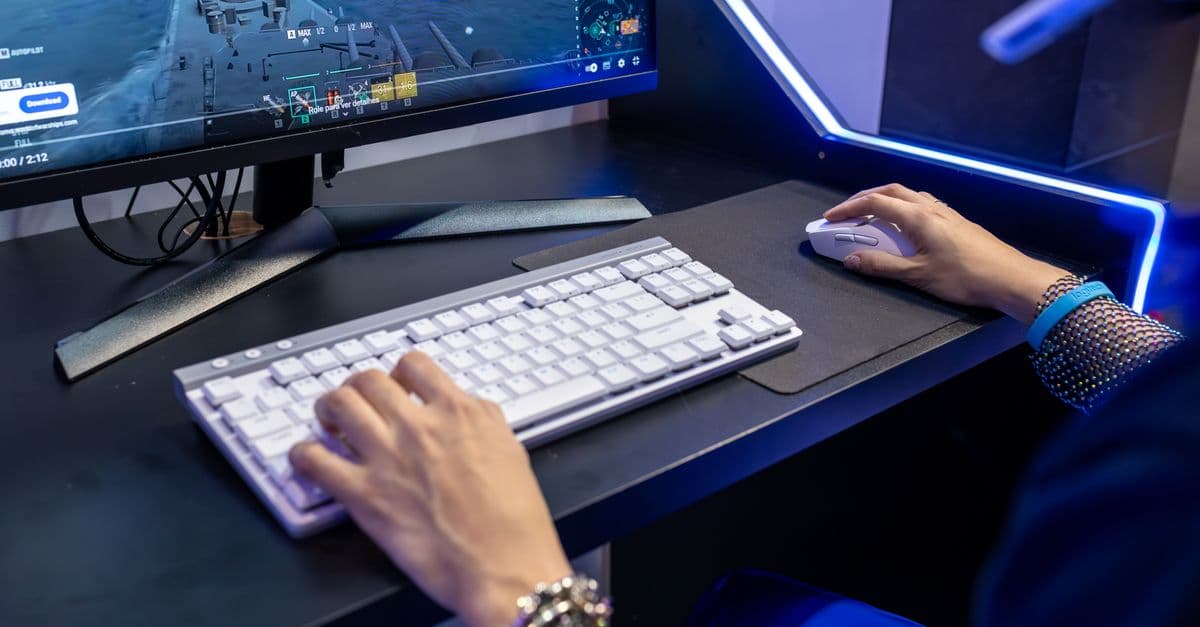
Photo: Yan Krukau / Pexels
Before World of Warcraft launched in November 2004, massively multiplayer online role-playing games (MMORPGs) were a niche hobby for players willing to tolerate steep learning curves and unforgiving grinds. Within three years Blizzard's game had more than 10 million subscribers, and by October 2010 it topped out at 12 million worldwide, a number Activision Blizzard confirmed in an official announcement and never surpassed again (Activision Blizzard investor relations, 2010). This piece explains how a genre built for hardcore hobbyists became a mainstream phenomenon, what its guild and raid systems actually do to player behavior, and why nearly every live-service game released since has borrowed its blueprint.
The genre WoW inherited, and the problem it solved
MMORPGs did not start with Blizzard. Ultima Online (1997) and EverQuest (1999) proved persistent online worlds could hold a paying audience years before WoW existed. But both games demanded punishing time investments: corpse runs after death, forced grouping to level past certain points, and interfaces that assumed players already understood MMO conventions.
EverQuest peaked at roughly 400,000 subscribers, a rounding error next to what came later. The audience that stuck around was self-selecting: people with enough free time and tolerance for friction to push through systems that actively worked against casual play.
Blizzard's designers, several of whom had played EverQuest obsessively, set out to keep the parts that created social investment (grouping, guilds, a persistent shared world) while stripping out the parts that just wasted time (empty travel, punishing death penalties, unclear objectives). That distinction, between friction that builds community and friction that just builds frustration, became the design philosophy that separated WoW from its predecessors.
How the quest and leveling system actually works
WoW's core innovation was not any single mechanic. It was making progression legible. Earlier MMOs told players to "go kill monsters until you level up," with no clear direction on where or why. WoW replaced that with a quest log: numbered objectives, a marker on the map showing where to go, and a reward that scaled to the effort required.
This sounds trivial now because every RPG since has copied it. In 2004 it was not standard. The quest system worked like a video game tutorial that never ends: it constantly tells you what to do next while leaving room to ignore the guidance and explore. A new player in Northshire Abbey in 2004 always had a next step. A new player in EverQuest's starting zones often did not.
How does WoW's quest design differ from earlier MMORPGs?
Earlier MMORPGs relied on open-ended grinding: kill generic monsters for experience with no narrative framing or map guidance. WoW attached each objective to a location, a story beat, and a specific reward, turning leveling into a guided path rather than an undirected grind. This made solo play viable for the first time in a major MMO.
Guilds, raids, and why 40-player coordination created real institutions
WoW launched with 40-player raid dungeons such as Molten Core, requiring guilds to coordinate dozens of players across specific roles: tanks who absorb damage, healers who keep the group alive, and damage-dealers who kill the boss before an enrage timer ends the fight. That number later dropped to 25 and then 10-to-30 depending on difficulty, but the underlying demand never disappeared: raiding required an organization, not just a group of friends.
Guilds became de facto institutions. A serious raiding guild needed a roster deep enough to cover absences, a loot distribution system players trusted enough not to quit over, and a leadership structure to schedule raid nights across time zones. This is closer to running a volunteer sports club than playing a video game session. Guild leaders managed interpersonal conflict, recruited and benched players based on performance, and negotiated who got the next piece of rare gear.
That structure produced real social stakes. Players who felt cheated on loot distribution left guilds and took friends with them. Guilds that consistently cleared new raid content first (a competition called "world first") earned a kind of celebrity status within the community, tracked by third-party sites and later by Blizzard-sponsored tournaments. None of this was scripted by Blizzard; it emerged from the constraint that difficult content required more coordinated people than any friend group could reliably supply.
Why the subscription model mattered more than the game itself
WoW charged roughly $15 a month on top of a box purchase, a pricing model borrowed from EverQuest but applied at a scale no MMO had reached. At the October 2010 peak of 12 million subscribers, that model generated roughly $180 million a month in subscription revenue alone, before counting expansion sales or the box price (Activision Blizzard, 2010).
Recurring revenue changes what a studio can build. A one-time game purchase funds one release cycle. A subscription funds a permanent live-operations team: content designers who ship new raids, balance patches, and expansions on a predictable cadence because the business model depends on players never having a reason to cancel.
Estimates place WoW's lifetime revenue at roughly $9 billion in subscriptions, expansions, and in-game purchases, with the broader Warcraft franchise (including merchandise and the 2016 film) closer to $15 billion (Business Model Analyst franchise revenue analysis, 2025). Microsoft, which acquired Activision Blizzard in 2023, reported WoW's revenue for its 2024 fiscal year at approximately $680 million, a 12% increase year over year, showing the franchise still generates meaningful revenue two decades after launch.
The expansion cadence that became the industry template
Blizzard shipped major expansions roughly every one to two years: The Burning Crusade (2007), Wrath of the Lich King (2008), Cataclysm (2010), and onward through ten expansions by The War Within in 2024. Each expansion raised the level cap, added a new continent, and reset the gear treadmill, making previous top-tier equipment obsolete.
That reset is the mechanism, not a side effect. If old gear stayed relevant forever, players would have no reason to buy the next expansion or keep subscribing. Raising the level cap and obsoleting old rewards is a deliberate lever that converts finished content into a reason to keep paying. Every major live-service game that followed, from Destiny 2 to Final Fantasy XIV, uses some version of this same lever: seasons, expansions, or battle passes that periodically reset what counts as "current" gear or content.
| Year | Subscribers (approx.) | Milestone |
|---|---|---|
| 2005 | 1.5 million | First full year after November 2004 launch |
| 2007 | 10 million | The Burning Crusade expansion |
| 2010 | 12 million (peak) | Wrath of the Lich King, all-time high |
| 2014 | Back to roughly 2006 levels | Subscriber decline through Cataclysm and Mists of Pandaria |
| 2019 | ~357,000 active on Classic servers alone | WoW Classic launch, two-week EU/US count |
| 2024 | ~7.25 million (analyst estimate) | Pre-The War Within growth streak |
Table: World of Warcraft subscriber trajectory, 2005–2024. Figures for 2005–2010 come from Activision Blizzard's own investor announcements; post-2015 figures are third-party analyst estimates since Blizzard stopped disclosing exact subscriber counts. Sources: Activision Blizzard investor news, 2010; Pro Game Guides, WoW Classic server populations, 2020; Windows Central, The War Within subscriber estimate, 2024.
PvP, esports, and the Arena World Championship
WoW built player-versus-player (PvP) combat into three distinct formats: open-world skirmishes between the Alliance and Horde factions, large-scale Battlegrounds with objectives like capturing flags, and small-team Arena matches (2v2, 3v3) with a competitive ranking ladder. The Arena format became the basis for an actual esport: the Arena World Championship (AWC), which Blizzard has run in various formats since 2016.
Prize pools are modest by esports standards. The 2023 Dragonflight Season 2 AWC distributed a $400,000 season-long prize pool, and individual Grand Finals in 2024 and 2025 have offered between $200,000 and $300,000 (Esports Earnings, Arena World Championship prize pool history, 2025). That is small compared to League of Legends or Dota 2, where single tournaments can exceed $20 million, but it establishes something rarer: a 20-year-old game maintaining an official, funded competitive scene, not just community tournaments.
Is WoW's Arena World Championship a real esport?
Yes, in the sense that matters: it has official Blizzard funding, professional teams with sponsorships, a ranked qualification ladder, and Twitch broadcasts drawing organized viewership. Its prize pools, in the low hundreds of thousands of dollars per season, are small next to top-tier shooters and MOBAs, but the structure is genuinely professional rather than purely grassroots.
The persistent world and why it created stakes other genres cannot
Single-player games reset when you close them. WoW's world does not. Other players are always present, competing for the same resources, occupying the same dungeon queues, and, in the case of PvP servers, actively fighting over territory. That persistence is what turns a video game into something closer to a shared social space.
Guilds that controlled contested world PvP zones, or that consistently won world-first raid races, built reputations that outlasted any single patch. Server communities developed their own informal hierarchies: which guilds were respected, which players were known as reliable healers, which names carried a reputation for ninja-looting (taking items outside agreed distribution rules). None of that exists in a single-player game, because there is no shared, persistent audience to build a reputation in front of.
The social infrastructure nobody designed on purpose
Guilds organized voice chat outside the game itself, first through third-party tools like Ventrilo and TeamSpeak, later through Discord. Raiding for three to four hours, multiple nights a week, with the same 20 to 30 people for months or years, produces the kind of sustained contact that generates real friendships, and sometimes real relationships. Numerous journalistic accounts and community retrospectives over the past two decades have documented marriages and long-term friendships that began in WoW guilds, a pattern common enough that it stopped being surprising within the community well before it became a talking point outside it.
This matters for understanding why WoW held onto players for so long. A game with weak mechanics but strong social ties is far harder to quit than a game with excellent mechanics and no social ties, because leaving means abandoning people, not just content.
The addiction question, and what the actual classification says
WoW's reward structure, daily quests, raid lockouts that reset weekly, seasonal cosmetics available for a limited time, is intentionally built to create habitual return visits. In May 2019, the World Health Organization's 72nd World Health Assembly formally added "gaming disorder" to the 11th revision of the International Classification of Diseases (ICD-11), defining it as impaired control over gaming that takes priority over other life activities for at least 12 months, with significant harm to personal, social, or occupational functioning (World Health Organization, ICD-11 gaming disorder classification, 2018).
That classification applies to gaming broadly, not specifically to WoW, and the game's industry trade group, the Entertainment Software Association, publicly opposed the WHO's decision at the time. It is worth being precise here: the WHO criteria describe a diagnosable pattern of impairment, not simply playing many hours. Millions of WoW players logged 20 to 30 hours a week during raiding tiers without meeting a clinical threshold for disorder. The mechanics that create engagement (goals, measurable progress, social belonging) are not unique to WoW or even to video games; they are the same levers that make sports leagues, hobbies, and workplaces engaging. What made WoW notable is scale: it applied those levers to tens of millions of people simultaneously, which is exactly why it became one of the first games cited in public discussion of gaming and mental health.
Streaming, Twitch, and how WoW shaped spectator gaming
Long before League of Legends or Fortnite dominated streaming platforms, WoW players broadcast raid progression and Arena matches to build audiences. Guilds live-streamed attempts at difficult bosses, turning weeks of failed attempts and eventual "world first" kills into appointment viewing for thousands of spectators. That format, watching skilled players attempt something difficult in real time with the outcome genuinely uncertain, is close to the template every major streaming platform still runs on.
WoW remains a consistently ranked top-20 title on Twitch during expansion launches, with concurrent viewership spiking into six figures when a new expansion drops or a major raid tier opens (Twitch platform category data, cited via industry gaming statistics roundups, 2024). Two decades after launch, a niche RPG subgenre still reliably draws crowds comparable to games released last year.
Where WoW's competitors carved out real ground
WoW never lost its dominant position outright, but it created enough room in the MMO market for competitors to build sustainable audiences by not copying it directly.
- Final Fantasy XIV: Launched poorly in 2010, relaunched as A Realm Reborn in 2013 with a subscription model close to WoW's, but leaned into a fully voiced, single continuous story campaign that plays more like a JRPG than an open sandbox. It has absorbed a meaningful share of players during periods of WoW community dissatisfaction.
- Guild Wars 2: Dropped the subscription entirely in favor of a buy-to-play model, betting that removing the monthly fee would draw players uninterested in a long-term financial commitment.
- Elder Scrolls Online: Built on an existing single-player franchise's lore and exploration style, targeting Elder Scrolls fans first and MMO veterans second.
None of these matched WoW's peak scale. But their survival for over a decade each shows the MMO audience WoW created was large enough to support more than one major title, something that was not obviously true before 2004.
What people get wrong about WoW's success
It was not just the Warcraft brand. Warcraft III (2002) had a substantial real-time strategy following, and that fan base gave WoW an initial audience. But brand loyalty does not explain sustained growth to 12 million subscribers over six years, and it does not explain why many Warcraft strategy game fans never touched the MMO at all, having no interest in the genre. The quest design, guild systems, and content cadence did the work of retention; the brand only did the work of the first install.
It was not accidental "sticky" design that trapped players against their will. The habitual mechanics are real and intentional, but framing every returning player as a victim of manipulation ignores that goal-setting, measurable progress, and group belonging are motivations people pursue deliberately in plenty of non-gaming contexts, from marathon training to community sports leagues. The WHO's own gaming disorder criteria require clinically significant impairment sustained over a year, a bar most subscribers never crossed.
Modern WoW is not the same game, and comparing subscriber peaks across eras is misleading. The 2010 peak happened in a market with far fewer competing live-service games chasing the same hours. By 2024, players are dividing attention across mobile games, Fortnite, Minecraft, and dozens of other live-service titles that did not exist in 2010. A 7 million subscriber estimate in 2024, in that more fragmented market, represents a stronger competitive position than the raw number suggests next to the 2010 peak.
The takeaway
World of Warcraft did not invent the MMORPG, but it proved the genre could scale past a hardcore niche into a mainstream, multi-billion-dollar business, and it did that by treating friction as a design variable to be tuned rather than a genre default to be tolerated. Guided quests replaced aimless grinding. Guild structures turned raid coordination into genuine social institutions. A subscription model funded two decades of continuous content rather than a single release. Every live-service game built since, whether it charges a subscription or not, inherited some piece of that template: seasonal resets, guild-like social systems, or a content cadence designed to keep an audience from ever having a clean reason to leave.
Frequently Asked Questions
Q: Is WoW still worth playing today? A: It depends on what you want from it. The endgame content, Mythic raids, rated Arena, Mythic+ dungeons, remains mechanically deep and well-supported. Leveling a new character takes a fraction of the time it did in 2004. The tradeoffs are real: a gear treadmill that resets with every expansion, seasonal cosmetics that create fear of missing out, and a subscription cost. Players who want a finished, narrative-focused MMO with expansions that stay relevant longer often prefer Final Fantasy XIV.
Q: Why do players raid for hours every week? A: Four overlapping reasons: measurable achievement from downing a difficult boss, sustained social contact with the same 10 to 30 people over months, tangible loot rewards that also function as status signals, and inter-guild competition for "world first" kills. The combination of mechanical challenge and group belonging is why raiding remains the game's central social structure.
Q: Is WoW pay-to-win? A: Not directly. Blizzard's official monetization is subscriptions, expansions, and cosmetics, plus optional level boosts and a WoW Token that converts real money into in-game gold, or vice versa. Because that token can be used to buy gold, which can then buy raid carries or crafted gear from other players, wealthy players have an indirect path to better gear that is faster than earning it through play. It is a gray area rather than a clean yes or no.
Q: How many people play WoW in 2026? A: Blizzard has not disclosed an exact subscriber count since 2015. Independent analyst estimates placed the figure around 7.25 million ahead of The War Within's 2024 launch, with daily active players in the 1.5 to 2 million range shortly after that expansion released.
Q: What was the highest WoW subscriber count ever recorded? A: 12 million worldwide, officially confirmed by Activision Blizzard in October 2010 during the Wrath of the Lich King expansion. That remains the only exact peak figure the company has ever publicly verified.
Q: Did WoW invent the MMORPG genre? A: No. Ultima Online (1997) and EverQuest (1999) established the genre years earlier. WoW did not invent persistent online worlds, guilds, or raiding; it redesigned the onboarding and progression systems around those existing ideas to make them accessible to a mainstream audience.
Q: Is gaming disorder a real medical diagnosis, and does it apply to most WoW players? A: Yes, the World Health Organization added gaming disorder to the ICD-11 in 2019, defining it as impaired control over gaming causing significant harm sustained over at least 12 months. It is a specific clinical threshold, not a label for anyone who plays many hours. Most heavy WoW players, including dedicated raiders, do not meet that clinical bar.
Q: How much money has WoW made in total? A: Estimates place WoW's lifetime revenue at roughly $9 billion in subscriptions, box sales, and in-game purchases, with the wider Warcraft franchise, including merchandise and film revenue, closer to $15 billion. Microsoft reported roughly $680 million in WoW revenue for its 2024 fiscal year alone.
Q: What is the Arena World Championship and how big are its prize pools? A: It's Blizzard's official esports circuit for WoW's ranked Arena PvP mode. Season-long prize pools have ranged from roughly $280,000 in 2018 to $400,000 in 2023, with individual Grand Finals paying out $200,000 to $300,000. That is modest compared to top esports titles but represents a genuinely professional, continuously funded competitive scene two decades into the game's life.
Q: Which competitor MMOs have survived alongside WoW? A: Final Fantasy XIV, Guild Wars 2, and Elder Scrolls Online have each maintained sustainable, multi-year audiences by differentiating rather than directly copying WoW's formula, respectively through narrative-driven campaigns, a buy-to-play pricing model, and leveraging an existing single-player franchise.
Read next:
Follow new articles
Add SciHub101 to your feed reader to see new science and technology stories.
About the Author
SciHub101 is an independent science and technology publication founded and edited by Buğra Sözeri, a software engineer and app developer based in Türkiye. AI tools assist with drafting and research. Source documentation in the existing archive is uneven, and articles are being reviewed and corrected. The Editorial Team byline identifies editorial responsibility; it does not certify specialist or independent human review. Where we compare products, anything built by our own team is labelled as such — see the editorial guidelines and About page for how corrections and disclosures work.
Related Articles
StarCraft: The RTS That Defined Esports in Korea
StarCraft became Korea's national esport, broadcast on TV, played professionally for decades. Perfect balance between three factions created the template for competitive RTS.
League of Legends: The Esport That Became Mainstream
League of Legends became the world's most-watched esport, with Worlds 2024 peaking at 6.94 million viewers. Here's how a 2009 MOBA built that infrastructure.
Overwatch: Team Coordination and Hero-Based Gameplay
Overwatch revolutionized team shooters by emphasizing team composition over individual skill. Hero abilities enabled diverse playstyles and accessible gameplay.

Psychology of Gaming: Why Games Are So Addictive
The strongest pull in gaming often isn't the loot or the level-up — it's the guild that's counting on you, the friend list you don't want to disappoint, and the identity you've built inside a community that logs on when you do.

Mobile Gaming Revolution: How Phones Became Gaming's Biggest Platform
Mobile gaming generates over $120 billion a year and reaches roughly 3 billion players worldwide. From Angry Birds to Genshin Impact, smartphones transformed who plays games and how they play.
Complete Gaming Guide 2026 — Technology, Design, Esports, and Psychology
The complete guide to gaming in 2026: how game engines work, gaming hardware, esports, game design psychology, industry trends, and what makes games engaging and addictive.