League of Legends: The Esport That Became Mainstream
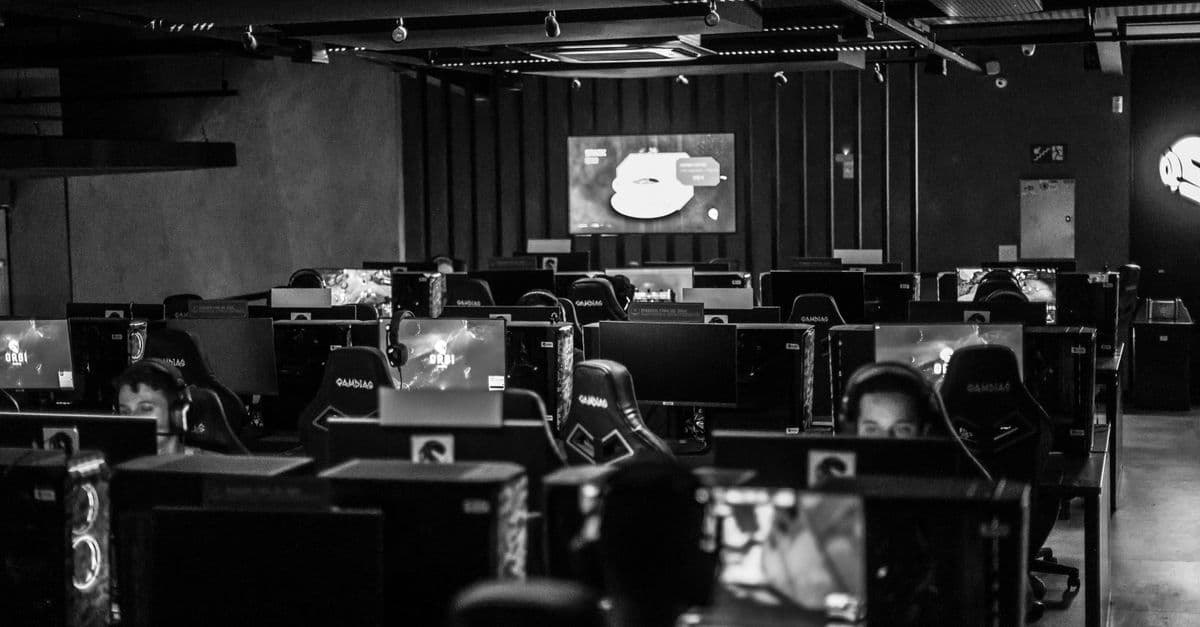
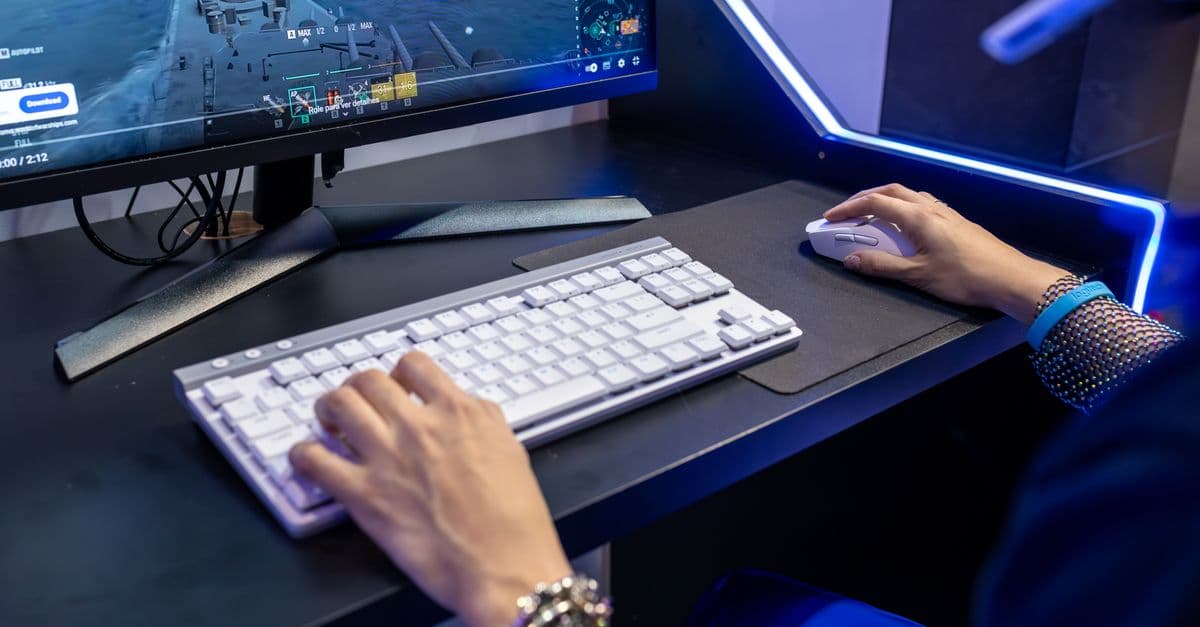
Photo: Nathan b Caldeira / Pexels
In November 2024, T1's win over Bilibili Gaming at the League of Legends World Championship final peaked at 6.94 million concurrent viewers, the highest single-moment audience any esports match has ever recorded (Esports Charts). That's not a game niche anymore. That's an audience the size of a mid-size country tuning in, at the same second, to watch five people in Korean and Chinese jerseys fight over a virtual nexus.
League of Legends, released by Riot Games in 2009, didn't invent the multiplayer online battle arena (MOBA), a genre where two teams of five destroy each other's base while leveling up characters along the way. That credit goes to Defense of the Ancients, a fan-made mod for Warcraft III. What Riot built instead was the infrastructure around the genre: professional leagues, broadcast production, a monetization model that funded all of it, and a decade-plus commitment to treating a video game like a televised sport. This is how that infrastructure actually works, why it took over a decade to build, and why it still leads every other esport in the audience it commands.
What a MOBA actually is, and why League simplified it
Every League match is a five-versus-five fight across a single map called Summoner's Rift. Each team defends a base guarded by defensive towers and, at the center, a structure called the Nexus. Destroy the enemy Nexus first and you win. Along the way, players kill computer-controlled monsters and enemy players to earn gold, which buys items that make their character stronger.
That's the DotA formula, and it's genuinely complex: dozens of interacting item stats, steep execution requirements, and a punishing learning curve that kept the original mod's audience relatively small and hardcore. Riot's founders, Brandon Beck and Marc Merrill, built League as a standalone commercial product on the same core loop but stripped out friction, according to accounts of the studio's early design philosophy compiled by outlets covering Riot's history. Simpler shop interfaces, clearer visual read on enemy abilities, and a matchmaking system built for newcomers rather than mod veterans.
The result is a game with a low floor and a high ceiling: a first-time player can understand the objective in one match, but reaching professional-level mastery still takes years. That combination, easy to try, hard to master, is the same design principle chess and poker run on. It's why both have sustained spectator interest across generations, and it's the first reason League built a broad audience instead of a niche one.
How the roles and the meta create strategic depth
League splits its ten players into five roles per team, and each role has a distinct job on the map.
| Role | Primary job | Typical champion type |
|---|---|---|
| Top | Solo lane, absorbs pressure, initiates fights | Tanks or bruisers |
| Jungle | Roams between lanes, ambushes ("ganks") enemies | Mobile, high early-game damage |
| Mid | Central lane, generates map-wide pressure | Mages or assassins |
| ADC (bot lane) | Ranged physical damage, scales into late game | Marksmen |
| Support | Vision control, crowd control, protects the ADC | Enchanters or engage-tanks |
Table: League of Legends' five standard roles and what each is responsible for on the map.
As of mid-2026, League has 173 playable champions, with the newest additions still being released roughly every few months (TrustDice, July 2026). Each champion has four unique abilities plus a passive trait, which means team composition is a puzzle with thousands of viable combinations. Riot ships monthly balance patches that adjust damage numbers, cooldowns, and item costs, which keeps shifting which champions and strategies are strong. This is the second mandatory analogy: patches function like rule tweaks in a sport's offseason, except League runs that offseason every four weeks instead of once a year. A "solved" game, one where the best strategy never changes, gets stale fast for spectators. League never lets that happen.
Why does League's metagame keep changing instead of stabilizing?
Because balance patches shift champion power roughly every month, and professional teams immediately hunt for underused champions or item builds that the patch inadvertently made strong. A strategy dominant at one tournament can be nerfed into irrelevance by the next, which forces constant innovation instead of a single "correct" way to play.
The tournament structure that turned a game into a season
League's competitive calendar mirrors a traditional sports season on purpose. Riot runs Split-based regular seasons in each major region, feeding into playoffs, which feed into an annual international tournament: the World Championship, or Worlds.
The four historically dominant regions are Korea (LCK), China (LPL), Europe (LEC), and North America (which has cycled through several names, more on that below). Each has a distinct competitive identity that pro analysts and fans widely describe: LCK teams are generally regarded as the most mechanically precise and macro-disciplined, LPL teams favor early aggression and high kill totals, LEC is known for coordinated teamplay, and North American teams have historically lagged behind the other three in international results despite having some of the largest domestic viewership.
Worlds 2024's total prize pool was $2,225,000 (Leaguepedia; Dot Esports), a fixed sum funded directly by Riot rather than crowdfunded through in-game sales. That structure is a deliberate contrast with Dota 2's The International, which historically built its prize pool through community-purchased Battle Pass sales and once peaked above $40 million before Valve discontinued that model. League's approach trades eye-popping prize headlines for predictability: teams and players know roughly what a tournament win is worth years in advance, which stabilizes team budgeting in a way crowdfunded prize pools never could.
How Riot turned regional leagues into a real business: franchising
For League's first several years, regional leagues worked on a promotion-and-relegation system borrowed straight from traditional soccer: win your Split, stay up; finish last, get demoted to a lower division, and a new team takes your slot. That kept the competitive tier honest, but it made running a team financially reckless. Sponsors and investors don't like putting money into an organization that could disappear from the top league in a single bad season.
Riot ended that model for North America and Europe in 2018, converting both the LCS and the EU LCS into franchised leagues. Existing organizations paid a flat $10 million buy-in for a permanent LCS slot, with new entrants paying an additional $3 million that was redistributed to teams the league didn't retain, according to Riot's own franchising announcement and ESPN's coverage of the rollout (ESPN). Europe's franchising fee landed around €10.5 million per slot the same year (Forbes). The NA LCS reportedly drew over 100 applications for just 10 permanent spots, evidence that investors saw guaranteed top-flight status, no relegation, no disappearing overnight, as worth a seven-figure entry fee.
That bet paid off for early buyers. Franchise slots that cost $10 million in 2018 have resold on the secondary market for far more since: Misfits Gaming's LEC slot reportedly changed hands in a deal worth $45 million to $50 million, and TSM's LCS slot was reportedly shopped at roughly $20 million, double the original buy-in (Esports Legal News; Dot Esports). Korea's LCK adopted a comparable franchising model, with outside organizations reportedly needing to pay 12 to 15 billion Korean won, roughly $10 million to $12 million, on top of the base buy-in to enter (Esports.net).
Franchising is the analogy every American sports fan already understands: it's the same logic the NFL and NBA use to guarantee a team's place in the league regardless of a single bad season, in exchange for a large upfront payment and revenue-sharing obligations. Riot borrowed that structure wholesale rather than inventing something new, and it's the financial backbone that let teams justify paying players real salaries instead of scraping by on sponsorship crumbs.
Why Worlds 2024 became the biggest esports broadcast ever
Worlds 2024 averaged 1.73 million viewers across its run and produced roughly 191 million hours watched over 109 hours of broadcast, with the finale peaking at 6.94 million concurrent viewers, according to Esports Charts' full tournament breakdown (Esports Charts). YouTube alone peaked above 3.3 million viewers and Twitch peaked above 2.5 million during the final, per the same viewership tracking reported by SportsPro (SportsPro).
That peak didn't appear overnight. Worlds' viewership climbed in distinct steps rather than a smooth curve, and tracking those steps shows exactly where Riot's investments paid off.
| Worlds edition | Reported peak concurrent viewers | Notable driver |
|---|---|---|
| 2013 (Season 3) | Under 1 million | Early tournament, limited co-streaming |
| 2018 | Roughly 1.5–2.1 million | First major co-streaming push on regional platforms |
| 2022 | 5.14 million | First time surpassing the 5 million threshold |
| 2023 | 6.4 million | Arcane season one halo effect, T1 vs. Weibo Gaming final |
| 2024 | 6.94 million | T1 vs. Bilibili Gaming final, Arcane season two overlap |
Table: Worlds' peak concurrent viewership by edition, according to Esports Charts' historical retrospective (Esports Charts).
Three things drove the 2024 number specifically. First, the final matched T1, led by Faker, arguably League's most recognized player globally, against Bilibili Gaming, a Chinese team representing the LPL region, whose domestic viewership alone is enormous given China's player base. Second, Riot streams the event on multiple platforms simultaneously (Twitch, YouTube, and regional broadcasters), which fragments the audience across platforms but grows the aggregate number reported. Third, Riot has spent over a decade building Worlds as an annual cultural event, complete with a dedicated anthem released each year and, since 2021, tie-ins with the Arcane animated series, which primed a much broader, non-gaming audience to tune in.
For comparison, the Super Bowl regularly draws well over 100 million US viewers. Worlds isn't in that category, and pretending otherwise misrepresents both events. But among esports specifically, no other tournament, including Dota 2's International or Counter-Strike majors, has posted a bigger single-moment audience than Worlds 2024's 6.94 million peak.
The money: salaries, revenue, and who actually gets paid
League's business model funds all of this through cosmetic sales, "skins" that change a champion's appearance without altering gameplay balance, priced typically between $10 and $30 each, plus limited-run collaborations. SuperData's Year in Review estimated League generated $1.75 billion in revenue in 2020 alone, making it the only non-mobile title in that year's top ten highest-grossing games worldwide (Dot Esports; Win.gg). That revenue is what funds Riot's ability to guarantee prize pools, pay franchise league operating costs, and produce Worlds as a televised-style event rather than a scrappy LAN tournament.
Player salaries sit on top of that. Reports on Faker's contract with T1, extended through 2029, put his reported annual salary in the range of $6 million to $8 million, according to Korean outlet coverage compiled by multiple esports business sites (Fragster; Strafe). That figure is exceptional, not typical: Faker is the highest-paid and most decorated player in League's history, a four-time world champion. Mid-tier professional players in major regions typically earn salaries in the low-to-mid six figures, supplemented by streaming income, tournament winnings, and sponsorship deals, though exact figures are rarely disclosed publicly because most contracts include non-disclosure terms.
That salary gap creates a structural problem franchising alone doesn't solve: most LCS and LEC organizations still lose money even with guaranteed top-flight status, because domestic media rights and sponsorship in North America and Europe remain far smaller than in Korea and China. Franchising removed the risk of relegation, but it didn't remove the underlying revenue gap between what a franchise slot costs to run and what the regional league generates in return. That's a big part of why Riot has repeatedly revisited league structure, including the LCS reshuffle covered below, rather than treating the 2018 franchising model as a finished product.
When the infrastructure breaks: the LCS collapse and reversal
League's regional league structure isn't static, and its most recent stumble is instructive. In June 2024, Riot announced it would merge North America's LCS, Brazil's CBLoL, and Latin America's LLA into a single combined league called the League of Legends Championship of the Americas (LTA), starting in 2025 (Esports Insider). The stated goal was cost efficiency and a stronger combined broadcast product across three previously separate, smaller regions.
The experiment lasted one season. By September 2025, Riot reversed course and announced it would restore the LCS and CBLoL as independent regional leagues for 2026, reinstating the historic regional names and identities while keeping a handful of format innovations tested during the LTA year (The Esports Advocate; The Sporting Tribune). Reporting on the reversal points to regional fan identity, something a merged pan-American league diluted, as a central reason the combined format underperformed expectations.
That reversal matters for a reason beyond League specifically: it's a rare, public example of an esports publisher admitting a top-down structural change failed and walking it back within a year, rather than quietly letting a struggling format limp along. Traditional sports leagues almost never do this in real time; League's governing body, being a single company rather than a franchise consortium with competing owners, could.
Did the LCS actually shut down?
Not permanently. Riot merged the LCS into the combined LTA league for the 2025 season, then reinstated the LCS as an independent regional league for 2026 after the merged format underperformed. The historic LCS name and regional identity are back, though some 2025 format changes were kept.
Inside the regions: what actually separates LCK, LPL, LEC, and the Americas
Talking about "four major regions" glosses over just how different those scenes are in practice, and understanding the differences explains why international results have stayed so lopsided toward Asia for most of League's competitive history.
Korea's LCK operates inside a broader domestic esports culture that predates League by a decade, built originally on StarCraft: Brood War's television-broadcast era in the early 2000s, the same cultural infrastructure covered in StarCraft: The RTS That Defined Esports in Korea. That legacy means Korean organizations, broadcasters, and fans already had a shared vocabulary for treating a video game as a spectator sport before League even launched, which gave LCK a head start other regions had to build from scratch.
China's LPL benefits from sheer scale: the league draws from the world's largest gaming population and some of the best-funded organizations in esports, many backed by major Chinese tech and entertainment conglomerates. That funding shows up directly in player acquisition, LPL teams have historically been able to outbid other regions for top talent, including recruiting star players away from Korea.
Europe's LEC and North America's LCS sit in a different financial position. Both regions have large, engaged domestic viewerships and strong sponsorship interest from mainstream brands, but neither has matched LCK or LPL's international tournament results consistently. Analysts covering the region's competitive gap generally point to a smaller domestic talent pipeline, fewer dedicated amateur development leagues below the top tier, and a greater tendency for top talent to relocate toward LCK or LPL organizations offering larger contracts.
Cultural crossover: how League left the game client
Arcane, Riot's animated series set in the League universe, is the clearest evidence the franchise built an audience beyond players. Season two, released on Netflix in November 2024, won four Emmy Awards at the 77th Primetime Emmy Awards, including Outstanding Animated Program, matching the four wins its first season earned in 2022 (Sheep Esports; Collider). That's a mainstream television and streaming accolade, judged by the same body that judges every other prestige drama on Netflix, not a gaming-specific award.
This matters commercially, not just culturally. A viewer who has never opened the League client can watch Arcane, become invested in characters like Jinx and Vi, and then tune into Worlds specifically because the anthem or the storyline referenced the tournament. Riot has leaned into this deliberately, timing Arcane-adjacent content and skins around the Worlds broadcast calendar. Few esports franchises have a comparable mainstream media property working alongside their competitive scene; this is closer to what Marvel does for its films than what any other game publisher does for its esport.
The streaming layer underneath all of this is Twitch, and to a lesser extent YouTube. Individual League streamers built enormous followings independent of the professional scene itself, functioning as a farm system that keeps casual viewers engaged with the game between tournaments. Riot doesn't own Twitch, but it structured Worlds broadcast rights and co-streaming permissions specifically to let large personalities rebroadcast official coverage with their own commentary, a decision that multiplies total reach far beyond what a single official broadcast could reach on its own. That's a meaningfully different distribution strategy than traditional sports broadcasting, where a network typically holds exclusive rights and blocks unauthorized rebroadcast entirely.
What people get wrong about League's esports success
"League's esports success is just about the game being popular." Popularity is necessary but not sufficient. Dota 2 arguably has comparable or deeper competitive mechanics and, at its International peak, offered vastly larger prize pools, yet it never matched League's viewership consistency. The difference is closer to infrastructure: Riot invested in professional league production, salaries, and broadcast quality from a much earlier stage, and kept doing it every year rather than in occasional crowdfunded spikes. The full mechanical and financial comparison lives in Dota 2: The Complex MOBA With Esports' Largest Prize Pools.
"Bigger prize pools mean a stronger esport." Worlds 2024's $2.225 million prize pool is a fraction of what Dota 2's International offered at its peak, yet Worlds drew a larger viewership peak. Prize pool size measures how much money flows to a handful of top teams in one tournament. Viewership measures whether a broader public is actually watching. Those are different metrics, and League optimized for the second one.
"The playing population determines viewership." League's monthly active player base has fallen by roughly 14% from its 2022 peak, while Worlds set back-to-back viewership records in 2023 and 2024. A shrinking or plateauing player base and a growing spectator base can coexist; think of how many people watch professional football without playing organized football themselves. Esports spectatorship increasingly detaches from active participation the more mainstream a title becomes.
"Franchising fixed League esports' finances for everyone." Franchising removed relegation risk and made investors comfortable enough to pay seven and eight-figure buy-ins, but it didn't automatically make franchises profitable. Most LCS and LEC organizations still operate at a loss most years, subsidized by ownership groups betting on long-term brand value and secondary-market slot appreciation rather than near-term operating income.
"Female players can't compete at the top level because of the game itself." League has no gender-based mechanical advantage; matchmaking and mechanics are identical regardless of who's playing. Female representation on top-tier professional rosters remains low, which reflects structural and cultural barriers within competitive gaming, including team recruitment practices and online toxicity, rather than any in-game limitation.
"League and Valorant compete for the same esports audience." They overlap in publisher and some crossover viewership, but the games test different skills: League rewards macro decision-making and champion knowledge across a 30-plus-minute match, while Valorant is a round-based tactical shooter where individual aim and utility timing matter more moment-to-moment, closer to the precision-first structure covered in Valorant: Tactical Precision Meets Ability-Based Gameplay. Riot runs both as separate ecosystems with distinct broadcast calendars rather than treating them as substitutes.
Frequently Asked Questions
Q: Is League of Legends outcome-based on skill or luck? A: Skill-based. Elite teams place highly across hundreds of matches; random variance averages out over that sample size. Professional rosters that dominate one Split typically remain competitive across seasons, which is the statistical signature of a skill-driven game rather than a luck-driven one.
Q: Why did League overtake Dota 2 in mainstream viewership despite Dota's larger prize pools? A: Accessibility and consistent infrastructure investment. League has a lower mechanical entry barrier for new and casual viewers, and Riot funded professional league production, salaries, and broadcast quality every year rather than relying on community-funded prize pool spikes the way Dota 2's International historically did.
Q: How big was the Worlds 2024 prize pool compared to Dota 2's International? A: Worlds 2024's total prize pool was $2,225,000 (Leaguepedia), a fixed amount funded directly by Riot. Dota 2's International once exceeded $40 million at its crowdfunded peak, though that model has since been discontinued by Valve, and Dota 2's prize pools have fallen sharply since.
Q: Can female pro players compete in League alongside male players? A: Yes, mechanically the game has no gender-based advantage. Some professional and semi-professional teams include female players, but representation on top-tier rosters remains low, a pattern attributed to structural barriers in recruitment and online toxicity rather than any in-game limitation.
Q: How does Riot balance 173 champions without breaking competitive integrity? A: Through monthly patches that adjust individual ability damage, cooldowns, and item costs based on win-rate data from both professional and casual play. Some changes overcorrect and get walked back in the following patch; balance is treated as continuous iteration rather than a one-time fix.
Q: Is League of Legends' player base shrinking? A: Yes. Monthly active players peaked around 152 million in 2022 and had fallen to roughly 131 million by 2025 (Demandsage). Viewership of Worlds has kept growing during the same period, showing that spectator interest and active playership can move independently.
Q: What happened to the LCS, and is it still North America's League of Legends league? A: Riot folded the LCS into a combined Americas league called the LTA for the 2025 season, merging North America, Brazil, and Latin America. The merger underperformed on regional fan engagement, and Riot restored the LCS as an independent North American league for 2026 (The Esports Advocate).
Q: How much did it cost to buy into the LCS or LEC when Riot introduced franchising? A: Roughly $10 million per slot in North America's LCS, with an added $3 million from new entrants that was redistributed to displaced teams, and about €10.5 million per slot in Europe's LEC, both introduced in 2018 (ESPN; Forbes). Secondary-market resales of individual slots have since climbed as high as $45 million to $50 million.
Q: Did Arcane actually win real television awards, or just gaming-specific ones? A: Real mainstream television awards. Arcane's second season won four Primetime Emmy Awards in 2025, including Outstanding Animated Program, judged by the Television Academy alongside every other prestige animated series that year, not a gaming-specific body (Collider).
Q: How much do top League of Legends professionals actually earn? A: It varies enormously. Faker's reported T1 salary sits between $6 million and $8 million annually, but he is the outlier by a wide margin as a four-time world champion (Fragster). Mid-tier professionals in major regions typically earn salaries in the low-to-mid six figures, with streaming, sponsorships, and tournament winnings adding to base pay.
Q: Will Worlds ever draw as many viewers as the Super Bowl? A: Unlikely in the near term. The Super Bowl regularly draws over 100 million US viewers, while Worlds 2024's peak was 6.94 million globally. Worlds is the largest single moment in esports history, but esports as a category is still a fraction of the audience traditional American football commands domestically.
The takeaway
League of Legends didn't win the esports audience by being the most mechanically demanding MOBA or by offering the largest prize pool. It won by treating competitive infrastructure, broadcast quality, regional league stability, franchised team ownership, salaried player contracts, and a decade of consistent investment, as the actual product, with the game itself as the engine underneath.
Worlds 2024's 6.94 million peak viewers is the clearest evidence that strategy worked, and the steady climb from under a million peak viewers in 2013 to nearly seven million in 2024 shows the growth wasn't a single lucky broadcast but a decade of compounding investment. The LCS's 2025 collapse and 2026 reversal is just as instructive: even a decade-plus of infrastructure-building doesn't make an esport immune to bad structural decisions, and Riot's willingness to publicly reverse course within a year is itself part of why the ecosystem has stayed durable. Popularity funded the infrastructure. The infrastructure, not the popularity alone, is what kept people watching.
Read next:
Follow new articles
Add SciHub101 to your feed reader to see new science and technology stories.
About the Author
SciHub101 is an independent science and technology publication founded and edited by Buğra Sözeri, a software engineer and app developer based in Türkiye. AI tools assist with drafting and research. Source documentation in the existing archive is uneven, and articles are being reviewed and corrected. The Editorial Team byline identifies editorial responsibility; it does not certify specialist or independent human review. Where we compare products, anything built by our own team is labelled as such — see the editorial guidelines and About page for how corrections and disclosures work.
Related Articles

World of Warcraft: The MMORPG That Changed Gaming
WoW proved MMORPGs could reach mainstream audiences. 12 million subscribers at peak, raid guilds, competitive PvP, and communities that transcended gaming.
Dota 2: The Complex MOBA With Esports Largest Prize Pools
Dota 2 built esports' richest prize pool era through crowdfunding, then watched it collapse when Valve killed the Battle Pass model. Here's how the mechanics, the money, and the meta actually work.
Esports in 2026: The Rise of Competitive Gaming, Prize Pools, and Professional Careers
Esports revenue reached 1.38 billion USD globally in 2025 and is projected to 1.88 billion by 2027. Global peak concurrent viewership for major events (League of Legends Worlds, The International) routinely exceeds 100 million across all platforms, with esports tournaments distributing over 500 million dollars in prizes annually. The top 100 professional players earn 200,000 to 5 million USD annually, yet median esports player income remains 40,000 USD due to the sport's winner-take-most distribution. The esports industry now encompasses team ownership, sponsorships, media rights, coaching, sports science, equipment manufacturing, and esports venues. Professional gaming is no longer a niche pursuit; it is a legitimate career path, governed by contracts, physical training regimens, and psychological coaching. Understanding the scale, structure, and economics of esports reveals not a fad but a permanent entertainment medium comparable in revenue scale to professional tennis and growing faster than traditional sports.
Apex Legends: Battle Royale With Hero Abilities and Squad Mechanics
Apex Legends proved battle royales could emphasize teamwork and hero abilities. Squad-based gameplay with legend abilities created unique BR experience.

Valorant: Tactical Precision Meets Ability-Based Gameplay
Valorant combines Counter-Strike's tactical depth with hero abilities. Perfect accuracy required but abilities provide strategic alternatives to pure mechanical skill.
StarCraft: The RTS That Defined Esports in Korea
StarCraft became Korea's national esport, broadcast on TV, played professionally for decades. Perfect balance between three factions created the template for competitive RTS.