Apex Legends: Battle Royale With Hero Abilities and Squad Mechanics
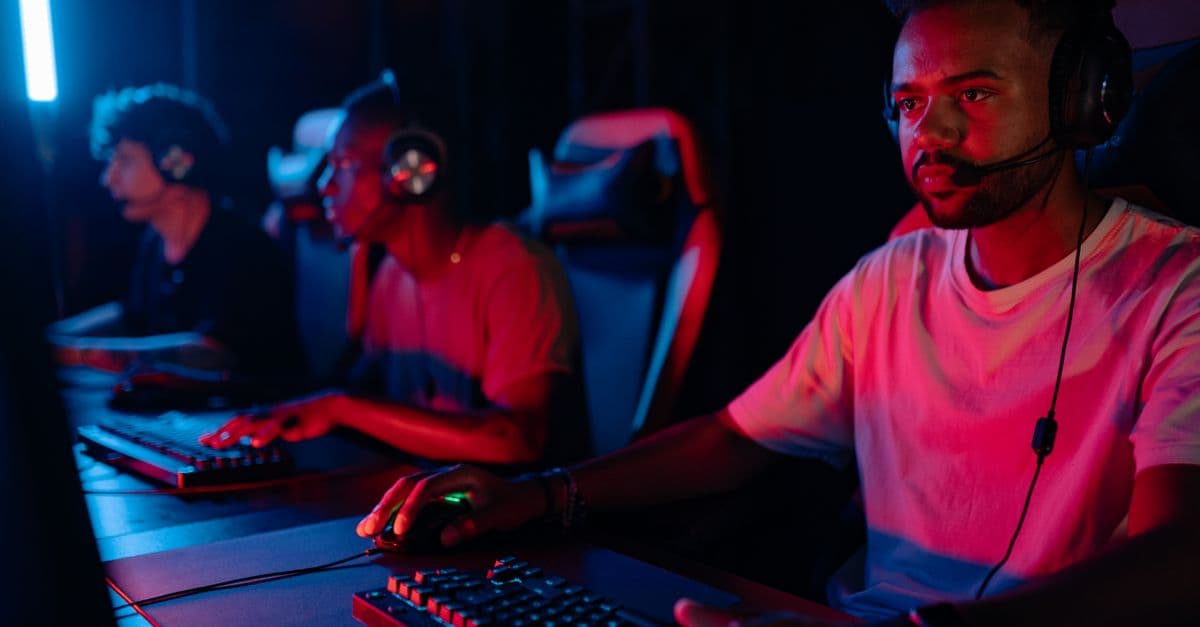
Photo: Yan Krukau / Pexels
By early 2019, the battle royale genre was defined by two giants, Fortnite and PUBG, both built around solitary survival and gunplay. On February 4, 2019, Respawn Entertainment released Apex Legends with no marketing lead-up and reshaped that formula around mandatory three-player squads, hero abilities, and a communication system that let teammates coordinate without speaking a word. The game hit 25 million players in its first week, a launch curve still cited as one of the fastest in free-to-play history (GameSpot, 2019). This piece breaks down what Apex actually changed about the genre, mechanism by mechanism, and why some of those changes outlived the game's own esports scene.
The Problem Apex Was Solving
Fortnite and PUBG proved battle royale could hold an audience of millions, but both had a structural weakness: squads were optional add-ons to what was fundamentally a solo survival loop. You could queue with three friends, but nothing in the game design forced you to depend on them. Coordination was a bonus, not a requirement.
Respawn's design team, largely veterans of Titanfall who understood movement and gunplay but had never shipped a battle royale, approached the genre from a different angle. Rather than asking "how do we make our version of Fortnite," they asked what a battle royale would look like if teamwork was the core skill being tested, not an optional multiplier on individual aim. That question produced three interlocking systems: locked three-player squads, hero-style "legends" with unique kits, and a context-aware ping system built to replace voice chat entirely if needed.
None of these ideas were invented from nothing. Squad-based shooters existed. Hero abilities existed in games like Overwatch. What Apex did was combine them inside the battle royale structure for the first time at scale, and in doing so, it forced the rest of the genre to react.
Squad-Locked Design: Why Three, Not Four
Most battle royales let you queue solo, duo, or in a squad of four, and the mode you pick barely changes the underlying game. Apex launched with exactly one option: teams of three, no solo queue, no duos. That constraint was not an oversight. It was the mechanism that made every other system in the game meaningful.
Think of it like a three-legged stool instead of a chair with four or more legs. A four-person squad can absorb the loss of one careless player; the remaining three can often still function. A three-person squad cannot. Losing one teammate removes a third of your firepower and, more importantly, a third of your ability to revive a downed ally before the enemy closes the gap. That fragility is deliberate. It makes every decision, whether to push a fight, whether to split up to loot, whether to disengage, carry real weight for the whole team rather than for one player's KDA.
The design also changes what "winning a fight" means. In a solo-viable battle royale, an aggressive player with superior aim can often carry a passive team to a win. In Apex's three-squad structure, an aggressive player who pushes without support usually just dies alone, because there is no fourth teammate to cover the gap. Respawn later loosened this slightly, permitting duos and solos in limited-time modes, but the core ranked and casual experience has stayed squad-locked since launch, which tells you the studio still sees it as the game's identity rather than a launch-era limitation (Apex Legends, Wikipedia).
Why does Apex lock squads to three players instead of four?
Three-player squads remove the buffer that four-player teams provide. Losing one teammate costs a full third of the team's combat and revive capacity, which forces every player to depend on coordinated positioning rather than relying on a fourth player to compensate for mistakes.
The Legend System: Heroes Inside a Battle Royale
Apex borrowed its hero-ability structure from games like Overwatch and Titanfall's own pilot classes, but applying it to a hundred-player battle royale created a different kind of strategic layer. Each legend, the game's term for its playable characters, comes with three ability types: a passive that runs constantly in the background, a tactical that recharges quickly and shapes a single engagement, and an ultimate that takes longer to charge and can swing an entire fight.
At launch, Apex shipped with eight legends. By 2024, the roster had grown past 20, spanning archetypes from defensive anchors (Gibraltar, Caustic) to aggressive flankers (Wraith, Octane) to support-oriented picks (Lifeline, Newcastle). This is where the analogy to a sports draft is useful: a squad's three legend picks function like choosing positions on a small team roster. A composition with no defensive legend and no healer can win on raw aggression, but it is fragile against a coordinated enemy team running counters. That interplay, picking legends that complement each other and counter what you expect from the lobby, adds a strategic layer that pure-gunplay battle royales like the original PUBG never had.
The ability system also changes what "skill" means in a battle royale. In Fortnite, skill is largely building speed and aim. In Apex, skill includes knowing which legend counters which, timing an ultimate to interrupt an enemy's push, and reading when a teammate's ability creates a window to engage. Respawn has continued to patch legend balance roughly every season based on competitive pick-rate and win-rate data gathered from ranked and pro play, treating the roster the way a live-service fighting game treats its character pool rather than treating it as a one-time launch feature.
The Ping System: Communication Without Voice
The single most influential design decision in Apex Legends was not a legend ability or a map. It was the ping system, an interaction model that lets players communicate detailed tactical information with a single button press instead of speaking.
The underlying problem is not unique to Apex: multiplayer games require constant communication, but not every player wants to or can use voice chat. Some play in toxic voice lobbies they'd rather avoid. Some don't share a language with their teammates. Some are deaf or hard of hearing. Some are streaming and can't risk broadcasting personal information over an open mic. Every other major shooter before Apex treated this as an accessibility afterthought, if it addressed it at all.
Respawn's solution was contextual pinging, a system where the same button produces different information depending on what you're aiming at:
| Ping action | What it does | What teammates hear or see |
|---|---|---|
| Aim at an enemy, hold ping | Marks a spotted enemy | "Enemy spotted" with map marker and distance |
| Aim at a weapon or item, tap ping | Calls out loot | Item name spoken aloud, e.g., "Shield battery here" |
| Aim at open ground, tap ping | Suggests a destination | "Going here" with a directional marker |
| Hold ping while facing away from a fight | Signals disengagement | "Let's regroup" or "Retreat" |
Table: Apex Legends' contextual ping actions and the information each conveys to squadmates.
The key detail is that the game interprets intent automatically. Pinging an ammo box does not require you to type or say "grab ammo here," the game already knows what you're looking at and announces it correctly. Respawn's design team playtested the system for roughly a month with voice chat deliberately disabled and player names replaced with fakes, specifically to force-test whether pings alone could carry a full match's worth of coordination (GamesRadar+, 2019).
That testing paid off. Voice chat in Apex became optional rather than mandatory for competent play, which is a genuinely rare outcome in competitive multiplayer design. Players with hearing disabilities, players who don't speak the dominant language of their server region, and streamers avoiding voice leaks could all compete at a high level using pings alone. The system was significant enough that Electronic Arts filed for a patent covering it, while stating publicly it would allow other studios to license or reference the approach rather than block the industry from adopting it (Dexerto, 2019).
How is Apex's ping system different from a simple map marker?
Older shooters let you drop a generic marker on the map. Apex's ping reads context, what you're aiming at, whether it's an enemy, an item, or empty ground, and generates a specific, spoken callout automatically. It replaces the sentence you'd otherwise have to type or say out loud.
Subsequent live-service shooters, including later Overwatch updates and Valorant's own communication tools, adopted similar context-aware pinging, treating Apex's system as the reference implementation for non-voice team coordination in fast-paced competitive games.
Revive Mechanics and the Comeback Loop
Apex's downed-but-not-dead structure changed the emotional stakes of every fight. When a player is eliminated, they don't disappear immediately; they're "knocked" and can still crawl, use a pistol one-handed, and call for help, while a teammate attempts a revive that takes several seconds and leaves both players exposed. If the whole squad is knocked or killed, their banners can be collected and carried to a respawn beacon for a full return to the match, provided the beacon can be reached before the ring closes it off.
This layered second-chance system is closer to a fighting game's stock-and-rally structure than to the permanent-elimination model PUBG and early Fortnite used. Losing a teammate is a serious setback, but not an automatic loss condition, which keeps squads fighting for comebacks rather than disengaging the moment the odds turn. It also means positioning during a fight has to account for protecting a downed teammate's revive window, adding another layer of tactical decision-making on top of pure aim.
Gunplay: The Skill Floor Beneath the Systems
None of Apex's structural innovations would matter if the underlying gunplay were weak, and Respawn's Titanfall background shows here. Weapon handling sits between Fortnite's fast, forgiving time-to-kill and PUBG's slow, punishing precision requirements. Recoil patterns are learnable but demanding, headshots carry a meaningful damage multiplier, and the armor system, shields that absorb damage before health does, adds a resource-management layer to every fight: do you disengage to heal, or push while your shield is cracked.
This mid-ground gunplay matters strategically because it keeps mechanical skill relevant even inside a heavily systems-driven game. A team with excellent legend synergy and perfect ping communication can still lose to an opponent with superior aim. Apex's design bet was that teamwork and mechanical skill should matter roughly equally, rather than letting one dominate the other, and reviewers and competitive players have generally credited that balance as the reason the game held a distinct identity from both Fortnite and PUBG rather than reading as a clone of either.
Map Design and Forced Adaptation
Apex launched with a single map, Kings Canyon, and has since rotated through several permanent additions, including World's Edge (a volcanic, industrial landscape), Olympus (a floating city built around verticality), and Storm Point (a larger island-based map emphasizing vehicle traversal). Each map's terrain interacts differently with the legend roster; a map with more verticality favors mobility-focused legends like Wraith or Valkyrie, while a tighter, close-quarters map favors area-denial legends like Caustic or Wattson.
Rotating maps forces the playerbase to continually re-learn rotation routes, loot spawns, and the best legend picks for the current map pool, which keeps the meta from calcifying the way it might on a single static map. This is a smaller innovation than the ping system or squad-locking, but it compounds with the legend system to keep strategic variety high across seasons.
Ranked Ladder and Competitive Structure
Apex's ranked mode uses a 20-tier ladder running from Bronze through Predator, with placement and elimination points combining into a season-long rating rather than a simple win-loss record. The top 750 players on each platform, a number that has shifted over seasons, qualify for the Predator tier and appear on public leaderboards, giving the game's most competitive players a visible, ongoing goal beyond casual matches.
This structure matters because battle royale outcomes carry more randomness than a 1v1 duel; a squad can play flawlessly and still die to a bad ring rotation or an unlucky third-party fight. Weighting rank around both survival placement and eliminations, rather than wins alone, was Respawn's attempt to reward consistent good decision-making even in matches a team doesn't win outright.
The Professional Scene: ALGS
Apex's esports arm, the Apex Legends Global Series, has run since 2020 and had distributed more than $18.6 million across roughly 160 tournaments as of recent tracking (Esports Earnings, ALGS). Individual splits have carried seven-figure prize pools; the 2024 Split 1 and Split 2 Playoffs each offered $1 million, and the 2025 Championship in Sapporo raised that to $2 million, with the ALGS Year 6 season carrying a total prize pool of roughly $7 million across its global events (Liquipedia, ALGS 2025).
That is a genuinely large competitive circuit by battle royale standards, but it has not grown at the pace of tactical shooters like Valorant or long-established titles like League of Legends and Dota 2. Several structural factors explain the gap, and they say more about esports economics than about Apex's design.
Why Apex Esports Struggled to Keep Pace
Battle royale games carry inherent competitive disadvantages that tactical shooters don't. A hundred-player free-for-all has far more variance than a 5v5 round-based match; a team can play a technically perfect game and still lose because of where the ring closed or which squad happened to third-party their final fight. Broadcast audiences generally prefer competitions where skill maps more directly onto outcome, which tactical, round-based formats deliver more reliably.
Respawn also experimented with a franchised league model for part of the ALGS's history, which required organizations to pay entry fees for guaranteed slots. That model works when a scene has enough sponsorship and media-rights revenue to make franchise slots profitable; Apex's viewership, while respectable, sat well below Valorant and League of Legends, which made the economics difficult for participating organizations. Concurrent player counts on Steam also show real strain: Apex peaked at over 624,000 concurrent Steam players during Season 16 in 2023, but by December 2024 had fallen to roughly 140,000, a decline of about 70% across the year, before Season 24's February 2025 launch pushed concurrents back up to a 225,000 peak (various player-tracking sources compiled by Turboboost, 2025). A shrinking active playerbase makes it harder to justify growing prize pools or broadcast investment, even when the underlying game design remains sound.
It's worth separating two claims that often get conflated: "Apex's esports scene has struggled" is well supported by the viewership and franchise-economics data above. "Apex's game design is unbalanced" is a much weaker claim, since Respawn has continued to run regular balance patches informed by professional pick-rate and win-rate data, the same process tactical shooters use. The esports contraction looks more like an organizational and market-timing problem than evidence the core game is flawed.
Squad Dynamics as the Primary Skill
Because of the squad-locked structure, most of what separates a strong Apex team from a weak one happens before the shooting starts: clear callouts through the ping system, deliberate ultimate-ability timing so a team's most powerful tools land together rather than separately, shared resource management (who carries extra shield cells, who takes the better attachment), and coordinated positioning that covers multiple angles during a fight. Individual aim still matters, but a team of average shots who coordinate well will consistently beat a team of excellent shots who don't, which is a genuinely different skill hierarchy than most shooters reward.
Cosmetic Economy and Live-Service Structure
Apex is free-to-play and monetizes entirely through cosmetics: legend skins, weapon skins, a seasonal battle pass, and limited-time event items. None of these purchases affect gameplay, which keeps the competitive integrity of the free-to-play model intact, a distinction that matters for a game running a serious esports circuit. Respawn ships a new season roughly every 10 to 13 weeks, typically pairing it with a new legend or map change, weapon balance adjustments, and a fresh battle pass, a cadence that has kept the game's live-service structure running for more than six years since launch.
Comparison to Fortnite and PUBG
The clearest way to see what Apex actually changed is to place it directly next to the two games that defined the genre before it.
| Design element | PUBG | Fortnite | Apex Legends |
|---|---|---|---|
| Squad size | 1 / 2 / 4 | 1 / 2 / 4 | 3 only (at launch) |
| Core mechanical skill | Precise, punishing gunplay | Building and fast gunplay | Mid-ground gunplay plus ability timing |
| Player abilities | None | None | Legend passive, tactical, and ultimate |
| Primary communication tool | Voice chat | Voice chat | Context-aware ping system |
| Comeback mechanic | None (permanent elimination) | Limited | Knock-and-revive plus respawn beacons |
| Map structure | Single map per mode | Frequently reworked single map | Multiple rotating permanent maps |
Table: Structural comparison of PUBG, Fortnite, and Apex Legends at the systems level.
This table makes the pattern clear: Apex's changes cluster around forcing and enabling teamwork, squad-locking, hero abilities that create team synergy, a communication tool built for coordination, and a revive system that keeps squads fighting together rather than each player fending for themselves after elimination. Fortnite and PUBG, by contrast, treat squads as an optional mode layered on top of a fundamentally solo-survival design.
What People Misunderstand About Apex
A common claim is that "Apex is just Fortnite without building." This misreads the genre-level difference between the two. Fortnite's building mechanic is additive to an otherwise solo-viable survival loop; you can play and win Fortnite alone. Apex's entire structure, squad-locking, legend synergy, revive dependency, is built around the assumption that you cannot succeed alone. That's not a stylistic difference, it's a different design thesis about what a battle royale should test.
A second common claim is that "Apex esports failed because the game is unbalanced." The viewership and prize-pool data above show real contraction in the competitive scene, but the causes trace to franchise economics, battle royale variance working against spectator appeal, and a shrinking overall playerbase rather than to broken game design. Respawn's ongoing balance patch cadence, informed by professional-level data, suggests the studio treats competitive integrity as an active priority rather than a neglected one.
A third misunderstanding worth flagging: some players assume solo queuing in Apex works the same as it does in Fortnite or Warzone. It doesn't. Apex was built around premade squad communication; solo-queuing into random teammates means inconsistent ping usage, uneven legend picks, and outcomes that depend heavily on luck of the draw. That's a deliberate consequence of the squad-locked design, not a bug.
The Takeaway
Apex Legends did not invent hero abilities, revive mechanics, or team communication tools individually, each existed in other genres first. What it did was combine them inside the battle royale structure in a way that made teamwork a structural requirement rather than an optional bonus, and it did so with a communication system, contextual pinging, precise enough that voice chat became genuinely optional for competitive play. That combination is why later shooters borrowed the ping system directly rather than reinventing their own version. The game's esports scene has contracted since its 2021 peak, but that decline reflects franchise economics and battle royale spectator variance more than any flaw in the underlying design, which remains distinct from both Fortnite and PUBG six years after launch.
Frequently Asked Questions
Q: Is Apex Legends harder to learn than Fortnite? A: They test different skills rather than one being strictly harder. Apex demands precise aiming, positioning, and legend-ability timing; Fortnite demands building speed and quick structural decision-making on top of gunplay. Players who transition from Apex often adapt well to aim-focused shooters like Valorant, while Fortnite players tend to excel at games requiring rapid construction and improvisation.
Q: Why do professional Apex Legends players earn less than Valorant or League of Legends pros? A: Several factors compound. Apex's viewership trails Valorant and League of Legends, which built on a decade of established competitive culture. The ALGS also ran a franchise-fee model for part of its history that strained team economics. Battle royale matches carry more outcome variance than round-based tactical shooters, which broadcasters and sponsors generally find less appealing to invest in long-term.
Q: Can you solo queue in Apex Legends? A: Yes, in standard matchmaking you can queue alone and get matched with random teammates, though the core ranked and casual modes are built around three-player squads by default. Coordination with randoms is inconsistent, and outcomes are less predictable than with a premade team, which is an intentional consequence of the game's squad-focused design rather than an oversight.
Q: What is the ping system in Apex Legends? A: It's a context-aware communication tool that lets players convey specific tactical information, spotted enemies, available loot, suggested destinations, or a call to retreat, by aiming and pressing a single button. The game interprets what the player is aiming at and generates the appropriate spoken and visual callout automatically, reducing the need for voice chat.
Q: How many legends does Apex Legends have? A: The roster launched with eight legends in February 2019 and had grown to more than 20 by 2024, with Respawn adding new legends on a regular seasonal cadence and periodically adjusting existing kits for balance.
Q: Did other games copy Apex Legends' ping system? A: Yes. Subsequent live-service and competitive shooters incorporated context-aware pinging inspired by Apex's implementation. Electronic Arts filed a patent covering the system but stated it would not use the patent to block other studios from building similar features, and comparable non-voice communication tools have since appeared across the genre.
Q: How large is the ALGS prize pool? A: The Apex Legends Global Series has distributed more than $18.6 million across roughly 160 tournaments since its 2020 debut, according to Esports Earnings tracking. Recent seasons have carried multimillion-dollar totals, including a $2 million prize pool for the 2025 Championship in Sapporo.
Q: Why did Apex Legends' player count decline in 2024? A: Concurrent player tracking on Steam showed a roughly 70% drop across 2024, from a February peak near 470,000 to about 140,000 by December, before Season 24's February 2025 launch reversed part of the decline. Analysts have pointed to season-content fatigue and competition from other live-service shooters as contributing factors, alongside the natural maturation curve most long-running live-service games experience after their initial growth phase.
Q: Does Apex Legends support duo or solo battle royale modes? A: The game launched exclusively with three-player squads and has since added duos and solos as limited-time or rotating modes in some seasons, but three-player squads remain the default structure for its main ranked and casual playlists.
Read next:
Follow new articles
Add SciHub101 to your feed reader to see new science and technology stories.
About the Author
SciHub101 is an independent science and technology publication founded and edited by Buğra Sözeri, a software engineer and app developer based in Türkiye. AI tools assist with drafting and research. Source documentation in the existing archive is uneven, and articles are being reviewed and corrected. The Editorial Team byline identifies editorial responsibility; it does not certify specialist or independent human review. Where we compare products, anything built by our own team is labelled as such — see the editorial guidelines and About page for how corrections and disclosures work.
Related Articles

Valorant: Tactical Precision Meets Ability-Based Gameplay
Valorant combines Counter-Strike's tactical depth with hero abilities. Perfect accuracy required but abilities provide strategic alternatives to pure mechanical skill.

Minecraft: The Sandbox That Became Educational Platform
Minecraft Education Edition puts coding, curriculum, and classroom management inside the same game millions already play. Here's how schools actually use it.
Esports in 2026: The Rise of Competitive Gaming, Prize Pools, and Professional Careers
Esports revenue reached 1.38 billion USD globally in 2025 and is projected to 1.88 billion by 2027. Global peak concurrent viewership for major events (League of Legends Worlds, The International) routinely exceeds 100 million across all platforms, with esports tournaments distributing over 500 million dollars in prizes annually. The top 100 professional players earn 200,000 to 5 million USD annually, yet median esports player income remains 40,000 USD due to the sport's winner-take-most distribution. The esports industry now encompasses team ownership, sponsorships, media rights, coaching, sports science, equipment manufacturing, and esports venues. Professional gaming is no longer a niche pursuit; it is a legitimate career path, governed by contracts, physical training regimens, and psychological coaching. Understanding the scale, structure, and economics of esports reveals not a fad but a permanent entertainment medium comparable in revenue scale to professional tennis and growing faster than traditional sports.
Dota 2: The Complex MOBA With Esports Largest Prize Pools
Dota 2 built esports' richest prize pool era through crowdfunding, then watched it collapse when Valve killed the Battle Pass model. Here's how the mechanics, the money, and the meta actually work.

League of Legends: The Esport That Became Mainstream
League of Legends became the world's most-watched esport, with Worlds 2024 peaking at 6.94 million viewers. Here's how a 2009 MOBA built that infrastructure.
StarCraft: The RTS That Defined Esports in Korea
StarCraft became Korea's national esport, broadcast on TV, played professionally for decades. Perfect balance between three factions created the template for competitive RTS.