Dota 2: The Complex MOBA With Esports Largest Prize Pools
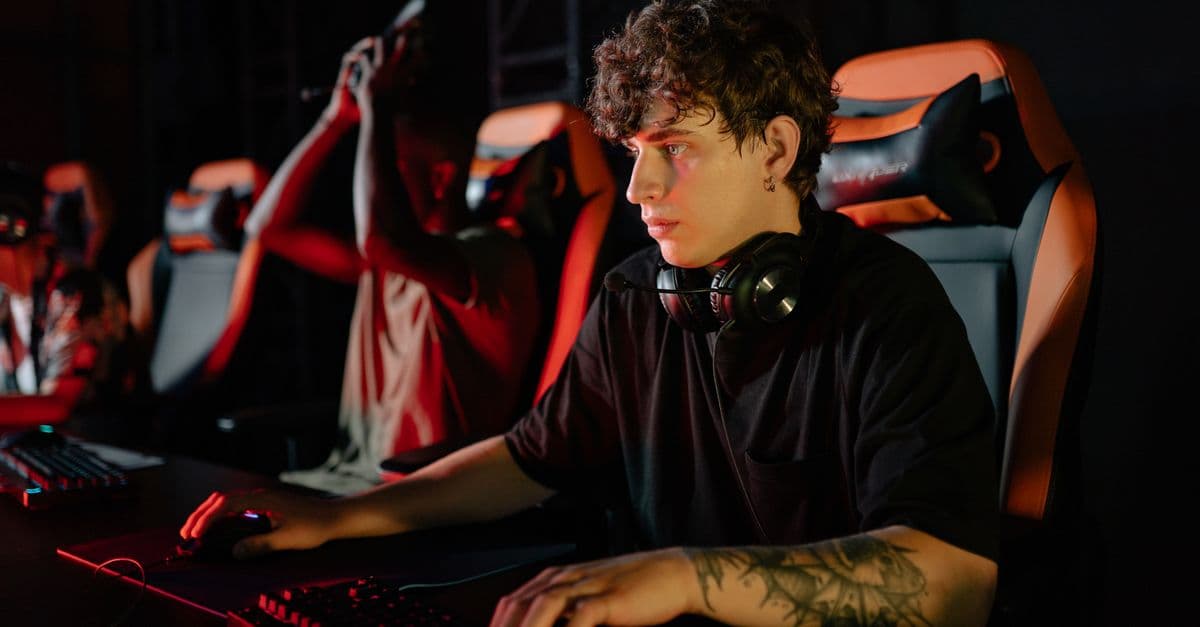
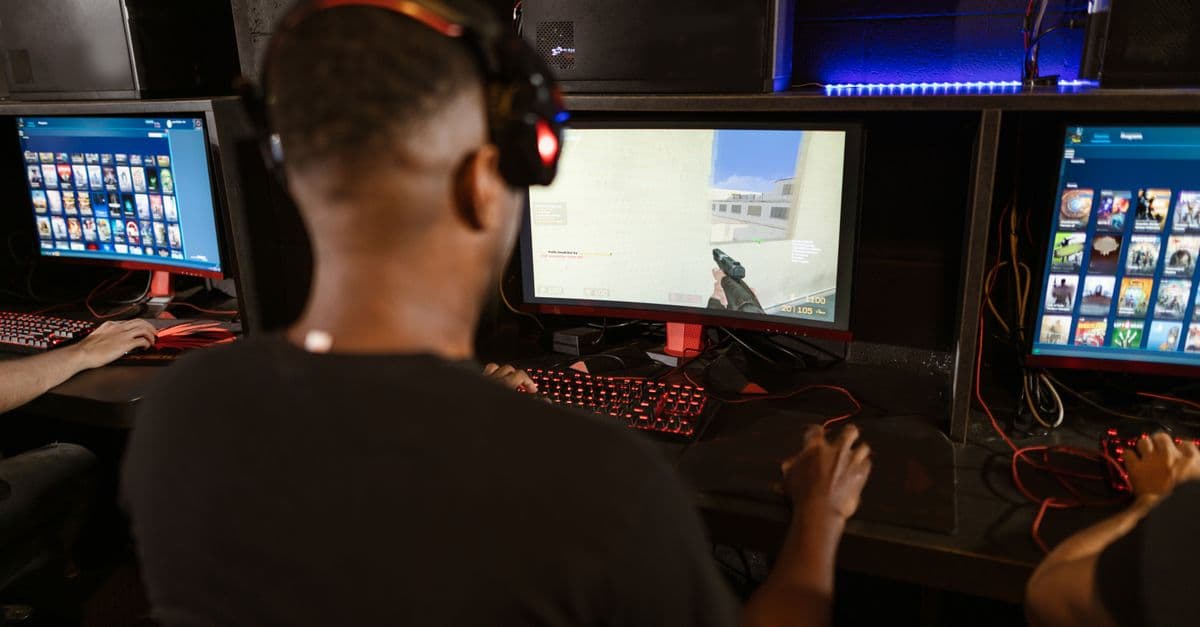
Photo: Yan Krukau / Pexels
For nearly a decade, Dota 2's annual world championship, The International, paid out more prize money than any other event in esports, and it did it through an idea no other major game has successfully copied: it let the players fund the prize pool themselves. That system peaked at $40 million in 2021, then collapsed to roughly $2.6 million by 2024 when Valve dismantled the mechanism that built it (Esports.net). Understanding why requires understanding both the game underneath the spectacle and the economics Valve built around it.
What Dota 2 actually is
Dota 2 is a multiplayer online battle arena (MOBA), a genre where two teams of five players each control a single hero and fight to destroy the enemy team's main structure, called the Ancient. It descends directly from Defense of the Ancients, a custom map for Warcraft III: The Frozen Throne first built by a modder known as Eul in 2003 and later refined for years by a pseudonymous designer called IceFrog (Liquipedia). Valve hired IceFrog in 2009, and after a three-year closed beta, released Dota 2 as a free-to-play standalone game on July 9, 2013 (Liquipedia: Dota 2).
That lineage matters because it explains why Dota 2 looks and plays the way it does. Unlike League of Legends, which Riot Games built from scratch with new players in mind, Dota 2 is a near-literal port of a fifteen-year-old mod, warts and all. Valve preserved mechanics that other MOBAs simplified or removed because the existing competitive community demanded continuity. The result is a game that rewards mastery disproportionately and punishes newcomers just as disproportionately.
Dota 2 is currently the fourth most-played game on Steam by concurrent users, averaging between 496,000 and 617,000 simultaneous players through the first half of 2026, with a single-day peak of 859,966 in late July 2026 (Esports.net Player Count Wiki). That's a durable core audience, but it's well below the all-time high of 1,295,114 concurrent players recorded on March 6, 2016 (Esports.net). The game is aging, stable, and shrinking slowly rather than growing — a pattern common to complexity-first genres that never chased mass-market accessibility.
How the mechanics create Dota's reputation for difficulty
Every MOBA shares a basic skeleton: heroes with unique abilities, lanes where minions fight automatically, and towers that must fall before the base can be attacked. Dota 2 keeps every layer of complexity that genre siblings trimmed away, and it adds several unique to itself. The result is a game commonly cited by professional players and analysts as having the steepest learning curve in mainstream esports.
Consider the hero pool alone. Dota 2 currently has over 120 playable heroes, each with four or more unique abilities, and most of those abilities interact with dozens of items and with each other in ways that are not explained anywhere in the client. Compare that to chess, where 32 pieces of six types create emergent complexity through position rather than ability text: Dota 2's complexity comes from combinatorics, not position. A support hero's slow interacting with a carry's critical strike, timed against an enemy's spell immunity window, is the kind of interaction a new player will not discover through the tutorial. They discover it by losing to it.
What is last-hitting and denying in Dota 2?
Last-hitting means landing the killing blow on an enemy creep (a computer-controlled unit) to earn gold; only the player who deals the final blow gets paid. Denying is Dota's unique twist: players can kill their own low-health creeps to deprive the enemy of that gold and experience entirely. No other major MOBA lets you attack your own units for strategic value, and mastering deny timing is one of the clearest skill dividers between amateur and professional play.
Why do items matter more in Dota 2 than in League of Legends?
Dota 2's item shop contains dozens of components that combine into complex final items, many with active abilities a player must manually trigger at the right moment, not passive stat boosts. Because Dota has no auto-buy or recommended-build shortcuts that professionals use, item timing and combination knowledge is a distinct, trainable skill separate from mechanical execution, and it shifts every patch.
Mana management adds another layer most competing MOBAs simplify. Casting spells costs a limited resource that regenerates slowly, so a hero who runs out of mana becomes nearly useless in a fight, forcing constant resource-tracking on top of positioning and targeting. Layer in Roshan, a neutral boss creature that drops an item allowing a dead hero to instantly respawn, and the game constantly forces objective trade-offs: do you fight for a five-person advantage now, or split resources to secure Roshan for a later swing?
The economics of The International
The International's funding model was Dota 2's single most consequential innovation, more influential on the broader esports industry than any specific balance patch. Starting in 2013, Valve sold a cosmetic-and-content bundle called the Compendium, later renamed the Battle Pass, and committed 25% of net revenue from those sales directly to the tournament's prize pool (GosuGamers). Millions of players, most of whom would never attend or even watch the full tournament, effectively became micro-investors in the prize pool simply by buying a $10 season pass for themselves.
The system worked spectacularly for eight years. The table below tracks the trajectory.
The International prize pool by year (selected)
| Year | Prize pool | Notable detail |
|---|---|---|
| 2011 | $1.6 million | Valve-funded, no crowdfunding yet |
| 2013 | $2.87 million | First Compendium crowdfunding |
| 2017 | $24.8 million | Battle Pass model matures |
| 2019 | $34.3 million | Peak pre-pandemic growth |
| 2021 | $40.0 million | All-time record, largest esports prize pool ever awarded |
| 2024 | $2.6 million | Valve discontinues Battle Pass crowdfunding |
| 2025 | $2.88 million | Slight recovery, still down roughly 93% from peak |
Sources: Esports.net Prize Pool Tracker, Wikipedia: The International 2024, Wikipedia: The International 2025.
The 2021 record deserves a second look, because it illustrates how directly the crowdfunding mechanism translated community spending into prize money. That $40 million pool required roughly four million Battle Pass owners spending an average of around $30 each, once a portion of that spending routed through Valve's 25% commitment (Statista). No traditional sports league or other esport replicates this structure. The NFL's Super Bowl prize pool comes from broadcast rights and sponsorships negotiated top-down; The International's prize pool, at its peak, came from the bottom up, one cosmetic purchase at a time.
Then Valve changed the model. Starting with the 2024 tournament, the company moved away from the crowdfunded Battle Pass structure that had defined a decade of Dota's economy, and the prize pool cratered to roughly $2.6 million, the lowest total since crowdfunding began in 2013 (Esports.net). The 2025 tournament recovered slightly to about $2.88 million, still a fraction of the 2021 peak (Wikipedia: The International 2025). The lesson for the wider esports industry: a prize pool built entirely on optional cosmetic spending is only as durable as player enthusiasm for cosmetics, and that enthusiasm can decay even while the player base stays roughly stable.
Why the patch cycle keeps professional Dota unsolved
Valve updates Dota 2 through numbered "patches" that rebalance hero abilities, item costs, and map features, sometimes lightly and sometimes so aggressively that entire strategies used at one tournament are unplayable at the next. Major patches, often released a few months before The International to reset the competitive landscape, can shift dozens of heroes from unplayable to dominant in a single update.
This matters competitively in a way it's easy to underrate if you only follow more conservatively balanced games. In chess, the rules never change; mastery compounds indefinitely. In Dota 2, a professional player's encyclopedic knowledge of item timings and hero interactions can be partially reset every few months, forcing teams to relearn matchups rather than simply refining execution of matchups they already understand. This is closer to how professional poker players must adapt when a casino changes its rake structure or blind schedule, not eliminating skill, but changing which skills pay off.
The counterargument, and one balance designers make deliberately, is that this volatility prevents any single strategy from becoming permanently "solved." A slower patch cadence risks a metagame where the optimal draft and item build become public knowledge and static, reducing strategic variety even as mechanical skill differences persist. Dota's aggressive patch philosophy trades stability for freshness.
How often does Valve patch Dota 2?
Valve releases balance updates on an irregular schedule, ranging from minor tweaks every few weeks to major gameplay patches roughly two to four times per year. There's no fixed cadence comparable to League of Legends' predictable two-week patch cycle, which is itself a point of both criticism (teams can't plan around release dates) and praise (patches ship when ready, not on a marketing calendar).
What happened when an AI beat Dota's world champions
In April 2019, a research system called OpenAI Five, developed by OpenAI and trained using roughly 770 petaflop/s-days of compute over ten months, defeated the reigning Dota 2 world champions, Team OG, two games to zero in a best-of-three exhibition series in San Francisco (OpenAI). It was the first time an AI system had beaten a reigning world champion team in a major esports title, and during a subsequent multi-day public showcase, the system won 99.4% of its games against human challengers (The Register).
The achievement is a useful data point for exactly why Dota 2 has a reputation for complexity among researchers, not just players. OpenAI selected Dota 2, rather than a simpler game, specifically because its combination of long time horizons (matches run 30 to 60 minutes with consequences that compound), partial information (fog of war hides enemy positions), and a large, continuous action space made it a harder reinforcement-learning benchmark than most existing game AI challenges at the time (OpenAI technical report). A game simple enough for a human beginner to master in an afternoon would not have made for a meaningful AI research milestone; Dota 2's mechanical depth is precisely what made it useful as a test bed.
Regional competitive history and the professional scene
Dota's professional scene has never had a single dominant region the way League of Legends' competitive history has often centered on South Korea. Instead, championship-caliber teams have emerged in waves from Europe, China, the CIS region (Russia and neighboring former Soviet states), and Southeast Asia, with North American and South American teams competing but rarely reaching the top tier of International placements.
Chinese organizations have historically shown particular strength at The International, and European rosters, especially teams built around veteran cores that stay together across multiple seasons, have produced some of the tournament's most recognizable champions. Team rosters in Dota shift constantly; unlike traditional sports franchises, most competitive Dota organizations are built around a five-player core that can dissolve and reform under a different team name within a single off-season, making year-over-year brand loyalty harder to sustain than in franchised leagues like League of Legends' LCS or Call of Duty League.
Where the money actually goes for professional players
Beyond the widely publicized International prize pool, a professional Dota 2 career draws income from several separate sources, and understanding the split explains why some players remain financially secure even in years, like 2024, when the marquee tournament's prize pool shrinks dramatically.
- Tournament winnings: The International remains the single largest payday, but Valve and third-party organizers also run smaller Major and regional tournaments throughout the year with prize pools typically in the low millions collectively, providing income outside the August peak.
- Team salaries: Top organizations pay base salaries funded by sponsorships and organizational revenue, independent of tournament performance, giving players a floor income even during a losing season.
- Streaming and content: Professional players commonly stream practice and ranked matches on platforms like Twitch, earning subscription and donation revenue that can rival or exceed salary for the most popular personalities.
- Sponsorships: Individual endorsement deals with peripheral, apparel, and energy drink brands supplement team income, particularly for players with large personal followings independent of their team's results.
This diversified structure is part of why the 2024 prize pool collapse, while a genuine crisis for the tournament's prestige and headline appeal, did not immediately collapse the professional scene the way a similarly sized cut to a traditional sports league's revenue-sharing pool might.
Common misconceptions about Dota 2's difficulty and appeal
"Dota 2 is objectively harder than League of Legends." This claim gets repeated constantly but doesn't hold up to scrutiny as stated. Dota 2 has a higher raw mechanical ceiling in terms of ability interactions, item complexity, and manual actions per minute required at the top level. League of Legends demands comparably deep macro-strategic understanding, champion matchup knowledge across a roster of over 160 champions, and precise team coordination. "Harder" depends heavily on which specific skill — mechanical execution, strategic planning, or raw information processing — you're measuring, and professional players in both games would likely struggle in the other's competitive scene without significant retraining.
"Dota 2 is dying because the prize pool crashed." The prize pool collapse from $40 million to roughly $2.6 million between 2021 and 2024 reflects a change in Valve's monetization strategy for the Battle Pass, not a proportional collapse in the player base (Esports.net). Concurrent player counts have actually risen since 2023, from an average around 420,000-440,000 to over 600,000 in early 2026. Prize pool size and player base health are related but distinct metrics, and conflating them overstates the tournament's financial reset as an existential crisis for the game itself.
"Casual players can't enjoy Dota 2 at all." Valve added a faster game mode called Turbo, which speeds up gold and experience gain roughly 50% relative to standard matches, specifically to give newer or time-limited players a shorter, lower-commitment version of the core game. A steep learning curve for competitive mastery does not mean the game is unplayable casually; it means competitive relevance takes meaningfully longer to reach than in more streamlined MOBAs.
"Denying and mana management are just complexity for its own sake." Both mechanics create genuine strategic decisions rather than arbitrary friction. Denying forces support players to make real-time trade-offs between protecting their own creep wave's gold value and using that time to harass an enemy hero instead. Mana management forces spellcasters to sequence abilities rather than spam them freely, creating windows where a hero is temporarily vulnerable after committing resources. Removing either mechanic, as several genre competitors have done, measurably simplifies decision-making, which is a legitimate design choice, not an objectively superior one.
The takeaway
Dota 2's identity was never really about being the hardest MOBA for its own sake. It was about a design philosophy, inherited from a fifteen-year-old mod and preserved deliberately by Valve, that refused to trade depth for accessibility even as competitors did exactly that and captured larger audiences. The crowdfunded prize pool experiment proved, for nearly a decade, that a community could fund its own championship at a scale no sponsor-driven tournament matched, and its recent collapse proves just as clearly that bottom-up funding models carry risks fixed sponsorship structures don't. Both halves of that story, the peak and the crash, are part of the same underlying lesson: Dota 2 built its legacy on mechanisms, not marketing, and mechanisms can be undone as deliberately as they were built.
Frequently Asked Questions
Q: Is Dota 2 harder than League of Legends? A: It depends on which skill you measure. Dota 2 has a higher raw mechanical ceiling: more abilities per hero, an active-item system requiring manual triggers, and unique mechanics like denying and Roshan timing that League doesn't have. League of Legends demands comparably deep macro-strategic knowledge across a larger champion roster and tighter coordinated objective play. Professional players in each game would likely need significant retraining to compete at the top of the other.
Q: Why did The International's prize pool crash after 2021? A: Valve discontinued the Battle Pass crowdfunding model that had funneled 25% of cosmetic-bundle sales into the prize pool since 2013. Without that mechanism, the pool fell from a record $40 million in 2021 to roughly $2.6 million in 2024, the lowest total since crowdfunding began, before a small recovery to about $2.88 million in 2025 (Esports.net; Wikipedia: The International 2025).
Q: What is denying, and why does it make Dota 2 harder to learn? A: Denying is attacking your own low-health creeps (computer-controlled units) to kill them before the enemy team can get the gold and experience for the kill. It requires tracking enemy attack timing on a unit you don't control, then reacting within a narrow window, on top of managing your own last-hits. No other major MOBA includes this mechanic, and it's one of the clearest early skill gaps between new and experienced Dota players.
Q: How much money do professional Dota 2 players actually make? A: Income comes from four separate streams: tournament winnings, team salaries (funded independently by sponsorships), streaming revenue on platforms like Twitch, and individual sponsorship deals. This diversified structure is why the 2024 prize pool collapse, while a real blow to headline totals, didn't collapse the professional scene the way an equivalent cut to a single revenue source would.
Q: Did an AI ever beat professional Dota 2 players? A: Yes. In April 2019, OpenAI Five, a reinforcement-learning system trained by OpenAI over roughly ten months, defeated the reigning world champions, Team OG, 2-0 in a best-of-three exhibition series, then won 99.4% of games in a subsequent public showcase against human challengers (OpenAI; The Register).
Q: Is Dota 2's player base shrinking? A: No, it's grown modestly. Average concurrent players rose from roughly 420,000-440,000 in 2023 to between 496,000 and 617,000 through the first half of 2026, with a peak of 859,966 in late July 2026 (Esports.net). That's still below the all-time peak of 1,295,114 set in March 2016, but the trend since 2023 has been upward, not downward.
Q: What is Turbo Mode, and does it make Dota 2 more beginner-friendly? A: Turbo Mode is an official game mode that increases gold and experience gain roughly 50% relative to standard matches, shortening games and lowering the time investment needed to see meaningful hero progression. It doesn't remove Dota's mechanical complexity, but it gives newer or time-limited players a faster, lower-commitment way to learn the game's basics before attempting ranked, standard-length matches.
Q: How often does Valve rebalance Dota 2 through patches? A: Irregularly, ranging from small tweaks every few weeks to major gameplay-altering patches roughly two to four times a year, often timed a few months before The International. This contrasts with League of Legends' predictable two-week patch cycle, and it means Dota's competitive meta can shift more suddenly and unpredictably between tournaments.
Q: Where did Dota 2 originally come from? A: It descends from Defense of the Ancients, a custom map for Warcraft III: The Frozen Throne first created by a modder known as Eul in 2003 and later developed for years by a designer using the pseudonym IceFrog. Valve hired IceFrog in 2009 and released Dota 2 as a free-to-play standalone game on July 9, 2013, after a roughly three-year closed beta (Liquipedia: Dota 2).
Q: Will Dota 2 ever become as mainstream as League of Legends? A: Unlikely in the near term. Dota 2's design philosophy consistently prioritizes mechanical and strategic depth over onboarding ease, a tradeoff Valve has preserved rather than softened across more than a decade of updates. League of Legends was built from the ground up with accessibility as a design goal. Both approaches have proven commercially viable, but they serve different audiences, and nothing in either game's current trajectory suggests that gap closing.
Read next:
Follow new articles
Add SciHub101 to your feed reader to see new science and technology stories.
About the Author
SciHub101 is an independent science and technology publication founded and edited by Buğra Sözeri, a software engineer and app developer based in Türkiye. AI tools assist with drafting and research. Source documentation in the existing archive is uneven, and articles are being reviewed and corrected. The Editorial Team byline identifies editorial responsibility; it does not certify specialist or independent human review. Where we compare products, anything built by our own team is labelled as such — see the editorial guidelines and About page for how corrections and disclosures work.
Related Articles
League of Legends: The Esport That Became Mainstream
League of Legends became the world's most-watched esport, with Worlds 2024 peaking at 6.94 million viewers. Here's how a 2009 MOBA built that infrastructure.
Overwatch: Team Coordination and Hero-Based Gameplay
Overwatch revolutionized team shooters by emphasizing team composition over individual skill. Hero abilities enabled diverse playstyles and accessible gameplay.
Esports in 2026: The Rise of Competitive Gaming, Prize Pools, and Professional Careers
Esports revenue reached 1.38 billion USD globally in 2025 and is projected to 1.88 billion by 2027. Global peak concurrent viewership for major events (League of Legends Worlds, The International) routinely exceeds 100 million across all platforms, with esports tournaments distributing over 500 million dollars in prizes annually. The top 100 professional players earn 200,000 to 5 million USD annually, yet median esports player income remains 40,000 USD due to the sport's winner-take-most distribution. The esports industry now encompasses team ownership, sponsorships, media rights, coaching, sports science, equipment manufacturing, and esports venues. Professional gaming is no longer a niche pursuit; it is a legitimate career path, governed by contracts, physical training regimens, and psychological coaching. Understanding the scale, structure, and economics of esports reveals not a fad but a permanent entertainment medium comparable in revenue scale to professional tennis and growing faster than traditional sports.
Complete Gaming Guide 2026 — Technology, Design, Esports, and Psychology
The complete guide to gaming in 2026: how game engines work, gaming hardware, esports, game design psychology, industry trends, and what makes games engaging and addictive.