StarCraft: The RTS That Defined Esports in Korea
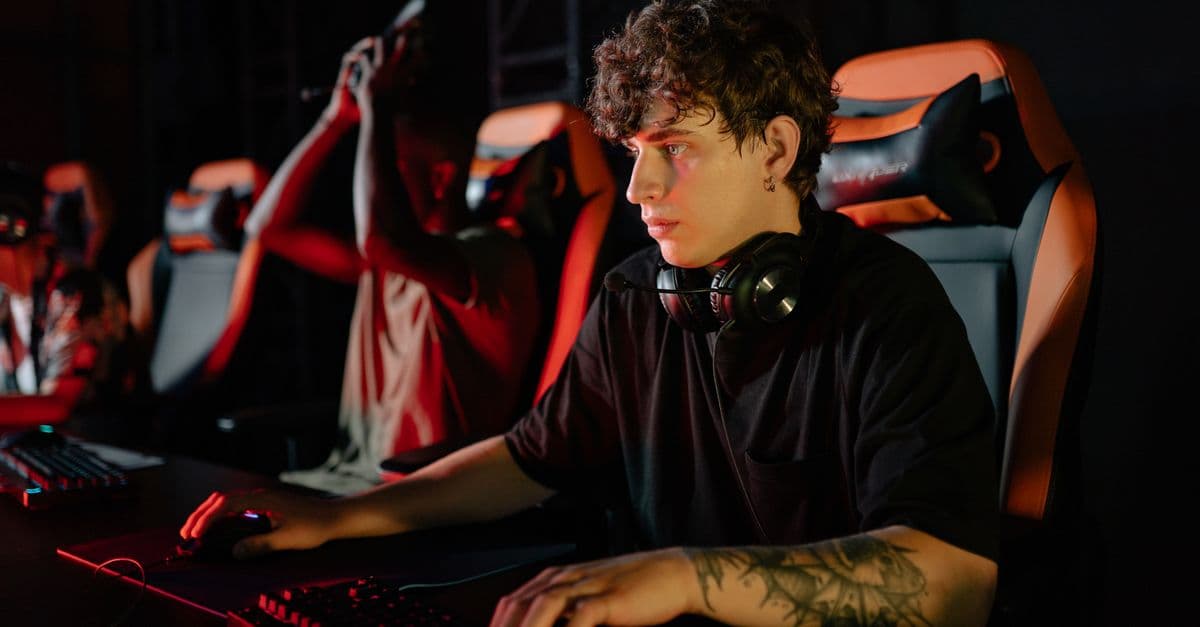
Photo: Matheus Bertelli / Pexels
In 1998, Blizzard Entertainment released StarCraft, a real-time strategy game built around three factions that had almost nothing in common mechanically, yet were tuned to be roughly equal in win rate. In South Korea, the game outgrew "video game" entirely. It became a televised national pastime, with dedicated cable channels, six-figure player salaries, and stadium crowds watching two people click a mouse. This piece breaks down how that balance actually worked, what the professional infrastructure looked like on the ground, and why the whole system nearly collapsed in 2010 before splintering into the niche legacy scene that survives today.
What made StarCraft's three factions different
StarCraft's factions were not reskins of the same unit roster with different paint. Each one solved the game's central resource problem, mineral and gas gathering, with a completely different economic and combat logic, which is what game designers call asymmetrical balance.
Terran plays like a fortified, mobile army. Marines, tanks, and buildings that can lift off and relocate give Terran players flexibility and strong defensive positioning, at the cost of a slower, more methodical economy.
Protoss fields small numbers of expensive, powerful units protected by regenerating energy shields. Losing a Protoss army hurts more because each unit costs more to replace, so Protoss strategy leans on efficient trades and technology advantages rather than sheer numbers.
Zerg is a swarm built on cheap units and the fastest economic expansion in the game. A Zerg player can out-produce both other races if left unchecked, which is why Zerg openings so often involve early aggression meant to prevent that snowball from ever getting the chance to form.
This is the first analogy worth sitting with: StarCraft's three races function like rock-paper-scissors, but each "throw" is itself a deep, ten-year-strategic-tree deep game. Terran generally has tools against Protoss's slow tech, Protoss generally punishes Zerg's early aggression if it survives the opening, and Zerg generally outraces Terran's methodical buildup if it isn't shut down early. No matchup is a coinflip, but no matchup is unwinnable either, and that structure is what let professional players specialize in one race for an entire career without hitting a ceiling.
Why is StarCraft so balanced when so many games struggle with balance?
Three distinct asymmetrical factions with completely different production, combat, and economic mechanics require extraordinary design discipline to keep in equilibrium. Blizzard's 1.08 patch achieved a balance stable enough that it went essentially unrevised through a decade of professional Korean competition, an outcome most competitive multiplayer games never reach even with constant patching.
Building the professional league system
Korea's StarCraft infrastructure did not happen by accident. It was built on top of an existing piece of national infrastructure: the PC bang, a pay-by-the-hour internet cafe that had spread across the country during the late-1990s broadband buildout. When home internet in most of the world was still dial-up, Korean PC bangs offered cheap, fast, always-on connections, and StarCraft's LAN-friendly, spectator-legible gameplay made it the default game people played there.
That created a large, engaged player base before anyone had built a business model around watching it. Two cable broadcasters filled that gap. OnGameNet (OGN) launched the OnGameNet Starleague (OSL) in October 1999, and it ran continuously for 34 seasons across 13 years, becoming the most prestigious individual tournament in Brood War according to Liquipedia's tournament archive (liquipedia.net/starcraft/Ongamenet_Starleague). MBCGame launched a rival tournament in 2002 under the name KPGA Tour, renamed the MBCGame StarCraft League (MSL) in 2003.
The Korea e-Sports Association (KeSPA) sat above both broadcasters as the regulatory body. KeSPA issued pro-gaming licenses, required for entry into the OSL and MSL, and organized Proleague, the team league that ran from 2003 through 2014 and that both broadcasters eventually co-produced starting in 2005 (liquipedia.net/starcraft/KeSPA).
Corporate sponsorship followed the audience, not the other way around. Samsung, SK Telecom, and KTF, three of Korea's largest telecoms and electronics conglomerates, funded full professional teams with salaried rosters, practice facilities, and dedicated coaching staff, treating StarCraft players the way a traditional sports franchise treats athletes.
| League | Operator | Format | Active years |
|---|---|---|---|
| OSL (OnGameNet Starleague) | OnGameNet | Individual, single-elimination bracket | 1999–2012 |
| MSL (MBCGame StarCraft League) | MBCGame | Individual, double-elimination bracket | 2002–2012 |
| Proleague | KeSPA / OGN / MBCGame | Team vs. team | 2003–2014 |
| ASL (Afreeca StarLeague) | AfreecaTV | Individual, post-KeSPA revival | 2015–present |
Table: Korea's major Brood War professional league structure, sourced from Liquipedia's tournament archives.
What separated an amateur from a professional
Watching a professional StarCraft match, the first thing that jumps out is speed. Elite Brood War players routinely posted actions-per-minute (APM) figures in the 300 to 400+ range during intense sequences, a mix of camera hotkey switches, unit selection, production queuing, and micro-adjustments during combat.
But APM was a means, not the goal, and this is the article's second analogy: APM is to StarCraft skill roughly what words-per-minute is to writing skill. A fast typist with nothing to say is still slower to produce a good essay than a slower typist who knows exactly what sentence comes next. Professional commentators and players alike have pointed out for years that a player executing 250 well-chosen actions per minute routinely beats a player mashing 450 actions per minute without a coherent plan behind them.
The two skill categories that actually separated pros were:
- Macro: base management, continuous worker and unit production, expansion timing, and keeping the economy running without gaps.
- Micro: real-time control of individual units in combat, including dodging area-of-effect attacks, focus-firing priority targets, and repositioning under fire.
The best players in Brood War history were strong at both simultaneously, which is mechanically brutal because macro (managing your whole base) and micro (controlling units in a fight happening somewhere else on the map) compete for the same attention and the same hands on the same keyboard at the same time.
How did Korean esports become mainstream while Western esports remained niche?
Korea's advantage was infrastructural and cultural, arriving years ahead of the rest of the world. Widespread PC bang broadband in the late 1990s gave Korea a dense, low-cost competitive-gaming venue network when most of the West still had dial-up. Cable broadcasters then treated StarCraft as programming, not a fringe hobby, normalizing it for a mainstream television audience roughly a decade before Twitch existed elsewhere.
Information, scouting, and the mind games underneath the mechanics
Brood War has no minimap reveal of the enemy base by default. What a player knows about their opponent's build comes entirely from scouting: sending a worker or a fast unit across the map early to physically look at what's being built. That single design choice turns every early game into an information contest layered on top of the mechanical one.
Professional openings were built around memorized, rehearsed sequences called build orders, exact timings for what building or unit gets produced and when. Because build orders counter each other in a rock-paper-scissors relationship (an early aggressive Zerg build beats a slow Protoss expansion, but loses outright to a Terran build that walls in and turtles), professional prep work involved scouting your specific opponent's known tendencies before the match even started, the same way a chess player studies an opponent's opening repertoire.
Deception mattered as much as detection. Pros learned to fake scouting patterns, delay obvious tells, and build decoy structures specifically to mislead an opposing scout, since a wrong read on an opponent's build order could lose the game before a single unit clashed.
The players who became national celebrities
A handful of Brood War players reached a level of fame in Korea that had no real precedent for a video game competitor anywhere else in the world at the time.
Lim Yo-hwan, known as "BoxeR," is widely credited as the player who turned Terran into a legitimate top-tier race and, with it, turned professional StarCraft into a viable career. Active from 1999 to 2010, he compiled a televised record of 500 wins against 336 losses across 836 broadcast matches, built a fan club that exceeded 600,000 members, and at his peak earned a salary reported to exceed $300,000 a year before endorsements (starcraft.fandom.com/wiki/Lim_Yo-Hwan).
Lee Young-ho, known as "Flash," is frequently cited by the Brood War community and outlets like ESPN Esports as the greatest Brood War player of all time. Flash posted roughly a 70 percent win rate across every individual matchup, held the longest reign atop the KeSPA player ranking system, tied for the most Starleague individual championships of any player, and earned career prize money exceeding $500,000 (espn.com/gaming/story/_/id/19570876/flash-all-brood-war; Liquipedia: Flash).
Jaedong (Lee Jae-dong) built his reputation as one of the most dominant Zerg players in Brood War history, known for explosive aggressive play in an era when Zerg was widely considered the hardest race to succeed with at the highest level.
Ma Jae-yoon, known as "sAviOr," was, before 2010, considered one of the most dominant Zerg players of his generation, and his career is inseparable from what happened next.
The match-fixing scandal that ended the golden era
On April 13, 2010, the Korean esports scene was rocked by revelations that a group of professional players had deliberately thrown matches for money. Investigators found that between September 2009 and February 2010, players had been approached by illegal online betting operations and paid to lose specific games, pocketing amounts KeSPA and Korean press reported at up to 6.5 million Korean won (roughly $5,400 at the time) in direct bribes, with some players making as much as 35 million won (roughly $29,000) betting against themselves (Liquipedia: Match Fixing Scandal).
Eleven players, including sAviOr, were permanently banned from professional play by KeSPA by June 9, 2010, and some faced criminal charges. Guinness World Records recognizes the incident as the first video game match-fixing scandal of its kind (Guinness World Records: First videogame involved in a match-fixing scandal).
Both the OSL and MSL individual leagues ended in 2012. Proleague, the team league, continued in a reduced form until 2014, when it too was discontinued, closing out what had been Brood War's fifteen-year run as Korea's flagship national broadcast esport.
StarCraft II and why it never replaced the original in Korea
Blizzard released StarCraft II: Wings of Liberty in 2010, rebuilding the game with modern graphics, a new engine, and a fresh single-player campaign while keeping the same three-race asymmetric structure. KeSPA and Korean broadcasters transitioned much of their professional infrastructure toward StarCraft II through the early 2010s, and it did build a genuine competitive scene, including Korean-dominated international tournaments through the mid-2010s.
But StarCraft II never reproduced the cultural saturation the original had in Korea. Part of that is timing: the shift happened at the same moment the match-fixing scandal was eroding sponsor trust and viewer goodwill in Korean StarCraft broadly. Part of it is competitive fragmentation: League of Legends launched in 2009 and rapidly became the dominant esport globally through the 2010s, pulling both sponsorship dollars and viewership away from RTS games generally. And part of it is specific to the original game's balance: many veteran Korean players and commentators have argued publicly, over years of retrospectives, that Brood War's unit control ceiling and matchup complexity were never fully matched by the sequel's more streamlined mechanics, though this is a subjective, frequently debated claim rather than a settled fact.
Is StarCraft still played professionally, or is it only nostalgia?
Both, depending on the game. StarCraft: Brood War has a real, ongoing competitive scene through the Afreeca StarLeague (ASL), run by streaming platform AfreecaTV since 2015, where legacy stars like Flash have continued to compete and win championships as recently as 2017. StarCraft II remains the more actively developed and internationally competitive title, but its audience is smaller than League of Legends or Dota 2 today, and Brood War's audience, while dedicated, is a fraction of its mid-2000s broadcast peak.
Why StarCraft succeeded where other RTS games failed as esports
Plenty of real-time strategy games came before and after StarCraft. Command & Conquer, Age of Empires, and Warcraft III all had competitive scenes. None reached StarCraft's scale, and the reasons are specific rather than mysterious.
The balance was unusually durable, which mattered because a professional scene needs years of stable strategy to develop deep expertise and rivalries fans can follow across a career, not a meta that gets reset by every patch. The infrastructure existed before the sponsorship did, since PC bangs had already built a mass audience of players who understood the game intimately before broadcasters ever needed to create demand from scratch. Broadcasters treated it as legitimate television programming from early on, with dedicated channels and structured seasons rather than occasional novelty coverage. And the game was, by design, unusually watchable: matches resolve in twenty to sixty minutes, key moments (an army wipe, a successful base trade, a comeback) are visually legible even to non-players, and the format compressed cleanly into broadcast television.
None of those four factors alone would have been enough. Balance without broadcast infrastructure produces a game respected by a small hardcore community. Broadcast infrastructure without balance produces a scene where the same strategy dominates every season and viewers get bored. StarCraft had both at the same time, in the one country that also had the internet infrastructure and cultural appetite to turn it into television.
What made Flash and Jaedong legendary players specifically?
Dominance sustained over exceptionally long careers by esports standards. Flash maintained a roughly 70 percent win rate across every individual matchup and the longest reign at the top of the KeSPA ranking system, a form of consistency that is rare in any competitive game where the meta keeps shifting. Jaedong achieved comparable sustained success playing Zerg, a race many considered the hardest to pilot to elite consistency, which is part of why his aggressive, high-risk playstyle is still referenced in Brood War commentary today.
Can StarCraft II ever match the original's cultural impact in Korea?
Unlikely, based on what happened between 2010 and 2014. Brood War's original cultural penetration in Korea, non-gamers recognizing pro player names, cable channels running 24-hour esports programming, came from a specific alignment of infrastructure, timing, and lack of competition that no longer exists. StarCraft II is a legitimate, internationally competitive esport, but it entered a far more crowded field, competing against League of Legends, Dota 2, and later mobile and battle royale titles for the same sponsorship dollars and viewer attention that Brood War once had almost entirely to itself.
Why is APM so heavily discussed in StarCraft, and does it actually predict who wins?
APM measures how many actions a player executes per minute, and it correlates with skill at the margins because Brood War genuinely rewards fast, precise multitasking across a large map. But it is not a reliable predictor of match outcomes on its own. Professional commentary and player interviews have repeatedly emphasized that decision quality, what to build, when to attack, where to scout, matters more than raw speed once a player clears a baseline mechanical threshold.
What is the difference between macro and micro in StarCraft, and why do both matter?
Macro refers to base-level management: worker production, expansion timing, and keeping unit production queues full without gaps. Micro refers to real-time control of units already on the field, positioning them to minimize damage taken and maximize damage dealt during a fight. Professional players had to run both simultaneously under time pressure, which is a large part of why the skill ceiling in Brood War is considered unusually high even among RTS specialists.
How did StarCraft's professional scene affect esports outside Korea?
It functioned as a proof of concept the rest of the industry pointed to for years afterward. Once Korean broadcasters demonstrated that a video game could sustain full television production, corporate sponsorship, and salaried athletes, organizations in other countries and other games, including League of Legends and Dota 2's international leagues, explicitly modeled parts of their own league and broadcast structures on what OGN and MBCGame had already proven worked.
Did the streaming era grow out of StarCraft, or was that a separate development?
AfreecaTV, the Korean streaming platform, was already broadcasting individual StarCraft players before Twitch existed in its current form, giving Korean audiences a way to watch professional and semi-professional players outside the scheduled OSL and MSL broadcasts. When AfreecaTV later became the operator of the post-KeSPA Afreeca StarLeague in 2015, it effectively folded the game's competitive legacy scene into the same platform, connecting Brood War's broadcast-television era directly to the streaming-first model that now defines most competitive gaming distribution worldwide.
What this means
StarCraft's Korean era was not an accident of one great game landing in the right country. It was a specific, and largely unrepeatable, stack of conditions: exceptionally durable competitive balance, a pre-existing mass audience built by PC bang infrastructure, broadcasters willing to treat gaming as real television years before anyone else did, and a design that made unstructured strategic depth watchable to a general audience. The 2010 match-fixing scandal showed how fragile that stack actually was, since sponsorship and trust, not the game's mechanics, turned out to be the load-bearing wall. What survived, a dedicated legacy scene on ASL and a genuinely competitive but smaller StarCraft II circuit, is smaller than the mid-2000s peak but proves the underlying game was never the problem. Twenty-five years later, competitive Brood War is still played at a level that professional pros of that era consider mechanically uncompromised, which is a rare thing to be able to say about any game a quarter-century after release.
Read next:
Follow new articles
Add SciHub101 to your feed reader to see new science and technology stories.
About the Author
SciHub101 is an independent science and technology publication founded and edited by Buğra Sözeri, a software engineer and app developer based in Türkiye. AI tools assist with drafting and research. Source documentation in the existing archive is uneven, and articles are being reviewed and corrected. The Editorial Team byline identifies editorial responsibility; it does not certify specialist or independent human review. Where we compare products, anything built by our own team is labelled as such — see the editorial guidelines and About page for how corrections and disclosures work.
Related Articles
Counter-Strike: From Mod to Defining Esport
Counter-Strike evolved from a free Half-Life mod into esports' longest-running competitive shooter. Here's how a bomb-defusal game outlasted every rival for 25 years.

World of Warcraft: The MMORPG That Changed Gaming
WoW proved MMORPGs could reach mainstream audiences. 12 million subscribers at peak, raid guilds, competitive PvP, and communities that transcended gaming.
Esports in 2026: The Rise of Competitive Gaming, Prize Pools, and Professional Careers
Esports revenue reached 1.38 billion USD globally in 2025 and is projected to 1.88 billion by 2027. Global peak concurrent viewership for major events (League of Legends Worlds, The International) routinely exceeds 100 million across all platforms, with esports tournaments distributing over 500 million dollars in prizes annually. The top 100 professional players earn 200,000 to 5 million USD annually, yet median esports player income remains 40,000 USD due to the sport's winner-take-most distribution. The esports industry now encompasses team ownership, sponsorships, media rights, coaching, sports science, equipment manufacturing, and esports venues. Professional gaming is no longer a niche pursuit; it is a legitimate career path, governed by contracts, physical training regimens, and psychological coaching. Understanding the scale, structure, and economics of esports reveals not a fad but a permanent entertainment medium comparable in revenue scale to professional tennis and growing faster than traditional sports.
Apex Legends: Battle Royale With Hero Abilities and Squad Mechanics
Apex Legends proved battle royales could emphasize teamwork and hero abilities. Squad-based gameplay with legend abilities created unique BR experience.
Dota 2: The Complex MOBA With Esports Largest Prize Pools
Dota 2 built esports' richest prize pool era through crowdfunding, then watched it collapse when Valve killed the Battle Pass model. Here's how the mechanics, the money, and the meta actually work.
League of Legends: The Esport That Became Mainstream
League of Legends became the world's most-watched esport, with Worlds 2024 peaking at 6.94 million viewers. Here's how a 2009 MOBA built that infrastructure.