Counter-Strike: From Mod to Defining Esport
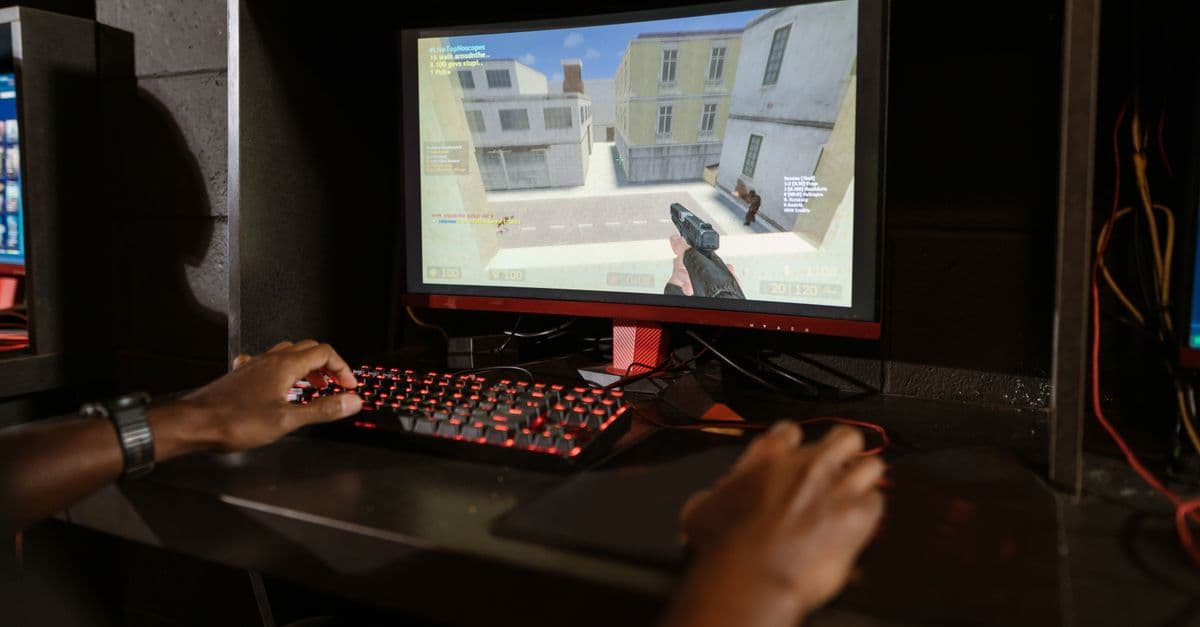
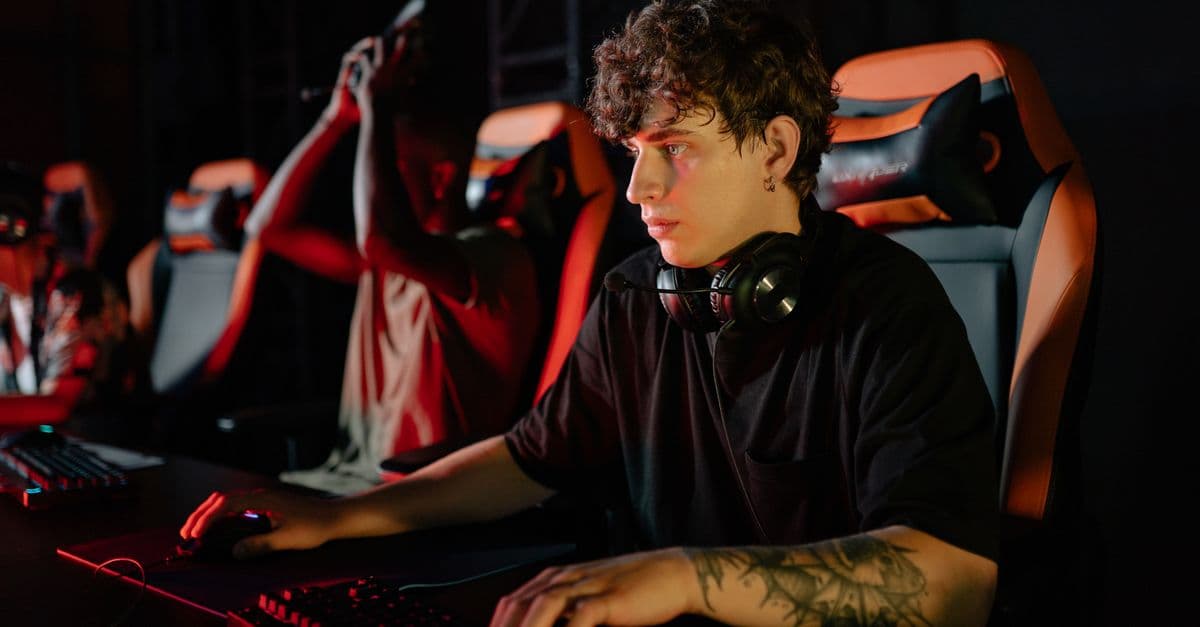
Photo: RDNE Stock project / Pexels
In January 1999, a Simon Fraser University student named Minh "Gooseman" Le and a collaborator named Jess Cliffe started building a bomb-defusal shooter as a free modification of Valve's Half-Life. They released Half-Life: Counter-Strike on June 19, 1999, with no publisher, no marketing budget, and no plan beyond finishing it (Wikipedia: Counter-Strike). Twenty-five years and four major engine generations later, Counter-Strike 2 draws crowds bigger than most traditional sporting events, with a single 2025 tournament match peaking at 1.79 million concurrent viewers (Esports Charts, BLAST.tv Austin Major 2025). This is the story of how that happened, and why the game's underlying economy is the real reason it never got old.
From student mod to Valve acquisition
Counter-Strike wasn't built in a studio. Le and Cliffe developed it on their own time, distributed it as a free download, and iterated based on direct feedback from the players using it (History of Counter-Strike, tradeit.gg). Each beta version shipped roughly monthly, and the community effectively co-designed the game by reporting what felt broken and what felt good.
That development loop is closer to open-source software than to traditional game design. Think of it like a restaurant that lets diners walk into the kitchen and tell the chef what's wrong with the sauce, every single night, for a year straight. Most of that feedback is noise. But a large enough sample of engaged, repeat customers eventually converges on something better than any single chef could have designed alone.
Valve noticed. On April 12, 2000, the company announced it had acquired the rights to Counter-Strike and hired both Le and Cliffe (Wikipedia: Counter-Strike). The first full retail release, Counter-Strike 1.0, shipped that November. What started as an unpaid side project became one of the best-selling PC games of the following decade, and Valve's ownership of both the game and the distribution platform (Steam, launched in 2003) gave it a direct pipeline to millions of players without needing a traditional publisher.
Why the economy system is the actual game
Most shooters of the late 1990s followed Doom's logic: more guns, more ammo, more kills, less friction. Counter-Strike inverted that. Every round, players buy weapons and equipment with in-game money earned from kills, bomb plants, and round wins. Die with unused money, and it's mostly gone. Win rounds, and your team can afford rifles, armor, and utility. Lose several in a row, and you're forced to "eco," buying cheap pistols and grenades while you rebuild your bank.
That single mechanic is why Counter-Strike plays more like poker than like a typical shooter. A team that's losing 3-round momentum doesn't just lose gunfights, it loses purchasing power, which compounds into losing more gunfights. The reverse is also true: a well-timed "force buy," spending everything on a desperate full-rifle push while the opponent is still on a cheap eco round, can flip a losing map in a single round. Professional teams build entire strategies around reading and manipulating this cycle, deciding when to save, when to force, and when an opponent's economy is weak enough to punish.
How does the Counter-Strike economy actually work?
Players start each half with a fixed amount of money and no weapons. Kills earn roughly $300, bomb plants and defuses earn bonuses, and winning a round earns significantly more than losing one, with loss bonuses that increase the longer a team's losing streak runs. The AWP sniper rifle costs $4,750, meaning a team often has to choose between one AWP or armor and utility for the whole squad.
Is Counter-Strike's economy realistic compared to other shooters?
No other major tactical shooter replicates it exactly. Valorant borrowed the round-based buy economy directly from Counter-Strike but layered hero abilities on top, while games like Call of Duty and Rainbow Six Siege use lighter, less punishing economic systems. Counter-Strike's economy is unusually harsh, which is precisely what makes its comebacks and collapses dramatic.
Inside the buy round: eco, force-buy, and the anti-eco read
Professional Counter-Strike analysts describe every round in economic terms before they describe it tactically, because the buy decision made in the first 15 seconds shapes everything that follows. There are effectively four buy states a team can be in: a full buy (rifles, armor, and utility for all five players), a half buy or "force buy" (spending most or all of the bank on cheaper rifles or SMGs despite not having a full budget), a light buy (pistols with upgraded armor and a grenade or two), and a full eco (pistols only, sometimes not even armor, deliberately sacrificing the round to rebuild the bank for the next one).
An eco round looks like a team giving up, and often it is treated that way by casual viewers. In reality it's a calculated trade: a team that just lost three straight rounds with rifles knows it cannot outgun the opponent's now-fully-stocked arsenal, so it accepts a near-certain loss this round in exchange for guaranteed money next round. The alternative, force buying every round to "keep pace," usually digs the hole deeper, since a rifle bought and immediately lost produces the same drop-weapon pickup problem for the opponent and leaves the forcing team with nothing to show for the spend.
The force buy is the riskier, higher-variance cousin of the eco. A team down on rounds and money sometimes buys anyway, betting that the opponent, flush with cash and playing loose after a winning streak, will get caught off guard by full aggression from players the opponent assumed would be on pistols. Because the forcing team is outgunned on paper, force-buy rounds are won disproportionately through surprise and aggression rather than gunfight discipline, and a single successful force can swing an entire half's momentum by denying the opponent the kills and plant/defuse bonuses that fund their next round.
This is also why "anti-eco" rounds exist as their own tactical category. When a team knows the opponent is almost certainly on a full eco, buying pistols and maybe one grenade, the well-funded team doesn't just walk in with rifles; it plans specific setups to avoid losing a rifle round to a lucky pistol pick, because giving up a full-buy rifle to a $200 opponent weapon is one of the most economically damaging outcomes in the game, handing the eco'ing team both a round win and a free rifle to sell or use. Reading these patterns, tracking an opponent's likely bank balance round by round, is a skill analysts and in-game leaders treat as seriously as aim or map knowledge, and it's a major part of what a coach or analyst desk breaks down when explaining why a team "should have known" a round was coming.
Rounds, momentum, and the weapons that define skill
Standard competitive Counter-Strike is played to a set number of rounds, with the CS2-era default of 24 rounds per match (12 per half, first to 13 wins) after Valve trimmed the traditional 30-round MR15 format down in 2023. Winning teams buy up; losing teams either save (bank money for a future round) or force buy (spend everything now, hoping to catch the opponent off guard). That ebb and flow, not raw kill counts, is what commentators and analysts track when predicting who wins a match.
The AK-47 and M4A4/M4A1-S rifles anchor each side's economy. The AK-47, used exclusively by the Terrorist side, kills with one headshot at almost any range but has a recoil pattern that climbs and drifts in a fixed, learnable shape. Professional players drill "spray control," small mouse movements that counteract that climb, for hours daily until the correction becomes muscle memory rather than a conscious calculation. It's the shooter equivalent of a pianist practicing scales until their fingers know the pattern before their brain finishes thinking about it.
The AWP occupies a different niche entirely. It one-shot kills almost anywhere on the body, costs more than half a full-rifle round's budget, and requires a player to hold a single sightline rather than move with the team. Because it commits so much of a team's economy and positioning to one player, professional rosters typically designate a single AWP specialist rather than rotating the weapon.
Grenades as a discipline: how utility became its own skill
For most of Counter-Strike's history, aim got the attention and grenades were treated as an afterthought, something to toss roughly toward the enemy before pushing. That changed as the professional scene matured. Smoke grenades, flashbangs, HE grenades, molotovs (Terrorist side) or incendiary grenades (Counter-Terrorist side), and decoys are now considered a distinct skill discipline with its own practice regimen, separate from raw aim training, and top players spend dedicated practice time on nothing else.
The core idea is the "lineup," a precise combination of standing position, crosshair placement, and throw strength that makes a grenade land in exactly the same spot every time, rather than approximately the same spot. A smoke that blocks a sightline by three pixels of gap is functionally useless; a smoke thrown from a lineup lands pixel-perfect and holds that sightline for the smoke's full duration. Professional players and their coaches maintain lineup libraries for every map in the competitive pool, and part of a new player's onboarding to a professional roster is memorizing dozens of these throws until they can execute them without looking at a guide mid-round.
That precision matters because of how positional Counter-Strike's five-versus-five structure is. A well-placed smoke can cut a bomb site in half, letting attackers cross open ground that would otherwise be watched by an angle with a clear kill shot. A flashbang thrown around a corner a half-second before a teammate peeks blinds a defender just long enough for a free kill, but thrown a half-second late or early, it does nothing and burns a grenade the team no longer has for the rest of the round. Molotovs and incendiary grenades deny space outright, forcing a defender out of a chokepoint or, in the post-plant phase, making it too costly for a defuser to approach the bomb without cover.
Counter-Strike 2's engine change reinforced how central this discipline had become. Valve rebuilt smoke grenades as volumetric, physics-simulated clouds that react to gunfire, explosions, and molotov fire burning through them, rather than a flat 2D sprite, and it added an in-game lineup reticle that lets players line up a throw using an on-screen ruler instead of memorizing pixel-precise crosshair placement against a wall texture. The change made grenade lineups more consistent across different monitor setups and resolutions, but it didn't reduce the skill ceiling; it shifted competitive advantage toward teams that understood which smokes interact with which other utility, since a molotov can now burn a hole through an opponent's smoke cloud in real time.
Because utility is expensive, a full grenade loadout for one player runs close to $1,000, on top of a rifle and armor purchase, using it well is inseparable from the economy discussion above. A team that spends its entire budget on rifles and skips utility is faster to full strength on paper but has no way to safely take space against a well-positioned defense. The teams that consistently win Majors are, almost without exception, the teams whose utility usage is most disciplined, not simply the teams with the best individual aim.
Team play, communication, and the professional scene it built
Individual aim wins duels. It does not win matches. Counter-Strike requires constant, precise communication: calling enemy positions, coordinating simultaneous pushes through multiple points on a map, and trading kills, where a teammate immediately punishes whoever just killed you before that player can reposition. A team with five great individual aimers and no communication routinely loses to a team with average aim and disciplined callouts.
That team-dependent structure is what made Counter-Strike a legitimate spectator sport rather than a highlight reel of individual plays. Early leagues like the Cyberathlete Professional League (CPL) and Electronic Sports World Cup (ESWC) in the early 2000s gave the game its first organized tournament structure, and Swedish organizations like SK Gaming and Ninjas in Pyjamas built the first generation of professional rosters with salaries and sponsorships.
The clutch: Counter-Strike's signature spectator moment
The single most replayed situation in Counter-Strike is the "clutch," a scenario where one surviving player faces multiple opponents and has to win the round alone. Because rounds have no respawns, a clutch carries genuinely all-or-nothing stakes: lose the duel and the round is over, win it and the tide of an entire map can turn. A 1-versus-5 clutch, the rarest and hardest version, has become the sport's defining highlight, the kind of moment that gets clipped, subtitled, and shared across YouTube and Twitch independent of whether a viewer follows competitive Counter-Strike at all.
That drama is a direct consequence of the no-respawn, round-based structure. In respawn-heavy shooters, a single elimination barely registers because the dead player is back in 10 seconds. In Counter-Strike, every death is permanent until the next round, so every individual duel carries the weight of the round, and every round carries the weight of the economy cycle described above. The format concentrates tension instead of diluting it.
Regional scenes and the players who built the sport's identity
Counter-Strike's competitive history is regional in a way few esports are. Sweden produced the sport's first sustained dynasty through SK Gaming and Ninjas in Pyjamas in the 2000s and early 2010s. Denmark followed with Astralis's Source 2-era dominance. Ukraine and the CIS region produced Natus Vincere (NAVI), whose 2021 roster won a Major and became one of the most commercially valuable teams in esports history. Brazil built a scene almost from nothing in the mid-2010s and produced back-to-back Major-winning rosters through organizations like SK Gaming's Brazilian lineup and later MIBR.
| Region | Defining era | Signature achievement |
|---|---|---|
| Sweden | 2000s–early 2010s | First professional CS dynasties (SK Gaming, NiP's 87-map win streak) |
| Denmark | 2017–2019 | Astralis wins four CS:GO Majors, three consecutive |
| Ukraine/CIS | 2021 | Natus Vincere wins PGL Major Stockholm with a near-flawless run |
| Brazil | 2016–2017 | SK Gaming's Brazilian roster wins back-to-back Majors |
| Mongolia | 2024–2025 | The MongolZ becomes a top-tier CS2 contender, drawing record regional viewership |
Table: Regional eras in competitive Counter-Strike, from CPL-era LAN tournaments to CS2's global Major circuit.
Player identity mattered as much as team identity. Names like GeT_RiGhT (tactical leadership), device (Astralis's statistical anchor for years), and s1mple (NAVI's individual-skill outlier, widely regarded as one of the best players the game has produced) became recognizable outside the scene entirely, with sponsorship deals, streaming income, and fan followings that rival mid-tier traditional athletes.
Skin gambling and the match-fixing problem
Counter-Strike's popularity created a second economy entirely separate from the in-game one: cosmetic weapon skins, introduced in 2013, which quickly acquired real-world monetary value through third-party trading and betting sites. Because skins could be wagered like currency on unregulated gambling platforms, and because many of those platforms had no age verification, the ecosystem attracted both underage gambling and match-fixing incentives.
The clearest example is the 2014 iBUYPOWER scandal. Four members of the then-top North American roster, Sam "DaZeD" Marine, Braxton "swag" Pierce, Keven "AZK" Larivière, and Joshua "steel" Nissan, were found to have thrown a match against an underdog opponent while distributing the resulting skin winnings among themselves (Wikipedia: Counter-Strike match-fixing scandal). Valve issued lifetime bans from its own events. ESL lifted its ban in 2017 and DreamHack followed later that year, but Valve kept the players out of its Majors for a full decade before finally lifting the ban, a decision that only became final in the mid-2020s (Dust2.us, iBUYPOWER bans eight years on).
The episode reshaped how the scene treats gambling-adjacent risk. Valve has since restricted third-party skin betting integrations tied to its own trading APIs and pushed legitimate tournament organizers toward transparent, licensed betting partnerships instead of the unregulated skin-gambling sites that defined the mid-2010s. The underlying tension, real-money value attached to cosmetic items owned by players who can also influence match outcomes, has not fully gone away, but the scandal remains the clearest cautionary case study in esports integrity.
Why do skins have real money value in Counter-Strike?
Valve lets players trade weapon skins through the Steam Community Market, which converts a purely cosmetic item into a tradeable asset with a real market price. Rare skins with low drop rates can sell for thousands of dollars, and that liquidity is what made third-party gambling and betting sites possible in the first place.
CS:GO, the decade that made Counter-Strike an industry
Counter-Strike: Global Offensive launched in August 2012, modernizing the visuals and interface while keeping the core round-based, economy-driven gameplay essentially intact. It's the version most people picture when they hear "Counter-Strike," and it's the version that turned the game from a niche competitive scene into a full commercial industry: franchise-adjacent leagues, dedicated broadcast talent, seven-figure prize pools, and an active skin marketplace running in parallel to the sport itself.
CS:GO's decade also produced the format most fans still associate with Counter-Strike: the Valve-sponsored Major, a quarterly-ish flagship tournament run by third-party organizers under Valve's oversight, with the winning team's name engraved into the community's collective memory the way a Grand Slam title works in tennis. The Major format is part of why Counter-Strike has a more legible, tradition-heavy history than most esports; there's a clean, countable list of who won what, going back to 2013.
Counter-Strike 2: the biggest technical shift in 20 years
Valve announced Counter-Strike 2 on March 22, 2023, and released it fully on September 27, 2023 (Valve Developer Community, Counter-Strike 2). It's built on Source 2, the engine Valve had already used for Dota 2, and it replaces CS:GO's traditional tick-based server architecture with a "sub-tick" system that processes player inputs (shoot, jump, move) at the exact moment they happened rather than snapping them to the nearest server tick.
That distinction sounds technical, but it matters competitively. In a tick-based system, two players who shoot within the same tick window can register in either order depending on network timing, occasionally producing outcomes that feel arbitrary. Sub-tick processing removes most of that ambiguity by recording the precise timestamp of an action rather than rounding it to the server's refresh interval. It's the difference between a stopwatch that only reads whole seconds and one that reads to the millisecond, the finish line doesn't move, but the measurement gets more honest.
CS2 also rebuilt smoke grenades as volumetric, physics-based objects that respond to gunfire and explosions rather than a flat sprite, and it reworked every competitive map's lighting and geometry on the new engine. The gameplay fundamentals, economy, weapon roles, round structure, carried over almost unchanged, which is why professional and amateur players alike could switch over without relearning the sport from scratch.
What changed between CS:GO and CS2?
The engine (Source 2 replacing the original Source engine), the netcode (sub-tick replacing fixed-tick simulation), and the visuals (rebuilt maps, volumetric smoke, updated lighting) all changed. The economy, weapon balance, and round-win conditions stayed close enough to CS:GO that professional strategy and individual mechanical skill transferred directly.
From LAN whispers to global broadcasts: how production caught up to the game
Counter-Strike's broadcast infrastructure grew up alongside the game itself, and for years the two moved at very different speeds. Early 2000s tournaments like the Cyberathlete Professional League relied on local LAN commentary with minimal production value, no dedicated overlay showing round economy or player equipment, and often no reliable way for remote fans to watch at all. The community solved part of that problem itself: two Danish students, Per "Nomad" Lambæk and Martin "Martin" Rosenbæk, launched HLTV.org on April 11, 2002, originally as a way to help fans find and watch matches between top teams, and it grew into the sport's de facto statistics, news, and demo archive over the following two decades (HLTV.org, 20 years of HLTV.org). A demo library, added in July 2003 starting with recordings from an ESWC tournament, let fans rewatch full matches after the fact instead of relying on secondhand highlight clips, and the site has since hosted more than 70,000 uploaded demos (HLTV.org, 20 years of HLTV.org).
The bigger production leap came from GOTV, Valve's built-in spectator and broadcast relay system, which tournament organizers used to route live match feeds to casters and, eventually, to the public. A 2014 update added direct caster audio integration to GOTV spectator streams, letting broadcast commentary sync cleanly with the in-game camera and overlay rather than being bolted on as a separate audio track (HLTV.org, 20 years of HLTV.org). That kind of infrastructure work is invisible to most viewers, but it's what allowed tournament organizers to build the layered broadcast experience competitive Counter-Strike now runs: a live round-economy tracker, a kill feed, a radar showing player positions and utility, and a caster feed all synced to the same moment in the match.
On-air talent professionalized in step with the infrastructure. Play-by-play casters and analyst desks moved from ad hoc LAN booths to full studio productions with dedicated desk segments, replay breakdowns, and pre- and post-match analyst panels, a format borrowed loosely from traditional sports broadcasting. Major tournament organizers like ESL and PGL now field desk shows with multiple analysts breaking down draft decisions, economy reads, and utility usage between maps, treating tactical analysis as its own broadcast segment rather than something casters squeeze in between kills. HLTV itself extended into video content beyond its news and stats site, running its own shows with rotating hosts and analysts to cover results and storylines between events (HLTV.org, 20 years of HLTV.org).
That production maturity is a big part of why Counter-Strike Majors now draw traditional-broadcast-scale audiences. A viewer who has never played the game can follow along because the overlay tells them who has the money advantage, who has utility left, and what a clutch situation actually means, work that two students running a fan site out of Denmark had no way to do in 2002, and that LAN organizers in the CPL era had neither the bandwidth nor the tooling to attempt.
Viewership records and what they mean for the sport's health
Counter-Strike's audience has grown, not shrunk, in the CS2 era, contrary to a common assumption that the engine switch would fracture the playerbase. The PGL Major Copenhagen 2024 final peaked at 1.8 million concurrent viewers, itself a CS2-era record at the time (Sportskeeda). The BLAST.tv Austin Major 2025 broke that record with a peak of 1.79 million viewers on its most-watched match and 76.1 million hours watched across the event, streamed simultaneously across Twitch, Kick, YouTube Live, Facebook Gaming, and TikTok (Esports Charts). Prize pools for individual Majors in 2025 sat at $1.25 million each, a figure that has stayed remarkably stable across the CS:GO-to-CS2 transition rather than spiking or collapsing (Esports Charts, StarLadder Budapest Major 2025).
For a genre that most industry analysts expected to have a five-to-ten-year competitive shelf life, that kind of sustained, cross-generational audience growth is unusual. League of Legends and Dota 2 remain larger in some viewership metrics, but neither has undergone a full engine rebuild mid-lifecycle and kept its audience intact the way Counter-Strike has.
What people get wrong about Counter-Strike's staying power
The most common misconception is that Counter-Strike survives on nostalgia, that its audience is aging alongside the 1.6-era veterans who first watched CPL broadcasts in the early 2000s. The viewership data doesn't support that. Teams like The MongolZ, a Mongolian roster with almost no competitive history before 2023, became one of the most-watched teams in the sport within two years, drawing audiences that skew toward newer, regionally distinct fanbases rather than legacy CS:GO viewers (Esports Charts, Top CS2 tournaments of 2025).
A second misconception treats the AWP and AK-47 as simply "the best guns" rather than as economic decisions. Their power level is inseparable from their cost. An AWP that one-shots anywhere on the body would be broken at a $2,000 price point; at $4,750, it's a commitment that trades team-wide firepower for single-player precision. Removing the economic framing from any weapon discussion misses why Counter-Strike's balance has held up across 25 years without the wholesale weapon reworks common in other live-service shooters.
A third misconception is that skin gambling and match-fixing were solved by the iBUYPOWER bans. They reduced the most blatant form of the problem among top-tier Western rosters, but unregulated third-party gambling sites tied to skin economies remain an active concern for tournament organizers and regulators, particularly as CS2's skin market has grown alongside its viewership.
The takeaway
Counter-Strike's core insight, still true 25 years after Minh Le and Jess Cliffe shipped a free mod, is that scarcity creates drama better than abundance does. A round-based economy where money, weapons, and lives are all finite and non-renewing forces every decision to carry weight, which is exactly the ingredient that turns a shooter into a spectator sport. CS2's sub-tick netcode and Source 2 visuals modernized the delivery, but the underlying design, buy or save, push or hold, clutch or die, hasn't needed a fundamental rework since 1999. That's rare in software, and it's the real reason a game built by two students with no publisher outlasted almost everything that tried to copy it.
Read next:
Follow new articles
Add SciHub101 to your feed reader to see new science and technology stories.
About the Author
SciHub101 is an independent science and technology publication founded and edited by Buğra Sözeri, a software engineer and app developer based in Türkiye. AI tools assist with drafting and research. Source documentation in the existing archive is uneven, and articles are being reviewed and corrected. The Editorial Team byline identifies editorial responsibility; it does not certify specialist or independent human review. Where we compare products, anything built by our own team is labelled as such — see the editorial guidelines and About page for how corrections and disclosures work.
Related Articles
Half-Life: Blending Narrative and FPS Into Cinematic Experience
Half-Life proved FPS games could tell complex stories without cutscenes. Gordon Freeman's silent protagonist became iconic, blending action and narrative.
StarCraft: The RTS That Defined Esports in Korea
StarCraft became Korea's national esport, broadcast on TV, played professionally for decades. Perfect balance between three factions created the template for competitive RTS.
Esports in 2026: The Rise of Competitive Gaming, Prize Pools, and Professional Careers
Esports revenue reached 1.38 billion USD globally in 2025 and is projected to 1.88 billion by 2027. Global peak concurrent viewership for major events (League of Legends Worlds, The International) routinely exceeds 100 million across all platforms, with esports tournaments distributing over 500 million dollars in prizes annually. The top 100 professional players earn 200,000 to 5 million USD annually, yet median esports player income remains 40,000 USD due to the sport's winner-take-most distribution. The esports industry now encompasses team ownership, sponsorships, media rights, coaching, sports science, equipment manufacturing, and esports venues. Professional gaming is no longer a niche pursuit; it is a legitimate career path, governed by contracts, physical training regimens, and psychological coaching. Understanding the scale, structure, and economics of esports reveals not a fad but a permanent entertainment medium comparable in revenue scale to professional tennis and growing faster than traditional sports.

Valorant: Tactical Precision Meets Ability-Based Gameplay
Valorant combines Counter-Strike's tactical depth with hero abilities. Perfect accuracy required but abilities provide strategic alternatives to pure mechanical skill.
Dota 2: The Complex MOBA With Esports Largest Prize Pools
Dota 2 built esports' richest prize pool era through crowdfunding, then watched it collapse when Valve killed the Battle Pass model. Here's how the mechanics, the money, and the meta actually work.
Complete Gaming Guide 2026 — Technology, Design, Esports, and Psychology
The complete guide to gaming in 2026: how game engines work, gaming hardware, esports, game design psychology, industry trends, and what makes games engaging and addictive.