Valorant: Tactical Precision Meets Ability-Based Gameplay

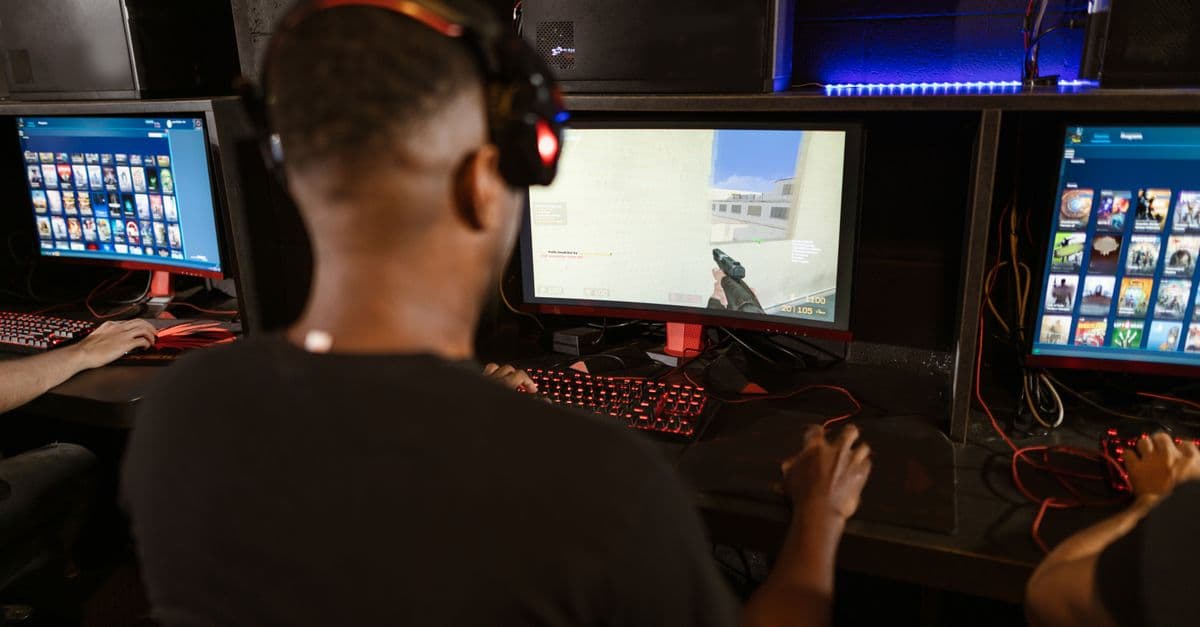
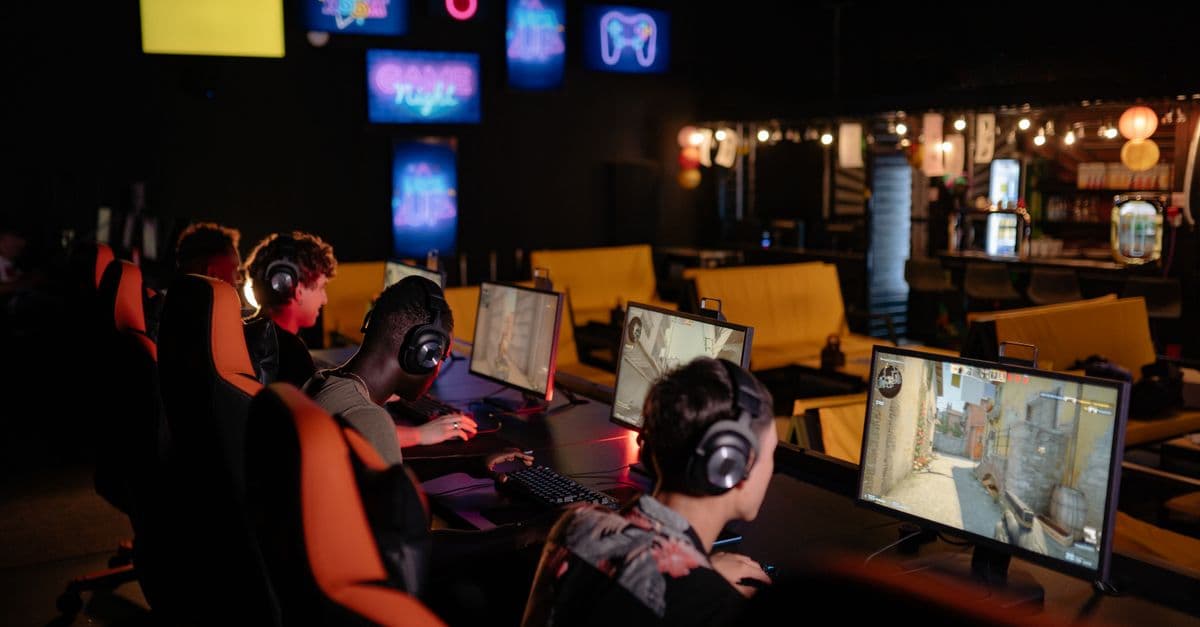
Photo: Tima Miroshnichenko / Pexels
In June 2020, Riot Games (the studio behind League of Legends) released Valorant into a tactical shooter market that Counter-Strike had defined alone for two decades. The game fused Counter-Strike's round-based economy and one-life-per-round tension with hero abilities borrowed from the MOBA and hero-shooter genres, an experiment few thought could hold up at the professional level.
Within months, organizations that had built their reputations in Counter-Strike and League of Legends — Sentinels, Fnatic, 100 Thieves, DRX — assembled Valorant rosters. Within four years, Riot's Valorant Champions Tour had grown into a franchised, multi-region league with tournaments drawing seven-figure viewership. By 2026, Valorant sits alongside Counter-Strike 2 as one of the two dominant tactical shooters in global esports, rather than the pretender many expected it to be.
This piece breaks down how Valorant's specific mechanical systems work, why its ability-based design didn't collapse the tactical shooter formula the way skeptics predicted, and where the game still trails its 25-year-old rival.
Tactical Foundation: The Economic System From Counter-Strike
Buy system — an economic game mechanic in which teams earn in-game currency through kills, plants, defuses, and round wins, then spend that currency between rounds on weapons, armor, and ability charges. Every purchase decision creates a resource trade-off that ripples into future rounds.
Valorant adopted Counter-Strike's buy-round logic almost intact:
- Limited ammunition per round; no unlimited spray or regenerating clips.
- Weapons and armor are bought between rounds from a loadout menu, not found on the map.
- Economic management determines whether a team can afford rifles, mid-tier "half-buys," or is forced into a cheap "eco" round.
- Eco rounds deliberately sacrifice a round's win chance to bank money for a stronger buy later.
- A single buy decision can shape the outcome of the next two or three rounds, not just the current one.
The mechanic's appeal is the same one that has kept Counter-Strike alive since 1999: it punishes both greed and excessive caution. A team up 3-0 in rounds can still lose momentum if the trailing team correctly reads the economy and force-buys rifles while the leader is still buying conservatively. Valorant's twist is a slightly more generous money curve than Counter-Strike's, which speeds up the economic swings so a 13-round match (first to 13, win by 2) can turn on two or three key economic reads rather than the slower grind of Counter-Strike's historically longer 30-round format. Valve shortened Counter-Strike's own match length to 24 rounds with Counter-Strike 2's 2023 launch, narrowing that gap.
Agent Abilities: How Roles Reshape Tactical Decision-Making
Agent — a playable character with four abilities: three are purchased with in-game currency at the start of a round and can be held in reserve, while the fourth ("ultimate") charges through orbs picked up on the map or kills, and typically has round- or game-changing impact.
As of 2026, Valorant has 29 released agents divided across four roles, each of which forces a different tactical approach:
Duelists (Jett, Phoenix, Reyna, Raze, Yoru, Neon, Iso, Waylay) are built for entry fragging — the job of being first through a doorway or chokepoint to create space for teammates. Jett's dash lets her reposition mid-fight; Phoenix can heal through a solo push; Reyna can blind herself free of a bad angle.
Controllers (Omen, Astra, Brimstone, Viper, Harbor, Clove) deny information by blocking sightlines with smokes, walls of water, or vine growth. A controller's smoke placement on defense can single-handedly determine which of two bomb sites a defending team can realistically hold.
Sentinels (Sage, Cypher, Killjoy, Chamber, Deadlock, Vyse, Veto) specialize in area denial and flank protection — trip wires, turrets, and slow fields that punish attackers who try to rotate behind a defense.
Initiators (Sova, Breach, Skye, Fade, Gekko, Tejo, Iso's predecessors) open sites for a team by revealing enemy positions or disabling their aim with flashes and concussion grenades before a push begins.
This role split forces roster construction decisions that didn't exist in Counter-Strike, where all five players use identical characters. A team cannot run five duelists without giving up smokes, information, and flank security — composition itself becomes a strategic layer, decided map by map based on what sightlines and chokepoints a given map offers.
The most surprising fact in Valorant's design: every ability is cooldown- or currency-gated. A Sage healing orb or Cypher trip wire cannot simply be spammed — abilities cost credits from the same budget used for weapons, which means a team maxing out utility every round is quietly starving its own rifle budget.
Accuracy Requirements and Mechanical Skill
Despite the ability layer, Valorant is a headshot-first game at every competitive level:
- Hitboxes: A headshot from most rifles is a one-hit kill; body shots typically require two hits. Missing a first shot against an equally-geared opponent is usually fatal.
- Spray control: Holding the trigger produces a fixed, learnable recoil pattern per weapon; controlling it is a matter of repetition and muscle memory, not randomness.
- Crosshair placement: Professional players pre-aim head height at common angles before an opponent appears, rather than tracking and reacting after the fact.
- First-shot accuracy: Standing still and firing the first bullet is far more accurate than moving-and-shooting, which is why professional duels are frequently decided by who stops moving first.
Valorant's own weapon and ability data — cooldown timers, credit costs, damage values — is published by Riot in the game's in-client patch notes and on the official Valorant news site, letting players and analysts calculate exact trade-offs rather than estimate them.
Ability-Mechanical Balance: No Single Dominant Strategy
Riot's stated design goal, repeated across multiple official developer video updates, is that abilities should create options rather than replace aim. In practice:
- Smokes give a team a way to cross open ground without winning a gunfight, but they buy time, not victory — the opposing team can still hold an angle at the edge of the smoke.
- Healing (Sage, Skye) keeps a team's mechanical players alive longer in extended engagements, extending fights rather than avoiding them.
- Crowd control (Breach's concussion grenades, Fade's Prowlers) briefly disables enemy aim and movement, converting a 1-for-1 gunfight into a near-guaranteed trade.
- Recon tools (Sova's drone, Cypher's cameras) reveal enemy positions without requiring a kill, shifting information-gathering away from pure map sense.
Even with all of that utility, aim remains the deciding factor in most individual duels — abilities change when and where a duel happens, not whether the better shooter usually wins it. That is the balance Riot has tried to hold: mechanical skill is necessary but not, by itself, sufficient to win consistently against a team using abilities well.
Professional Adoption and the Valorant Champions Tour
Valorant's path from a beta client to a fully franchised global league was unusually fast by esports standards.
2020–2021: Professional rosters formed organically as players migrated from Counter-Strike, Overwatch, and other titles. Early tournaments ran on an open circuit model with no permanent team slots.
2022–2023: Riot announced the franchised Valorant Champions Tour (VCT), assigning permanent, non-relegatable slots to partner organizations. According to Riot's own 2023 franchising announcement, 30 partner teams were confirmed across three regional leagues — 10 each in Americas, EMEA, and Pacific — plus a China league added later in 2024.
2024–2026: Regional competition stabilized around Kickoff, two Stage splits, regional Masters qualification, and an annual international Champions event, typically held in August or September.
Prize pools: According to prize-pool tracking site The Spike and official VCT announcements, 2025's major international events alone totaled roughly $4.75 million: $1,000,000 for Masters Toronto and $2,250,000 for Champions 2025 in Paris, on top of regional Stage prize pools of $250,000 apiece in Americas, EMEA, and Pacific. That is smaller than Counter-Strike's flagship Major, which regularly exceeds $1 million on its own and runs alongside a broader ecosystem of six-figure tournaments, but VCT's totals have grown every year since franchising began.
Franchising gave partner organizations multi-year revenue certainty that circuit-based esports leagues rarely offer — a structural bet Riot made after watching its own League of Legends franchising model succeed commercially.
Viewership and Mainstream Growth
Valorant's viewership numbers now rival established traditional-sports-adjacent esports.
According to Esports Charts, Valorant Champions 2024 in Seoul drew a combined peak of 1.41 million concurrent viewers across Twitch, YouTube, and TikTok during its EDward Gaming vs. Team Heretics grand final, with an event average of roughly 442,000 viewers across its 106-hour broadcast — the second-highest peak in Champions history behind Champions 2022 in Istanbul. Riot's own internal figures, which include platforms not tracked by third-party services (notably Chinese streaming platforms), reported a peak above 3 million viewers for the same event.
For comparison, Counter-Strike 2's PGL Major Copenhagen 2024 — the first CS2 Major after Valve's 2023 relaunch of the franchise — peaked at 1.85 million concurrent viewers during its NAVI vs. FaZe Clan final, per HLTV and Esports Insider tracking, making it the third-highest-viewed Counter-Strike event ever recorded. Both games now regularly clear seven-figure peaks for their flagship events, a viewership tier that was, as recently as 2019, reserved almost exclusively for League of Legends' World Championship.
Regional Competition and Distinct Playstyles
Valorant's four VCT regions have developed visibly different competitive identities, mirroring how regional playstyles diverge in traditional international sports.
Pacific (Japan, South Korea, Southeast Asia, and — since 2024 — a separate China league) has produced some of the sport's most mechanically disciplined rosters. Korean and Japanese organizations, including EDward Gaming (China) and Paper Rex, have repeatedly reached Champions finals, reflecting the deep esports infrastructure already built around League of Legends and StarCraft in the region.
EMEA (Europe, Middle East, Africa) inherited much of its player base directly from Counter-Strike, giving the region an aggressive, utility-forward playstyle. Organizations like Fnatic and Team Heretics have been consistent international contenders.
Americas (North and South America) produced the biggest individual stars of Valorant's early years — Sentinels' TenZ chief among them — and tends toward duelist-heavy, high-pressure early rounds, though the region has trailed Pacific and EMEA at recent international finals.
China, added as its own VCT league in 2024, gives Riot direct access to one of gaming's largest live audiences and mirrors the separate China league structure Riot already runs for League of Legends.
Notable Professional Players
TenZ (born Tyson Ngo) became Valorant's first breakout mechanical star while still playing on a Cloud9 loan to Sentinels; Sentinels later paid a reported $1.25 million transfer fee to sign him outright, one of the largest player transfers in Valorant history, according to VLR.gg financial reporting. His salary has never been officially disclosed by either organization, and public estimates from esports finance trackers put it in the low-to-mid six figures annually before streaming and sponsorship income — worth noting because inflated, unsourced salary figures circulate widely in Valorant discourse and should be treated skeptically.
Derke (Nikita Sirmitev), Fnatic's longtime duelist, has been named EMEA MVP in multiple VCT seasons and is widely credited by regional analysts with popularizing an aggressive, high-risk Jett playstyle that other European duelists later copied.
Chronicle (Timofey Khromov), formerly of Fnatic and now competing for other organizations, is frequently cited by coaches and analysts as redefining the sentinel role — using camera and trip-wire placement as an active information tool rather than a purely passive defense.
These are the players Valorant's broadcast ecosystem has built around, but it's worth being precise about what's verifiable: attendance and viewership figures come from Riot and third-party trackers like Esports Charts and HLTV; salary and transfer-fee figures, outside a handful of publicly confirmed transfer deals, are largely industry estimates rather than official disclosures.
Strategic Complexity and the Balance Patch Cycle
Riot updates Valorant's agent balance on a roughly monthly cadence, publishing exact numeric changes (cooldown seconds, credit costs, damage falloff) in official patch notes rather than vague descriptions. That transparency lets professional teams calculate trade-offs precisely instead of guessing.
Two recurring patterns define the professional metagame:
Agent viability cycles: Controllers like Astra saw a period of dominant pick rates in 2021 before nerfs pushed her toward situational use by 2023, replaced in many compositions by newer controllers like Harbor and Clove. This kind of rise-and-fall cycle has repeated across nearly every role.
Economic prediction: Top teams plan buy decisions two or three rounds ahead based on the opponent's likely money total, not just their own. Post-match analysis from coaches and analysts on broadcasts frequently credits correct economic reads, not raw aim differential, as the deciding factor in close series.
Riot has also stated a general policy of avoiding major balance patches during playoff windows, so that a mid-tournament nerf doesn't retroactively invalidate a team's preparation — a scheduling discipline Counter-Strike, by contrast, does not formally guarantee around its Majors.
Counter-Strike vs. Valorant: Where the Two Games Diverge
The direct comparison is unavoidable, since Valorant was built as a deliberate answer to Counter-Strike's format. The table below summarizes where the two games differ on mechanics that matter competitively.
Head-to-head comparison of core competitive systems.
| Aspect | Counter-Strike 2 | Valorant |
|---|---|---|
| Abilities | None; grenades only, identical for all players | Four per agent, unique across 29 agents |
| Characters | Uniform player models per side | Role-locked agents (duelist, controller, sentinel, initiator) |
| Map design | Largely symmetrical sightlines | Deliberately asymmetrical attacker/defender vantage points |
| Round format | First to 13, 24-round regulation (since CS2, 2023) | First to 13, 13-round regulation, win by 2 |
| Flagship event prize pool | $1M+ per Major, multiple Majors yearly | $2.25M for Champions 2025; ~$4.75M across 2025 majors combined |
| 2024 flagship peak viewers | 1.85M (PGL Copenhagen, per HLTV/Esports Insider) | 1.41M third-party tracked / 3M+ Riot-reported (Champions 2024, per Esports Charts) |
| Franchise structure | Valve Regional Standings, no full franchising | Fully franchised VCT since 2023, 30+ partner orgs |
| Series legacy | Since 1999 (Half-Life mod origin) | Since 2020 |
Neither system is objectively superior; they encode different bets about what makes a shooter watchable and learnable. Counter-Strike bets that removing abilities keeps skill legible — anyone watching can tell who out-aimed whom. Valorant bets that adding a controllable ability layer widens who can meaningfully contribute to a team win, without removing aim as the primary skill.
What People Get Wrong About Valorant's Design
Myth: abilities make Valorant "easier" than Counter-Strike. Aim requirements are comparable; what differs is the amount of non-aim knowledge required. A Valorant player who cannot land headshots will not win gunfights regardless of ability usage, but a player who can shoot yet ignores agent knowledge, ability timing, and economy reads will lose to a coordinated team that manages all three.
Myth: agent picks don't matter as much as aim. Professional roster construction contradicts this directly — teams draft and practice specific agent compositions per map for weeks, and a mismatched composition (for example, too few controllers on a map with long sightlines) can lose a series regardless of individual aim.
Myth: Valorant will replace Counter-Strike. Viewership data from 2023–2026 shows both games growing in parallel rather than one cannibalizing the other, similar to how League of Legends and Dota 2 have coexisted in the MOBA genre for over a decade without either displacing the other.
Myth: the buy system is a minor detail compared to shooting mechanics. Coaches across both games routinely identify economic misplays, not aim deficits, as the proximate cause of lost series in post-match breakdowns — the buy phase is treated by professionals as its own skill, distinct from aim.
The takeaway
Valorant's real achievement wasn't inventing a new genre; it was proving that Counter-Strike's tactical, round-based, buy-system core could absorb a hero-ability layer without losing the mechanical rigor that made tactical shooters compelling to watch in the first place. Riot's franchised VCT structure, transparent balance data, and fast-growing prize pools turned that design bet into a self-sustaining esport within roughly four years, a pace that outstripped League of Legends' own path to esports legitimacy. The two tactical shooters that matter most in 2026 — Counter-Strike 2 and Valorant — now coexist with distinct audiences rather than one having replaced the other, and the deciding factor in both remains the same uncomfortable truth for casual players: mechanics get you into the fight, but only the team that also manages information, positioning, and money wins it consistently.
Frequently Asked Questions
Q: Is Valorant harder than Counter-Strike? A: They demand different skill mixes rather than one being strictly harder. Counter-Strike is closer to pure mechanical skill — spray control and crosshair placement with no ability layer. Valorant requires the same mechanical baseline plus agent knowledge, ability timing, and utility-based information gathering. Players who have competed in both, including several pros who transitioned from CS to Valorant, typically describe CS as "pure aim" and Valorant as "aim plus game sense."
Q: Why do professional players specialize in specific agents instead of rotating? A: Mastering an agent's ability timings, positioning, and synergy with teammates takes months of repetition at the professional level. A duelist main who has drilled thousands of hours on Jett's dash-and-peek timing cannot simply swap to a controller role mid-season without a steep performance drop, so rosters build around identified individual strengths rather than flexible rotation.
Q: How important is the buy system compared to aim? A: Extremely important — coaches and analysts routinely point to economic misreads, not aim deficits, as the proximate cause of lost rounds and series in post-match breakdowns. A team forced into a cheap eco round against a fully-armed opponent starts that round at a significant disadvantage regardless of mechanical skill.
Q: Can Valorant overtake Counter-Strike as the top tactical-shooter esport? A: Current data doesn't support either game displacing the other. Counter-Strike's flagship Majors still out-draw Valorant's flagship Champions event on third-party viewership trackers, and its 25-year competitive history gives it a legacy prize-pool and audience base Valorant hasn't matched. Valorant's growth rate has been faster in absolute terms since 2020, but the two games have settled into coexistence rather than a winner-take-all rivalry.
Q: What makes Valorant's agent abilities balanced against pure aim? A: Every ability is gated by either a cooldown, a limited charge count, or an in-game currency cost drawn from the same budget used for weapons. A team that spends heavily on abilities every round has less money for rifles, forcing a trade-off between utility and firepower rather than allowing unlimited ability spam.
Q: How many agents does Valorant have, and how are they split by role? A: As of 2026, Valorant has 29 released agents split roughly evenly across four roles: eight duelists, seven controllers, seven sentinels, and seven initiators, according to Riot's official agent roster. New agents are added periodically, with the most recent addition, Miks, released in March 2026.
Q: How does VCT's franchising model work? A: Riot assigns permanent, non-relegatable slots in each regional league (Americas, EMEA, Pacific, and China) to partner organizations who paid buy-in fees and signed multi-year agreements, rather than teams qualifying through an open circuit each season. As of the 2023 franchising rollout, 30 organizations held partner slots across the original three regions.
Q: Do Valorant and Counter-Strike 2 draw the same audience? A: Largely different, overlapping audiences. Esports Charts and HLTV data show both games posting seven-figure peak viewership for flagship events in 2024, but industry analysts generally describe Valorant's audience as younger and more likely to have started with the game itself, while Counter-Strike retains a larger base of viewers who followed the franchise since CS 1.6 or Source.
Q: What is the difference between a Duelist and an Initiator in Valorant? A: Duelists (Jett, Phoenix, Reyna, and others) are built to create space by entering a site aggressively, often alone. Initiators (Sova, Breach, Skye, Fade) instead prepare that entry for the whole team by revealing enemy positions or disabling their aim before anyone pushes, making the two roles complementary rather than interchangeable.
Read next:
Follow new articles
Add SciHub101 to your feed reader to see new science and technology stories.
About the Author
SciHub101 is an independent science and technology publication founded and edited by Buğra Sözeri, a software engineer and app developer based in Türkiye. AI tools assist with drafting and research. Source documentation in the existing archive is uneven, and articles are being reviewed and corrected. The Editorial Team byline identifies editorial responsibility; it does not certify specialist or independent human review. Where we compare products, anything built by our own team is labelled as such — see the editorial guidelines and About page for how corrections and disclosures work.
Related Articles
Overwatch: Team Coordination and Hero-Based Gameplay
Overwatch revolutionized team shooters by emphasizing team composition over individual skill. Hero abilities enabled diverse playstyles and accessible gameplay.
Apex Legends: Battle Royale With Hero Abilities and Squad Mechanics
Apex Legends proved battle royales could emphasize teamwork and hero abilities. Squad-based gameplay with legend abilities created unique BR experience.
League of Legends: The Esport That Became Mainstream
League of Legends became the world's most-watched esport, with Worlds 2024 peaking at 6.94 million viewers. Here's how a 2009 MOBA built that infrastructure.
Counter-Strike: From Mod to Defining Esport
Counter-Strike evolved from a free Half-Life mod into esports' longest-running competitive shooter. Here's how a bomb-defusal game outlasted every rival for 25 years.
Complete Gaming Guide 2026 — Technology, Design, Esports, and Psychology
The complete guide to gaming in 2026: how game engines work, gaming hardware, esports, game design psychology, industry trends, and what makes games engaging and addictive.
Esports in 2026: The Rise of Competitive Gaming, Prize Pools, and Professional Careers
Esports revenue reached 1.38 billion USD globally in 2025 and is projected to 1.88 billion by 2027. Global peak concurrent viewership for major events (League of Legends Worlds, The International) routinely exceeds 100 million across all platforms, with esports tournaments distributing over 500 million dollars in prizes annually. The top 100 professional players earn 200,000 to 5 million USD annually, yet median esports player income remains 40,000 USD due to the sport's winner-take-most distribution. The esports industry now encompasses team ownership, sponsorships, media rights, coaching, sports science, equipment manufacturing, and esports venues. Professional gaming is no longer a niche pursuit; it is a legitimate career path, governed by contracts, physical training regimens, and psychological coaching. Understanding the scale, structure, and economics of esports reveals not a fad but a permanent entertainment medium comparable in revenue scale to professional tennis and growing faster than traditional sports.