Mobile Gaming Revolution: How Phones Became Gaming's Biggest Platform
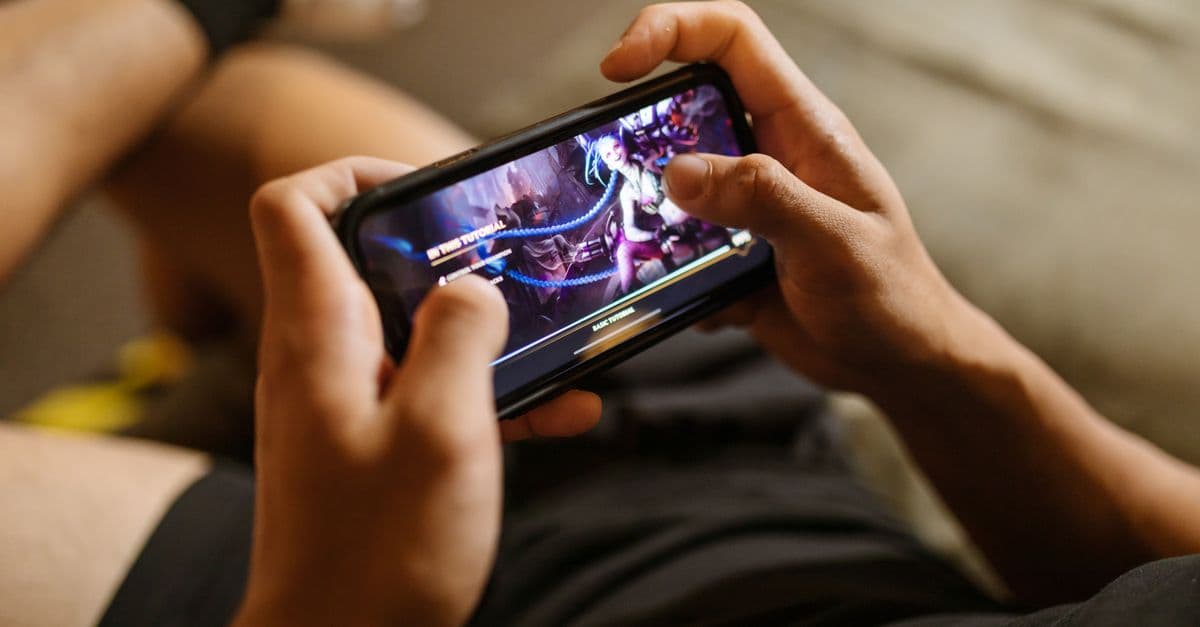
Photo: RDNE Stock project / Pexels
On July 10, 2008, Apple opened the App Store with 500 applications and no clear plan for what a "phone game" should look like. Seventeen years later, mobile gaming generates over $120 billion a year, reaches an estimated three billion players, and dwarfs console and PC revenue combined. This is the story of how a communication device became the world's largest gaming platform, and what that shift cost along the way.
Before the smartphone: mobile gaming's marginal era
Mobile gaming existed long before the iPhone, but it was a footnote, not a market. Nintendo's Game Boy (1989) proved handheld gaming could sell hardware, and Nokia's pre-installed Snake (1997) put a game in more pockets than any console ever had. Neither, though, created a real software economy.
Early "smart" phones like the Nokia N-Gage (2003) and BlackBerry devices ran clunky, expensive games sold through carrier decks — walled-garden storefronts controlled by telecom companies. Downloads cost several dollars, installation was fiddly, and the audience was narrow: young, technically patient, mostly male. Nobody in the games industry treated mobile as a serious platform. Consoles and PCs set the agenda; phones were an afterthought.
How the App Store rewired the business model
The iPhone changed the hardware: a capacitive touchscreen, an accelerometer, and always-on internet access in a device people already carried everywhere. But the bigger shift was structural. Apple's App Store, and Google's Android Market (later Google Play) that followed in 2008, removed the carrier as gatekeeper and let any developer publish directly to a global audience.
Think of the old carrier-deck model like publishing a book only through a handful of regional bookstores that each demanded their own contract. The App Store was closer to self-publishing on Amazon: any developer, anywhere, could upload a build and reach millions overnight, no distribution deal required.
The App Store grew from 500 apps at launch to 3,000 within two months and 15,000 by January 2009, according to Apple's own 10th-anniversary retrospective. That growth curve produced overnight windfalls nobody had modeled for software before. Steve Demeter, a solo developer, earned roughly $250,000 in the first two months from his $5 puzzle game Trism, purely from App Store visibility — a payout that would have required a publishing deal and a marketing budget on any prior platform.
What made Angry Birds different from a console hit
Angry Birds, released by Finnish studio Rovio in December 2009, is usually cited as mobile gaming's first cultural crossover. It surpassed 50 million downloads within its first year, according to reporting cited in Digital Trends' App Store history, on the strength of a five-minute session length, single-thumb controls, and a slingshot mechanic that used the touchscreen instead of fighting it. It proved a game built for pocket moments, not living-room evenings, could still be a hit.
Free-to-play: the model that made mobile scalable
Console gaming ran, and largely still runs, on a simple transaction: pay $60–70, get the whole game. Mobile gaming broke that model almost immediately. Free-to-play (F2P) — download at no cost, monetize through optional purchases — became the mobile default because it matched how phones get used: on impulse, without a wallet already open.
The mechanics vary by title, but the shared structure looks like this:
| Monetization lever | How it works | Example |
|---|---|---|
| Cosmetics | Purely visual items, no gameplay advantage | Fortnite skins |
| Battle passes | Seasonal progression track, partly paid | Most live-service mobile titles |
| Convenience purchases | Pay to skip timers or grinding | Clash of Clans builder queues |
| Gacha / loot mechanics | Randomized pulls for characters or gear | Genshin Impact's wish system |
| Rewarded ads | Optional ad views for in-game currency | Most hyper-casual titles |
Common mobile free-to-play monetization mechanics and representative games.
The revenue distribution inside F2P games is famously lopsided. Industry analyses consistently find that a small fraction of players — often cited around 2 to 5 percent — account for the overwhelming majority of in-app purchase revenue, a pattern the industry nicknames "whale hunting." This is one of the more contested design choices in modern gaming, and it is the direct subject of our explainer on why random loot feels rewarding, which walks through the psychology researchers use to describe variable-ratio reward schedules.
Genshin Impact is the model's most visible success story. Sensor Tower reported the game crossed $1 billion in mobile spending within six months of its September 2020 launch, $2 billion within its first year, and $3.7 billion across its first two years, averaging close to $1 billion in mobile revenue every six months — figures that exclude PC and console spending entirely. A game with no upfront price tag became one of the highest-grossing entertainment products of the decade.
Who actually plays: the demographic shift consoles never achieved
The clearest way mobile changed gaming is who counts as a "gamer." Console gaming skewed heavily toward young and male audiences for decades. Mobile broke that pattern almost immediately because the barrier to entry collapsed: no $500 console, no controller to learn, no dedicated gaming time block. A phone already in someone's pocket is enough.
That shift shows up in age spread as much as gender. Candy Crush, Match-3 puzzlers, and casual card games built an audience that includes people in their sixties and seventies who never owned a console. Combine that with cheap Android handsets reaching first-time internet users across India, Southeast Asia, and Latin America, and mobile became the entry point to gaming for markets that console makers had never seriously targeted.
Why session length matters more on mobile than genre
Mobile design optimizes for interruption. A commute, a waiting room, a five-minute break between meetings — these are the moments mobile games are built to fill, which is why match-3 puzzles, idle clickers, and turn-based strategy dominate mobile charts far more than they do console charts. Games that demand 40-hour uninterrupted campaigns simply don't fit the context phones get used in, which is also why genres like MOBAs and battle royales needed real redesign work (shorter matches, simplified controls) before they translated to mobile at all.
Regional dominance: not one mobile market, three
Mobile gaming's growth looks different depending on where you measure it, and the differences reveal what actually drives adoption.
China represents the largest single mobile gaming market by revenue, anchored by Tencent titles like Honor of Kings and by strict domestic regulation. Since August 2021, Chinese regulators have limited players under 18 to three hours of online gaming per week — one hour between 8 p.m. and 9 p.m. on Fridays, weekends, and public holidays, enforced through mandatory real-name registration, according to reporting from the World Economic Forum and CNBC. That's a tightening from a 2019 rule that had allowed 1.5 hours on weekdays.
Southeast Asia and parts of South Asia represent the fastest-growing mobile markets, largely because smartphone penetration outpaced console and PC adoption entirely — many first-time gamers in these regions never owned a dedicated gaming device before their phone. North America and Europe, by contrast, show a more mature, blended pattern: mobile captures casual and mid-core play, while console and PC retain the hardcore, high-spend audience. According to Sensor Tower's 2025 State of Mobile report, the United States alone accounted for roughly a third of global mobile game spending by December 2025, even without leading in raw player count.
The monetization backlash: loot boxes, gambling law, and regulators
Mobile gaming's F2P engine runs on psychological hooks that regulators increasingly treat as a gambling problem rather than a game design choice. The clearest flashpoint is the loot box: a randomized reward mechanic where players pay real money for a chance at a desirable outcome, structurally similar to a slot machine pull.
In April 2018, Belgium's Gaming Commission concluded that paid loot boxes meet the legal definition of a game of chance under the country's 1999 Gaming Act, because they combine a financial stake, an element of chance, and a possible win, as confirmed by BBC News coverage of the ruling. Publishers who didn't comply faced threatened fines up to €800,000 and prison terms up to five years. In practice, enforcement proved inconsistent: a later academic study published in Collabra: Psychology (UC Press) found loot boxes remained present in a large majority of top games available in the Belgian market years after the "ban," because enforcement relied on complaint-driven prosecution rather than proactive storefront blocking.
The pattern of "regulator declares a position, industry adapts unevenly" repeats across markets: the UK Gambling Commission has issued advisory reports without a formal ban, the Netherlands pursued and then had a loot box ruling overturned on appeal, and multiple US states have introduced but not passed loot box disclosure bills. China's approach is the most direct — its regulations require probability disclosure for gacha-style pulls, alongside the youth playtime limits described above.
Mobile gaming's genre map, and why certain genres won
Not every genre translates to mobile equally well, and the ones that dominate mobile charts share specific traits: short sessions, forgiving input, and monetization built into the core loop rather than bolted on.
- Casual and puzzle games — Candy Crush Saga has surpassed 10 billion lifetime downloads across its franchise footprint, and match-3 mechanics remain a reliable revenue base because difficulty curves naturally nudge players toward paid boosts.
- Idle and incremental games — titles built around Cookie Clicker's original formula require minimal active input, letting progress continue passively, which fits a phone people check rather than sit with.
- Battle royale ports — PUBG Mobile and Fortnite's mobile client proved console-originated genres could work on touchscreens once developers redesigned controls specifically for thumbs rather than porting a controller scheme.
- Console-quality action RPGs — Genshin Impact and its successor Honkai: Star Rail (from developer HoYoverse) demonstrated that mobile hardware could sustain open-world, real-time combat games with production budgets rivaling AAA console titles, reportedly in the range of $100 million for Genshin's initial development and live-service support.
- Social and user-generated platforms — Roblox and Among Us built mobile-first social loops where the game itself is partly a communication tool, a pattern closer to a social network than a traditional game.
This genre sorting also explains why mobile esports looks different from console esports. Titles like Honor of Kings and PUBG Mobile draw enormous mobile-specific tournament audiences in Asia, even though Western esports culture, historically built around PC titles like League of Legends and Counter-Strike, has been slower to recognize mobile competitions with the same prestige. Our esports in 2026 explainer covers how prize pools and viewership break down across the whole competitive gaming industry, mobile included.
Hardware: the console-on-a-phone trajectory
Mobile gaming's ceiling rose in lockstep with phone hardware. The original 2007 iPhone ran on a roughly 620 MHz processor with 128 MB of RAM, adequate for 2D puzzle games and little else. By comparison, flagship phones released in 2024 and 2025 pack multi-core processors clocked above 3 GHz, 8 to 12 GB of RAM, and dedicated neural processing units, putting graphics performance in range of previous-generation home consoles for many workloads.
That hardware leap is the quiet enabler behind games like Genshin Impact: an open-world, real-time action RPG with dynamic lighting and physics that would have been unthinkable on phone hardware even five years earlier. It's a similar leap to what happened between the original PlayStation and the PlayStation 3, compressed into roughly a decade instead of two.
How cross-play and cloud streaming are blurring "platform" itself
Rather than replacing consoles, mobile increasingly plugs into the same ecosystem. Fortnite and PUBG support full cross-play between phone, console, and PC, letting one match include all three input types simultaneously. Cloud streaming services — Xbox Cloud Gaming and PlayStation Remote Play among them — let players run console-grade titles on a phone screen without local hardware doing the rendering at all. The practical result: "mobile game" and "console game" are becoming less separate categories and more just separate ways to reach the same game.
What critics get wrong, and right, about mobile quality
The common criticism, that mobile gaming is inherently shallow compared to console or PC, was fair in 2010 and increasingly outdated today. Genshin Impact, Honkai: Star Rail, and Infinity Nikki compete directly with console production values, complete with orchestral scores, motion-captured cutscenes, and ongoing narrative content updates.
What the criticism gets right is variance, not ceiling. The App Store and Google Play's low barrier to entry that made Angry Birds possible also floods storefronts with templated, low-effort clones designed purely to extract ad revenue or impulse purchases before being abandoned. Mobile gaming doesn't have a quality problem so much as a quality range problem: the best mobile titles rival anything on console, while the median mobile app is closer to disposable content. That range is wider than console gaming's, where publishing costs alone filter out much of the bottom tier before release.
Case study: Supercell's boom-peak-decline arc
No single company illustrates mobile gaming's revenue dynamics better than Finland's Supercell. Clash of Clans, released in August 2012, became the top-grossing game in the United States within three months of launch. Supercell's revenue jumped from $101 million in 2012 to $892 million in 2013, then to a peak of $1.36 billion in 2015, roughly $5.5 million a day, according to PhoneArena's revenue reporting and Business of Apps' Clash of Clans statistics.
That arc, explosive growth, a peak, and then a long, gradual decline, is close to the norm for F2P hits rather than the exception. Clash of Clans has since fallen from roughly the top 20 grossing mobile games worldwide to around 33rd, overtaken by newer live-service titles like Last War: Survival ($1.57 billion lifetime) and Whiteout Survival ($1.4 billion lifetime), per the same Business of Apps data. Supercell's five flagship titles, Clash of Clans, Clash Royale, Brawl Stars, Hay Day, and Boom Beach, have combined for roughly $10.5 billion in lifetime revenue, according to London Tech News' reporting on Supercell's portfolio.
The pattern matters because it explains why mobile publishers rarely bet everything on one title the way a console studio might bet a decade of work on a single flagship franchise. A mobile hit has a shelf life measured in years, not console-generation cycles, and today's chart leader is routinely displaced by a newer live-service game built on lessons the previous hit already taught the market. Supercell's own internal structure, small independent "cell" teams that can kill a game in prototype rather than ship a mediocre one, is a direct response to how quickly mobile audiences move on. The studio has publicly killed more prototypes than it has shipped finished games, treating cancellation as a normal cost of doing business rather than a failure.
The hidden cost side: user acquisition and the end of cheap growth
Free-to-play's most-discussed number is revenue per whale. The number that determines whether a mobile studio survives at all is cost per install (CPI), what it costs in advertising spend to acquire one new player. That cost has risen sharply and structurally over the past five years.
Apple's April 2021 App Tracking Transparency (ATT) framework required apps to ask permission before tracking a user's activity across other apps and websites for ad targeting. Because most users decline, advertisers lost the granular targeting data that made mobile ad campaigns efficient. Reported iOS cost-per-install increases in the aftermath ran 20 to 30 percent, according to industry coverage of the ATT rollout, and the effect compounded over subsequent years as Meta, Google, and other ad networks rebuilt targeting models around aggregated, privacy-preserving signals instead of individual user tracking.
By 2025, the mobile games industry spent an estimated $25 billion on user acquisition, part of a broader $78 billion in global app marketing spend, up 13 percent year over year, with iOS acquisition spend surging 35 percent while Android spend stayed roughly flat, according to 2026 mobile user acquisition benchmarking data. Hyper-casual titles, the ad-supported, no-purchase-required genre that dominated app store charts in the late 2010s, felt this hardest: their entire business model depends on acquiring players cheaply and monetizing them through ad views, and a global median Android CPI near $0.40 against an iOS CPI of $1.50 to $2.50 squeezes margins that were thin to begin with.
This cost pressure has a consolidating effect on the industry. Small independent studios that thrived in the App Store's early gold-rush years, when a clever idea and modest marketing spend could reach the charts, now compete against publishers with data science teams, in-house ad networks, and marketing budgets that can absorb a $1.50-plus iOS CPI across millions of installs. The App Store's original promise, that any developer anywhere could reach a global audience without a distribution deal, still holds technically. Reaching that audience profitably is a different and much steeper problem than it was in 2010.
How mobile game publishing actually differs from console publishing
It helps to compare the publishing pipelines side by side, because the differences explain almost every downstream decision mobile studios make, from release cadence to how a game is priced.
| Dimension | Console/PC publishing | Mobile publishing |
|---|---|---|
| Upfront cost to player | $60–70 typical at launch | Free download, near-universal |
| Primary revenue event | Point of sale | Ongoing, spread across a game's live lifespan |
| Release cadence | One shipped product, then sequels years apart | Continuous updates, seasons, and events within the same install |
| Failure cost | A shipped game that underperforms still recoups some box revenue | An unsuccessful soft launch can be killed before wide release with minimal sunk cost |
| Primary growth lever | Marketing campaign around a release date | Ongoing paid user acquisition (CPI-driven) plus organic virality |
| Quality gatekeeping | Publisher funding and certification (Sony/Microsoft/Nintendo cert process) | Storefront review is largely automated; almost anything can list |
| Player relationship | Transactional, mostly ends at purchase | Long-running, monetized through repeated engagement |
How console/PC and mobile publishing pipelines differ structurally, and why each produces different business incentives.
This table explains, for instance, why mobile studios soft-launch games in smaller markets, often the Philippines, Canada, or the Nordics, before a global release. A console game can't easily test a "beta version" of its business model on live players before shipping worldwide; a mobile game can, and typically does, tuning monetization curves and retention loops against real spending data before the game a US or European audience sees is even final.
Retention curves: the metric that actually predicts mobile success
Revenue gets the headlines, but the metric mobile studios watch obsessively before a game is even publicly released is the retention curve, the percentage of new players still opening the app one day, seven days, and thirty days after install. A Day 1 retention rate in the 35 to 45 percent range and a Day 30 retention rate above 10 percent are widely treated inside the industry as healthy benchmarks for a casual title, though thresholds vary by genre; mid-core and RPG titles with deeper progression systems often tolerate lower Day 1 numbers in exchange for stronger long-tail retention.
Retention curves matter more than any single revenue figure because F2P economics are compounding, not one-time. A game that loses 80 percent of its players by day 7 can never build the whale base that drives its revenue, no matter how well-designed its monetization mechanics are, because whale spending typically accelerates the longer a player stays engaged, not on their first session. This is why mobile studios A/B test tutorial length, onboarding difficulty, and the timing of the first monetization prompt more rigorously than almost any other consumer software category. A single percentage point of Day 7 retention, multiplied across millions of installs, can be worth more to a live-service mobile game's lifetime revenue than a major content update.
Why live-service seasons replaced the traditional sequel
Console franchises historically grew through numbered sequels released years apart: a new Call of Duty, a new Assassin's Creed. Mobile's dominant live-service titles instead grow through seasonal content updates inside the same install, new characters, events, and battle passes shipped every few weeks rather than a new purchase every few years. Genshin Impact's version updates, released roughly every six weeks since its 2020 launch, function as the mobile equivalent of a sequel: each brings new playable characters, story content, and a fresh monetization event, without asking the player to buy or download a separate product. This structure is why a single mobile title can sustain multibillion-dollar revenue for years past its original launch window, something a boxed console game structurally cannot do on its own.
Platform power and the Epic v. Apple fight
The App Store's 30 percent commission on in-app purchases, standard since 2008, became mobile gaming's most contested business term as F2P revenue scaled into the tens of billions. Epic Games challenged that commission directly in August 2020 by adding a direct payment option to Fortnite's mobile client that bypassed Apple's and Google's in-app purchase systems, deliberately triggering removal from both storefronts to manufacture the antitrust lawsuit Epic had already prepared. The resulting Epic Games v. Apple case produced a mixed ruling: a US federal judge found Apple was not an illegal monopolist under most of Epic's claims but did order Apple to allow developers to link out to external payment options, a change Apple resisted implementing in full for years afterward through subsequent appeals.
The commission fight matters for the same reason CPI matters: it is a direct tax on the margin mobile studios operate on. A 30 percent platform cut on a business already spending heavily on user acquisition leaves less room for error than console publishing's simpler, one-time retail margin ever did. Smaller developers, without Epic's legal budget or Fortnite's cultural leverage, have mostly had no practical way to contest the fee structure the two dominant app stores set unilaterally.
The takeaway
Mobile gaming didn't just add a new screen to play games on. It rebuilt the economics (free-to-play over upfront purchase), the audience (three billion players spanning every age bracket, not a narrow enthusiast demographic), and the regulatory landscape (loot box gambling law, youth playtime caps) around a device most people already carried for other reasons. The App Store's 2008 launch removed the carrier gatekeeper; free-to-play removed the price barrier; better hardware removed the quality ceiling. What's left is an industry generating over $120 billion a year that is still working out, market by market and regulator by regulator, how much of its own monetization playbook it can defend.
Frequently asked questions
Q: How much revenue does mobile gaming generate globally? A: Mobile gaming generated an estimated $126 billion globally in 2025 across in-app purchases and advertising, according to Sensor Tower's 2025 State of Mobile Gaming report, making it the largest single segment of the video game industry.
Q: When did mobile gaming become bigger than console gaming? A: Mobile revenue overtook console and PC combined during the early-to-mid 2010s as free-to-play adoption accelerated and smartphone penetration expanded in emerging markets, though exact crossover dates vary by which analytics firm's methodology is used.
Q: Why is free-to-play the dominant mobile business model? A: Free-to-play removes the upfront cost barrier that discourages impulse downloads on a device people already own for other purposes, then monetizes through optional purchases like cosmetics, battle passes, and convenience items rather than a single transaction.
Q: Are loot boxes actually illegal anywhere? A: Belgium's Gaming Commission ruled in 2018 that paid loot boxes meet its legal definition of gambling, and several other regulators, including the Netherlands and UK Gambling Commission, have issued rulings or advisories, though enforcement has been inconsistent and no single global standard exists.
Q: How does China regulate mobile gaming for minors? A: Since August 2021, Chinese regulations limit players under 18 to three hours of online gaming per week, restricted to one hour between 8 and 9 p.m. on Fridays, weekends, and public holidays, enforced through mandatory real-name registration systems.
Q: What was the first mobile game to go viral globally? A: Angry Birds, released by Finnish studio Rovio in December 2009, is widely credited as the first mobile game to cross into mainstream culture, surpassing 50 million downloads within its first year on the strength of short, touch-optimized sessions.
Q: Can mobile games match console-quality graphics? A: Yes for flagship titles. Genshin Impact and Honkai: Star Rail run open-world, real-time 3D graphics with production budgets reported in the range of $100 million, comparable to prior-generation home console titles, though this level of fidelity remains the exception rather than the norm across the mobile catalog.
Q: Why do so few players account for most mobile game revenue? A: Free-to-play games are commonly built so a small percentage of high-spending players, sometimes called "whales," generate the large majority of in-app purchase revenue, while the vast majority of players spend nothing, a distribution shaped heavily by gacha and loot mechanics.
Q: Is mobile esports taken as seriously as console or PC esports? A: Not uniformly. Titles like Honor of Kings and PUBG Mobile draw massive tournament audiences, particularly in Asia, but Western esports culture, historically rooted in PC titles, has been slower to grant mobile competitions the same prestige despite comparable viewership numbers.
Q: What phone hardware changes made modern mobile games possible? A: Processor speed, RAM, and dedicated graphics capability all increased dramatically between the 2007 iPhone (roughly 620 MHz, 128 MB RAM) and 2024-era flagship phones (multi-core chips above 3 GHz, 8 to 12 GB RAM), enabling console-comparable rendering on handheld hardware.
Q: Why did user acquisition costs rise so much for mobile games? A: Apple's April 2021 App Tracking Transparency policy required apps to request permission before tracking users across other apps for ad targeting, and because most users decline, advertisers lost the granular data that made mobile ad campaigns efficient, pushing reported iOS cost-per-install up 20 to 30 percent in the rollout's aftermath.
Q: What is the Epic Games v. Apple case about, and how does it affect mobile gaming? A: Epic Games sued Apple in August 2020 after deliberately triggering Fortnite's removal from the App Store by adding a payment system that bypassed Apple's mandatory 30 percent in-app purchase commission, and the resulting ruling required Apple to allow developers to link to external payment options, though Apple contested full implementation for years afterward.
Q: How is Supercell's Clash of Clans revenue history typical of mobile hits? A: Clash of Clans grew from $101 million in 2012 to a peak of $1.36 billion in 2015, then declined gradually as newer live-service titles overtook it in the charts, an explosive-growth-then-slow-decline arc that is closer to the norm for free-to-play hits than the exception.
Read next:
Follow new articles
Add SciHub101 to your feed reader to see new science and technology stories.
About the Author
SciHub101 is an independent science and technology publication founded and edited by Buğra Sözeri, a software engineer and app developer based in Türkiye. AI tools assist with drafting and research. Source documentation in the existing archive is uneven, and articles are being reviewed and corrected. The Editorial Team byline identifies editorial responsibility; it does not certify specialist or independent human review. Where we compare products, anything built by our own team is labelled as such — see the editorial guidelines and About page for how corrections and disclosures work.
Related Articles
Halo: Combat Evolved - The FPS That Defined Console Gaming
Released in 2001, Halo proved that first-person shooters could work on consoles. Its innovative controls and design became the template for console FPS games for decades.
Grand Theft Auto III: The Open World Game That Changed Everything
Released in 2001, GTA III proved that open-world games could be commercially viable. It sold over 17 million copies and became the template for sandbox games for decades.
The Economics of the Gaming Industry: How Games Make Money
The gaming industry generates roughly $190–200 billion a year — more than film and music combined. Free-to-play, battle passes, live service, and subscriptions have replaced the simple box purchase. Here's how the economics actually work.

Gaming in 2026: Platforms, Hardware, and Trends
In 2026, gaming spans five major hardware ecosystems: PlayStation 5 and Xbox Series X/S dominating console market share; the Nintendo Switch entering its final year as the mobile-console hybrid benchmark before Switch 2's late-year launch; personal computers transitioning to next-generation GPUs (RTX 50-series from NVIDIA, RDNA 4 from AMD); and mobile gaming (iOS/Android) supporting both casual free-to-play and premium titles. This article examines the platform landscape, hardware capabilities across tiers, market share data, and the technological and cultural trends shaping gaming in 2026.

What Are the Best Free-to-Play Games in 2026?
Free-to-play gaming in 2026 encompasses genres from competitive esports titles to narrative-driven adventures, with monetization ranging from cosmetic-only (respecting player progression integrity) to aggressive gacha mechanics that gate progression behind randomized paywalls. This article examines the best free-to-play games across genres, explaining the free-to-play economic model, how to identify monetization strategies, and which titles offer genuine value without requiring money spent. Featured games span competitive shooters, action RPGs, card games, and story-driven experiences, with emphasis on games where spending is optional for enjoying core content.

World of Warcraft: The MMORPG That Changed Gaming
WoW proved MMORPGs could reach mainstream audiences. 12 million subscribers at peak, raid guilds, competitive PvP, and communities that transcended gaming.