Grand Theft Auto III: The Open World Game That Changed Everything
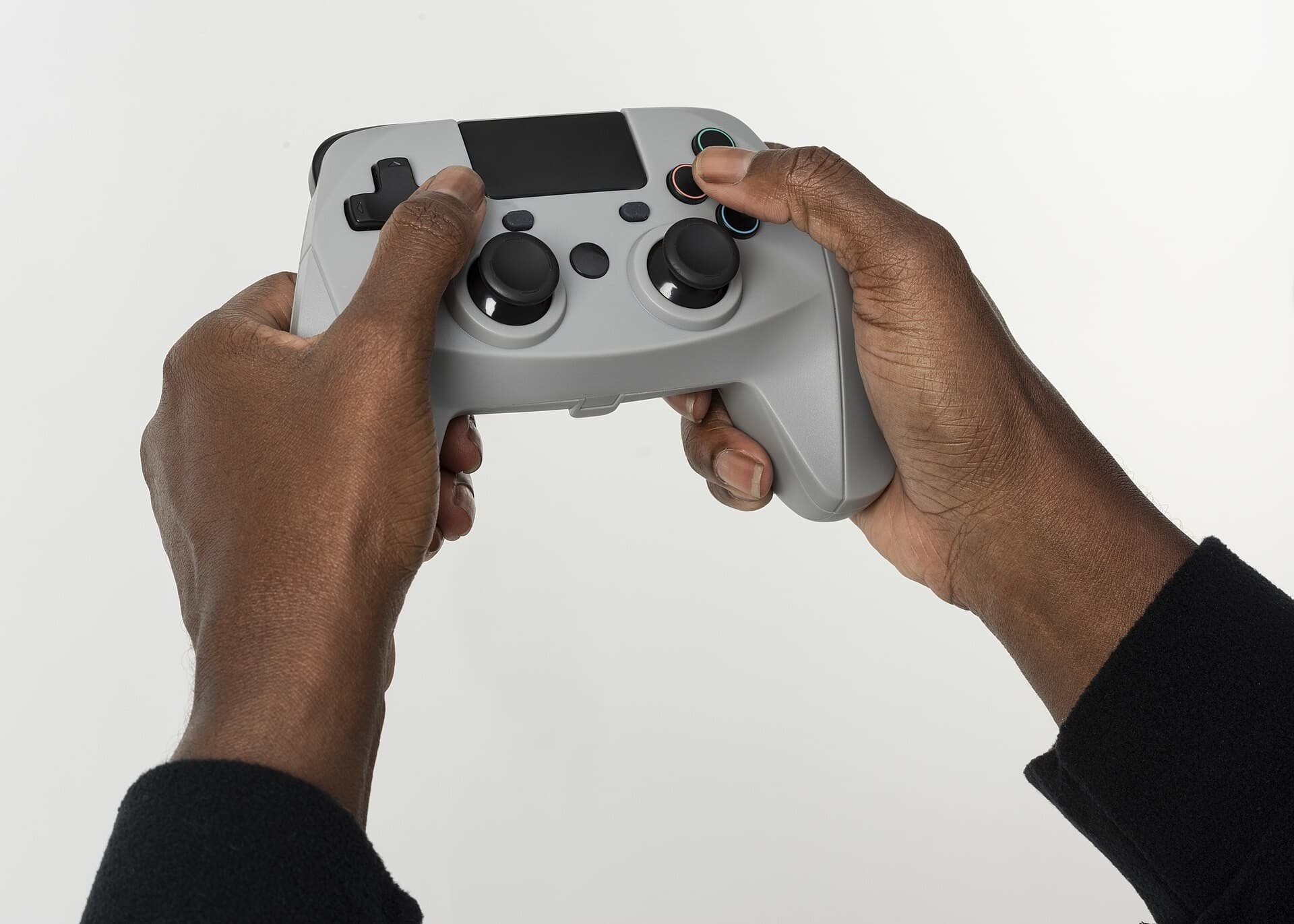
Photo: Vladimir Srajber / Pexels
On October 22, 2001, Rockstar Games released Grand Theft Auto III on PlayStation 2, and the rules of what a game could be quietly changed. It sold over 17 million copies by 2011, was the best-selling video game in the United States that year, and earned a 97-out-of-100 score on Metacritic, tying it for the highest-rated PS2 game on the platform. This is how a 23-person Scottish studio built a crime sandbox that rewired the entire industry's ambitions.
Why open-world games were considered a risk before 2001
Open, non-linear worlds already existed in 2001. The Elder Scrolls: Daggerfall (1996) put players in a landmass bigger than the United Kingdom, and Ultima games had experimented with freedom for over a decade. But these were niche PC titles, built for players patient enough to fight clunky interfaces and empty landscapes.
Publishers treated open design as a financial gamble. Linear, level-based games (think Crash Bandicoot or Tomb Raider) were easier to budget, easier to market with a trailer, and easier for players to understand in a five-minute demo. A world you could walk through in any direction, ignore the plot in, and improvise your own goals inside, looked like a feature for hardcore PC gamers, not a mass-market console product.
GTA III's core team, about 23 developers at DMA Design in Edinburgh working with Rockstar's New York office, had actually prototyped the idea on the Sega Dreamcast at the tail end of finishing Grand Theft Auto 2, according to the game's own production history documented on Rockstar's fan wikis. The earlier top-down GTA games already had crime, cars, and chaos. What changed for GTA III was the leap to full 3D and a genuinely explorable metropolis, called Liberty City, modeled loosely on New York.
How GTA III actually built its illusion of freedom
Freedom in GTA III was not a single feature. It was the sum of several systems running at once, each one small enough to build in 2001 hardware, but combined into something that felt bigger than its parts.
The city was the level design
Liberty City was split into three distinct islands, unlocked progressively as the story advanced, rather than handed to the player all at once. This mattered mechanically as much as narratively: the PS2's memory couldn't stream an entire open city in real time, so Rockstar used story gates (a bridge blown up, a route blocked) to limit how much of the map had to be loaded and rendered simultaneously. The designers turned a hardware constraint into a pacing tool.
Systems talked to each other
Traffic AI, pedestrian AI, and police response were built as separate, interacting layers. Commit a crime near a cop, and the wanted-level system (one to six stars) escalates the response from a single patrol car to roadblocks and helicopters. None of these systems were scripted per-mission. They ran constantly, in the background, which is why two players could commit the same carjacking in the same spot and get two different chases.
Think of it like a city's actual infrastructure: traffic lights, police dispatch, and pedestrian foot traffic in a real city don't know or care what any one person is doing, they just respond to conditions. GTA III modeled a crude version of that same indifferent, reactive city, which is exactly what made it feel alive instead of staged.
Missions were optional, but not equal
Players could ignore the story missions entirely and just explore, steal cars, or trigger vigilante and taxi side-missions. But the story missions were still the fastest route to money, weapons, and safehouses, so the game nudged players toward structure without locking them into it. That balance, between total freedom and a clear reward path, is the single hardest thing to tune in open-world design, and it's the reason so many imitators felt either aimless or overly linear.
What made the mission design and pacing work
GTA III's mission list varied wildly in tone and mechanics for a game built around one core loop of driving and shooting: assassination hits, timed races, rescue-and-escape jobs, and stealth-adjacent infiltration missions. Later missions raised the skill ceiling with tighter timers and more aggressive enemy AI, which meant the difficulty curve tracked the player's growing familiarity with the map rather than an arbitrary numbers increase.
The game's silent protagonist, known to players as Claude, never speaks a line of dialogue. Story context arrived instead through NPC dialogue during missions, cutscenes with other characters, and, notably, through nine licensed radio stations players could switch between while driving. Those stations combined real licensed music with satirical talk radio, which did double duty: it made the world feel like a real place with its own media culture, and it let the writing team deliver social satire without ever interrupting gameplay with a cutscene.
The controversy, and why it didn't sink the game
GTA III drew sustained criticism from politicians, parents' groups, and some media outlets for its depiction of car theft, gang violence, and interactions with sex workers. Several US states, including California, attempted to pass laws restricting sales of violent video games to minors in the years that followed. That effort eventually reached the US Supreme Court in Brown v. Entertainment Merchants Association (2011), which ruled 7-2 that video games are protected speech under the First Amendment, striking down California's restriction. Justice Antonin Scalia's majority opinion held that video games communicate ideas through familiar literary devices, just as books and film do, and that the state hadn't proven a causal link between violent games and violent behavior in minors.
That ruling arrived a decade after GTA III's release, but the controversy around the franchise, GTA III specifically, was part of the political fight that produced it. Rockstar's own commercial data suggests the controversy amplified visibility rather than suppressing sales: the series continued growing every generation after 2001, culminating in GTA V, which passed 205 million copies sold by late 2024 according to Take-Two Interactive's own disclosures, making the Grand Theft Auto franchise's cumulative sales roughly 425 million units.
The design template that outlived the console generation
GTA III's structural formula, an unlockable multi-district map, main story missions layered over freeform side activities, ownable properties, multiple vehicle types, competing factions, and an in-game economy, became the default open-world skeleton that other studios adapted for years afterward.
| Element | GTA III (2001) | Later adopters | What carried over |
|---|---|---|---|
| Progressive map unlocks | Three islands gated by story | Assassin's Creed regions, Far Cry outposts | Limits loading and paces content discovery |
| Wanted/notoriety system | 1-6 star police response | Watch Dogs, Saints Row, Sleeping Dogs | Consequence for player-chosen violence |
| Radio/soundtrack as worldbuilding | 9 licensed/talk stations | Fallout 3's Galaxy News Radio, Far Cry 3 | Ambient narrative without cutscenes |
| Optional side activities | Vigilante, taxi, ambulance missions | Bethesda's Fallout, Elder Scrolls side quests | Non-mandatory content extends playtime |
| Silent-to-vocal protagonist shift | Claude (silent) | Later GTA entries gave protagonists full voice | Series itself moved away from this by Vice City |
Table: How GTA III's 2001 design choices propagated across the open-world genre
Where the "everyone copied GTA III" narrative gets it wrong
It's tempting to credit GTA III with inventing open-world design outright. That overstates the case. Bethesda's Elder Scrolls series and Origin's Ultima games had freeform worlds years earlier, and even DMA Design's own earlier GTA titles (1997 and 1999) had non-linear, top-down crime sandboxes with wanted levels and city hopping, just in 2D. What GTA III did was prove that a 3D, mainstream-console version of that freedom could sell at blockbuster scale and hold a 97 Metacritic score while doing it.
The other common misreading is that GTA III's success was driven mostly by controversy and shock value. Controversy generated headlines, but headlines don't sustain a 17-million-unit sales run over a decade. Players kept buying the sequels because the underlying systems, traffic AI, police response, mission variety, kept getting refined. Vice City (2002) and San Andreas (2004) sold even more copies than GTA III, and neither one relied on new controversy to do it; they relied on a bigger, more detailed version of the same interlocking systems.
A third misconception worth correcting: that "open world" automatically means "empty world." GTA III's islands were dense with scripted pedestrian routines, ambient traffic, and hand-placed collectibles (100 hidden packages scattered across the map, each unlocking a weapon cache once fully collected). The emptiness that plagued many mid-2000s open-world clones wasn't a structural inevitability of the genre; it was a production-budget shortfall in games that copied GTA III's map size without matching its density of hand-placed content.
GTA's satire runs deeper than the violence headlines
Critics who focused only on carjacking and gunplay missed what Rockstar's writers were actually building: a running satire of American media, consumerism, and celebrity culture that started with GTA III's talk-radio stations and has grown more pointed with every subsequent release. Chatterbox FM's callers, obsessed with conspiracy theories and petty grievances, parodied American talk radio at a moment when shock-jock programming was a real cultural force. Head Radio's ads mocked corporate branding by simply exaggerating it, not inventing anything players hadn't already seen on a real billboard.
That satirical voice widened dramatically with each sequel. Vice City (2002) skewered 1980s excess, cocaine-fueled real estate speculation, and Miami's tourist-industry sleaze, using a setting one decade removed from launch so players could recognize the target without Rockstar having to spell it out. San Andreas (2004) took on the LAPD's Rampart-era corruption scandal, gang-injunction policing, and the CIA's documented history of destabilizing communities of color, folding real institutional history into a crime story rather than inventing a cartoon villain from scratch.
GTA IV (2008) turned the satire inward, toward the American Dream narrative itself. Niko Bellic's arrival in Liberty City, chasing a cousin's exaggerated promises of easy wealth, mirrors the disillusionment many real immigrants describe on arrival in the US, and the game's version of internet culture (parody sites, a in-game "LifeInvader" social network years before Facebook's own controversies peaked) got sharper the more Rockstar's writers watched real tech platforms behave. GTA V (2013) pushed that same instinct at surveillance capitalism, reality television, and Wall Street's post-2008 culture through three playable protagonists whose class positions, a broke ex-con, a washed-up gangster, and a sociopathic finance bro, let the writing hit three different socioeconomic targets in the same story.
This is where the two most common critical readings of the franchise talk past each other. One camp treats GTA as glorifying crime; the other treats it as prestige satire on par with a film like Wolf of Wall Street. Both readings can be partly true, because the games rarely tell players how to feel about the violence they're committing. The radio ads mocking consumerism play in the same car the player is using to run over pedestrians for points. Rockstar leaves that tension unresolved by design, which is part of why the series still generates op-eds two decades after GTA III's launch instead of fading into genre nostalgia.
The GTA Online economy: how a single-player template became a decade-long live service
GTA III shipped as a self-contained, single-player product with no ongoing monetization beyond the original purchase price. GTA Online, launched in October 2013 as a companion to GTA V, inverted that model entirely and turned Rockstar's open-world template into one of the most durable live-service businesses in the industry.
The mechanism is simple to describe and has proven difficult for competitors to replicate: GTA Online is free to anyone who owns GTA V, and its core loop, heists, businesses, races, and a constant drip of new vehicles and properties, is playable without spending real money. But nearly everything of value inside that loop costs an enormous amount of in-game cash relative to how quickly players can earn it through normal play, which creates persistent pressure to buy Shark Cards, Rockstar's real-money currency packs, to shortcut the grind.
That pressure has translated into unusually durable revenue. GTA Online generated more than five billion US dollars in Shark Card revenue between its November 2014 introduction of that system and April 2024, according to figures that circulated after a Rockstar data leak, with revenue holding at roughly 400 million dollars a year through 2024 and 2025 even a full decade after launch. Only a small share of the active player base, reportedly around four percent, accounts for most of that spending, a pattern common to free-to-play and hybrid monetization games generally, where a minority of high-spending players subsidize a much larger free population.
Heists are the clearest example of how Rockstar keeps that economy moving. Multiplayer heist missions, first added in 2015, require coordinated four-player teams to plan and execute elaborate robberies, and they reward large one-time cash payouts that give players a legitimate, skill-based alternative to buying Shark Cards. Rockstar has released heists on an irregular cadence ever since, and the Kortz Center heist that arrived in 2026 was the first entirely new heist scenario since the Cayo Perico Heist in December 2020, a gap of roughly five years that reflects both the game's aging codebase and Rockstar's shifting attention toward Grand Theft Auto VI's development.
That longevity matters for understanding GTA III's legacy specifically. The single-player sandbox GTA III popularized in 2001, story-gated map expansion, an in-game economy, ownable properties, became the substrate Rockstar layered a live-service business on top of a decade later. GTA Online's businesses, properties, and vehicle customization are direct descendants of GTA III's safehouses and garages, just re-tuned around a real-money currency instead of a fixed single-player budget. Competing publishers who tried to copy GTA V's open-world formula in the mid-2010s, including several licensed crime and superhero sandboxes that launched and folded within a year or two, generally failed to replicate the live-service layer, not the open-world layer, which turned out to be the harder half of Rockstar's formula to reproduce.
Comparing the numbers across three Grand Theft Auto eras
Raw map size and unit sales don't tell the whole story of how the series evolved, but placed side by side they show how dramatically the scope of "open world" changed in just twelve years.
| Metric | GTA III (2001) | San Andreas (2004) | GTA V (2013) |
|---|---|---|---|
| Map size | 3.76 km² (Liberty City) | 38.2 km² (state of San Andreas) | 75.84 km² (Los Santos and Blaine County) |
| Playable cities | 1 (three linked islands) | 3 (Los Santos, San Fierro, Las Venturas) | 1 city plus rural county |
| Metacritic score (flagship platform) | 97 (PS2) | 95 (PS2) | 97 (PS3/PS4) |
| Lifetime units sold | Over 17 million (as of 2011) | Over 27.5 million (as of 2011) | Over 205 million (as of late 2024) |
| Protagonist voice | Silent (Claude) | Fully voiced (CJ) | Fully voiced, three playable leads |
| Post-launch monetization | None | None | GTA Online live-service economy, launched 2013 |
Table: Map scale, critical reception, and sales across three defining GTA console releases
The trend line across the table is not just "bigger map, more sales." San Andreas nearly tripled GTA III's playable area by fitting three distinct cities and their surrounding countryside into a single unbroken map, which is part of why many longtime fans still argue it feels denser than GTA V despite having half the raw square kilometers. GTA V's jump to 75.84 square kilometers and a fully voiced three-protagonist structure represented a different kind of scaling, less about cramming in more discrete locations and more about building a persistent world detailed enough to support both a 30-plus-hour single-player campaign and a decade of live-service content on the same map.
What changed in the industry after GTA III
Q: Did GTA III invent open-world games? A: No. Freeform worlds existed earlier in games like The Elder Scrolls: Daggerfall (1996) and DMA Design's own 2D Grand Theft Auto (1997). GTA III's contribution was proving a 3D, console-native open world could be a mainstream commercial hit rather than a niche PC experiment.
Q: How many copies has GTA III sold? A: Over 17 million copies by 2011, and it was the best-selling video game in the United States in 2001 with roughly 2 million units sold in that launch window, per sales data compiled from Rockstar and industry retrospectives.
Q: What is GTA III's Metacritic score? A: 97 out of 100 on the PlayStation 2 version, tying it with Tony Hawk's Pro Skater 3 for the highest-rated game on that console.
Q: Was GTA III involved in any Supreme Court case? A: Indirectly. The broader legislative backlash against violent games, sparked partly by GTA III and GTA: San Andreas, led to California's 2005 law restricting sales of violent games to minors, which the US Supreme Court struck down in Brown v. Entertainment Merchants Association (2011) as a First Amendment violation.
Q: Who is the protagonist of GTA III, and why doesn't he talk? A: The protagonist, commonly referred to by fans as Claude, is a silent character. The design choice let players project themselves onto him and let other characters carry the exposition through dialogue, a technique later GTA games (starting with Vice City's Tommy Vercetti) moved away from in favor of fully voiced leads.
Q: What is the wanted-level system, and did GTA III invent it? A: The wanted-level system escalates police response from a single patrol car to armed roadblocks and helicopters based on a one-to-six star meter tied to the severity and frequency of crimes committed. The mechanic existed in simpler form in the original 1997 Grand Theft Auto; GTA III expanded it into a fully 3D, real-time pursuit system with layered AI response.
Q: How does GTA III compare to GTA V in scale? A: GTA V's map is dramatically larger and denser, and its lifetime sales (over 205 million copies as of late 2024, per Take-Two Interactive) dwarf GTA III's roughly 17 million. But GTA V's open-world structure, story-gated regions, side activities, wanted system, vehicle variety, is a direct descendant of the template GTA III established in 2001.
Q: Why did some critics call GTA III's controls dated even at launch? A: The PS2-era analog aiming system lacked a proper lock-on or auto-aim refinement for third-person shooting, and the driving physics were simplified compared to later entries. These were widely acknowledged limitations even in contemporary 2001 reviews, though they didn't prevent the game from reaching a 97 Metacritic average.
Q: Did GTA III's success actually cause other studios to make open-world games, or is that just cause and correlation? A: It's not just correlation. Multiple studios and developers, including Bethesda's team on Oblivion (2006) and Ubisoft's Assassin's Creed team (2007), have publicly credited GTA III's commercial proof-of-concept as part of the reasoning that got open-world pitches greenlit internally in the years following its release.
The takeaway
GTA III didn't invent the open world, but it proved, with a 97 Metacritic score and over 17 million units sold, that a mainstream console audience would buy into a game with no fixed path through it. Its real contribution was systems design: traffic, police response, and mission variety that all ran independently and combined into something that felt like a living city rather than a level set. Every open-world game built since, from Assassin's Creed to Red Dead Redemption, still runs on variations of the map-gating, wanted-level, and side-activity formula GTA III shipped in October 2001.
Read next:
Follow new articles
Add SciHub101 to your feed reader to see new science and technology stories.
About the Author
SciHub101 is an independent science and technology publication founded and edited by Buğra Sözeri, a software engineer and app developer based in Türkiye. AI tools assist with drafting and research. Source documentation in the existing archive is uneven, and articles are being reviewed and corrected. The Editorial Team byline identifies editorial responsibility; it does not certify specialist or independent human review. Where we compare products, anything built by our own team is labelled as such — see the editorial guidelines and About page for how corrections and disclosures work.
Related Articles

Mobile Gaming Revolution: How Phones Became Gaming's Biggest Platform
Mobile gaming generates over $120 billion a year and reaches roughly 3 billion players worldwide. From Angry Birds to Genshin Impact, smartphones transformed who plays games and how they play.
Why Sandbox Games Like Minecraft Make Us More Creative
Minecraft has no story, no combat requirement, and no ending, yet it outsold every game ever made. The psychology of unstructured play explains why open-ended tools beat scripted content.
Red Dead Redemption 2: Mastery of Open World Design
Red Dead 2 demonstrated that open worlds could be art. Its attention to detail, world design, and animation fidelity set new technical and artistic standards.
The History of Video Games: From Pong to Open Worlds
Video games went from a blinking dot on a screen in 1972 to a $200 billion industry in 50 years. The history is a story of technology, creative leaps, market crashes, and the democratisation of interactive entertainment into the world's largest cultural medium.
Complete Gaming Guide 2026 — Technology, Design, Esports, and Psychology
The complete guide to gaming in 2026: how game engines work, gaming hardware, esports, game design psychology, industry trends, and what makes games engaging and addictive.