Red Dead Redemption 2: Mastery of Open World Design
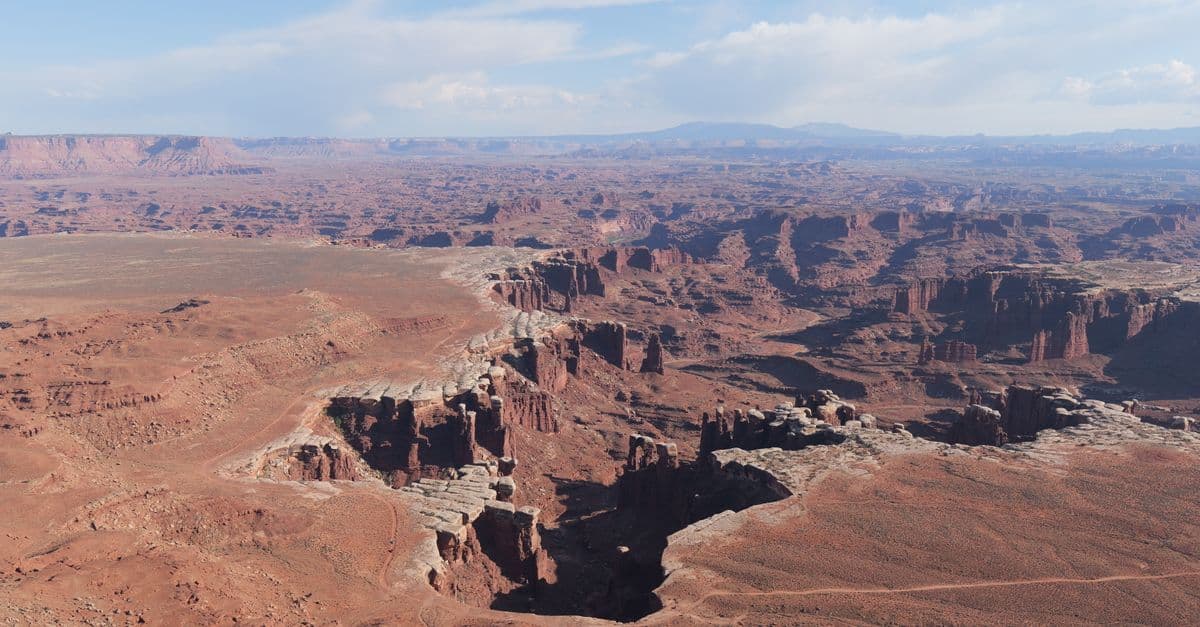
Photo: Ambient Vista / Pexels
Red Dead Redemption 2 did not introduce a genre-defining mechanic the way Breath of the Wild's physics sandbox or Elden Ring's open-ended boss structure did. What Rockstar Games shipped in October 2018, after roughly eight years of development and a reported team of close to 2,000 people, was something narrower and harder to copy: a level of craftsmanship so consistent that simply existing in the world became the game's core loop. This piece breaks down how that craftsmanship was built, what it cost, and why it still matters as a case study eight years later.
The Detail Obsession
Rockstar's internal rule for Red Dead 2 seems to have been simple: no animation is allowed to be generic. Arthur Morgan does not have a single "loot corpse" animation reused across every context. He checks pockets, removes items with visibly different grips depending on the object, and reacts differently if a body is fresh versus days old.
That same philosophy extended to the horse. Horses in Red Dead 2 have individually tracked stats for bonding, stamina, and temperament, and their gait animations shift based on terrain, incline, and the animal's personality type, according to Rockstar's own pre-release marketing materials and gameplay breakdowns. A nervous horse spooks differently than a calm one. A tired horse breathes and stumbles differently than a fresh one.
This extended to mundane actions most games skip. Opening a door, greeting an NPC, sitting at a table, cooking over a campfire, cleaning a weapon: each carries a distinct, hand-tuned animation. Weather compounds the effect. Characters hunch their shoulders and quicken their pace in rain, their voices carry differently, and Arthur's coat visibly darkens as it gets soaked. None of this is scripted per-scene; it is systemic, meaning it applies everywhere, all the time, whether or not a camera or a mission is watching.
This obsessive layering of detail is a lot like the difference between a mass-produced chair and a hand-joined one. Both let you sit down. Only one rewards you for looking closely at the joints.
The Engine Behind the Illusion: Euphoria and RAGE
The animation fidelity described above did not come from Rockstar hand-animating every possible permutation of every action. That would be impossible at this scale. Instead, Red Dead 2 runs on RAGE (Rockstar Advanced Game Engine), layered with a heavily modified version of Euphoria, a physics-driven animation system originally developed by NaturalMotion.
Euphoria does not play back pre-recorded animation clips for reactive moments. It simulates a virtual skeleton, muscles, and a simplified nervous system in real time, so that when a character gets shot, falls off a horse, or gets dragged by a stirrup, the resulting movement is calculated on the fly rather than pulled from a library. Rockstar North's director of technology, Phil Hooker, described the system for Red Dead 2 as "radically overhauled" from its use in Grand Theft Auto V, extending physics-driven reactions to both humans and animals in ways the earlier game never attempted, including horses tumbling, characters being trapped under dead horses, and hand-to-hand combat producing improvised, non-scripted outcomes (GamingBolt).
Why does this matter more than pre-baked animation?
Pre-baked animations look identical every time they play, which breaks immersion once a player notices the repetition. A physics-simulated reaction responds to the specific circumstances of that moment: the angle of a fall, the speed of a horse, the surface underfoot. The trade-off is computational cost and unpredictability, which is why Euphoria-driven moments are reserved for combat, falls, and animal interactions rather than everyday walking and talking, which still rely on traditional motion-captured clips for consistency and control.
The World Design
Red Dead 2's map spans roughly 75 square miles (about 194 square kilometers) across five fictional US-analog states, a size Rockstar deliberately kept smaller than Grand Theft Auto V's map while packing it with denser content. That density shows up in a few measurable ways.
| Design element | What it looked like in practice | Why it mattered |
|---|---|---|
| NPC population | Thousands of named and unnamed NPCs with daily routines, dialogue trees, and location-based schedules | Made towns feel inhabited rather than staged for the player |
| Dynamic encounters | Random crimes, accidents, ambushes, and wildlife events layered across the map | Created replayable surprise without scripted triggers |
| Environmental storytelling | Abandoned camps, unmarked graves, torn journals, evidence of past violence | Delivered narrative without dialogue or quest markers |
| Biome variety | Swamps, snowy mountains, deserts, plains, and forests, each with distinct wildlife and weather | Reinforced the sense of a real, geographically coherent frontier |
Table: Core elements of Red Dead Redemption 2's open-world density, based on Rockstar's pre-release design breakdowns and independent technical analysis.
Walking from one town to another in Red Dead 2 rarely feels like traversing empty filler space, which is the most common complaint leveled at earlier open-world games. Rockstar's answer to "how do you fill 75 square miles" was not more map, but more reasons to stop moving within the map you already have.
The Immersion Through Animation, Not Interruption
Most open-world games hide the seams of their animation systems behind quick cuts, camera pans away from the action, or context-sensitive prompts that skip straight to a result. Red Dead 2 largely refuses to do this. Riding a horse, getting dressed, looting a body, eating a meal: all of it plays out in real time, without a cutaway.
That choice is a deliberate trade against efficiency. Looting a corpse in Red Dead 2 can take five or more seconds of animation, which becomes tedious if you are trying to loot quickly during combat. But the same slowness, applied to a quiet moment at camp, makes the world feel tactile rather than abstracted into menus.
This is similar to the difference between a fast-food drive-through and a sit-down meal cooked in front of you. The drive-through is efficient. The sit-down meal, watching the process happen, builds a different kind of investment, even if it takes longer to get the same calories.
Does showing every animation actually improve immersion, or does it just slow the game down?
Both, depending on context. Animation transparency builds a sense of physical presence and consequence during exploration and quiet moments, which is where Red Dead 2's pacing philosophy is strongest. During combat or repetitive tasks like looting, the same transparency becomes a friction point, which is the most consistent criticism of the game across reviews.
The Consequence of Detail
Every layer of fidelity Rockstar added came with a cost, and none of them were free lunches.
- Performance demands: at 2018 launch, maxing PC visual settings required a high-end GPU with 8GB or more of VRAM, a bar few consumer machines cleared at the time.
- Console resolution and frame rate trade-offs: PlayStation 4 and Xbox One versions ran at 1080p and 30 frames per second rather than the higher resolutions or frame rates competitors were beginning to chase.
- Slower, less responsive controls: realistic weight and momentum in movement animations meant Arthur does not turn or stop as instantly as characters in more arcade-focused open-world games.
- Longer loading and transition times: the amount of streamed detail meant some area transitions took 30 seconds or more on consoles.
Some of this friction was purely a technical ceiling of 2018 hardware; some was a deliberate design decision that Rockstar would likely make again even on modern hardware, because it serves the tone of the game.
The Technical Achievement in Context
Digital Foundry's technical breakdown of Red Dead 2 at launch highlighted volumetric cloud and fog rendering, dynamic time-of-day lighting, advanced water and cloth physics, and draw distances that let players see mountain ranges from dozens of kilometers away with minimal pop-in (Digital Foundry). For a game targeting eighth-generation consoles that had already been on the market for five years by 2018, this was a genuine push against hardware limits rather than a routine iteration.
It is worth being precise about what "technically stunning" meant in 2018 versus now. Red Dead 2 was not running ray-traced global illumination; its lighting relied on carefully tuned rasterization techniques and pre-baked volumetrics tuned for the specific hardware. What made it feel advanced was not any single novel technique but the density and consistency with which Rockstar applied known techniques across an unusually large, varied world.
The Narrative Integration
Rockstar tied its systems to the story rather than treating world design and narrative as separate departments. The game is structured into chapters, each of which changes the available map area, the tone of the environment, and which NPCs are accessible, so the world literally narrows and widens with the plot.
Arthur's physical decline over the course of the story (avoiding specifics for readers who have not finished the game) is reflected directly in his animation set. His walk slows, his posture changes, his breathing during exertion becomes labored. This is not a cutscene effect; it persists across every interaction in open-world gameplay, meaning the mechanical experience of controlling Arthur late in the story feels different from controlling him early on, without a single line of dialogue explaining it.
Seasonal changes and the aftermath of major story missions also alter the map. Areas affected by story events show lasting evidence: burned structures, disturbed graves, changed NPC populations. The world is not reset to a neutral state after major plot beats, which is a meaningfully different design decision than most open-world games make for the sake of replayability.
The Environmental Storytelling
Rockstar populated Red Dead 2's map with what amount to thousands of micro-narratives that exist independent of the main quest line. Abandoned homesteads contain journals that piece together a family's fate. Unmarked graves with makeshift crosses suggest violence the game never explains directly. Saloon architecture shifts by region, reflecting different colonial and cultural influences across the map's five states. NPC clothing shifts by season and geography rather than being a single reused asset set.
None of this is delivered through dialogue trees or quest markers. It is delivered through the same visual language a documentary photographer might use: let the details imply the history. Walking into an abandoned house and finding a half-written letter next to an overturned chair tells a story the game trusts the player to assemble without a tutorial prompt.
This approach is comparable to how a well-designed museum exhibit works. You are not handed a paragraph of text for every object; the objects, arranged with intention, tell the story themselves if you're willing to look.
The NPC Routines and World Persistence
Thousands of NPCs in Red Dead 2 run on schedules: shopkeepers open and close their stores at set hours, townsfolk travel fixed routes between home and work, and hunting behavior of wildlife shifts by time of day and season. This persistence is the mechanism behind the game's most-cited "living world" praise.
If you ignore a side character's quest thread, that character does not freeze in place waiting for you. They continue on their own trajectory, and you might encounter them weeks of in-game time later with an updated situation, sometimes for better, sometimes for worse. Some optional storylines become permanently unavailable if you wait too long, which is a genuine design risk, because it can cost players content through no clear fault of their own. Rockstar accepted that risk deliberately: a world where nothing is ever missable does not feel like it has stakes.
The Mechanics-Story Integration
Systems in Red Dead 2 consistently reinforce, rather than sit apart from, the narrative themes. Weapon choice communicates characterization: dual revolvers versus a single rifle tells you something about how a given character approaches conflict without a line of dialogue. Horse bonding is not cosmetic; a horse with low bond will spook and throw the player during combat, while a well-bonded horse stays calm under fire, which mechanically reinforces the game's broader theme that relationships (with people, with animals, with land) require sustained investment to pay off.
Even something as procedural as reloading is characterized: Arthur reloads with a deliberate, professional economy of motion that reflects his background as a career outlaw, distinct from how a novice character might fumble the same action in another game. This is systems design functioning as characterization, which is unusual; most games treat mechanical animation as functionally neutral.
The Streaming Difficulty and Platform Constraints
Delivering this density of detail across such a large, seamless map created real technical strain. PC players at launch reported stuttering and inconsistent frame pacing tied to CPU-bound streaming, not just raw GPU horsepower (Digital Foundry). Console players experienced longer-than-average loading transitions between distinct map regions, a direct cost of loading the volume of streamed asset detail Rockstar had built.
Rather than read this purely as a technical failure, it is more accurate to read it as evidence of a team pushing past the safe, well-tested performance envelope in pursuit of a specific creative vision. That trade-off polarized critical and player reception: outlets and players prioritizing immersion tended to treat the performance cost as acceptable, while those prioritizing responsiveness treated it as a legitimate flaw. Both reactions are reasonable responses to the same design choice, which is a sign the choice was a real trade-off rather than an unambiguous mistake.
The Human Cost Behind the Craft
It would be incomplete to discuss Red Dead 2's level of polish without acknowledging what producing it required from Rockstar's staff. In a 2018 interview, Rockstar co-founder Dan Houser said the team had worked "100-hour weeks" at points during the year leading up to launch, comments that triggered significant public criticism of crunch culture in the games industry (Kotaku).
Houser later clarified that the 100-hour figure referred specifically to the four-person senior writing team during a compressed three-week period near the end of a seven-year writing process, not the studio as a whole (GameSpot). Even with that clarification, reporting from Rockstar NYC developers at the time described sustained periods of 60-to-80-hour weeks across parts of the wider team over the preceding one to two years (Kotaku). Dan Houser left Rockstar in 2020, with most coverage at the time linking the departure, at least in part, to the strain of RDR2's extended development cycle.
This matters for evaluating the game honestly. The density and polish celebrated throughout this article were not free; they were produced under working conditions that the industry itself, and eventually parts of Rockstar's own workforce, criticized as unsustainable. Praise for craftsmanship should not erase the labor conditions that produced it.
The Criticisms
Not every trade-off Rockstar made lands cleanly as a strength, and it is worth stating the honest criticisms plainly rather than treating the game as beyond reproach.
- Pacing is slow by design, and there is no option to meaningfully speed up core interactions like looting or traveling on foot, which some players experience as tedium rather than immersion.
- Player agency is limited during main missions. Mission structure is frequently linear, with fixed paths and fail states triggered by deviating from an expected route, which contradicts the sense of freedom the open world otherwise promises.
- Mission design leans repetitive: a large share of story missions follow an "approach objective, enemies appear, shoot enemies" template, regardless of the narrative dressing around it.
- Controls feel heavy, a direct consequence of the animation-first philosophy, and this weight can feel like unresponsiveness rather than realism during fast-paced combat.
These are legitimate design trade-offs, not oversights. Rockstar chose immersion and consistency over speed and flexibility, and that choice does not suit every player or every moment in the game.
Why It Mattered
Red Dead 2's influence on the industry is less about a specific mechanic other studios copied and more about a standard it raised. It demonstrated, at massive commercial and critical scale, that:
- Graphical fidelity and animation quality are not cosmetic add-ons but load-bearing parts of how believable a world feels.
- Systemic detail (NPC routines, environmental storytelling, physics-driven reactions) can substitute for scripted set pieces as the primary source of a game's memorable moments.
- Craftsmanship, meaning the consistency and care applied across thousands of small details, can be as commercially and critically valuable as genre innovation.
- A slower, heavier feel is not automatically a flaw if it is applied consistently in service of a clear creative vision, rather than as an unintended consequence of poor optimization.
By 2025, Red Dead Redemption 2 had sold more than 70 million copies worldwide, according to sales tracking reported by Statista and industry outlets, making it one of the best-selling video games in history nearly seven years after release, a longevity curve unusual for a single-player-focused title (Statista; GamerRant). That kind of sustained sales performance, well past the typical two-to-three-year sales tail of most single-player games, is itself evidence that the craftsmanship approach paid off commercially, not just critically.
Frequently Asked Questions
Q: Is Red Dead 2 purely a single-player game, or does it have multiplayer? Red Dead 2 launched with a primarily single-player story campaign and a separate persistent multiplayer component, Red Dead Online. The two share the same map and core systems but serve different design goals: the story campaign is built around narrative pacing and consequence, while Red Dead Online is built around player interaction, progression, and repeatable activities. Rockstar continued supporting Red Dead Online with content updates for several years after the story campaign's release.
Q: Does the game's slow pacing make it boring compared to action games? This depends heavily on what you're expecting going in. Red Dead 2 prioritizes narrative and environmental pacing over constant action, so players expecting a fast, combat-forward experience often find the pacing frustrating. Players expecting an immersive, slower-burn narrative experience, closer to a novel or a film in structure, tend to find the same pacing appropriate. Both reactions are valid; they reflect different expectations for the same deliberate design choice.
Q: Can you customize Arthur's appearance and equipment? Moderately, but with real limits. Arthur's look changes based on grooming choices (facial hair, hairstyle), weight gained or lost through eating habits, and hygiene, and his outfits can be swapped through in-game wardrobes and tailors. However, his core identity, personality, and base appearance are fixed. Rockstar built Arthur as a specific, authored character rather than a blank-slate avatar, which trades player self-expression for narrative coherence.
Q: How does the game handle player mistakes or non-optimal play? Generally forgivingly outside of scripted missions. Frequent autosaving means most open-world mistakes do not cost significant progress. Story missions are less forgiving: many have narrow expected approaches, and deviating too far triggers a mission failure and a reset to the last checkpoint. This tension exists because main missions need to hit specific story beats, which requires more control over player behavior than open-world free roam does.
Q: What's the draw for players who don't care about the main story? There's a substantial amount of activity outside the plot: hunting, fishing, treasure hunting, gambling minigames, bounty hunting, and general exploration of the map's varied biomes and wildlife. That said, the game's core design still assumes narrative interest as the primary motivator; players purely interested in mechanical variety or competitive systems may find the single-player mode's density less compelling without that narrative buy-in.
Q: How does Red Dead 2 compare to other open-world games like Skyrim or GTA V? Grand Theft Auto V (from the same studio) leans into player agency and chaotic, systemic gameplay over narrative constraint. Skyrim leans into character customization and open-ended exploration with minimal narrative pressure to follow any specific path. Red Dead 2 leans hardest into narrative and immersion, at the cost of some agency and pacing flexibility both of the other titles offer more freely. None of these approaches is objectively superior; they reflect different design priorities for different player preferences.
Q: What game engine and animation technology powers Red Dead Redemption 2? Red Dead 2 runs on Rockstar's proprietary RAGE engine, combined with a heavily modified version of the Euphoria physics-animation system originally built by NaturalMotion. Euphoria simulates character physics in real time for reactive moments like falls, collisions, and combat, rather than relying solely on pre-recorded motion-capture clips, which is why reactions to the same event rarely play out identically twice (GamingBolt).
Q: Was Red Dead Redemption 2 profitable given its high development cost? By most public sales figures, yes, substantially. Analyst estimates place combined development and marketing costs between $370 million and $540 million, and the game had surpassed 70 million units sold by early-to-mid 2025, at a typical retail price well above the estimated cost per unit even accounting for platform and distribution fees (ScreenRant; Statista).
Q: Did the crunch controversy affect how critics and players evaluate the game? It affected discourse around the game without significantly denting its review scores or sales at launch. Coverage of the crunch controversy ran largely parallel to, rather than intertwined with, reviews of the finished product, though it has become a recurring reference point in broader industry conversations about the cost of AAA production values, including in later coverage of other high-crunch releases.
Q: How big is the map compared to other Rockstar or open-world games? Red Dead 2's map covers roughly 75 square miles (about 194 square kilometers), which is smaller than Grand Theft Auto V's map by most measurements. Rockstar's stated design intent was density over raw size: fewer square miles, but more hand-placed detail, NPC routines, and environmental storytelling per square mile than a larger, sparser map would allow.
The Takeaway
Red Dead Redemption 2 did not reinvent open-world mechanics. What it did was apply an unusual, expensive, and by most accounts costly-to-produce level of consistency across nearly every system in the game, from physics-driven animation to NPC scheduling to environmental storytelling, and let that consistency itself become the game's signature. The result is a world that rewards attention rather than demanding constant input, which is a different kind of engagement than most open-world games chase. Whether that trade-off, in pacing, in responsiveness, and in the labor conditions that produced it, was worth it is a genuinely open question. What is not in question is that it worked commercially and set a reference point every subsequent open-world game has had to reckon with, whether by matching it or by explicitly rejecting its priorities.
Read next:
- How Pathfinding AI Moves NPCs
- How Game Engines Render Lighting
- Why Save Systems Change Player Behavior
Source: ScreenRant (2020) — Red Dead Redemption 2 development cost estimates
Source: GamesBeat (2018) — Analysis of Red Dead Redemption 2's development and marketing budget
Source: GamingBolt (2018) — Rockstar on Red Dead Redemption 2's overhauled Euphoria physics engine
Source: Digital Foundry / Eurogamer (2018) — Technical review of Red Dead Redemption 2's graphics and performance
Source: Kotaku (2018) — Dan Houser's "100-hour weeks" comments and Rockstar's clarification
Source: GameSpot (2018) — Rockstar's clarification of the 100-hour work week comments
Source: Kotaku (2018) — Inside Rockstar Games' culture of crunch
Source: Statista (2025) — Red Dead Redemption 2 total unit sales worldwide
Source: GamerRant (2024) — Red Dead Redemption 2's lifetime sales milestone coverage
Follow new articles
Add SciHub101 to your feed reader to see new science and technology stories.
About the Author
SciHub101 is an independent science and technology publication founded and edited by Buğra Sözeri, a software engineer and app developer based in Türkiye. AI tools assist with drafting and research. Source documentation in the existing archive is uneven, and articles are being reviewed and corrected. The Editorial Team byline identifies editorial responsibility; it does not certify specialist or independent human review. Where we compare products, anything built by our own team is labelled as such — see the editorial guidelines and About page for how corrections and disclosures work.
Related Articles

From AlphaGo to StarCraft: How Reinforcement Learning Mastered Strategy Games
Reinforcement learning has conquered Go, Chess, Dota 2, StarCraft II, and Diplomacy — reshaping our understanding of strategy, creativity, and machine intelligence.
AI-Powered Game Balancing: How Dynamic Difficulty Is Changing the Way We Play
AI-driven dynamic difficulty adjustment keeps players in the flow state by making games harder or easier in real time based on how you're actually playing.

Grand Theft Auto III: The Open World Game That Changed Everything
Released in 2001, GTA III proved that open-world games could be commercially viable. It sold over 17 million copies and became the template for sandbox games for decades.

AI-Powered Game Testing: How Machine Learning Is Transforming Quality Assurance
AI testing agents can play through games thousands of times overnight, finding bugs and balance issues that human QA testers would take months to discover.
AI-Generated Game Assets: How Machine Learning Is Transforming Game Art Production
AI art generation tools are reshaping game development pipelines, enabling smaller teams to produce AAA-quality assets faster than ever before.
Indie Games: David vs Goliath and Winning
Indie developers proved that creativity and passion could compete with AAA budgets. Games like Celeste, Hades, and Stardew Valley proved small teams could create masterpieces.