AI-Generated Game Assets: How Machine Learning Is Transforming Game Art Production
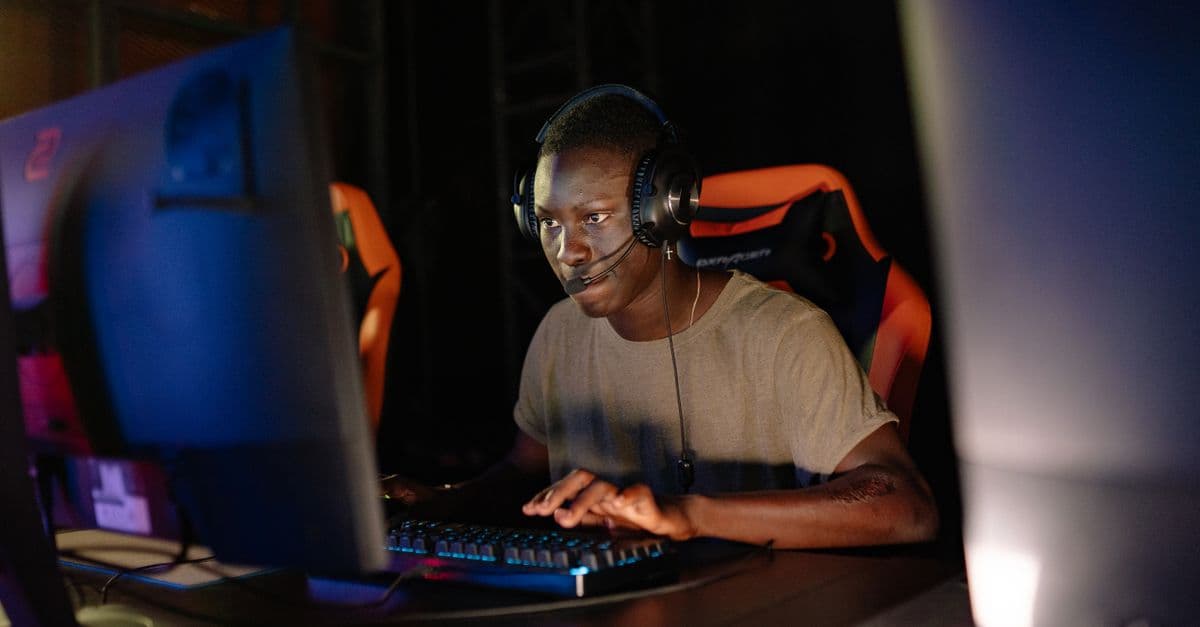
Photo: James Collington / Pexels
Game development has always been a resource race. AAA titles require teams of hundreds spending years producing millions of individual assets — textures, models, animations, sound effects, concept art — before a single player sees them. Art and asset production has long been reported as one of the largest line items in AAA budgets, and that math is starting to shift. Studios that once needed a dozen concept artists to prototype an environment can now iterate in hours, and small independent teams are producing visual fidelity that would have required a major publisher's budget just five years ago. This piece walks through where AI actually sits in the asset pipeline today, which studios are using it and how, and where the real limits and controversies are — separate from the marketing claims on both sides.
Key takeaways
- AI tools such as Midjourney, Stable Diffusion, and NVIDIA's ACE and Omniverse suites are active in professional game art pipelines, mostly for concept iteration, texture variation, and NPC dialogue drafts.
- Machine learning accelerates specific pipeline stages — concept art, texture generation, 3D asset drafting, and background dialogue — without yet replacing hero-asset or narrative work.
- NVIDIA, Ubisoft, and independent studios are integrating generative tools into production, but each has drawn public pushback from artists and writers over credit, quality, and job security.
- US Copyright Office guidance means purely AI-generated art may not be legally protectable, which affects how studios structure ownership of shipped game assets.
- Industry surveys show developer sentiment on generative AI trending negative even as adoption grows, a genuine split worth understanding before treating either side's framing as settled.
The Asset Pipeline: Where AI Has the Most Impact
Modern game asset production follows a lengthy pipeline. Concept artists sketch visual directions. Art directors approve and refine. Modelers build 3D geometry. Texture artists create surface detail. Technical artists rig characters for animation. Environment artists place assets in game worlds. Writers draft dialogue, and audio designers build ambient soundscapes. Each stage is labor-intensive, iterative, and expensive — a single hero character in a modern RPG can pass through a dozen specialists before it ships.
AI tools have inserted themselves at multiple points in this pipeline with varying degrees of disruption. In concept art, generative image models let art directors rapidly iterate visual ideas — a dozen variations on an environment's lighting mood in an hour rather than a week. In texture creation, ML-based synthesis tools generate high-resolution surface detail from smaller reference inputs or plain-language descriptions. In 3D modeling, emerging text-to-3D and image-to-3D tools can generate rough geometry from a single reference image or prompt, dramatically shortening the blocking-out phase that once ate days of a modeler's time.
The impact isn't uniform, and it isn't close to end-to-end. Think of AI in the current pipeline the way autocomplete works in a word processor: it fills in plausible next steps fast, but a human still decides what the sentence needs to say and rewrites the parts that don't fit. The quality bar for shipped game art remains high enough that fully automated generation isn't viable for hero assets, cinematics, or anything a player will stare at for more than a few seconds. But the speedup in early-stage iteration is already changing how studios plan production timelines, and that's the part worth understanding in detail.
NVIDIA's Contribution: From DLSS to Digital Humans
NVIDIA has been the most aggressive major hardware company in developing AI game art and character tools, and its efforts split into two distinct product lines that are frequently conflated.
The first is rendering-side: DLSS (Deep Learning Super Sampling) uses a neural network trained on game frame data to upscale lower-resolution rendering to display-quality output in real time. The practical effect is that games can render internal frames at reduced resolution — faster to compute — and upscale to 4K without the blur and shimmer of traditional upscaling methods. This is not an art-generation tool in the sense of creating new assets; it is a rendering-optimization technique, but it changes what art teams can afford to build, since more detailed geometry and texture work becomes viable when the GPU doesn't have to render every pixel natively.
The second line, and the more directly relevant one to asset creation, is NVIDIA ACE (Avatar Cloud Engine), a suite of RTX-accelerated digital human technologies first introduced in 2023 and expanded through 2024 and 2025. ACE bundles models like Audio2Face, which generates expressive facial animation directly from an audio track (including text-to-speech output), and Riva ASR for real-time speech recognition, letting players talk to NPCs by microphone instead of typing. At Gamescom 2024, NVIDIA introduced an on-device small language model specifically for improving game-character conversational range, with Mecha BREAK among the first titles to publicly demo the technology. NVIDIA has listed developer partners including miHoYo, NetEase Games, Tencent, Perfect World, Ubisoft, and Convai as ACE adopters. Sources: NVIDIA GeForce News, ACE architecture and NVIDIA Developer Blog, on-device SLM for game roleplay.
It's worth being precise about what ACE actually replaces and what it doesn't. It generates facial animation from audio and can drive real-time conversational responses within a scripted range, but the underlying dialogue content, character personality design, and narrative arcs are still written and directed by human teams. The tool automates the mechanical translation of "here is a line of dialogue" into "here is a moving, speaking face" — a genuinely difficult animation problem that used to require motion capture or hand-keyed facial rigs for every line.
Ubisoft: Texture Variation, and the Ghostwriter Controversy
Ubisoft has been the most publicly visible large studio experimenting with generative AI in production, and its experience illustrates both the upside and the reputational risk clearly.
On the texture and environment side, Ubisoft's research team has explored using generative adversarial networks (GANs) to produce game-ready texture variations automatically — feeding a network a base texture and receiving multiple plausible variations across weather conditions, wear levels, and color palettes. For open-world games that need hundreds of surface variations to avoid visual repetition across a large map, this kind of automated variation generation addresses a real production bottleneck: a single texture artist can only hand-paint so many convincing "cracked concrete, slightly different" tiles before diminishing returns set in.
The more contentious deployment has been Ubisoft Ghostwriter, an internal AI tool that generates first-draft NPC "barks" — the short, ambient lines background characters say when a player walks past them (combat callouts, idle chatter, environmental reactions). Ubisoft has said Ghostwriter output is treated strictly as a draft that scriptwriters edit, and that its use is limited to barks rather than narrative dialogue. The tool drew significant public criticism after Ubisoft's July 2025 announcement, with writers and creatives arguing publicly on social media against the framing, and some noting that editing AI drafts to an acceptable quality bar can take as long as writing original lines. Sources: Siliconera, Ubisoft Ghostwriter and Game Developer, GDC 2024 State of the Industry.
The Ghostwriter backlash didn't happen in isolation. French video game developers staged their first-ever sector-wide strike in February 2025, and Ubisoft unions called an international three-day strike in early 2026 over a broader restructuring plan that included studio closures and layoffs. Generative AI tools are one grievance among several in that dispute, not the sole cause, but the timing means Ubisoft's AI announcements land in a workforce already anxious about job security. Source: PC Gamer, Ubisoft union backlash.
Indie Revolution: Punching Above Your Weight Class
The most democratizing effect of AI art tools is on independent developers. A solo developer or a two-person team has historically been limited to pixel art or stylized low-polygon aesthetics — not necessarily by creative preference, but because realistic 3D art was out of reach without a team of specialists.
AI tools are chipping away at that constraint the same way desktop publishing software once let a single person produce a magazine layout that used to require a print shop. Text-to-3D generators like Meshy convert a written prompt or a reference image into a textured, export-ready 3D model in roughly a minute, following a pipeline of generation, mesh optimization, PBR (physically based rendering) texturing, and for characters, automated rigging. That doesn't produce a finished, ship-ready hero asset — the geometry usually needs cleanup and the textures need art-directed refinement — but it collapses what used to be a full day of blocking-out work into a starting point a solo developer can iterate on in an afternoon. Source: Meshy documentation, game asset workflow.
Style-consistency tools that let a developer fine-tune an image model on their own game's specific art direction serve a similar function for 2D concept and environment art: instead of hiring multiple artists to maintain visual consistency across hundreds of assets, one artist can establish the style and use the tuned model to extend it. The tradeoff is real, though — over-reliance on a single tuned style model can flatten visual variety in ways a team of artists with individual sensibilities naturally avoids.
Where the Major Tools Actually Fit
It's easy to lump every "AI game tool" into one bucket, but they solve genuinely different production problems and sit at different stages of the pipeline. The table below breaks down what each does, who's using it publicly, and what it doesn't do.
Table: AI tools by game-development pipeline stage
| Tool / Technology | Pipeline stage | What it actually does | Known adopters | What it doesn't do |
|---|---|---|---|---|
| Midjourney / Stable Diffusion | Concept art | Generates 2D mood and environment images from text prompts for early ideation | Widely used informally across indie and AA studios | Produce game-ready, license-clear final art without human revision |
| NVIDIA DLSS | Real-time rendering | Upscales lower-resolution rendered frames to higher-resolution display output | Broadly licensed across PC and console titles | Generate or modify any art asset — it's a rendering technique, not an art tool |
| NVIDIA ACE (Audio2Face, Riva ASR) | Character animation, voice interaction | Generates facial animation from audio and enables real-time speech-driven NPC conversation | miHoYo, NetEase, Tencent, Ubisoft, Convai, others | Write the underlying dialogue content or character personality |
| Ubisoft texture-variation GANs (research) | Environment texturing | Produces plausible surface variations (wear, weather, color) from a base texture | Internal Ubisoft research, not publicly released | Design an original material from scratch without a human-made base |
| Ubisoft Ghostwriter | NPC dialogue (barks only) | Drafts first-pass ambient NPC lines for human scriptwriters to edit | Ubisoft internal production | Write narrative dialogue, quest text, or cinematics |
| Meshy | 3D modeling | Converts text or image prompts into textured, roughly rigged 3D models in about a minute | Indie developers, prototyping teams | Deliver production-ready topology or final PBR texture quality without cleanup |
The Legal Question: Who Owns an AI-Generated Asset?
This is the part of the AI-in-games conversation that gets the least attention relative to how much it actually matters for a studio's bottom line, because it determines whether a shipped asset can be legally defended against copying.
US Copyright Office guidance, first issued in March 2023 and expanded in a February 2025 report, holds that copyright protection requires human authorship. Purely AI-generated material — an image or model produced by a prompt with no further human creative modification — is not protectable on its own. Where a human "sufficiently modifies AI-generated material to meet the standard for copyright protection," or selects and arranges AI outputs in a sufficiently creative way, the human's contribution can be registered, but the underlying AI-generated element still cannot. Practically, that means a studio needs to document which parts of an asset involved meaningful human creative work — concept sketches that guided the AI output, hand-painted refinements over a generated base texture, art-directed compositing — to have any enforceable claim if a competitor copies the asset wholesale. Source: Federal Register, Copyright Registration Guidance.
The training-data side of the legal picture is separately unresolved. Multiple image-generation models were trained on large web-scraped image datasets that included copyrighted artwork without individual artists' consent, and lawsuits over whether that training constitutes infringement are ongoing in US courts. Until those cases resolve, studios integrating third-party generative tools into their pipelines are absorbing legal uncertainty about the provenance of the models' training data, not just the ownership of the output.
Can I copyright an AI-generated game asset?
Not on its own. US Copyright Office guidance says AI-generated material without meaningful human creative modification is not protectable. Studios that want enforceable ownership need to document specific human creative contributions — direction, editing, compositing — layered on top of the AI output, and register only those contributions.
The Controversy: Authentic Creativity vs. Automated Production
The integration of AI into game art production is not without significant, well-documented pushback from working artists and writers, and it predates most current studio deployments. In December 2022, artists staged a mass protest on ArtStation (owned by Epic Games) after AI-generated images began appearing alongside human portfolios on the platform's front page, posting "No to AI Generated Images" graphics across thousands of profiles. ArtStation's response — an opt-in "NoAI" tag that had to be applied per artwork rather than by default — was widely seen by the protesting artists as insufficient, and criticism of the platform's policy continued for months afterward. Source: PetaPixel, ArtStation protest.
That tension shows up in industry-wide survey data too, not just in isolated protests. The Game Developers Conference's annual State of the Game Industry survey has tracked developer sentiment toward generative AI declining even as adoption climbs: the share of developers reporting a positive impact from generative AI dropped from 21% to 13% between the 2023 and 2024 surveys, while the share reporting a negative impact rose to 30%, a 12-point increase. The same surveys found no clear evidence that current layoffs are being directly driven by AI adoption — developers cited post-pandemic course correction, studio conglomeration, and economic pressure as the more likely causes — but the perception gap between "AI is a convenient scapegoat" and "AI is actually costing jobs" remains a live and largely unresolved argument inside the industry. Source: Game Developer, GDC 2024 State of the Game Industry.
Within studios that have worked through these tensions rather than avoided them, the practical framing that tends to emerge is that AI tools function best as accelerators for a specific, narrow set of early-stage or background tasks — texture variation, barks, environmental blocking — rather than as replacements for hero-asset work, narrative writing, or art direction. A concept artist who can produce a dozen environmental mood variations in a day rather than one can explore more creative territory before committing, but someone still has to recognize which variation is actually good, and that judgment call hasn't been automated. That framing positions AI as an amplifier of a smaller team's output rather than a replacement headcount, though it doesn't resolve the legitimate concern that a smaller team doing more work with AI assistance is still a smaller team than the one that would have been hired without it.
Common Misconceptions About AI Game Art
"AI can generate a complete, ship-ready game today." It can't, at least not for anything a player is meant to look at closely or for more than a few seconds. Generated 3D geometry from current text-to-3D tools typically needs topology cleanup, UV unwrapping fixes, and hand-refined textures before it's usable in a real-time engine at production quality. Generated concept art is genuinely useful for mood and direction but rarely survives contact with an actual production pipeline unmodified.
"Every studio using AI tools is doing it to cut headcount." Some deployments are explicitly framed that way by studio leadership, and layoffs have coincided with generative AI rollouts often enough that the suspicion is reasonable. But GDC's own industry survey data doesn't show a direct causal link between AI adoption and the current layoff wave, which appears more tied to post-pandemic overhiring correction and studio conglomeration. Both things — real job displacement risk and a broader industry contraction happening for other reasons — can be true simultaneously, and treating them as the same phenomenon oversimplifies both.
"AI-generated assets are automatically owned by the studio that generated them." Not under current US law. Without documented human creative modification, purely AI-generated material isn't copyrightable at all, which is a legal exposure many smaller studios haven't fully reckoned with.
FAQ
Q: What AI tools are professional game developers currently using for art creation? A: Common tools include Midjourney and Stable Diffusion for concept art ideation, NVIDIA's ACE suite (Audio2Face, Riva ASR) for character animation and voice interaction, Omniverse for procedural material generation, and specialized platforms like Meshy for text-to-3D asset generation. Studio-internal tools, such as Ubisoft's texture-variation GAN research and Ghostwriter for NPC barks, are typically not available outside the studios that built them.
Q: Can AI fully replace human game artists? A: Not at current technology levels, and there's no clear evidence it will in the near future for high-quality shipped games. AI is genuinely effective at variation, iteration, and certain texture or environmental tasks, but complex character art, narrative illustration, and art direction still depend on human creative judgment that hasn't been automated. GDC's own industry survey data doesn't show generative AI as a direct driver of the current wave of layoffs, though it is a growing concern among developers.
Q: Do AI-generated game assets look noticeably different from hand-crafted ones? A: For some asset types, tileable textures, environmental props, and early concept sketches, AI output is now close to competitive with human work once refined by an artist. For character art, hero assets, and cinematics, trained eyes can usually still identify artifacts from AI generation, such as inconsistent geometry or texture seams. The gap is closing, but it hasn't closed.
Q: Are there commercial games where AI generated most of the visual content? A: Not among major commercial releases. Some smaller experimental and mobile titles have leaned on AI generation more heavily, but mainstream studios use these tools as one stage in a broader human-directed pipeline rather than as the primary production method.
Q: Who owns the copyright on an AI-generated game asset? A: Under current US Copyright Office guidance, purely AI-generated material without meaningful human creative modification is not copyrightable. A studio can register copyright on the human-directed and human-edited portions of an asset, but the underlying AI-generated element itself typically cannot be claimed as authored work. Studios are advised to document the human creative contribution at each stage.
Q: Is training an AI image model on copyrighted art legal? A: This is actively being litigated in US courts and the outcome varies by jurisdiction and by specific case. Many popular generative image models were trained on large web-scraped datasets that included copyrighted artwork without explicit consent from the original artists, and whether that constitutes infringement remains an open legal question as of 2026.
Q: What is NVIDIA ACE and how is it different from DLSS? A: DLSS (Deep Learning Super Sampling) is a rendering-optimization technology that upscales lower-resolution game frames to higher-resolution output in real time. NVIDIA ACE (Avatar Cloud Engine) is a separate suite of digital-human tools, including Audio2Face for generating facial animation from audio and Riva ASR for speech recognition, aimed at making NPCs conversational rather than making frames render faster.
Q: Why did Ubisoft's Ghostwriter tool cause backlash? A: Ghostwriter generates first-draft dialogue for background NPC "barks," and Ubisoft has said it's used only for that narrow purpose with scriptwriters editing every line. The backlash centered on the public announcement itself, which many writers read as normalizing AI involvement in creative writing work, and it landed amid broader labor tensions at Ubisoft, including union strikes over layoffs and studio closures unrelated to the tool itself.
Q: Do AI art tools actually save studios money? A: Studios and tool vendors report meaningful time savings on specific tasks like texture variation and concept iteration, but there's no independently audited, publicly available figure for total cost savings across a full AAA production. The time saved on early-stage tasks is often reinvested into more iteration rather than reducing overall budget, since art directors use the extra speed to explore more options rather than simply stopping earlier.
Q: What should a solo or small indie developer actually expect from tools like Meshy? A: A usable starting point, not a finished asset. Text-to-3D and image-to-3D tools can produce a textured, roughly rigged model in about a minute, but the geometry typically needs cleanup and the textures need art-directed refinement before they're production-ready in a real-time engine. Treat the output as a fast first draft, similar to a rough sketch, not a final deliverable.
The takeaway
AI tools have genuinely accelerated a handful of specific, well-defined stages in game asset production — concept iteration, texture variation, background dialogue, and rough 3D blocking — without coming close to replacing the human judgment that turns a rough draft into a shipped, art-directed asset. The technology is real and the productivity gains for small teams are measurable, but so is the backlash from artists and writers who've watched studios deploy these tools with the same PR gloss the industry uses for everything else, and the unresolved copyright and training-data questions mean the legal ground under all of this is still shifting. The studios navigating this well are treating AI as a way to do more early-stage iteration with the same headcount, not as a shortcut around paying for creative judgment — and the ones that get that distinction wrong are the ones generating the loudest backlash.
Read next:
Follow new articles
Add SciHub101 to your feed reader to see new science and technology stories.
About the Author
SciHub101 is an independent science and technology publication founded and edited by Buğra Sözeri, a software engineer and app developer based in Türkiye. AI tools assist with drafting and research. Source documentation in the existing archive is uneven, and articles are being reviewed and corrected. The Editorial Team byline identifies editorial responsibility; it does not certify specialist or independent human review. Where we compare products, anything built by our own team is labelled as such — see the editorial guidelines and About page for how corrections and disclosures work.
Related Articles
Indie Games: David vs Goliath and Winning
Indie developers proved that creativity and passion could compete with AAA budgets. Games like Celeste, Hades, and Stardew Valley proved small teams could create masterpieces.

Gaming and Mental Health: How Games Help Us Heal
Video games are increasingly recognized as tools for mental wellness. From anxiety management to therapy, gaming provides benefits science is only beginning to understand.

AI-Powered Game Testing: How Machine Learning Is Transforming Quality Assurance
AI testing agents can play through games thousands of times overnight, finding bugs and balance issues that human QA testers would take months to discover.
Machine Learning and Procedural Level Generation: Infinite Worlds by Design
Machine learning is transforming procedural generation from random noise into intelligent design, creating game worlds that feel handcrafted yet never repeat.
How Neural Networks Are Making NPCs Smarter Than Ever
Neural networks are transforming game NPCs from predictable scripted bots into adaptive, lifelike characters that learn and surprise players.
Neural Networks and Physics Simulation: How AI Is Rewriting the Rules of Game Engines
Neural networks are replacing traditional physics equations in game engines, enabling more realistic simulation of fluids, cloth, destruction, and character motion at real-time speed.