Indie Games: David vs Goliath and Winning
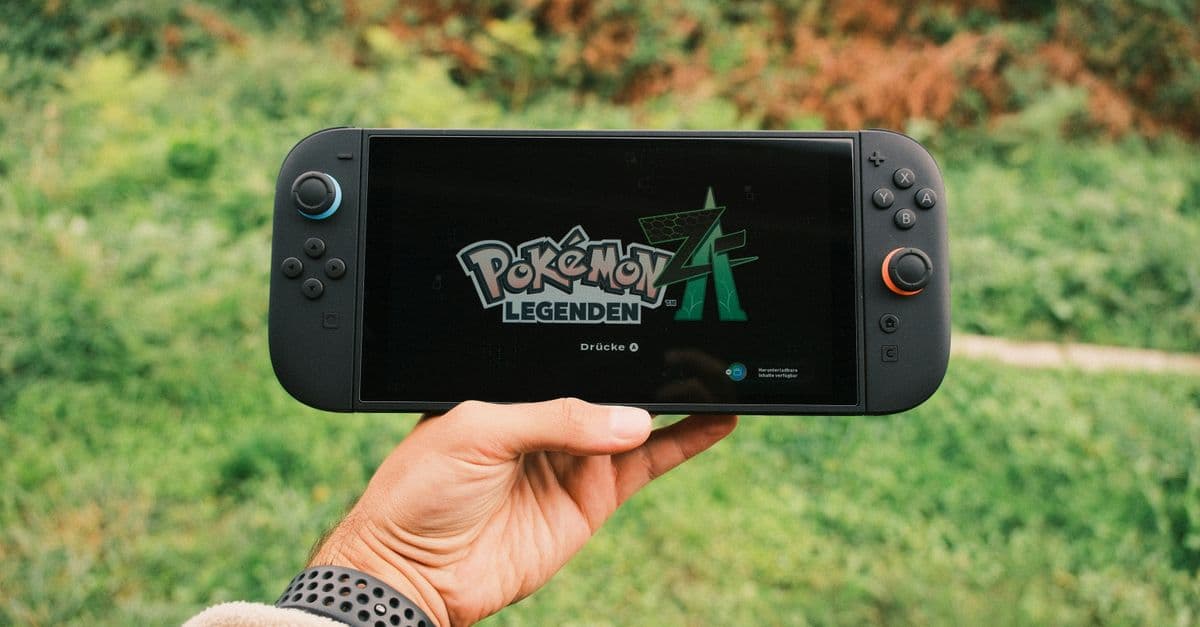
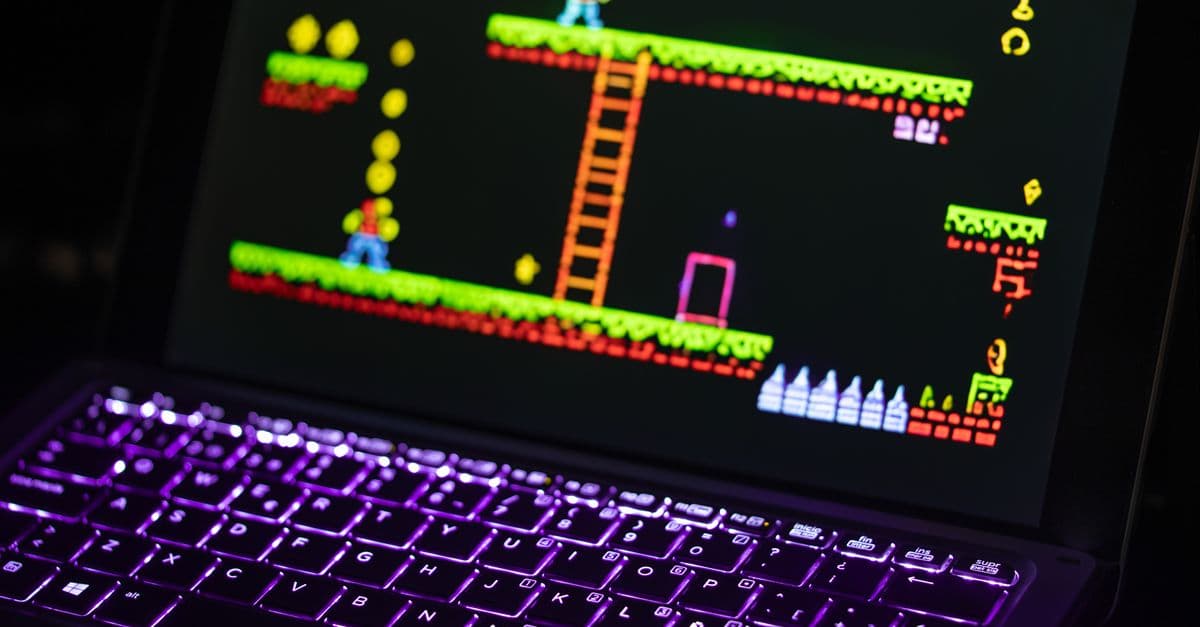
Photo: Daniel J. Schwarz / Pexels
One person spent about four and a half years building a farming game by himself: the design, the code, the pixel art, the music, the writing. By December 2024, Stardew Valley had passed 41 million copies sold across all platforms, a number that few studios with hundreds of employees ever reach. Indie games have a real record of beating bigger budgets, and this article explains why it happens, which numbers can be trusted, and what the success stories leave out.
What "indie" means, and why the label stretches
Indie is short for independent. The strict version is simple: the developers fund the game themselves or through backers, no publisher controls creative decisions, and the team is small. In practice the word covers a wide spectrum, and the edge cases are more informative than the definition.
Stardew Valley sits at one end. Eric Barone began it in 2012, released it in 2016, and handled it as designer, programmer, artist, animator, composer, and writer. He paid his bills with a part-time evening job as an usher at a Seattle theater while he worked, and he began working with a small team only in 2019, according to the Wikipedia summary of Barone's career.
Disco Elysium sits much further along. Its developer, ZA/UM, had venture funding in its first year, and by release in October 2019 the company had about 35 in-house developers and about 20 outside consultants, per the Wikipedia entry for the game. Most players still call it indie, and it won four awards at The Game Awards 2019, including Best Independent Game. Balatro is another blurred case: LocalThunk, a solo developer, spent about two and a half years on it, but a publisher, Playstack, released it.
The useful test is not headcount alone but who holds decision-making authority. A solo developer who answers to nobody is independent in the fullest sense, even with outside money. A 12-person team taking creative notes from a publisher's marketing department is functionally a small satellite studio. When you compare outcomes, it helps to know which kind of indie you are looking at, because the freedom-versus-resources tradeoff plays out very differently across that range.
Five structural advantages small teams have
Small teams do not out-resource big studios. They win by removing friction that resources create. Postmortems and interviews from successful indie developers return to the same five advantages.
Decision speed. A solo developer or a three-person team can rewrite a core mechanic in an afternoon. A large studio often needs sign-off from design leads, producers, and a publisher before the same change ships, and that process can take weeks.
Fewer layers between idea and game. In a big production, an unusual idea passes through market research, focus testing, and executive review. Each step tends to sand off whatever is strange. A two-person team answers to its own judgment.
Control of scope. Indie developers choose what to cut. If a mechanic is not working, they can kill it, because no marketing beat has already promised it to the public.
Direct player relationships. Developers post progress on Discord and social media themselves. There is no public-relations layer translating feedback before it reaches the person who can act on it.
A lower break-even. A small team with small costs needs far fewer sales to be sustainable, which makes "moderate success" a real outcome rather than a polite word for failure.
Management scholars would call the common thread reduced coordination overhead. The more people who must agree before a change ships, the more of the budget is spent on agreeing. Think of two boats crossing a harbor. A rowing skiff can turn around the moment its rower spots a better channel, while a container ship needs a mile of warning and a plan filed in advance. The container ship carries more cargo, but only the skiff can follow a hunch.
Case studies: what the numbers actually say
Numbers make the abstraction concrete. The table gathers verifiable facts for six well-known games. Sales figures are as reported on the dates shown, and they change, so treat them as snapshots.
| Game | Who made it | Funding and timeline | Reported outcome |
|---|---|---|---|
| Stardew Valley | Eric Barone, solo through 2019 | Started 2012, released 2016, self-funded from part-time work | 41 million+ copies across platforms by December 2024 (26 million on PC, 7.9 million on Switch) |
| Undertale | Toby Fox, with Temmie Chang as main artist | Kickstarter June 24 to July 24, 2013: US$5,000 goal, US$51,124 raised from 2,398 backers; released September 15, 2015 | Over one million copies by early February 2016 |
| Hollow Knight | Team Cherry (Adelaide, Australia) | Kickstarter in 2014: A$35,000 goal, over A$57,000 raised from 2,158 backers; released February 24, 2017 | 2.8 million by February 2019; 15 million+ by August 2025 |
| Shovel Knight | Yacht Club Games | Kickstarter closed April 13, 2013: US$75,000 goal, US$311,502 raised | Spawned sequels and spin-offs |
| Hades | Supergiant Games, about 20 staff at Early Access | Early Access from December 2018; full release September 17, 2020 | About 700,000 copies in Early Access; over one million within three days of full release |
| Balatro | LocalThunk (solo), published by Playstack | About 2.5 years of development; released February 20, 2024 | Over US$1 million gross in eight hours (per Playstack); over 5 million copies by January 2025 |
Sources: Game Developer for Stardew sales; Wikipedia: Undertale, Hollow Knight, Hades, and Balatro for funding, dates, and sales milestones; Engadget for Shovel Knight; KitGuru for the 15 million figure.
Stardew Valley and the value of a patient solo project
Barone told no publisher what to build. He began partly as a way to practice C# and to have a finished project to show employers, and the project grew until it became his job. Game Developer reported the 41 million figure after Barone posted it himself, and the sales breakdown shows how wide the audience became: 26 million on PC and 7.9 million on Switch, with the rest spread across other consoles and mobile.
The cost was not visible in the sales chart. The same Wikipedia summary quotes Game Developer describing his schedule, roughly 10 hours a day, seven days a week, as "self-imposed crunch." A solo hit is not a free lunch. The developer pays in years of income and health, and gets paid only if the game lands.
Undertale and the Kickstarter that outran its goal
Toby Fox wrote the game's script and music, programmed it, and drew some of the art, with Temmie Chang providing most of the sprites and concept art. He asked Kickstarter backers for US$5,000 and received US$51,124. By Wikipedia's account, the game was developed over 32 months and passed one million sales by early 2016, a few months after its September 2015 release.
Undertale also shows how a small game gets noticed without an ad budget. It spread through memes, fan art, and streamers, especially around the character Sans, and later through unusual tie-ins like a costume in Super Smash Bros. Ultimate. None of that was planned in a marketing calendar. It was a byproduct of a game that people wanted to talk about.
Hollow Knight and the game jam origin
Hollow Knight began as a game jam. Ari Gibson and William Pellen made a game called Hungry Knight for Ludum Dare 2013, and its protagonist became the design basis for the Knight. A 2014 Kickstarter raised more than A$57,000 against a A$35,000 goal. The game launched in February 2017 and reached 2.8 million copies by February 2019, then 15 million by August 2025, as reported by KitGuru from a Bloomberg piece. That sales curve is unusual. The game kept selling for years, helped by a console launch, word of mouth, and a loyal audience that waited for the sequel, Silksong, which launched on September 4, 2025.
Team Cherry began with the two founders, Ari Gibson and William Pellen, and later added a technical director, a composer, and a marketing and publishing lead. A studio that small can keep tight control over a game's tone.
Hades and the Early Access experiment
Supergiant Games was a team of about 20 employees when it chose Early Access for Hades, and it had previously shipped Bastion, Transistor, and Pyre. That history matters because it complicates the underdog story. Hades was the work of a veteran team with a track record, not first-time hobbyists.
Early Access gave the team a way to fund and test the game at the same time. According to the Hades article on Wikipedia, the game sold about 700,000 copies during Early Access, then roughly 300,000 more in the first three days after its full release on September 17, 2020. It won Game of the Year at the BAFTA Games Awards, the D.I.C.E. Awards, and the Game Developers Choice Awards, and it became the first video game to win a Hugo Award. Our piece on roguelike design and Hades looks at why its loop of dying and returning worked so well.
Balatro and the one-person hit
Balatro, a poker-themed roguelike deck-builder, was released in February 2024 and sold over a million copies in its first month. By January 2025 it had passed five million. It won Best Independent Game, Best Debut Indie Game, and Best Mobile Game at The Game Awards 2024. The developer worked alone for about two and a half years, and the game's visual and mechanical simplicity helped. A complete, tightly scoped design can be finished by one person; a sprawling one cannot.
Celeste and a prototype made in days
The platformer Celeste began as a PICO-8 prototype made by Maddy Thorson and Noel Berry over about three days in August 2015. The full game came out on January 25, 2018, and had reached about 1.7 million copies by January 2025, by the Wikipedia count. Its Assist Mode, which lets players slow the game or grant themselves invincibility, was added late in development, and Berry said it took a couple of days to build, though balancing it required extensive playtesting. The decision to treat difficulty options as part of the design, rather than as cheating, anticipated a wider conversation about game accessibility and inclusive design.
The distribution shift that made this possible
None of these results were achievable before digital storefronts. Before they matured, reaching a store shelf took a publisher relationship, manufacturing costs, and a distribution deal. Each of those worked as a gatekeeper, filtering out anything a publisher considered too risky or too strange.
Digital stores removed those layers. Steam lets developers publish directly, and the platform's cut is now publicly documented. Fortune reported in 2018 that Steam takes 30% of revenue at lower levels, 25% above $10 million, and 20% from $50 million, applied to revenue from October 1, 2018 onward. A 30% cut is not small, but it replaced the layered margins of physical retail, and it is predictable.
The cost of an open door: 19,003 releases
Easy access has a downside. SteamDB's release statistics counted 19,003 games released on Steam in 2024, a record, as reported by GamingOnLinux. Tom's Hardware reported the same record as "over 18,000" from an earlier count. The exact total depends on when the count is taken and how it is filtered.
The same GamingOnLinux report says that 15,009 of those games carried SteamDB's "Profile Features Limited" flag, which marks games that have not reached certain player and sales thresholds. That does not mean 15,009 games failed, because new releases start with limited features and some are not meant to sell. But it shows how thin attention can be. For every Stardew Valley there are many games that few people ever play. The bottleneck has moved from getting published to being found.
How indie developers get noticed without an advertising budget
They rely on communities more than on ad spend. Common tactics include sending early builds to streamers directly, posting devlogs on Discord and social media, releasing demos, and taking part in storefront festivals that feature unreleased games. Undertale is the textbook example of a title that spread through fans, memes, and streamers. None of these tactics guarantees a result, and a game that is hard to describe in a single clip tends to struggle.
How indie funding works: four models
Indie developers did not only find new places to sell games. They found new ways to pay for them before a single copy sold.
- Crowdfunding. A developer sets a goal and a deadline, and backers pledge money for rewards. If the goal is missed, no money changes hands. Shovel Knight asked for $75,000 and raised $311,502. Undertale asked for $5,000 and raised $51,124. Hollow Knight asked for A$35,000 and raised more than A$57,000. In all three, the campaign also served as proof of demand.
- Early Access. The developer sells an unfinished game and uses the revenue to finish it while players give feedback. Hades spent about 21 months in Early Access, from December 2018 to September 2020, and earned roughly 700,000 sales before it was done.
- Publisher or platform deals. Some small games take a publisher's money in exchange for marketing, porting, or distribution help, as Balatro did with Playstack. Some storefronts and subscription services pay up front for inclusion. Those terms are private, which makes outside figures rare.
- Direct sales with low distribution cost. There is no manufacturing and no shelf-space negotiation. The platform's percentage is the main cost of selling.
A back-of-envelope break-even
Here is a hypothetical, not any real studio's accounts. Suppose a small team spends $150,000 over two years on a game priced at $20. After a 30% platform cut, the studio keeps $14 per copy. Dividing $150,000 by $14 gives about 10,700 copies to recover costs, before taxes, refunds, regional price discounts, and any publisher share.
| Price | Studio's share after a 30% cut | Copies to recover $150,000 |
|---|---|---|
| $10 | $7.00 | about 21,400 |
| $20 | $14.00 | about 10,700 |
| $30 | $21.00 | about 7,100 |
The cost figure and prices are illustrative assumptions. The 30% rate is the base Steam rate described by Fortune.
A game with a cost base ten times larger needs ten times the copies. That is the lower-break-even advantage in numbers, and it is why a mid-sized hit can be a success for a small team and a disappointment for a large one.
Where AAA still wins
It would be inaccurate to frame this as indie triumphing everywhere. Some kinds of games are not buildable by a few people. Open-world games with dense, hand-built environments need large teams to make and test that much content in a reasonable time. Games with heavy licensed properties, film-grade motion capture, or large-scale multiplayer infrastructure require capital and specialized engineers. Live-service games that need new content every few weeks for years need sustained staffing that a tiny core team cannot supply without burning out.
Indie strength runs the opposite way. It peaks in games where a tightly scoped, mechanically deep, single vision matters more than breadth. That explains why indie hits cluster in genres like precision platformers (Celeste), narrative role-playing games (Disco Elysium), roguelikes (Hades, Balatro), and cozy simulations (Stardew Valley). Our article on metroidvania exploration design covers another genre where small teams have thrived, and how procedural generation creates infinite game worlds explains a technique that lets a small team make a lot of content.
What people get wrong about indie success
Survivorship bias. Everything in this article is about games that succeeded, which is exactly why they are in this article. For every Celeste there are many well-made platformers that sold a few thousand copies and never repaid their developers' time. Reading the success stories as a recipe confuses a handful of outcomes with a method.
"Indie means amateur." Hades came from a studio with three earlier commercial games. Disco Elysium had a staff the size of a mid-sized studio. Indie describes how a game is funded and who controls it, not the skill of the people making it.
"Indie escapes crunch." Solo developers and tiny teams often work without HR departments, overtime pay, or a safety net if the game fails. That can be harsher than AAA crunch, because there is no larger institution to absorb the loss. Barone's seven-day weeks are a case in point.
"A hit means lasting security." Disco Elysium is a useful warning. By the Wikipedia account, several of its creative leads left ZA/UM in late 2021 amid ownership disputes, after the game had won four Game Awards and sold millions. Commercial success did not protect the company from internal conflict. A hit can fund a studio's future, but it does not guarantee a stable one.
How indie games reshaped the larger industry
The influence runs both ways. Design ideas that spread through small games, such as roguelike loops, precision difficulty, and experiments with how saving works, now show up in much larger productions too. Our explainers on why save systems change player behavior and why random loot feels rewarding look at two of these ideas.
Money is another channel. Small games had to solve in-game economies and balance with limited budgets, which pushed designers to think about inflation and currency sinks early, a topic covered in why game economies inflate. For the industry's overall finances, see our article on the economics of the gaming industry.
The takeaway
Indie games did not beat larger studios by outspending them. They won by cutting the layers of committee, obligation, and coordination that money tends to create, and by using Steam, Kickstarter, and Early Access to reach players without a publisher's approval. The record is real: a solo developer with 41 million sales, a team of about 20 winning Game of the Year awards, a Kickstarter that turned $5,000 into $51,124.
The model also has a survivorship problem built in. With 19,003 games released on Steam in 2024 and most of them carrying limited-feature flags, the question is no longer who can publish but who can be found. Small teams can compete on equal terms when the game itself is the thing being judged. They cannot count on anyone judging it.
FAQ
Q: How much does it cost to develop an indie game? A: It varies too much for a single number. Stardew Valley's main cost was Barone's own unpaid time over four and a half years. Undertale ran on a US$51,124 Kickstarter plus Fox's time. Hades and Hollow Knight cost more, but neither studio has published exact budgets. A useful approach is to work backward from the break-even math above: costs divided by the studio's net revenue per copy.
Q: Can indie developers make a living from this? A: Some do, but outcomes are uneven. The success stories show it is possible. The 19,003 Steam releases in 2024, most flagged with limited profile features, show that many games reach few players. Developers who go full time usually do so after a first game proves itself, and many keep contract work or day jobs in the meantime.
Q: What is the difference between indie, AA, and AAA? A: There is no official line. In common usage, indie means small and independent, AAA means large budgets and teams with heavy publisher involvement, and AA falls in between. The boundaries blur, as Disco Elysium's 35 in-house developers and 20 consultants show, and a game can be called indie while taking publisher money, as Balatro did with Playstack.
Q: How do developers with no advertising budget get noticed? A: Mostly through direct contact with streamers and communities, devlogs, demos, and word of mouth. Undertale spread largely through fans, memes, and streamers rather than paid promotion. No tactic is reliable, and a game that is hard to explain in a short clip faces a steeper climb.
Q: Do indie games compete for major awards? A: Yes. Hades won Game of the Year at the BAFTA Games Awards, the D.I.C.E. Awards, and the Game Developers Choice Awards, and became the first game to win a Hugo Award. Disco Elysium won four awards at The Game Awards 2019, and Balatro won three at The Game Awards 2024 and was nominated for Game of the Year.
Q: Why do so many indie games use pixel art or simple visuals? A: Partly style, and largely scope. Stylized or 2D art lets a very small team produce a consistent look without the rendering, motion capture, and asset-production headcount that realistic 3D requires. Celeste began as a prototype on PICO-8, a deliberately limited console, and its pixel look carried through to the finished game.
Q: Can one person really finish a commercially successful game? A: Yes, though it is rare. Stardew Valley and Balatro were each built mainly by one developer over multiple years. Both took long stretches of work before revenue arrived, and both benefited from careful scoping. Most solo projects do not become hits.
Sources
- Game Developer: Stardew Valley sales grew to over 41 million by 2024's end
- GamingOnLinux: Valve saw a record-breaking nearly 19,000 games released on Steam in 2024
- Tom's Hardware: Steam released a record number of games in 2024
- Fortune: Steam revenue share tiers, December 2018
- Engadget: Shovel Knight Kickstarter campaign raises over $300K
- KitGuru: Hollow Knight has sold over 15 million copies
- Inverse: Undertale anniversary
- Wikipedia: Eric Barone, Undertale, Hollow Knight, Hades, Celeste, Balatro, Disco Elysium
Read next:
Follow new articles
Add SciHub101 to your feed reader to see new science and technology stories.
About the Author
SciHub101 is an independent science and technology publication founded and edited by Buğra Sözeri, a software engineer and app developer based in Türkiye. AI tools assist with drafting and research. Source documentation in the existing archive is uneven, and articles are being reviewed and corrected. The Editorial Team byline identifies editorial responsibility; it does not certify specialist or independent human review. Where we compare products, anything built by our own team is labelled as such — see the editorial guidelines and About page for how corrections and disclosures work.
Related Articles

Deep Learning vs. Cheaters: How AI Is Winning the War on Gaming Fraud
Deep learning anti-cheat systems analyze millions of data points per second to catch cheaters that rule-based systems routinely miss, protecting competitive integrity.
AI-Generated Game Assets: How Machine Learning Is Transforming Game Art Production
AI art generation tools are reshaping game development pipelines, enabling smaller teams to produce AAA-quality assets faster than ever before.
The Psychology of Creativity: How the Brain Generates New Ideas
The psychology of creativity explained: divergent thinking, the default mode network, the incubation effect, why the right-brain myth is wrong, and how constraints paradoxically boost creative output.
Esports in 2026: The Rise of Competitive Gaming, Prize Pools, and Professional Careers
Esports revenue reached 1.38 billion USD globally in 2025 and is projected to 1.88 billion by 2027. Global peak concurrent viewership for major events (League of Legends Worlds, The International) routinely exceeds 100 million across all platforms, with esports tournaments distributing over 500 million dollars in prizes annually. The top 100 professional players earn 200,000 to 5 million USD annually, yet median esports player income remains 40,000 USD due to the sport's winner-take-most distribution. The esports industry now encompasses team ownership, sponsorships, media rights, coaching, sports science, equipment manufacturing, and esports venues. Professional gaming is no longer a niche pursuit; it is a legitimate career path, governed by contracts, physical training regimens, and psychological coaching. Understanding the scale, structure, and economics of esports reveals not a fad but a permanent entertainment medium comparable in revenue scale to professional tennis and growing faster than traditional sports.
Metroidvania: Exploration Rewarding Skill and Knowledge
Metroidvania games reward exploration and ability acquisition. Metroid and Castlevania defined genre where new abilities open new areas.
Roguelike Games and Hades: Meaningful Progression Through Repetition
Roguelikes embrace repetition through procedural generation. Hades perfected the formula: meaningful rewards across runs, beautiful presentation, compelling narrative.