The Economics of the Gaming Industry: How Games Make Money
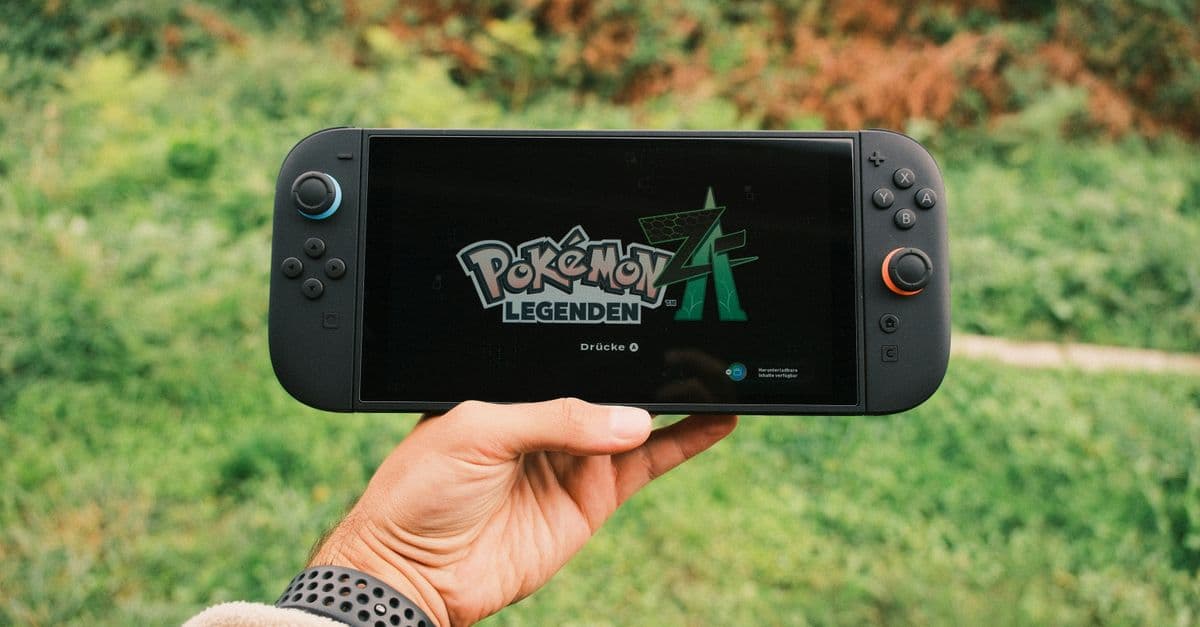
Photo: Daniel J. Schwarz / Pexels
In 1985, you bought Super Mario Bros. for $35. You owned it. That was the entire transaction — a cartridge, a store shelf, a one-time payment, done. Today, the single biggest game in the world is free. Fortnite has never charged a cent for entry, yet Epic Games has built a company valued in the tens of billions of dollars around it, largely by selling cosmetic items that change nothing about how the game plays (Epic Games, 2020).
That shift, from a single transaction to an ongoing financial relationship with the player, is the defining story of modern gaming economics. Global games revenue sat at roughly $188.8 billion in 2025 according to market analyst Newzoo, with 2026 projected to reach around $205 billion in software revenue alone (more if hardware sales are included) (Newzoo Global Games Market Report, 2025). That is larger than the global film box office and recorded music industries combined, and it was built almost entirely by rewriting how games charge for themselves. This piece walks through where that money actually comes from, why a small fraction of players fund most of it, why making a blockbuster now costs as much as a Hollywood tentpole, and what that means for the games that get made and the ones that don't.
Where the money actually comes from
Gaming revenue is not one market. It is at least four distinct businesses, each with its own economics, dominant platforms, and monetization logic, loosely glued together by the fact that all of them involve interactive software.
Mobile is the largest single segment by revenue, generating roughly $90–108 billion depending on the year and methodology, and it is overwhelmingly a free-to-play (F2P) business monetized through in-app purchases rather than upfront sales (Newzoo, 2025). Titles like Honor of Kings, Royal Match, and Genshin Impact reach a global, casual, demographically broad audience — including huge numbers of players who would never describe themselves as "gamers." A supermarket cashier waiting in line and a professional esports athlete are both, statistically, part of the same market segment.
Console revenue runs a hybrid model: hardware sales (PlayStation, Xbox, Nintendo Switch) plus software, where first-party exclusives drive the hardware purchase and third-party titles generate the bulk of software revenue. Sony's exclusives — God of War, Spider-Man, The Last of Us — are strong enough that they meaningfully influence which console a household buys, a dynamic console makers exploit deliberately.
PC gaming is dominated by a single storefront. Valve's Steam platform controls somewhere in the range of 70-75% of digital PC game sales, giving Valve extraordinary leverage over pricing, discovery, and the standard 30% platform cut that has become an industry benchmark (Valve, Steamworks documentation). PC is also the platform where indie developers have the best shot at meaningful revenue, because Steam's storefront doesn't require the same curation gatekeeping as console certification once did.
Esports and game-adjacent media (competitive tournaments, streaming, sponsorships) remain the smallest of the four, at roughly $5 billion, with sponsorship alone accounting for more than 40% of that figure as of 2025–2026 (market analysis compiled by ResearchAndMarkets, 2025). It gets outsized media attention relative to its actual share of industry revenue, largely because it is the part of gaming that looks and behaves like traditional sports business — arenas, jerseys, broadcast deals — and is therefore legible to outside investors and journalists in a way that in-app purchase revenue is not.
From box sales to a business built on habit
The business model didn't change all at once. It moved through distinct eras, each one solving a problem the previous model created — and each one creating a new problem in turn.
The box era (1977–2010). You bought a cartridge or disc, and the transaction ended there. Manufacturing, packaging, and retail distribution consumed a meaningful slice of the sale price, and publishers had no ongoing financial relationship with the player once the copy left the store. A commercial flop at launch was, for most of this era, a total and final loss.
DLC and microtransactions (roughly 2005–2015). Downloadable content let publishers keep selling to a game's existing owners after the initial purchase — sometimes legitimately, as substantial new campaigns or expansions, and sometimes controversially, as content that critics alleged had been carved out of the base game specifically to be resold as "day one DLC." Microtransactions, small individual purchases inside a game, emerged first in massively multiplayer online games (MMOs) and then in mobile, establishing the psychological groundwork for what came next: paying repeatedly, in small increments, inside a game you already own.
Free-to-play goes global (2010–present). Pioneered in Korean and Chinese online PC games years earlier, F2P reached mainstream Western dominance through League of Legends (2009), Team Fortress 2's shift to free in 2011, and — most decisively — Fortnite in 2017. The logic is simple to state and powerful in practice: player acquisition cost drops to zero because there's no purchase barrier at all, and revenue instead comes from converting a small percentage of the resulting enormous player base into paying customers.
The battle pass (2018–present). Fortnite's Battle Pass, launched alongside its Battle Royale mode, popularized a specific structure: pay roughly $10 for a season (typically 8–10 weeks), and unlock a fixed track of cosmetic rewards by playing. It solved three business problems simultaneously — predictable, recurring revenue instead of the spiky, unpredictable pattern of standard in-app purchases; a built-in retention mechanic, because players who've bought a pass have a sunk-cost reason to keep logging in; and a legible value proposition, since players can see exactly what they're paying for rather than gambling on a randomized loot box. The battle pass model has since been adopted by Apex Legends, Call of Duty, Genshin Impact, and dozens of others.
Subscriptions and cloud access (2019–present). Xbox Game Pass and PlayStation Plus offer library access — dozens to hundreds of games — for a flat monthly fee, modeled explicitly on Netflix and Spotify. Microsoft's $69 billion acquisition of Activision Blizzard, completed in 2023, was framed publicly and repeatedly around strengthening Game Pass's content library rather than any single franchise's standalone sales (Microsoft, 2023 regulatory filings and public statements). By fiscal year 2025, Xbox Game Pass had crossed roughly $5 billion in annual revenue for the first time, with Microsoft reporting around 40 million subscribers across tiers as of early 2026, up from roughly 34 million publicly confirmed in early 2024 (Microsoft FY2025 earnings disclosures, reported via industry tracking).
Each era layered on top of the last rather than replacing it entirely. Box sales still exist (most console games are still sold as discrete purchases at launch), DLC is still common, and F2P, battle passes, and subscriptions now all coexist within the same game in many cases — Fortnite sells a battle pass, individual cosmetic items, and a subscription bundle called Crew, simultaneously, to the same free-to-download game.
The whale economy: a small number of players fund almost everything
Free-to-play economics rest on a specific and, to many critics, troubling mathematical structure: the overwhelming majority of players contribute nothing financially, and revenue concentrates in a very small paying segment.
Industry analysts commonly describe the F2P player base in four tiers:
| Player tier | Approximate share of players | Typical lifetime spend | Approximate share of revenue |
|---|---|---|---|
| Free riders | ~50% | $0 | 0% |
| Minnows | ~40–45% | $1–$50 | Small |
| Dolphins | ~4–5% | $50–$500 | Moderate |
| Whales | ~1–2% | $500–$10,000+ | 50–80% |
Table: Typical spending-tier breakdown in a mature free-to-play game, based on patterns reported across the mobile and live-service gaming industry.
That last row is the crux of the business model. A tiny fraction of players — sometimes fewer than one in fifty — generates the majority of a game's revenue, which means the game's monetization design is, whether intentionally or not, optimized around retaining and extracting from that fraction rather than around the median player's experience. This is a structurally different incentive than a $60 box sale, where every buyer's dollar is worth the same to the publisher and the incentive is simply to make a game worth buying once.
The demographic and behavioral profile of high-spending players has drawn scrutiny from researchers studying gambling-adjacent behavior. Loot boxes in particular — randomized paid item drops — replicate the variable-ratio reward schedule that behavioral psychologists identify as the most powerful reinforcement pattern known, the same mechanism that makes slot machines effective (for a deeper look at that specific mechanism, see How Loot Boxes Work: The Psychology of Gambling Hidden in Your Video Games). That overlap is why Belgium's Gaming Commission ruled in 2018 that paid loot boxes with randomized rewards constitute unlicensed gambling under Belgian law, and why the Netherlands' gambling regulator pursued similar enforcement action the same year (Belgian Gaming Commission, 2018 ruling, summarized by the European Commission's consumer protection network). The UK's Gambling Commission, by contrast, concluded loot boxes fall outside the legal definition of gambling because prizes typically can't be cashed out for real money, but recommended in 2020 that the games industry adopt stronger protections for minors regardless (UK Department for Digital, Culture, Media & Sport, Loot Boxes in Video Games consultation response, 2020).
Why a AAA game now costs as much as a Hollywood blockbuster
Making a major console or PC game today is among the most expensive forms of entertainment production in the world, and the cost curve has bent sharply upward over the past 15 years.
Rockstar Games' Red Dead Redemption 2, released in 2018, is widely reported to have cost around $540 million to develop over roughly eight years with a team that grew to around 2,000 people. Grand Theft Auto V, its predecessor, cost an estimated $265 million to develop plus another $128 million in marketing. And Rockstar's next release, Grand Theft Auto VI, is now the subject of industry-wide budget speculation: Take-Two CEO Strauss Zelnick has publicly acknowledged the game is "expensive" without confirming a figure, while analyst estimates cluster around $1–1.5 billion in direct development spend once marketing, licensing, and online infrastructure are factored in (Business Insider analyst estimates, reported 2024–2025). Whatever the exact figure lands on, it will likely be the most expensive entertainment production ever made — bigger than any film in history.
For context, the average Hollywood blockbuster costs somewhere in the $100–200 million range including marketing. Major video game productions have not just caught up with that figure; the top end of the industry has surpassed it by an order of magnitude.
That cost inflation reshapes the industry in several concrete ways:
- Risk concentration. Only a handful of titles per year can justify a nine- or ten-figure budget, which pushes publishers toward sequels and established franchises rather than new intellectual property. A new, unproven concept simply carries too much downside risk at this scale.
- Crunch and layoffs. Extended overtime ("crunch") ahead of release dates remains a documented and recurring pattern across major studios. When a title underperforms at this budget level, the financial consequence is often severe: the Game Developers Conference's 2025 State of the Game Industry survey found that 11% of the roughly 3,000 developers surveyed had personally been laid off in the prior 12 months, and industry tracking estimated around 14,800 gaming jobs lost across 2024 alone, following roughly 10,500 in 2023 (GDC 2025 State of the Game Industry survey, reported via Variety).
- The live-service pivot. At these cost levels, a single upfront sale can't recoup the investment on its own, which pushes publishers toward ongoing monetization — battle passes, cosmetic stores, seasonal content — even for games that weren't originally designed around a live-service structure. This is part of why single-player, narrative-focused games increasingly ship with some form of post-launch monetization bolted on.
- Consolidation. Rising development costs have accelerated industry consolidation, since only companies with very large balance sheets can absorb a nine-figure failure. Embracer Group's restructuring alone involved cutting roughly 8,000 jobs and closing or divesting 44 studios between 2023 and 2024 (Wikipedia summary of industry-tracked layoff data, sourced to Game Developer, Variety, and IGN reporting, 2022–2025). Microsoft, Sony, Tencent, and a small number of other companies now control the majority of AAA publishing capacity worldwide.
Indie economics run on almost the opposite logic
Set against billion-dollar productions, the independent (indie) game market operates on fundamentally different math, and it's worth understanding both ends of the spectrum to see how differently "the games industry" behaves depending on scale.
Stardew Valley, released in 2016, was built essentially by one developer, Eric Barone, over roughly four years, and has since sold more than 30 million copies. Hollow Knight, built by a two-person Australian studio, has sold more than five million copies. Vampire Survivors, a minimalist bullet-hell game built largely by a single Italian developer, generated tens of millions of dollars in revenue within its first year despite an initial price under $5. None of these required a publisher's marketing budget, a nine-figure development team, or a live-service monetization loop to succeed.
What changed the economics wasn't a new business model so much as the removal of a cost that used to be structural: physical distribution. Digital storefronts, primarily Steam, eliminated the manufacturing, warehousing, and retail-shelf-space costs that made small-scale publishing financially impossible before the mid-2000s. A solo developer today can list a finished game on Steam for a flat $100 fee and reach a global audience — a level of market access that simply didn't exist for an individual before digital distribution matured.
That access comes with its own concentration problem. Steam now sees more than 15,000 new game releases in a typical year, and discoverability inside that volume is genuinely difficult; the top slice of releases captures the overwhelming majority of indie revenue, and a large number of listed games sell only a handful of copies. But the floor for a viable small-team business has dropped meaningfully: a game that sells 50,000 copies at $15 generates $750,000 in gross revenue, which is a survivable, even comfortable, outcome for a two- or three-person studio, in a way that would have been structurally impossible in the retail-shelf era.
How is procedurally generated content connected to indie economics?
Many successful indie titles lean on procedural generation — algorithmically creating levels, items, or worlds rather than hand-building every piece of content — specifically because it lets a tiny team produce far more playable content per developer-hour than a hand-authored AAA game can. For a deeper technical breakdown of how that works, see How Procedural Generation Creates Infinite Game Worlds.
The subscription bet: gaming's Netflix experiment
Xbox Game Pass and PlayStation Plus represent an explicit attempt to establish subscription access, rather than per-title purchase, as gaming's dominant revenue model — the same transition streaming video went through with Netflix a decade earlier.
For players, the pitch is straightforward: access to a rotating library of dozens to hundreds of games for a flat monthly fee, which lowers the effective cost of trying any individual title toward zero. For publishers, the economics are considerably murkier. Being included in Game Pass typically comes with a negotiated upfront payment from Microsoft, but the arrangement risks cannibalizing full-price sales, since some subscribers who would otherwise have bought a game outright instead access it "for free" as part of what they're already paying for the subscription. The exact revenue-share terms of these deals are not made public, which makes it difficult for outside analysts, or competing developers deciding whether to opt in, to evaluate whether subscription inclusion is a net financial win.
First-party exclusives are the cleanest case: when Microsoft or Sony develops a game in-house and puts it directly into their own subscription service, there's no cannibalization calculus to run, because the platform holder owns both the game and the distribution channel. Putting Halo or a God of War remaster into a subscription tier straightforwardly increases the subscription's value and, by extension, subscriber retention. Third-party publishers face a genuinely different, harder decision every time.
What people get wrong about how games make money
A few misconceptions come up constantly in discussions of gaming economics, and they're worth addressing directly.
"Free-to-play means the game can't be good." This conflates business model with design quality. League of Legends, Path of Exile, and Warframe are widely respected, deeply designed games that happen to be free to download. The monetization model doesn't dictate the quality of the core gameplay loop — though certain monetization choices, particularly pay-to-win mechanics that sell competitive advantage rather than cosmetics, are directly at odds with fair, well-balanced game design, and players and reviewers reliably notice and penalize that distinction.
"Mobile gaming isn't 'real' gaming, so it doesn't matter economically." This one is simply wrong on the numbers. Mobile is the single largest revenue segment in the entire industry, generating more than console and roughly comparable to PC, precisely because its addressable audience — anyone with a smartphone — is orders of magnitude larger than the audience for dedicated gaming hardware. Dismissing it as economically peripheral misreads where the industry's actual center of gravity sits.
"A $70 price tag is pure greed." The standard $60 console game price was set around 2005 and held for nearly two decades without adjusting for inflation. Sixty 2005 dollars is roughly equivalent to $95 in 2025 purchasing power. Publishers raising base prices to $70 in recent years is, at minimum, partly a delayed inflation correction layered on top of genuinely higher development costs — even though it's also true that many of those same publishers are simultaneously pursuing DLC and live-service revenue on top of the higher base price, which is a legitimate point of consumer frustration.
"Esports is a massive chunk of gaming revenue." It gets disproportionate media coverage because it resembles traditional sports business — arenas, broadcast deals, sponsorships — in ways that are easy for outside audiences to parse. In actual dollar terms, esports and competitive gaming media represent roughly $5 billion of a $190+ billion industry, a small fraction compared to mobile or console software sales.
Frequently asked questions
Q: Why do games cost $70 now? Base prices didn't track inflation for nearly two decades after the $60 standard was set around 2005; that figure is worth roughly $95 in 2025 dollars. Publishers raised list prices to $70 in recent years while also pursuing DLC, battle passes, and live-service revenue to offset rising development costs.
Q: Does free-to-play mean a game can never be good? No. League of Legends, Path of Exile, and Warframe are all critically respected free-to-play games. Business model and design quality are separate questions, though pay-to-win mechanics specifically — selling competitive advantage rather than cosmetics — tend to undermine fair game design regardless of how well-built the rest of the game is.
Q: How do game subscriptions affect what games get made? Subscription services may favor games that keep players engaged over long periods, since sustained engagement supports subscriber retention, over shorter but excellent experiences. Critics argue this creates structural pressure against short-form or experimental games in favor of endless live-service content, though this remains a debated, not settled, effect.
Q: What percentage of gaming revenue do developers actually keep? Platform holders — Steam, PlayStation, Xbox, Apple, Google — typically take a 30% cut of digital sales as an industry-standard rate. Of the remaining 70%, an independent developer self-publishing on Steam keeps the whole share, while a developer working under a major publisher typically sees a much smaller cut after the publisher's contractual terms, marketing recoupment, and royalty structure are applied.
Q: Is the gaming industry recession-proof? Gaming has historically shown relative resilience in downturns, since it's comparatively cheap entertainment per hour of engagement. That said, the industry saw a real correction after 2020–2021's pandemic-driven growth spike, with more than 10,000 industry layoffs reported in 2023 alone and roughly 14,800 more in 2024. Long-term revenue growth has continued, but the labor market inside the industry has been genuinely volatile.
Q: What is the "whale" model and why do critics object to it? It's the pattern in which a small fraction of paying players, often 1–2%, generate 50–80% of a free-to-play game's revenue. Critics object because it creates a financial incentive to design monetization around maximizing spend from a small, sometimes vulnerable, segment rather than around the experience of the median player — a dynamic regulators in Belgium and the Netherlands have specifically targeted through loot box gambling laws.
Q: Why did Microsoft spend $69 billion on Activision Blizzard if games are increasingly given away through subscriptions? Microsoft framed the acquisition explicitly around strengthening Xbox Game Pass's content library rather than around any single franchise's standalone box sales. The bet is that owning more must-play IP, including Call of Duty, increases subscription value and retention, which the company sees as the more durable long-term revenue stream than one-off purchases.
Q: How much does a AAA game actually cost to make today? Recent high-profile examples range from roughly $174 million (Cyberpunk 2077's development budget) to an estimated $540 million (Red Dead Redemption 2). Grand Theft Auto VI's budget hasn't been officially confirmed, but analyst estimates commonly cited in 2024–2025 cluster around $1–1.5 billion in direct development spend, which would make it the most expensive entertainment production of any kind, film included.
Q: Do live-service games ever fail even with big budgets behind them? Yes, frequently. High-profile live-service launches have been shut down within weeks or months of release after failing to build a sustained player base, despite substantial development investment, because live-service revenue depends on ongoing engagement in a way a traditional box sale does not — a single strong opening weekend isn't enough to make the model work.
The takeaway
Gaming's economics didn't just add new features to the old box-sale model; they replaced the underlying financial relationship between publisher and player entirely, from a single transaction to an ongoing one. That shift explains almost everything else in this piece: why free games can be worth more than paid ones, why a tiny sliver of players funds most of the industry's revenue, why a single blockbuster can now cost more than any film ever made, and why subscription services are betting that access, not ownership, is where players are headed next. None of this is inherently good or bad — a free, well-designed game and a manipulative gambling-adjacent one can use the exact same monetization tools. What's changed is that understanding those tools is no longer optional if you want to know why the games in front of you are built the way they are.
Read next:
Follow new articles
Add SciHub101 to your feed reader to see new science and technology stories.
About the Author
SciHub101 is an independent science and technology publication founded and edited by Buğra Sözeri, a software engineer and app developer based in Türkiye. AI tools assist with drafting and research. Source documentation in the existing archive is uneven, and articles are being reviewed and corrected. The Editorial Team byline identifies editorial responsibility; it does not certify specialist or independent human review. Where we compare products, anything built by our own team is labelled as such — see the editorial guidelines and About page for how corrections and disclosures work.
Related Articles
Complete Gaming Guide 2026 — Technology, Design, Esports, and Psychology
The complete guide to gaming in 2026: how game engines work, gaming hardware, esports, game design psychology, industry trends, and what makes games engaging and addictive.
How Procedural Generation Creates Infinite Game Worlds
Minecraft's world is 60 million kilometres wide. No Man's Sky has 18 quintillion planets. Neither was hand-crafted — both are generated by algorithms from a single random seed number. Procedural generation is one of the most powerful tools in game design, and it reveals something fundamental about how patterns and meaning emerge from rules.

Mobile Gaming Revolution: How Phones Became Gaming's Biggest Platform
Mobile gaming generates over $120 billion a year and reaches roughly 3 billion players worldwide. From Angry Birds to Genshin Impact, smartphones transformed who plays games and how they play.
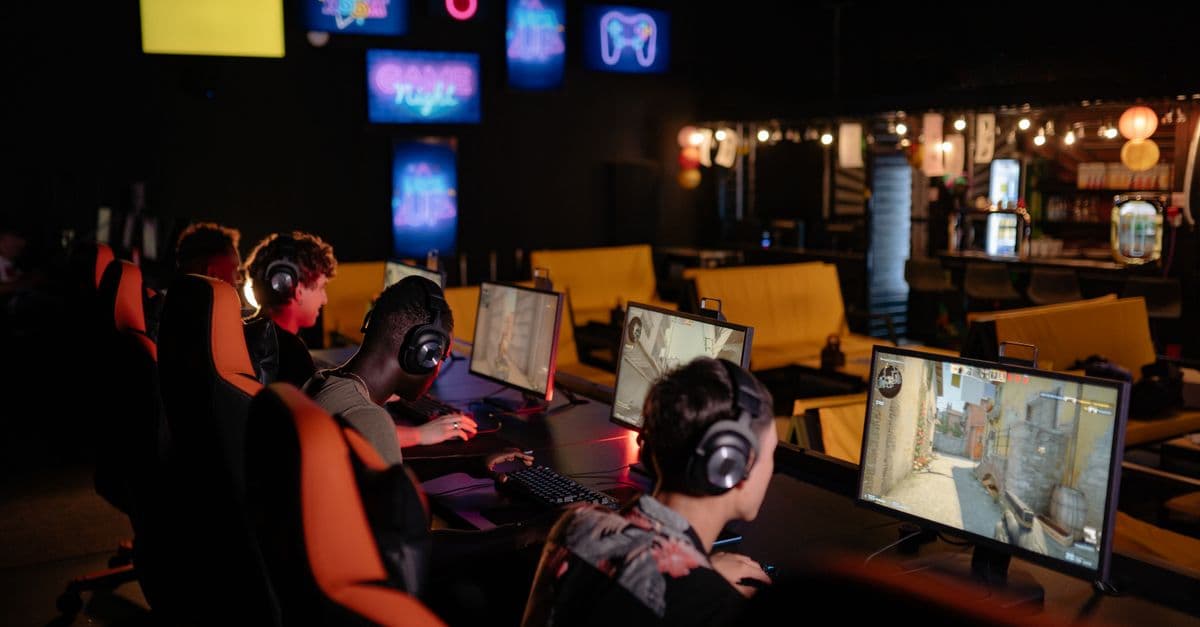
Esports in 2026: The Rise of Competitive Gaming, Prize Pools, and Professional Careers
Esports revenue reached 1.38 billion USD globally in 2025 and is projected to 1.88 billion by 2027. Global peak concurrent viewership for major events (League of Legends Worlds, The International) routinely exceeds 100 million across all platforms, with esports tournaments distributing over 500 million dollars in prizes annually. The top 100 professional players earn 200,000 to 5 million USD annually, yet median esports player income remains 40,000 USD due to the sport's winner-take-most distribution. The esports industry now encompasses team ownership, sponsorships, media rights, coaching, sports science, equipment manufacturing, and esports venues. Professional gaming is no longer a niche pursuit; it is a legitimate career path, governed by contracts, physical training regimens, and psychological coaching. Understanding the scale, structure, and economics of esports reveals not a fad but a permanent entertainment medium comparable in revenue scale to professional tennis and growing faster than traditional sports.

Gaming in 2026: Platforms, Hardware, and Trends
In 2026, gaming spans five major hardware ecosystems: PlayStation 5 and Xbox Series X/S dominating console market share; the Nintendo Switch entering its final year as the mobile-console hybrid benchmark before Switch 2's late-year launch; personal computers transitioning to next-generation GPUs (RTX 50-series from NVIDIA, RDNA 4 from AMD); and mobile gaming (iOS/Android) supporting both casual free-to-play and premium titles. This article examines the platform landscape, hardware capabilities across tiers, market share data, and the technological and cultural trends shaping gaming in 2026.

What Are the Best Free-to-Play Games in 2026?
Free-to-play gaming in 2026 encompasses genres from competitive esports titles to narrative-driven adventures, with monetization ranging from cosmetic-only (respecting player progression integrity) to aggressive gacha mechanics that gate progression behind randomized paywalls. This article examines the best free-to-play games across genres, explaining the free-to-play economic model, how to identify monetization strategies, and which titles offer genuine value without requiring money spent. Featured games span competitive shooters, action RPGs, card games, and story-driven experiences, with emphasis on games where spending is optional for enjoying core content.