How Loot Boxes Work: The Psychology of Gambling Hidden in Your Video Games

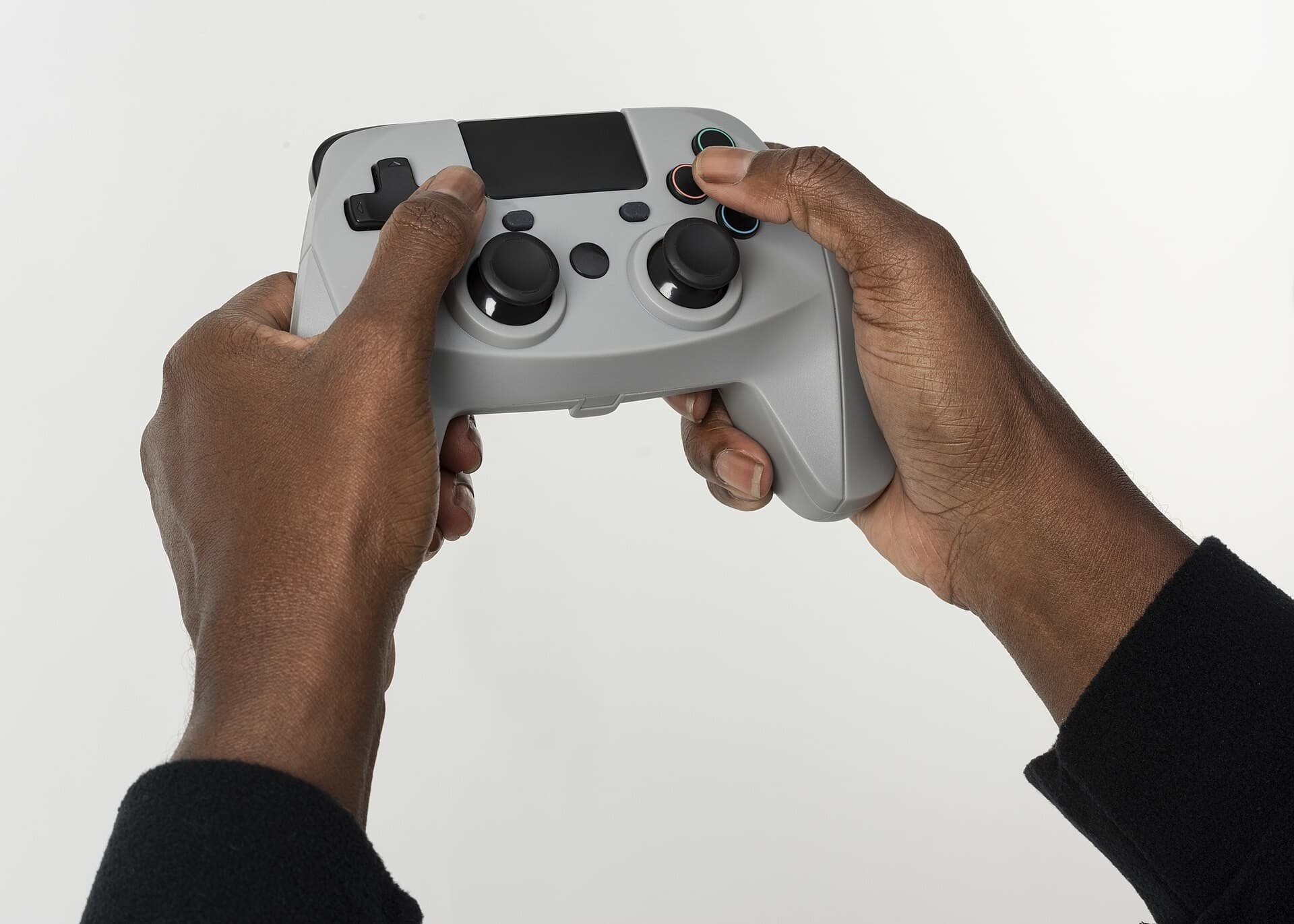
Photo: MART PRODUCTION / Pexels
You spend two dollars. A box appears on screen. It shakes, glows, and opens with a satisfying burst of sound and light. You get a common item — not what you wanted. You spend two more dollars.
This loop generated an estimated $15 billion globally in 2020 alone according to industry analyst Juniper Research, and it works not through clever gameplay design but through the same psychological architecture that powers slot machines. Understanding loot boxes requires understanding behavioral psychology first, because the game design is almost incidental. The real mechanism runs deeper, and it is now the subject of active litigation, government bans, and consumer-protection law on four continents.
What Is a Loot Box?
A loot box (also called a gacha, prize crate, card pack, or supply drop depending on the game) is a purchasable virtual container with randomized contents. Players pay real money — either directly or by converting it into in-game currency — for a chance at receiving items of varying rarity and desirability.
The items might be cosmetic (character skins, weapon designs, emotes) or functional (stronger characters, better stats, power-boosting equipment). The distinction matters enormously for the pay-to-win debate but not at all for the underlying psychology. Both types exploit the same reward mechanisms, because the reward system responds to unpredictability, not to what the prize actually does in the game.
Loot boxes became mainstream in the mid-2000s with online games like MapleStory, expanded aggressively through mobile gaming's gacha mechanics in Japan and South Korea, and reached global mainstream controversy with Star Wars Battlefront II in November 2017, when EA's implementation of gameplay-affecting loot boxes triggered a backlash loud enough to prompt investigations by regulators in Belgium and the Netherlands within months.
For a deeper look at the mechanical reward loop that loot boxes plug into — the broader system of progress bars, streaks, and notification design that keeps people playing — see why video games are designed to be addictive.
Variable Reward Schedules: The Engine Under the Hood
The foundational science comes from behavioral psychologist B.F. Skinner's operant conditioning research in the 1950s and 1960s at Harvard. Skinner studied how different patterns of reinforcement affected behavior in rats and pigeons pressing levers for food pellets. He identified four reinforcement schedules, but one stood out for its power to create persistent, compulsive behavior: the variable ratio schedule.
On a variable ratio schedule, a reward comes after an unpredictable number of responses. You don't know if the next press will pay out — it might be this one, or the next ten might all fail before one succeeds. This uncertainty doesn't suppress lever-pressing behavior. It dramatically amplifies it, producing the highest response rates of any reinforcement type Skinner tested.
Variable ratio schedules also produce the most extinction-resistant behavior, meaning the behavior persists longest after rewards stop entirely. Pigeons on a variable ratio schedule would peck thousands of times with no reward before giving up, where pigeons on a fixed schedule (reward guaranteed every fifth peck, say) stopped almost immediately once the reward disappeared. The brain doesn't learn "rewards have stopped" quickly when it never learned a reliable pattern in the first place.
This is precisely how slot machines work, and it is precisely how loot boxes work. Think of it like a vending machine that occasionally, unpredictably, gives you two items instead of one. A predictable machine gets used exactly as needed. An unpredictable one gets fed coins compulsively, because the brain keeps testing whether this next feed is the one that pays off. The randomness isn't a flaw in loot box design, it is the design, engineered the same way a casino floor is engineered.
We cover the research lineage behind this mechanism, from Skinner's pigeons to modern dopamine-prediction-error models, in more technical detail in why random loot feels rewarding.
Why doesn't a guaranteed reward work as well?
A fixed reward schedule (get an item every tenth purchase, always) creates satisfaction but weak compulsion, because the brain accurately predicts the outcome and stops anticipating. Variable ratio schedules keep the brain's prediction system constantly engaged, because it can never confirm a stable pattern, and that unresolved uncertainty is itself motivating.
The Near-Miss Effect
One of the most powerful mechanisms in gambling psychology is the near-miss: the experience of coming very close to a desired outcome without achieving it. On a slot machine, this is two jackpot symbols with a third spinning just past the payline. In a loot box, it might be an animation that teases a rare item before revealing a common one, or a percentage tracker that shows a player is "just" one pull away from a guaranteed rare drop.
Near-misses activate brain regions associated with wins rather than losses. A landmark neuroimaging study by Luke Clark and colleagues, published in Neuron in 2009, used a slot-machine task with healthy volunteers and found that near-misses produced significant activation in the ventral striatum and anterior insula — the same reward circuitry activated by actual monetary wins (Clark et al., 2009, Neuron). Subsequent work found the effect is amplified in people who already show problem gambling traits, with pathological gamblers showing an even stronger striatal response to near-misses than recreational gamblers (Neuropsychopharmacology, 2016).
The brain, in other words, misreads a loss dressed up as an almost-win. It generates a small dopamine-linked signal that resembles the signal for an actual win, and that signal sustains motivation to keep playing even though the objective outcome was nothing.
Crucially, near-misses in loot boxes are not accidental. Game systems can be, and often are, engineered to produce them. If the animation engine can reveal a spinning wheel that slows dramatically near a legendary item before landing on a common one, it creates a near-miss experience without technically misrepresenting the disclosed odds. This is the layer of game design that most directly mirrors slot machine engineering, and it operates independent of whatever percentage figure sits in the small print.
Is the near-miss effect intentional in loot box design?
Game studios rarely confirm this publicly, but the mechanism is well documented in the gambling machine industry that pioneered it, and loot box reveal animations (slowing spins, teasing high-rarity colors before the final reveal) follow the same visual grammar slot machine manufacturers use deliberately to maximize near-miss frequency.
Sunk Cost, Loss Aversion, and the Pity Timer
Loot boxes layer additional psychological mechanisms on top of the variable ratio foundation.
Sunk cost fallacy keeps players spending past rational stopping points. Having already spent $40 chasing a specific item, stopping feels like wasting that $40, even though the money is already gone regardless and every future purchase is a separate decision that should be evaluated on its own merits. The past investment creates psychological pressure to continue rather than accept the loss.
Loss aversion, the well-documented tendency (first formalized by psychologists Daniel Kahneman and Amos Tversky in their 1979 prospect theory work) for people to feel losses roughly twice as intensely as equivalent gains, manifests in collection-completion mechanics. Many loot box systems display a player's collection with missing items visually highlighted. An incomplete set starts to feel like an active loss to be resolved, not simply an absence to be indifferent to.
Pity timers (also called bad luck protection or guaranteed drop systems) offer a predetermined fallback: if a player doesn't receive a rare item after a set number of pulls, the next pull guarantees one. This sounds like consumer protection, and it genuinely does prevent infinite streaks of nothing. But it also functions as a defined spending threshold. A player who knows a pity timer exists at 90 pulls now has a concrete target: spend enough to reach pull 90. The system converts infinite, unbounded uncertainty into a known (if often expensive) cost, which paradoxically can increase total spending by making the endpoint feel achievable and worth chasing rather than open-ended and worth avoiding.
Think of a pity timer like a punch card at a coffee shop that requires ten purchases for a free drink, except the "tenth purchase" costs as much as the previous nine combined, and the shop never tells you up front how large your total bill will be until you've already committed to the pattern.
The Currency Obfuscation Layer
A standard technique in loot box monetization is the introduction of intermediate virtual currency. Instead of paying $2.00 directly for a loot box, players buy 1,000 "gems" for $9.99, then spend 800 gems on a bundle of ten boxes. The translation from real money to actual outcome cost requires arithmetic that players rarely perform in the moment of purchase.
Research on payment decoupling consistently shows that abstract representations of money reduce the psychological pain of spending, what behavioral economists call the "pain of paying." A widely cited study by Drazen Prelec and Duncan Simester at MIT found that participants in a real auction were willing to bid roughly twice as much when told they could pay by credit card versus cash, because the more abstract payment method dulled the felt cost of spending (Prelec & Simester, 2001, Marketing Letters). Casino chips and airport-lounge drink tickets work on the same principle: when the transaction feels like moving tokens rather than spending dollars, the threshold for spending rises.
Combined with bundles that don't divide evenly into purchase amounts, leaving players with a small residual currency balance that effectively "requires" another purchase to use up, this layer measurably increases average spend per session. It is the same mechanic mobile-game economists study when they track in-game currency sinks and faucets, a topic covered in depth in why game economies inflate.
Who Is Most Vulnerable?
The population of loot box spenders is not uniformly distributed. A well-established pattern in free-to-play monetization is the whale model: a small percentage of players, often cited in industry analyses as somewhere between 1% and 5%, accounts for a disproportionate share of total revenue, sometimes 50% or more of a title's monetization.
Research on problematic loot box spending finds a significant, replicated correlation with problem gambling traits. Psychologists David Zendle and Paul Cairns, in a series of studies beginning in 2018 and replicated in 2019, surveyed thousands of gamers and found that loot box spending correlated with problem gambling severity scores independently of overall time spent gaming (Zendle & Cairns, 2019, PLOS ONE replication study; Zendle & Cairns, 2019, PLOS ONE). A separate 2021 meta-analysis pooling data across multiple countries found a consistent small-to-moderate correlation between loot box engagement and problem gambling across nearly every study design examined.
This doesn't mean most loot box purchasers are problem gamblers; the majority of players who buy a loot box never spend beyond what they can comfortably afford. It does mean the monetization model is optimized in ways that extract disproportionate revenue from people with the least ability to moderate their spending, a population that includes people with existing gambling vulnerabilities, adolescents with underdeveloped impulse control, and adults in financial stress who are more susceptible to escapism-driven purchasing.
Case Study: Star Wars Battlefront II and the Reddit Comment That Changed an Industry
No single event did more to turn loot boxes into a global regulatory issue than the launch of Star Wars Battlefront II in November 2017. EA structured the game so that unlocking marquee characters like Darth Vader or Luke Skywalker through normal play would take an estimated 40 hours or more per hero, while loot-box-derived currency offered a faster path, effectively making randomized purchases the practical route to competitive parity.
When a Reddit user complained about the roughly 40-hour grind (or equivalent real-money cost) required to unlock Darth Vader, EA's community team replied that the design was intended "to provide players with a sense of pride and accomplishment for unlocking different heroes." The response was downvoted more than 683,000 times, becoming, at the time, the most downvoted comment in Reddit's history (TechCrunch, November 2017).
The backlash was severe enough that EA disabled all real-money microtransactions in the game just before launch and permanently redesigned the progression system months later. More importantly, the controversy directly triggered government attention. Belgium's Gaming Commission had already begun examining loot boxes in Battlefront II, FIFA 18, Overwatch, and Counter-Strike: Global Offensive, and in April 2018 it formally declared loot boxes a form of gambling under Belgian law (BBC, April 2018). Hawaii state representative Chris Lee cited Battlefront II directly when introducing a pair of bills in early 2018 aimed at restricting loot box sales to minors and mandating odds disclosure, and told reporters that more than a dozen other US states had reached out to him about similar legislation (Kotaku, 2018; GameRant).
Case Study: EA's FIFA Ultimate Team, the Highest-Grossing Loot Box in Gaming
If Battlefront II was the PR crisis, EA's FIFA franchise (rebranded EA Sports FC in 2023) has been the financial engine that proves why publishers have been so reluctant to abandon loot boxes entirely. EA's Ultimate Team modes, which let players buy randomized packs of player cards, generated $1.49 billion in the fiscal year ending March 2020 and $1.62 billion the following fiscal year, at one point accounting for roughly 29% of EA's total company-wide revenue in a single year (GameDeveloper.com). At that revenue rate, analysts calculated EA was earning roughly $3,000 per minute from FUT packs alone (Engadget).
That revenue has made FIFA packs the single most litigated loot box mechanic in the world, and the legal record shows how unsettled the "is it gambling" question remains even within one game across different courts:
| Jurisdiction | Ruling | Year | Outcome |
|---|---|---|---|
| Belgium | Loot boxes are illegal games of chance | 2018 | EA removed FIFA Points sales in Belgium entirely |
| Netherlands (district court) | FUT packs are gambling; EA fined | 2020 | €10 million maximum fine issued |
| Netherlands (Council of State, on appeal) | Ruling reversed — packs are part of a skill game, not standalone gambling | March 2022 | EA did not pay the fine |
| Austria (District Court of Hermagor) | FUT packs are licensable gambling; Sony ordered to refund a player | February 2023 | Sony did not appeal; refund paid |
| Austria (Vienna Regional Civil Court) | Packs ruled illegal gambling again; EA and Sony ordered to repay a second player | 2023 | Ordered payout of roughly €10,800 |
| Austria (Supreme Court, final) | Packs are not gambling when embedded in a skill-based game | December 2025 | Earlier Austrian refund rulings overturned |
Table: How courts in the same three European countries have reached opposite conclusions on the identical FIFA Ultimate Team mechanic, sometimes within the same country.
The whiplash is instructive. Courts keep returning to one central legal question: does a randomized pack purchased inside a skill-based game count as an "isolated game of chance," or is it inseparable from the skill-based game itself? Belgium and the initial Austrian rulings said the former. The Dutch Council of State and Austria's final Supreme Court ruling said the latter. No supranational EU court has yet settled the question definitively, which is why the same loot box mechanic remains legal in some EU member states and effectively banned in others.
The Regulation Debate Beyond FIFA
Belgium's 2018 ruling remains the strongest stance globally: publishers who continue selling paid loot boxes in Belgium risk fines up to €800,000 and up to five years in prison, doubled if minors are involved (Slashdot/Belgian Gaming Commission statement). Rather than comply, several major publishers, including Valve with CS:GO case openings, simply withdrew the mechanic from the Belgian market entirely rather than redesign it.
The United Kingdom's Gambling Commission reviewed loot boxes extensively and, as of its most recent published position, declined to classify them as gambling under existing UK law, largely because in-game items typically cannot be directly cashed out for real money through an official channel. A UK government white paper published in 2022 nonetheless recommended stronger age verification and industry-wide spending controls as a minimum standard, short of an outright ban (BBC coverage of the white paper).
China took the most direct regulatory action of any government specifically on disclosure, and did it earliest. China's Ministry of Culture issued a notice in December 2016, with compliance required starting May 1, 2017, mandating that publishers disclose exact per-item drop probabilities for randomized loot mechanics, not rounded ranges, and maintain transaction logs for at least 90 days to demonstrate actual drop rates match published odds. This predates every Western regulatory action on loot boxes by more than a year, making China's disclosure law the de facto global first-mover on loot box transparency, even though China has not banned the mechanic outright.
In the United States, no federal loot box law has ever passed, despite Hawaii's 2018 bills and proposed federal legislation like the "Protecting Children from Abusive Games Act." The Federal Trade Commission held a public workshop on loot boxes in August 2019; its resulting staff report acknowledged consumer protection concerns but stopped short of recommending new regulation, leaving the issue to industry self-regulation and state-level proposals that have mostly stalled in committee.
Japan took a narrower but earlier action than most Western countries. Following a 2012 scandal around kompu gacha ("complete gacha," a mechanic requiring players to collect a specific combination of randomized items to unlock a rarer prize, which regulators judged unusually manipulative), Japan's Consumer Affairs Agency banned that specific mechanic under existing prize-marketing law. The broader gacha industry continued operating and adapted around the ban, developing an industry self-regulatory body that requires member companies to disclose drop rates.
Are loot boxes illegal in the United States?
No federal law bans or restricts loot boxes in the US as of 2026. Hawaii's 2018 bills to restrict sales to minors and require odds disclosure did not pass into law, and subsequent state-level proposals in California, Minnesota, Pennsylvania, and other states that representative Chris Lee said had expressed interest have similarly stalled. The FTC's 2019 workshop concluded with a staff report but no binding rule.
Why did the Netherlands and Austria reverse their own loot box gambling rulings?
Both reversals turned on the same legal distinction: appellate courts concluded that a randomized pack purchased inside a broader skill-based game (like FIFA itself) is not a "standalone" game of chance under national gambling statutes, because the pack's contents feed into a game where skill, not luck, ultimately determines outcomes. Lower courts and gambling authorities in both countries had initially ruled the opposite way, focusing on the chance-based purchase moment in isolation rather than the game as a whole.
Industry Self-Regulation and Disclosure
Under pressure from regulators, journalists, and advocacy groups, major publishers, including Activision Blizzard, EA, Microsoft, Nintendo, and Sony, committed in 2019 to disclosing loot box drop-rate odds across their platforms. The Entertainment Software Association, the US industry's main trade group, announced that member companies would show approximate drop rates before purchase, following similar commitments already required by China's 2017 law and South Korea's game ratings board.
Disclosure matters because without known odds, players cannot make informed decisions about expected value. But research on gambling behavior suggests disclosed odds alone don't straightforwardly reduce problematic spending. Slot machine players generally know the house edge works against them and continue playing regardless, because the psychological drivers (variable ratio reinforcement, near-miss effects, sunk cost) operate independently of whether the player consciously understands the math. Disclosure functions as a necessary transparency baseline, not a comprehensive harm-reduction solution.
Some publishers have moved partway toward direct-purchase models for cosmetics, removing randomness for at least some content. Fortnite largely abandoned traditional loot boxes in favor of its Battle Pass model, where players pay a flat, known fee for a defined season of unlockable content rather than a randomized chance at it. Whether this represents genuine reform driven by regulatory pressure or a tactical pivot toward an equally profitable but legally safer model remains debated among researchers who study game monetization.
What People Get Wrong About Loot Boxes
A common misconception is that disclosed odds make a loot box "fair" in the way a fair coin flip is fair. Odds disclosure tells a player the probability of an outcome, but it does nothing to counteract the psychological architecture, the variable ratio reinforcement, near-miss engineering, and currency obfuscation, that was specifically built to override rational cost-benefit thinking in the first place. A casino publishing its house edge on a poster doesn't make problem gambling disappear, and the same logic applies here.
Another frequent misunderstanding is that cosmetic-only loot boxes (which don't affect gameplay balance) are psychologically harmless because "nothing important" is at stake. The reward circuitry activated by a near-miss doesn't distinguish between a cosmetic skin and a stat-boosting weapon; the compulsion mechanism runs on the unpredictability of the reward, not on the practical value of what's inside the box. Regulators in Belgium explicitly rejected the cosmetic-versus-functional distinction as legally relevant for exactly this reason.
Finally, many players assume that because loot boxes are technically legal in their country, that legality reflects a settled scientific consensus that the mechanic is not gambling-like. The opposite is closer to true: legal status varies enormously by jurisdiction precisely because courts and regulators disagree, often reversing each other's rulings on the same underlying mechanic, while the psychological research behind variable ratio reinforcement and near-miss effects is comparatively well established and much more consistent across studies than the legal landscape built on top of it.
The takeaway
Loot boxes work because they were built on eight decades of behavioral science, from Skinner's variable ratio schedules through modern neuroimaging of the near-miss effect, repurposed for a digital storefront instead of a casino floor. The legal question of whether that makes them gambling remains genuinely unsettled, with courts in the same countries reaching opposite conclusions on the identical FIFA Ultimate Team mechanic within a few years of each other. What isn't unsettled is the psychology: near-misses light up the same reward circuitry as real wins, currency obfuscation measurably raises spending thresholds, and a small population of vulnerable spenders generates a disproportionate share of industry revenue. Odds disclosure is a floor, not a fix, and the fact that a mechanic is legal in your country tells you far less about its psychological design than the research behind it does.
Read next:
- Why Video Games Are Designed to Be Addictive: The Psychology Behind the Loop
- Why Random Loot Feels Rewarding
- Why Game Economies Inflate
Key takeaways
- Loot boxes use variable ratio reinforcement schedules — the same mechanism that makes slot machines compulsive — to drive repeated purchases through unpredictable rewards.
- The near-miss effect activates the ventral striatum, the same reward circuitry triggered by actual wins, even when the objective outcome is a loss, according to Clark et al.'s 2009 Neuron neuroimaging study.
- Currency obfuscation (gems, coins, tokens) reduces the psychological pain of spending by abstracting real money into tokens, a decoupling effect documented in behavioral economics research on payment methods.
- Pity timers appear to protect players but function as defined spending targets, often increasing total expenditure rather than capping it.
- A small percentage of "whale" spenders, often correlated with problem gambling traits per Zendle and Cairns' replicated research, drives a disproportionate share of loot box revenue.
- Legal status is genuinely unsettled: Belgium banned paid loot boxes outright in 2018, while Dutch and Austrian courts have both issued and then reversed gambling rulings against the identical FIFA Ultimate Team mechanic.
- China's 2017 disclosure law predates every Western loot box regulation by more than a year and remains among the most detailed transparency regimes worldwide.
FAQ
Q: Are loot boxes gambling? A: Legally, it depends entirely on jurisdiction. Belgium classifies certain loot box mechanics as gambling outright; the Netherlands and Austria have both ruled loot boxes as gambling and later reversed those rulings on appeal; the UK and US have declined to classify them as gambling under existing law. Psychologically, the mechanisms, variable ratio rewards, near-miss effects, and loss aversion exploitation, closely parallel those of recognized gambling products regardless of the legal label applied in any given country.
Q: What is a variable ratio reward schedule? A: A reinforcement pattern where rewards occur after an unpredictable number of actions rather than a fixed number. B.F. Skinner's research in the 1950s and 1960s showed this schedule produces the highest and most extinction-resistant response rates of any reward pattern he tested, the same principle behind both slot machines and loot boxes.
Q: What is the near-miss effect in loot boxes? A: When a loot box animation teases or appears close to delivering a desired rare item before revealing a lesser one, the brain's reward circuitry (specifically the ventral striatum and anterior insula, per Clark et al., 2009) responds in a way that resembles an actual win. This near-miss effect sustains motivation to continue spending despite the objective outcome being a loss.
Q: What is a pity timer? A: A guaranteed-drop mechanic that ensures a rare item after a set number of failed pulls, also called bad luck protection. While it prevents infinite unlucky streaks, it also functions as a known spending target, which research on gambling-adjacent design suggests often increases total expenditure rather than capping it, because it converts open-ended uncertainty into an achievable, if expensive, goal.
Q: Do disclosed odds reduce loot box spending? A: Not significantly, based on available gambling research. Knowing the odds gives players more information but doesn't counteract the psychological mechanisms driving spending, just as knowing a casino's house edge doesn't reliably prevent problem gambling. Disclosure functions as a harm-reduction baseline, not a comprehensive solution, which is why China's mandatory 2017 disclosure law has not eliminated loot box spending in Chinese mobile games.
Q: Which countries have banned loot boxes? A: Belgium has banned the sale of paid randomized loot boxes outright since 2018, with fines up to €800,000 and potential prison time for noncompliant publishers. The Netherlands and Austria have each issued and later reversed gambling classifications for the same FIFA Ultimate Team mechanic. Japan banned a specific high-cost mechanic called kompu gacha in 2012. No country has achieved a fully settled, uncontested legal position on loot boxes as of 2026.
Q: What happened with EA and the Star Wars Battlefront II loot box controversy? A: In November 2017, EA's design made unlocking major characters like Darth Vader require roughly 40 hours of play or a comparable real-money loot box spend. When EA's community team responded to a player complaint by citing "a sense of pride and accomplishment," the comment became the most downvoted in Reddit's history at over 683,000 downvotes. EA disabled real-money microtransactions before launch, and the controversy directly triggered Belgian and Hawaiian regulatory action within months.
Q: How much money does EA make from FIFA Ultimate Team loot boxes? A: EA's Ultimate Team modes, primarily FIFA (now EA Sports FC), generated $1.49 billion in the fiscal year ending March 2020 and $1.62 billion the following year, at one point accounting for roughly 29% of EA's total company-wide revenue, according to figures reported by GameDeveloper.com and calculated by Engadget at approximately $3,000 per minute.
Q: What is China's loot box disclosure law? A: China's Ministry of Culture issued a notice in December 2016 requiring compliance by May 1, 2017, mandating that game publishers disclose exact per-item probabilities for randomized loot mechanics and retain transaction records for at least 90 days to verify actual drop rates match what's published. This makes China the earliest and one of the most detailed loot box disclosure regimes in the world, predating comparable Western rules by over a year.
Q: Are cosmetic-only loot boxes less psychologically harmful than ones that affect gameplay? A: Not according to the underlying reward mechanism. The near-miss effect and variable ratio reinforcement respond to the unpredictability of a reward, not its practical value in the game. Belgium's Gaming Commission explicitly rejected the cosmetic-versus-functional distinction as legally relevant when ruling loot boxes constitute gambling, on the reasoning that the compulsive mechanic operates identically either way.
Follow new articles
Add SciHub101 to your feed reader to see new science and technology stories.
About the Author
SciHub101 is an independent science and technology publication founded and edited by Buğra Sözeri, a software engineer and app developer based in Türkiye. AI tools assist with drafting and research. Source documentation in the existing archive is uneven, and articles are being reviewed and corrected. The Editorial Team byline identifies editorial responsibility; it does not certify specialist or independent human review. Where we compare products, anything built by our own team is labelled as such — see the editorial guidelines and About page for how corrections and disclosures work.
Related Articles

The Science of Speedrunning: How Glitches and Exploits Work
Completing a 50-hour game in 20 minutes sounds impossible, but speedrunners do it by exploiting the fundamental gap between what a game looks like and how it actually works in memory. Understanding how glitches work is essentially a course in low-level computer science.

History of Video Game Graphics: From Pong to Photorealism
Video game graphics have advanced further in 50 years than almost any other technology. The journey from two white rectangles bouncing a dot to real-time ray-traced worlds is a story of engineering leaps, creative constraints, and an endless push to make the virtual look real.

Why Video Games Are Designed to Be Addictive: The Psychology Behind the Loop
Video games are engineered to keep you playing. The reward loops, progress systems, and social mechanics in modern games aren't accidents — they're the result of decades of research into human motivation psychology. Understanding them changes how you play.
Complete Gaming Guide 2026 — Technology, Design, Esports, and Psychology
The complete guide to gaming in 2026: how game engines work, gaming hardware, esports, game design psychology, industry trends, and what makes games engaging and addictive.

Game Sound Design: How Audio Creates Immersion
You hear a footstep above you in *Alien: Isolation* and your heart rate spikes before you consciously register what you heard. Game audio operates at the boundary of conscious and unconscious processing — and the science behind it is as sophisticated as anything in visual rendering.

Procedural Generation: How Minecraft Builds Infinite Worlds
Minecraft's world spans roughly 60 million blocks in each direction, yet it fits in a few bytes of seed data. The mathematics behind biomes, caves, and mountains from a single number is one of gaming's most elegant engineering achievements.