The Psychology of Creativity: How the Brain Generates New Ideas
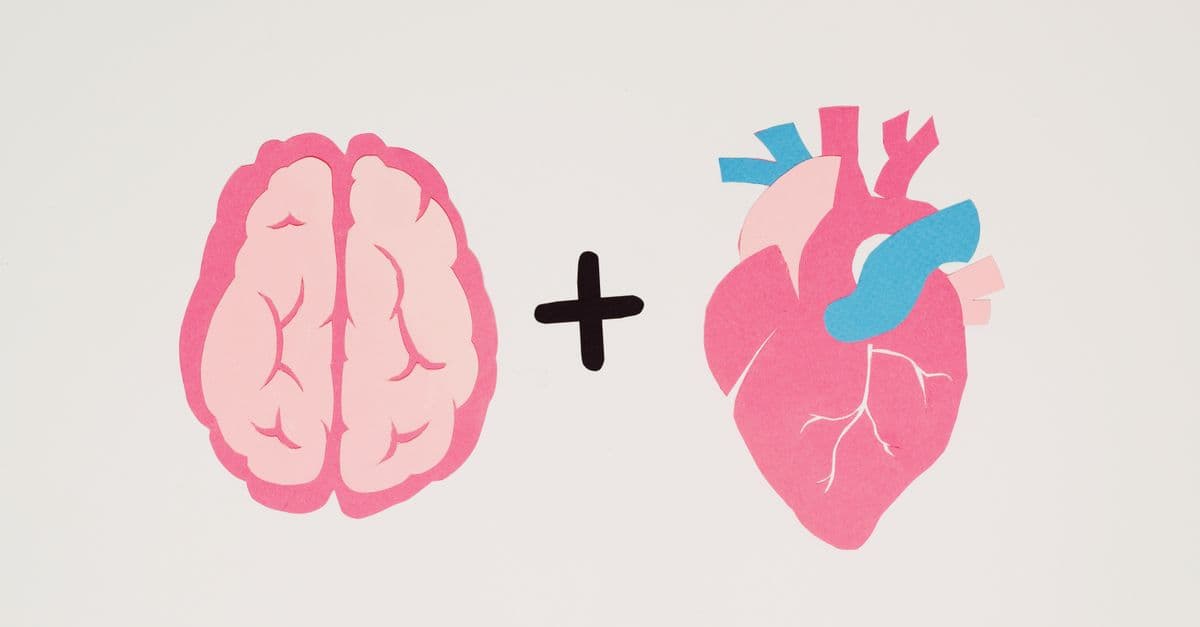
Photo: Nadezhda Moryak / Pexels
In the 1960s, psychologist Frank Barron conducted personality assessments on architects who had been peer-rated as highly creative. He then compared them to architects rated as technically competent but uncreative. The creative architects scored higher on measures of psychological complexity, tolerance for ambiguity, openness to experience, and — critically — they did not score higher on intelligence tests. The finding, replicated in studies of scientists, writers, and artists across the following decades, established something the mythology of creative genius obscures: creativity is not primarily about raw intellectual power. It is about a set of cognitive dispositions and skills that allow the mind to move through a problem space differently than conventional analysis does. Those processes are now mapped at the neural level with reasonable precision.
What Creativity Is (and What It Is Not)
The word "creativity" carries so much cultural freight that the research definition is worth being precise about. Psychologists generally require that a creative product or idea meet two criteria simultaneously: it must be novel (new, unusual, or original) and it must be appropriate (useful, correct, or fitting for its context). Novel-but-useless is not creativity — it is mere randomness. Useful-but-unoriginal is competent execution, not creativity.
Creativity — the capacity to generate ideas, solutions, or products that are both novel and appropriate (useful, aesthetically coherent, or contextually fitting), typically distinguished from routine problem-solving by the need for insight, remote association, or reframing.
Divergent thinking — the cognitive process of generating multiple possible responses or solutions from a single starting point, associated with ideational fluency (number of responses), flexibility (variety of categories), and originality (statistical rarity of responses). Measured by tasks like Alternate Uses (how many uses can you think of for a brick?).
Convergent thinking — the cognitive process of narrowing multiple possibilities to the single best solution, evaluated against clear criteria. Associated with standard problem-solving and most traditional intelligence tasks.
The distinction between divergent and convergent thinking was developed by J.P. Guilford in his 1967 work on the structure of intellect, and it remains foundational. Real creative work requires both: generating a wide field of possibilities (divergent) and then evaluating and refining them toward a viable output (convergent). A novelist who only diverges produces rambling, unfinished drafts. One who only converges produces competent but generic work. The interplay between the two modes is what creative output requires.
Creativity is also distinct from intelligence, though the two are related. There is a consistent but modest correlation between creativity (measured by divergent thinking tests) and IQ, but the relationship follows a threshold pattern: above an IQ of roughly 120, additional intelligence contributes less and less to creative output, while factors like openness to experience, intrinsic motivation, and domain expertise become more important. This is sometimes called the "threshold hypothesis."
Source: Guilford, J.P. (1967), The Nature of Human Intelligence, McGraw-Hill — foundational theoretical account distinguishing convergent from divergent thinking and establishing divergent thinking tests as measures of creative potential.
Source: Kim, K.H. (2005), "Can Only Intelligent People Be Creative?" Journal of Secondary Gifted Education, 16(2-3), 57–66 — meta-analysis of 21 studies examining the creativity-intelligence relationship and documenting the threshold effect.
The Default Mode Network: The Brain's Idea Generator
For most of the history of neuroscience, the brain was studied during task performance. Researchers would have participants solve problems, remember words, or perceive stimuli, and map which regions became more active. For decades, researchers noted that the same set of regions consistently became less active during focused tasks — and were largely dismissed as baseline or "resting state" activity.
Marcus Raichle of Washington University School of Medicine formalized this observation in 2001 and named the network that showed consistent deactivation during external tasks and activation during internal thought: the default mode network (DMN). Rather than being idle, the DMN was discovered to be highly active during mind-wandering, daydreaming, future planning, autobiographical recall, and creative imagination.
Default mode network (DMN) — a set of interconnected brain regions (medial prefrontal cortex, posterior cingulate cortex, angular gyrus, and medial temporal regions) that is active during internally directed thought, including mind-wandering, self-referential processing, and imaginative simulation, and deactivates during externally focused tasks.
The connection between the DMN and creativity became clear through a series of neuroimaging studies in the 2010s. Rex Jung and colleagues found that highly creative individuals showed structural differences in white matter tracts connecting DMN regions, suggesting more efficient communication within the network. Studies by Roger Beaty at Penn State found that creative individuals showed stronger functional connectivity between the DMN and the executive control network (ECN) — a pairing that would seem paradoxical, since these networks typically work in opposition (when DMN is active, ECN tends to suppress, and vice versa).
The resolution is that highly creative individuals can simultaneously engage DMN (generating raw, unconstrained ideas) and ECN (evaluating and directing that generation toward useful ends). Less creative individuals show a more typical anticorrelation between the two networks during creative tasks. The creative brain does not simply daydream more — it daydreams more purposefully, with executive control active enough to catch and develop the useful material that spontaneous thought generates.
A third network, the salience network (centered on the anterior insula and anterior cingulate cortex), appears to mediate between DMN and ECN — detecting when a spontaneously generated idea is worth switching cognitive modes to evaluate. In this three-network model of creativity, the salience network functions as the editorial gatekeeper between the generative and the evaluative.
Source: Raichle, M.E. et al. (2001), "A Default Mode of Brain Function," Proceedings of the National Academy of Sciences, 98(2), 676–682 — foundational paper establishing the default mode network and its consistent activation during internally directed cognition.
Source: Beaty, R.E., Benedek, M., Silvia, P.J., & Schacter, D.L. (2016), "Creative Cognition and Brain Network Dynamics," Trends in Cognitive Sciences, 20(2), 87–95 — synthesis showing that creative thinking involves dynamic coupling between default mode and executive networks, not merely default mode activity.
The Incubation Effect: Why Stepping Away Helps
One of the most robust and practically significant phenomena in creativity research is the incubation effect: taking a break from a difficult problem, and then returning to it, often produces solutions that direct continued effort does not. The experience is common enough to have produced the cultural archetype of the insight in the shower — the "aha moment" that arrives after you stop straining for it.
Incubation effect — the empirical finding that a period of rest or unrelated activity between initial work on a problem and subsequent attempts often facilitates later insight or problem-solving, compared to continuous effort on the same problem.
Insight problem — a problem whose solution requires a sudden restructuring of problem representation rather than incremental logical steps. Classic examples include the nine-dot problem, remote associates tests (RAT), and riddles that require seeing a familiar element in an unexpected frame.
The mechanism of incubation has been debated for over a century, and several non-exclusive processes appear to contribute. The most empirically supported is spreading activation: during the incubation period, the brain continues processing the problem at a low level, and concepts related to the solution gradually become more activated. When attention returns to the problem, the solution-relevant concepts are primed and easier to access. This explains why incubation works better for insight problems (which require remote associations) than for analytical problems (which require logical calculation).
A second mechanism is fixation release. Intense focused effort on a problem tends to anchor the mind to the approaches that have already been tried — a failure of mental set that prevents seeing alternative framings. The break allows fixation on a failed approach to decay, making it easier to approach the problem from a new angle.
Sio and Ormerod's 2009 meta-analysis in Psychological Bulletin reviewed 117 studies of incubation and found consistent positive effects on problem-solving, with effects larger for insight problems than analytic ones, and for longer incubation periods (though with diminishing returns). Incubation worked better when the break activity was undemanding — light activity or unrelated low-effort tasks — than when the break involved demanding cognitive work in an unrelated domain, suggesting that the incubating processes need some cognitive resources to continue operating in the background.
The "shower effect" specifically may reflect an additional factor: relaxed, internally focused states (like showering or walking) activate the DMN, allowing spontaneous thought to surface. Alpha wave activity — associated with relaxed wakefulness — has been found to increase before reported insight moments in EEG studies, consistent with the idea that a shift toward internally directed processing facilitates the retrieval of remote associations.
Source: Sio, U.N. & Ormerod, T.C. (2009), "Does Incubation Enhance Problem Solving? A Meta-Analytic Review," Psychological Bulletin, 135(1), 94–120 — meta-analysis of 117 incubation studies confirming the effect and identifying moderating conditions.
Source: Dijksterhuis, A. & Meurs, T. (2006), "Where Creativity Resides: The Generative Power of Unconscious Thought," Consciousness and Cognition, 15(1), 135–146 — experimental evidence for unconscious information integration during incubation periods.
The Right-Brain Myth: What Neuroscience Actually Says
Few ideas about the mind are more popular, more intuitively appealing, and more thoroughly refuted by neuroscience than the right-brain / left-brain personality divide. The notion that creative people are "right-brained" while analytical people are "left-brained" has been repeated in educational policy, management consulting, and popular self-help for decades. It is, in the neuroscientific sense, wrong.
The myth has a legitimate origin. Nobel laureate Roger Sperry's split-brain research in the 1960s, studying patients whose corpus callosum had been severed to treat epilepsy, demonstrated that the two hemispheres have different functional specializations. The left hemisphere is primarily responsible for language production in right-handed people; the right hemisphere shows advantages in certain spatial tasks and holistic pattern recognition.
What the research did not show, and what subsequent decades have firmly disconfirmed, is that individual people operate predominantly from one hemisphere. Neuroimaging studies of thousands of participants have consistently found that both hemispheres are active during virtually all complex cognitive tasks, including both creative and analytical ones. A 2013 study by Nielsen and colleagues at the University of Utah analyzed resting-state fMRI data from over 1,000 participants and found no evidence that individuals show systematic left or right hemisphere dominance across network connectivity patterns.
Creative thinking involves both hemispheres substantially. The key regions of the default mode network span both hemispheres. Insight problem-solving shows a right-hemisphere advantage for remote semantic associations (consistent with old research), but the judgment, evaluation, and communication of creative work involves left-hemisphere language systems extensively. The corpus callosum in highly creative individuals tends to be thicker and better myelinated than in less creative individuals — indicating more, not less, inter-hemispheric communication.
The persistence of the right-brain creativity myth despite the neuroscience against it is instructive. It offers a flattering binary: you are either creative (right-brained, special, artistic) or analytical (left-brained, organized, conventional). This simplification appeals precisely because it validates both creative self-image and explains creative limitations without addressing the actual, improvable processes involved.
| Myth | Reality |
|---|---|
| Creative people use only their right brain | Both hemispheres are active during creative tasks; creativity requires inter-hemispheric communication |
| Analytical thinking and creativity are opposed | High-creativity individuals show strong executive network activity alongside DMN activity |
| You are either creative or you are not | Divergent thinking is a trainable skill; domain expertise and practice reliably enhance creative output |
| Creative insight comes from nowhere | Insight follows unconscious spreading activation and fixation release enabled by incubation |
| Constraints kill creativity | Moderate constraints reliably improve creative output by focusing generative search |
Source: Nielsen, J.A., Zielinski, B.A., Ferguson, M.A., Lainhart, J.E., & Anderson, J.S. (2013), "An Evaluation of the Left-Brain vs. Right-Brain Hypothesis with Resting State Functional Connectivity Magnetic Resonance Imaging," PLOS ONE, 8(8), e71275 — the large-scale fMRI study directly refuting individual left- or right-brain dominance.
Source: Gonen-Yaacovi, G. et al. (2013), "Rostral and Caudal Prefrontal Contribution to Creativity: A Meta-Analysis of Neuroimaging Studies," Frontiers in Human Neuroscience, 7, 465 — meta-analysis confirming bilateral prefrontal involvement in creative cognition.
How Constraints Boost Creativity
One of the most counterintuitive findings in creativity research is that constraints often enhance rather than impair creative output. The intuition says that freedom maximizes creativity — give people maximum latitude and you will get maximum originality. The data says otherwise, consistently and across many domains.
Patricia Stokes's analysis of Monet's water lily series documented a systematic pattern: as Monet imposed increasingly severe constraints on his own paintings (same subject, same compositional structure, variations restricted to light and season), his stylistic innovations accelerated rather than diminished. The constraints forced originality precisely because obvious solutions were ruled out.
Laboratory research supports this pattern. Catrinel Haught-Tromp's studies on "green eggs and ham" creativity (deliberately constraining participants to unusual words or structures) found that verbal creative output rated as more original when produced under word constraints than without them. Patricia Stokes's work across art history found that painters who imposed systematic constraints on themselves — like Monet's self-limiting focus or Mondrian's progressive elimination of curves — produced their most influential innovations under the most constrained conditions.
The mechanism involves what researchers call the "search space" of possible solutions. Unconstrained problems have effectively infinite solution spaces, which makes it difficult to navigate away from the most obvious (and therefore least creative) options. Constraints prune the solution space, forcing exploration of regions that unconstrained search would never reach. An analogy: if someone asks you to write a story about anything, you might default to familiar narrative structures. If they ask you to write a story set on a submarine on Venus in the year 3000 using only dialogue, the constraints force you into territory your default habits would never generate.
The relationship between constraints and creativity follows a dose-response curve similar to the Yerkes-Dodson function: too few constraints leave the search space too large; too many constraints eliminate viable solutions. Moderate constraints in the right dimensions tend to produce the most creative outputs.
This finding has direct implications for how creative work is structured in practice. Complete freedom is rarely optimal. Time pressure (mild), resource limitations, format constraints (write a poem rather than an essay), and audience specifications all function as productive constraints when they are specific enough to focus the search but not so restrictive as to eliminate the novel space.
Source: Stokes, P.D. (2005), Creativity from Constraints: The Psychology of Breakthrough, Springer — systematic analysis of how self-imposed constraints drove innovation in the work of Monet, Mondrian, and Stravinsky.
Source: Haught-Tromp, C. (2017), "The Green Eggs and Ham Hypothesis: How Constraints Facilitate Creativity," Psychology of Aesthetics, Creativity, and the Arts, 11(1), 10–17 — experimental study demonstrating that verbal constraints increase originality in creative writing tasks.
Domain Expertise, the 10-Year Rule, and Creative Peaks
One of the most consistent findings in the study of creative careers is that major creative contributions rarely appear early in a career. Hayes (1989) examined the careers of 76 famous classical composers and found that the average interval between when a composer began formal musical study and when they produced their first major recognized work was 10 years — a pattern he termed the "10-year rule." Similar analyses have been conducted for painters, poets, mathematicians, and scientists with comparable results.
10-year rule — the empirically observed pattern that major creative contributions in a domain typically require approximately 10 years (or 10,000 hours) of intensive domain immersion before they appear, reflecting the knowledge base and pattern recognition that deep expertise provides.
The 10-year rule does not mean that creativity is simply the output of accumulated knowledge — if it were, the most experienced practitioners would always be the most creative, which is not the case. Rather, it reflects that creativity in any domain requires fluent access to the domain's patterns, constraints, and conventions before genuine innovation is possible. You cannot break rules productively until you know what they are and why they exist. You cannot generate surprising combinations until you have a rich enough vocabulary of domain elements to combine.
This is why beginner's creativity — the novel ideas that come from knowing enough to have ideas but not enough to know that they are conventional — is a real but limited phenomenon. And it is why the most enduring creative contributions tend to combine deep domain knowledge with the psychological openness (curiosity, tolerance of ambiguity, non-defensiveness about one's own work) that domain experts can gradually lose as expertise becomes investment in existing frameworks.
The age of peak creative output varies by domain in a systematic way. Simonton's analyses of career trajectories found that domains requiring extensive formal knowledge accumulation (mathematics, physics, music composition) tend to show earlier career peaks than domains where the key resource is experiential depth and social understanding (writing, history, philosophy). This pattern is consistent with the role of domain-specific knowledge structures in enabling and sometimes constraining creative recombination.
Source: Hayes, J.R. (1989), The Complete Problem Solver (2nd ed.), Lawrence Erlbaum — the analysis of composer careers establishing the 10-year pattern between domain entry and major creative contribution.
Source: Simonton, D.K. (1997), "Creative Productivity: A Predictive and Explanatory Model of Career Trajectories and Landmarks," Psychological Review, 104(1), 66–89 — mathematical model of creative career trajectories across disciplines and its relationship to knowledge accumulation.
Openness to Experience: The Personality Correlate of Creativity
If there is a single personality trait that predicts creativity across domains and measurement methods, it is openness to experience — the fifth of the Big Five personality dimensions. Openness includes intellectual curiosity, aesthetic sensitivity, preference for variety and novelty, willingness to entertain unconventional ideas, and tolerance of ambiguity.
Openness to experience — one of the Big Five personality dimensions, characterized by intellectual curiosity, aesthetic sensitivity, imagination, preference for novelty, and tolerance of ambiguity. The most consistently documented personality predictor of creative achievement across domains.
The relationship between openness and creativity holds across peer-rated creativity, divergent thinking test scores, creative achievement (documented publication, artistic production), and career choice in creative fields. McCrae's (1987) factor-analytic work established openness as the personality dimension most strongly associated with creativity, and subsequent decades of research in this framework have consistently confirmed the relationship.
The neural basis of openness appears to overlap substantially with the default mode network. Individuals high in openness show more DMN activity during rest, stronger semantic associations between remote concepts, and greater responsiveness to novel stimuli in attention and arousal measures. High-openness individuals also show less latent inhibition — the automatic tendency to screen out stimuli that have previously been irrelevant — which means their attention is captured more readily by unexpected or peripheral information that low-openness individuals automatically filter.
This reduced latent inhibition is a double-edged feature. It expands the input to creative cognition by keeping more of the perceptual environment available for processing. It also makes high-openness individuals more susceptible to distraction and more vulnerable to the kind of loose cognitive associations associated with both creative insight and, at pathological extremes, psychosis. The relationship between openness and subclinical psychosis-spectrum traits (schizotypy) is documented and represents one of the more interesting edges of creativity research.
Source: McCrae, R.R. (1987), "Creativity, Divergent Thinking, and Openness to Experience," Journal of Personality and Social Psychology, 52(6), 1258–1265 — foundational study establishing openness to experience as the key Big Five predictor of creativity.
Source: Carson, S.H., Peterson, J.B., & Higgins, D.M. (2003), "Decreased Latent Inhibition Is Associated with Increased Creative Achievement in High-Functioning Individuals," Journal of Personality and Social Psychology, 85(3), 499–506 — demonstrated that reduced latent inhibition in high-functioning individuals predicts creative achievement.
Frequently Asked Questions
Q: Is creativity something you are born with, or can it be developed?
A: Both. There is a heritable component to divergent thinking ability and to openness to experience (estimated heritability around 50% for both). But divergent thinking is also trainable: studies by Barron and others, and more recent training research, show that structured practice with open-ended generation tasks increases performance on divergent thinking tests. Domain expertise, acquired through sustained practice, reliably improves domain-specific creative output. Creative environments — social contexts that reward exploration, tolerate failure, and expose people to diverse stimuli — further develop creative capacity.
Q: Does sleep affect creativity?
A: Yes, substantially. REM sleep in particular — the dreaming stage — facilitates the integration of distantly related concepts and appears to contribute to the kind of remote associations that fuel insight. Ullrich Wagner and colleagues demonstrated in a 2004 Nature study that subjects who slept between exposures to a number sequence task were nearly three times as likely to discover the hidden mathematical shortcut as those who stayed awake. Anecdotal accounts of creative insights during dreams (Kekulé's benzene ring, Coleridge's Kubla Khan) are consistent with REM sleep's role in loosening associative constraints.
Q: Why do creative ideas so often come in the shower or on a walk?
A: These low-demand activities produce a relaxed, internally focused state associated with alpha wave activity and DMN engagement. When external demands are minimal and body movement is rhythmic and automatic, the mind can wander — and spontaneous thought during mind-wandering engages the spreading activation processes of incubation. The shower does not generate ideas; it creates the cognitive conditions under which ideas already in progress can surface into conscious awareness.
Q: What is the difference between creativity and innovation?
A: Creativity refers to the cognitive and psychological process of generating novel and appropriate ideas. Innovation refers to the implementation of those ideas in a social, organizational, or technological context — bringing the creative output to practice. Highly creative individuals are not always innovators (some lack the practical or social skills to implement ideas), and successful innovators are not always the most creative (implementation often draws on existing ideas more than novel ones). The distinction matters for understanding why organizational creativity research findings do not always translate directly to organizational innovation outcomes.
Q: Does collaboration enhance or impair individual creativity?
A: It depends on the stage and structure of the process. Individual divergent thinking is typically superior to brainstorming in groups — a robust finding called "production blocking" in group brainstorming, where individuals hold back ideas to avoid interrupting others, reducing total idea generation. However, collaborative exposure to diverse perspectives can seed subsequent individual divergent thinking, and collaborative convergent evaluation tends to outperform individual evaluation. The optimal structure involves alternating between solo generation and collaborative evaluation, rather than conflating the two.
Q: Is there a relationship between creativity and mental illness?
A: There is a documented statistical association between creative achievement and certain mental health conditions, particularly bipolar disorder and schizotypy (subclinical schizophrenia-spectrum traits). But the relationship is neither necessary nor sufficient. Most creative people do not have mental illness, and most people with the relevant conditions are not exceptionally creative. The association may reflect shared underlying features (openness, reduced latent inhibition, loose associative thinking) that, in moderate form, facilitate creativity and, in extreme form, produce disorder. Kay Redfield Jamison's research on affective disorder in writers and artists documented elevated lifetime rates of mood disorder compared to control professions, though she was also careful to note that the creative work of these individuals was not produced during episodes of illness.
For a broader look at how the brain produces insight and how problem representation changes, see Cognitive Biases Explained and The Science of Learning. The relationship between motivation and creative output connects to The Science of Motivation. The foundational experiments on behavioral conditioning that shaped early creativity research are covered in The Skinner Box and Operant Conditioning.
The Takeaway
Creativity is not a mystical endowment granted to artists and withheld from accountants. It is a cognitive profile — characterized by the dynamic coupling of generative (DMN-based) and evaluative (ECN-based) processing, strong openness to experience, domain expertise deep enough to enable recombination, and the metacognitive habit of stepping away from problems long enough for unconscious spreading activation to do its work. Constraints help by pruning the solution space rather than eliminating it. The right-brain myth should be retired. The incubation effect is real and exploitable. And the architecture of the creative brain, as it becomes clearer through neuroimaging, looks less like a switch between imaginative and analytical modes and more like an unusually flexible integration of both.
Read next:
Follow new articles
Add SciHub101 to your feed reader to see new science and technology stories.
About the Author
SciHub101 is an independent science and technology publication founded and edited by Buğra Sözeri, a software engineer and app developer based in Türkiye. AI tools assist with drafting and research. Source documentation in the existing archive is uneven, and articles are being reviewed and corrected. The Editorial Team byline identifies editorial responsibility; it does not certify specialist or independent human review. Where we compare products, anything built by our own team is labelled as such — see the editorial guidelines and About page for how corrections and disclosures work.
Related Articles

The Psychology of Decision Making: How We Really Decide
The psychology of decision making explained: prospect theory, loss aversion, the paradox of choice, heuristics, and why human decisions deviate systematically from rationality.

The Psychology of Color: Science vs. Marketing Myths
The psychology of color explained: how color affects mood and behavior, the red performance effect, cultural differences in color meaning, and what the actual science says versus marketing myths.

Why Do We Get Bored? The Science Behind Boredom and Motivation
Boredom is not simply lack of stimulation but a complex cognitive and emotional state signaling that current activities are not meeting psychological needs. Research suggests boredom arises when attention demands are too low (monotony, routine) or when the gap between attention available and attention demanded is mismatched. The attention restoration theory proposes that boredom serves as a signal that the mind needs a change. The default mode network (brain regions active during rest) becomes hyperactive during boredom, associated with mind-wandering and future planning. Boredom is not uniformly negative: susceptibility to boredom varies with personality traits (novelty-seeking, sensation-seeking) and predicts creativity, risk-taking, and innovation. Some of history's greatest scientific and artistic achievements came from bored minds seeking stimulation. Understanding boredom reveals it as a motivational signal that pushes people toward novel goals, exploration, and self-improvement.

The Science of Learning: How We Actually Learn
The science of learning explained: spaced repetition, retrieval practice, the testing effect, why rereading fails, and the myth of learning styles debunked by cognitive research.

What Happens to Your Brain When You Meditate
In 2005, Sara Lazar at Harvard found that experienced meditators had measurably thicker cortex in regions associated with attention and interoception — and that the thickness correlated with years of practice, not age. A year later the same group confirmed the finding with a larger sample. Since then, hundreds of neuroimaging studies have examined meditation's effects on brain structure and function, with results that are genuinely interesting, frequently overstated, and worth reading carefully. The brain does change. The question is how much, in whom, through what mechanism, and whether those changes explain the psychological effects people report.