Game Modding: Communities Creating Infinite Content

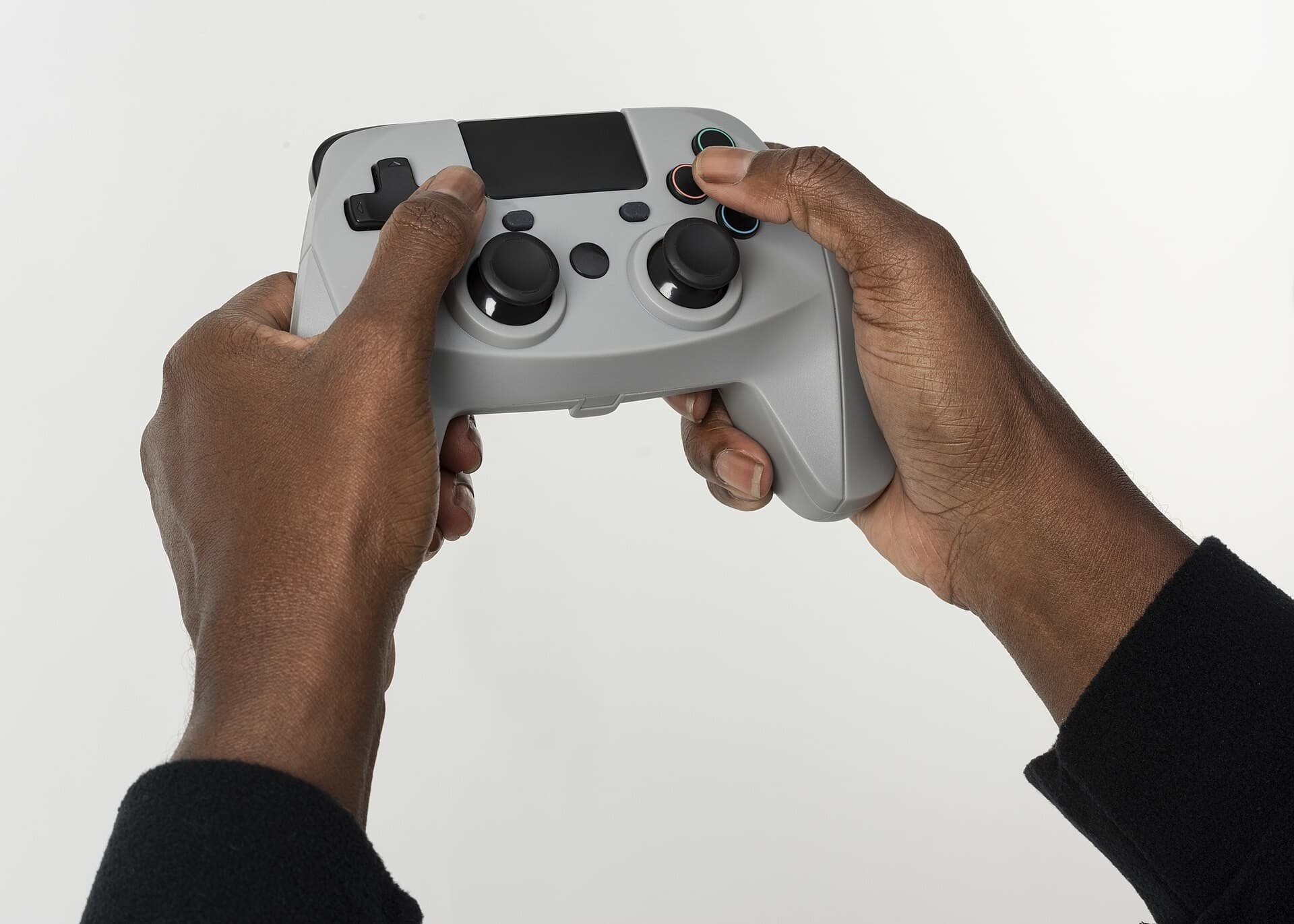
Photo: RDNE Stock project / Pexels
A studio ships a game, closes the project, and moves on. Players, however, do not stop. They open the files, rewrite the scripts, replace the textures, and keep building for years, sometimes decades, after the credits roll. This is modding: unofficial modification of a game's code, assets, or rules by the people who play it, not the people who made it.
Modding is not a footnote to game history. It has produced entire genres (battle royale, MOBA), launched the careers of major studios (Valve hired the creators of Counter-Strike and Dota), and kept 2011-era games like The Elder Scrolls V: Skyrim commercially and culturally relevant more than a decade after release. Understanding how modding communities work explains why some games become platforms for endless creativity while others fade the moment support ends.
What modding actually is, and why studios allow it
A mod is any player-made change to a game that the original developer did not build or officially ship. That covers a huge range: a single texture swap that makes a sword look shinier, a total conversion that turns a fantasy RPG into a different game entirely, or a scripted quest chain with its own voice acting and story.
Modding requires access. Developers either provide official tools (Bethesda's Creation Kit, Valve's Source SDK, the Minecraft modding API surface) or leave the game's files loosely enough structured that hobbyists can reverse-engineer them. Without one of those two openings, a modding scene simply cannot form, no matter how much players want one.
The reason studios tolerate, and often actively support, this unpaid third-party labor is economic. A modded game keeps selling. Bethesda has re-released Skyrim multiple times since 2011 (Legendary Edition, Special Edition, Anniversary Edition), and each re-release resets modding activity, driving a fresh wave of purchases from players who want to experience the mod ecosystem on updated hardware. Nexus Mods, the largest third-party mod repository, passed 10 billion total mod downloads in February 2024, and Skyrim alone (original plus Special Edition) accounted for more than half of that figure, with the original 2011 release surpassing 2 billion downloads on its own.
How a modding ecosystem forms and grows
Think of a base game as a house and the developer's official content as the furniture that came with it. Modding tools are the equivalent of handing every buyer a key to the walls, wiring, and plumbing. Most buyers never touch any of it. But give millions of people that access, and a small percentage, the ones with programming skills, art training, or just obsessive patience, will renovate rooms the original architect never designed.
That analogy only works because modding scales with audience size, not with any single person's skill. A game with ten million owners might have one percent of players capable of scripting a new quest. One percent of ten million is one hundred thousand potential creators, more people than most game studios have ever employed in total. This is the core mechanism behind modding's output: it converts a large, passive audience into a distributed, unpaid development team, one member at a time.
How does Skyrim modding actually sustain the game after 13 years?
Skyrim shipped with Bethesda's Creation Kit, a free official editor that exposes the game's quest, dialogue, and world systems to anyone willing to learn it. Nexus Mods now hosts roughly 60,000 mods for Skyrim Special Edition and nearly 70,000 for the original release, according to Nexus Mods' own platform statistics reported across gaming press in 2024. That volume, sustained continuously since 2011, is what keeps the game selling and streaming.
Modders built entire standalone-quality expansions on top of Skyrim's engine. Falskaar, created largely by a single modder, added a new landmass with more than 20 quests and full voice acting. Enderal is a total conversion, a mod so extensive it functions as an entirely separate RPG using Skyrim's underlying Creation Engine. Graphics overhauls using the ENB post-processing framework routinely make thirteen-year-old character models look closer to a 2024 release than a 2011 one.
Modding's biggest secret: some of the industry's biggest games started as mods
The most consequential fact about modding is not that it extends old games. It is that entire genres, and several billion-dollar franchises, began life as unauthorized modifications of someone else's game.
Counter-Strike is the clearest example. In 1999, university student Minh "Gooseman" Le and collaborator Jess "Cliffe" Cliffe built a team-based tactical shooter mod on top of Valve's Half-Life engine. Le has said it took him roughly six weeks to get a playable version working. Valve noticed the mod's growing beta community, began contributing to development directly, then bought the rights outright and hired both creators. Counter-Strike became a standalone commercial release in November 2000 and has since spawned five major sequels, including Counter-Strike 2, one of the most-played competitive shooters in the world.
Dota 2 has an almost identical origin story, just with a different host game. Defense of the Ancients began in 2003 as a custom map for Blizzard's Warcraft III, built by a modder known as Eul. Development passed through several community members, most notably Steve "Guinsoo" Feak, who built the DotA Allstars version most players remember, before landing with a modder known only as IceFrog. In 2009, Valve hired IceFrog directly and acquired the rights to build an official sequel, releasing Dota 2 on Steam in July 2013, according to a history compiled by Red Bull Esports. Guinsoo, meanwhile, left to co-found Riot Games and build League of Legends, which drew directly on the same mod's design ideas. Two of the three largest MOBA franchises in gaming trace their design DNA to a single fifteen-year-old Warcraft III custom map.
Battle royale followed the same path a decade later. Irish designer Brendan Greene, working under the handle PlayerUnknown, built a series of last-player-standing mods on top of the military simulator ARMA 2, including a variant of the survival mod DayZ itself born as an ARMA 2 mod, called DayZ: Battle Royale. Sony's Daybreak Game Company hired Greene as a consultant to build battle royale into H1Z1, and he went on to direct PlayerUnknown's Battlegrounds, released in 2017, according to Game Informer's history of the genre. PUBG then directly inspired Fortnite: Battle Royale and Apex Legends. A shooter mode played by a few hundred people inside a niche military-sim mod community became one of the defining commercial genres of the 2010s and 2020s.
Where mods live: the infrastructure that makes creation possible
A mod that nobody can find is functionally invisible. Modding communities depend on distribution platforms as much as they depend on editing tools, and the health of a modding scene tracks closely with how good its hosting infrastructure is.
| Platform | Primary games hosted | Approximate catalog size | Notable model |
|---|---|---|---|
| Nexus Mods | Skyrim, Fallout 4, Starfield, Baldur's Gate 3 | Over 60,000 mods for Skyrim Special Edition alone; 10 billion+ total downloads platform-wide as of Feb. 2024 | Free hosting, donation points system, manual and app-based installers |
| Steam Workshop | Skyrim, Left 4 Dead 2, Baldur's Gate 3, Total War series | Hundreds of thousands across supported titles | Direct in-client subscription; some revenue-share attempts |
| CurseForge | Minecraft, World of Warcraft add-ons | Hundreds of thousands, dominated by Minecraft | Launcher-integrated installs, ad-supported downloads |
| Mod DB | Total War, Company of Heroes, Half-Life mods | Tens of thousands | Long-running community archive, oldest of the major platforms |
Table: Major third-party modding platforms by primary hosted games and approximate scale. Figures compiled from platform statistics and 2024 gaming press coverage.
Nexus Mods functions as the closest thing modding has to critical infrastructure: version tracking, compatibility notes, mod-author credit systems, and community voting all reduce the friction between "I made something" and "a hundred thousand people are using it." Steam Workshop does the same job with a different tradeoff, trading Nexus's manual install flexibility for one-click in-client subscription, which matters enormously for non-technical players who would never touch a file directory.
Where modding runs into trouble: legality, monetization, and moderation
Modding exists in a legal space that is more tolerated than protected. Modifying a game you own, for personal use, is broadly accepted under fair use and consumer rights norms. Distributing that modification to others is where the ambiguity starts.
Mods that reuse copyrighted assets, ripped textures, ported character models, or licensed music, without permission infringe copyright regardless of the mod's popularity or intent. Developers hold the legal right to issue takedowns, and some exercise that right aggressively. Nintendo has a well-documented history of shutting down fan projects and mods built on its intellectual property, in sharp contrast to Bethesda, which licenses its Creation Kit specifically to encourage third-party mod development.
Monetization is the other recurring flashpoint. Bethesda attempted to introduce paid mods on Steam Workshop for Skyrim in 2015. The backlash from the modding community was immediate and overwhelming, and Valve and Bethesda reversed the program within about a week. The episode set an informal industry norm that persists today: modding is expected to remain free, and attempts to monetize it directly tend to provoke community revolt rather than adoption. Valve has since experimented with more limited, opt-in creator marketplaces for specific titles, but broad paid-modding programs remain rare.
Not every mod community stays healthy. Asset theft, where a modder republishes another creator's work without credit, is a recurring source of conflict on platforms like Nexus Mods, and most large repositories now run explicit permission systems requiring authors to state whether their assets can be reused. Mod incompatibility is a separate, purely technical problem: two mods that each alter the same underlying game system can conflict, crash saves, or silently break one another, which is why experienced modders build and test "load orders" the way developers manage software dependencies.
Modding as a career pathway
Modding functions, informally, as one of the only unpaid apprenticeships in the games industry. A modder building a substantial quest mod has to solve narrative design, dialogue scripting, level layout, and often basic 3D art, the same skill set a junior game designer needs, but with no deadline pressure and no publisher oversight forcing shortcuts.
That apprenticeship produces real hires. Valve's acquisition of both the Counter-Strike and Dota development teams are the two most visible examples, but the pattern repeats at smaller scale constantly: studios recruiting modders directly because a portfolio of shipped, played, and reviewed mod content is a stronger signal of ability than a design document with no players attached to it. For someone trying to break into a notoriously competitive industry, a well-received mod is evidence a resume cannot replicate.
Can you actually make money from modding today?
Rarely, and mostly indirectly. Direct monetization of mods is uncommon and has provoked backlash when developers attempted it, as with Bethesda's 2015 paid-mods experiment. Most modders earn nothing beyond community reputation, though some fund ongoing work through Patreon-style support, and the strongest financial upside remains indirect: a mod portfolio that leads to a paid industry job.
Why some games build thriving mod scenes and others never do
Modding is not automatic. It requires three conditions at once: technical access to the game's files or an official toolset, a developer willing to tolerate or actively support third-party changes, and a distribution platform where finished mods can reach an audience. Remove any one of the three and the scene withers regardless of how much players want to create.
Live-service and always-online games struggle here by design. Anti-cheat systems that monitor for unauthorized code changes cannot easily distinguish a cosmetic mod from a cheat, so many multiplayer-focused live-service titles block modding outright to protect competitive integrity. Console platforms add a second layer of restriction: closed hardware ecosystems and certification requirements make the kind of file-level access PC modders take for granted far harder to obtain, though Bethesda has notably supported limited console mod support for Skyrim and Fallout 4 through Creation Club-style curated systems.
Some developers simply prefer full creative control. FromSoftware games, despite an active community-built modding scene for titles like Elden Ring, receive no official modding tools or support from the studio itself, and modders there work entirely through reverse-engineered, unofficial methods. The contrast with Bethesda's stance, licensing an official editor specifically to invite third-party content, illustrates that modding culture is a deliberate choice a studio makes, not an automatic byproduct of a game's popularity.
What people get wrong about modding
The most common misconception is that modding is simply fans patching a developer's mistakes, filling in gaps left by a rushed or unfinished release. That framing undersells what modders actually do. A quest mod on the scale of Falskaar, built with full voice acting and twenty-plus quests, requires narrative design, audio direction, and months of iterative testing, the same production discipline a small studio would apply to a paid expansion. Modders frequently exceed the polish of the base game precisely because they are not bound by a publisher's release date.
A second misconception treats modding as pure charity that only benefits the developer. In practice the relationship runs both directions. Developers that support modding see measurably longer sales tails and stronger long-term community engagement, as Skyrim's post-2011 download numbers demonstrate. Modders, meanwhile, gain a public portfolio, community standing, and in a meaningful number of documented cases, a direct hire into the industry. It functions less like unpaid labor extracted from fans and more like an informal, mutually beneficial talent pipeline that happens to run without a contract.
A third misconception assumes any popular game will eventually get a rich mod scene if it just stays popular long enough. Popularity alone does not create modding culture. Fortnite and Call of Duty's live-service entries are among the most-played games in the world and have essentially no third-party modding scenes, because anti-cheat enforcement and closed content pipelines make unauthorized modification both technically difficult and against the terms of service. Modding culture is manufactured by developer choices about tooling and tolerance, not conjured automatically by an audience's size.
The takeaway
Modding turns a game's audience into an unpaid, distributed development studio, and the biggest names in competitive gaming, Counter-Strike, Dota, and the entire battle royale genre, all trace back to that exact mechanism rather than to a publisher's roadmap. Skyrim's thirteen-plus years of continuous relevance is not an accident of good game design; it is a direct consequence of Bethesda handing players a real editor and then getting out of the way. The lesson generalizes: a game becomes a platform the moment its developer decides community-built content is worth more than the risk of losing some control over the final product.
Read next:
- Minecraft: The Game About Nothing That Became Everything
- World of Warcraft: The MMORPG That Changed Gaming
Frequently Asked Questions
Q: Is modding legal? Could modders face lawsuits? A: Modifying a game you own for personal use is broadly accepted under fair use and consumer rights norms. Distributing mods publicly is legally murkier: reusing copyrighted assets like textures, models, or music without permission infringes copyright regardless of intent. Developers hold the right to issue takedowns. Nintendo has a documented history of shutting down fan mods and projects, while Bethesda licenses its Creation Kit specifically to invite third-party mod development. Legal tolerance is a developer choice, not a fixed rule.
Q: Can you make money modding? A: Rarely, unless the developer explicitly enables it. Bethesda attempted paid mods on Steam Workshop in 2015, faced immediate community backlash, and reversed the program within about a week. Most modders earn nothing directly, though some fund ongoing work through Patreon-style community support. The largest financial upside is indirect: a strong mod portfolio has led directly to industry hires, most famously Valve acquiring and hiring the creators of both Counter-Strike and Dota.
Q: Why did Counter-Strike and Dota start as mods instead of original games? A: Both began as side projects built on top of existing commercial engines because building a game engine from scratch was far beyond what an individual or small team could do in the late 1990s and early 2000s. Counter-Strike used Valve's Half-Life engine; Dota began as a Warcraft III custom map. Modding gave creators access to a working engine, renderer, and physics system for free, letting them focus entirely on gameplay design.
Q: Why do some developers refuse to support modding? A: Live-service and always-online games resist modding because anti-cheat systems cannot easily distinguish unauthorized cosmetic mods from cheats, and unauthorized changes can destabilize competitive balance. Some studios, like FromSoftware, prioritize a fixed creative vision and provide no official tools, even though unofficial community modding still occurs. Monetization concerns also play a role: if players can mod in free cosmetics or content, developers may lose revenue from official sales.
Q: What is the difference between a mod and downloadable content (DLC)? A: DLC is official paid or free content released directly by the developer or publisher, tested and supported through normal channels. A mod is unofficial, built by a third party without direct developer compensation or, usually, formal quality control. Some mods are later hired by developers and converted into official DLC or full sequels, blurring the line, but the core distinction is who built it and whether the original studio sanctioned the work before release.
Q: What tools do developers provide to enable modding? A: The most common are dedicated level and quest editors, such as Bethesda's Creation Kit for the Elder Scrolls and Fallout series, and Valve's Source SDK for Half-Life-engine games. Minecraft exposes modding through a combination of community-built APIs like Forge and Fabric rather than an official first-party tool. Games with no editor and no documented file structure essentially cannot develop a modding scene, no matter how popular they are.
Q: How does Steam Workshop differ from independent sites like Nexus Mods? A: Steam Workshop is built directly into the Steam client, letting players subscribe to a mod with one click and have it install and update automatically, which lowers the barrier for non-technical players. Nexus Mods requires manual downloads or a separate app but offers more flexibility, deeper version history, and detailed compatibility documentation, which power users and complex mod setups tend to need. Many major games, including Skyrim and Baldur's Gate 3, are hosted on both simultaneously.
Q: Did any battle royale games besides PUBG start as mods? A: PUBG's lineage traces directly back to mods built on Bohemia Interactive's ARMA 2, including creator Brendan Greene's own DayZ: Battle Royale mod, itself built on top of the DayZ mod, which was later spun into its own standalone game by its developer. PUBG then directly inspired later battle royale titles including Fortnite: Battle Royale and Apex Legends, though those later games were built as original commercial products rather than mods themselves.
Q: Does modding hurt game sales by giving away content for free? A: Available evidence points the opposite direction. Nexus Mods' download statistics show Skyrim Special Edition still driving the majority of platform-wide traffic more than a decade after release, which corresponds with Bethesda re-releasing and continuing to sell the game across multiple editions. A strong modding scene tends to extend a game's active community and purchase window rather than cannibalize it, because most mods require owning the base game to use.
Sources cited: Destructoid – Nexus Mods 10 billion downloads (2024); TheGamer – Skyrim vanilla 2 billion mod downloads; GamesRadar+ – Skyrim Special Edition 65% of Nexus downloads (Nov. 2024); Nexus Mods – Skyrim network statistics; PC Games Insider – The making of Counter-Strike; Red Bull Esports – The history of Dota; Game Informer – From Mod to Phenomenon: a short history of Battle Royale
Follow new articles
Add SciHub101 to your feed reader to see new science and technology stories.
About the Author
SciHub101 is an independent science and technology publication founded and edited by Buğra Sözeri, a software engineer and app developer based in Türkiye. AI tools assist with drafting and research. Source documentation in the existing archive is uneven, and articles are being reviewed and corrected. The Editorial Team byline identifies editorial responsibility; it does not certify specialist or independent human review. Where we compare products, anything built by our own team is labelled as such — see the editorial guidelines and About page for how corrections and disclosures work.
Related Articles

Soulslike Evolution: From Dark Souls to Elden Ring's Open-World Mastery
Dark Souls created soulslike genre. Elden Ring perfected it through open-world accessibility. Difficulty without handholding became gaming philosophy.

Game Accessibility: Making Games for Everyone
Gaming's future includes everyone. Accessibility features enable disabled players to experience games. Inclusive design benefits all players, not just those with disabilities.

Roblox: User-Generated Games and Virtual World Economy
Roblox is platform where users create games. Millions of user-created experiences generate billions in revenue through virtual economy.
Complete Gaming Guide 2026 — Technology, Design, Esports, and Psychology
The complete guide to gaming in 2026: how game engines work, gaming hardware, esports, game design psychology, industry trends, and what makes games engaging and addictive.