Why Sandbox Games Like Minecraft Make Us More Creative
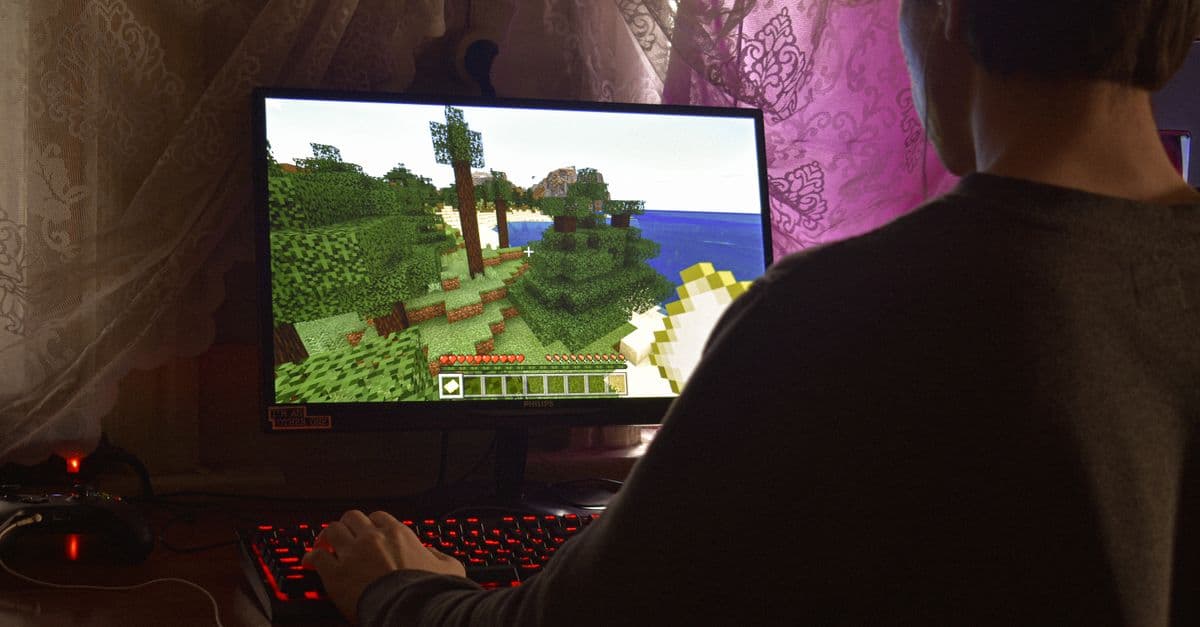
Photo: Alexander Kovalev / Pexels
Minecraft has no story, no combat requirement, no boss fight you're forced to win, and no ending screen that means anything. You are a blocky character in a blocky world, placing and breaking cubes. By most conventional game-design logic, that should have flopped.
Instead, Mojang's block-building sandbox has sold more than 350 million copies as of 2026, according to Mojang's own Minecraft Annual report and Guinness World Records, making it the best-selling video game in history by verified paid sales. No other title, not Grand Theft Auto V, not Wii Sports, not Tetris on any single platform, has matched that number. The reason isn't graphics, story, or marketing. It's a design philosophy built on unstructured play, and it's the same philosophy driving a whole genre of sandbox titles from Garry's Mod to Roblox. This piece looks at why that philosophy works, what psychology says about why humans crave open-ended tools over scripted paths, and where the sandbox model breaks down.
What a sandbox game actually is
"Sandbox" gets used loosely, so it's worth being precise. A sandbox game gives players a persistent world and a toolset, then steps back. There's no forced sequence of levels, no single win condition, and often no antagonist. The player supplies the goals.
Minecraft's toolset is blocks: place them, break them, combine resources into new items, survive hostile mobs if you choose Survival mode, or skip survival entirely in Creative mode and build without limits. That's the entire ruleset. Everything else, cities, redstone computers, roller coasters, working calculators, emerges from players applying that ruleset to their own ideas.
Compare that to a linear shooter or an open-world RPG with a main quest. Those games also let you explore, but there's a spine, a critical path the designers built and expect you to walk. Sandbox games remove the spine. What's left is closer to a box of LEGO bricks than a novel: raw material, not a story someone else already wrote for you.
The psychology behind why open-ended tools beat scripted content
Developmental psychologist Peter Gray, a research professor at Boston College, has spent decades studying what he calls "free play," activity that is self-chosen, self-directed, and intrinsically motivated rather than assigned. His research argues that unsupervised, self-directed play is where children build resilience, problem-solving skills, and creative capacity, and that the decline of unstructured play time in Western childhoods correlates with rising rates of anxiety and depression in young people, per his analysis published in the American Journal of Play.
The mechanism Gray points to matters here: creativity requires the freedom to fail without evaluation. If someone is grading your every move, you optimize for the grade, not the idea. Sandbox games remove the grader. Nobody scores your Minecraft house. That absence of judgment is precisely what lets players attempt genuinely strange things, like a working calculator made of redstone dust, without fear of doing it "wrong."
There's a second psychological framework at work: self-determination theory, developed by psychologists Edward Deci and Richard Ryan. Their research, later applied specifically to games by Andrew Przybylski, Richard Ryan, and C. Scott Rigby in a study published in Motivation and Emotion, identifies three needs that drive intrinsic motivation: autonomy (acting on your own volition), competence (mastering a challenge), and relatedness (feeling connected to others). Their findings show these three needs independently predict how much people enjoy a game and whether they return to it.
Sandbox design is, functionally, an autonomy-maximizing machine. A linear game can deliver competence (you beat the level) and relatedness (co-op with friends), but it caps autonomy by design, the level ends where the designer put the wall. Minecraft has no wall. You decide what "winning" looks like, which is exactly the condition self-determination theory identifies as most motivating.
Why do unstructured tools produce more creative output than guided ones?
Because evaluation and structure narrow the range of ideas people are willing to try. Gray's free-play research and controlled creativity studies both show that when people expect their output to be judged against a fixed standard, they gravitate toward safe, conventional answers. Remove the standard, and the range of attempts widens, producing more unusual, more personally meaningful results, even if more of those attempts also fail.
How Minecraft's specific tools turn a blank canvas into a construction kit
A blank canvas alone doesn't guarantee creativity. Give someone truly infinite freedom with no constraints at all and most people freeze. Minecraft's trick is bounded freedom: a small, learnable rule set (blocks, gravity for some materials, day-night mob spawning, crafting recipes) that stays constant, layered under infinite recombination possibilities.
This is analogous to how a piano works. Twelve notes, fixed physics of string and hammer, yet the constraint doesn't limit music, it enables it. Without fixed notes, there's no shared vocabulary for melody to exist in. Minecraft's blocks function the same way: a fixed vocabulary (dirt, stone, wood, redstone) that's small enough to learn in an afternoon but combinatorially large enough that nobody has built everything possible with it. That combination, low floor, no ceiling, is the design principle instructors call "low floor, high ceiling," originally coined in educational technology circles around tools like LOGO and Scratch, and it's the same principle Minecraft's block system runs on.
The second mechanism is emergence, when complex, unplanned behavior arises from a small set of simple rules interacting. Chess has six piece types and simple movement rules, yet no two grandmaster games are identical. Minecraft's redstone system (a conductive block that carries a power signal, functioning like a simplified electrical circuit) is simple in isolation: a wire that's either on or off. But players combined redstone logic gates into functioning ALUs, programmable calculators, and at least one working Turing machine built entirely from in-game blocks, a project documented by hobbyist engineering communities on the Minecraft wiki and covered by outlets like PC Gamer. Nobody designed the game to make computers possible. The rules simply didn't forbid it.
Why does Minecraft still grow after 15+ years when most games decline?
Because the ceiling isn't the software, it's player imagination, and that ceiling never fills up. Mojang keeps adding blocks and mechanics (the Caves & Cliffs, Wild, and Trails & Tales updates each expanded the toolkit), but the deeper reason Minecraft hasn't stagnated is that emergent systems generate new possibility space faster than any single community can exhaust it.
Minecraft against the sandbox field: Garry's Mod and Roblox
Minecraft isn't the only game built on this philosophy, and comparing it to its closest relatives shows what's constant across the genre and what's Minecraft-specific.
Garry's Mod, released by Facepunch Studios in 2006 and built on Valve's Source engine, strips sandbox design down to physics alone. There's no crafting, no survival loop, not even blocks, just objects, ragdolls, and a "physics gun" that lets players grab, rotate, and freeze anything in the world. It has sold more than 25.5 million copies as of late 2024, according to Facepunch's own sales disclosures reported by NME, a fraction of Minecraft's numbers but still remarkable for a game with essentially no marketed goal at all. Where Minecraft gives players a resource-and-construction system, Garry's Mod gives players a physics simulator and lets Lua scripting (a lightweight programming language) turn that simulator into entirely new game modes, including Trouble in Terrorist Town and Prop Hunt, both of which started as community mods before becoming standalone hits.
Roblox takes the opposite approach: instead of one sandbox, it's a platform that hosts millions of separate ones, each built by a different creator using Roblox Studio. Roblox posted roughly 132 million average daily active users in the first quarter of 2026, with 2025 full-year revenue reaching $4.9 billion, according to the company's own investor disclosures. Where Minecraft's creativity lives inside a single shared ruleset (blocks), Roblox's creativity lives one layer up: users aren't just building within a sandbox, they're building new sandboxes for other people to play in, and get paid in Robux (Roblox's virtual currency) when their creations attract enough players.
Comparison of major sandbox-genre titles by design philosophy
| Title | Core creative tool | Lifetime sales / users | What players actually build |
|---|---|---|---|
| Minecraft | Blocks + crafting + redstone logic | 350M+ copies sold (Mojang, 2026) | Structures, redstone machines, entire cities |
| Garry's Mod | Physics gun + Lua scripting | 25.5M+ copies sold (Facepunch, 2024) | Physics contraptions, new game modes |
| Roblox | Roblox Studio (full game engine) | 132M average daily users (Q1 2026) | Entire standalone games, sold to other players |
The shared thread across all three: the developer's job stopped at building tools, not experiences. That's a genuinely different job description than making a linear game, where the designer's task is to author a specific sequence of moments a player will walk through in order.
Why linear games still dominate revenue even though sandbox games dominate engagement hours
Sandbox design isn't a strict upgrade over linear design, it's a trade-off, and the industry hasn't abandoned linear games for good reasons.
Scripted, narrative games deliver something sandbox play structurally cannot: a controlled emotional arc. A studio can guarantee a specific gut-punch moment, a specific twist, a specific pacing of tension and release, because they control every variable. Sandbox games can't guarantee any single player experiences a specific emotion, because the designer gave up that control on purpose. If you want a story with the narrative precision of a film, a sandbox can't promise that; it can only provide raw material.
There's also a documented downside to unlimited openness: decision paralysis. Not every player thrives on total freedom. Some players, especially newcomers, report Minecraft feeling aimless without external goals, a criticism echoed frequently enough in player communities that Mojang eventually added an in-game "advancements" system, essentially optional achievement prompts, specifically to give directionless players a nudge without forcing a path. That's a tacit acknowledgment that pure openness has a real cost for some fraction of players, not just critics.
Redstone as an emergent computation system
Redstone is the clearest proof that Minecraft's rule set is more powerful than its designers intended. In its raw form, redstone dust is a wire: place it on a block, feed it power from a lever or button, and it carries a signal to whatever it's connected to, a door, a piston, a lamp. That's the entire specification. Mojang built redstone to open trapdoors and trigger traps, not to run software. Players took it somewhere else entirely.
The path from "wire" to "computer" runs through logic gates, the same building blocks that make up every microprocessor on Earth. A redstone repeater, torch, and a bit of wiring can be arranged to behave as an AND gate, an OR gate, or a NOT gate, the three primitives that, combined in enough quantity, can express any computable logical operation. That's not a metaphor borrowed from real electronics: it's the same Boolean logic silicon chips use, rebuilt block by block, with signal propagation delay standing in for clock cycles. Once players had reliable logic gates, they started chaining them into adders, then registers, then full arithmetic logic units (ALUs), the component in a real CPU that performs addition, subtraction, and comparison. The Minecraft Wiki's redstone computer tutorials document the progression in detail, from single-bit adders to multi-bit ALUs built from thousands of individual redstone components.
The best-documented result of that progression is a Minecraft build modeled directly on Ben Eater's breadboard computer, a well-known hobbyist 8-bit CPU design used to teach computer architecture. The in-game version reproduces Eater's design almost component for component: an ALU that reads two registers, A and B, and either adds or subtracts them depending on a control signal, memory built from banks of redstone-and-piston latches, and a rudimentary display built from redstone lamps arranged as pixels. None of that is simulated by the game engine. Every signal path, every memory cell, every logic gate is physical blocks that a player placed and wired by hand, meaning the "computer" runs at the actual speed redstone signals propagate in Minecraft, block by block, tick by tick.
Turing machines, the theoretical minimum model of a general-purpose computer, described by Alan Turing in 1936, have also been built in-game. One widely cited example was constructed to mark the centenary of Turing's birth in 2012, using an infinite (or effectively infinite, bounded by world size) redstone "tape" to demonstrate that Minecraft's rule set is Turing-complete, meaning it can, in principle, compute anything any other computer can compute, given enough blocks and enough time.
This is emergence in its purest form: Mojang shipped a wire, and the community derived Boolean algebra, arithmetic, and Turing-completeness from it without a single line of that logic being written by the developers. It's also a useful teaching artifact. Builders who design a redstone ALU are, whether they realize it or not, learning the same digital-logic fundamentals taught in a first-year computer engineering course, just with blocks instead of a breadboard and a soldering iron.
Why does redstone attract this kind of engineering-grade building?
Because it's the one Minecraft system with a genuine on/off binary state and predictable propagation rules, the two prerequisites for building logic circuits. Wood, stone, and dirt are aesthetic materials; redstone is a functional one, closer to a component library than a decoration, which is why builders who want to test the limits of the game's rule set gravitate toward it specifically.
The modding and plugin ecosystem's role in extending creative possibility
Vanilla Minecraft's tool set, blocks, crafting, and redstone, is already large enough to generate the emergent complexity described above. But a second, parallel layer of creativity exists entirely outside Mojang's control: the modding and server-plugin ecosystem, which rewrites or extends the game's actual code rather than just recombining what's already there.
Mods and plugins split into two different technical approaches, and the distinction matters for what each one can do. Mods, distributed through loaders like Forge and Fabric, alter the client-side game code directly, meaning they can add entirely new blocks, entities, dimensions, and mechanics that didn't exist in vanilla Minecraft at all. Forge has been the dominant mod loader since 2011 and, because of that maturity, hosts the largest mod library and supports the most content-heavy modpacks, according to comparisons published by hosting providers like Wabbanode and community references on SpigotMC. Fabric, a newer and more lightweight loader, trades some of that breadth for speed: it's typically first to support new Minecraft snapshot versions and has become the base layer for a strong ecosystem of performance-optimization mods.
Server plugins take a different route. Rather than modifying the client, they hook into an already-running server using an API (application programming interface), a defined set of functions the plugin is allowed to call, without requiring players to install anything on their end. That lineage runs Bukkit (2011, the first plugin API that let anyone extend a Minecraft server without touching the base game) to Spigot (2012, an optimized fork built for performance) to Paper (2016, a further-optimized fork of Spigot that became the de facto standard for high-population servers), a timeline documented on SpigotMC's own wiki. Plugin-based servers are how features like minigames, custom economies, land-claiming systems, and moderation tools became standard on public Minecraft servers without Mojang ever building any of it into the base game.
The practical effect of this second layer is that Minecraft's creative ceiling isn't fixed by Mojang's release schedule at all. A mod can add an entire tech tree of machinery (as the long-running Industrial Craft and Applied Energistics mods do), a new dimension with its own physics (as the Twilight Forest mod does), or a scripting layer that lets players write actual code to control in-game robots (as ComputerCraft and its successor CC: Tweaked do, effectively giving players a real Lua programming environment inside the game). None of that required Mojang's involvement. CurseForge and Modrinth, the two largest mod-and-plugin distribution platforms, host hundreds of thousands of community-built mods and plugins between them, a volume of third-party content that dwarfs anything a single studio could ship on its own release schedule.
That's the same pattern seen in Garry's Mod's Lua scripting layer, generalized: a sandbox's real ceiling isn't the base game's shipped feature list, it's however far the community's own programming and design skill can push the underlying engine. Minecraft's redstone shows what emerges from a fixed rule set with no code access at all. Its modding ecosystem shows what happens when a subset of that community gets code access too.
Do mods and plugins change vanilla Minecraft's core design philosophy, or extend it?
They extend it. Vanilla Minecraft already hands players a toolkit and steps back; mods and plugins simply move that same philosophy up a layer, handing programmers a toolkit (the modding API) and stepping back from that too. The chain of "give people tools, not experiences" runs from Mojang to modders to the players who use their mods, unbroken.
What people get wrong about sandbox creativity
The most common misconception is that Minecraft's appeal is nostalgia for simple graphics, or that it's "just for kids." Neither holds up. The blocky aesthetic wasn't a limitation Mojang settled for, it was a deliberate choice that unlocked infinite procedural world generation, since low-poly cubes are computationally cheap to generate and render compared to the high-fidelity assets AAA studios like those behind Crysis were pouring budgets into circa 2009, when Minecraft launched in alpha under creator Markus "Notch" Persson. Removing graphical overhead is what made infinite worlds technically possible in the first place.
The age claim is also weaker than assumed. While younger players make up a large share of Minecraft's base, adult communities built around technical redstone engineering, architectural megaprojects, and collaborative city-building on servers like Hermitcraft routinely produce work with the scope and polish of professional studio output, documented extensively on YouTube by creators whose entire channels are built around multi-hundred-hour collaborative builds.
A second misconception: that "no goals" means "no structure." Sandbox games aren't structureless, they're structured differently. The rules of physics, crafting, and resource scarcity still constrain what's possible; the difference is that the objective sits with the player, not the designer. That's a design choice, not an absence of design.
Q: Isn't Minecraft just "place and break blocks"? How is that not boring? A: Surface-level simplicity hides emergent complexity. Chess is "move pieces on a grid" and nobody calls that boring, because six simple movement rules generate effectively infinite game states. Minecraft's blocks work the same way: a small rule set that combines into redstone computers, full-scale landmark reconstructions, and functioning in-game economies. The game avoids staleness because players keep discovering new combinations the designers never planned for.
Q: What's the psychological difference between sandbox play and scripted-game play? A: Self-determination theory, developed by psychologists Edward Deci and Richard Ryan and later applied to games by researcher Andrew Przybylski, identifies autonomy, competence, and relatedness as the three drivers of intrinsic motivation. Scripted games can deliver competence and relatedness but cap autonomy at the edges of the designed level. Sandbox games remove that cap, letting players define their own goals, which research shows independently predicts higher enjoyment and longer-term engagement.
Q: Can you actually "win" a sandbox game like Minecraft? A: Not in the traditional sense, and that's intentional. Minecraft's Survival mode has an optional final boss, the Ender Dragon, whose defeat triggers a credits sequence, but no forced ending. Most players set personal goals instead: build a specific structure, automate a redstone system, complete an in-game "advancement" list. Winning is self-defined, which some players find liberating and others find directionless.
Q: Why do sandbox games like Garry's Mod succeed with almost no marketed objective at all? A: Because the tool itself, in Garry's Mod's case, a physics gun plus Lua scripting, is flexible enough that the community generates the objectives. Modes like Trouble in Terrorist Town and Prop Hunt started as player-made game modes built on top of the sandbox and later became genre staples in their own right, distributed through Steam Workshop. The developer's role shifted from designing an experience to maintaining a toolkit other people design experiences with.
Q: Is a redstone computer in Minecraft a "real" computer? A: Functionally, yes, within the game's world. It performs the same Boolean logic (AND, OR, NOT gates) as a silicon CPU, using the same digital-logic principles taught in computer engineering courses, and at least one build has demonstrated Turing-completeness, meaning it can, in theory, compute anything any general-purpose computer can. The difference is speed and substrate: it runs at the pace redstone signals propagate block by block, not at gigahertz, and it's built from in-game blocks rather than silicon transistors.
Q: What's the difference between a Minecraft mod and a server plugin? A: A mod, installed through a loader like Forge or Fabric, changes the actual client-side game code, so it can add new blocks, mobs, or mechanics that didn't exist before. A plugin, built on server software like Paper or Spigot, hooks into an already-running server through an API without requiring players to install anything, which is why plugins are better suited for features like minigames or economies on public multiplayer servers.
Q: Do mods and plugins undermine Mojang's "give players tools, not stories" design philosophy? A: No, they extend it one layer further. Mojang hands players a block-and-crafting toolkit and steps back from dictating what's built with it. Modding APIs like Forge and Fabric, and plugin APIs like Bukkit's descendants, hand a smaller group of technically skilled players a code-level toolkit and step back the same way, which is how features like scriptable in-game computers (via mods such as CC: Tweaked) got built without Mojang writing a line of that code itself.
Q: Why did Mojang add achievements ("advancements") to a game built around total freedom? A: Because unlimited openness has a documented cost for some players. Newcomers without a clear goal often report Minecraft feeling aimless, a critique common enough in player communities that Mojang built an optional in-game advancement list specifically to give directionless players a nudge, without forcing anyone to follow it. It's a small structural concession inside an otherwise open design.
The takeaway
Sandbox games like Minecraft succeeded by inverting a basic assumption of game design: instead of controlling what a player experiences, they hand over the tools and get out of the way. Psychology research on free play and self-determination theory both point to the same mechanism, autonomy without evaluation produces more creative output than structure with a grade attached, even though that same openness means some players will feel lost without a nudge. Minecraft, Garry's Mod, and Roblox each apply that principle differently, but all three bet that a well-designed toolkit beats a well-designed story for keeping people engaged over years, not hours. The block, the physics gun, and the engine are just vocabulary. What people build with them is the actual product.
Read next:
Follow new articles
Add SciHub101 to your feed reader to see new science and technology stories.
About the Author
SciHub101 is an independent science and technology publication founded and edited by Buğra Sözeri, a software engineer and app developer based in Türkiye. AI tools assist with drafting and research. Source documentation in the existing archive is uneven, and articles are being reviewed and corrected. The Editorial Team byline identifies editorial responsibility; it does not certify specialist or independent human review. Where we compare products, anything built by our own team is labelled as such — see the editorial guidelines and About page for how corrections and disclosures work.
Related Articles
Grand Theft Auto III: The Open World Game That Changed Everything
Released in 2001, GTA III proved that open-world games could be commercially viable. It sold over 17 million copies and became the template for sandbox games for decades.

How Neural Networks Are Making NPCs Smarter Than Ever
Neural networks are transforming game NPCs from predictable scripted bots into adaptive, lifelike characters that learn and surprise players.

Procedural Generation: How Minecraft Builds Infinite Worlds
Minecraft's world spans roughly 60 million blocks in each direction, yet it fits in a few bytes of seed data. The mathematics behind biomes, caves, and mountains from a single number is one of gaming's most elegant engineering achievements.
Complete Gaming Guide 2026 — Technology, Design, Esports, and Psychology
The complete guide to gaming in 2026: how game engines work, gaming hardware, esports, game design psychology, industry trends, and what makes games engaging and addictive.