Metroidvania: Exploration Rewarding Skill and Knowledge
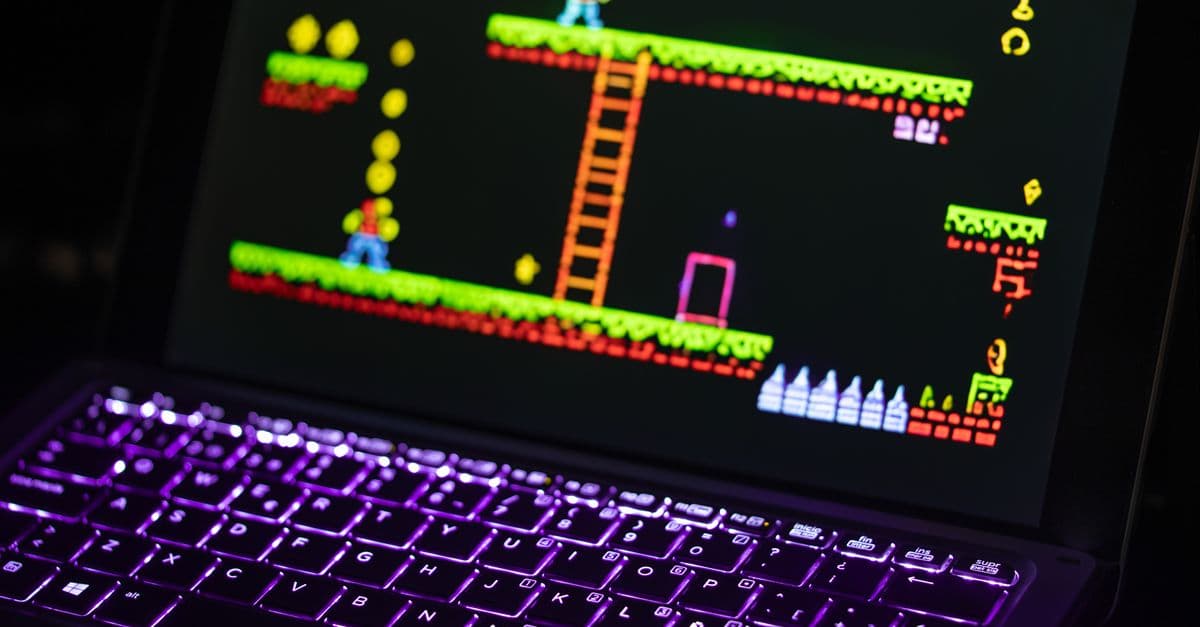
Photo: Rafael Minguet Delgado / Pexels
Two games, released more than a decade apart, defined a genre that still dominates the indie charts nearly forty years later. Metroid (Nintendo, 1986) sent Samus Aran onto an alien planet where new equipment opened new terrain. Castlevania: Symphony of the Night (Konami, 1997) sent Alucard through an interconnected gothic castle where relics did the same job. Fans mashed the two names together — "Metroidvania" — and a design philosophy was born: a single, sprawling map where the abilities you earn are the keys that unlock it, piece by piece.
The Core Concept: A Map That Remembers What You Can't Do Yet
A metroidvania is, structurally, the opposite of a level-based game. Instead of a sequence of self-contained stages, the player explores one continuous world from the first screen. That world is riddled with obstacles the player's starting toolkit cannot overcome: a gap too wide to jump, a wall too high to climb, a door that only opens for a specific key item.
Think of the map as a locked house you're allowed to wander through immediately, but most of the rooms are behind doors you don't have keys for yet. Every new ability — a double jump, a grappling hook, a bomb — is a key. Getting it doesn't just add a move to your combat toolkit; it reopens the entire map through a new lens, because areas you already walked past can now be crossed.
This is the loop that separates a metroidvania from a linear platformer: explore, hit a wall, remember where that wall was, find the ability that removes it, and go back. The genre's defining pleasure isn't reaching a new area for the first time. It's returning to an old area and suddenly being able to go somewhere you couldn't before.
The Gating Mechanism: How Designers Control Pacing Without Cutscenes
Every metroidvania relies on what designers call "gating" — deliberately blocking progress until the player has earned a specific tool. It's the same principle as a locked door in a heist film: the plot doesn't move until someone finds the key, and finding the key is itself the plot.
Gates come in a handful of recognizable flavors. A physical gate blocks a path outright — a gap wider than your jump, a ledge higher than your reach. A combat gate is an enemy or boss too strong for your current gear, forcing you to explore elsewhere and grow stronger first. An environmental gate uses hazards like darkness, water, or lava that require a specific item (a lantern, a water-breathing charm, fire resistance) to survive. A knowledge gate is subtler: nothing physically blocks you, but you don't yet know a route exists, or you haven't recognized that a cracked wall is breakable.
What makes gating elegant rather than frustrating is that the game teaches the player to recognize gates on sight. After a few hours in Super Metroid or Hollow Knight, a player learns to identify a "double-jump gap" or a "dash-only gap" just by looking at its shape, the same way an experienced hiker reads terrain. That legibility is the difference between a gate that feels like a fair puzzle and one that feels like an arbitrary wall.
How does gating differ from a simple locked door in a linear game?
A locked door in a linear game usually has one key, found once, used once — a narrative beat. A metroidvania gate is a permanent rule change. The ability that opens it stays with the player forever and retroactively reopens every past gate of that type across the entire map, which is what generates the genre's signature backtracking loop.
Metroid's Template: Isolation as a Design Tool
The original Metroid, released in Japan for the Family Computer Disk System in August 1986, sold roughly 2.73 million copies worldwide, a solid number for the era but nowhere near a blockbuster (VGChartz sales history). Its real legacy wasn't commercial; it was structural. Where most contemporaneous action games (Mega Man, Contra) presented discrete, selectable stages, Metroid dropped the player onto planet Zebes with almost no direction and let them wander.
Samus starts weak: a basic beam weapon, a short jump, no map. As the player explores, they find the Morph Ball (letting Samus roll through tunnels too small to walk through), the Ice Beam, missile expansions, and suit upgrades that reduce damage. Each pickup doesn't just make Samus stronger in a fight — it changes what terrain she can physically occupy. Series high point Super Metroid (1994) refined this into a nearly frictionless loop: item, exploration, item, exploration, with sequence breaks (see below) baked in almost accidentally by the physics engine.
Metroid's isolation-horror atmosphere — no dialogue, minimal music in some rooms, a planet that feels indifferent to the player — became inseparable from its exploration structure. Being lost wasn't a failure state. It was the intended emotional register.
Castlevania's Innovation: RPG Systems Meet the Metroid Loop
Castlevania: Symphony of the Night, directed in its latter half by Koji Igarashi, took the Metroid structure and merged it with role-playing game mechanics that Metroid never had: experience points, character leveling, a weapon and armor inventory, and multiple sub-weapons with independent upgrade paths. Igarashi has said in interviews that The Legend of Zelda was his biggest influence, specifically Zelda's practice of designing "the thing that unlocks the next area" as a core mechanic (ScreenRant, citing Igarashi interviews).
Where Metroid isolates the player emotionally, SOTN surrounds Alucard with gothic ornamentation — an entire castle rendered as a single, obsessively interconnected structure, illustrated by artist Ayami Kojima, whom the development team specifically sought out from outside the games industry to give the cast an unconventional look (shmuplations, 1997 developer interview archive). The game's most famous twist — the castle inverting into a mirrored, upside-down version of itself roughly two-thirds through — effectively doubled the map without doubling the art budget, and it remains one of gaming's most cited "aha" moments precisely because it recontextualizes every room the player had already memorized.
SOTN's RPG layer changed what "getting stronger" meant. In Metroid, power comes almost entirely from finding items. In SOTN, power comes from items, levels, and gear combinations, which meant players could grind for stat gains if they got stuck — a safety valve pure Metroid never offered.
Map Design Mastery: Building a World That Teaches Itself
The hardest problem in metroidvania design isn't drawing rooms. It's making a coherent mental map emerge in the player's head without a tutorial explaining it. Good metroidvania maps rely on landmark-based navigation: distinct silhouettes, unique color palettes per region, and recurring architectural cues (a specific statue, a colored door, a save-room aesthetic) that let players triangulate location without staring at a minimap.
Shortcuts are the second pillar. When a player fights their way through a long, difficult gauntlet and finds a one-way door or elevator back to a previously visited hub, that shortcut converts a punishing detour into a permanent convenience — and it's rewarding precisely because the player earned it through exploration rather than being handed it. Hollow Knight uses this constantly: benches (save points) placed just past a hard section, and stagways or elevators unlocked only once, forever after.
The third pillar is optional depth for completionists: hidden rooms, secret bosses, lore terminals, or collectible currencies that reward players who deviate from the critical path without punishing players who don't. Ori and the Blind Forest hides entire "cells" of collectibles that expand health or energy capacity but are entirely skippable for players focused on story.
Sequence Breaking: When Players Out-Design the Designers
"Sequence breaking" is the term for reaching an area or ability earlier than the designers intended, usually by exploiting movement physics, collision quirks, or unintended item interactions. Super Metroid is legendary for this: a wall-jump technique the designers never explicitly taught lets skilled players skip entire sections of the intended route, and speedrunning communities have built entire competitive categories around how early a player can break sequence.
Developer reactions to sequence breaking split into two camps. Some studios treat it as an accepted, even celebrated, emergent skill ceiling — Nintendo has never patched Super Metroid's wall-jump exploits across re-releases. Others patch sequence breaks that trivialize difficulty or narrative pacing, particularly in games with strong story beats where skipping content breaks the plot. Either way, the mere existence of sequence breaking is a byproduct of good gating design: a gate defined by physical geometry (a gap, a wall) is inherently more exploitable than a gate defined by a hard-coded flag, because physics engines have edge cases that flags don't.
Why do speedrunners gravitate toward metroidvanias specifically?
Interconnected maps create dense route-optimization puzzles: dozens of legal paths between two points, several illegal ones enabled by physics exploits, and item orders that can be reshuffled. That combinatorial complexity, absent from strictly linear games, is exactly what speedrunning leaderboards reward.
Exploration Motivation: Why Players Keep Wandering
Players explore metroidvania worlds for overlapping reasons that reinforce each other rather than compete. Concrete rewards — weapon upgrades, health or energy tank increases, currency for shops — give exploration a tangible payoff. Narrative curiosity, delivered through environmental details, item descriptions, or optional NPC dialogue, gives it a storytelling payoff. And mastery itself is a reward: learning a boss's patterns well enough to explore its arena for a hidden item mid-fight is a demonstration of skill the game doesn't need to state explicitly.
Hollow Knight is a useful case study because it deliberately withholds nearly all direct narrative exposition, forcing players who want the story to explore obscure corners and read item flavor text, effectively making narrative curiosity and spatial exploration the same activity.
The Backtracking Question: A Genre's Oldest Criticism
Backtracking is the most consistent complaint leveled against metroidvanias, and it's a legitimate design tension rather than a myth. Retracing a long corridor with nothing new to find is dead time; retracing it and discovering three secrets you couldn't reach before is the genre working as intended. The difference is entirely in execution.
Modern entries have converged on a handful of mitigation techniques. Dead Cells sidesteps the problem almost entirely by using a roguelike structure: rather than one persistent map you backtrack across, each run generates a fresh layout, and permanent unlocks change what's available on future runs instead of requiring literal retracing of old ground. Hollow Knight leans on stagways, benches, and late-game movement abilities (like the Shade Cloak dash) that dramatically compress travel time across areas visited early. Ori's series-defining "Bash" and later movement abilities are explicitly designed to make previously slow terrain fast to cross, turning backtracking into a demonstration of acquired mastery rather than a chore.
Modern Metroidvanias: The Indie Renaissance
AAA publishers largely abandoned the pure metroidvania format after the 16-bit and PlayStation-era peak, viewing it as too niche for blockbuster budgets. Independent developers filled the vacuum through the 2010s, and several titles now stand as genre landmarks in their own right.
| Title | Developer | Year | Distinguishing feature | Notable metric |
|---|---|---|---|---|
| Hollow Knight | Team Cherry | 2017 | Hand-drawn art, punishing but fair combat, minimal narrative | 15+ million copies sold (VGChartz) |
| Ori and the Blind Forest / Will of the Wisps | Moon Studios | 2015 / 2020 | Platforming-heavy, emotionally driven narrative, accessibility options | Critically acclaimed on modest indie budgets |
| Dead Cells | Motion Twin / Evil Empire | 2018 | Roguelike-metroidvania hybrid, procedural runs with permanent unlocks | 10+ million copies sold by 2023 (Game Developer) |
| Axiom Verge | Tom Happ (solo) | 2015 | Solo-developed, glitch-art aesthetic, deliberate Metroid homage | Built and shipped by a single programmer/artist |
| Aeterna Noctis | Aeternum Game Studios | 2022 | Boss-rush difficulty layered onto exploration | Recognized for demanding combat encounters |
| Environmental Station Alpha | Jaspel (solo) | 2014 | Minimalist pixel art, no dialogue, pure puzzle-exploration | Cult favorite among genre purists |
Table: Selected modern metroidvanias and what each contributed to the genre's post-2010 revival.
The pattern across this table is consistent: small teams with low overhead can sustain a title aimed at a passionate, moderately sized audience in a way a AAA studio's cost structure typically can't justify. That constraint, ironically, produced more design experimentation — hand-painted art direction, glitch aesthetics, roguelike hybridization — than the genre saw during its console-era peak.
Combat Depth: From Balanced to Boss-Centric
Combat design varies more across metroidvanias than exploration structure does. Metroid balances combat and traversal roughly evenly — most enemies are obstacles to route around or dispatch efficiently rather than centerpieces. SOTN leans toward sword-and-magic RPG combat, where gear and leveling meaningfully change encounter difficulty. Hollow Knight makes boss fights the emotional and mechanical peak of the entire game, with tight hitboxes and precise parry windows that reward the kind of practice associated with character-action games. Dead Cells structures combat around wave-based encounters and weapon variety refreshed every run, closer to an action-roguelike than a traditional metroidvania brawler.
This variance matters for a common misconception addressed below: difficulty and genre are independent variables, not the same axis.
Save Stations: Small Design Choices With Outsized Pacing Effects
Where a game places its save points shapes the emotional rhythm of the entire playthrough. Sparse, strategically placed save points (common in classic Metroid entries and in Soulslike-adjacent metroidvanias) create tension: the closer you are to a save point when you die, the less you lose, so players start rationing risk. Generous, frequent save points (common in more narrative-focused entries like Ori) prioritize flow and reduce frustration at the cost of some tension.
Neither approach is objectively correct. It's a genre-wide example of how a single systemic choice — where to place one UI element — cascades into how careful, reckless, or exploratory a player's moment-to-moment behavior becomes. For a deeper look at the psychology behind this, see Why Save Systems Change Player Behavior.
The "Soulvania" Term: A Subgenre Born From Fan Shorthand
"Soulvania" is fan and critic shorthand for metroidvanias that graft Dark Souls-style difficulty and risk-reward stakes (losing currency on death, deliberate stamina management, punishing but telegraphed boss patterns) onto Metroidvania-style interconnected exploration. Hollow Knight, Salt and Sanctuary, and Blasphemous are frequently cited examples. The term illustrates something useful about genre boundaries generally: difficulty philosophy and map structure are separable design axes that can be recombined, which is exactly why hybrid labels like "soulvania," "roguevania" (Dead Cells), and "metroidbrainia" (Tunic, Outer Wilds-adjacent puzzle-exploration games) keep emerging.
Visual Design and the Minimap Debate
Metroidvanias lean heavily on cohesive art direction because the player spends dozens of hours staring at the same handful of biomes; visual fatigue is a real risk that stronger environmental storytelling and distinct color-coding per region actively fight against. Color itself often functions as a wayfinding tool: a region rendered in a saturated palette reads as memorable and distinct from a neighboring region rendered in muted tones, which helps players build the mental map the genre depends on.
Whether to include a minimap is a genuinely contested design choice. A minimap lowers frustration and speeds route-planning, which suits players who want the exploration reward without the navigation friction. Omitting a minimap (or making the in-game map deliberately hand-drawn and imprecise, as several recent indies do) forces players to build genuine spatial memory of the world, which many longtime fans argue produces a more intimate, immersive relationship with the map — at the cost of alienating players who find manual navigation tedious rather than rewarding.
Design Philosophy Comparison
Design philosophy comparison across four genre-defining titles.
| Element | Metroid | Castlevania SOTN | Hollow Knight | Dead Cells |
|---|---|---|---|---|
| Progression | Ability-gated | Ability-gated + RPG leveling | Ability-gated + optional cosmetics | Roguelike resets + permanent meta-upgrades |
| Combat focus | Balanced with traversal | Sword-and-magic RPG combat | Boss-centric, precision-based | Wave-based, weapon-variety driven |
| Map structure | Single interconnected planet | Single castle (plus inverted mirror castle) | Interconnected kingdom, multiple biomes | Procedurally reshuffled per run |
| Narrative delivery | Minimal, atmosphere-driven | Dialogue-driven cutscenes | Environmental, item-text driven | Fragmented, lore-item driven |
This comparison shows a clear historical drift: the earliest metroidvanias minimized narrative in favor of pure atmosphere, while modern entries increasingly balance exploration with deliberate storytelling delivery mechanisms (environmental text, lore items, optional NPCs) rather than cutscenes. Progression systems have similarly hybridized, moving from pure ability-gating toward combinations with RPG leveling or roguelike meta-progression, without abandoning the core interconnected-map structure that defines the genre.
What People Misunderstand About Metroidvanias
Assumption: "Metroidvanias are hard Souls-like games." Difficulty varies enormously across the genre and is not a defining trait. Ori prioritizes platforming accessibility and offers assist options over combat challenge; Hollow Knight demands precision and punishes mistakes; Dead Cells emphasizes rapid reflexes in short, replayable runs; Symphony of the Night is comparatively forgiving thanks to its RPG leveling safety valve. What actually defines the genre is progression unlocking through ability acquisition across an interconnected map — not combat difficulty, which is an independent design axis studios can dial up or down freely.
Assumption: "Metroidvanias are outdated relics kept alive only by speedrunners." This doesn't hold up against the sales data. Hollow Knight alone has sold more than 15 million copies through word-of-mouth and critical acclaim, not nostalgia marketing (VGChartz). Dead Cells crossed 10 million copies in 2023, six years after its early-access launch, showing sustained rather than one-time interest (Game Developer). The genre isn't a niche kept on life support; it's thriving under an indie-publishing business model rather than the AAA retail model that dominated during its console-era peak.
Assumption: "Backtracking is a design flaw developers haven't figured out how to remove." Backtracking isn't a bug in metroidvania design, it's the direct, structural consequence of an interconnected map with permanent ability unlocks. The design challenge developers actually face isn't eliminating backtracking, it's making the return trip rewarding through shortcuts, new secrets, and faster traversal abilities — which every genre-defining title from Super Metroid onward has solved differently rather than avoided entirely.
Source: VGChartz (2025 sales figures) — Hollow Knight has sold more than 15 million copies worldwide, one of the highest totals ever recorded for an independently developed video game (VGChartz).
Source: Game Developer / gamedeveloper.com (2023) — Dead Cells surpassed 10 million units sold across all platforms roughly six years after its 2017 Steam early-access debut (Game Developer).
Source: VGChartz sales history — the original Metroid (Famicom Disk System, August 1986) sold approximately 2.73 million copies worldwide, modest by blockbuster standards but foundational to the genre's structural template (VGChartz).
Key Takeaway
Metroidvania design proves a simple but easy-to-miss idea: exploration paired with permanent ability progression produces engagement that outlasts flashier, more linear alternatives. An interconnected map where new abilities unlock new areas is a self-teaching, self-rewarding structure — the game doesn't need a tutorial screen to explain progression because the world itself demonstrates it every time the player returns to an old gate with a new key.
From Metroid's 1986 isolation-driven blueprint, through Symphony of the Night's RPG-infused castle, through the 2010s indie renaissance that produced Hollow Knight, Ori, and Dead Cells, the core loop has proven durable across four decades and wildly different art styles, difficulty philosophies, and business models. What hasn't changed is the emotional core: the satisfaction of standing in front of a wall you remember, and realizing you can finally get past it.
The genre's real lesson for design generally is that "story" doesn't require dialogue. A map that remembers what you couldn't do yet, and rewards you the moment you can, is itself a kind of narrative — one told entirely through space, memory, and earned capability.
Frequently Asked Questions
Q: What's the difference between metroidvania and soulslike? A: Metroidvanias emphasize exploration and interconnected maps gated by ability acquisition; soulslikes emphasize combat difficulty, stamina management, and risk-reward death mechanics. The two overlap in some titles (Hollow Knight borrows Souls-style risk-reward death penalties; Elden Ring has some metroidvania-style optional exploration), but they answer different core questions. Metroidvanias ask "Where can I go now that I couldn't before?" Soulslikes ask "Can I survive this encounter?" They're separable design axes, not competing definitions of the same genre.
Q: Why do metroidvanias have so much backtracking? Isn't that tedious? A: Backtracking is the direct consequence of interconnected map design: once you unlock a double-jump, the game expects you to revisit earlier areas that gap once blocked. Whether it feels tedious or rewarding depends entirely on execution. Dead Cells minimizes it by structurally avoiding literal map retracing (each run is freshly generated). Hollow Knight and Super Metroid mitigate it with shortcuts, fast travel points, and late-game movement abilities that compress old terrain into seconds of travel. The design goal isn't eliminating backtracking, it's making the return trip reveal something new.
Q: Are metroidvanias still being made? A: Yes, and the genre is commercially healthy. Hollow Knight alone sold over 15 million copies, and Dead Cells passed 10 million in 2023, both years after their initial release, indicating sustained rather than launch-window-only demand (VGChartz; Game Developer). AAA publishers rarely fund pure metroidvanias, viewing them as too niche for blockbuster budgets, but independent studios have made the genre a reliable commercial category rather than a nostalgia act.
Q: Do metroidvanias need a map screen to work? A: No, but most modern entries include one because building spatial memory of a large interconnected world purely from environmental memory is demanding. Some titles deliberately withhold or obscure the map (hand-drawn, incomplete, or purchasable in pieces) to intensify the exploration feeling. This is a contested design choice: it rewards attentive players with a stronger sense of place, but risks alienating players who find manual navigation frustrating rather than immersive.
Q: What was the first metroidvania, technically? A: The term postdates both foundational games, but Metroid (1986) is generally credited as establishing the ability-gated exploration structure first, with Castlevania: Symphony of the Night (1997) merging it with RPG systems more than a decade later. Some historians point to earlier action-adventure titles with non-linear maps as precursors, but Metroid and SOTN are the two games the genre's name is literally built from.
Q: Why did AAA studios largely abandon the metroidvania format? A: The format rewards long, deliberate playtimes (often 15-plus hours) built around exploration rather than the shorter, spectacle-driven set pieces that scale well with blockbuster marketing budgets. A metroidvania's audience, while loyal, has historically been smaller than the audience for open-world action games or shooters, making the format harder to justify at AAA budget scales. Indie studios, operating with far lower overhead, can profitably serve that smaller but dedicated audience.
Q: Does difficulty in a metroidvania come from combat or from exploration? A: Both, but independently. A metroidvania can have easy combat and hard navigation (many classic Metroid sections), hard combat and straightforward navigation (Hollow Knight's boss-heavy late game), or scale both together. Because gating and combat are separate systems, developers can tune each without changing the other, which is part of why the genre supports such different difficulty philosophies under one structural umbrella.
Q: What role does sequence breaking play in competitive speedrunning? A: Sequence breaking, reaching areas or abilities earlier than intended through movement-physics exploits, is central to metroidvania speedrunning because the genre's interconnected maps create dense route-optimization puzzles with many legal and semi-legal paths between two points. Super Metroid's speedrunning community is a well-documented example, with wall-jump and other physics-exploit techniques that Nintendo has never patched out of subsequent re-releases.
Q: How did Castlevania: Symphony of the Night's inverted castle change the genre? A: By flipping the entire castle upside down roughly two-thirds through the game, SOTN effectively doubled the explorable map without doubling the art or level-design budget, while also recontextualizing every room the player had already memorized. It became a template other metroidvanias have referenced or riffed on for late-game map twists that reward players who built strong spatial memory of the original layout.
Read next:
Follow new articles
Add SciHub101 to your feed reader to see new science and technology stories.
About the Author
SciHub101 is an independent science and technology publication founded and edited by Buğra Sözeri, a software engineer and app developer based in Türkiye. AI tools assist with drafting and research. Source documentation in the existing archive is uneven, and articles are being reviewed and corrected. The Editorial Team byline identifies editorial responsibility; it does not certify specialist or independent human review. Where we compare products, anything built by our own team is labelled as such — see the editorial guidelines and About page for how corrections and disclosures work.
Related Articles
Roguelike Games and Hades: Meaningful Progression Through Repetition
Roguelikes embrace repetition through procedural generation. Hades perfected the formula: meaningful rewards across runs, beautiful presentation, compelling narrative.

Soulslike Evolution: From Dark Souls to Elden Ring's Open-World Mastery
Dark Souls created soulslike genre. Elden Ring perfected it through open-world accessibility. Difficulty without handholding became gaming philosophy.

Among Us: The Unexpected Phenomenon of Social Deduction
Among Us became a billion-player phenomenon by combining simple mechanics with social deduction. One of you is an imposter—who do you trust?
Complete Gaming Guide 2026 — Technology, Design, Esports, and Psychology
The complete guide to gaming in 2026: how game engines work, gaming hardware, esports, game design psychology, industry trends, and what makes games engaging and addictive.