The Legend of Zelda: Ocarina of Time - Gaming's Perfect Adventure

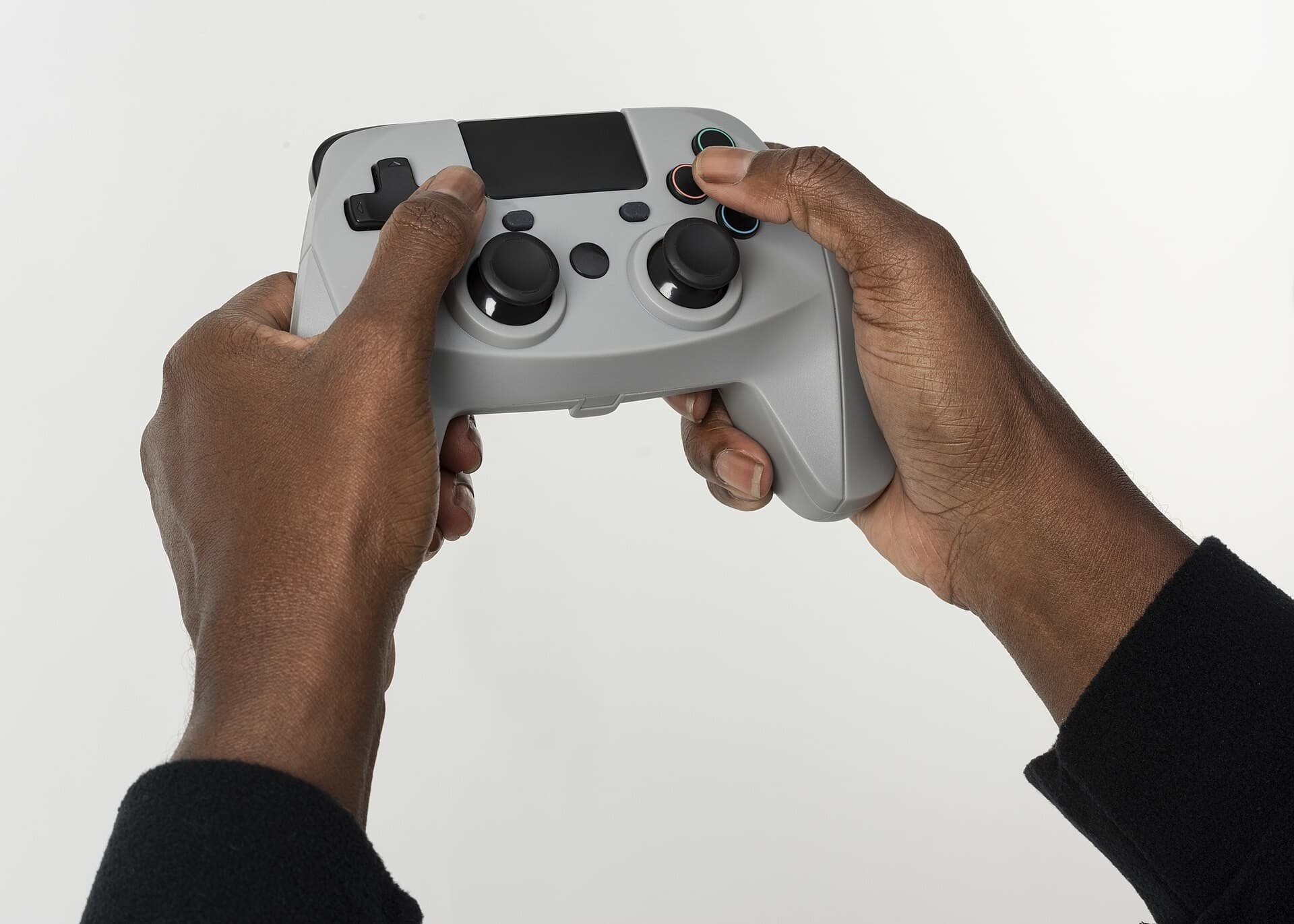
Photo: Ron Lach / Pexels
In November 1998, Nintendo released The Legend of Zelda: Ocarina of Time exclusively for the Nintendo 64. It was the first major 3D entry in the Zelda franchise, built by a team of more than 120 people under five directors, including Eiji Aonuma and Yoshiaki Koizumi, with Shigeru Miyamoto acting as producer rather than sole director for the first time in the series' history (Nintendo Fandom: Development of Ocarina of Time). Nearly three decades later, it is still the only video game to hold a Metacritic score of 99 out of 100, a distinction recognized by Guinness World Records (Guinness World Records: Most critically acclaimed videogame).
This is not nostalgia talking. Professional designers still study Ocarina of Time's camera systems, dungeon architecture, and item design as foundational templates. Nearly every 3D adventure game released since traces some part of its design language back to this one cartridge, and the reasons are mechanical, not sentimental.
The Challenge: 3D Gaming Was an Unsolved Problem
By 1998, 3D games existed, but nobody had figured out how to make them feel controllable. Super Mario 64, released two years earlier by many of the same Nintendo EAD staff, had already exposed the core problem: a camera that the player has to actively wrestle is exhausting. Point it wrong and you can't see the enemy in front of you. Point it right and you've spent your attention on cinematography instead of gameplay.
Zelda's transition to 3D multiplied that problem across five fronts:
- Camera control. A free-roaming camera worked for platforming but broke down completely during sword combat, where players need to track a single target while moving.
- Dungeon navigation. Two-dimensional Zelda dungeons used a grid of rooms players could hold in their heads like a map. Three-dimensional space has no such built-in legibility.
- Exploration translation. Old Zelda exploration worked screen-by-screen, each screen a discrete puzzle box. An open 3D field needed a different logic entirely.
- Combat geometry. Series combat had always been a 2D dance of approach and retreat. Depth changes the math of every swing and dodge.
- Puzzle clarity. Block-pushing and switch puzzles read instantly in 2D because the whole solution space was visible at once. In 3D, half the puzzle can be behind you.
Nintendo's answer wasn't an incremental patch. It was a from-scratch reimagining of how a Zelda game moves, fights, and communicates space to the player, and its center of gravity was a single camera-and-lock-on system.
The Z-Targeting Camera Revolution
Z-targeting is a system where pressing the Z button locks the camera's attention onto a nearby enemy or object, letting the camera track that target automatically while the player still moves and attacks freely. Nintendo animator and camera designer Yoshiaki Koizumi, who had worked on Super Mario 64's camera two years earlier, built the system specifically to solve the problem that game never fully cracked (shmuplations: 1999 Ocarina of Time developer interview).
Think of Z-targeting like a photographer with an assistant. Without an assistant, the photographer has to simultaneously walk backward, watch their footing, and keep the subject framed, three jobs at once. With an assistant holding the camera trained on the subject, the photographer is free to just move. That's what Z-targeting does for the player: it hands the "keep the enemy in frame" job to the game so the player's hands are free to fight.
During combat, locking onto an enemy makes the camera orbit around that target as Link circles it. The player thinks purely in terms of distance and timing, not camera angle.
During exploration, releasing the lock returns the camera to a standard third-person view trailing behind the character. There's no fighting the stick to find a usable angle.
The elegance is in what it removed. Z-targeting eliminated "camera battles," the single most common complaint about early 3D games, by giving players an on-demand anchor point instead of full manual control they didn't actually want during a fight.
Industry adoption was near-universal. Lock-on or soft-lock targeting descended in a direct line from Z-targeting appears in Devil May Cry, Kingdom Hearts, the Souls series, God of War, and dozens of other 3D action franchises. It is arguably the single most copied camera mechanic in the history of console gaming.
Why did Z-targeting matter so much for the genre?
It solved a problem no prior 3D game had solved cleanly: how to keep a moving enemy in frame without asking the player to manually steer the camera during combat. By automating that one task, it let designers build fast, precise 3D combat for the first time.
Hyrule's World Design: Scale and Interconnection
Rebuilding Hyrule in three dimensions meant rethinking what a game world even was. Nintendo's designers landed on four structural principles that still show up in open-world design today.
Geographic diversity. Hyrule Field, the Lost Woods, Death Mountain, Zora's Domain, and Lake Hylia each have a distinct visual identity and a distinct way of moving through them, on foot, on horseback, climbing, or swimming.
Vertical design. Unlike the flat, top-down maps of earlier Zelda games, Hyrule uses height as a design axis. Mountains climb, caves descend, and the layering gives the world a sense of physical depth that a 2D map simply cannot.
Secrets that reward curiosity. Golden Skulltulas, heart pieces, and rare items are scattered across the map in places that require deliberate detours to find. The incentive structure teaches players that wandering off the critical path pays off.
Interconnected geography. Zora's Domain's water logically feeds Lake Hylia. Death Mountain's volcanic terrain explains the surrounding scorched land. The map reads as one coherent place rather than a series of disconnected levels stitched together, a technique later adopted wholesale by games like Dark Souls, whose interlocking world design is itself a widely studied case of environmental storytelling. For more on how a connected map can double as difficulty design, see our piece on Dark Souls and why difficulty is a design feature.
Walking through Hyrule feels like moving through an actual place with its own internal logic, not advancing through a sequence of levels.
Dungeon Design Mastery
Ocarina of Time's dungeons are still used as case studies in game design courses because each one teaches a mechanic, tests it, and then escalates it without ever repeating itself.
Puzzle table. The following table breaks down how five of the game's major dungeons pair environmental theme with mechanical lesson.
| Dungeon | Core Mechanic | Design Role |
|---|---|---|
| Inside the Deku Tree | Basic combat and platforming | Tutorial dungeon introducing core controls |
| Fire Temple | Lava avoidance and heat hazards | Teaches environmental-hazard puzzles |
| Water Temple | Raising and lowering water level | Multi-floor puzzle built on a single shared variable |
| Shadow Temple | Light and darkness navigation | Atmosphere-driven, low-visibility puzzle design |
| Spirit Temple | Switching between child and adult Link | Same space solved two different ways over time |
Table: Ocarina of Time's major dungeons paired with the core mechanic each one introduces or escalates.
Puzzle integration is thematic, not arbitrary. The Fire Temple's puzzles are built from lava, moving platforms, and heat-sensitive mechanisms. The Water Temple's puzzles are built from a single elegant variable, the water level itself, which the player raises and lowers to reach previously submerged or inaccessible rooms.
Key placement varies by design intent. Some keys sit in plain sight to reward basic exploration. Others require solving a puzzle. Others drop from specific enemies. That inconsistency is deliberate: it keeps players scanning every room rather than developing a formula for skipping content.
Bosses function as skill checks for the next dungeon. The Fire Temple's boss, Volvagia, punishes players who haven't internalized the dungeon's heat-avoidance lessons. Later dungeons assume those lessons are learned and build on top of them rather than reteaching them.
The Water Temple's reputation deserves context. The dungeon is widely cited as the series' most notoriously difficult, largely because of one key whose location is easy to forget once the water level changes again. Series director Eiji Aonuma has spoken publicly about revisiting and adjusting the dungeon's design in the Ocarina of Time 3D remake specifically because of this feedback, adding a boat and streamlining backtracking (Iwata Asks: Ocarina of Time 3D development interviews). That the team revisited it 13 years later shows the dungeon's difficulty was real, even if it also reflects the era's tolerance for demanding, exploration-heavy puzzle design.
Core Gameplay Loop: Item Acquisition as a Progress Gate
Ocarina of Time's central loop is deceptively simple, and its simplicity is exactly why it works:
- Explore Hyrule Field, which is technically open from the very start.
- Reach a dungeon entrance, often blocked by terrain, a locked door, or an environmental hazard.
- Solve the dungeon's puzzles, each of which teaches the rules of that dungeon's core mechanic.
- Defeat the dungeon's boss, a climactic fight that tests everything just learned.
- Acquire a new item as the dungeon's reward.
- Return to Hyrule Field carrying that item.
- Use the new item to reach a previously inaccessible area, which expands the playable map.
- Repeat with a new destination now visible.
This loop is a slow-motion magic trick. The map never visibly grows, it was always there, but the player's ability to reach parts of it does, which creates a rolling sense of discovery without the developers needing to add new geography every few hours.
How does Ocarina of Time keep 40+ hours of content from feeling repetitive?
It ties new areas to new abilities rather than new geography. Each item unlocks specific obstacles across the entire existing map, so previously explored areas gain new relevance instead of becoming irrelevant once visited, a structure that later became known as "Metroidvania" design in other franchises. Our Metroidvania design breakdown covers how Metroid and Castlevania built entire genres around this same principle.
Items as Puzzle-Solving Tools, Not Just Weapons
Every item Link acquires functions primarily as a key, not a weapon or a cosmetic upgrade.
- Hookshot: extends reach across gaps, pulls the player to distant targets, retrieves out-of-reach objects.
- Bombs: destroy cracked walls, trigger pressure switches, and damage bomb-vulnerable enemies.
- Boomerang: hits distant switches and returns carrying stunned enemies or dropped items.
- Longshot: a late-game upgrade to the Hookshot with roughly double its range, opening puzzle solutions that were previously geometrically impossible.
The pattern is consistent throughout the game: a room that looks like a dead end is actually a locked puzzle waiting for a specific tool. Once the tool is acquired, the solution becomes visually obvious, the player just needed the right lens to see it. This "item-gating" loop, acquire tool, solution space expands, solve harder puzzles, acquire next tool, became a standard template that shows up across the adventure genre, tracing directly back to the item-based progression that made Nintendo's earlier 2D platformer such a landmark in the first place. See our history of Super Mario Bros and how Nintendo revived the industry for the earlier chapter of that design lineage.
The Time-Travel Mechanic: Doubling Content Without Doubling the Art Budget
Ocarina of Time's central narrative device, Link traveling between a child-era Hyrule seven years in the past and an adult-era Hyrule in the present, does more structural work than most players realize.
It doubles content efficiently. The same dungeon entrances often exist in both timelines, but the adult-timeline versions carry harder enemies, altered layouts, and new puzzle logic, letting the development team reuse geography while still delivering fresh challenges.
It gives level variation a narrative justification. Rather than an arbitrary "hard mode" toggle, the game explains why the world looks and plays differently: seven years passed, and Ganondorf's rise changed everything.
It creates puzzle variety from a single character. Some puzzles require child Link's small frame to slip through narrow gaps. Others require adult Link's strength to move heavy blocks or draw a bow. The same rooms sometimes demand different solutions depending on which era the player is in.
The mechanic let the team stretch a roughly 40-hour game across a fraction of the unique art assets that duration would normally require, an efficiency lesson that later open-world and adventure games absorbed directly.
Why It Endures: Timelessness in Game Design
Mechanical cohesion. Camera, combat, and exploration were tuned to work as one system rather than three separate ones bolted together. Z-targeting means no player is fighting a bad camera while also fighting Ganondorf.
Design discipline. Very little in the game is filler. Rooms teach a mechanic, test it, or advance the story, and rarely do more than one of those at once, which keeps pacing tight across a long runtime.
Exploration that rewards curiosity. The scattered Skulltulas, heart pieces, and side content give obsessive exploration a payoff instead of treating it as optional busywork.
A deliberate difficulty curve. Early dungeons like the Deku Tree and Dodongo's Cavern are simple by design. Later dungeons like the Shadow Temple and Spirit Temple combine multiple previously taught mechanics into single, harder puzzles, but nothing spikes unfairly.
Moments that carry narrative weight. Waking up to the fairy Navia's introduction, first playing the ocarina to warp across the map, riding Epona across the open field, meeting Sheik at the Temple of Time, these read as story beats, not as gameplay filler wedged between dungeons.
Modern Criticism and Valid Refinements
No 27-year-old game survives scrutiny unscathed, and Ocarina of Time has real, well-documented weak points that fans and critics still raise.
Controls feel dated by modern standards. Holding Z while pressing C-buttons to cycle items is awkward compared to modern single-button item wheels, a friction point Nintendo itself addressed in the 3DS remake.
The Water Temple's key visibility problem was real, not a myth. As noted above, Nintendo revised the dungeon's flow for the 2011 remake specifically because of two decades of player frustration.
Text scroll speed is slow. Dialogue crawls across the screen at a pace that felt normal in 1998 and feels sluggish on a modern replay; the 3DS version increased it.
The late-game Biggoron's Sword and trading-sequence content can feel like padding to players focused purely on the main story path, since it's largely optional but heavily signposted.
Modern lock-on systems have refined Z-targeting's core idea. Games like Sekiro: Shadows Die Twice and the Souls series added stamina management, dodge-cancel windows, and multi-target switching that Z-targeting's original 1998 implementation didn't attempt.
These are refinements of a strong foundation, not evidence the foundation was weak. Games widely considered to have surpassed Ocarina of Time in specific areas, Dark Souls in combat depth, Breath of the Wild in open-world freedom, built directly on top of its systems rather than discarding them.
Industry Impact: The Template for 3D Adventure
Z-targeting became the industry standard for lock-on combat. This is arguably the single most durable piece of Ocarina of Time's legacy: an entire generation of 3D action games inherited a camera solution from a 1998 Nintendo 64 cartridge.
Dungeon design became a studied discipline. Puzzle sequencing, key distribution philosophy, and boss-as-skill-check pacing are still taught using Ocarina of Time's dungeons as primary examples in game design coursework.
Item-gated progression became a genre-defining structure. Acquire an item, unlock new areas, find new dungeons, acquire new items, repeat, this loop appears in adventure and action-adventure games released decades later.
The "explore, obstacle, ability, overcome" formula crystallized here. Later franchises across multiple genres adopted variations of this exact structural spine.
Environmental storytelling matured as a technique. Rather than relying purely on dialogue, Ocarina of Time communicates history and mood through the state of its world, an abandoned Kakariko well, the burned Kokiri Forest in the adult timeline, and so on.
Accessibility: How Modern Players Can Experience It
Ocarina of Time remains playable across several distinct versions, each with tradeoffs.
Original Nintendo 64 cartridge (1998). Authentic experience, but controls and text speed feel dated compared to modern standards.
Master Quest (2002, bundled with Wind Waker preorders and later the GameCube collection). A remixed version of the same dungeons with altered layouts and increased difficulty, designed for players who already know the base game.
Ocarina of Time 3D (2011, Nintendo 3DS). A ground-up remake with modernized controls, gyroscope-assisted aiming, faster text, and Water Temple adjustments, developed in collaboration between Nintendo and Grezzo (Iwata Asks: Ocarina of Time 3D development interviews).
Virtual Console and Switch Online re-releases. Emulated versions of the original N64 release, preserving the original experience for players who want an unmodified copy.
For a first playthrough, the 3DS remake offers the smoothest entry point given its control updates. For players revisiting the game, the original N64 release or its Virtual Console equivalent preserves the exact experience that earned its historic reputation.
Critical Rankings: A Rare, Sustained Consensus
Few games maintain critical consensus across nearly three decades. Ocarina of Time is the clearest exception in the medium's history.
Its Metacritic score of 99 out of 100 is, as of this writing, unmatched by any other game tracked on the platform, a fact formally recognized by Guinness World Records as the "most critically acclaimed video game" in its database (Guinness World Records). Commercially, the original N64 release had sold 7.6 million copies as of March 2004, and combined N64 and 3DS remake sales reached roughly 13.8 million copies, making it one of the best-selling entries in the entire Zelda franchise (Zelda Wiki: Reception of Ocarina of Time).
It's worth noting that the Metacritic record itself has drawn scrutiny. Critics and outlets like Kotaku have pointed out that the score reflects an era with fewer, more concentrated review outlets than modern games face, which statistically makes a perfect aggregate easier to achieve than it would be today (Kotaku: Did You Know Gaming disputes Metacritic's top-rated entry). That caveat is worth holding alongside the record itself: the score reflects both genuine quality and a review landscape that no longer exists in the same form.
What People Get Wrong About Ocarina of Time
It's not just "old and nostalgic." The mechanics it introduced, particularly Z-targeting, are still active design decisions in games released this year, not museum pieces.
The perfect score doesn't mean it's flawless. As covered above, real friction points exist. The score reflects the scale of its innovation relative to 1998's landscape, not an absence of any weakness.
It didn't invent open-world exploration outright. Earlier games experimented with nonlinear exploration, but Ocarina of Time was the first to combine that exploration with functional 3D combat and camera systems at a mainstream scale, which is a narrower and more specific claim than "invented open worlds."
Breath of the Wild is not simply "Ocarina done better." The two games embody opposite design philosophies, tight item-gated linearity versus open-ended systemic freedom, and both are widely regarded as high points of the franchise rather than one superseding the other.
The Takeaway
Ocarina of Time proved 3D gaming could carry the same sense of discovery as 2D gaming, not by porting the old formula but by rebuilding it around a new camera system, a new approach to world geometry, and a puzzle-and-item loop tuned specifically for three dimensions. Z-targeting alone reshaped how an entire genre of games handles combat, and its dungeon architecture is still assigned reading, functionally, in game design education. The perfect review score is a headline; the real legacy is in how many unrelated games, released years and platforms apart, still borrow its solutions without crediting them.
Read next:
Follow new articles
Add SciHub101 to your feed reader to see new science and technology stories.
About the Author
SciHub101 is an independent science and technology publication founded and edited by Buğra Sözeri, a software engineer and app developer based in Türkiye. AI tools assist with drafting and research. Source documentation in the existing archive is uneven, and articles are being reviewed and corrected. The Editorial Team byline identifies editorial responsibility; it does not certify specialist or independent human review. Where we compare products, anything built by our own team is labelled as such — see the editorial guidelines and About page for how corrections and disclosures work.
Related Articles
Pokémon: How Game Mechanics Created a Global Phenomenon
Pokémon Red and Blue (1996) sold 10+ million copies on Game Boy by combining simple mechanics with social play. Two decades later, it's still the best-selling franchise of all time.
The Last of Us: How Games Tell Stories Better Than Films
Released in 2013, The Last of Us proved games could tell stories as emotionally powerful as films—through interactivity and player agency making the experience uniquely moving.

History of Video Games: From Pong to Today
From a blinking dot bouncing across a black screen to a $180 billion global industry — the story of video games is a business history of crashes, quality-control rescues, console wars, and platform shifts that reshaped how the world plays.
Super Mario Bros: How Nintendo Saved Gaming
In 1985, Super Mario Bros almost single-handedly revived the video game industry after its 1983 crash. The game's innovation and quality became the template for the entire industry.
The History of Video Games: From Pong to Open Worlds
Video games went from a blinking dot on a screen in 1972 to a $200 billion industry in 50 years. The history is a story of technology, creative leaps, market crashes, and the democratisation of interactive entertainment into the world's largest cultural medium.
Complete Gaming Guide 2026 — Technology, Design, Esports, and Psychology
The complete guide to gaming in 2026: how game engines work, gaming hardware, esports, game design psychology, industry trends, and what makes games engaging and addictive.