How Taste And Smell Work Together

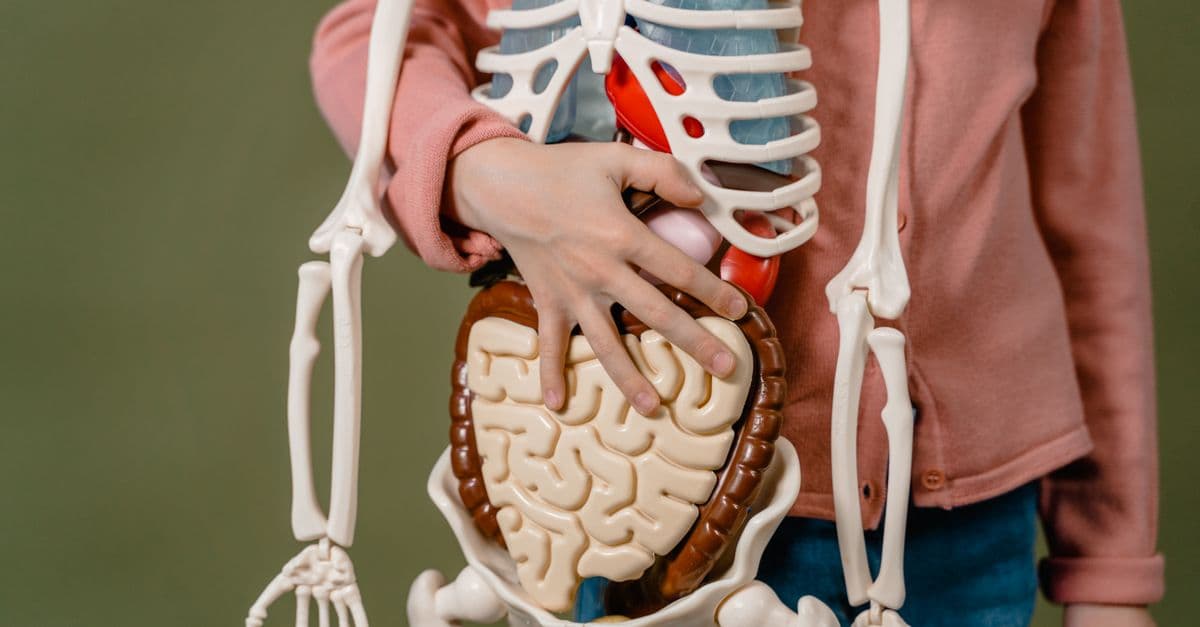
Photo: Natalia Olivera / Pexels
Pinch your nose while eating a jelly bean and you can usually still tell it's sweet, but you often cannot tell whether it's supposed to taste like cherry or lime until you let go and breathe out through your nose. That gap reveals something counterintuitive: most of what people casually call "taste" is actually smell, routed through a pathway most people never notice, and the brain fuses the two into a single seamless experience it labels "flavor."
This isn't a minor technicality for food scientists. It explains why a head cold makes even favorite meals taste like cardboard, why wine tasters swirl and sniff before ever letting liquid touch the tongue, and why so much of the sensory richness people credit to their tongue is, physiologically speaking, happening several centimeters away in the nasal cavity.
What the tongue can actually detect on its own
Taste buds sit on the tongue and scattered across the soft palate, the epiglottis, and the upper esophagus, but their job is narrower than most people assume. Taste receptor cells, clustered inside each taste bud in groups of 50 to 100, detect only five basic qualities: sweet, sour, salty, bitter, and umami, the savory taste associated with glutamate found in foods like broth, aged cheese, meat, and mushrooms. When a compound in food binds to a matching receptor, that cell fires a signal along one of three cranial nerves, primarily the facial nerve (cranial nerve VII) for the front two-thirds of the tongue and the glossopharyngeal nerve (cranial nerve IX) for the back third, carrying the signal toward the brainstem.
That five-category vocabulary is the entire chemical alphabet the tongue has to work with. It cannot distinguish strawberry from raspberry, or brewed coffee from black tea; stripped of smell, both members of each pair would register as roughly similar combinations of sweet, sour, and bitter. A chef's careful balancing of flavors and a food chemist's engineering of a snack both lean overwhelmingly on manipulating aroma, not manipulating the five taste categories, because the five categories are where the specificity runs out.
Sweet and umami receptors both work through a family of G-protein-coupled receptors called T1R receptors, first characterized through a series of molecular studies in the early 2000s. Bitter compounds, by contrast, are detected by a much larger family of roughly 25 different T2R receptors, reflecting the evolutionary pressure to recognize many distinct classes of toxic or spoiled compounds rather than one. Sour and salty tastes use ion channels instead of G-protein receptors, detecting hydrogen ions and sodium ions directly. The tongue, in other words, is not one generalized "taste organ" so much as five separate, narrowly specialized detection systems bundled into the same tissue.
Where the specificity really comes from: retronasal smell
The olfactory epithelium, a patch of tissue high in the nasal cavity, contains hundreds of distinct types of odor receptors, an order of magnitude more discriminating power than the tongue's five taste categories offer. Odor molecules released by chewed, warmed food travel up through the back of the throat (the nasopharynx) into the nasal cavity from behind, a pathway called retronasal olfaction. This is physiologically distinct from orthonasal smelling, which happens when you sniff something directly through your nostrils before it ever reaches your mouth.
Retronasal olfaction is why plugging your nose while eating so effectively flattens flavor: pinching the nostrils blocks the airflow route that would otherwise carry aroma molecules upward to the olfactory receptors during chewing and swallowing. The basic taste signals from the tongue keep arriving normally, so sweetness or saltiness still registers, but the specific character, the part that makes a jelly bean taste like cherry rather than merely "sweet," disappears almost entirely.
Signals from taste receptors and olfactory receptors converge in the brain along separate pathways that meet and integrate in several regions, most notably the orbitofrontal cortex, an area involved in evaluating the reward value of food. That convergence is where two anatomically and developmentally distinct sensory systems, one chemesthetic and tongue-based, one olfactory and nose-based, get merged into the single, unified perception people experience as one thing rather than two signals running in parallel. Researchers studying flavor perception generally describe this integration as a genuinely multisensory construction rather than a simple additive sum of taste plus smell.
Why does food taste bland when you have a cold?
Nasal congestion physically narrows or blocks the nasal passages, preventing aroma molecules from reaching the olfactory epithelium through the retronasal pathway during chewing and swallowing. Taste buds keep functioning normally, so food still registers as sweet, salty, sour, bitter, or umami. What's missing is the specific character that smell normally supplies, which is why people describe cold-affected food as "tasteless" rather than describing a change in sweetness or saltiness.
Umami's surprisingly late arrival as a "real" taste
For most of Western food science history, taste was assumed to have four basic categories: sweet, sour, salty, and bitter. That changed because of a specific researcher working on a specific bowl of soup. In 1908, Kikunae Ikeda, a professor of physical chemistry at Tokyo Imperial University, became convinced while eating dashi, a broth made from kombu kelp, that he was tasting a fifth basic quality distinct from the existing four. Ikeda spent months processing roughly 12 kilograms of dried kelp and eventually isolated about 30 grams of a crystalline substance responsible for the taste. Chemical analysis identified it as glutamic acid, and Ikeda coined the Japanese term umami, roughly "pleasant savory taste," to describe the sensation it produced (Umami Information Center; History Today).
Ikeda filed a patent in April 1908 for a method of producing a glutamate-based seasoning and received approval that July. Within a year, he and a business partner, Saburosuke Suzuki, had worked out how to mass-produce the seasoning by combining glutamate with sodium, creating what became monosodium glutamate, or MSG. The commercial product predated the scientific consensus that umami was a genuine, receptor-based taste category by nearly a century; for much of the twentieth century, umami remained a claim accepted mainly within Japanese food science while treated with more skepticism elsewhere.
That skepticism had a real scientific gap behind it: nobody had identified a dedicated receptor. That changed with a series of molecular studies published between 2000 and 2002. Researchers identified a family of taste receptors called T1Rs, and in 2002 a pair of studies demonstrated that a heterodimer combining two receptor subunits, T1R1 and T1R3, functions as a receptor that responds specifically to glutamate and is potentiated by certain nucleotides found in foods like dried mushrooms and cured meats (published in Nature, 2002; PMC review, Two Distinct Determinants of Ligand Specificity in T1R1/T1R3). That finding gave umami the same kind of molecular, receptor-level evidence that sweet, bitter, sour, and salty already had, nearly a century after Ikeda first isolated the compound responsible for it.
Why did umami take so long to be scientifically accepted?
Umami lacked a demonstrated molecular receptor for most of the twentieth century, so its status as a genuine taste rather than a flavor-enhancing side effect of glutamate remained contested outside Japan. The identification of the T1R1/T1R3 receptor heterodimer in 2000-2002 gave umami the same receptor-level evidence already established for sweet, sour, salty, and bitter, resolving the scientific debate.
Other senses folded into the same perception
Flavor perception recruits more than taste and smell. Trigeminal nerve fibers, part of cranial nerve V, run through the mouth and nasal lining and detect chemical irritation, pressure, and temperature. This is why chili peppers feel "hot," through capsaicin binding to a heat- and pain-sensing receptor called TRPV1, and why mint feels "cool," through menthol activating a cold-sensing receptor called TRPM8, sensations that are chemically triggered rather than genuinely thermal even though the brain interprets them as temperature changes.
| Sense | What it detects in food | Number of distinct categories | Where signals are processed |
|---|---|---|---|
| Taste (tongue) | Sweet, sour, salty, bitter, umami | 5 basic qualities | Facial and glossopharyngeal nerves to brainstem |
| Retronasal smell | Aroma compounds released during chewing | Hundreds of receptor types | Olfactory epithelium to orbitofrontal cortex |
| Trigeminal sense | Chemical irritation, temperature-like effects | Multiple (heat, cold, pressure, pain) | Cranial nerve V to somatosensory cortex |
| Texture and sound | Crunch, viscosity, temperature | Not categorical; continuous | Somatosensory cortex, partial bone-conducted audio |
Flavor is a brain-level fusion of at least four separate input channels, only one of which is taste in the strict physiological sense.
Texture, actual thermal temperature, and even sound feed into the same integrated experience. The crunch of a potato chip, for instance, is partly perceived through bone conduction to the inner ear rather than through the mouth alone, and researchers have shown that amplifying or muffling that crunch sound in a lab setting can shift how fresh or stale people rate an identical chip. Food companies and chefs manipulate texture and the rate at which aroma compounds release as food is chewed as deliberately as they manipulate the underlying chemistry of taste, because those variables shift perceived flavor intensity even when the actual concentration of taste compounds is held constant.
Why the brain bothers merging these signals at all
There's a functional logic behind fusing taste and retronasal smell into one perception rather than reporting them as two separate streams. Taste alone is a coarse safety check: sweetness generally signals digestible energy, bitterness often signals plant toxins, sourness can flag spoilage or unripe fruit. Smell alone is a detailed but comparatively slow identification system. Combining them lets the brain use the coarse taste signal as a fast go/no-go filter while smell supplies the detailed identity of what's actually being eaten, all resolved into a single judgment fast enough to guide chewing and swallowing decisions in real time.
This fusion also explains a well-documented illusion: when the aroma of a food is altered while its basic taste stays constant, such as adding a strawberry scent to a sweetened, unflavored liquid, people frequently report tasting "sweeter" strawberry flavor rather than separately noticing a sweet taste and a strawberry smell. The brain's orbitofrontal cortex effectively launders the two signals together before they ever reach conscious perception, which is part of why so many people are surprised the first time they learn how much of "taste" is actually smell.
The genetics behind supertasters and nontasters
"Supertaster" sounds like marketing language, but it describes a real, measurable population split first mapped through a bitterness compound called PROP (6-n-propylthiouracil), a close chemical relative of an older compound called PTC used in taste research since the 1930s. When researchers have people rate the bitterness of a PROP-soaked paper strip, the population splits into roughly three groups rather than falling along one smooth curve: nontasters, who report little or no bitterness, medium tasters, and supertasters, who report intense, sometimes painful bitterness from the same concentration.
That split traces to a specific gene, TAS2R38, which codes for a bitter-taste receptor. The gene comes in two common variants, one called PAV and one called AVI, named for the amino acids at three key positions in the protein. People who inherit two copies of PAV are almost always tasters, people with two copies of AVI are almost always nontasters, and people with one of each fall in between, a textbook example of a single gene producing a population-wide behavioral split (PMC, TAS2R38 and PROP tasting).
Supertasting adds a second, anatomical layer on top of that genetic split. Researchers counting fungiform papillae, the small mushroom-shaped bumps on the front of the tongue that each house several taste buds, have measured average densities of roughly 65 papillae per square centimeter in supertasters compared with about 43 per square centimeter in medium tasters and about 34 per square centimeter in nontasters (ResearchGate, papillae density study). A second gene, called gustin (CA6), appears to influence how densely those papillae grow and how well they're maintained over time, working alongside TAS2R38 rather than replacing it (PLOS One, Gustin gene and papilla density).
The practical upshot connects back to the taste-versus-flavor distinction covered earlier in this article: supertasting is a tongue-level phenomenon, concentrated overwhelmingly in heightened bitterness perception, not a general upgrade to the whole flavor system. A supertaster will typically find black coffee, kale, or grapefruit more intensely bitter than a nontaster sitting at the same table, but that heightened bitterness sensitivity says nothing about how well that person can distinguish a Pinot Noir from a Cabernet, a skill that still depends almost entirely on trained retronasal smell.
How common are supertasters?
Estimates vary by population and testing method, but researchers generally describe supertasters as a meaningful minority, often cited around 25 percent of people, with nontasters making up a comparable share and medium tasters forming the largest group in between. The exact proportions shift depending on the bitter compound used for testing and the ethnic composition of the sample studied.
How aging changes taste and smell separately
The two systems that fuse into flavor don't age at the same rate, and that mismatch is well documented in sensory research. Smell loss with age, called presbyosmia by analogy with presbyopia (age-related farsightedness) and presbycusis (age-related hearing loss), is both common and substantial: population studies estimate that more than half of adults between 65 and 80 years old have measurably reduced olfactory function, rising to somewhere between 62 percent and 80 percent of adults over 80 (PMC, age-related changes in oral sensitivity, taste, and smell).
The mechanisms behind presbyosmia operate at several levels simultaneously. The olfactory epithelium's surface area shrinks with age, the mucus layer that helps dissolve incoming odor molecules thins, nerve fibers connecting to the olfactory bulb decline in number, and the stem cells responsible for regenerating worn-out odor receptor cells become less effective at replacing them. A 2022 NIH-funded study using human tissue traced part of this decline to age-related inflammatory changes within those olfactory stem cells themselves, disrupting the normal cycle of receptor-cell turnover that keeps the system working in younger adults (JCI, olfactory stem cell transcriptional alterations).
Taste, by contrast, holds up considerably better with age. Reviews of the sensory-aging literature describe true gustatory decline, meaning a genuine drop in basic taste sensitivity from taste-bud loss, as far less common and less severe than olfactory decline, and note that when older adults do report taste changes, the cause is frequently traceable to medication side effects, chronic disease, or infections rather than to taste-bud loss from aging itself (PMC, does presbygeusia really exist?).
That asymmetry matters directly for the flavor-fusion model described earlier in this article. Because so much of what people call "taste" actually depends on the retronasal smell pathway rather than the tongue, and because that pathway is the one degrading faster with age, older adults frequently report food tasting bland or "not like it used to" even though their basic taste receptors, sweet, sour, salty, bitter, and umami, remain largely intact. It's the fine-grained, smell-supplied detail that fades first, not the coarse taste signal underneath it, which is consistent with the broader pattern in this article that flavor's specificity lives almost entirely in the nose rather than on the tongue.
Why this matters beyond the dinner table
Understanding that flavor is a brain-level fusion rather than a tongue-level detection explains a range of everyday experiences that otherwise seem mysterious. It explains why food tastes muted during a cold, why wine tasters and coffee cuppers swirl and sniff deliberately to maximize both orthonasal and retronasal input before ever swallowing, and why so-called supertasters, people with a genetically higher density of fungiform taste papillae on the tongue, still rely heavily on smell to distinguish complex flavors despite their heightened basic taste sensitivity.
It also connects to a broader pattern in sensory neuroscience: the brain routinely merges signals from separate physical channels into single, coherent perceptions, a theme also visible in how your inner ear controls balance, where fluid motion, calcium-crystal deflection, and visual input are similarly fused into one stable sense of orientation rather than reported as separate streams. The same integrative logic shows up in why fingers wrinkle in water, where an active nervous-system response, not passive skin swelling, produces an outcome that looks purely mechanical on the surface. Even the alertness people feel after coffee, explained in why caffeine keeps you awake, depends on a chemical signal, adenosine blockade, being interpreted by the brain rather than acting as a simple direct switch, the same basic pattern of raw signal plus brain-level interpretation that defines flavor.
What people get wrong about taste and flavor
The most common misconception is treating "taste" and "flavor" as interchangeable words for the same sensation. Strictly, taste refers only to the five qualities the tongue's receptors can detect. Flavor is the broader, brain-constructed perception that includes taste, retronasal smell, trigeminal sensation, texture, and even food-associated sound. Marketing copy and casual conversation blur this distinction constantly, which makes it easy to assume the tongue is doing more work than it actually is.
A second common error is assuming supertasters have an advantage at identifying complex flavors like wine or coffee. Supertasting is specifically about heightened sensitivity to basic taste qualities, particularly bitterness, driven by a higher density of taste papillae, not heightened smell. Professional flavor evaluators, including many sommeliers and food scientists, are typically prized for trained olfactory discrimination rather than for being supertasters in the strict physiological sense.
A third misconception involves MSG itself. Ikeda's 1908 discovery of glutamate as the source of umami taste is well documented, but decades of subsequent public concern about MSG causing headaches or other symptoms, often described informally as "Chinese restaurant syndrome," has not held up under controlled scientific scrutiny in the way the original scare suggested; that's a separate, more complicated line of food-safety research from the taste-receptor science described here, and this article does not attempt to adjudicate it.
The takeaway
Taste gives the brain only five broad categories to work with: sweet, sour, salty, bitter, and umami, the last of which took nearly a century from Kikunae Ikeda's 1908 discovery to gain molecular receptor-level confirmation. Smell, arriving through the little-known retronasal pathway rather than through the nostrils directly, supplies the fine-grained detail that makes one food distinguishable from another. The two signals travel through entirely separate nerve pathways into the brain but get merged, in the orbitofrontal cortex and elsewhere, into a single experience so convincingly that most people never realize how much of what they call taste is actually happening in their nose.
Read next:
FAQ
Q: Is taste and flavor the same thing?
No. Taste refers strictly to the five qualities detected by the tongue: sweet, sour, salty, bitter, and umami. Flavor is the combined perception the brain creates by merging taste with retronasal smell, trigeminal sensation, texture, and even sound.
Q: Why does pinching your nose change how food tastes?
Pinching your nose blocks the retronasal airflow pathway that normally carries aroma molecules from the mouth up into the nasal cavity while chewing, removing most of the specific character of flavor while leaving basic taste qualities intact.
Q: What is the difference between orthonasal and retronasal smell?
Orthonasal smell happens when you sniff something directly through your nostrils. Retronasal smell happens when aroma molecules from food in your mouth travel up through the back of the throat into the nasal cavity while chewing and swallowing, reaching the same olfactory epithelium from a different direction.
Q: Why does food seem bland during a cold?
Nasal congestion blocks the retronasal pathway that carries aroma to olfactory receptors, so while taste buds still detect sweetness or saltiness normally, the specific character that smell normally provides is largely lost, leaving food tasting flat.
Q: When was umami discovered as a basic taste?
Kikunae Ikeda identified glutamic acid as the source of a distinct fifth basic taste in 1908 after analyzing kombu kelp broth, coining the term umami. A dedicated molecular receptor, the T1R1/T1R3 heterodimer, was not confirmed until studies published between 2000 and 2002.
Q: Are supertasters better at identifying complex flavors like wine?
Not necessarily. Supertasting refers to heightened sensitivity to basic taste qualities, especially bitterness, from a higher density of taste papillae on the tongue. Distinguishing complex flavors like wine relies mainly on trained retronasal smell discrimination, a separate skill from supertasting.
Q: What makes someone a supertaster?
Supertasting stems mainly from the TAS2R38 bitter-receptor gene, with people carrying two copies of the "PAV" variant typically perceiving bitter compounds like PROP as far more intense than people with two copies of the "AVI" variant. Supertasters also tend to have a higher density of fungiform papillae on the tongue, roughly 65 per square centimeter versus about 34 in nontasters, partly influenced by a second gene called gustin.
Q: Does smell or taste decline more with age?
Smell declines considerably more than taste. Age-related olfactory loss, called presbyosmia, affects more than half of adults between 65 and 80 years old and up to 80 percent of adults over 80, while true age-related decline in basic taste sensitivity is comparatively rare and often traceable to medication or illness rather than taste-bud loss itself.
Follow new articles
Add SciHub101 to your feed reader to see new science and technology stories.
About the Author
SciHub101 is an independent science and technology publication founded and edited by Buğra Sözeri, a software engineer and app developer based in Türkiye. AI tools assist with drafting and research. Source documentation in the existing archive is uneven, and articles are being reviewed and corrected. The Editorial Team byline identifies editorial responsibility; it does not certify specialist or independent human review. Where we compare products, anything built by our own team is labelled as such — see the editorial guidelines and About page for how corrections and disclosures work.
Related Articles

How The Body Keeps Blood pH Stable
Blood pH holds at 7.35 to 7.45 through three layers: chemical buffers in seconds, lungs in minutes, and kidneys over days. See how each works and fails.

Best AI Workout Planners With Calendar Logging (2026)
Best AI workout planners with calendar logging (2026): MyWorkoutCalendar, Fitbod, Hevy, Strong, JEFIT, and Freeletics compared on free access and limits.