The Psychology of Fear: How Your Brain Constructs Terror

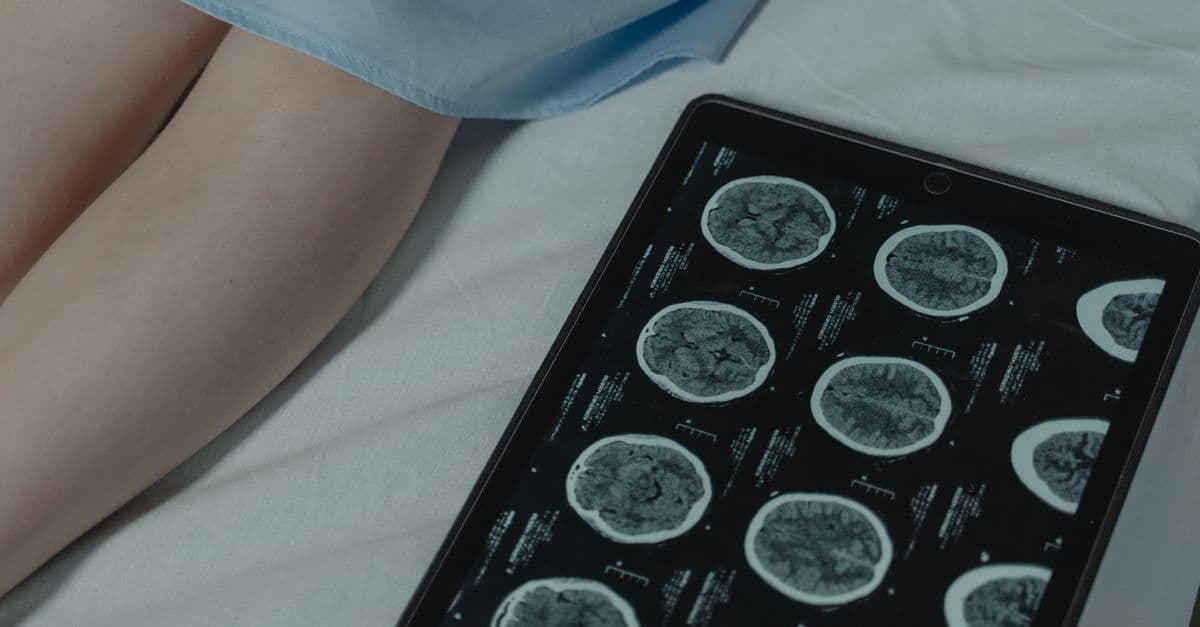
Photo: MART PRODUCTION / Pexels
In 1994, a young woman known in the literature as SM walked into a pet store and, on a dare, reached into a tank and handled a snake — something she had been terrified of just months earlier. SM has a rare genetic condition called Urbach-Wiethe disease that destroyed her amygdala bilaterally. Without that almond-shaped structure, she had lost her capacity for fear almost entirely. She could describe danger intellectually. She simply could not feel afraid. Her case, studied extensively by Justin Feinstein and colleagues at the University of Iowa, helped establish what decades of animal research had suggested: the amygdala is the brain's fear engine, and without it, the system goes dark.
What the Amygdala Actually Does
The amygdala is not a single nucleus but a cluster of about 13 interconnected regions in the medial temporal lobe, sitting just anterior to the hippocampus on each side of the brain. Its name comes from the Greek word for almond, which describes its shape. Its function is threat detection — scanning incoming sensory data for anything that matches a learned or innate danger template.
Amygdala — a set of nuclei in the brain's medial temporal lobe that plays a central role in processing threats, forming emotional memories, and triggering defensive behavioral responses including fight-or-flight.
The basolateral complex (BLA) of the amygdala receives direct input from sensory systems and evaluates stimuli for threat relevance. When the BLA detects a match, it projects to the central nucleus, which acts as the output hub — relaying signals to the hypothalamus, brainstem, and autonomic nervous system that collectively produce the fear response: elevated heart rate, dilated pupils, tensed muscles, redirected blood flow, and the release of adrenaline (epinephrine) and cortisol.
Crucially, the amygdala is not merely reactive. It is predictive. It continuously updates threat templates based on experience, which is why encountering a dog that bit you as a child can produce a fear response to all dogs decades later even when consciously you know most dogs are harmless.
Source: Feinstein, J.S., Adolphs, R., Damasio, A., & Tranel, D. (2011), "The Human Amygdala and the Induction and Experience of Fear," Current Biology, 21(1), 34–38 — the landmark study of patient SM showing that bilateral amygdala damage eliminates subjective fear experience.
Source: Phelps, E.A. & LeDoux, J.E. (2005), "Contributions of the Amygdala to Emotion Processing: From Animal Models to Human Behavior," Neuron, 48(2), 175–187 — comprehensive review linking animal fear conditioning to human amygdala function.
The Two Roads to Fear: Fast and Slow
Neuroscientist Joseph LeDoux identified one of the most important architectural features of the fear system: there are two distinct routes by which sensory information reaches the amygdala, and they operate at radically different speeds.
The "low road" runs directly from the sensory thalamus to the amygdala. It is fast — activating the fear response in roughly 12 milliseconds — but it is coarse. The thalamus passes a rough, imprecise sketch of the incoming stimulus directly to the amygdala, which begins the threat response before detailed analysis has occurred. If you hear a loud crack in a dark alley, the low road fires your heart rate upward before your cortex has determined whether it was a gunshot, a car backfiring, or someone dropping a crate.
The "high road" takes the same sensory data to the cortex first, where detailed perceptual processing occurs, and then relays the analyzed signal to the amygdala. This route takes hundreds of milliseconds — an eternity in threat-response terms. But it allows the cortex to modulate or cancel the amygdala's response once it determines the crack was not a gunshot.
Think of it like a smoke detector wired to a fire sprinkler. The low road is the detector — it goes off the moment it senses anything resembling smoke, including burnt toast. The high road is the human inspection that follows, which determines whether to silence the alarm or call the fire department.
This architecture means that fear responses regularly precede conscious awareness. By the time you consciously register that something startled you, your body has already prepared to run.
Source: LeDoux, J.E. (1996), The Emotional Brain: The Mysterious Underpinnings of Emotional Life, Simon & Schuster — the foundational account of dual-pathway fear processing and amygdala circuitry.
Source: LeDoux, J.E. & Pine, D.S. (2016), "Using Neuroscience to Help Understand Fear and Anxiety," American Journal of Psychiatry, 173(11), 1083–1093 — LeDoux's revised framework distinguishing subjective fear experience from the neural circuits that drive defensive behavior.
The Physiology of Fight-or-Flight
When the amygdala's central nucleus fires, it triggers a cascade that affects almost every organ system in the body. Walter Cannon, the Harvard physiologist who coined the term "fight-or-flight" in 1915, mapped the broad outlines of this response. The century of research that followed has filled in the molecular machinery.
Fight-or-flight response — the coordinated physiological reaction to perceived threat, mediated by the sympathetic nervous system and adrenal hormones, that prepares an organism for rapid defensive action.
The hypothalamus activates the sympathetic branch of the autonomic nervous system, releasing norepinephrine throughout the body and signaling the adrenal medulla to release epinephrine (adrenaline) into the bloodstream. Heart rate and blood pressure rise. Breathing deepens and accelerates. Blood is shunted away from digestive organs and toward skeletal muscle. Glucose is released from the liver — a 2025 study from Tulane University identified the specific amygdala-hypothalamus-liver circuit that drives this blood sugar spike, providing the skeletal muscle with immediate fuel. Pupils dilate to gather more light. Pain sensitivity decreases (stress-induced analgesia), which is why people sometimes don't notice injuries in the immediate aftermath of a traumatic event.
A third response — freezing — tends to occur when the threat is close and unavoidable, and represents a distinct circuit from fight or flight. Freezing reduces the chance of being detected by a predator. Recent neuroimaging work has shown that the central amygdala chooses between freezing and active escape based on the perceived distance and controllability of the threat.
The whole system is designed to be brief and self-correcting. Once the threat resolves, the parasympathetic system (the "rest and digest" branch) should bring all systems back toward baseline. Chronic activation — when the threat never fully resolves — is one of the physiological mechanisms underlying conditions like post-traumatic stress disorder.
| Response Phase | Key Hormone/System | Primary Effect |
|---|---|---|
| Detection (0–12 ms) | Amygdala low road | Initiates defensive response |
| Activation (seconds) | Norepinephrine (SNS) | Heart rate up, blood pressure up |
| Sustained response (minutes) | Epinephrine (adrenal) | Glucose mobilized, pupils dilated |
| Prolonged stress (hours–days) | Cortisol (HPA axis) | Immune suppression, sustained arousal |
| Recovery | Parasympathetic system | Returns body to baseline |
Source: Cannon, W.B. (1915), Bodily Changes in Pain, Hunger, Fear, and Rage, Appleton — the original description of the fight-or-flight response; still foundational.
Source: Ulrich-Lai, Y.M. & Herman, J.P. (2009), "Neural Regulation of Endocrine and Autonomic Stress Responses," Nature Reviews Neuroscience, 10(6), 397–409 — comprehensive review of the HPA axis and autonomic stress circuitry.
How Phobias Form and Why They Persist
A phobia is not an unusually intense fear. It is a fear that has become decoupled from the actual threat level of its trigger. Someone with arachnophobia is not simply "very afraid of spiders" — they experience a full fear response to images of spiders, the word "spider," or even the shadow of something spider-like, despite knowing, consciously and completely, that the stimulus presents no danger.
Phobia — an excessive, irrational, and persistent fear of a specific object, situation, or activity that produces marked distress and typically triggers avoidance behavior.
Phobias form through classical conditioning — the same mechanism Ivan Pavlov documented with his dogs in the early 1900s. A neutral stimulus (say, a dog) becomes associated with an aversive unconditioned stimulus (a dog bite) in a single pairing. The amygdala encodes that association as a fear memory. Subsequently, the neutral stimulus alone elicits the fear response.
What makes phobias sticky is memory reconsolidation — a process by which fear memories are re-stabilized after each recall. Every time the phobic stimulus is encountered or even vividly imagined, the fear memory is briefly reactivated and then re-stored. If nothing new is learned during that reactivation window, the memory re-consolidates in its original form: as threatening. This is one reason phobias can persist for decades without any "maintenance" from repeated actual trauma.
The most effective behavioral treatment — exposure therapy — works precisely by exploiting the reconsolidation window. Gradual, controlled exposure to the phobic stimulus without aversive consequences gives the amygdala new information to incorporate: this thing does not actually lead to harm. Over repeated exposures, extinction learning competes with and gradually overrides the original fear memory.
Preparedness theory, proposed by Martin Seligman in 1971, adds an evolutionary layer: humans are biologically prepared to acquire phobias about stimuli that were genuine threats in ancestral environments — snakes, spiders, heights, open spaces, strangers — more readily than about stimuli that are objectively more dangerous today, like cars or electrical outlets. The amygdala's threat templates appear to have evolutionary defaults.
Source: Seligman, M.E.P. (1971), "Phobias and Preparedness," Behavior Therapy, 2(3), 307–320 — the preparedness theory of phobia acquisition.
Source: Nader, K., Schafe, G.E., & LeDoux, J.E. (2000), "Fear Memories Require Protein Synthesis in the Amygdala for Reconsolidation after Retrieval," Nature, 406, 722–726 — the discovery of reconsolidation in fear memories.
Why We Pay to Be Scared: The Horror Paradox
If fear is aversive by design, why do approximately one-third of Americans voluntarily seek out horror movies, haunted houses, and extreme roller coasters each year? The apparent contradiction resolves when you separate the fear system from the reward system — and recognize they are simultaneously active in recreational fear contexts.
When a horror movie delivers a well-timed scare, the amygdala fires, adrenaline rises, and the sympathetic nervous system activates. All of that is real fear physiology. But the prefrontal cortex is simultaneously processing contextual information: this is a movie theater, I am surrounded by other people, I chose to be here, the exit is right behind me. That cortical signal moderates the fear response and prevents it from escalating to panic.
What remains after that modulation is a state of elevated arousal — and arousal itself, uncoupled from genuine threat appraisal, is pleasurable. The same dopamine circuits that encode reward are activated by novelty and unpredictability, both of which horror provides in abundance. The combination of controlled threat and safe context produces what researchers at the University of Tennessee described in a 2020 study as "optimal stress" — an amount of arousal that produces positive hedonic experience without tipping into genuine distress.
There is also a social dimension. Fear is contagious via mirror neuron systems, and experiencing shared fear with companions strengthens social bonds through the same physiological mechanisms as other forms of co-activation. Group horror experiences — haunted houses, scary movies — may function as modern versions of communal threat-bonding that strengthened group cohesion in ancestral environments.
Source: Andersen, M.M., Schjoedt, U., Price, H., Rosas, F.E., Scrivner, C., & Clasen, M. (2020), "Playing With Fear: A Field Study in the Haunted House," Psychological Science, 31(12), 1497–1510 — the empirical study establishing that recreational fear produces positive affect under safe-threat conditions.
Fear vs. Anxiety: The Crucial Distinction
In everyday language, fear and anxiety are often used interchangeably. In the neuroscience and clinical literature, they refer to meaningfully different states — and the distinction has real consequences for understanding and treating them.
Fear — an acute, present-directed defensive response to a specific, identifiable threat. The threat is here, now, real (or perceived as real), and fear organizes the organism's response to it.
Anxiety — a future-directed state of apprehensive anticipation concerning potential threats that are uncertain, diffuse, or not yet present. The threat might happen, and the organism pre-activates a version of the fear system in preparation.
The two states share neural substrates — both involve the amygdala and the stress hormone system — but they differ in the circuits that dominate. Fear responses are primarily driven by the central amygdala's output to the brainstem. Anxiety responses are more heavily modulated by the bed nucleus of the stria terminalis (BNST), a structure adjacent to the amygdala that maintains sustained low-grade activation in response to uncertain, diffuse threat signals.
The fear response to a growling dog is sharp, specific, and resolves when the dog leaves. The anxiety you feel for the rest of the walk — scanning for other dogs around every corner, imagining what might happen — is driven by a different circuit. LeDoux and Pine drew this distinction clearly in their 2016 paper, arguing that what clinicians call pathological anxiety may be better understood as dysregulation of BNST-mediated sustained threat anticipation rather than hyperactive amygdala fear circuits per se.
This matters practically: treatments targeting the amygdala's fear-conditioning circuitry (like exposure therapy) work well for specific phobias but are less effective for generalized anxiety disorder, which may involve the BNST system more than the amygdala's acute fear circuits.
For related research on how emotional states are represented and regulated, see Why We Feel Emotions: The Science.
Source: LeDoux, J.E. & Pine, D.S. (2016), "Using Neuroscience to Help Understand Fear and Anxiety," American Journal of Psychiatry, 173(11), 1083–1093 — the framework distinguishing fear and anxiety by their underlying neural circuits.
Source: Davis, M., Walker, D.L., Miles, L., & Grillon, C. (2010), "Phasic vs Sustained Fear in Rats and Humans: Role of the Extended Amygdala in Fear vs Anxiety," Neuropsychopharmacology, 35(1), 105–135 — the empirical case for the amygdala/BNST distinction in fear vs. anxiety.
What Fear Conditioning Experiments Reveal
The science of fear owes much to experiments that could not be conducted today under modern ethics guidelines. John B. Watson and Rosalie Rayner's 1920 "Little Albert" experiment — in which a nine-month-old infant was conditioned to fear a white rat by pairing its appearance with a loud noise — established that human fear could be acquired through conditioning. Watson famously, and controversially, claimed he could condition fear of "any object" in any healthy infant.
More ethically designed laboratory paradigms have since refined this picture substantially. Fear-potentiated startle studies, skin conductance response protocols, and neuroimaging during threat conditioning have allowed researchers to map the precise neural circuitry of fear acquisition, expression, and extinction in humans. The conditioned fear paradigm — pair a neutral stimulus with a mild shock, then measure the physiological response to the neutral stimulus alone — is one of the most replicated findings in all of experimental psychology.
For a detailed examination of a landmark fear conditioning study, see The Skinner Box and Operant Conditioning, which covers how learned associations between stimuli and outcomes were first systematically mapped.
The picture that has emerged from a century of fear research is considerably more complex than Watson's bold claims. Fear conditioning depends on the amygdala. Its extinction depends on the prefrontal cortex's inhibitory projections to the amygdala. Relapse of extinguished fear — the "return of fear" — occurs when this inhibitory control is disrupted by stress, time, or context change. Understanding these mechanisms has driven the development of pharmacological adjuncts to therapy, including drugs like d-cycloserine that enhance extinction learning by acting on NMDA receptors in the amygdala.
Source: Milad, M.R. & Quirk, G.J. (2002), "Neurons in Medial Prefrontal Cortex Signal Memory for Fear Extinction," Nature, 420, 70–74 — demonstrating that the infralimbic prefrontal cortex stores extinction memories that inhibit amygdala fear expression.
What People Get Wrong About Fear
The most persistent misconception about fear is that it is irrational — something to be overcome, suppressed, or powered through. In fact, fear is one of the most evolutionarily conserved and functionally important response systems in the vertebrate brain. It is not an error. It is a calibration problem when it misfires.
A second common mistake is conflating fearlessness with courage. The amygdala of someone we describe as courageous responds to threats much as anyone else's does. What differs is what happens downstream: prefrontal regulation, reappraisal, and volitional behavior override the fear state's pull toward avoidance. Courage, neurologically, is not the absence of fear but the act of proceeding despite it — which is exactly what exposure therapy trains people to do.
A third misconception, common in popular neuroscience writing, is that the amygdala is "the fear center." The amygdala is involved in fear, but it is also involved in positive emotional associations, social cognition, attention to emotional salience, and the formation of reward-related memories. Lesioning the amygdala does not produce a fearless organism that otherwise functions normally — it produces an organism with severely disrupted emotional processing across multiple domains, as SM's case illustrates in detail.
Understanding fear accurately — as a dynamic, circuit-level phenomenon shaped by evolution, learning, and context — also has implications for how we think about cognitive biases more broadly. Many of the systematic errors in human judgment trace back to the same ancestral threat-detection architecture that makes fear such a potent experience.
Frequently Asked Questions
Q: Is the amygdala the only brain region involved in fear? A: No. While the amygdala is central, fear involves a distributed network including the prefrontal cortex (which regulates and can inhibit fear responses), the hippocampus (which provides contextual information), the hypothalamus (which activates the stress hormone system), and the brainstem (which mediates autonomic fear responses like heart rate changes).
Q: Can adults develop new phobias? A: Yes. Phobias can develop at any age through direct conditioning (a traumatic encounter), vicarious conditioning (witnessing someone else's fearful reaction), or informational transmission (being told something is dangerous). Single-event traumatic conditioning is particularly effective at producing lasting phobias in adulthood.
Q: Why do some people enjoy horror movies while others hate them? A: Individual differences in fear enjoyment track sensation-seeking traits and the degree to which the prefrontal cortex can modulate amygdala output in safe contexts. High sensation-seekers find the arousal state produced by horror rewarding. Low sensation-seekers or those with high baseline anxiety find the amygdala activation overwhelming even when they know they are safe.
Q: What is the difference between a fear and a phobia? A: Intensity and proportionality. A fear becomes a phobia when the fear response is markedly disproportionate to the actual threat, when it reliably triggers even in response to clearly safe stimuli, and when it causes significant distress or functional impairment — such as reorganizing one's life around avoidance of the feared stimulus.
Q: Why do people freeze instead of running when very afraid? A: Freezing is a distinct defensive response to close, inescapable threat. It reduces detection by predators (movement triggers predator attention), conserves energy, and allows time to assess the situation. It is driven by circuits in the central amygdala and periaqueductal gray. The perception that someone "froze in terror" rather than fleeing reflects this adaptive response, not weakness.
Q: Does repeated exposure to fear-inducing stimuli always reduce fear? A: Only under specific conditions. Exposure reduces fear when it is gradual, occurs in a safe context, and is not paired with any aversive consequence — conditions that allow extinction learning to occur. Exposure that is too intense, too rapid, or paired with genuine harm can strengthen fear memories through sensitization rather than reducing them.
Q: How long does it take to extinguish a phobia with therapy? A: For specific phobias treated with evidence-based exposure therapy, clinically significant improvement is often achieved in 1–5 sessions for circumscribed phobias (specific animal phobias, injection phobias). More complex phobias with high avoidance, secondary anxiety, or comorbid conditions typically require more extended treatment. This is consistent across multiple randomized controlled trials of exposure-based treatments.
Read next:
Follow new articles
Add SciHub101 to your feed reader to see new science and technology stories.
About the Author
SciHub101 is an independent science and technology publication founded and edited by Buğra Sözeri, a software engineer and app developer based in Türkiye. AI tools assist with drafting and research. Source documentation in the existing archive is uneven, and articles are being reviewed and corrected. The Editorial Team byline identifies editorial responsibility; it does not certify specialist or independent human review. Where we compare products, anything built by our own team is labelled as such — see the editorial guidelines and About page for how corrections and disclosures work.
Related Articles

The Psychology of Persuasion: How Influence Really Works
The psychology of persuasion reveals six universal principles — reciprocity, commitment, social proof, authority, liking, scarcity — and the neuroscience driving each.

The Psychology of Decision Making: How We Really Decide
The psychology of decision making explained: prospect theory, loss aversion, the paradox of choice, heuristics, and why human decisions deviate systematically from rationality.
The Psychology of Fear and Phobias: How Your Brain Creates Terror
Fear is the brain's most ancient alarm system. Understanding the amygdala, fight-or-flight, and how phobias form reveals why terror can feel so rational—and how it can be treated.

What Causes Phobias? The Science Behind Extreme Fear and Anxiety
A phobia is an intense, irrational fear of a specific object or situation that produces anxiety and avoidance behavior disproportionate to actual danger. Phobias develop through classical conditioning, where a neutral stimulus becomes paired with a fear-inducing event, causing the neutral stimulus to trigger fear independently. However, not everyone who experiences a traumatic event develops a phobia, suggesting a genetic and temperamental vulnerability. Research points to heightened amygdala reactivity, reduced prefrontal regulation of fear, and genetic variations in neurotransmitter systems (serotonin, GABA) as risk factors. The preparedness theory proposes that humans are biologically prepared to fear certain stimuli (snakes, spiders, heights) more easily than others. Understanding phobia mechanisms reveals that conditioning and biological vulnerability interact. Exposure-based approaches, in which the person repeatedly encounters the feared stimulus in a safe context, effectively reduce phobias by promoting new learning and prefrontal inhibition of amygdala reactivity.

Anxiety Explained — The Neuroscience Behind Fear
How the amygdala, HPA axis, and neurotransmitters drive anxiety. Science of GAD, panic disorder, social anxiety, and modern treatments.

Why Do We Get Angry: The Science of Anger
How anger works through threat appraisal, the amygdala, and the fight-or-flight response. The neuroscience of anger, its functions in boundary-setting and motivation, why venting doesn't reduce anger, and evidence-based regulation strategies like reappraisal.