Science
Deep Learning and Microscopy: Seeing Materials at the Atomic Scale
AI is giving electron microscopes superhuman vision—resolving atomic structures, identifying defects, and automating analyses that once took weeks.
36 articles tagged with #deep-learning
AI is giving electron microscopes superhuman vision—resolving atomic structures, identifying defects, and automating analyses that once took weeks.

Climate tipping points could trigger irreversible planetary changes. Machine learning is giving scientists new tools to detect early warning signals, with real limits.

Deep learning now outlines cells, restores noisy images, predicts fluorescent labels, and turns cell photos into numbers. Here is how, and where it breaks.

Object detection went from slow two-stage pipelines to real-time single-pass networks and transformer detectors. Here is how each generation works and what the benchmark numbers mean.

AI is reshaping animation pipelines from motion capture cleanup to full character synthesis — and it's moving faster than Hollywood expected.
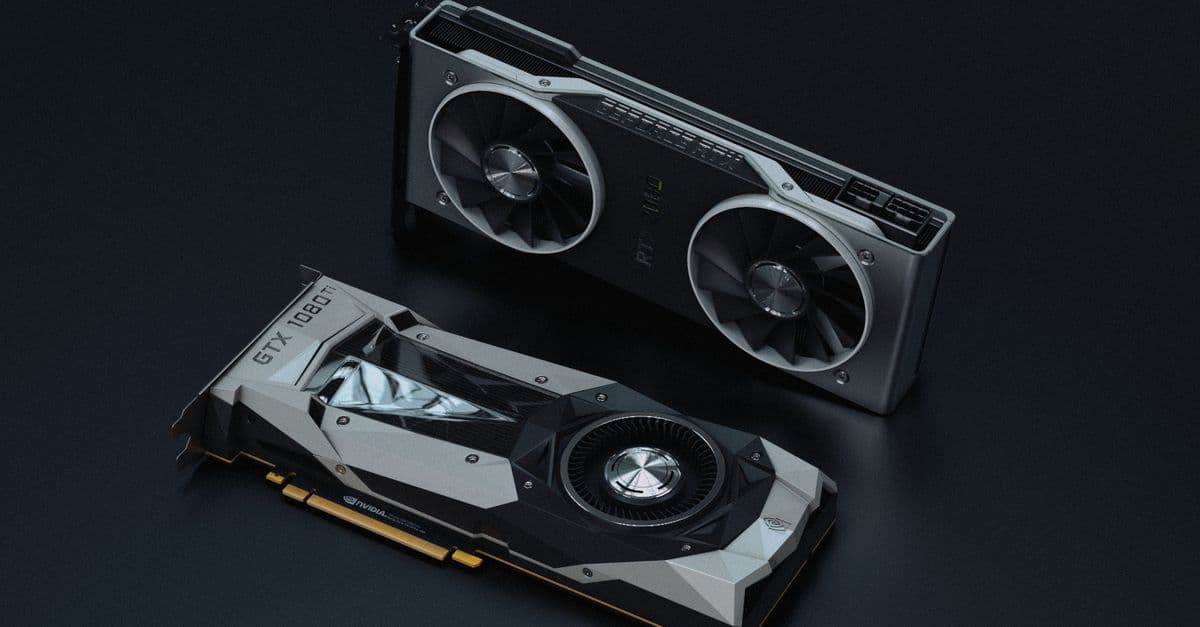
Deep learning anti-cheat systems analyze millions of data points per second to catch cheaters that rule-based systems routinely miss, protecting competitive integrity.

Server-side chatbots run on racks of GPUs in data centers. Face ID, voice dictation, and a growing number of language features run on a chip the size of a fingernail in your pocket. The science of shrinking large models to fit is called edge AI.

Type a sentence, get a picture. Behind Stable Diffusion and DALL-E sits one idea borrowed from thermodynamics: destroy images with noise in small steps, train a network to undo each step, then run the process backward from static.

Transfer learning lets a model trained once on broad data be adapted to many narrower tasks. Here is how pre-training, fine-tuning, LoRA, and foundation models work, and where reuse quietly fails.
Two neural networks play a game. One forges images, the other tries to catch the forgeries, and each failure teaches the forger something. That is a GAN, and its strengths and flaws all follow from that game.

A language model never sees words, only numbers. Here is the pipeline that turns raw text into tokens, vectors, and predictions, from tokenization to BERT.

AlphaGo did not read a Go textbook for its strongest play. It improved by playing itself, guided by win or lose. Here is the math and the history behind how reinforcement learning works.