Science
Physics-Informed Neural Networks (PINNs): When AI Learns the Laws of Physics
PINNs embed physical equations directly into neural network training, enabling powerful simulations that respect the laws of nature by design.
36 articles tagged with #deep-learning
PINNs embed physical equations directly into neural network training, enabling powerful simulations that respect the laws of nature by design.

Deep learning systems can now turn brain recordings into text, speech, and rough images. Here is how it works, what it needs, and where it stops.
Turbulence is one of physics' hardest unsolved problems. Neural networks are rewriting how we simulate fluids—at a fraction of the cost.

Deep learning systems now classify billions of celestial objects with superhuman accuracy, enabling sky surveys that would take human astronomers millennia to complete.
Neural style transfer lets AI blend the content of one image with the style of another. The results are stunning — and philosophically thorny.
Deep learning models now price options faster and more accurately than classic formulas, reshaping how Wall Street trades trillions in derivatives.
Machine learning didn't just assist the Higgs boson discovery—it's now reshaping how physicists search for physics beyond the Standard Model.
Neural networks now sort galaxies, rank gravitational lens candidates, and flag changing objects in Hubble, Webb, and survey data. Here is what they do well, and where astronomers still check their work.

AI is compressing decades of trial-and-error chemistry into weeks, helping scientists discover new compounds with unprecedented precision.

What OpenAI disclosed about GPT-4, what it scored on exams and benchmarks, why next-token prediction got that far, where it still fails, and what replaced it.
Machine learning is how computers learn patterns from data instead of being told the rules. It powers everything from email spam filters to self-driving cars. Here's how it actually works.
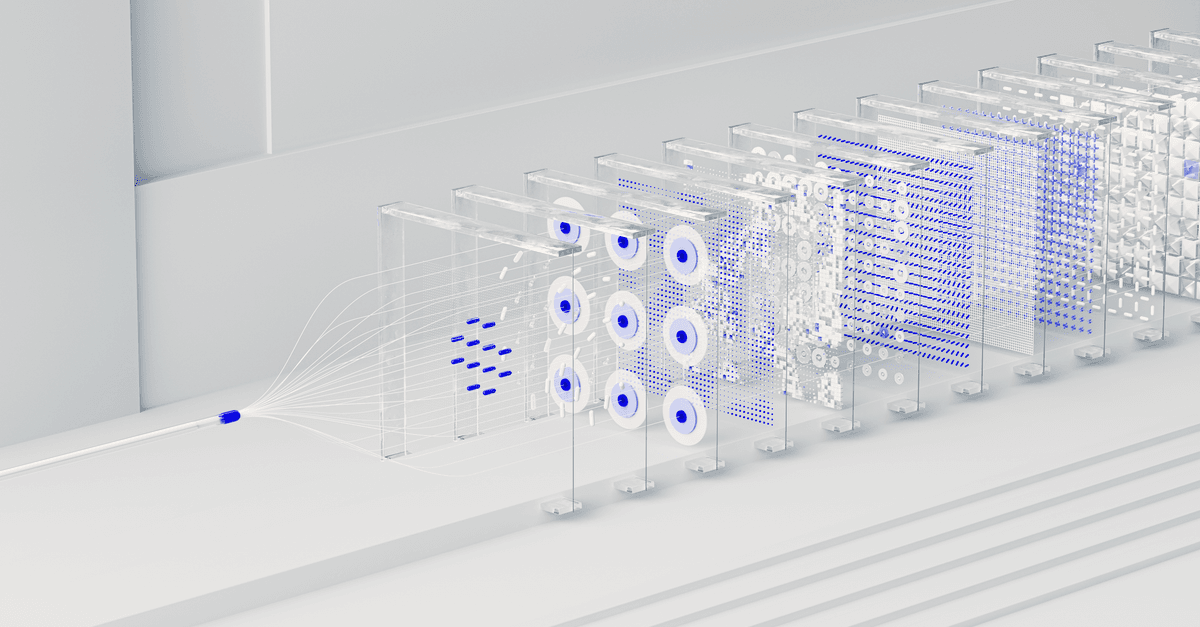
Neural networks are loosely inspired by the brain — but they're really just stacks of math doing pattern recognition. Here's how they work, why they're so powerful, and what's actually going on inside.