How to Build a Personal Brand Online in 2026: Authenticity Over Hustle
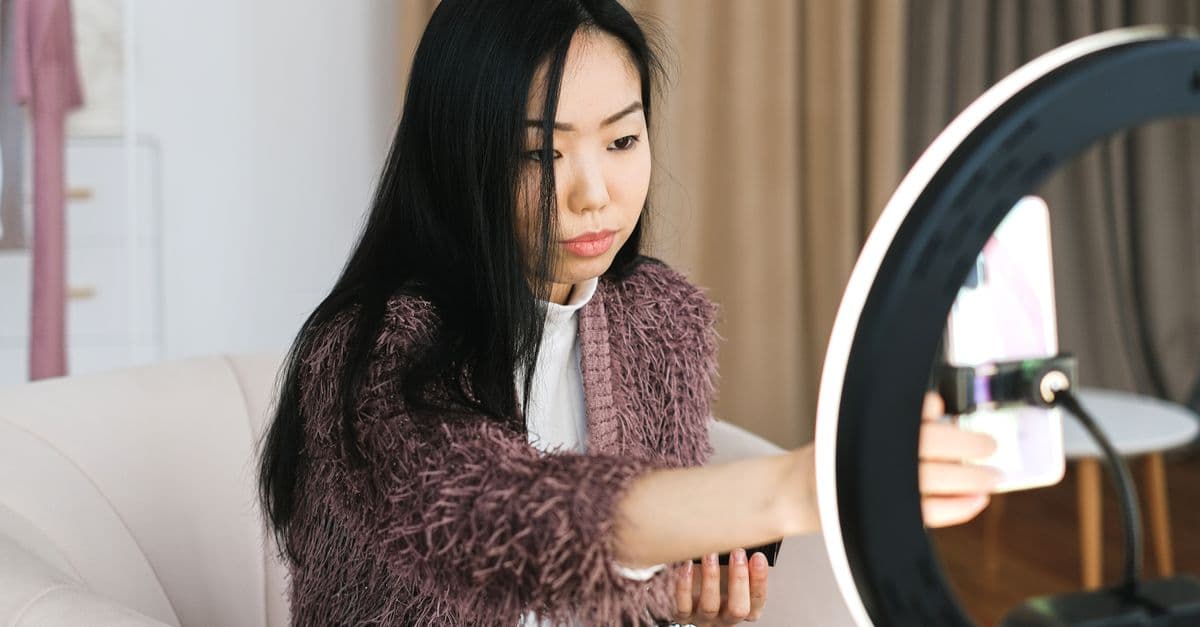
Photo: Anna Shvets / Pexels
Every professional has a personal brand whether they intend to or not. A software engineer's brand is determined by the quality of her GitHub commits, the clarity of her Stack Overflow answers, and the integrity she demonstrates when she admits a mistake. A fitness coach's brand is built through consistent workouts, transparent results, and the patience he shows teaching beginners. A writer's brand is the voice and ideas she publishes, the reliability with which she publishes them, and whether people can trust what she says. Personal branding is not optional; the only choice is whether you shape your brand intentionally or let it form haphazardly.
Yet the internet has distorted personal branding into a hustle-culture caricature. Success, in the hustle narrative, requires aggressive self-promotion, going viral, maintaining a presence on seven platforms, and projecting a hyper-confident persona 24 hours per day. That narrative is false and corrosive. People follow people they trust, and trust is built through sustained, authentic behavior. This guide walks through the realistic mechanics of building a personal brand online, the platforms and tactics that work in 2026, the mistakes that sink most attempts, and the timeline you should expect.
What Is a Personal Brand and Why Build One
A personal brand is the consistent reputation you hold in the minds of your audience. It is the set of expectations about your expertise, reliability, and personality that people develop based on repeated exposure to your work and ideas. A personal brand is not your résumé or portfolio; it is the informal social capital you accumulate.
Why personal brands matter:
Opportunity magnet — a strong personal brand pulls opportunities toward you. A data scientist with a public following of 15,000 engaged practitioners receives job offers, consulting inquiries, speaking invitations, and partnership proposals without cold-calling. The network effect does the outbound work for you.
Pricing power — a personal brand lets you command premium rates because buyers trust you before they work with you. An unknown freelancer charges $50/hour; a freelancer with a visible personal brand and published case studies charges $150/hour for identical work because the buyer's perceived risk is lower.
Audience for ideas — if you create software, write books, run courses, or sell services, a personal brand means you have a launch pad. A marketing automation course is a commercial flop without an audience; the same course with an email list of 50,000 people and a 5 percent conversion rate sells 2,500 copies at $97 profit each—that is $242,500 in revenue from the same work, differentiated only by brand and audience.
Compounding knowledge — building a personal brand forces you to learn and synthesize knowledge in public. A software engineer who writes monthly tutorials on Docker learns Docker deeper than one who does not, because explaining forces clarity. The act of teaching deepens the taught.
Competitive moat — in a commoditized labor market, personal brands are a competitive advantage that cannot be easily replicated. A hundred people can learn the same coding languages; only a dozen will build a personal brand as a thought leader in machine learning systems design.
The flip side: personal branding requires sustained effort (typically 2-3 years to see meaningful traction), emotional resilience (public criticism stings), and a willingness to be vulnerable. It is not a get-rich-quick scheme; it is a long-term investment in your professional identity.
Platform Selection: Commit to One or Two
The biggest mistake beginners make is trying to maintain presence across Facebook, LinkedIn, Twitter (X), Instagram, TikTok, YouTube, and a personal blog simultaneously. The math makes this impossible: a high-quality YouTube video requires 4-8 hours of production; a LinkedIn article requires 2-3 hours of writing and refinement. Multiplying this across seven platforms yields 30+ hours of work per week, unsustainable for most professionals with day jobs.
The correct approach: choose one primary platform and one secondary platform. Commit to one for 12 months minimum. Only expand when that platform requires fewer than 5 hours per week to maintain.
Platform selection by profession:
| Profession | Primary Platform | Secondary | Reasoning |
|---|---|---|---|
| Software Engineer | GitHub + Twitter (X) | Code is the brand; Twitter for thought leadership; LinkedIn for recruiter discovery | |
| Writer | Substack or personal blog | Twitter (X) | Own audience via email; Twitter for distribution and networking |
| Fitness Coach | Instagram or TikTok | YouTube | Visual demonstration of results and teaching; YouTube for longer-form education |
| Designer | Instagram or Dribbble | Twitter (X) | Visual portfolio; Twitter for design thought leadership |
| Business/Founder | Twitter (X) or YouTube | LinkedIn for B2B credibility; Twitter for thought leadership or YouTube for educational content | |
| Academic/Researcher | Twitter (X) | Medium or personal blog | Twitter for real-time paper discussion and networking; Medium for accessible writing |
| Artist | Instagram or TikTok | YouTube | Visual portfolio; YouTube for process videos and tutorials |
Critical decision: build your audience on a platform you do not own (LinkedIn, Twitter, TikTok) or on owned channels (email list, personal blog, Substack)?
Owned channels are strategically superior long-term because platform algorithm changes, policy shifts, and outages do not affect your audience connection. An email list of 10,000 is permanent capital; a Twitter following of 10,000 can vanish if Twitter changes its recommendation algorithm or you say something controversial and get shadowbanned. Ideal strategy: use a social platform (Twitter, LinkedIn, TikTok) for discovery and traction, simultaneously building an email list or Substack to own the relationship.
Consistency and Content Pillars: What to Share
Personal brands fail when their message is incoherent. Someone who publishes machine learning tutorials one week, macro investing takes the next week, and fitness tips the week after does not build a brand; they build an audience with no coherent identity.
Define your content pillars: identify 2-4 core themes that align with your expertise and interests. These pillars become the backbone of your publishing schedule.
Example content pillars:
Software Engineer in DevOps: (1) Docker and container orchestration, (2) Kubernetes patterns and troubleshooting, (3) Infrastructure-as-code, (4) Cost optimization and observability. Every piece of content you publish should map to one of these pillars.
Productivity Writer: (1) Time management systems, (2) Note-taking and knowledge management, (3) Attention and focus, (4) Career and skill development. A piece on "how to take better notes" is in-pillar; a piece on macroeconomics is out-of-pillar and damages cohesion.
Fitness Coach: (1) Strength training, (2) Nutrition fundamentals, (3) Behavior change and habit formation, (4) Injury prevention and recovery. A post on trading strategies is off-brand and confuses your audience.
Once pillars are defined, commit to a publishing schedule: one long-form piece per week (article, video, or podcast) and 2-3 short-form pieces per week (tweets, LinkedIn posts, or TikToks). Long-form content demonstrates depth and builds authority; short-form content drives engagement and network effects.
Authenticity vs. Performance: The Credibility Trap
The worst personal brands are those built on carefully curated lies. A fitness influencer who posts transformation photos edited by Photoshop, never shows the grind, and promotes "meal plans that guarantee six-pack abs in 30 days" builds an audience of people seeking magical solutions. When those people fail (because the plan was fake), they lose trust and leave. Worse, they feel stupid for believing, and that shame prevents them from trying again.
Authentic personal brands, by contrast, show the real process. A fitness coach who posts honest body transformation photos (before, during, after), documents her workouts publicly, admits her failed diets, and teaches the actual 18-24 month timeline to lean muscle gain builds a smaller but far more loyal audience. Those followers become customers, advocates, and friends because they know the transformation they underwent mirrors what the coach did.
Authenticity tactics:
Show your work — do not just share the polished final output. Share the drafts, the failed experiments, the mistakes. A writer who publishes unfinished ideas on Twitter and refines them based on feedback is more interesting and credible than one who publishes only polished final pieces. People relate to process.
Admit uncertainty — the most damaging phrase in personal branding is false confidence. "I know for a fact that X will happen" is a trap because the world is probabilistic and you will be wrong. Phrase things probabilistically: "In my experience, X tends to happen when Y conditions are met, but YMMV." This is both more honest and more credible because readers trust nuance over certainty.
Share failures as much as wins — a personal brand built entirely on highlights is exhausting to follow because readers unconsciously compare your highlights to their daily life and feel inadequate. Sharing struggles, failed projects, and lessons from mistakes makes you human and relatable. A developer who tweets "spent 6 hours debugging a query that turned out to be a typo, do not make my mistake" is more useful and more memorable than one who tweets only "shipped a major feature."
Do not perform vulnerability — there is a difference between authentic vulnerability and performing vulnerability for attention. Authentic vulnerability is sharing something that scares you because you believe it is useful; performing vulnerability is oversharing personal crises for sympathy. Audiences can sense the difference. Stick to vulnerability related to your area of expertise and value proposition, not your entire inner life.
Maintain boundaries — being authentic does not mean being a open diary. A software engineer can share technical struggles and code failures publicly; she does not need to share relationship drama or family trauma. Authenticity means being genuine within appropriate professional boundaries.
The Realistic Timeline and Growth Curve
Personal branding is not linear. Most people experience a three-phase growth curve:
Phase 1 (Months 1-6): Flatline and doubt
You publish consistently and see minimal traction. Five followers per month feels pointless. The algorithm does not favor your content. You question whether anyone cares about what you are saying. Most people quit here. Do not. Phase 1 is normal. You are establishing a baseline of content, finding your voice, and building a small core of people who actually enjoy your work. Expect zero to 100 followers.
Phase 2 (Months 6-18): Slow compound growth
One of your pieces resonates and gets shared. Followers jump from 100 to 500 in one week, then back to steady growth of 20-50 per week. You find collaborators and people in your niche start mentioning you. Momentum builds. You are now publishing content that is 20 percent better than it was in Phase 1, and that quality difference compounds. Expect 500 to 5,000 followers.
Phase 3 (Months 18-36): Exponential phase
An article goes viral, you get featured on a major platform, or you land a significant win (job offer, client, partnership) that you publicly attribute to your audience. Followers now grow 10+ percent per month. You have "made it" in the sense that your brand is generating meaningful opportunities. Expect 5,000 to 50,000 followers.
The critical variable is phase length and depth. A software engineer with 8 years of deep experience might compress Phase 1 to 3 months because her expertise is real and obvious to other engineers; a 25-year-old with 2 years of experience might extend Phase 1 to 12 months because credibility is harder to establish. The phases are not time-based; they are based on how much value you have actually accumulated, and that accumulation depends on your real expertise.
Avoid vanity metrics. Five thousand followers who skip 90 percent of your content is less valuable than 500 followers who share your articles and recommend you to others. Engagement rate and trust are the real measures of personal brand strength, not follower count.
Mistakes That Sink Personal Brands
Chasing virality — trying to go viral at any cost leads to off-brand sensationalism, clickbait, and inconsistency. A software engineer who posts clickbait like "this one weird trick destroyed my startup" might get 10,000 impressions on that one tweet but damages long-term credibility because her audience expects substance. Stay on brand even if it means slower growth.
Inconsistent publishing — publishing twice a week for 3 months, then disappearing for 4 months, then reappearing, trains your audience not to expect you. Consistency matters more than frequency. Publishing one thoughtful article per month, every month, is preferable to eight articles one month and none the next.
Comparing to others' Phase 3 — a dangerous mistake is comparing your Phase 1 effort to someone else's Phase 3 result. You see a writer with 100,000 Twitter followers and think "I could never." That writer is at Phase 3 after 5 years of Phase 1 and 2. Comparison is the thief of joy; focus on your own pace.
Building on borrowed land — exclusive reliance on a single platform you do not own is risky. Twitter can change its algorithm. TikTok could be banned. LinkedIn could restrict reach. Simultaneously building an email list or personal blog ensures that platform volatility does not destroy your audience connection.
Overmonetizing too early — the most common mistake is launching a personal brand and immediately trying to sell a course, affiliate products, or sponsorships before audience trust is established. The audience can sense desperation. Build trust first (12-24 months of free value), then monetize. A newsletter with 10,000 engaged followers monetizing at 12 months will earn more lifetime revenue than one trying to sell at month 3.
Neglecting community — personal brands are not broadcasts; they are two-way relationships. Spend as much time responding to comments, engaging with others' content, and building community as you spend publishing. An author who replies to every substantive comment, recommends other writers in her niche, and collaborates with peers grows faster than one who publishes and ghosts.
Monetization: The Long Game
Personal brands monetize through several channels, each requiring established trust:
Sponsorships and brand deals — companies pay you to mention their product. Requires 50,000+ followers and high engagement rate. Rates range $1,000-$10,000 per post depending on audience size and engagement.
Courses and digital products — leverage your audience to sell educational products. Requires 5,000-10,000 engaged followers. Profit margins are 60-80 percent, but production cost is high (20-100 hours per course).
Consulting and freelancing — a personal brand qualifies you for consulting and freelance work at premium rates. Requires 1,000-5,000 engaged followers. Rates are 2-5x higher than comparable generic freelancers.
Employment and partnership — a strong personal brand makes you attractive for full-time roles, partnerships, speaking engagements, and collaborations. Requires 5,000+ followers. Value ranges from $50,000+ salary premium to multi-six-figure opportunities.
Affiliate products — recommend products you use and earn commission. Requires 10,000+ followers and high trust (recommending poor products destroys credibility). Commissions range 5-30 percent per sale.
Patreon, Substack, or memberships — charge recurring fees for exclusive content or community access. Requires 1,000+ followers, of which 2-5 percent convert to members. Revenue scales with audience size.
The trap: trying to monetize all channels at once or prioritizing monetization over value creation. The healthiest personal brands monetize primarily through one or two channels that align with their skills and their audience's needs.
Frequently Asked Questions
Q: Should I use a real name or pseudonym for my personal brand?
A: Use a real name if your expertise domain allows it. A software engineer, writer, and designer benefit from name recognition; legal or medical professionals might use a pseudonym for privacy. Pseudonyms are acceptable if you are addressing sensitive topics (mental health, abuse recovery); just maintain consistency. Never switch between real name and pseudonym; it confuses your audience.
Q: How much time does building a personal brand require?
A: Realistically, 5-10 hours per week in Phase 1 and Phase 2 (establishing content, engagement, and community). Time can be invested as 2-3 hours writing one long-form piece weekly, 1-2 hours on short-form content, and 2-3 hours engaging with others' work. Phase 3 can be higher (15-20 hours per week) if you add speaking, consulting, or brand partnerships, or lower if you have an assistant or an established content funnel.
Q: What platform should a beginner start on in 2026?
A: LinkedIn for B2B, corporate, or business-focused brands; Twitter (X) for software engineering, science, and thought leadership; TikTok or Instagram for visual creators; Substack or personal blog for writers and researchers. Choose based on where your target audience already spends time, not where you personally prefer to be.
Q: Is it too late to build a personal brand?
A: No. The best time to plant a tree was 20 years ago; the second best time is today. Personal brands are not zero-sum. There is room for unlimited software engineers, writers, and designers on Twitter. The question is not whether there is room, but whether you are willing to invest 18-36 months with patience.
Q: Can I build a personal brand in a niche area with a small potential audience?
A: Yes, and small niches are often better for personal brands because there is less competition and higher trust. A personal brand in "Kubernetes observability" serves a smaller audience than "productivity tips," but that small audience is highly engaged, willing to pay, and more likely to refer you. Niche is a feature, not a bug.
Q: How do I know if my personal brand is working?
A: Track: (1) Engagement rate (comments + shares per post), (2) audience growth rate (followers per month), (3) inbound opportunities (inquiries, partnership offers, job leads), (4) revenue (if monetized). If engagement rate is below 1 percent, you are broadcasting but not connecting; increase time spent in community. If growth is flat for 6+ months, your content is not resonating; solicit feedback, change topics or format, or analyze what other creators in your niche are doing differently.
Read Next
Deepen your audience growth and communication skills:
- How to Protect Your Online Privacy in 2026 — safeguard your personal brand and audience data.
- How the Internet Actually Works — understand the distribution networks behind your platform.
- How to Build a Second Brain with Digital Note-Taking — capture and organize the knowledge that powers your personal brand.
Source: Burnham, Ryan (2023), The Shortest History of Personal Branding — case study analysis of 50+ personal brands and their growth patterns over 5-10 year timelines.
Source: LinkedIn (2024), The State of Creators 2024 — survey of 10,000+ content creators on timeline, effort, and monetization expectations.
Source: Newman, Andrew (2023), "The Personal Brand Paradox: Authenticity and Growth" in Harvard Business Review — research on how perceived authenticity correlates with follower engagement and opportunity conversion.
Source: Godin, Seth (2022), The Practice: Shipping Creative Work — foundational text on consistency, shipping, and the compound returns of repeated public work.
Source: Ries, Eric (2011), The Lean Startup: How Modern Entrepreneurs Use Continuous Innovation — principles of iterative learning applied to personal brand development and positioning.
Source: Twitter / X Analytics (2024), Creator Metrics Benchmark Report — engagement rate medians by audience size, category, and platform.
Source: Substack (2024), Creator Economics Report — data on email list growth, monetization timelines, and revenue per subscriber by content category.
Source: Demand Curve (2023), Personal Brand Growth Playbook — tactical guide with 50+ case studies of accelerated growth through collaboration and strategic positioning.
Source: McCullough, David (2013), Willpower: Rediscovering the Greatest Human Strength — psychological basis for consistency, motivation, and long-term behavior change.
Source: OnlyFans & Creator Collective (2024), Creator Economy Trends — analysis of platform shifts, audience preferences, and emerging monetization models in 2024-2026.
Source: Morning Brew (2024), "Creator Burnout and Sustainability" — longitudinal study on why creators quit and what separates sustainable from unsustainable brands.
Source: Byrne, Derek (2024), The Authentic Personal Brand — exploration of vulnerability, truth-telling, and differentiation in crowded creator markets.
Follow new articles
Add SciHub101 to your feed reader to see new science and technology stories.
About the Author
SciHub101 is an independent science and technology publication founded and edited by Buğra Sözeri, a software engineer and app developer based in Türkiye. AI tools assist with drafting and research. Source documentation in the existing archive is uneven, and articles are being reviewed and corrected. The Editorial Team byline identifies editorial responsibility; it does not certify specialist or independent human review. Where we compare products, anything built by our own team is labelled as such — see the editorial guidelines and About page for how corrections and disclosures work.
Related Articles

How to Build a Second Brain with Digital Note-Taking
Your memory is a retrieval system, not a storage system. A brain neuron firing at the moment you need to recall information is vastly more important than the amount of information you have stored. Digital note-taking tools—Obsidian, Notion, Roam Research, LogSeq—enable you to externalize information into a structure that enhances retrieval. The framework is Tiago Forte's PARA system: Capture raw information, Organize into Projects and Areas, Distill into clear ideas, Express by synthesizing notes into written work. This is not about collecting notes passively; it is about building a networked knowledge system where ideas link, cross-pollinate, and compound over time. The science of external memory and spaced repetition shows that people who maintain a 'second brain' learn 20-40 percent faster than those who rely on biological memory alone.
How the TikTok Algorithm Works in 2026
TikTok's For You Page (FYP) is powered by a recommendation engine that does one thing obsessively: predict which video you will watch longest. It uses watch time, replays, shares, and dozens of secondary signals to build a real-time model of your interests — then tests that model continuously by mixing in new content. Understanding the mechanics explains why the feed feels eerily accurate and why some videos reach millions of people who have never heard of the creator.
AI Tools for Content Creation — Scripts to Social Posts
Best AI tools for creators in 2026: generate YouTube scripts, TikTok clips, podcast edits, and thumbnails. Real pricing, workflows, and disclosure rules.
How to Create a YouTube Shorts Strategy That Works: The Algorithm, Hooks, and Posting Cadence
YouTube Shorts uses a recommendation algorithm that prioritizes watch time, retention, and engagement signals — not subscriber count or video length. The first 3 seconds determine 50–60% of completion rates. Posting frequency (2–3 per week) matters more than batch uploading. Repurposing long-form content works only if edited for mobile vertical format and native captions. Most creators fail because they treat Shorts as teasers for long-form rather than a self-contained format. Realistic growth: 0–10k followers in 6–12 months with consistent posting and adequate hooks. No viral shortcuts exist.
How to Get on the Instagram Explore Page in 2026: The Algorithm, Content Types, and Engagement Signals
Instagram's Explore algorithm prioritizes saves and shares over likes, uses hashtag engagement to surface new content, and favors video over static images. The first 10 comments on a post are weighted more heavily than total comment count. Most creators fail by chasing likes instead of saves. Realistic expectations: a 5,000-follower account with optimized saves can reach Explore in 4–12 weeks. A 50,000-follower account with weak saves may never reach it. The algorithm changed significantly in 2024; old 'engagement rate' tactics no longer work. No guarantee exists, but consistent video posting with high save rates and strategic hashtag selection increases probability by 30–50%.

How VPN Works — Virtual Private Networks
How VPNs work: encrypted tunnels, protocols (WireGuard, OpenVPN, IKEv2), top providers in 2026, limitations, and how they compare to Tor.