Front-End vs Back-End Development Career Path 2026
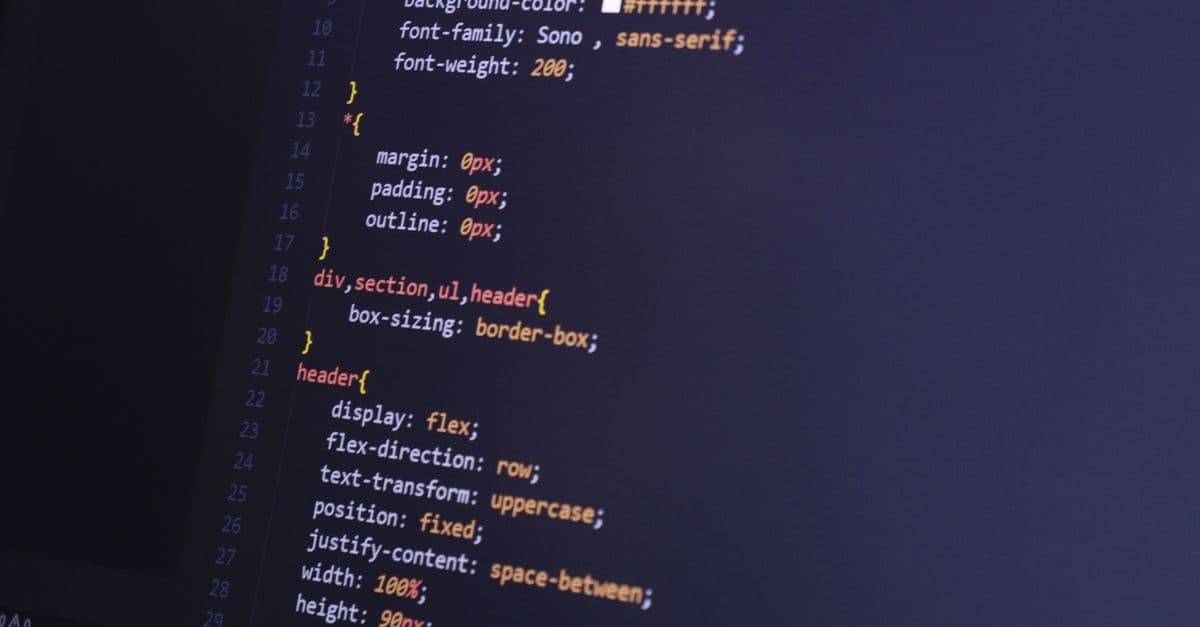
Photo: Bibek ghosh / Pexels
Front-end developers build the part of a website or app a user actually touches: the buttons, layouts, forms, and animations rendered in a browser or on a phone screen. Back-end developers build the machinery behind that screen: the servers, databases, and APIs (application programming interfaces, the rules that let two pieces of software talk to each other) that make the buttons actually do something. Both paths pay well and both are in demand, but they ask for genuinely different skills, different daily habits, and different kinds of patience. This guide breaks down what each job actually looks like day to day, what the U.S. Bureau of Labor Statistics and the 2025 Stack Overflow Developer Survey say about pay, and how to pick a lane without guessing.
What front-end and back-end actually mean
Think of a website like a restaurant. Front-end development is the dining room: the menu design, the table layout, how fast a server brings your food to the table, whether the lighting makes the room feel good. Back-end development is the kitchen: the walk-in fridge, the prep stations, the ticket system that tells the cooks what to make and in what order. A customer never sees the kitchen, but if it breaks down, the dining room experience collapses within minutes.
In code terms, front-end developers write HTML (the structure of a page), CSS (the visual styling), and JavaScript that runs inside the user's browser, usually through a framework like React, Vue, or Svelte. Back-end developers write server-side code, typically in languages like Python, Java, Go, or Node.js, and they design the databases that store everything from user passwords to product inventories. When you click "Add to Cart," front-end code captures that click and back-end code decides whether the item is actually in stock, updates the database, and sends a confirmation back.
Neither role works in isolation. A front-end developer's beautifully designed checkout form is useless if the back-end API it calls returns an error. A back-end developer's flawlessly fast API is invisible if the front-end never displays the result correctly. That interdependence is why many companies hire both roles as separate specialists on the same team, and why a growing number of developers eventually learn to do both.
What a front-end developer's day actually looks like
A front-end developer's morning usually starts with a design file, often from Figma, showing exactly how a new feature should look on desktop and mobile. The first hour is spent translating that static design into a React or Vue component: writing the markup, wiring up state (the data that changes as a user interacts with the page), and making sure spacing and fonts match the design pixel for pixel.
The middle of the day tends to involve cross-browser and cross-device testing. A layout that looks perfect in Chrome on a laptop can break in Safari on an iPhone, especially around CSS Grid, Flexbox, or custom fonts. Front-end developers spend real time in browser DevTools inspecting computed styles, checking the Network tab for slow-loading assets, and running Lighthouse audits to catch performance regressions before they ship.
The afternoon often shifts toward code review and integration. A front-end developer connects their new component to a back-end API, handling loading states, error messages, and edge cases like a slow network or an empty response. Before shipping, they check Core Web Vitals metrics (Google's standardized measures of loading speed, interactivity, and visual stability), because Google has confirmed these metrics are used as a ranking signal in search results, per Google's own documentation on page experience.
What does a front-end developer actually build?
A front-end developer builds anything a user directly interacts with: marketing websites, e-commerce checkout flows, dashboards with live-updating charts, and the UI layer of mobile apps built with React Native or Flutter. The common thread is that every piece of it renders visually and responds to clicks, taps, or keystrokes in real time.
What a back-end developer's day actually looks like
A back-end developer's day tends to start further from a screen and closer to a system diagram. The first task might be designing a new database table, deciding what fields it needs, how it relates to existing tables, and what indexes will keep queries fast as the table grows to millions of rows. Get this wrong early and a query that took ten milliseconds at launch can take ten seconds two years later.
Mid-morning is often spent building or modifying an API endpoint, the URL a front-end app calls to fetch or submit data. This means writing the logic that validates incoming requests, checks whether a user is authenticated, queries the database, and formats a response. Authentication itself is a deep well: back-end developers implement systems like OAuth or session tokens, and a mistake here can expose user data, which is why security review is a standard part of back-end code review.
The back-end job also carries more unpredictable interruptions. A production alert, a spike in error rates, or a slow query choking the database can pull a developer away from planned work with no warning. Back-end teams commonly rotate an on-call schedule so someone is reachable if a critical service goes down outside business hours. That responsibility is part of why back-end roles at senior levels tend to command a pay premium.
What does a back-end developer actually build?
A back-end developer builds APIs, databases, authentication systems, payment processing logic, and the infrastructure that keeps an application running under load. None of it is visible to an end user directly, but all of it determines whether the visible part of the product actually works.
Skills, learning curve, and what "job-ready" really requires
Front-end development has a shorter runway to a first working project because the feedback loop is immediate: change a line of CSS, refresh the browser, see the result. That immediacy makes early learning motivating, but it can also mask gaps. A beginner front-end developer can build something that looks finished while still lacking real skills in state management, accessibility, or performance, all of which employers test for.
Back-end development has a steeper initial curve because the feedback loop is slower and less visual. A new back-end developer might spend a week understanding how relational databases normalize data before writing a single line of application code. The payoff is that back-end concepts, once learned, tend to be more stable over time. SQL, written in the 1970s, still underpins most production databases today, while front-end frameworks have churned through jQuery, Angular.js, React, Vue, and Svelte within about fifteen years.
| Skill Area | Front-End | Back-End |
|---|---|---|
| Core languages | HTML, CSS, JavaScript/TypeScript | Python, Java, Go, Node.js, or similar |
| Primary framework | React, Vue, or Svelte | Express, Django, Spring, or similar |
| Data layer | Client-side state management | SQL/NoSQL databases, schema design |
| Testing focus | Visual regression, cross-browser | Unit tests, load testing, integration tests |
| Deployment concern | Bundle size, CDN caching | Server scaling, uptime, database indexing |
| Typical ramp to job-ready | 4 to 6 months of focused study | 5 to 8 months of focused study |
Table: Core skill differences between front-end and back-end development. Ramp times are general industry estimates and vary by prior experience.
How long does it take to become job-ready in each path?
Most self-taught developers reach an entry-level front-end portfolio in four to six months of consistent, focused study. Back-end development tends to take five to eight months because database design, API architecture, and server security concepts take longer to internalize than visual layout skills. Full-stack competency, covering both, realistically takes eight to twelve months for most learners.
Salary and job market reality in 2026
Salary numbers vary widely by source depending on whether they measure median or average, and whether they include stock compensation. The U.S. Bureau of Labor Statistics reported a median annual wage of $90,930 for web developers in May 2024, the most recent year with finalized data, according to the BLS Occupational Outlook Handbook. That BLS figure covers a broad "web developer" category and tends to run lower than self-reported industry surveys, which skew toward respondents already employed at established tech companies and often include total compensation rather than base salary alone.
The 2025 Stack Overflow Developer Survey, which polled over 49,000 developers globally including more than 7,000 U.S. respondents on compensation, found average U.S. salaries of $145,000 for front-end developers, $175,000 for back-end developers, and $138,000 for full-stack developers, per TechRecruiting's breakdown of the 2025 U.S. data. Mobile developers, a related specialization, actually saw pay decline 8.11% year over year to $170,000, a reminder that even within software engineering, demand and pay shift by specialization and year, not just by front-end versus back-end.
The gap between BLS and Stack Overflow numbers is not a contradiction, it reflects different populations. BLS surveys a nationally representative sample across all experience levels and company sizes, including many roles outside of high-paying tech hubs. Stack Overflow's respondent pool skews toward more experienced, more tech-industry-embedded developers who self-select into taking a detailed technical survey. When comparing salary data for any career decision, check which population a number describes before treating it as your own likely outcome.
| Experience Level | Front-End (avg.) | Back-End (avg.) | Full-Stack (avg.) |
|---|---|---|---|
| Entry (0–1 yr) | Lower end of range | Lower end of range | Lower end of range |
| Mid (2–4 yrs) | Approaching survey average | Approaching survey average | Approaching survey average |
| Senior (5+ yrs) | Above survey average | Above survey average, often highest tier | Above survey average |
Table: Directional salary progression by experience level. Exact entry/mid/senior breakdowns were not published in the cited 2025 Stack Overflow role-specific dataset; treat this as a general trend, not precise figures.
Where each path genuinely wins
Front-end development wins for anyone who wants to see the result of their work immediately and cares about the visual and interactive feel of a product. It's also the more natural entry point for developers who came from design, content, or marketing backgrounds, since CSS and layout intuition often transfers from those fields. Front-end skills are also more portable into adjacent work like UI/UX collaboration and accessibility consulting.
Back-end development wins for developers who enjoy systems thinking, working through database schema tradeoffs, or reasoning about what happens when 10,000 users hit an API at once. It also tends to offer a clearer path into infrastructure-adjacent specializations like DevOps, data engineering, or security engineering, all of which currently command strong demand as companies scale AI features that depend on reliable backend data pipelines.
Full-stack development wins for developers at small companies and startups, where a single engineer is often expected to ship an entire feature from database schema to rendered UI without waiting on a second specialist. It also wins for anyone who wants maximum flexibility to move between teams or projects without being blocked by a narrow skill set.
Where each path genuinely loses
Front-end development's weak spot is the sheer churn of its ecosystem. A framework, build tool, or best practice that was standard three years ago (Create React App, for instance, effectively deprecated in favor of Vite and framework-native tooling) can become outdated fast, so front-end developers spend real ongoing time relearning tools just to keep pace, not just building new skills.
Back-end development's weak spot is the slower, less visible feedback loop, which can be discouraging for beginners who want tangible proof of progress. It also carries more operational responsibility. A poorly indexed database query or an unpatched authentication flaw can bring down a service or expose user data, consequences that are more severe and more stressful than a front-end visual bug.
Full-stack development's weak spot is depth. Employers hiring specifically for "full-stack" sometimes actually want a strong specialist in one area with working knowledge of the other, not equal mastery of both. A full-stack developer who is mediocre at both halves can struggle to compete against a focused specialist for senior roles that require deep expertise in a specific layer.
Common confusions and myths
A common myth is that front-end work is "easier" because the code is visible and the feedback is fast. Visible feedback does not mean simple logic. Building an accessible, performant, responsive interface that works correctly across browsers, screen sizes, and assistive technologies is its own deep discipline, and senior front-end engineers deal with genuinely hard problems in state management and rendering performance at scale.
Another common myth is that back-end developers never touch design or user experience. In practice, back-end architecture decisions, like how fast an API responds or whether data loads in one request instead of five, directly shape what a front-end developer can build and how fast the app feels to a user. The two roles are more coupled than the labels suggest.
A third myth is that full-stack is simply "front-end plus back-end, no downsides." Full-stack developers face real context-switching costs. Moving from reasoning about database indexes to reasoning about CSS specificity within the same afternoon requires a different mental mode each time, and some developers find that switching cost genuinely tiring in a way that specialized, single-domain work is not.
Finally, many beginners assume the career choice is permanent. It isn't. Developers regularly move between front-end, back-end, and full-stack roles across a career, often driven by which team needs headcount, which problems currently interest them, or which skill set the market is paying a premium for that year.
How to actually decide
Start by testing both, not by reading about both. Build one small full-stack project, even something as simple as a to-do list app with a real database behind it. Notice which half of the build you find yourself wanting to spend more time on: tweaking the layout and interactions, or designing how the data is structured and served. That instinct, tested against real code rather than career blog posts, is a more reliable signal than any salary table.
If you genuinely can't tell after building something real, default to full-stack for your first year. It keeps both doors open, it's what most early-stage startups are hiring for, and it gives you direct, first-hand data about which half of the stack energizes you before you commit to specializing.
Frequently asked questions
Q: Is front-end or back-end easier to learn? A: Front-end typically has a faster path to a visible first project because the feedback loop is immediate, browser reload shows the result instantly. Back-end concepts like database schema design and API architecture usually take longer to internalize because the payoff isn't visual, but neither path is "easier" in the sense of requiring less total skill at a senior level.
Q: Which pays more, front-end or back-end? A: According to the 2025 Stack Overflow Developer Survey, back-end developers reported a higher average U.S. salary ($175,000) than front-end developers ($145,000) or full-stack developers ($138,000). The U.S. Bureau of Labor Statistics' broader web developer category reported a lower median of $90,930 in May 2024, reflecting a wider, more representative sample of the workforce.
Q: Can I switch from front-end to back-end later in my career? A: Yes. Many developers move between specializations multiple times across a career. The transition typically takes a few months of focused study to reach working competency, since core programming logic, version control, and testing habits transfer directly between the two domains.
Q: Do I need a computer science degree for either path? A: No. Both fields have well-documented paths through bootcamps, self-study, and on-the-job learning, and hiring in both areas is heavily portfolio and skills-driven. A degree can help at large, degree-screening companies, but it is not a requirement at most employers, especially for front-end roles.
Q: Is full-stack development actually better than specializing? A: It depends on the employer. Startups and small teams often need full-stack generalists who can ship a complete feature alone. Larger, more mature engineering organizations often prefer deep specialists in front-end or back-end because the systems are more complex and the pace of change in tools requires focused expertise to keep up with.
Q: What programming language should I learn first for back-end development? A: There's no single correct answer, but Python and JavaScript (via Node.js) are common starting points because both have large communities, extensive documentation, and let a beginner apply the same language across the front-end and back-end, which lowers the initial learning overhead.
Q: Are front-end frameworks like React still worth learning in 2026? A: Yes. JavaScript remains the most-used programming language among developers, used by 66% of respondents in the 2025 Stack Overflow Developer Survey, and React remains the dominant framework built on top of it, making it a practical foundation for front-end hiring in most markets.
Q: Does AI coding assistance change which path I should choose? A: AI coding tools speed up routine tasks in both domains, from generating boilerplate CSS to scaffolding API endpoints, but they do not replace the underlying judgment: knowing whether a layout is accessible, or whether a database query will scale. Choosing a path based on genuine interest still outperforms choosing based on which one seems more "AI-proof," since both are actively being augmented by the same tools.
Q: How long does it realistically take to get a first job in either field? A: Timelines vary enormously by prior background, but a focused learner building a real portfolio typically spends four to eight months in preparation before landing an entry-level role, roughly matching the front-end and back-end skill-ramp estimates above. Full-stack candidates often take longer to prepare but sometimes interview for a wider pool of open roles once ready.
The takeaway
Front-end and back-end development are not a harder-versus-easier choice, they're a different-kind-of-hard choice. Front-end trades a faster feedback loop and more visual work for a faster-churning toolchain. Back-end trades a slower feedback loop and more operational responsibility for more stable fundamentals and, per current survey data, a higher average salary. The BLS's broader $90,930 median and Stack Overflow's role-specific averages of $145,000 to $175,000 both describe real developers, just different slices of the workforce, so read any salary number in context. Build something real in both directions before committing, because your own instinct about which half of the stack holds your attention will tell you more than any comparison table.
Read next:
Follow new articles
Add SciHub101 to your feed reader to see new science and technology stories.
About the Author
SciHub101 is an independent science and technology publication founded and edited by Buğra Sözeri, a software engineer and app developer based in Türkiye. AI tools assist with drafting and research. Source documentation in the existing archive is uneven, and articles are being reviewed and corrected. The Editorial Team byline identifies editorial responsibility; it does not certify specialist or independent human review. Where we compare products, anything built by our own team is labelled as such — see the editorial guidelines and About page for how corrections and disclosures work.
Related Articles

React vs Vue vs Svelte 2026 — Which Framework to Learn?
Compare React, Vue, Svelte side-by-side. Job market demand, learning curve, salary, real-world usage. Which one to choose.
Web Development Job Market 2026 — Salaries & Careers
Web dev job market 2026: BLS salary data by experience, location, and specialization, plus hiring trends, remote work shifts, and negotiation tactics.
Web Development Portfolio — 5 Projects That Get Hired
5 web development portfolio projects to get hired: beginner to advanced, GitHub best practices, README template, deployment, and recruiter-tested tips.

Complete Web Development Learning Path 2026 Roadmap
6-phase learning roadmap for web development. Timeline, costs, realistic expectations, job prospects. Beginner to employed.
The Best Coding Bootcamps Worth Your Money in 2026: Evaluating Outcomes, Costs, and Job Placements
Coding bootcamps charge $15k–$30k for 12–16 weeks of instruction, promising job placement within 3–6 months. Reality: approximately 65% of graduates land jobs within six months at the salary promised (~$70k–$90k for junior developers). The remaining 35% either do not get hired, get hired at lower salary, or pursue different roles. Success depends entirely on selection: attending a bootcamp with verified 75%+ placement rate and learning in-demand stack (React, Node, Python) has different outcomes than attending an unknown bootcamp and learning a deprecated framework. This article covers how to evaluate bootcamps (audit reviews, outcome data, curriculum, cost structure), the honest reality of job outcomes, the hidden risks (Income Share Agreements, debt burden), alternatives (self-teaching, degree programs), and what realistic post-graduation looks like.

Programming Language Job Market 2026 — Data Analysis
What Stack Overflow, GitHub, and the US Bureau of Labor Statistics actually show about programming language demand: Python and TypeScript lead growth, Java and C# hold enterprise ground, Rust is small but permanent, and pay follows role more than language.