AI Benchmarks Explained: How We Measure Machine Intelligence

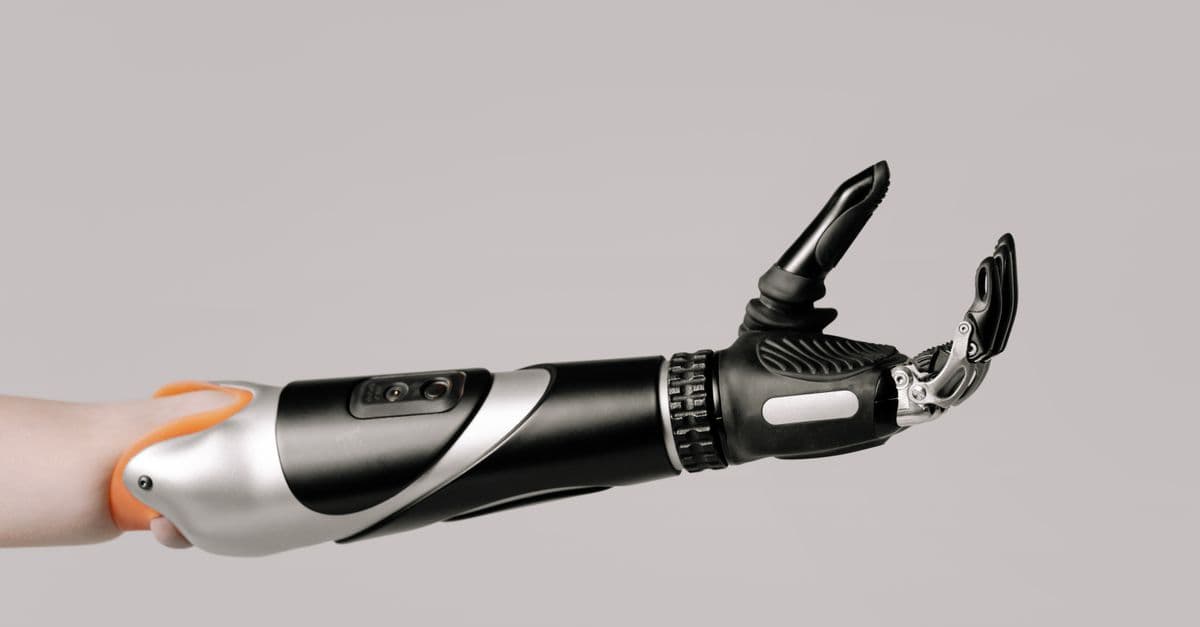
Photo: Tara Winstead / Pexels
An AI benchmark is a fixed set of tasks paired with a scoring rule, so that different models can be compared on the same scale. When OpenAI released GPT-4 in 2023, its technical report listed an 86.4% score on MMLU, a 57-subject exam, and said the model passed a simulated bar exam at around the 90th percentile of test takers. Numbers like these now accompany nearly every model launch. This article explains how benchmarks are built, how their scores are calculated, what the major ones actually test, and how to read a leaderboard without over-reading it.
Key takeaways
- A benchmark measures performance on a specific set of tasks under specific conditions. It is a proxy for capability, not a measure of intelligence in general.
- Scoring rules matter as much as questions. Accuracy, pass@k, and Elo-style ratings each answer a different question and carry different error bars.
- Benchmarks age quickly. Scores on several flagship tests rose by tens of percentage points in a single year, which erases the differences they were built to show.
- Contamination, label errors, judge bias, and format sensitivity can all move a score without any change in real ability.
- The most reliable practice is to use several benchmarks, read the protocol behind each number, and test candidate models on your own task.
What a benchmark actually is
Strip away the leaderboard styling and every benchmark has three parts. A dataset supplies the questions or tasks. A protocol says how the model is prompted: how many worked examples it sees, whether it may use tools, whether it gets one attempt or many. A metric turns the model's outputs into a number. Change any of the three and the score changes, which is why two reports of "the same benchmark" can disagree.
The closest everyday analogy is a driving test. A cone course with parallel parking is a legitimate, repeatable measure of some driving skills, and two drivers can be compared on it fairly. But it does not tell you how someone handles black ice or a four-lane merge. A benchmark is the cone course: standardized on purpose, which is exactly what makes it both useful and narrow.
Benchmarks serve four jobs. They track progress over time, compare models, expose weaknesses, and give outsiders a common language. The trouble starts when a benchmark built for the first job gets used for a fifth: proving that a system is "intelligent." Intelligence, as researchers use the word, is not one measurable quantity. François Chollet argued in his 2019 paper On the Measure of Intelligence that measuring skill alone is insufficient, because unlimited prior knowledge or training data can inflate a system's apparent skill without reflecting an ability to generalize. He proposed defining intelligence as skill-acquisition efficiency, how quickly a system learns new things, rather than how much it can already do.
A short timeline of the benchmarks that matter
The set of benchmarks people cite has shifted as models improved. The table lists the ones this article returns to, with figures from the papers that introduced them.
| Benchmark | Introduced | What it tests | Notable detail from the source |
|---|---|---|---|
| MMLU | 2020 (Hendrycks et al.) | Multiple-choice questions across 57 subjects | Largest GPT-3 beat random chance by almost 20 points on average |
| BIG-bench | 2022 | 204 diverse tasks | Built by 450 authors from 132 institutions |
| HELM | 2022 (Liang et al.) | Multiple metrics across many scenarios | Raised average scenario coverage per model from 17.9% to 96.0% |
| HumanEval | 2021 (Chen et al.) | Writing Python functions from docstrings | Codex solved 28.8%; GPT-3 solved 0% |
| TruthfulQA | 2021 (Lin et al.) | Avoiding common false beliefs | 817 questions; best model 58% truthful versus 94% for humans |
| GPQA | 2023 (Rein et al.) | Graduate-level science questions | 448 questions; PhD experts 65%, skilled non-experts 34% |
| SWE-bench | 2023 (Jimenez et al.) | Resolving real GitHub issues | 2,294 tasks from 12 Python repositories; best model then resolved 1.96% |
| Chatbot Arena | 2024 paper (Chiang et al.) | Human preference in head-to-head chats | Over 240,000 votes at time of the paper |
| Humanity's Last Exam | 2025 | Expert-written hard questions | 2,500 questions across dozens of subjects |
Two patterns stand out. First, each benchmark was introduced because an earlier one had become too easy. MMLU arrived when models were near random chance on it. Humanity's Last Exam arrived because, in its authors' words, LLMs now exceed 90% accuracy on benchmarks like MMLU. Second, the starting scores were low and did not stay that way. SWE-bench's best model resolved under 2% of issues in 2023, and Stanford's 2025 AI Index reports that scores on MMMU, GPQA, and SWE-bench rose by 18.8, 48.9, and 67.3 percentage points respectively over the following year.
The main families, and how each one scores
Multiple-choice knowledge exams: MMLU, GPQA, MMLU-Pro
MMLU poses multiple-choice questions across 57 tasks, from elementary mathematics and US history to law and computer science. The metric is simple accuracy: the share of questions answered correctly. With four answer choices, blind guessing yields about 25%, so anything above that is a signal.
The format is easy to grade automatically, which is why it spread. It also has weaknesses. A model can sometimes eliminate wrong options without understanding the question, and results can swing with how the prompt is worded. MMLU-Pro, from 2024, responded by expanding the choices from four to ten. Its authors report that models score 16% to 33% lower than on the original MMLU, and that sensitivity to prompt variation, tested across 24 prompt styles, dropped from 4-5% on MMLU to about 2%.
GPQA took a different approach to difficulty. Its 448 questions in biology, physics, and chemistry were written by domain experts and validated so that they resist lookup. Experts with or pursuing PhDs in the field reached 65% accuracy, or 74% after discounting clear mistakes they identified in retrospect. Highly skilled non-experts with unrestricted web access and over 30 minutes per question reached only 34%. At release, the strongest GPT-4-based baseline scored 39%. That human-versus-model gap is what made it a popular target, and, as the next section notes, it did not stay open for long.
Code: HumanEval and SWE-bench
Code benchmarks have the cleanest ground truth in the field: the code either passes the tests or it does not. HumanEval, released with OpenAI's Codex paper in 2021, asks a model to complete a Python function from its docstring, then runs hidden unit tests. Its signature metric is pass@k: the probability that at least one of k sampled attempts passes. Codex solved 28.8% of problems on a single attempt, and the paper reports that generating 100 samples per problem raised the solve rate to 70.2%. That difference shows why the protocol matters: "28.8%" and "70.2%" came from the same model on the same test.
SWE-bench moved from textbook exercises to real maintenance work. Each of its 2,294 tasks is drawn from a real GitHub issue and the pull request that fixed it, across 12 popular Python repositories. A model must edit the codebase so the project's tests pass, which often means coordinating changes across multiple functions and files. Because some tasks were ambiguous or had flawed tests, a human-filtered subset of 500 instances called SWE-bench Verified was created in collaboration with OpenAI. Human annotators reviewed each instance to confirm that the problem description was clear, the test patches were correct, and the task could be solved from the information provided.
Human preference: Chatbot Arena
Static tests can be memorized. Chatbot Arena sidesteps that by asking people to write their own prompts, compare two anonymous responses, and vote for the better one. The platform aggregates pairwise votes into rankings. The authors report that crowdsourced votes agree well with expert raters.
The strength is that prompts are fresh and reflect what people actually ask. The weakness is that voters reward what looks good in a quick read, such as length and formatting, so a ranking measures preference, not correctness. Published analyses of how style and private-testing access can distort Arena results are summarized in the failure-modes section below.
LLM-as-judge: MT-Bench
Open-ended answers have no single correct string, so another model often grades them. A 2023 paper by Lianmin Zheng and colleagues introduced MT-Bench, a multi-turn question set, and tested how well strong judges like GPT-4 match human preferences. They found agreement of over 80%, which the authors describe as the same level of agreement humans have with each other. They also documented position bias, verbosity bias, self-enhancement bias, and limited reasoning ability. In practice, an LLM judge is a fast and cheap approximation that needs periodic checking against human graders.
Abstract reasoning: ARC-AGI
The Abstraction and Reasoning Corpus, introduced by Chollet in 2019, was designed to test generalization instead of accumulated knowledge. The ARC Prize describes it as built on a principle of "easy for humans, hard for AI," using core knowledge priors that avoid cultural content such as written English, so that humans and machines are compared on similar footing. It measures how efficiently a system adapts to unfamiliar tasks, which is a different thing from how much it has memorized.
Broad suites: BIG-bench and HELM
Suites try to cover many abilities at once. BIG-bench collected 204 tasks from 450 authors at 132 institutions and found that performance and calibration both improve with scale but are poor in absolute terms. HELM, from Stanford's Center for Research on Foundation Models, argued that models were being tested inconsistently. Before HELM, models had been evaluated on an average of 17.9% of its core scenarios. It evaluated 30 models across 42 scenarios using seven metrics: accuracy, calibration, robustness, fairness, bias, toxicity, and efficiency, which raised coverage to 96.0%. The lesson was that accuracy alone leaves out most of what a deployer cares about.
How the numbers are computed
Reading a benchmark table gets easier once you can reproduce the arithmetic behind it. Three calculations cover most cases.
Accuracy and its error bars
Accuracy looks exact, but it is an estimate drawn from a finite test set. The standard error of a measured proportion p over n questions is the square root of p times (1 minus p) divided by n, and a 95 percent confidence interval is roughly plus or minus 1.96 standard errors.
Take a model that scores 80% on a 500-question benchmark. The standard error is the square root of (0.8 × 0.2 / 500), about 1.8 points, so the interval is roughly plus or minus 3.5 points. A rival scoring 82% on the same questions is not clearly better. On a 164-problem test of the size HumanEval is commonly cited at, the same 80% carries an interval near plus or minus 6 points. Many leaderboard differences of one or two points fall inside that noise. Our explainers on what a confidence interval really means and why sample size changes confidence cover the statistics in more depth.
pass@k
If you sample n attempts per problem and c of them pass, the unbiased estimate of pass@k from the Codex paper is 1 minus the number of ways to choose k attempts from the failures, divided by the number of ways to choose k attempts from all n. A worked example: generate 10 samples for a problem and find that 3 pass. Then pass@1 is 1 − 7/10 = 0.30. For pass@5, count the ways to pick five attempts from the seven failures, which is 21, and divide by the ways to pick five from ten, which is 252. That gives 1 − 21/252, about 0.92. The same problem looks hard at k=1 and nearly solved at k=5, which is why a report that does not state k is incomplete.
Elo-style ratings
Arena-style rankings convert head-to-head results into a rating. The classic Elo formula shows how a rating gap maps to a win probability: the chance that A beats B is 1 divided by (1 + 10 raised to the power of (B's rating minus A's rating) / 400). A 100-point gap works out to about a 64% chance of winning a single comparison. So a model 30 points ahead of another is ahead in a mild statistical sense, and voters will still prefer the lower-rated model in nearly half of matchups. Rank order on such a leaderboard overstates how different the top entries are.
Why scores rise fast, then stop meaning much
A benchmark is informative only while models score well below its ceiling. As models approach it, three things happen. Differences between top models shrink to within the error bars computed above. Residual errors in the questions themselves start to dominate the remaining gap. And the field moves on to something harder.
The AI Index reports this compression directly. In its 2025 report, the gap between the top-ranked and 10th-ranked models narrowed from 11.9% to 5.4% in a year, and the top two were separated by 0.7%. MMLU is the standard example of saturation, with frontier systems above 90% according to the authors of Humanity's Last Exam. The successors are built to restore headroom: MMLU-Pro adds answer choices, GPQA raises the expertise bar, SWE-bench Verified tightens the task definitions, and Humanity's Last Exam collects 2,500 expert-written questions.
This life cycle has a practical consequence. Any benchmark chart carries an implicit expiration date, and a score that discriminated well in 2023 may tell you almost nothing now. When you see a table, check whether the benchmark still has room between the best score and the maximum.
Where scores go wrong
A full catalog of failure modes lives in our companion piece, Why AI Benchmarks Can Be Misleading. The short version, with the evidence most relevant to reading a score:
Contamination. If test questions appear in training data, the model may have memorized the answers. Oscar Sainz and colleagues argue that the most serious form occurs when a model is trained on a benchmark's test split and then evaluated on it, and that the full extent of the problem is unknown and hard to measure. One careful test: researchers wrote a fresh set of grade-school math problems called GSM1k to match the public GSM8K and found leading models dropped by up to 8%. They reported a relationship between a model's likelihood of generating GSM8K examples and the size of its drop (Spearman's r² of 0.36), concluding that some models may have partially memorized GSM8K. Many frontier models showed minimal signs of overfitting, so the effect is uneven, not universal. For the data-handling side of this problem, see why data leakage breaks AI evaluations and why training and test data must be separated.
Label errors. The questions themselves can be wrong. Gema and colleagues re-annotated 5,700 MMLU questions across all 57 subjects, called MMLU-Redux, and estimated that 6.49% of MMLU questions overall contain errors. In the Virology subset, they reported that 57% of the analyzed questions contained errors. When a ceiling is 94% rather than 100%, a score of 90% looks closer to the limit than it is.
Format and prompt sensitivity. The MMLU-Pro authors measured 4-5% score sensitivity to prompt wording on MMLU. A gap between two models of that size could come from the prompt alone.
Judge bias. LLM judges favor longer answers, answers presented in a particular position, and answers resembling their own style, per the MT-Bench paper.
Weak baselines. "Human-level" depends on which humans. GPQA's design makes this visible: PhD experts scored 65% while skilled non-experts, given the web and half an hour, scored 34%. A headline like "beats humans" means something different against each group. The same applies to professional exams. GPT-4's technical report says it scored 298 out of 400 on a simulated Uniform Bar Exam, about the 90th percentile, but a percentile always refers to a specific pool of test takers, and an exam score is not a measure of how someone would perform as a lawyer.
Optimizing for the number. When a score drives purchasing decisions and press coverage, developers have reasons to tune toward it. This is Goodhart's Law: when a measure becomes a target, it stops being a good measure. It does not require bad faith, only incentives.
How to read a benchmark table
When you meet a score, a handful of questions separate useful from misleading. The table gives the ones worth asking every time.
| Question | Why it matters | Example |
|---|---|---|
| Which version and which subset? | Variants differ in difficulty and cleanliness | SWE-bench (2,294 tasks) versus SWE-bench Verified (500) |
| What was the protocol? | Shots, tools, retries, and sampling change scores | HumanEval pass@1 of 28.8% versus pass@100 of 70.2% |
| How many questions? | Small sets have wide error bars | About plus or minus 3.5 points at n=500 and 80% accuracy |
| Is there headroom? | Near the ceiling, differences are noise | MMLU above 90% for frontier models |
| Who reported it? | Lab-reported scores use lab-chosen settings | Compare to independent runs when available |
| Were contamination checks run? | Memorization inflates scores | GSM1k drops of up to 8% for some models |
| Who is the human baseline? | Experts and crowdworkers differ widely | GPQA: 65% for experts versus 34% for skilled non-experts |
If a vendor's chart omits most of these, treat the number as marketing. If an independent group reproduces it with a stated protocol, give it more weight. For a ranked comparison of current systems that applies this skepticism, see our comparison of the best AI models.
Matching the benchmark to the question
No single benchmark answers every question, so the right choice depends on what you are trying to learn.
| If you want to know... | Look at... | Keep in mind |
|---|---|---|
| General knowledge and reasoning | MMLU-Pro, GPQA, Humanity's Last Exam | MMLU itself is saturated for frontier models |
| Coding on isolated problems | HumanEval-style tests, pass@k | Easy to overfit; check k |
| Software maintenance ability | SWE-bench Verified | Depends on scaffolding and tools around the model |
| Which answers people prefer | Chatbot Arena | Measures preference, not accuracy |
| Truthfulness | TruthfulQA | Small set; one aspect of honesty |
| Adaptation to novel puzzles | ARC-AGI | Tests generalization, a narrow slice |
| Breadth and side effects | HELM | Reports calibration, bias, toxicity, efficiency |
| Your own product | A custom evaluation set | Public scores cannot see your data or users |
That last row is the one that matters most to anyone deploying a model. A public leaderboard measures a model on someone else's questions. Whether it handles your documents, your customers' phrasing, and your failure costs requires an evaluation built from your own data. We cover how to build one in LLM Evaluation Explained.
What benchmarks cannot tell you
Even a clean, uncontaminated, well-designed benchmark leaves large questions open.
Reliability. An average hides the distribution. A model at 85% overall may be near-perfect on some question types and weak on others, and benchmarks rarely say which. For professional use, the failure cases matter more than the mean.
Understanding. Passing a test does not show the model reasons the way a person would. A system can reach a right answer through shortcuts that fail on slightly different inputs. Chollet's distinction between skill and skill-acquisition efficiency captures this: a high score on a known task type says little about how the system would handle a new one.
Long-horizon work. Most benchmarks consist of short, self-contained tasks. Real jobs involve hours of ambiguity, changing requirements, and recovery from mistakes. SWE-bench moved toward this by using real repositories, but a pass/fail test suite still captures a small slice of what engineering involves.
Safety and values. Truthfulness benchmarks like TruthfulQA show one concrete failure: its authors found the largest models were generally the least truthful in their original tests, a reminder that more capable does not automatically mean more honest. Alignment is covered in AI Safety and Alignment Explained.
What this means
Benchmarks are measuring instruments, and like any instrument they have a range, a precision, and conditions under which they fail. A bathroom scale that reads to the nearest pound is fine for tracking your weight over a month and useless for weighing letters. In the same way, MMLU was a useful ruler when models scored in the 40s and is a blunt one now that they score above 90. Treating each score as a measurement with error bars, taken under a stated protocol, on a test that has an expiration date, makes most of the confusion in AI headlines go away.
The better habit is to use benchmarks the way a careful buyer uses specifications: to narrow the field, not to pick the winner. Run the shortlisted models on your own tasks, watch how they fail as well as how often they succeed, and revisit the choice when the models or the benchmarks change.
FAQ
Q: What is an AI benchmark? A: It is a fixed set of tasks with a scoring rule, used to compare models on a common scale. Every benchmark has a dataset, a protocol that specifies how the model is prompted, and a metric such as accuracy, pass@k, or an Elo-style rating. Change any of the three and the score can change.
Q: Which AI benchmarks are most widely used? A: MMLU for broad knowledge, GPQA for graduate-level science, HumanEval and SWE-bench for coding, Chatbot Arena for human preference, and newer tests such as MMLU-Pro and Humanity's Last Exam as older ones saturate. Which ones are informative changes over time, so check whether frontier models are already near the ceiling.
Q: What does pass@k mean? A: It is the probability that at least one of k sampled attempts at a problem passes the tests. The Codex paper reported 28.8% on HumanEval for one attempt and 70.2% when 100 samples were generated per problem. A score without its k is not comparable to one with a different k.
Q: What is benchmark contamination? A: It happens when a benchmark's test questions appear in a model's training data, which inflates scores without real capability gain. Researchers who built a fresh grade-school math set called GSM1k found some leading models scored up to 8% lower than on the public GSM8K, suggesting partial memorization in some cases.
Q: Why do benchmark scores stop being useful over time? A: Models improve until they cluster near the maximum score, which is called saturation. Stanford's 2025 AI Index reports that scores on MMMU, GPQA, and SWE-bench rose by 18.8, 48.9, and 67.3 percentage points in a year, and that the gap between the top and tenth-ranked models narrowed to 5.4%.
Q: Does a high benchmark score mean a model is reliable for my work? A: Not by itself. A score averages across many question types, carries statistical error, and may reflect contamination or a favorable protocol. Public benchmarks cannot see your data or your users, so test shortlisted models on a representative sample of your own tasks.
Q: Can I trust LLM-as-judge scores? A: With caution. The MT-Bench study found strong judges like GPT-4 agreed with human preferences over 80% of the time, similar to agreement between humans, but also documented position, verbosity, and self-enhancement biases. Spot-check judge scores against human graders before relying on them.
Sources
- Hendrycks, D., et al. (2020). Measuring Massive Multitask Language Understanding. ICLR 2021.
- Wang, Y., et al. (2024). MMLU-Pro. NeurIPS 2024 Datasets and Benchmarks Track.
- Gema, A. P., et al. (2024). Are We Done with MMLU?
- Rein, D., et al. (2023). GPQA: A Graduate-Level Google-Proof Q&A Benchmark.
- Chen, M., et al. (2021). Evaluating Large Language Models Trained on Code.
- Jimenez, C. E., et al. (2023). SWE-bench: Can Language Models Resolve Real-World GitHub Issues? ICLR 2024. See also the SWE-bench Verified page.
- Chiang, W.-L., et al. (2024). Chatbot Arena: An Open Platform for Evaluating LLMs by Human Preference.
- Zheng, L., et al. (2023). Judging LLM-as-a-Judge with MT-Bench and Chatbot Arena. NeurIPS 2023.
- Liang, P., et al. (2022). Holistic Evaluation of Language Models. Transactions on Machine Learning Research.
- Srivastava, A., et al. (2022). Beyond the Imitation Game (BIG-bench).
- Lin, S., Hilton, J., and Evans, O. (2021). TruthfulQA. ACL 2022.
- Phan, L., et al. (2025). Humanity's Last Exam.
- Zhang, H., et al. (2024). A Careful Examination of Large Language Model Performance on Grade School Arithmetic. NeurIPS 2024 Datasets and Benchmarks Track.
- Sainz, O., et al. (2023). NLP Evaluation in Trouble: On the Need to Measure LLM Data Contamination for Each Benchmark. EMNLP 2024 Findings.
- Chollet, F. (2019). On the Measure of Intelligence, and the ARC Prize overview of ARC-AGI.
- OpenAI (2023). GPT-4 Technical Report.
- Stanford HAI (2025). AI Index Report 2025.
Read next:
Follow new articles
Add SciHub101 to your feed reader to see new science and technology stories.
About the Author
SciHub101 is an independent science and technology publication founded and edited by Buğra Sözeri, a software engineer and app developer based in Türkiye. AI tools assist with drafting and research. Source documentation in the existing archive is uneven, and articles are being reviewed and corrected. The Editorial Team byline identifies editorial responsibility; it does not certify specialist or independent human review. Where we compare products, anything built by our own team is labelled as such — see the editorial guidelines and About page for how corrections and disclosures work.
Related Articles
Advanced Prompt Engineering: Techniques That Actually Work
Beyond 'be clear and specific': the advanced prompt engineering techniques that hold up in published tests, and the popular advice that does not.

John McCarthy: Founding Father of Artificial Intelligence
McCarthy coined 'artificial intelligence', organized the Dartmouth Summer Research Project, and developed Lisp. He shaped AI's early direction.

How AI Models Are Trained: The Full Pipeline Explained
Training a large language model is not a single act — it is a five-stage industrial process that begins with petabytes of scraped text, passes through weeks of GPU computation consuming millions of dollars of electricity, and ends with a model that can hold a coherent conversation. Each stage has a specific job, a distinct failure mode, and a measurable cost. Here is how the whole pipeline works, from raw data to deployed product.
What Is Generative AI and How Is It Changing Industries?
Generative AI is the class of machine learning systems that produce new content — text, images, audio, video, code, or molecular structures — rather than classifying or predicting from existing data. It is not a single technology but a family of model architectures sharing one property: trained on enough examples, they can synthesize plausible new outputs in the same domain. Understanding what separates generative from conventional AI explains both why the technology spread so quickly and where its real limits lie.

AI Training vs. Inference: What Actually Happens When AI Learns and Thinks
Training and inference are two fundamentally different computational processes. Understanding the distinction explains most of how AI systems work and cost.
AI Reasoning and Chain of Thought: How Models Learn to Think Step by Step
Chain-of-thought prompting and reasoning models have changed what language models can solve. Here is the evidence on why writing out steps helps, how it is trained now, and where the steps stop being trustworthy.