Countries with the Highest Gender Equality (2025 Ranked)
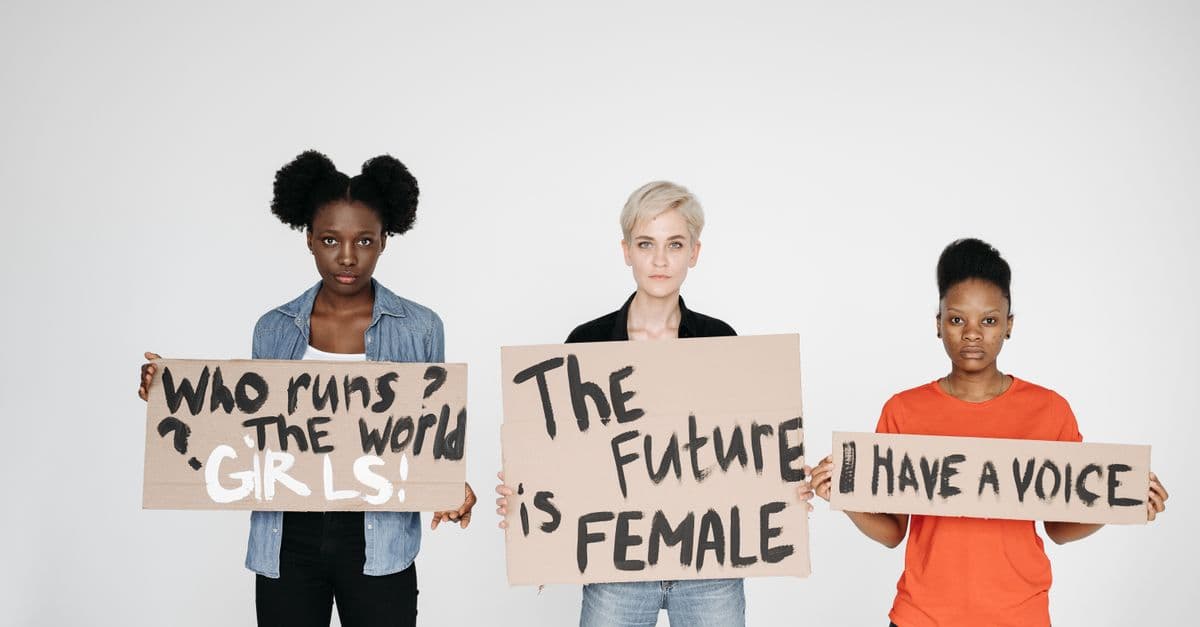
Photo: Pavel Danilyuk / Pexels
The World Economic Forum's Global Gender Gap Index measures the gap between women and men across four dimensions: economic participation and opportunity, educational attainment, health and survival, and political empowerment. A score of 1.0 represents full equality; 0.0 represents total inequality. In 2024, the global average score is 0.685 — meaning 68.5% of the gender gap has been closed. At current rates of progress, the WEF estimates the remaining gap will take approximately 134 years to close. The most lagging dimension is political empowerment: women hold roughly 26% of parliamentary seats globally and lead fewer than 12 countries as heads of state or government.
Where this data comes from
The gender equality rankings and indices in this article come from the World Economic Forum's Global Gender Gap Report 2024, published annually since 2006. The WEF compiles data on 146 countries from international organisations including the International Labour Organisation (ILO), UNESCO, the World Health Organisation (WHO), and the Inter-Parliamentary Union (IPU), combined with results from the WEF's own Executive Opinion Survey of business leaders. The data reflects 2023 figures with updates for 2024. The report explicitly notes that approximately 55 countries are not included due to unavailable data, primarily small island nations and a handful of authoritarian states with weak statistical systems.
How the Global Gender Gap Index works — and what it measures
The WEF's methodology, first applied in 2006, measures the gap between men and women — not women's absolute status. This distinction matters. A country where both women and men have equal access to poor healthcare scores well on the health dimension; a country where women have excellent healthcare but still face a gap relative to men scores lower than that absolute status would suggest. The index is specifically a measure of equality, not of women's welfare in isolation.
The four sub-indexes weight differently in practice:
Economic participation and opportunity (40% weight): Tracks female labour force participation rates, wage equality for similar work, female legislators/senior officials/managers, and female professional and technical workers.
Educational attainment (20% weight): Tracks literacy rates and enrolment in primary, secondary, and tertiary education.
Health and survival (20% weight): Tracks sex ratio at birth (capturing sex-selective abortion practices) and healthy life expectancy.
Political empowerment (20% weight): Tracks women in parliament, women as ministers, and years with a female head of state over the past 50 years. This dimension has the widest global gaps.
The WEF publishes the report annually covering 146 countries. Countries not covered (primarily small island nations and several authoritarian states) are not ranked. The data comes from international organisations (ILO, UNESCO, WHO, IPU) and the WEF's Executive Opinion Survey.
Source: WEF Global Gender Gap Report 2024 — weforum.org/publications/global-gender-gap-report-2024
Global Gender Gap Index 2024: the full ranking
(Score 0–1, higher = more equal; WEF Global Gender Gap Report 2024)
| Rank | Country | Score | Economic | Education | Health | Political |
|---|---|---|---|---|---|---|
| 1 | Iceland | 0.935 | 0.889 | 0.997 | 0.966 | 0.874 |
| 2 | Finland | 0.875 | 0.827 | 0.999 | 0.980 | 0.745 |
| 3 | Norway | 0.875 | 0.826 | 0.997 | 0.980 | 0.718 |
| 4 | New Zealand | 0.856 | 0.777 | 1.000 | 0.979 | 0.664 |
| 5 | Sweden | 0.816 | 0.781 | 1.000 | 0.979 | 0.499 |
| 6 | Nicaragua | 0.811 | 0.655 | 0.995 | 0.980 | 0.612 |
| 7 | Germany | 0.815 | 0.751 | 0.995 | 0.978 | 0.536 |
| 8 | Namibia | 0.807 | 0.750 | 0.937 | 0.977 | 0.563 |
| 9 | Lithuania | 0.804 | 0.786 | 0.998 | 0.979 | 0.453 |
| 10 | Belgium | 0.800 | 0.732 | 0.996 | 0.977 | 0.496 |
| 15 | United Kingdom | 0.792 | 0.735 | 0.993 | 0.979 | 0.461 |
| 20 | France | 0.784 | 0.710 | 0.999 | 0.980 | 0.448 |
| 25 | Canada | 0.770 | 0.731 | 1.000 | 0.979 | 0.349 |
| 30 | United States | 0.748 | 0.757 | 0.985 | 0.975 | 0.278 |
| 40 | Italy | 0.705 | 0.628 | 0.993 | 0.980 | 0.220 |
| 50 | Japan | 0.663 | 0.604 | 0.968 | 0.977 | 0.103 |
| 60 | South Korea | 0.652 | 0.570 | 0.975 | 0.978 | 0.145 |
| 70 | China | 0.680 | 0.706 | 0.955 | 0.926 | 0.133 |
| 80 | Brazil | 0.726 | 0.637 | 0.993 | 0.979 | 0.295 |
| 100 | India | 0.641 | 0.386 | 0.964 | 0.910 | 0.264 |
| 110 | Saudi Arabia | 0.616 | 0.334 | 0.999 | 0.963 | 0.170 |
| 120 | Egypt | 0.601 | 0.335 | 0.958 | 0.968 | 0.142 |
| 140 | Pakistan | 0.576 | 0.323 | 0.809 | 0.970 | 0.202 |
| 146 | Sudan | 0.571 | 0.249 | 0.770 | 0.968 | 0.098 |
Source: WEF Global Gender Gap Report 2024 benchmarking data — weforum.org
A brief history: from suffrage to structural equality
Measuring gender equality as a matter of policy and international comparison is a relatively recent project. The concept of women as citizens with equal legal standing — the most basic precondition for measurable gender equality — is itself less than a century old in most countries.
The women's suffrage movement achieved its first national legislative victory in New Zealand in 1893, followed by Australia (1902), Finland (1906), Norway (1913), Denmark (1915), Russia (1917), and then most of Western Europe and North America after World War I (1918–1920). Switzerland did not grant full women's suffrage until 1971; some Swiss cantons resisted until 1990 under court order. Saudi Arabia granted women the right to vote in municipal elections only in 2015.
Legal equality in employment came later and in layers. The US Equal Pay Act was signed in 1963; the Civil Rights Act of 1964 prohibited sex discrimination in employment. The European Economic Community's Equal Pay Directive came in 1975. Most developed countries formalised anti-discrimination law in the 1970s and 1980s — but formal legal equality and substantive economic equality are different things, as the persistent gender pay gap demonstrates.
The United Nations' Convention on the Elimination of All Forms of Discrimination Against Women (CEDAW), often called an international bill of rights for women, was adopted in 1979 and has been ratified by 189 countries. Notably, the United States has signed but not ratified CEDAW — making it one of only seven countries (alongside Iran, Somalia, Sudan, South Sudan, Tonga, and Palau) that have not done so.
The Beijing Platform for Action (1995) marked a major shift toward concrete gender equality targets at the international level, establishing a framework that influenced the WEF's Gender Gap Index methodology when it was introduced in 2006.
Source: Women's suffrage history — International IDEA; CEDAW — UN Women; WEF Global Gender Gap Report 2006 inaugural publication
Why Nordic countries lead in gender equality
The dominance of Nordic and Northern European countries in the top gender equality rankings is not coincidental — it reflects a specific policy architecture that has evolved over decades. The common elements: parental leave systems that incentivise male caregiving through non-transferable paternity quotas; universal, subsidised childcare from infancy that enables continuous female workforce participation; pay transparency requirements that place the burden of proof on employers to demonstrate equal pay rather than on workers to prove discrimination; and political representation systems that have achieved or approached gender parity in legislatures. Iceland's top ranking reflects not any single policy but the combination of all of these. Notably, these are not wealthy-specific advantages — Iceland's GDP per capita is below Luxemburg and Switzerland — nor are they high-human-development-only advantages. This policy architecture is theoretically available to any country with the political will to enact it. The absence of similar policies in equally wealthy countries like South Korea and Japan suggests that the Nordic model is not inevitable but chosen.
Iceland: 15 years at the top
Iceland has ranked first on the WEF Gender Gap Index every year since 2009 — a 15-year streak that reflects a specific combination of policy design, political continuity, and social norm reinforcement that no other country has fully replicated.
The 1975 women's strike. Iceland's gender equality story has a precise cultural starting point: October 24, 1975, when approximately 90% of Icelandic women refused to work — in paid employment, in the home, or in any other capacity — for one day. The strike, known as the Kvennafrídagurinn (Women's Day Off), paralysed the country. Fish factories shut down because women refused to work. Theatres closed. Men brought children to work because women refused childcare duties. The dramatic visibility of women's unpaid and paid labour created a national memory that subsequent generations have pointed to as the origin of Iceland's sustained commitment to gender equality.
Equal pay certification. In 2018, Iceland became the first country to make it illegal for employers to pay women less than men for equal work — and crucially, placed the burden of proof on employers rather than employees. Companies with 25 or more employees must obtain government certification that their pay practices are gender-neutral. The certification requires documented pay analysis across job categories. This reversal of the burden of proof is the key innovation: instead of women having to prove they are paid less, companies must prove they are paying equally.
Parental leave design. Iceland's parental leave system divides the entitlement into three portions: three months reserved for the mother, three months reserved for the father, and three months available to either parent. The father's months are non-transferable — if not used, they are lost. This design means that fathers face an economic incentive to take substantial parental leave, normalising male caregiving and reducing the career penalty that women in most countries face for taking extended leave. As of 2024, Icelandic fathers take an average of three months of parental leave — among the world's highest.
Women in politics. Iceland has had two female prime ministers — Jóhanna Sigurdardóttir (2009–2013), the world's first openly gay head of government, and Katrín Jakobsdóttir (2017–2024). Women hold 47.6% of parliamentary seats. Multiple Icelandic cities have female mayors. This level of political representation is not merely symbolic — it means women design the social policies that affect women's lives, which is a measurable advantage that most countries cannot claim.
Education reversal. Icelandic women significantly outnumber men in university education — approximately 67% of university graduates are women. This reversal of the historical educational gender gap — which for most of history favoured men — has translated into professional advancement that continues to close economic gaps, though occupational segregation remains.
Source: WEF Global Gender Gap Report 2024; Iceland equal pay certification — Jafnlaunavottun.is; Iceland parental leave policy — Directorate of Labour
Finland and Norway: the Nordic model's depth
Finland (0.875, rank 2) and Norway (0.875, rank 3) cluster closely behind Iceland, reflecting shared but not identical policy architectures.
Finland's political record is exceptional. In 2019, Sanna Marin became Prime Minister at age 34 — then the world's youngest sitting head of government — and led a coalition cabinet in which four of the five coalition party leaders were women. Finland introduced women's suffrage in 1906 — the first European country to do so — which means its political equality tradition is over a century old.
Norway's approach emphasises corporate board quotas. In 2003, Norway became the first country to require that 40% of the board members of publicly traded companies be women. The law, initially controversial, has been largely effective at its stated goal; female board representation in Norwegian public companies is now approximately 42%. Norway's quota system influenced subsequent legislation in France, Germany, Belgium, and several other European countries.
Norway also pioneered the non-transferable parental leave quota for fathers — the "daddy quota" — introduced in 1993, which has been extensively studied and found to increase fathers' parental leave uptake with measurable effects on women's subsequent career earnings.
Source: Norwegian corporate board quota — Ministry of Children and Families Norway; Finland parental leave reform — Finnish Institute for Health and Welfare; Sanna Marin biography — Finnish government records
Nicaragua's anomaly: political participation without full equality
Nicaragua ranks 6th globally — higher than any Western European country except Germany — which surprises most people encountering the ranking for the first time. A country with relatively low GDP, ongoing political repression under the Ortega government, and significant economic inequality ranking above the Netherlands, Ireland, and New Zealand requires explanation.
The explanation is primarily one of the index's four sub-dimensions: political empowerment. Nicaragua's National Assembly has 55% female membership — the third-highest female parliamentary representation in the world as of 2024. Nicaragua's political system under the Sandinista FSLN party has actively promoted women's political representation since the 1980s, following the party's Marxist-feminist ideological framework. The Ortega government has maintained this as a visible political priority even as it has suppressed political opposition of other kinds.
This produces a methodological paradox: the WEF index captures formal equality metrics but cannot fully capture whether political representation under an authoritarian framework translates into substantive women's empowerment when dissenting voices — including feminist organisations critical of the Ortega government — are suppressed.
Nicaragua's economic participation score (0.655) and its political context illustrate a broader limitation of composite indices: high scores on one heavily weighted dimension can mask significant problems in others, and formal representation metrics cannot capture quality of political freedom.
Japan and South Korea: wealthy world laggards
Japan (0.663, rank 118 in 2024) and South Korea (0.652) rank dramatically lower than any comparable wealthy nation. Both countries have female university graduation rates that equal or exceed men's, advanced healthcare systems, and high human development scores generally — yet their gender equality scores are dragged down sharply by economic participation and political empowerment.
Japan's structural barriers. Women hold approximately 10% of parliamentary seats in Japan's House of Representatives — below the global average — despite extensive pledges from successive governments to increase this figure. The "womenomics" programme launched by Prime Minister Abe in 2013 targeted 30% female corporate leadership by 2020; the actual figure reached approximately 13% by that date. The underlying barriers are structural: Japanese corporate culture has historically demanded long working hours and physical presence as signals of commitment, which is incompatible with primary caregiving responsibilities. Childcare infrastructure, while improving, has been insufficient in urban areas, forcing women who take maternity leave — which is legally generous — to face professional displacement when they return to work.
Japan's "M-curve" — the pattern of female labour force participation that drops sharply around age 25–35 during the marriage and childbearing years and partially recovers afterward — has been a defining feature of the labour market for decades. Abenomics reforms made partial progress: female labour force participation increased from approximately 63% to 74% between 2012 and 2023, but gains have been concentrated in part-time and irregular employment rather than full-time career tracks.
South Korea's compounded gap. South Korea's gender wage gap is approximately 31% — the largest among OECD member countries. Female political representation is approximately 19% in the National Assembly. Cultural expectations around marriage, domestic labour, and childrearing remain deeply embedded: the social expectation that women will manage the household and be primary caregivers is stronger than in comparable wealthy nations, and the absence of comprehensive, affordable childcare reinforces this division.
South Korea's very low total fertility rate (0.72 in 2023 — the lowest of any OECD country) is increasingly linked in policy discussions to gender inequality. Evidence from multiple countries suggests that societies where women bear significant career and economic costs for having children have lower fertility rates — and that countries which have reduced those costs through childcare provision and parental leave design have partially recovered theirs.
Source: Japan women in parliament — Inter-Parliamentary Union (IPU) data 2024; South Korea gender wage gap — OECD Employment Outlook 2024; Korea fertility rate — Statistics Korea 2024
India: economic participation as the critical gap
India's 0.641 score (rank 129 in 2024) is primarily driven down by its economic participation score of 0.386 — one of the world's lowest for a large country. India's female labour force participation rate of approximately 24% is among the lowest globally, a figure that reflects:
Marriage and caregiving norms. Indian social structures across most communities assign primary domestic and caregiving responsibilities to women and create social and familial pressure to withdraw from formal employment after marriage. This norm is stronger in rural areas but persists across urban settings.
Safety concerns. Fear of harassment and violence constrains women's economic mobility in many regions, limiting their willingness or ability to commute, work late, or work in environments where they are isolated. This is a structural economic constraint, not merely a cultural preference.
Educational improvement not translating to employment. India's educational attainment score has improved significantly as school enrolment gaps between girls and boys have narrowed. But higher female educational attainment has not produced proportional increases in labour force participation — suggesting that the barrier is not primarily educational.
India's political empowerment score (0.264) is above what its economic score would predict, reflecting historical female leadership at the national level: Indira Gandhi served as Prime Minister from 1966–1977 and 1980–1984; Droupadi Murmu became President in 2022; multiple state chief ministers have been women. However, women's parliamentary representation at the national level remains below 15%.
The IMF has estimated that closing India's female employment gap would increase GDP by approximately 27%. India's women's workforce participation being at 24% — in a country where women are the majority of agricultural labour but often not counted in formal employment statistics — represents both a human rights gap and one of the largest unrealised economic opportunities globally.
Source: WEF Global Gender Gap 2024 India analysis; IMF Working Paper on gender and economic growth 2018; India female labour force participation — ILO ILOSTAT 2024
What policies actually move the needle
Cross-country evidence from countries that have improved their gender equality rankings over time identifies several interventions with the strongest evidence base.
Affordable, universal childcare. The single strongest predictor of women's labour force participation is the cost and availability of childcare. In Nordic countries, heavily subsidised childcare begins at age one and covers most children before school age. The evidence from Nordic countries, Quebec (Canada), and Germany's post-2013 childcare expansion all show that expanding childcare access increases women's full-time employment and reduces the career penalty for parenthood.
Non-transferable parental leave for fathers. The "daddy quota" — portions of parental leave that are explicitly reserved for fathers and lost if not used — has been demonstrated in Norway, Iceland, and Sweden to increase fathers' leave uptake and reduce the leave asymmetry that disadvantages women's careers. Countries where parental leave is gender-neutral in theory but taken almost entirely by women reproduce career penalties for women even in formal equality frameworks.
Pay transparency legislation. Iceland's equal pay certification law, the EU's 2023 Pay Transparency Directive, and pay gap reporting requirements in the UK have all demonstrated that making pay data visible — and placing the burden of proof on employers — produces measurable pay gap reductions. The mechanism is not legal prosecution but rather the reputational and administrative burden of certification, which incentivises proactive pay equity analysis.
Corporate board quotas. Norway's 40% board quota has been evaluated in multiple academic studies. The primary finding is that it achieved its stated target without the "tokenism" effects initially feared — female board members in Norway are found to be as qualified as male board members by standard professional measures. The secondary effect on overall female corporate leadership is smaller and more contested.
Electoral quotas and gender parity laws. Countries that have implemented electoral gender quotas — reserved seats or candidate quota requirements — show measurable increases in female parliamentary representation. Rwanda (61% female parliament) and Bolivia (53%) achieved some of the world's highest representation through quota systems. Quota systems are criticised as distorting democratic competition, but the evidence on their effectiveness at increasing representation is robust.
Source: Childcare and women's employment — OECD Employment Outlook gender series; Norway board quota — academic studies in Journal of Financial Economics; EU Pay Transparency Directive 2023
What people get wrong about gender equality rankings
"Nordic countries score high only because they're small and homogeneous." Size and homogeneity are not the primary drivers. Germany (82 million people, very diverse) ranks 7th. New Zealand (5 million, diverse) ranks 4th. The driver is specific policy choices — parental leave design, childcare investment, electoral systems, and pay transparency — that other countries have not adopted.
"Gender equality is about making women work more, not choosing to stay home." The WEF index measures the gap in outcomes between women and men — it does not prescribe how that gap should be closed. Countries where women who want to work face structural barriers (inadequate childcare, discriminatory hiring, pay discrimination) score lower than countries where women have genuine choice. The target is not forced workforce participation but removal of barriers to participation by those who want to participate.
"High female political representation equals high gender equality." Nicaragua illustrates that high scores on one dimension can co-exist with significant problems on others, and with political conditions that undermine the meaningfulness of formal representation. The index captures quantitative measures of representation but cannot fully assess the quality of political freedom or whether formal representation translates into substantive policy influence.
"The gender pay gap is explained entirely by different job choices." Occupational segregation explains a significant portion of the raw pay gap — women are more concentrated in lower-paying sectors. But studies that control for occupation, hours, and experience still find a residual pay gap of approximately 5–10% in most countries, which reflects direct wage discrimination. Both the occupational segregation and the residual gap are policy problems: the former requires changes in how industries are valued and how children are socialised, the latter requires pay transparency enforcement.
Frequently asked questions
Q: Why does the gender pay gap persist even in the most gender-equal countries? A: Iceland's certified pay gap after accounting for job type and hours is approximately 3.5–5% — substantially lower than the raw gap but not zero. The remaining gap reflects: occupational segregation (male-dominated industries pay higher wages even for equivalent-skill work), hours differences (men work more paid hours on average, women more unpaid hours), and residual discrimination that pay transparency laws are incrementally reducing. The most effective interventions are parental leave design that equalises caregiving, affordable childcare, and pay transparency requirements.
Q: Is gender equality compatible with traditional family structures? A: High-equality countries include many where traditional two-parent families are the norm. The policy tools that drive gender equality — childcare availability, parental leave flexibility, pay transparency — reduce barriers to women's labour force participation without requiring any particular family structure. The evidence suggests that equality of outcome requires removing structural barriers, not prescribing lifestyle choices. What high-equality countries have moved away from is the institutional assumption that women are primary caregivers as a default — not the practice of individual families making different choices.
Q: What is the relationship between gender equality and economic growth? A: The IMF estimates that closing gender employment gaps would increase GDP by 12% in advanced economies and up to 35% in the Middle East and North Africa. The mechanism is straightforward: economies in which approximately half the population faces structural barriers to full participation are not operating at productive capacity. Japan's increase in female labour force participation from 63% to 74% between 2012 and 2023 contributed measurably to GDP growth during a period of demographic shrinkage.
Q: Why do women outperform men in education but still face economic gaps? A: Women now outnumber men among university graduates in 57 countries, and the educational attainment dimension of the WEF index is the closest to parity globally. But educational parity has not produced economic parity because structural barriers in the labour market — not preparation or capability — are the binding constraint. Women who match men educationally still face: lower pay for comparable work, greater career penalties from parenthood, concentration in lower-paying sectors despite similar qualifications, and underrepresentation in senior roles. Education is necessary but not sufficient.
Q: Which region has the lowest gender equality globally? A: The Middle East and North Africa (MENA) region has the lowest average Gender Gap Index scores globally. The region's average score is approximately 0.619, driven by low economic participation (many MENA countries have female labour force participation below 25%) and low political empowerment. Yemen (0.494) and Sudan (0.571) are among the world's lowest scorers. However, significant variation exists within the region: the UAE (0.674) and Bahrain have improved scores substantially, and Saudi Arabia has made measurable if still limited gains in female employment since 2017 Vision 2030 reforms.
Q: Does female political leadership actually improve gender equality outcomes? A: The evidence is positive but complicated. Countries with more female legislators consistently adopt more gender-responsive legislation — childcare expansion, parental leave reform, domestic violence law, and gender equality enforcement mechanisms. This "substantive representation" effect is documented in multiple studies. However, the effect is strongest when women hold sufficient critical mass (roughly 30%+) to form coalitions and exercise agenda-setting influence, rather than when isolated individual women reach top positions in male-dominated institutions.
The takeaway
Iceland's 15-year streak atop global gender equality rankings reflects specific, reproducible policy choices: equal pay certification that reverses the burden of proof onto employers, non-transferable parental leave for fathers that normalises male caregiving, sustained female political representation that creates both role models and policy advocates, and universal affordable childcare that removes the structural career penalty for parenthood. The WEF's 134-year estimate to close the global gap at current rates is a function of how slowly political empowerment is changing, not educational attainment — women have already reached or exceeded parity in education in most countries. Japan and South Korea demonstrate that economic development does not automatically produce gender equality; structural barriers in work culture and caregiving norms require targeted intervention. India's 24% female labour force participation rate is simultaneously a profound economic opportunity and a structural equity failure. Gender equality is not a social luxury that comes after development; the IMF's analysis consistently shows it is one of the highest-return investments a country can make in its own economic future.
Related Reading
Follow new articles
Add SciHub101 to your feed reader to see new science and technology stories.
About the Author
SciHub101 is an independent science and technology publication founded and edited by Buğra Sözeri, a software engineer and app developer based in Türkiye. AI tools assist with drafting and research. Source documentation in the existing archive is uneven, and articles are being reviewed and corrected. The Editorial Team byline identifies editorial responsibility; it does not certify specialist or independent human review. Where we compare products, anything built by our own team is labelled as such — see the editorial guidelines and About page for how corrections and disclosures work.
Related Articles

Countries with the Highest Road Traffic Death Rates (2025 Ranked)
Libya, Thailand, and Zimbabwe have the world's highest road death rates. Globally, 1.19 million people die on roads every year — a preventable public health crisis. Norway and Sweden have achieved near-zero road death targets. Here's the data on traffic fatalities and what Vision Zero countries actually do differently.
Countries with the Most Olympic and World Sport Medals (2025 Ranked)
The United States leads all-time Olympic medal tables with 2,631 total medals. China dominates weightlifting and diving. Kenya owns distance running. Jamaica dominates sprints. Here's the full breakdown of which countries dominate which sports — and what drives sporting excellence.

Active Recall and Quiz-Based Learning: The Science Behind the Most Powerful Study Method
Decades of cognitive psychology research reveals that the most effective study method is not reading or highlighting. It is active recall: testing yourself on what you have learned, spacing those tests over time, and using retrieval difficulty as the signal for what to study next. The research, pioneered by Roediger and Karpicke, shows that retrieval practice produces substantially larger long-term learning gains than equivalent study time spent on relearning. This article explains the science and shows how to apply it to any subject.

The Best Science Podcasts of 2026: Ranked by a Nerd
Science podcasts have matured from amateur bedroom productions to professionally produced programs with fact-checkers, scientific advisors, and international distribution. This guide ranks 12 of the best science podcasts across five domains — cosmology and physics, biology and medicine, technology and AI, history and culture, and storytelling — based on audio quality, scientific accuracy, pacing, and accessibility to non-experts. Whether you are driving, exercising, or cooking, these programs offer genuinely useful science education without the oversimplification that plagues popular science.

Universities Leading AI Research: Global Rankings for 2026
MIT, Stanford, and Carnegie Mellon dominate US AI research rankings. Tsinghua University now publishes more AI research than any US institution by volume. The field's geography has shifted fundamentally in a decade — and the compute gap between academic and industry frontier research is wider than it has ever been.

Best AI Tools for Students in 2026: Ranked and Reviewed
From writing assistants to research tools, here are the AI tools students actually use — and which ones are worth your time.