Countries with the Most Beer Consumption (2025 Ranked)
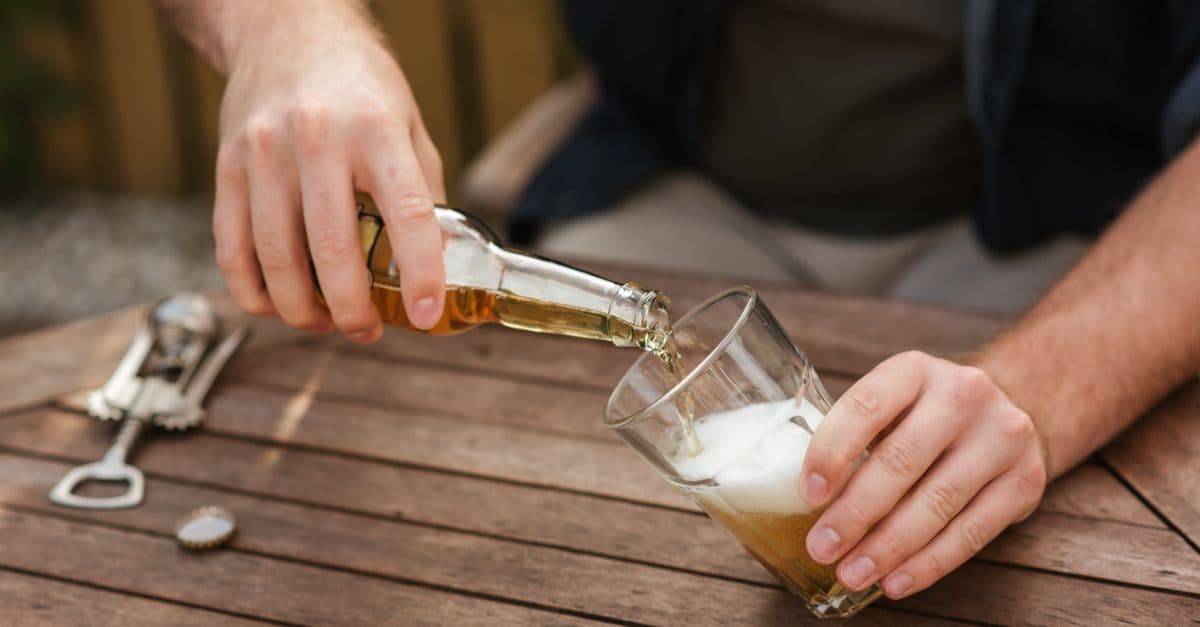
Photo: Anete Lusina / Pexels
Beer is the world's most widely consumed alcoholic beverage and the third most consumed drink overall, behind water and tea. Global beer production exceeds 194 billion litres annually — a volume that has grown modestly but consistently since 2020. Yet the distribution of that consumption is anything but even. The Czech Republic drinks roughly six times more beer per person than China does. Nigeria outranks Saudi Arabia by such a margin that any ranking by absolute volume obscures the deeper cultural and economic story. This article ranks countries by per-capita consumption, explains total-volume leaders separately, and traces the forces — brewing tradition, price, religion, and economic development — that determine where beer is drunk and how much.
What the data measures and how it is collected
The authoritative source for global beer consumption data is the Kirin Holdings Beer Institute, which has tracked global beer statistics since 1975. Kirin collects data through questionnaires sent to national brewers' associations and industry groups in each country, supplemented by official government statistics where available. The most recent full report covers 2024 data, published December 2025.
Per-capita consumption is calculated by dividing total national beer consumption (all beer types: lager, ale, stout, wheat beer, non-alcoholic beer) by the total population, not just the adult drinking-age population. This means Czech figures include children in the denominator, which suppresses the true adult consumption figure. A country with a large youth population will have a lower per-capita figure than its adult consumption rate would suggest.
Source: Kirin Holdings — Global Beer Consumption by Country in 2024
Total volume figures (used in the table for large markets) are aggregated national production plus imports minus exports, adjusted for inventory changes. They do not capture informal home brewing, which is significant in some African and Eastern European markets and results in slight under-counting.
Countries with the most beer consumption per capita (2024)
(Kirin Holdings Beer Institute, 2024 data)
| Rank | Country | Litres per capita/year | Total volume (approx.) |
|---|---|---|---|
| 1 | Czech Republic | 148.8 L | 1.6 billion L |
| 2 | Lithuania | 104.0 L | 0.30 billion L |
| 3 | Austria | 102.0 L | 0.91 billion L |
| 4 | Ireland | 98.0 L | 0.50 billion L |
| 5 | Croatia | 97.5 L | 0.38 billion L |
| 6 | Romania | 96.0 L | 1.9 billion L |
| 7 | Germany | 95.0 L | 7.9 billion L |
| 8 | Poland | 93.0 L | 3.6 billion L |
| 9 | Belgium | 91.0 L | 1.1 billion L |
| 10 | Namibia | 89.0 L | 0.24 billion L |
| 11 | Australia | 84.0 L | 2.2 billion L |
| 12 | Finland | 82.0 L | 0.46 billion L |
| 13 | United States | 72.0 L | 24.0 billion L |
| 14 | United Kingdom | 68.0 L | 4.6 billion L |
| — | Brazil | ~55.0 L | 13.5 billion L |
| — | China | ~26.0 L | 37.0 billion L |
| — | Nigeria | ~15.0 L | 3.0 billion L |
| — | India | ~3.5 L | 5.0 billion L |
Note: Czech Republic has held the top per-capita position for 32 consecutive years (since 1993). India's 2024 total volume grew 14.6% year-on-year, the fastest growth of any major market.
Source: Kirin Holdings Beer Institute Global Report 2024; National brewers' associations; government excise tax records.
Where this data comes from
Global beer consumption figures are primarily compiled by the Kirin Holdings Beer Institute, which has tracked industry data since 1975 through questionnaires to national brewers' associations, government tax authorities, and industry research organisations. Per-capita figures are calculated by dividing total national production plus net imports by the total population (including children and non-drinkers), which suppresses the actual adult consumption rate. For countries with robust regulatory and tax frameworks (Western Europe, North America, Australia), data is reliable. For countries with significant home-production sectors (parts of Africa, Eastern Europe), unrecorded consumption is estimated from survey data and is less precise. Total volume data spans 2023-2024 depending on the country. The ranking combines absolute volume leaders (China, US, Brazil) with per-capita consumption leaders (Czech Republic, Lithuania, Austria) to capture both scale and intensity of beer culture.
What beer consumption rankings reveal
The distribution of beer consumption traces history, climate, and economics more than preference alone. Czech dominance reflects a medieval brewing tradition reinforced by the 1842 pilsner invention, which became the global template. Germany's ranking seventh by per-capita consumption reveals that cultural identity and global brand dominance do not correlate neatly with actual per-person consumption — Oktoberfest and the Reinheitsgebot have outsized marketing value. China's total-volume leadership is a result of sheer population scale: at 26 litres per capita, China drinks less than half the Czech rate, but 1.4 billion people drinking that much produces 37 billion litres annually. India's 14.6% growth — the highest among major markets — signals the next frontier: a young, urbanising, rapidly growing middle-class population in emerging nations is driving the future of global beer consumption. Meanwhile, Western Europe and North America are experiencing flat or declining volumes as demographic ageing and health consciousness weight against tradition.
Historical context — 7,000 years of beer
Beer is one of the oldest manufactured beverages in human history. The earliest physical evidence — beer-making equipment found at the Raqefet Cave site in present-day Israel — dates to approximately 13,000 years ago, predating agriculture. The first written beer recipe appears in the 3,900-year-old Sumerian "Hymn to Ninkasi," the Sumerian goddess of beer and brewing, which also served as a practical fermentation instruction.
In medieval Europe, beer was a caloric staple consumed by all ages, including children, partly because water supplies were unreliable and fermentation killed pathogens. The alcohol content of everyday medieval "small beer" was typically 1–3% — closer to a modern non-alcoholic beer than a standard lager. Large-scale commercial brewing developed alongside urbanisation, with guilds and later industrial breweries concentrating production.
The critical technological turning point was the discovery of bottom-fermenting lager yeast (Saccharomyces pastorianus) and the development of refrigeration in the 19th century. Before refrigeration, brewing was seasonal — lager yeasts require cold temperatures, so brewers stored (lagered) beer in cold caves through summer. Industrial refrigeration freed brewing from seasons and geography, enabling mass production of pale lager that now accounts for approximately 85–90% of global beer volume.
The 1842 invention of pilsner-style lager in Plzeň (Pilsen), in what is now the Czech Republic, was the defining moment in modern beer history. Brewer Josef Groll produced the first clear, pale, bottom-fermented beer using local soft water, Bohemian Saaz hops, and pale malted barley. The result — Pilsner Urquell — became the stylistic template for Budweiser, Heineken, Corona, and essentially every mass-market lager produced today. Without Plzeň, modern beer would look and taste fundamentally different.
Czech Republic — 32 years at the top
The Czech Republic's per-capita dominance is not a recent phenomenon. The country has held the number one position every year since 1993, when Kirin began tracking the current ranking methodology. At 148.8 litres per person per year in 2024, the average Czech consumes roughly 0.4 litres of beer daily — including the population average with children. For Czech adults, the actual consumption figure is meaningfully higher.
The factors that explain this are specific and interconnected.
Price. Czech beer is among the most affordable in Europe relative to local wages. A half-litre draft in a Prague pub costs between 30–50 Czech crowns (approximately €1.20–€2.00 in 2024). Beer is often cheaper than bottled water in Czech restaurants. This price structure reflects a long tradition of low beer taxation — Czech excise duty on beer is among the lowest in the EU, reflecting the political influence of the domestic brewing industry and the cultural status of beer as a near-staple good.
The pub as social institution. The Czech hospoda (pub) functions differently from a bar in most countries. It is not primarily a venue for drinking to intoxication — it is a social institution where men (and increasingly families) gather after work, where community debates happen, and where regular attendance is part of ordinary social life. Beer consumption is distributed across the week rather than concentrated in weekend binge events.
Brewing quality. Czech hops — particularly the Saaz variety grown in the Žatec (Saaz) region of Bohemia — are considered among the world's finest. Their distinctive soft, spicy, floral character is the defining flavour of Czech lager. Czech malting traditions produce pale malts with precise modification that give Bohemian lager its characteristic clarity and malt sweetness. This domestic quality means Czech consumers have excellent local beer available at low prices.
Cultural identity. Beer is embedded in Czech national identity in a way that has no parallel in most countries. The Czech brewing tradition survived Habsburg rule, Nazi occupation, and communist nationalisation. Post-1989, the restitution of breweries to private ownership and the expansion of the craft beer sector reinvigorated a culture that already had deep historical roots.
Source: Kirin Holdings — Global Beer Consumption by Country 2024
It is worth noting that Czech per-capita consumption has been declining from its historic peak of approximately 163 litres in 2005. Health consciousness and demographic changes (an ageing population that drinks less) are slowly eroding the figure. The Czech Republic's dominance is secure for the near future, but the margin over second-place Lithuania has narrowed.
Germany — beer identity that outpaces the ranking
Germany ranks 7th globally in per-capita consumption — well below its cultural dominance in global beer identity. The gap between Germany's worldwide beer brand and its actual consumption rank is one of the more interesting discrepancies in the data.
Oktoberfest numbers. Munich's Oktoberfest runs 16–18 days in September–October. In a typical year, approximately 6–7 million visitors consume 6–7 million litres of beer. This is a significant absolute number but modest relative to Germany's annual total of nearly 8 billion litres. Oktoberfest is tourism-driven marketing as much as it is representative of German drinking culture.
The Reinheitsgebot. The German Beer Purity Law of 1516 — originally mandating that beer contain only water, barley malt, and hops (yeast was not yet understood as an ingredient) — is the world's oldest continuously referenced food quality regulation. Modern German beer law (the Biergesetz) has been updated to allow yeast and other ingredients while maintaining the basic purity principle for traditional German-style beers. The Reinheitsgebot is marketing as much as law today, but it reflects a real commitment to ingredient quality that distinguishes German lager production.
Craft beer arrival. Germany's brewing tradition was dominated by conservative lager styles until approximately 2010. The global craft beer movement — driven by American craft brewers producing hoppy ales, stouts, and experimental styles — arrived in Germany later than in the US, UK, or Scandinavia. Berlin, Hamburg, and Munich now have significant craft beer scenes, but the German market remains predominantly lager-focused compared to the US or UK.
China — the world's largest beer market by volume
China overtook the United States as the world's largest beer market by total volume in 2002. At approximately 37 billion litres annually, China's consumption dwarfs all competitors by a significant margin. The entire European Union's consumption totals approximately 35 billion litres.
At ~26 litres per capita, however, China ranks modestly by per-person metrics — reflecting that 1.4 billion people drinking modest amounts produces an enormous absolute number. Think of it like a very wide river flowing at a relatively slow pace: the total water volume is vast, but the speed is not exceptional.
Snow Beer — the world's best-selling brand. The best-selling beer brand globally by volume is not Budweiser, Heineken, or Corona. It is Snow Beer (华润雪花), produced by China Resources Snow Breweries, a joint venture between a Chinese state-owned enterprise and SABMiller (now AB InBev). Snow Beer sells approximately 11 billion litres annually — nearly entirely within China. Outside China, it has almost zero brand recognition. This makes Snow Beer the world's most consumed beer that most of the world's beer drinkers have never heard of.
Tsingtao — the export brand. Tsingtao Beer (青岛啤酒) was founded in 1903 in Qingdao by German settlers who brought Bavarian brewing techniques to the city. It remains China's most internationally recognised beer brand and is exported to over 100 countries. Tsingtao's German origins explain its clean, light lager character — it was literally founded as a German-style beer in China.
Premiumisation. China's overall beer volume has plateaued as the population ages and health consciousness increases. The growth segment is premium and craft beer — imported brands (Heineken has a significant Chinese operation), domestic craft breweries, and higher-priced domestic lagers. Per-unit revenue is growing even as volume growth slows.
Source: Food Navigator Asia — Global beer consumption rises: Kirin 2025
Nigeria — Africa's beer powerhouse
Nigeria is Africa's largest beer market and one of the world's fastest-growing, driven by specific demographic and economic conditions that make it structurally unlike other high-volume African markets.
Demographics. Nigeria's population of 220+ million has a median age of approximately 18 years — one of the youngest populations of any large country. Combined with a significant non-Muslim Christian population (roughly 50% of the country), this creates a large potential beer market that is growing as younger cohorts reach drinking age and earn disposable income.
Guinness Nigeria. Nigeria is one of the largest markets for Guinness outside Ireland. Guinness Foreign Extra Stout, brewed locally in Nigeria at a higher alcohol content (approximately 7.5% ABV) than standard Guinness (4.2%), has become a cultural institution. Nigerian Guinness has its own flavour profile — richer and more bitter than Irish Guinness — tailored to local taste. The brewery in Lagos, opened in 1963, is one of the largest Guinness production facilities globally.
The religious divide. Northern Nigeria is predominantly Muslim; alcohol consumption is minimal and regulated by sharia law in several northern states. Southern Nigeria, urban centres, and the Niger Delta are the locus of beer consumption. Nigeria's per-capita figure (~15 litres) is suppressed by including the non-drinking north; in the beer-consuming south, per-person rates are considerably higher.
Star Lager. Nigerian Breweries' Star Lager (launched 1949) holds over 50% of the domestic beer market. It is the quintessential Nigerian beer — available nationwide, affordable, and at 5.1% ABV, slightly stronger than many European lagers.
India — the fastest-growing major market in 2024
India is not in the per-capita top 20 — at approximately 3.5 litres per person, it ranks low globally. But it posted the highest year-on-year volume growth of any major market in 2024: +14.6%, adding approximately 700 million litres of consumption in a single year.
The structural story: India's population of 1.4 billion is predominantly young, increasingly urban, and rapidly growing its middle class. Beer consumption is concentrated in urban areas and southern states. Cultural attitudes toward alcohol are mixed — alcohol is prohibited in some states (Gujarat, Bihar), restricted in others, and relatively liberal in southern states like Goa, Karnataka, and Tamil Nadu.
The dominant brand is Kingfisher (United Breweries Group), which holds approximately 50% of the national market. International premium brands including Heineken (which has a significant stake in United Breweries), Budweiser, and Corona are growing rapidly in urban markets.
India's long-term trajectory — assuming continued economic growth and urbanisation — makes it one of the most consequential untapped beer markets in the world. It is the market that global brewers are most actively competing to develop.
Source: Food Navigator Asia — India drives global beer growth 2025
Surprises in the data
Namibia at rank 10. Namibia's per-capita beer consumption of approximately 89 litres places it 10th globally — the only African country in the top 10. This reflects German colonial history (Namibia was German South-West Africa until 1915, and German brewing traditions were established), high urbanisation rates relative to African averages, and a culture where beer is a central social beverage. Windhoek Lager, brewed by Namibia Breweries to the German Reinheitsgebot standard, is among the best-regarded African lagers.
Finland and Australia outranking the US. Both Finland (82 L) and Australia (84 L) outrank the United States (72 L) in per-capita consumption. Finland's inclusion in the Nordic cluster of high beer consumption is sometimes surprising given its associations with low alcohol consumption — but Finns drink considerable beer, with spirits and wine making up a smaller share of their alcohol intake than in some peer countries. Australia's beer culture is deeply embedded in social identity, though total consumption has been declining as wine and spirits gain market share.
Non-alcoholic beer's accelerating rise. The 2024 Kirin data shows non-alcoholic beer growing at approximately 7% annually globally — faster than any traditional beer category. Spain and Germany are the largest non-alcoholic beer markets in Europe. In the US and UK, major breweries now treat non-alcoholic offerings as a strategic priority. Heineken 0.0, Budweiser Zero, and numerous craft non-alcoholic variants are competing for the "sober curious" demographic. This category, which barely existed 15 years ago, now represents approximately 3% of global beer volume.
Why global beer volume has plateaued
Global beer volume has been relatively flat since approximately 2015, growing at under 1% annually in most years (with a notable COVID-19 disruption in 2020 and recovery afterward). Growth in Africa and South/Southeast Asia is offset by declines in Europe and North America.
The primary forces driving decline in mature markets are structural: ageing populations that drink less, rising health consciousness (particularly among younger demographics), competition from wine, spirits, cannabis (in legalised markets), and non-alcoholic beverages, and the premiumisation shift where consumers drink less but spend more per occasion.
This "drink less, drink better" trend has benefited craft beer and premium international lagers while hurting high-volume economy brands. The global craft beer industry — breweries producing fewer than 6 million litres annually — was valued at approximately $110 billion in 2023 and is one of the few beer segments growing in volume in Western markets.
Source: Visual Capitalist — Global Beer Consumption by Country
Frequently asked questions
Q: What is the best-selling beer in the world? A: Snow Beer (China Resources Snow Breweries) sells more volume than any other brand globally — approximately 11 billion litres annually, consumed almost entirely within China. Among internationally distributed brands, Budweiser (AB InBev) leads, followed by Heineken, Corona, and Stella Artois. Guinness is the world's best-selling stout.
Q: Is global beer consumption growing or declining? A: Global beer volume grew slightly in 2024, driven by sharp gains in India (+14.6%), Russia (+9.0%), and Thailand (+5.8%). In most mature Western markets, volume is flat or declining. The overall picture is geographic redistribution from established to emerging markets, with premiumisation the primary growth driver in markets where volume is flat.
Q: Why is the Czech Republic consistently number one? A: A combination of factors: affordable beer (low excise tax, strong domestic production), a deeply embedded pub culture as the primary social venue, world-class domestic hops and malting, and a cultural relationship with beer as an everyday beverage rather than a special-occasion drink. The Czech beer industry is also politically influential — beer taxes remain among the lowest in the EU.
Q: Does religious prohibition fully explain low consumption in Muslim-majority countries? A: Substantially, yes — but not entirely. Indonesia, the world's largest Muslim-majority country, has a small but legal beer market (Bintang is widely available in tourist areas and for non-Muslim minorities). Pakistan has a formal alcohol prohibition with some exceptions. The key variable is not Islam per se but whether a country has enacted legal prohibition. Several Muslim-majority countries in Southeast Asia and North Africa permit alcohol sales with varying restrictions. The countries with effectively zero recorded consumption — Saudi Arabia, Iran, Pakistan in official statistics — combine religious prohibition with legal enforcement.
Q: What styles of beer dominate globally? A: Pale lager dominates global consumption by a wide margin — approximately 85–90% of all beer consumed globally is a bottom-fermented, cold-conditioned, pale lager style. The dominance is even more pronounced in the largest-volume markets (China, Brazil, Mexico, US). Ale styles (IPAs, stouts, wheat beers, Belgian ales) are growing rapidly in craft markets but remain a small minority of total global volume.
The takeaway
The Czech Republic's 32-year dominance at the top of per-capita beer rankings reflects a specific cultural ecosystem — affordable, high-quality domestic beer embedded in daily social life — that no other country has fully replicated. China's total-volume leadership reflects demographics at scale. Germany's global beer identity is partly myth: it ranks seventh per capita, well behind Lithuania and Austria. The 2024 data's most consequential story is India's 14.6% volume growth — a signal of where the next major beer market is being built. And the global premiumisation trend, where consumers across mature markets drink less but spend more per glass, is reshaping brewing strategy faster than any market shift in the past three decades.
Read next:
Follow new articles
Add SciHub101 to your feed reader to see new science and technology stories.
About the Author
SciHub101 is an independent science and technology publication founded and edited by Buğra Sözeri, a software engineer and app developer based in Türkiye. AI tools assist with drafting and research. Source documentation in the existing archive is uneven, and articles are being reviewed and corrected. The Editorial Team byline identifies editorial responsibility; it does not certify specialist or independent human review. Where we compare products, anything built by our own team is labelled as such — see the editorial guidelines and About page for how corrections and disclosures work.
Related Articles

Countries with the Most Paid Vacation Days (2025 Ranked)
Austria mandates 30 days of statutory annual leave plus 13 public holidays — among the highest total paid leave entitlements on earth. France requires 30 working days. The United States is the only wealthy country with no federal paid vacation mandate. Here are the countries with the most generous paid leave.

Countries with the Most International Students (2025 Ranked)
The United States hosts over 1 million international students — the most of any country. The UK hosts 680,000. China has become the world's second-largest destination. International students contribute $40 billion annually to the US economy alone.

Alcohol Consumption by Country: Comparing the Measures
Country alcohol comparisons depend on pure-alcohol units, the age range, and estimates of unrecorded drinking. Learn what a per-capita figure can tell you and what it cannot.
Best Restaurant and Dish Discovery Apps 2026
Best restaurant discovery apps 2026: Dishcision ranks dishes, Google Maps finds locations, and Yelp provides reviews. Why ratings fail and what really works.
Best Prayer Times and Qibla Tools 2026
Best prayer times and qibla tools in 2026: Qibla Daily for on-device calculation and sourced duas, plus six alternatives with their limits and costs.
Best Free Bible Reading Plans and Sites 2026
Best free Bible reading plans in 2026: BibleRoutine for plans you can finish, printable and no account, plus five alternatives with their limits.