Countries With the Most Olympic Gold Medals Per Capita (All Time)

Photo: DS stories / Pexels
The Olympic medal table that appears in media coverage during every Games is dominated by large wealthy nations — the USA, China, Russia/USSR, UK, Germany — because absolute medal counts strongly correlate with population size and economic resources. But this raw count doesn't answer the more interesting question: which countries perform best relative to their size?
When Olympic gold medals are adjusted for population, the rankings transform dramatically. Finland — a country of 5.6 million people — has won approximately 305 Olympic gold medals across Summer and Winter Games combined. That's roughly 55 gold medals per million people. By comparison, the United States, with over 1,100 Summer Games gold medals, achieves approximately 3.4 gold medals per million people.
This per-capita analysis reveals the true sports powerhouses: small Nordic nations with outsized Winter Games dominance, Jamaica's sprint dynasty, Kenya's long-distance running empire, and the extraordinary punching weight of the Bahamas, Trinidad & Tobago, and Estonia.
Key Takeaways
- Finland leads all-time Olympic gold medals per capita with approximately 55 gold medals per million people, driven by historic strength in athletics, wrestling, and skiing
- Norway is the all-time Winter Olympics leader in absolute gold medals with 148 — and its per-capita rate is extraordinary for a country of 5.4 million
- Jamaica has produced more Olympic sprint medals per capita than any country, with athletes including Usain Bolt defining generational dominance
- The Bahamas (population 400,000) has won 8 Olympic gold medals — all in track and field — representing an extraordinary 20 golds per million
- Sweden's multi-sport Olympic tradition produces elite athletes in sports ranging from athletics and wrestling to sailing and equestrian events
All-Time Olympic Gold Medals Per Capita (Summer + Winter Combined)
| Rank | Country | Total Gold Medals | Population (millions) | Golds per Million | Olympic Highlight |
|---|---|---|---|---|---|
| 1 | Finland | ~305 | 5.6 | ~54.5 | Long-distance running, nordic skiing, wrestling |
| 2 | Norway | ~380 (W: 148) | 5.4 | ~70.4 | Winter sports dominance; biathlon, cross-country |
| 3 | Sweden | ~210 | 10.5 | ~20.0 | Multi-sport: athletics, swimming, sailing |
| 4 | New Zealand | ~50 | 5.1 | ~9.8 | Rowing, athletics, sailing |
| 5 | Cuba | ~82 | 11.0 | ~7.5 | Boxing, athletics, judo |
| 6 | Hungary | ~175 | 9.7 | ~18.0 | Fencing, swimming, athletics, gymnastics |
| 7 | Bulgaria | ~51 | 6.5 | ~7.8 | Weightlifting, wrestling, gymnastics |
| 8 | Australia | ~162 | 26.0 | ~6.2 | Swimming, rowing, athletics |
| 9 | Jamaica | ~25 | 3.0 | ~8.3 | Sprint/hurdles dynasty |
| 10 | Denmark | ~47 | 5.9 | ~8.0 | Cycling, rowing, sailing, handball |
| 11 | Greece | ~117 | 10.7 | ~10.9 | Ancient history + modern athletics |
| 12 | Estonia | ~25 | 1.3 | ~19.2 | Wrestling, weight events, athletics |
| 13 | Latvia | ~12 | 1.9 | ~6.3 | Bobsled, rowing, athletics |
| 14 | Trinidad & Tobago | ~3 | 1.4 | ~2.1 | Sprint (Richard Thompson, Ato Boldon, Keshorn Walcott) |
| 15 | Kenya | ~40 | 55.0 | ~0.7 | Long-distance running dynasty |
| 16 | Ethiopia | ~22 | 125.0 | ~0.2 | Long-distance running |
| 17 | Bahamas | ~8 | 0.4 | ~20.0 | Track and field |
| 18 | Slovakia | ~26 | 5.5 | ~4.7 | Canoeing, shooting, athletics |
| 19 | Netherlands | ~103 | 17.9 | ~5.8 | Speed skating, cycling, swimming |
| 20 | Romania | ~89 | 19.0 | ~4.7 | Gymnastics, rowing, canoeing |
Source: Olympic Games statistics, IOC database, all-time Summer + Winter combined through Paris 2024. Population figures from 2024 UN data. Note: Norway figure includes Winter Games dominance.
Where This Data Comes From
Per-capita medal rankings are calculated by dividing total Olympic gold medals (Summer + Winter combined through Paris 2024) by the country's 2024 population in millions, sourced from UN World Population Division data. The per-capita figures are most meaningful for countries with populations under 30 million; for large nations, per-capita rates can mask substantial absolute performance.
The data comes from the IOC's official medal database and Olympedia (the comprehensive Olympic historical record). Some methodological notes: "All-time" data includes medals from Summer and Winter Games combined, which can distort rankings — Norway leads per-capita largely due to Winter dominance, while Jamaica's per-capita strength is almost entirely from Summer sprint medals. Different sources occasionally report slightly different totals due to different cutoff dates and handling of stripped medals (medals removed due to doping violations are excluded from these totals). Population figures are as of mid-2024; countries with rapid migration (Australia, New Zealand) or aging populations with declining birthrates may experience shifting per-capita rates even if their medal counts remain static.
Top Winter Games Countries All-Time (Absolute Gold Medals)
| Rank | Country | Winter Gold Medals | Notable Sports |
|---|---|---|---|
| 1 | Norway | 148 | Cross-country, biathlon, ski jump |
| 2 | USA | 107 | Alpine skiing, snowboard, speed skating |
| 3 | Germany/E+W | 92 | Luge, biathlon, cross-country |
| 4 | Soviet Union/Russia | 78 | Cross-country, biathlon, speed skating |
| 5 | Austria | 70 | Alpine skiing |
| 6 | Canada | 73 | Ice hockey, curling, figure skating |
| 7 | Sweden | 52 | Cross-country, ice hockey, curling |
| 8 | Finland | 44 | Cross-country, speed skating |
| 9 | Switzerland | 55 | Alpine skiing |
| 10 | Netherlands | 45 | Speed skating |
Norway: The Winter Olympics Superpower
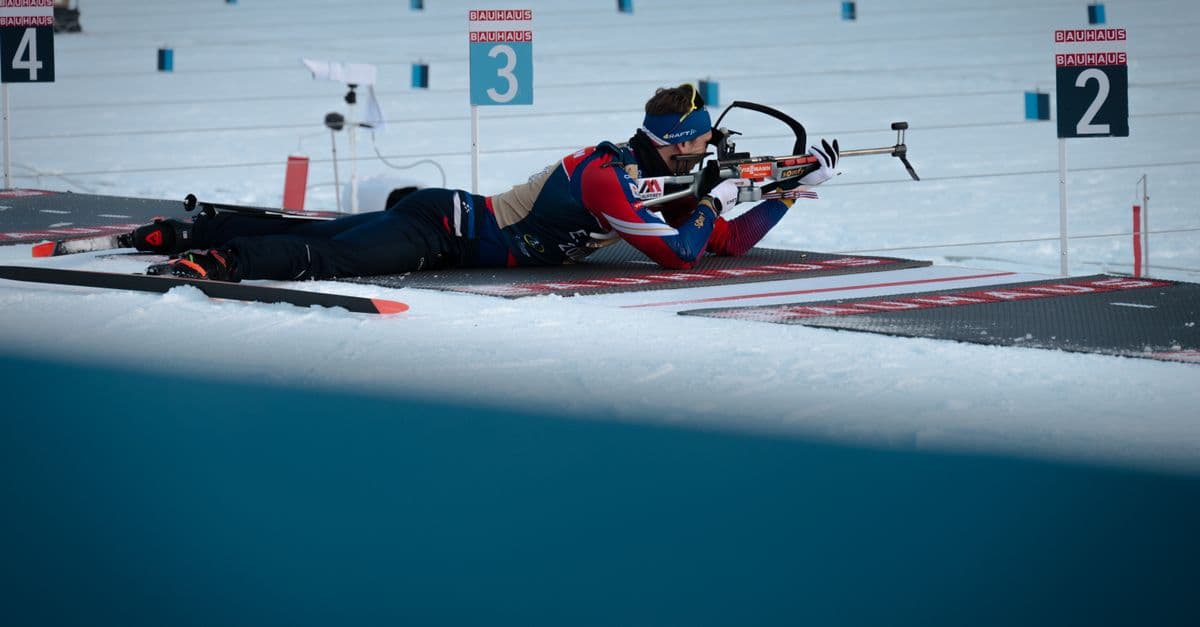
Norway's dominance of the Winter Olympics is one of the most extraordinary statistical facts in all of sports. At the 2022 Beijing Winter Olympics, Norway finished with 16 gold medals, 8 silver, and 13 bronze — a total of 37 medals from a country of 5.4 million people. At the 2018 Pyeongchang Winter Olympics, Norway won 14 gold medals — more than any other country.
Norway's all-time total of 148 Winter Olympic gold medals dwarfs all other countries, despite Norway having a fraction of the population of the USA, Russia, or Germany. Norway has won at least one gold medal at every Winter Olympic Games since the Games began. The country's dominance spans cross-country skiing, biathlon, ski jumping, speed skating, and alpine skiing.
What explains this extraordinary dominance? Norway's climate is the obvious starting point — skiing and skating are practical transportation skills and recreational activities that Norwegians pursue from childhood. But culture and investment matter more than climate alone. The Norwegian Olympic and Paralympic Committee and Confederation of Sports (NOCI/NIF) invests heavily in Olympic sport development programs. Norway's high incomes ensure athletes have time and resources to train. The cultural prestige of winter sport excellence means competitive pathways are well-developed from youth level upward.
Norway's "Secret Plan" — the famous training approach detailed by journalist Espen Gundersen — involves high volumes of low-intensity training combined with very precise training periodization, and has been widely adopted by endurance athletes globally.
Finland: Summer Games Heritage
Finland's per-capita gold medal count, particularly in Summer Games, reflects a golden era of Finnish athletics that spanned roughly 1900–1950. Finnish long-distance runners were the world's best across multiple generations: Hannes Kolehmainen won three golds at 1912 Stockholm; Paavo Nurmi ("The Flying Finn") won 9 Olympic gold medals, including five at a single Games (1924 Paris); Ville Ritola, Emil Zátopek's inspiration, won four golds. Finnish wrestlers, javelin throwers, and pentathletes also accumulated golds in large numbers.
This historic accumulation explains much of Finland's current per-capita dominance. Modern Finland remains competitive in cross-country skiing, biathlon, and some field events, but the extraordinary density of the 1908–1956 era will likely never be replicated.
Jamaica: The Sprint Nation
Jamaica's per-capita sprint medal record is incomparable. A country of approximately 3 million people produces a disproportionate share of the world's fastest humans. Usain Bolt won 8 Olympic gold medals (6 individual: 100m, 200m at three consecutive Olympics). Elaine Thompson-Herah won 3 individual sprint gold medals at 2016 and 2021. Shelly-Ann Fraser-Pryce has 5 Olympic gold medals.
Jamaica's success in sprinting reflects multiple reinforcing factors: a deep grass-roots track and field culture, extremely competitive national championships (the ISSA Boys and Girls Championships is one of the world's largest and most competitive high school athletic meets), sophisticated biomechanics coaching, and — some researchers suggest — genetic factors related to the high proportion of West African ancestry in the Jamaican population, associated with higher fast-twitch muscle fiber proportions.
Kenya and Ethiopia: Long-Distance Running Empires
Kenya and Ethiopia's long-distance running dominance — particularly in the 800m, 1500m, 3000m steeplechase, 5000m, 10000m, and marathon — represents one of sport's most durable dynasties. Kenyan athletes have won 40+ Olympic gold medals, concentrated almost entirely in long-distance events. Ethiopian athletes have accumulated 22+ golds through Haile Gebrselassie, Kenenisa Bekele, Tirunesh Dibaba, and Almaz Ayana.
Both countries' athletes overwhelmingly originate from specific high-altitude regions: Kenya's Great Rift Valley (particularly Nandi and Elgeyo-Marakwet counties) and Ethiopia's Oromia and Amhara regions. High-altitude training (2,000–2,400 meters above sea level) produces physiological adaptations — increased red blood cell mass, more efficient oxygen utilization — that provide advantages in endurance events. Combined with a culture that produces dedicated training groups and world-class coaching, these regions have become the global capitals of distance running.
Small Nation Giants
Several very small nations punch extraordinarily above their weight in Olympic medal production:
The Bahamas (population ~400,000): Has won 8 Olympic gold medals, all in track and field, producing athletes including Frank Rutherford (triple jump), Pauline Davis-Thompson (200m), Tonique Williams-Darling (400m), and the dominant 4x400m relay teams. This represents approximately 20 gold medals per million people.
Trinidad & Tobago (population ~1.4 million): Has produced sprint and field athletes including Ato Boldon (3 medals), Richard Thompson (100m silver), and Keshorn Walcott (javelin gold). The country's per-capita Olympics medal rate in sprinting rivals Jamaica.
Estonia (population ~1.3 million): Has won gold medals in wrestling, weight events, and athletics since the early 20th century, with continued success in canoeing and shooting.
Frequently Asked Questions
Q: Which country has won the most Olympic gold medals of all time (absolute)?
A: The United States leads all-time Summer Olympic gold medals with approximately 1,061, followed by the Soviet Union (~395), Germany (~201), and Great Britain (~263). For Winter Olympics, Norway leads with 148 gold medals, which is extraordinary for a country of 5.4 million.
Q: Has any athlete won more than 9 Olympic gold medals?
A: Yes. Michael Phelps (USA, swimming) holds the all-time record with 23 gold medals across 2000–2016. Larisa Latynina (Soviet Union, gymnastics) won 9 gold medals. Paavo Nurmi (Finland) won 9, Usain Bolt (Jamaica) 8, and Marit Bjoergen (Norway) 8 in Winter sports. These figures reflect how individual dominance over a decade can accumulate extraordinary totals in Olympic sport.
Q: Why doesn't China appear higher in per-capita rankings?
A: China has won many Olympic gold medals in absolute terms but has a population of 1.4 billion, so per-capita rates are modest despite strong absolute performance. China has historically focused Olympic investment on specific sports where it can achieve dominance: table tennis, badminton, gymnastics, diving, shooting, and weightlifting. China's large Olympic team also means even 40–50 gold medals at a single Games translates to only 0.03 per million people.
Q: How are countries' all-time medal counts affected by political history?
A: Significantly. The Soviet Union's medals are split among 15 successor states (Russia, Ukraine, Kazakhstan, etc.). East Germany and West Germany competed separately for decades, then reunified. Czechoslovakia split into Czech Republic and Slovakia. Yugoslavia's medals are distributed among Slovenia, Croatia, Serbia, and other successor states. This makes historical comparisons complex and per-capita calculations necessarily approximate for successor states.
Q: Do small island nations have an advantage in achieving high per-capita Olympic medal rates?
A: Island nations do not inherently have an advantage, but several (Jamaica, Trinidad & Tobago, the Bahamas) have combined strong track-and-field cultures with relatively small populations, producing high per-capita rates. However, per-capita dominance appears more driven by focused national investment in specific sports plus cultural emphasis on athletics than by geography.
Q: How does per-capita Olympic performance correlate with national wealth?
A: Wealth is a necessary but insufficient condition. Very rich countries like Luxembourg and Singapore rank lower per-capita than smaller Nordic nations despite higher investment capacity. The correlation is stronger between per-capita success and (1) strong grassroots sports culture in specific disciplines, (2) sustained government and private investment over decades, and (3) geographic or cultural advantages in particular sports (Norway's winter conditions, Jamaica's sprint tradition, Kenya's high-altitude distance-running zones).
The Bottom Line
Per-capita Olympic gold medal rankings reveal a different sporting world than absolute counts suggest. Norway's winter dominance, Finland's historic athletics legacy, Jamaica's sprint dynasty, and the Bahamas' remarkable track record per person tell stories about culture, environment, investment, and national identity that raw medal tallies cannot. The most competitive sports nations are not the largest, but the most focused — countries that identify their natural advantages, build grassroots programs, and invest in elite performance pathways consistently produce champions at rates that dwarf wealthier but less focused competitors.
Related Reading
Follow new articles
Add SciHub101 to your feed reader to see new science and technology stories.
About the Author
SciHub101 is an independent science and technology publication founded and edited by Buğra Sözeri, a software engineer and app developer based in Türkiye. AI tools assist with drafting and research. Source documentation in the existing archive is uneven, and articles are being reviewed and corrected. The Editorial Team byline identifies editorial responsibility; it does not certify specialist or independent human review. Where we compare products, anything built by our own team is labelled as such — see the editorial guidelines and About page for how corrections and disclosures work.
Related Articles

Countries With the Lowest Crime Rates in the World (2025)
Iceland has had years with no recorded homicide, yet Singapore, Japan, and several Gulf states report even lower rates. Here is how the lowest-crime countries rank on UN-sourced homicide data, the Global Peace Index, and Gallup's safety survey, and why the lists disagree.

Countries That Consume the Most Chocolate Per Capita (2025 Ranked)
Switzerland consumes 10.3 kg of chocolate per person per year — the world's highest. Denmark, Austria, and Germany follow. The global chocolate market exceeds $130 billion. Meanwhile, cocoa-growing countries in West Africa — which produce 70% of the world's cocoa — consume almost none. Here's the strange geography of chocolate.
Countries with the Most Olympic Gold Medals All Time (Total Ranked)
The United States has won more than 1,100 Olympic gold medals since 1896 — more than any other nation. The Soviet Union, which no longer exists, ranks second. Here's the all-time medal table, the stories behind the dominant nations, and how the balance of Olympic power has shifted over 130 years.
Countries with the Most Olympic and World Sport Medals (2025 Ranked)
The United States leads all-time Olympic medal tables with 2,631 total medals. China dominates weightlifting and diving. Kenya owns distance running. Jamaica dominates sprints. Here's the full breakdown of which countries dominate which sports — and what drives sporting excellence.

Countries with the Most Marathon Runners (2025 Ranked)
The United States has 600,000 marathon finishers annually — the most of any country. Kenya and Ethiopia dominate elite marathon racing, winning 80%+ of major marathon titles. Japan's Tokyo Marathon has the world's largest field with 38,000 runners. Here are the countries with the most marathon runners.

Top 10 Greatest Basketball Players of All Time (2026 Ranked)
Michael Jordan went 6-0 in NBA Finals. LeBron James is the all-time leading scorer. Kareem Abdul-Jabbar held the scoring record for 39 years. The 10 greatest basketball players ranked by championships, statistics, and impact.