How Paleontologists Date Dinosaur Fossils
Photo: Cup of Couple / Pexels
A dinosaur bone almost never gets dated directly. That surprises most people, because the popular image of paleontology involves plugging a fossil into some machine and reading off an age. In reality, bone rarely holds onto the right radioactive isotopes in a usable, undisturbed form once it has fossilized, so scientists instead date the volcanic ash layers above and below the bone and use the rock sequence between them to bracket its age. That indirect approach is still precise enough to place the end of the Cretaceous period at roughly 66 million years ago, with a margin of error measured in tens of thousands of years at the best-documented sites.
Why dinosaur bones themselves resist direct dating
Fossilization — the process by which organic remains become rock — is, ironically, what makes fossils hard to date directly. Most dinosaur bones found today have undergone permineralization, a process in which groundwater carrying dissolved minerals seeps into the bone's pore spaces and gradually deposits silica, calcite, or pyrite in and around the original bone tissue. Over millions of years, that mineral infill can dominate the fossil's composition, sometimes replacing organic material almost entirely. How bones become fossils in the first place is explained in how fossils form.
Radiometric dating techniques require a mineral sample that crystallized at one identifiable moment and then behaved as a closed system afterward, meaning no parent or daughter isotopes leaked in or out. Permineralized bone almost never satisfies that condition. Groundwater moving through the burial environment for millions of years is exactly the kind of open, ongoing chemical exchange that ruins a closed-system assumption, because it can add or remove isotopes at any point after burial, not just at one clean starting moment.
There is a second, more basic problem: even fresh, unfossilized bone lacks the isotope systems used for old rocks. Bone contains carbon, but carbon-14 dating only works for material younger than about 50,000 years, since carbon-14 has a half-life of roughly 5,730 years and effectively runs out of detectable atoms well before that limit. Dinosaur fossils are tens of millions of years older than that ceiling, so carbon-14 is irrelevant to them regardless of how well-preserved the bone is.
What bone generally does not contain, in a form isotope geochronologists can use, is enough of the parent isotopes that work on multi-million-year timescales, such as uranium or potassium locked into a crystal lattice that formed at a single, dateable moment. Volcanic minerals do have that structure. That difference, more than anything else, explains why paleontologists date the rock around a dinosaur rather than the dinosaur itself.
The law of superposition: dating without numbers
Long before radiometric methods existed, geologists had a reliable way to say which rocks, and which fossils inside them, were older or younger than others. That method is relative dating, and its foundational principle is the law of superposition: in an undisturbed sequence of sedimentary rock layers, the layers at the bottom are older than the layers above them, because sediment accumulates over time with newer material settling on top of older material.
The principle traces back to Nicolas Steno, a Danish scientist working in 17th-century Italy, who formalized it in 1669 while studying rock strata in Tuscany. Steno's insight seems obvious once stated, but at the time it was a genuine conceptual leap: it treated rock layers as a readable timeline rather than a static, meaningless pile of stone. Superposition, along with Steno's related principles of original horizontality (layers form flat) and lateral continuity (layers extend outward until they thin out or hit a barrier), still underlies how geologists read stratigraphic sections today.
Applied to fossils, superposition lets a paleontologist say, with confidence and without needing a lab, that a dinosaur found in a layer beneath another dinosaur-bearing layer lived earlier. This is enormously useful for building relative sequences across a single outcrop or formation. What superposition cannot do on its own is assign an actual number of years to any of it. It tells you order, not age. A fossil dated only by superposition is "older than layer A, younger than layer B," full stop, with no year attached until something else supplies one.
That "something else" is radiometric dating, and the two methods are not competitors. They are complementary tools that solve different halves of the same problem, and in practice almost every precisely dated dinosaur-bearing formation combines both.
What is biostratigraphy, and how does it extend relative dating across sites?
Biostratigraphy uses the known appearance and disappearance of widespread, short-lived "index fossils" — usually small, rapidly evolving organisms like certain ammonites or foraminifera — to correlate rock layers across distant locations that share no direct physical connection. If the same index fossil species appears in a Montana outcrop and a European one, paleontologists can infer the layers are roughly contemporaneous, letting relative ages travel across continents even without matching radiometric dates at both sites.
The physics of radiometric dating: half-lives as clocks
Radiometric dating works because certain isotopes are unstable and decay into different, stable "daughter" isotopes at a fixed, statistically predictable rate. That rate is described by the isotope's half-life — the amount of time it takes for half of a given sample of the radioactive parent isotope to decay into its daughter product. Half-life is a property of the isotope itself, unaffected by temperature, pressure, or chemical environment, which is exactly what makes it useful as a clock: it does not speed up or slow down depending on where a rock has been sitting for the last 70 million years.
To use this clock, geochronologists need a mineral that crystallized at a specific, identifiable moment, trapping a known starting ratio of parent to daughter isotope (ideally zero daughter isotope at the start), and that has remained a closed system ever since, with no additional parent or daughter atoms added or lost by later chemical processes. Measure the current ratio of parent to daughter isotope in that mineral today, know the decay constant for that isotope, and you can calculate how much time has passed since the mineral crystallized.
Different isotope pairs have wildly different half-lives, which is why geologists do not use one universal isotope for every rock. An isotope with too short a half-life will have completely decayed away in an old rock, leaving nothing left to measure. An isotope with too long a half-life will have barely changed in a young rock, making the measurement too imprecise to be useful. Matching the isotope system to the rock's expected age range is a basic, necessary step before any radiometric date is even attempted.
| Method | Parent isotope | Half-life | Typical age range applied to |
|---|---|---|---|
| Potassium-argon (K-Ar) | Potassium-40 | ~1.25 billion years | Thousands to billions of years; volcanic rocks |
| Argon-argon (⁴⁰Ar/³⁹Ar) | Potassium-40 (via argon-39 proxy) | ~1.25 billion years | Same range as K-Ar, but higher precision on single crystals |
| Uranium-lead (U-Pb) | Uranium-238 / Uranium-235 | 4.47 billion / 704 million years | Very old igneous/metamorphic rocks, often over 1 billion years, but also precise on zircons in younger ash |
| Radiocarbon (¹⁴C) | Carbon-14 | ~5,730 years | Organic material younger than roughly 50,000 years |
No single isotope system covers every rock; geochronologists match the isotope's half-life to the rock's expected age so the parent-daughter ratio stays measurable.
Argon-argon dating, a refinement of the older potassium-argon technique, is especially important for dinosaur-age rocks because it allows scientists to date individual mineral crystals with much greater precision, and it can cross-check for problems like partial argon loss that would otherwise bias a K-Ar result. Uranium-lead dating on zircon crystals, meanwhile, offers a different cross-check: because uranium decays through two independent decay chains (U-238 to Pb-206, and U-235 to Pb-207) at very different rates, geochronologists can compare the two resulting ages within the same crystal. If they agree, or are "concordant," confidence in the date rises substantially.
Why volcanic ash is the ideal target, and how the bracket works
Volcanic ash layers, geologically termed tuffs, are close to a perfect natural clock. When a volcano erupts, minerals like zircon crystallize directly out of the molten material and are then blasted out and deposited as ash in a geologically instantaneous event. That crystallization moment is exactly the kind of single, identifiable starting point radiometric dating needs, and because the ash settles and lithifies relatively quickly, it also tends to preserve as a distinct, mappable layer within the surrounding sediment.
This is why intensively studied dinosaur-bearing rock units, such as the Hell Creek Formation spanning Montana, North Dakota, South Dakota, and Wyoming, are dated primarily through the ash beds interbedded with the fossil-bearing mudstones and sandstones, not through the dinosaur bones scattered through those same layers. A field team might find a Triceratops skeleton in a mudstone layer with no dateable minerals of its own, but if that mudstone sits between two thin ash layers that have each been independently dated, the fossil's age is bracketed with real numerical precision.
Here is how that bracketing works in practice. Suppose a dinosaur fossil sits in a rock layer sandwiched between a lower ash bed dated to 75 million years ago and an upper ash bed dated to 73 million years ago. The law of superposition already tells the paleontologist that the fossil is younger than the lower ash and older than the upper ash, because the lower layer was deposited first. The radiometric dates on the ash then convert that relative statement into an actual numerical bracket: the fossil lived and died sometime within that two-million-year window. Narrower ash spacing produces a tighter bracket; wider spacing produces a looser one. This combined method, relative position for sequencing, radiometric ages on ash for the numbers, is the standard workflow across essentially every well-studied dinosaur formation worldwide, not a special technique reserved for famous sites.
It is worth being explicit about what this bracket does and does not claim. It does not say the fossil animal died in a specific year. It says the animal's burial happened somewhere within a window defined by two independently dated ash layers, and that window can be anywhere from tens of thousands of years wide, in an unusually ash-rich sequence, to a few million years wide, where ash beds are sparse. Precision in dinosaur dating is a direct function of how much datable volcanic material happens to be preserved nearby, which is why some formations produce far tighter age constraints than others purely because of local volcanic history, not because the paleontology itself is better or worse.
Why can't scientists just radiocarbon date dinosaur bones directly?
Carbon-14 has a half-life of only about 5,730 years, which means it becomes undetectably scarce in anything older than roughly 50,000 years. Dinosaur fossils are tens of millions of years old, far beyond that ceiling, so scientists rely on isotopes with much longer half-lives, such as potassium-40 or uranium-238, applied to volcanic minerals rather than to the fossils themselves.
Case study: pinning down the Cretaceous-Paleogene boundary
The most rigorously dated moment in dinosaur history is not a dinosaur discovery at all. It is the boundary layer marking the mass extinction event that ended the Cretaceous period, commonly called the K-Pg boundary (previously K-T boundary), associated with the Chicxulub asteroid impact off the coast of the Yucatán Peninsula. Because this single geological moment matters so much to understanding when dinosaurs (aside from birds) disappeared, it has received an unusual amount of geochronological attention.
Paul Renne and colleagues, publishing in Science in 2013, used high-precision argon-argon dating on volcanic ash layers closely associated with the boundary to refine the impact date to approximately 66.043 million years ago, with an uncertainty of only about 43,000 years. That level of precision, a margin of error smaller than 0.1% of the total age being measured, is what let researchers argue the Chicxulub impact and the extinction event were essentially simultaneous on a geological timescale, rather than two events separated by enough time to represent independent causes.
Before that generation of high-precision techniques matured in the late 20th and early 21st centuries, the pace and exact timing of the Cretaceous-Paleogene extinction were considerably harder to pin down, and competing hypotheses about volcanic activity at India's Deccan Traps versus the Chicxulub impact were difficult to test against each other without tight numerical dates on both. Sharper radiometric constraints did not settle every debate about the extinction's cause, but they meaningfully narrowed what a "simultaneous" or "sequential" argument could plausibly claim, by shrinking the available error bars on both sides of the comparison.
This case also illustrates something important about how dating precision scales with effort and material, not just method sophistication. The 43,000-year uncertainty on the K-Pg boundary reflects an unusually well-preserved, unusually well-studied sequence of ash layers analyzed with the most refined argon-argon protocols available. Most individual dinosaur fossils, found in less intensively sampled formations with sparser ash beds, carry considerably wider uncertainty windows, often in the hundreds of thousands of years, simply because the surrounding rock offers fewer opportunities to apply the method with that level of rigor.
What can still go wrong: limitations and honest uncertainty
Radiometric dating is precise, but it is not infallible, and paleontologists and geochronologists are generally candid about where the method's assumptions can break down. The biggest risk is a violated closed-system assumption: if a mineral has gained or lost parent or daughter isotopes after it originally crystallized, through later heating, fluid alteration, or metamorphism, the calculated age will be wrong, sometimes in ways that are hard to detect without cross-checking against an independent method or a second isotope system in the same sample.
Sample contamination is another practical concern. A volcanic ash layer that has been reworked by wind or water after the eruption, mixing older detrital zircon grains washed in from elsewhere with the freshly crystallized grains from the eruption itself, can produce a scatter of ages rather than one clean number. Geochronologists address this by dating multiple individual crystals from the same sample and looking for a tight cluster of consistent ages, treating outliers with suspicion rather than averaging blindly across everything in the sample.
There is also a structural limitation worth stating plainly: because fossils are dated by the rock around them rather than the fossil itself, the precision of any given dinosaur's age is only as good as the ash beds available nearby. A spectacular, well-preserved skeleton found in a formation with no nearby datable ash may end up with a much looser age estimate than a fragmentary specimen found in an ash-rich sequence, which can feel counterintuitive to someone assuming fossil quality and date precision should track together. They do not; date precision tracks volcanic and stratigraphic luck, not the quality of the bones themselves.
None of this undermines the overall reliability of radiometric geochronology, which has been cross-validated across multiple independent isotope systems, multiple laboratories, and, in some cases, against entirely unrelated dating approaches like Earth's known orbital cycles recorded in sediment layers. But it does mean that any single reported fossil age should be read as a scientifically constrained estimate with a stated (or implied) uncertainty, not as an exact figure carved in stone, appropriately enough.
The takeaway
Dinosaur fossils get their ages not from the bones themselves, which rarely survive fossilization with a usable, closed-system isotope record, but from the volcanic ash and rock layers surrounding them. Relative dating, built on Steno's law of superposition, establishes the sequence; radiometric dating, built on the fixed, measurable decay rates of isotopes like potassium-40 and uranium-238, supplies the actual numbers. Combined, those two tools narrowed the end of the Cretaceous down to a window of roughly 43,000 years, out of 66 million, a level of precision that would be impossible from bone alone.
Read next:
- Why The Cretaceous Extinction Was So Devastating
- How CT Scans Reveal Fossil Skulls
- How We Know What Dinosaurs Ate
FAQ
Q: Why can't paleontologists directly date dinosaur bones?
Fossilized bone has usually undergone permineralization, where groundwater deposits minerals in and around the original bone tissue over millions of years, disrupting the closed-system conditions radiometric dating requires. Instead, scientists date volcanic ash layers found above and below the fossil-bearing rock and use those dates to bracket the fossil's age.
Q: What is the difference between relative dating and radiometric dating?
Relative dating, based on the law of superposition, establishes the order of rock layers using the principle that older layers sit below younger ones in an undisturbed sequence, but it produces no age in years on its own. Radiometric dating measures the decay of radioactive isotopes with known half-lives to calculate an actual numeric age, usually applied to volcanic minerals.
Q: Why is radiocarbon dating not used for dinosaur fossils?
Carbon-14 has a half-life of only about 5,730 years, making it undetectable in material older than roughly 50,000 years. Dinosaur fossils are tens of millions of years old, so scientists use isotopes with much longer half-lives, such as potassium-40 or uranium-238, applied to volcanic minerals near the fossil rather than to the bone itself.
Q: How precisely can scientists date the end of the Cretaceous period?
Using argon-argon dating of volcanic ash layers tied to the Chicxulub impact, researchers led by Paul Renne dated the Cretaceous-Paleogene boundary to approximately 66.043 million years ago, with an uncertainty of only about 43,000 years, published in Science in 2013.
Q: Who first formalized the law of superposition?
Nicolas Steno, a Danish scientist working in Italy, formalized the law of superposition in 1669 while studying rock strata in Tuscany, establishing that in an undisturbed sequence of sedimentary layers, older layers lie beneath younger ones.
Q: Why do geochronologists use different isotopes for different rocks?
Each radioactive isotope has a fixed half-life, and that half-life must roughly match the rock's expected age for the dating method to work: an isotope with too short a half-life will have fully decayed in old rock, while one with too long a half-life won't have changed enough in young rock to measure precisely.
Follow new articles
Add SciHub101 to your feed reader to see new science and technology stories.
About the Author
SciHub101 is an independent science and technology publication founded and edited by Buğra Sözeri, a software engineer and app developer based in Türkiye. AI tools assist with drafting and research. Source documentation in the existing archive is uneven, and articles are being reviewed and corrected. The Editorial Team byline identifies editorial responsibility; it does not certify specialist or independent human review. Where we compare products, anything built by our own team is labelled as such — see the editorial guidelines and About page for how corrections and disclosures work.
Related Articles

How Fossils Form: The Science of Permineralization and Prehistoric Preservation
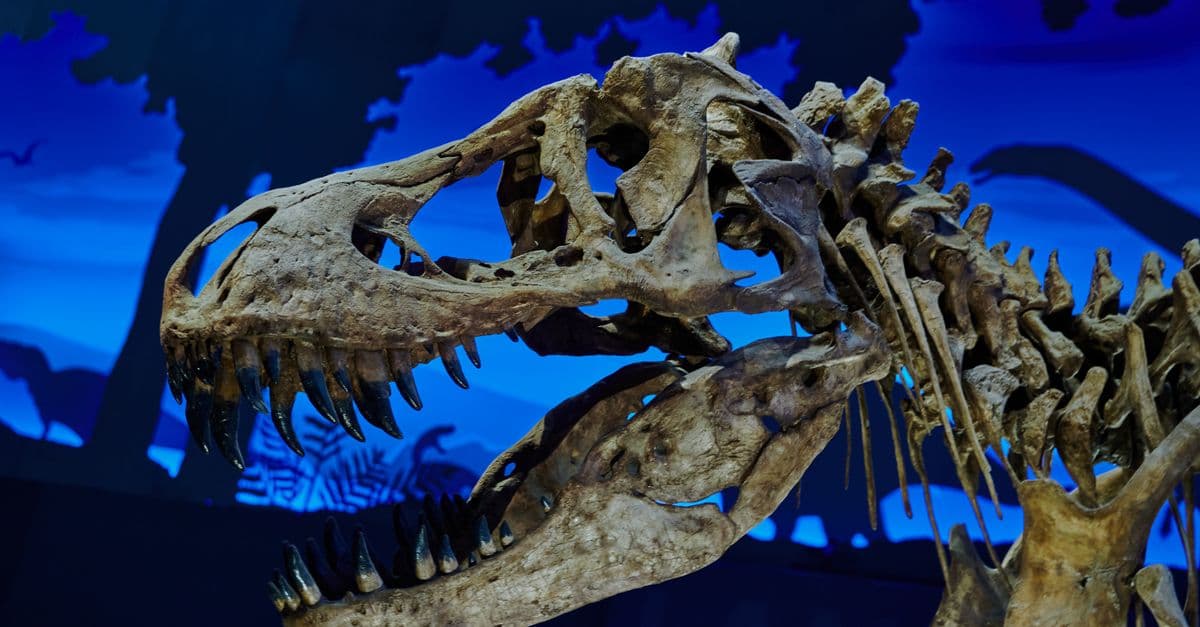
A dinosaur bone does not simply survive for 66 million years — it is chemically replaced, molecule by molecule, until what you hold is stone wearing the shape of life. The odds against any given animal leaving a fossil are staggering, which is why every specimen in a museum is a triumph of improbable geology.

How Radiometric Dating Works
Radiometric dating compares a radioactive parent isotope with its stable daughter, using fixed half-lives to date rocks, fossils, and Earth itself.
How Scientists Measure the Age of Earth
Earth's age is not guessed from one rock. This guide explains radiometric dating, meteorites, zircon crystals, half-lives, and why 4.54 billion years is robust.