How Fossils Form: The Science of Permineralization and Prehistoric Preservation
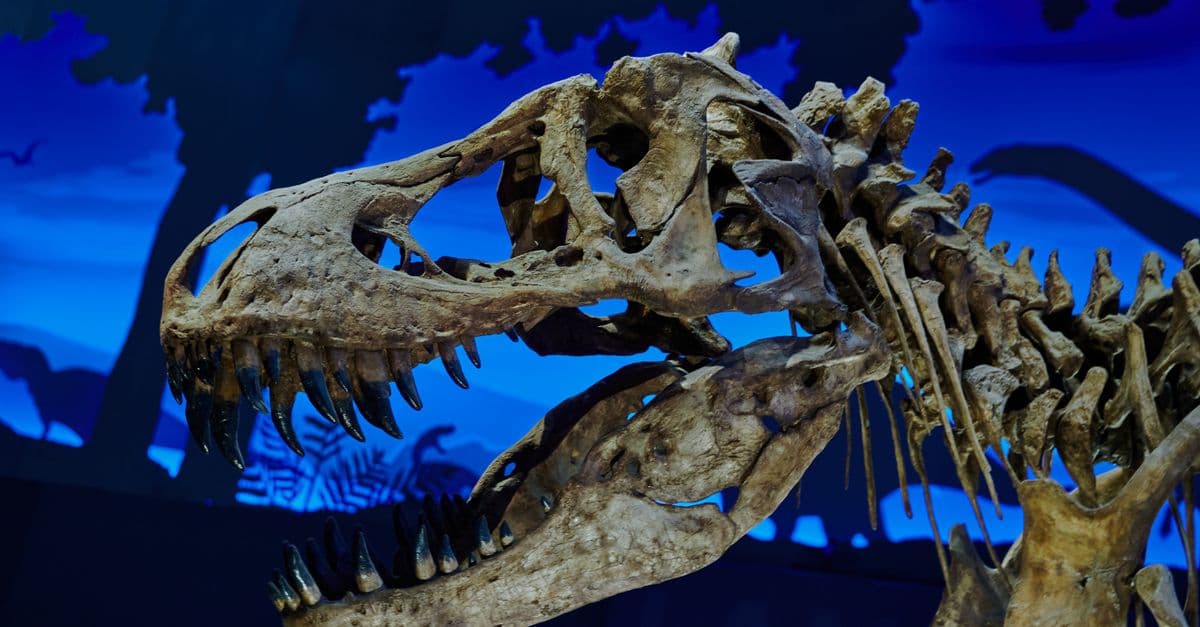
Photo: Suki Lee / Pexels
Every dinosaur skeleton on museum display represents an almost impossibly improbable series of events: the right burial, the right chemistry, the right geology, and the right discoverer — separated by tens of millions of years. A fossil is not simply a preserved bone. It is a stone replica, rebuilt mineral by mineral over geological time, while the original organic material dissolved away. Understanding how that replacement happens explains why the fossil record is simultaneously our most detailed window into deep history and a radically incomplete one.
What Taphonomy Reveals Before Fossilization Begins
Taphonomy — from the Greek taphos (burial) and nomos (law) — is the study of what happens to an organism between death and discovery. It is the discipline that puts context around every fossil, because what happened to a body after death determines what, if anything, survives.
When a large animal like a dinosaur dies, the body enters a predictable sequence. Soft tissue — muscle, skin, organs — begins decomposing within hours to days through bacterial action. Scavengers disarticulate the skeleton. Insects, fungi, and weathering attack what remains. In most environments, within a decade, nothing is left. The overwhelming default outcome for any dead animal is complete destruction and recycling back into the biosphere.
Fossilization requires interrupting that sequence — usually by rapid burial. Sediment (river mud, volcanic ash, wind-blown sand, lake bed silt) must cover the remains before decomposition or scavenging removes the hard parts. The burial must be deep enough to remove the material from the zone of active weathering and biological disturbance, typically several meters below the surface.
Lines of Arrested Growth (LAGs) — the bone ring analogs to tree rings — survive this transition only because the bone mineral itself is comparatively resistant. But even bone begins dissolving in acidic soil conditions within thousands of years. The specific chemistry of the burial environment is as important as burial speed.
Source: Behrensmeyer, A.K., Paleobiology (1978) — Foundational study on taphonomic processes and the stages of bone weathering after death, establishing the field of vertebrate taphonomy.
The Mechanics of Permineralization
Permineralization is the most common mechanism by which bone and shell survive into the fossil record. The process is elegant in its chemistry and slow on any human timescale.
After burial, groundwater percolates through the sediment and into the porous structure of bone. Bone is not solid: it contains a dense network of microscopic channels — the Haversian canals that once carried blood vessels — and smaller spaces between the mineralized collagen fibers. These void spaces are the targets of permineralization.
As groundwater moves through, it carries dissolved minerals: silica (SiO₂), calcite (CaCO₃), iron compounds, and others depending on local geology. When the water chemistry changes — through pressure, temperature shifts, or saturation — those minerals precipitate out of solution and crystallize inside the bone's void spaces. The mineral fills the pore, then the adjacent pore, then the next, building up until the internal architecture of the bone is replicated in stone.
The result is a bone that retains its original external and internal shape — sometimes preserving cellular-level detail — but has had most of its void space replaced with mineral. The organic collagen that originally gave bone its flexibility is usually gone. What remains is the original hydroxyapatite mineral of the bone matrix, reinforced and supplemented by the introduced mineral.
Replacement goes further. In some cases, the original bone mineral itself dissolves and is replaced by a different mineral entirely: silica replacing calcite, pyrite replacing bone in marine environments, or calcite replacing silica in older beds. A fossil that has undergone complete replacement may look identical to a permineralized bone but is chemically entirely different from the original.
Source: University of California Museum of Paleontology (UCMP) — "Permineralization," Berkeley, ongoing educational resource explaining silicification, carbonate mineralization, and void-space infilling mechanisms.
Source: National Park Service, Geological Resources Division — "Permineralization and Replacement," describing the chemical pathways of silicification and calcite replacement in vertebrate fossils across US national parks.
Why Fossilization Is Extraordinarily Rare
This is the number that should recalibrate every person's sense of the fossil record: scientists estimate that well under one in one billion individual animals that have ever lived has left a recoverable fossil. Some estimates put the fraction even lower.
Several compounding factors explain this:
Hard parts are required. Soft-bodied organisms — worms, jellyfish, most insects — leave almost no fossil record unless preserved by exceptional chemistry (like the Burgess Shale's unique clay mineral replacement). Vertebrates have bone and teeth, which are more preservable, but even these fail under most burial conditions.
Environment is critical. Marine environments — particularly shallow-sea floors with continuous fine sediment deposition — are dramatically better for preservation than land environments. This is why the marine invertebrate fossil record is so much richer than the terrestrial vertebrate record. A dinosaur dying on a floodplain had a better-than-average (for land animals) chance of being covered by river sediment. A dinosaur dying on an upland ridge had almost no chance.
Geology must cooperate over tens of millions of years. Even a well-buried, well-permineralized fossil can be destroyed if the rock it sits in is subducted into the mantle, metamorphosed by heat and pressure, or eroded at a rate faster than paleontologists can find it. Most fossil-bearing rock is eventually recycled by plate tectonics. The geological record is also biased toward the relatively recent: older rocks have had more time to be destroyed, which is why dinosaur-era fossils (66–252 million years old) are already comparatively rare compared to Cenozoic mammal fossils, and Cambrian animal fossils (485–538 million years old) are rarer still.
Discovery requires exposure at the surface. A fossil buried 500 meters underground serves no one. Erosion — rivers cutting through canyon walls, waves eating sea cliffs, wind stripping desert pavement — must expose the fossil at the surface at the precise time a paleontologist happens to look. Thousands of fossils erode out of cliffs each year, exposed for a season before rain and frost reduce them to fragments.
The takeaway is not pessimism about paleontology. The takeaway is that every named species in the fossil record is a genuine survivor of an improbable gauntlet, and our picture of prehistoric life is assembled from an extremely non-random sample of that life.
Source: Valentine, J.W., On the Origin of Phyla, University of Chicago Press (2004) — quantitative discussion of preservation probability and the incompleteness of the fossil record.
Trace Fossils: Recording Behavior, Not Bodies
The fossil record contains two broad categories, and the second is often underappreciated by the public. Body fossils are the preserved remains of an organism itself — bones, shells, teeth, wood. Trace fossils (technically called ichnofossils) are the preserved evidence of an organism's behavior: footprints, burrows, feeding marks, eggs, nests, and feces.
Trace fossils are scientifically valuable in ways that body fossils cannot match. A footprint records a living animal moving through a real environment at a real moment. It captures body weight (from impression depth), gait (from stride length and foot placement), and sometimes group behavior (from parallel trackways). The famous dinosaur trackways at Dinosaur Ridge in Colorado and at Lark Quarry in Australia preserve moments of group movement — herding or fleeing behavior — that no body fossil could reveal.
Coprolites — fossilized feces — are trace fossils that directly document diet. The bone-crushing coprolites associated with Tyrannosaurus rex (see Tyrannosaurus Rex: The Science) contain identifiable bone fragments that confirm its osteophagy (bone-eating) behavior. Spiral coprolites from sharks preserve the intestinal valve structure. Plant-eating dinosaurs' coprolites have yielded seeds, pollen, and even fungal spores.
Trackway terminology:
| Term | Definition |
|---|---|
| Track | A single footprint impression |
| Trackway | A sequence of tracks from one animal |
| Ichnogenus | A classification group for trace fossils (separate from body fossil taxonomy) |
| Dinoturbation | Extensive disruption of sediment by large numbers of dinosaurs |
| Undertracks | Ghost impressions made below the surface by a heavy animal stepping above |
The separation of trace fossils from body fossils into their own taxonomic system (ichnotaxonomy) reflects a practical reality: you almost never find the body fossil and the trace fossil of the same individual together. A track is made; the animal walks away. The track is preserved; the animal dies somewhere else entirely. The ichnogenus Grallator — a three-toed theropod track — has been found across multiple continents and time periods, made by animals ranging from small coelurosaurs to large allosaurs, none of which we can definitively identify from the tracks alone.
Source: Lockley, M.G. and Hunt, A.P., Dinosaur Tracks and Other Fossil Footprints of the Western United States, Columbia University Press (1995) — comprehensive reference on ichnology and trace fossil interpretation in Mesozoic formations.
Exceptional Preservation: When the Rules Break Down
Standard permineralization preserves bone and shell. A handful of exceptional depositional environments preserve far more, and the fossils they produce have transformed entire fields.
Amber is fossilized tree resin. When an insect, small vertebrate, or plant fragment becomes trapped in viscous resin, it can be enclosed before decomposition begins. The resin hardens over millions of years into amber, encasing its contents in an oxygen-deprived, antimicrobially hostile environment. Amber preserves three-dimensional soft tissue — compound eye facets, wing membrane venation, hair, feathers — at resolutions that permineralization cannot approach.
Cretaceous amber deposits in Myanmar (approximately 99 million years old) have yielded extraordinary specimens: a feathered dinosaur tail segment, baby birds with preserved plumage, ticks gorged with blood, and insects in the act of mating. The feathered tail specimen, described by Xing et al. in Current Biology (2016), preserves individual feather barbules and even residual coloration chemistry — evidence that could not have survived permineralization.
Exceptional preservation sites — Lagerstätten (German for "storage places") — are deposits where an unusual combination of anoxic (oxygen-free) water, fine-grained rapid sediment, and low biological disturbance preserves soft tissue alongside hard parts. The Messel Pit in Germany (Eocene, ~47 million years ago), the Burgess Shale in Canada (Cambrian, ~508 million years ago), and the Yixian Formation in China (Early Cretaceous, ~125 million years ago) are the most celebrated. The Yixian is particularly relevant to dinosaur research: it is the source of most feathered theropod specimens that established the dinosaur-to-bird transition (see Did Dinosaurs Have Feathers?).
Mummification in arid environments can preserve not just bone but skin, ligament, and occasionally internal organs. Hadrosaur "mummies" — most famously "Dakota," a Edmontosaurus specimen found in 1999 — preserve skin impressions wrapping around bones, revealing body shape, scale texture, and muscle mass estimates that complement skeletal reconstructions significantly.
Permafrost preserves whole organisms. Woolly mammoths frozen in Siberian permafrost retain fur, skin, stomach contents, and even liquid blood in some recent specimens. While this extends only ~50,000 years into the past (far younger than dinosaur-era fossils), it provides a calibration point for preservation quality: when we look at an amber-preserved insect or a mummified hadrosaur, we can compare the preservation mechanisms against permafrost specimens where we can directly verify what is retained.
Source: Xing, L. et al., Current Biology (2016) — Description of a feathered dinosaur tail preserved in Burmese amber, documenting individual feather microstructure and residual coloration.
Source: Schweitzer, M.H. et al., Science (2005) — Identification of soft tissue preservation including blood vessel structures in a T. rex femur, reopening questions about the limits of molecular preservation.
How Radiometric Dating Fixes Fossil Age
A fossil's geological context tells you what layer of rock it came from. Radiometric dating tells you how old that layer is. Together they produce the dates — "this animal lived approximately 75 million years ago" — that appear on museum labels and in research papers.
Radiometric — more precisely radioactive — dating exploits the fixed decay rates of unstable isotopes. A radioactive isotope decays into a daughter isotope at a rate determined by its half-life: the time required for half of any given sample to decay. Half-lives are measured in the laboratory and are constant — they do not change with temperature, pressure, or chemistry, which is what makes them reliable geological clocks.
The most widely used systems for dating rocks in the Mesozoic (the age of dinosaurs) are:
| System | Parent Isotope | Daughter Isotope | Half-Life | Useful Range |
|---|---|---|---|---|
| Uranium-Lead (U-Pb) | ²³⁸U | ²⁰⁶Pb | 4.47 billion years | 1 million – 4.5 billion years |
| Potassium-Argon (K-Ar) | ⁴⁰K | ⁴⁰Ar | 1.25 billion years | 100,000 years – 4.5 billion years |
| Argon-Argon (Ar-Ar) | ⁴⁰Ar | ³⁹Ar | 1.25 billion years | Same as K-Ar, higher precision |
| Rubidium-Strontium (Rb-Sr) | ⁸⁷Rb | ⁸⁷Sr | 48.8 billion years | 10 million – 4.5 billion years |
The process resembles reading a hourglass that started running at the moment a rock crystallized. When volcanic rock solidifies from magma, it incorporates radioactive isotopes from the melt but (for most systems) excludes or starts fresh with the daughter product. The ratio of parent to daughter that accumulates afterward measures elapsed time.
Fossils themselves are rarely dated directly — the mineral that replaced the bone is often not the type that contains dateable isotopes in useful concentrations. Instead, paleontologists date the rock layers above and below the fossil. If the layer beneath the fossil is dated to 75.2 million years ago and the layer above is dated to 74.8 million years ago, the fossil is bracketed between those dates. Volcanic ash layers — tephra — are particularly useful because they crystallize rapidly and synchronously across wide areas, giving precise time markers in sedimentary sequences.
Biostratigraphy complements radiometric dating. Certain species of microfossils (foraminifera, pollen, conodonts) are known to have existed only during specific geological intervals. Their presence in a layer confirms a time range independently of radiometric methods. When biostratigraphy and radiometric dating agree, confidence in the date is high.
The Chicxulub impact — which ended the non-avian dinosaur era — has been dated by Ar-Ar methods to 66.043 ± 0.011 million years ago. That error bar of ±11,000 years reflects the precision possible with modern mass spectrometry. For a clock measuring 66 million years, it represents accuracy of better than 0.02%.
Source: Renne, P.R. et al., Science (2013) — High-precision Ar-Ar dating of the Chicxulub impact to 66.043 ± 0.011 Ma, establishing the temporal boundary of the Cretaceous-Paleogene extinction.
Source: Bowring, S.A. and Schmitz, M.D., Reviews in Mineralogy and Geochemistry (2003) — Overview of U-Pb geochronology methods and their application to Mesozoic rock sequences.
Molecular Paleontology: What Chemistry Survives
The discovery that organic molecules can survive inside fossils far longer than textbooks once predicted is one of the most disruptive findings in recent paleontology. The working assumption through most of the twentieth century was that all original biochemistry was destroyed during fossilization. That assumption has been revised.
Mary Schweitzer's 2005 Science paper describing flexible, apparently soft tissue inside a T. rex femur triggered a decade of controversy and follow-up research. Subsequent studies confirmed the presence of what appear to be collagen protein fragments (identified by mass spectrometry), heme compounds associated with hemoglobin, and structures resembling preserved blood vessels in multiple dinosaur specimens. The mechanism of survival is still debated: iron ions from degraded hemoglobin may act as a fixative, crosslinking collagen into a chemically stable form that resists further degradation under low-oxygen conditions.
Ancient DNA (aDNA) from dinosaurs remains beyond reach. DNA degrades with a half-life of approximately 521 years under optimal conditions (frozen, dark, stable pH). Extrapolating that rate, no readable DNA should survive beyond approximately 1.5 million years — a fraction of the age of even the youngest non-avian dinosaurs. Jurassic Park's amber-preserved DNA is fiction. However, collagen protein fragments — which are much more chemically stable than DNA — have now been reported from specimens up to 195 million years old, and the field of palaeoproteomics (ancient protein analysis) is actively expanding the molecular information recoverable from fossils.
The implications extend beyond pure biology. Protein sequences can be used to infer phylogenetic relationships, sometimes supporting or contradicting anatomical analyses. A 2019 study recovered collagen sequences from a Brachylophosaurus specimen that placed hadrosaurs in a closer molecular relationship to birds than to crocodilians — consistent with the morphological phylogeny but independently derived from chemistry rather than bone shape.
Source: Schweitzer, M.H. et al., Science (2005) — Soft tissue recovery from T. rex femur, including flexible vessel structures and cellular material surviving 68 million years.
Source: Wiemann, J. et al., Nature (2018) — Characterization of oxidized lipids and proteins in dinosaur eggshells as a mechanism for molecular preservation over geological time.
What Fossils Cannot Tell Us — and the Experiments That Fill the Gaps
Knowing what fossils preserve is equally important as knowing what they preserve. The gaps shape every reconstruction of extinct animals, and understanding them prevents over-confident claims.
Color is generally not preserved in standard permineralized fossils. The pigment molecules that give feathers, scales, and skin their colors are organic compounds that typically decompose during fossilization. The exception: melanosomes — the microscopic organelles that contain melanin pigment — can be preserved as structures recognizable under electron microscopy. By comparing melanosome shape and density with those of living birds (for which the relationship between melanosome morphology and color is well-established), researchers have inferred coloration in some feathered dinosaurs and early birds with reasonable confidence. Microraptor, a four-winged feathered dinosaur from China, has been reconstructed with iridescent black plumage based on this method.
Sound and behavior leave no direct fossil record. How a dinosaur communicated — whether it used visual display, vocalization, or infrasound — is inferred from anatomy (cranial crests that may have functioned as resonating chambers in hadrosaurs, for example) rather than observed. How dinosaurs like Velociraptor actually hunted can be reasoned from anatomy and rare interaction fossils but never directly witnessed.
Internal anatomy (organs, nervous tissue, blood) is reconstructed by analogy with living relatives, scaled to body size and metabolic estimates. A T. rex brain endocast tells us the volume and rough shape of the brain cavity; what that brain actually processed is inference. Soft tissue reconstructions — muscles, skin texture, the presence or absence of lips — are increasingly supported by new fossil evidence but remain partly interpretive.
The discipline of experimental taphonomy addresses some of these gaps by actually running fossilization experiments: burying modern specimens under controlled conditions and measuring what survives under different chemistry, temperature, and sediment types. These experiments help calibrate which ancient claims are chemically plausible and which are not.
The radioactivity that makes radiometric dating possible has a direct intellectual lineage to Henri Becquerel's 1896 discovery of radioactivity itself — an experiment described in detail at The Becquerel Radioactivity Discovery — without which we would have no reliable means of dating the geological column, and every fossil age would be a relative estimate rather than an absolute date.
Source: Li, Q. et al., Science (2012) — Melanosome preservation in Microraptor feathers and reconstruction of iridescent coloration using comparisons with living bird melanosomes.
Frequently Asked Questions
Q: Why are fossils so rare?
A: Fossilization requires an improbable sequence: rapid burial before decomposition, the right groundwater chemistry to drive permineralization, burial deep enough to avoid weathering, and then erosion at exactly the right time and rate to expose the fossil before it is destroyed. Scientists estimate fewer than one in a billion individual animals that have ever lived left a recoverable fossil. Marine environments produce far more fossils than land environments because fine sediment deposition is more continuous in shallow seas.
Q: How quickly can a fossil form?
A: The minimum time for recognizable permineralization varies widely by environment. In hydrothermal spring systems, silica can replace soft tissue within years to decades — experimentally confirmed in modern spring deposits. Under typical geological conditions, significant mineral infilling of bone pores takes thousands to tens of thousands of years. Complete permineralization replacing original bone mineral can take millions of years. Amber entombment, by contrast, can preserve an organism intact within days of resin flow, though the amber itself requires millions of years to fully polymerize.
Q: Can soft tissue really be preserved in fossils?
A: In exceptional circumstances, yes. Mary Schweitzer's 2005 Science paper identified flexible vessel-like structures and what appear to be collagen fragments in a T. rex femur. Subsequent studies found similar material in multiple dinosaur specimens. The proposed mechanism involves iron from degraded hemoglobin crosslinking collagen into a chemically stable form that resists decomposition in low-oxygen conditions. Protein fragments (not intact proteins) have now been recovered from specimens up to 195 million years old in the emerging field of palaeoproteomics.
Q: How do scientists date fossils?
A: Fossils themselves are rarely dated directly. Instead, paleontologists date the rock layers above and below the fossil using radiometric methods — most commonly Uranium-Lead (U-Pb) and Argon-Argon (Ar-Ar) dating of volcanic ash layers (tephra) within the sedimentary sequence. These methods use known radioactive decay rates to calculate how long ago a rock crystallized. Biostratigraphy — identifying time-sensitive index microfossils in the same layer — provides an independent cross-check.
Q: Can dinosaur DNA ever be recovered from fossils?
A: No. DNA degrades with a half-life of approximately 521 years under optimal conditions. Extrapolating that rate, no readable DNA should survive beyond roughly 1.5 million years — far younger than even the most recent non-avian dinosaurs (66 million years at minimum). Jurassic Park's amber-preserved DNA is scientifically implausible. However, collagen protein fragments are much more chemically stable than DNA and have been recovered from Mesozoic-aged specimens, providing partial molecular information about extinct animals.
Q: What is a trace fossil and why does it matter?
A: A trace fossil (ichnofossil) is preserved evidence of an organism's behavior rather than its body — footprints, burrows, nests, feeding marks, and coprolites (fossilized feces). Trace fossils can reveal things no body fossil can: walking speed from stride length, group behavior from parallel trackways, and direct dietary evidence from coprolite contents. The ichnogenus Grallator — a three-toed theropod track — is found on multiple continents across tens of millions of years, recording the footfalls of living animals in ways their bones never could.
The Takeaway
A fossil is not preservation — it is replacement. The original organism is gone; what survives is a mineral echo, shaped by chemistry, buried by geology, and exposed by erosion at the precise moment someone looked. The process is so demanding that less than one in a billion animals leaves any trace, which means every species we know from fossils is the lucky survivor of a multi-million-year obstacle course. The tools we use to read those survivors — taphonomy, isotope geochemistry, molecular paleontology, experimental decay studies — are getting sharper every decade, and what they are recovering from stone is increasingly close to the living animal.
Read next:
Follow new articles
Add SciHub101 to your feed reader to see new science and technology stories.
About the Author
SciHub101 is an independent science and technology publication founded and edited by Buğra Sözeri, a software engineer and app developer based in Türkiye. AI tools assist with drafting and research. Source documentation in the existing archive is uneven, and articles are being reviewed and corrected. The Editorial Team byline identifies editorial responsibility; it does not certify specialist or independent human review. Where we compare products, anything built by our own team is labelled as such — see the editorial guidelines and About page for how corrections and disclosures work.
Related Articles
Tyrannosaurus Rex: The Science Behind the World's Most Studied Dinosaur
T. rex is not just a cultural icon — it is the most scientifically studied non-avian dinosaur in history, with over 50 reasonably complete specimens and a research record spanning more than a century. What emerges from that scrutiny is more complex and more surprising than the movie monster: an animal with the most powerful bite force ever measured in a land animal, better depth perception than a hawk, and a growth strategy that turned a 50-kg juvenile into a 9-tonne adult in roughly 20 years.
Were Dinosaurs Warm or Cold-Blooded? The Mesothermy Evidence
For decades, paleontologists sorted life into two metabolic boxes — warm-blooded mammals and cold-blooded reptiles — and debated which box dinosaurs belonged in. The answer, emerging from bone slices, isotope chemistry, and growth-rate analysis, is that most dinosaurs fit neither box. They occupied a metabolic middle ground that has no precise modern equivalent.
How Big Were Dinosaur Eggs?
Dinosaur eggs reveal nesting behavior, growth, oxygen limits, shell structure, and why even giant dinosaurs did not lay impossibly huge eggs.
Were Dinosaurs Colorful?
Fossil pigments, feathers, skin impressions, and living relatives suggest many dinosaurs were more colorful than old museum models.