Tyrannosaurus Rex: The Science Behind the World's Most Studied Dinosaur
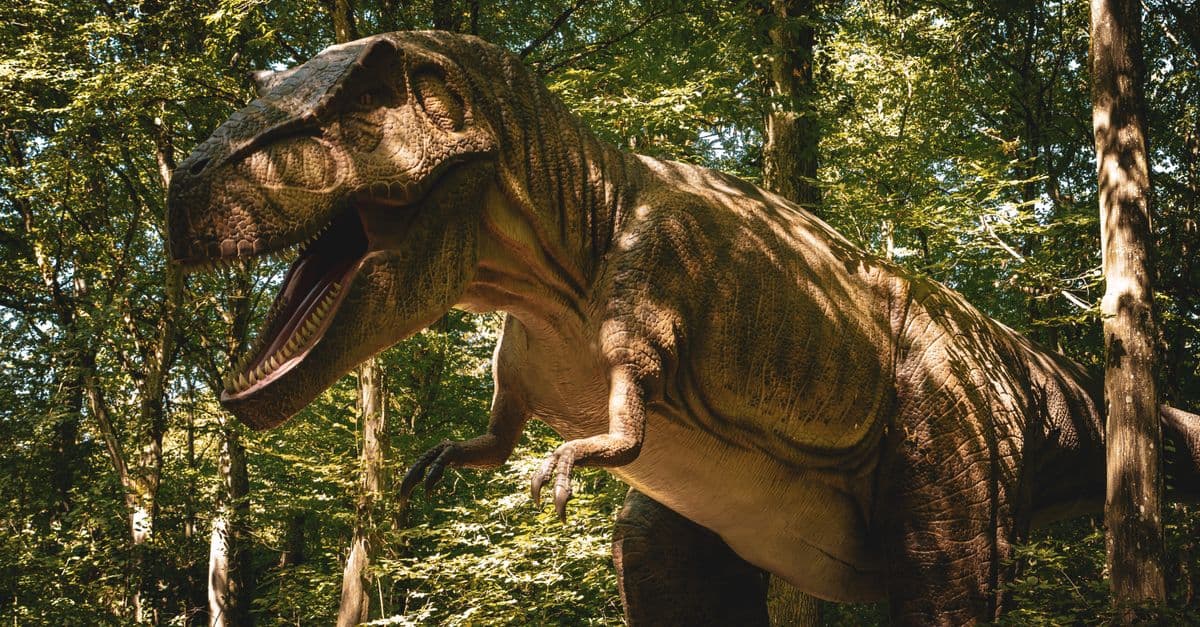
Photo: Antonio Mistretta / Pexels
T. rex is not just a cultural icon — it is the most scientifically studied non-avian dinosaur in history, with over 50 reasonably complete specimens and a research record stretching more than 130 years. What emerges from that scrutiny is more complex and more surprising than any movie version: an animal with the most powerful bite force ever measured in a terrestrial vertebrate, depth perception comparable to a hawk, and a growth strategy that turned a 50-kilogram juvenile into a 9-tonne adult in roughly 20 years. Nearly every headline claim about T. rex — its speed, its arms, its intelligence, whether it was a hunter or a scavenger — has been genuinely contested and genuinely studied, and the scientific answers are almost always more nuanced than the simple stories suggest.
What T. rex Was (and Wasn't)
Tyrannosaurus rex lived in what is now western North America during the latest Cretaceous period, approximately 68–66 million years ago — meaning it existed right up until the Chicxulub asteroid impact (see What Killed the Dinosaurs). It was a large-bodied theropod in the family Tyrannosauridae, a group of carnivorous dinosaurs characterized by two-fingered forelimbs, massive skulls with banana-sized teeth, and binocular forward-facing vision.
T. rex was not the largest theropod that ever lived. That title belongs to either Spinosaurus aegyptiacus (possibly 14+ meters, though much of the evidence is fragmentary) or Giganotosaurus carolinii from Argentina. However, T. rex was the heaviest and most robustly built theropod, with the largest head-to-body ratio and the most powerful jaw mechanics of any theropod known.
An adult T. rex averaged approximately 8–9 metres in length and 7–9 tonnes in mass. The largest confirmed individual — nicknamed "Scotty," described in a 2019 paper — is estimated at approximately 8.8 tonnes and about 13 meters long, making it the largest T. rex specimen on record.
Source: Scott, R. et al., The Anatomical Record (2019) — Description of "Scotty," the largest known T. rex individual, with mass and size estimates.
The Bite: Numbers Behind the Headline
The bite force of T. rex is one of the most studied mechanical questions in vertebrate paleontology, and the results are genuinely extraordinary.
Multiple independent studies using different methodologies — finite element analysis of the jaw bones, muscle attachment area measurements, and mechanical advantage calculations — consistently produce estimated bite forces of 35,000–57,000 newtons at the posterior (back) teeth for an adult. To put that in physical context:
- The bite force of a large saltwater crocodile, the hardest-biting living animal, is approximately 16,000 N
- T. rex's estimated minimum (35,000 N) is roughly twice the crocodile's maximum
- The maximum estimate (57,000 N) is equivalent to the weight of approximately three small cars pressing on a single tooth
This is not just a spectacular number. It has behavioral implications. T. rex is the only known theropod that routinely bit through and consumed bone. Its coprolites (fossilized feces) contain abundant crushed bone fragments — something no other large theropod's coprolites show in the same proportion. This bone-crushing behavior, called osteophagy, is seen in living animals only in hyenas among mammals (which have bite forces of approximately 9,000–10,000 N). T. rex extracted bone marrow as a significant caloric source — a feeding strategy that was unique among large dinosaur predators.
T. rex teeth were not blade-like (as in most theropods) but heterodont in a specific way: the front teeth were D-shaped in cross-section and used for gripping and tearing; the back teeth were more robust, rounded in cross-section — what paleontologists call "railroad spike" teeth — and were the crushing instruments. The tooth enamel was among the thickest of any dinosaur.
Source: Gignac, P.M. and Erickson, G.M., Scientific Reports (2017) — Finite element analysis and muscle force modeling for T. rex bite force, producing the 35,000–57,000 N range and bone-pulverizing implications.
Speed: The Power Walker Debate
Few questions about T. rex have generated more research, more disagreement, or more colorful media coverage than how fast it could move. The honest answer: probably not very fast in a sprint, but highly effective at steady pursuit over longer distances.
The structural argument for moderate speed: T. rex had a body mass of 7–9 tonnes. For an animal that heavy, the stresses placed on leg bones during a running stride scale dramatically. Biomechanical analysis by John Hutchinson and Mariano Garcia (2002) showed that T. rex would have needed leg muscles comprising approximately 86% of its total body mass to run at the speeds often depicted in films — physically impossible. Their estimate: T. rex was likely incapable of true running (defined as having an aerial phase where both feet are off the ground simultaneously) and moved instead with a fast walking or grounded running gait.
The preferred walking speed estimate: A 2021 study by Pasha van Bijlert and colleagues at the Vrije Universiteit Amsterdam reconstructed the natural resonant frequency of the T. rex skeleton — effectively calculating the mechanical stride frequency like a pendulum. Their result: T. rex's preferred walking speed was approximately 4.6 km/h (2.9 mph) — roughly the pace of a brisk human walk. This would make its locomotion energetically efficient without requiring sprint-level muscle forces.
Maximum sprint speed estimates: Range from approximately 12 km/h (some biomechanical models) to 20 km/h (other models with different assumptions about muscle properties). These speeds are faster than a fast-walking human but slower than a running human athlete. For context, a large hadrosaur or ceratopsian prey animal was probably not dramatically faster, meaning pursuit predation was still viable.
The key insight: T. rex may have been a long-distance power-walker that used endurance to wear down prey rather than a sprint predator that relied on acceleration. This is consistent with its ankle bone structure — it had elongated metatarsals (foot bones) that function as a passive spring mechanism, recovering energy during each stride, a feature seen in long-distance endurance runners among living animals.
Source: Hutchinson, J.R. and Garcia, M., Nature (2002) — Biomechanical modeling showing T. rex could not sprint like film depictions; leg muscle mass constraints.
Source: van Bijlert, P.A. et al., Royal Society Open Science (2021) — Natural frequency analysis of T. rex locomotion estimating preferred walking speed at approximately 4.6 km/h.
Hunter or Scavenger? The Evidence
The debate between Jack Horner (primary scavenger hypothesis) and the mainstream paleontological view (active predator) is probably the most publicly well-known scientific argument in modern dinosaur paleontology. The evidence now strongly favors active predation as the primary feeding mode, with scavenging as an opportunistic supplement — like every large living carnivore.
Evidence for active predation:
The most compelling single piece of evidence is a T. rex tooth crown embedded in a hadrosaur tail vertebra. The bone around the tooth showed clear healed bone regrowth — the animal survived the bite, meaning T. rex attacked a living hadrosaur. A scavenger does not attack living animals. This specimen, first described in Geology in 1998 by Kenneth Carpenter, is the definitive refutation of the pure-scavenger hypothesis.
Additional evidence:
- Forward-facing eyes with a binocular overlap estimated at approximately 55 degrees — comparable to modern hawks and far wider than most reptiles. Binocular overlap is associated with depth perception for judging distances to moving prey.
- Large olfactory bulbs (confirmed by endocranial casts), consistent with tracking prey by scent over long distances — useful for both hunting and scavenging.
- Limb proportions and ankle structure consistent with sustained pursuit rather than simply walking to carcasses.
- Social behavior evidence: bone pathologies in some T. rex specimens are consistent with combat injuries from other T. rex, suggesting social hierarchy competition — more consistent with a hunting predator defending resources than a dedicated scavenger.
Why scavenging was also part of the picture:
No large carnivore ignores a free meal. Spotted hyenas — which have a reputation as scavengers — kill more than 70% of their own food. Lions scavenge extensively when carcasses are available. T. rex certainly scavenged when the opportunity arose: its bone-crushing capability and high-tolerance gut for degraded meat (inferred from its bone-processing behavior) are consistent with consuming aged carcasses. The hypothesis that T. rex was exclusively a scavenger was almost certainly wrong; the hypothesis that it incorporated scavenging alongside predation is almost certainly right.
Source: Carpenter, K., Geology (1998) — T. rex tooth crown in hadrosaur vertebra with healed bone regrowth; definitive evidence of live predation.
Source: Stevens, K.A., Journal of Vertebrate Paleontology (2006) — Binocular overlap analysis of T. rex visual field compared to other theropods and living animals.
The Brain and Senses: More Than a Killing Machine
T. rex intelligence — compared with what, and measured how — is a genuinely interesting question. Relative to other non-avian dinosaurs, T. rex appears to have had a larger and more complex brain, particularly in regions associated with sensory processing.
Endocasts — casts made from the interior of the skull cavity, which preserve the brain's external shape — show that T. rex had:
- Large olfactory bulbs: the brain regions processing smell. The ratio of olfactory bulb size to overall brain size in T. rex is comparable to modern Turkey vultures — animals that locate food primarily by scent.
- Large optic lobes: consistent with well-developed vision.
- A cochlea (inner ear structure) configured for detecting low-frequency sounds — possibly infrasound, which travels long distances through terrain.
- A relatively large telencephalon (the forebrain region associated in living animals with complex behaviors, learning, and social interaction).
A 2023 study in the Journal of Comparative Neurology generated headlines by estimating T. rex's neuron count in the telencephalon as comparable to that of some primates. This claim was immediately and vigorously contested by other paleontologists, who argued that the methodology — extrapolating from brain volume to neuron density using primate ratios — was not validated for non-avian dinosaurs and produced an implausible result. The debate is unresolved, but the less dramatic baseline conclusion — that T. rex was a sensory-sophisticated animal with above-average (for dinosaurs) cognitive capacity — is not seriously disputed.
Source: Witton, M. and Ridgely, R., in Tyrannosaurid Paleobiology, Indiana University Press (2013) — Endocast analysis of sensory processing capacity in T. rex.
Growth: The Explosive Teenage Strategy
T. rex had one of the most dramatic growth strategies ever documented in a vertebrate. Bone histology (the microscopic structure of bone tissue) tells the story in growth rings and tissue types.
Bone histology results: T. rex passed through four distinct life history phases:
- Juvenile (0–14 years): rapid growth, relatively gracile build, approximately 30–100 kg. Juveniles had longer legs relative to body size, lighter skulls, and slender teeth — different hunting profile from adults.
- Adolescent (14–18 years): explosive growth phase, gaining approximately 600–700 kg per year (roughly 2 kg per day). Fibrolamellar bone (fast-growth tissue) dominates.
- Young adult (18–22 years): growth slows significantly as the animal approaches maximum size.
- Adult/senescent: minimal growth, slower bone remodeling, increasing pathology frequency.
Most T. rex specimens that have been analyzed died between ages 14–28. The oldest known individual ("Tyrannosaurus rex specimen MOR 980") died at approximately 28 years.
Sexual dimorphism: Whether T. rex showed significant size differences between males and females is contested. Some researchers argue for two distinct size morphs (a larger "robust" form and a smaller "gracile" form). Others argue the variation is better explained by age. A 2020 study suggested that medullary bone — a calcium-rich tissue that female birds produce during egg-laying — has been found in some T. rex specimens, potentially allowing sex identification, but sample sizes remain small.
Source: Erickson, G.M. et al., Nature (2004) — Bone histology of T. rex specimens revealing four-phase growth strategy and maximum growth rates.
The Arms: What Were They Actually For?
T. rex's arms are the most disproportionate limbs in the theropod record. At approximately 1 meter long on an animal 12–13 meters in total length, they clearly could not reach the mouth, could not reach the ground, and are often treated as vestigial or useless.
The evidence says otherwise. The forelimb bones of T. rex are robustly built — the cortical bone (outer shell) is thick and the muscle attachment scars are prominent, indicating powerful, well-developed muscles. A 2022 study by Kevin Padian in Acta Palaeontologica Polonica proposed that T. rex arms, rather than being vestigial, were adapted for close-contact grappling — holding struggling prey against the body while the jaws delivered killing bites. The two-fingered hand configuration and the range of motion in the elbow joint are consistent with this.
An alternative hypothesis: the arms may have been used in mating, helping a male brace against a female during copulation. This is consistent with the robust musculature and the otherwise puzzling retention of functional anatomy in what would seem, at first glance, like a useless appendage.
Why did the arms shrink? The leading hypothesis is that as T. rex's skull evolved to become larger and heavier, natural selection reduced forelimb length to shift the animal's center of mass backward, improving balance for a bipedal animal carrying an enormous head. The arms were not so much reduced as they were left behind while the skull scaled up.
Source: Padian, K., Acta Palaeontologica Polonica (2022) — Analysis of T. rex forelimb function and grappling hypothesis.
How Many T. rex Were There? A Population Estimate
A 2021 study by Charles Marshall and colleagues at UC Berkeley used scaling relationships between body size, population density, and metabolic rate to estimate the total number of T. rex individuals that ever existed. Their calculation: approximately 2.5 billion T. rex individuals over the species' entire existence of roughly 2.5 million years.
At any given moment, the living population was estimated at approximately 20,000 individuals — thinly spread across western North America. For context, this is roughly the current population of giraffes, and far fewer than most people would imagine for such a dominant predator. The rarity of T. rex fossils (roughly 50 good specimens known) makes more sense when you consider that 20,000 individuals across a continent, most dying in situations that do not favor fossilization, would leave very few recoverable remains.
Source: Marshall, C.R. et al., Science (2021) — Population size estimate for T. rex using macroecological scaling relationships; ~2.5 billion individuals total, ~20,000 at any given time.
Frequently Asked Questions
Q: Could a T. rex outrun a human? A: At maximum estimated speed (12–20 km/h), T. rex could match a fast walking human or a slow jogging human. A trained runner can sustain 12–15 km/h easily. Sprint speed for a fit human reaches 25–30 km/h. Over a very short distance, a human might outrun a T. rex. Over distance, T. rex's endurance stride may have been more sustainable than human sprint speed. The honest answer: it would depend heavily on terrain and circumstances.
Q: Did T. rex really have tiny useless arms? A: The arms were short but not useless. Their musculature was well-developed. The current best hypothesis is that they were used for gripping prey at close range during feeding bites, or possibly for mating. They could not reach the mouth or the ground, but that is not the only possible use for a limb.
Q: Was T. rex the apex predator of its ecosystem? A: Yes, in the Hell Creek Formation and related Late Cretaceous western North American ecosystems, T. rex was the only large carnivore. No other theropod in its environment came close to its body size. This is different from some other predator-rich Cretaceous ecosystems (like the Kem Kem Formation of North Africa, which had at least three large predator species coexisting).
Q: How smart was T. rex compared to other dinosaurs? A: Among non-avian dinosaurs, T. rex had a relatively large and well-developed brain, especially for olfactory processing and vision. The 2023 neuron-count study suggesting primate-level intelligence remains contested and should be treated with significant caution. A reasonable comparison: T. rex was probably cognitively comparable to a modern large crocodilian — sensory-sophisticated, capable of learned behaviors, but not displaying the complex social cognition of living birds or mammals.
Q: Did T. rex have feathers? A: Probably not extensively as an adult. Skin impressions from tyrannosaurids show scales on neck, hip, and tail regions. The ancestral tyrannosauroid Yutyrannus (9 meters, 1,400 kg) had filamentous feathers, so feathers were present in the lineage. The most likely reconstruction is that adult T. rex was largely scaly, possibly with some vestigial feathering on parts of the body, while juveniles may have had more extensive feather coverage for insulation. See Did Dinosaurs Have Feathers? for the full evidence.
Q: How do we know what color T. rex was? A: We don't, not directly. Melanosomes have not been reliably extracted from T. rex skin impressions. The color reconstruction in films (greenish-gray or olive-brown) is artistically plausible but scientifically undetermined. T. rex may have been brilliantly colored for sexual display — many living large predatory birds (cassowaries, for example) are vividly colored — or cryptically colored for ambush. The reconstruction methods are described in How Do We Know What Dinosaurs Looked Like?.
Source: Bell, P.R. et al., Biology Letters (2017) — Tyrannosaurid skin impressions confirming scaly integument on major body regions.
What This Means
T. rex is the best case study for what rigorous paleontology can accomplish. A century of analysis has moved the reconstruction from a tail-dragging, cold-blooded, slow-moving scavenger to a warm-blooded, fast-walking, sensory-sophisticated apex predator with the most powerful bite force of any land animal, a complex growth history, and a behavior set that looks far more like a large living predatory bird than a giant lizard. The picture is still incomplete — the color, the precise social behavior, the vocalizations all remain unknown. But the known details, assembled from bone chemistry, biomechanics, fossil trackways, and microscopic tissue analysis, are more compelling than any movie version. The extinction of this animal — and every other non-avian dinosaur — in the Chicxulub impact event 66 million years ago is explored in What Killed the Dinosaurs. The broader context of how nuclear decay makes it possible to date these 68-million-year-old fossils at all connects to the physics explored in The Becquerel Radioactivity Discovery.
Read next:
Follow new articles
Add SciHub101 to your feed reader to see new science and technology stories.
About the Author
SciHub101 is an independent science and technology publication founded and edited by Buğra Sözeri, a software engineer and app developer based in Türkiye. AI tools assist with drafting and research. Source documentation in the existing archive is uneven, and articles are being reviewed and corrected. The Editorial Team byline identifies editorial responsibility; it does not certify specialist or independent human review. Where we compare products, anything built by our own team is labelled as such — see the editorial guidelines and About page for how corrections and disclosures work.
Related Articles
The Biggest Dinosaurs Ever, Explained: Sauropods, Size, and Science
The largest animals to have ever walked on land were not the predators — they were the plant-eaters. Patagotitan mayorum, a titanosaur from Argentina, weighed an estimated 57–70 tonnes and stretched roughly 37 meters from snout to tail. Getting to that scale required solutions to engineering problems that no other land animal has ever faced or solved.
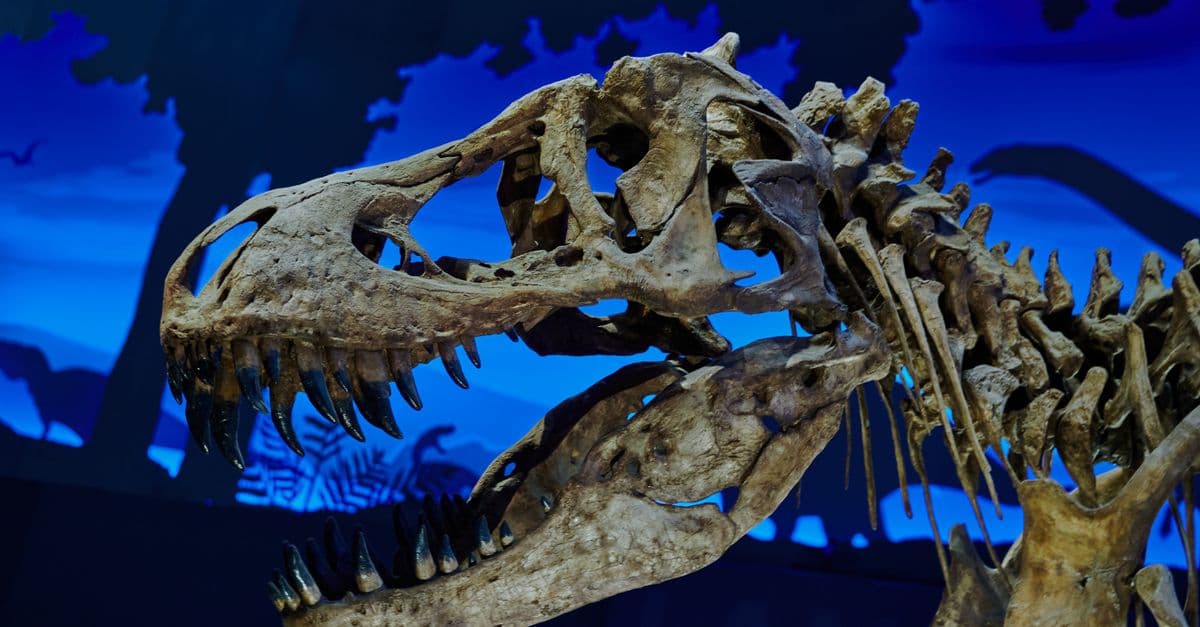
How Fossils Form: The Science of Permineralization and Prehistoric Preservation
A dinosaur bone does not simply survive for 66 million years — it is chemically replaced, molecule by molecule, until what you hold is stone wearing the shape of life. The odds against any given animal leaving a fossil are staggering, which is why every specimen in a museum is a triumph of improbable geology.
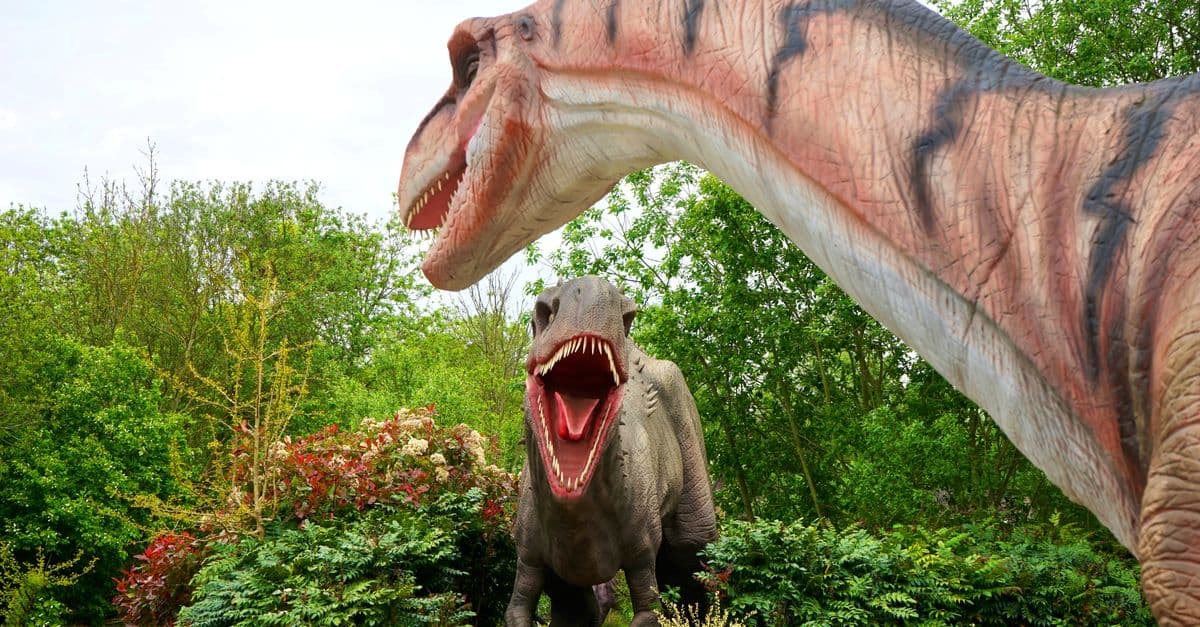
Velociraptor: The Real Science Behind the Jurassic Park Icon
The Velociraptor in Jurassic Park stands 1.8 meters tall, hunts in coordinated packs, and opens doors. The actual animal was the size of a turkey, covered in feathers, and probably hunted alone. Almost nothing about cinema's most famous raptor matches the fossil record — yet the real animal is, in its own way, more interesting than the fiction.
Did Dinosaurs Have Feathers? The Fossil Evidence Explained
In 1996, a Chinese farmer cracked open a rock and found a small predatory dinosaur still wearing its coat of filamentous proto-feathers — 130 million years after it died. That discovery, along with hundreds of similarly preserved fossils from northeastern China, permanently changed how science understood both dinosaurs and the origin of birds. The answer to whether dinosaurs had feathers is not 'some of them.' It's 'most of the lineage that gave rise to birds, and quite possibly several others.'
Did Dinosaurs Roar?
Dinosaur sounds are hard to reconstruct, but fossils, living relatives, and anatomy suggest they may have boomed, hissed, rumbled, or cooed.
How Big Were Dinosaur Eggs?
Dinosaur eggs reveal nesting behavior, growth, oxygen limits, shell structure, and why even giant dinosaurs did not lay impossibly huge eggs.