The Wöhler Urea Synthesis: The Experiment That Killed Vitalism

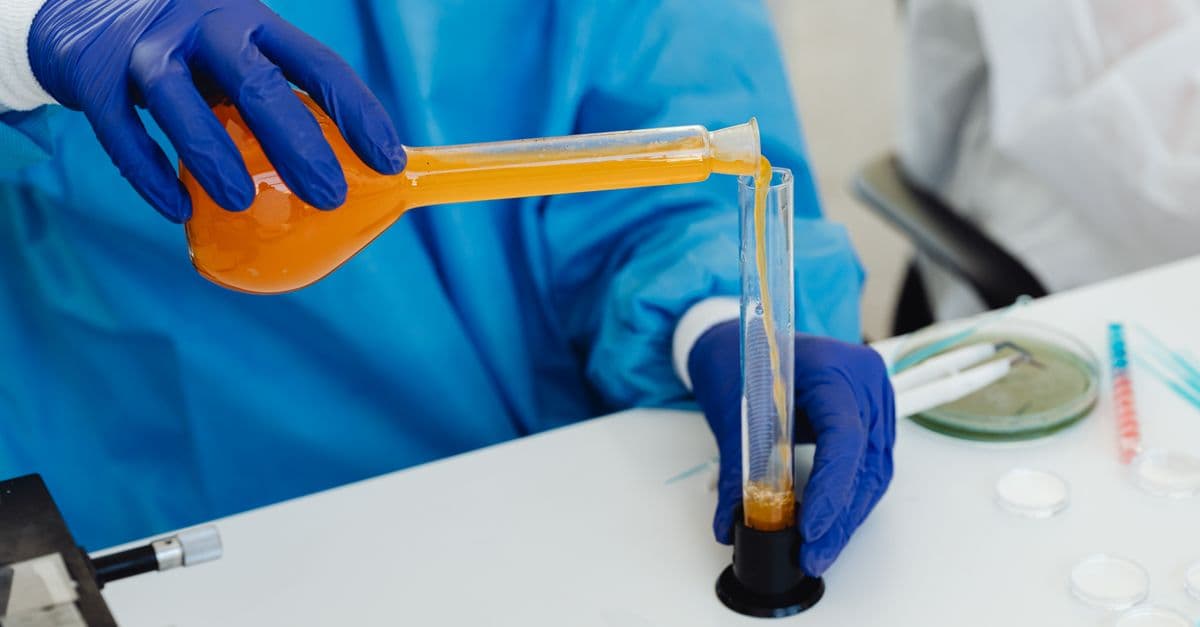
Photo: www.kaboompics.com / Pexels
On February 22, 1828, Friedrich Wöhler wrote a letter to his mentor Jöns Jacob Berzelius that began with remarkable casualness for a result that would overturn a century of chemical doctrine. He mentioned that he could make urea without kidneys. The compound he described — urea, the primary nitrogen-containing waste product of mammalian metabolism, present in urine — had always been classified as an "organic" substance, one that could only be produced by living organisms. Wöhler had made it by heating an inorganic salt. The wall between the chemistry of living things and the chemistry of everything else had just been breached.
The Two Chemistries, and the Doctrine That Separated Them
Vitalism — the philosophical and scientific doctrine, widespread in early 19th-century chemistry, that living organisms contain a special "vital force" or vis vitalis that gives them properties distinct from non-living matter, and that this vital force is necessary to produce the chemical compounds found in living things (organic compounds).
Before Wöhler's experiment, chemistry was widely understood to have two distinct domains. Inorganic chemistry dealt with minerals, metals, salts, and other compounds derived from the non-living world. Organic chemistry dealt with substances obtained from living organisms — fats, sugars, proteins, and metabolic waste products like urea. The distinction was not merely taxonomic. It was metaphysical. Organic compounds were thought to carry a residue of life's special force, and it was assumed — by many chemists, if not universally — that no laboratory process could assemble them from scratch.
This was not an obviously absurd position for 1820. The sheer complexity of organic compounds, compared to the simple salts and oxides of inorganic chemistry, seemed to demand some extra organizing principle. Chemists had successfully analyzed organic compounds, determining their elemental compositions, but synthesis — building them up from simpler, inorganic starting materials — had never been demonstrated. The absence of demonstrated synthesis was taken as evidence that synthesis was impossible without a vital force.
Organic compound — in modern chemistry, any compound containing carbon-hydrogen bonds, though the historical definition was broader: any substance produced by, or obtained from, living organisms; the two definitions do not perfectly overlap, which is itself a legacy of the vitalist tradition.
Jöns Jacob Berzelius, the dominant figure in European chemistry in the 1820s, held a nuanced position on vitalism. He was not a dogmatic vitalist, but he believed that organic compounds were governed by different forces than inorganic ones, and he was skeptical that organic synthesis from inorganic starting materials was achievable. That the letter announcing the first such synthesis landed in his mailbox from one of his own students made the event doubly pointed.
Source: Berzelius, J.J. — correspondence with Wöhler, 1820s–1840s, preserved in the Royal Swedish Academy of Sciences archive; extensively analyzed in Jorpes, J.E. (1966), Jac. Berzelius: His Life and Work, University of California Press.
Friedrich Wöhler: Student, Analyst, Accidental Revolutionary
Friedrich Wöhler was 28 years old when he made urea. Born in Eschersheim (near Frankfurt) in 1800, he trained under Leopold Gmelin in Heidelberg and then traveled to Stockholm to work in Berzelius's own laboratory — an apprenticeship that gave him both the best chemical training available in Europe and a close mentorship with the field's most authoritative voice.
By 1828, Wöhler was working in Berlin, analyzing cyanates and their salts. Cyanates were a class of compounds containing the cyanate ion (OCN⁻), and their chemistry was not well understood. Wöhler was not trying to synthesize urea. He was trying to make ammonium cyanate — a salt of ammonium and cyanate — and characterize its properties.
The preparation of ammonium cyanate involved combining silver cyanate with ammonium chloride, or treating cyanic acid with ammonia. Wöhler did not set out to disprove vitalism. He set out to study cyanate salts. The synthesis of urea was an accidental discovery — one of the most consequential accidents in the history of science.
Source: Wöhler, F. (1828), "Ueber künstliche Bildung des Harnstoffs," Annalen der Physik und Chemie, 88, 253–256 — the original paper announcing urea synthesis; title translates as "On the artificial production of urea."
The Chemistry: Why Heating Ammonium Cyanate Gives Urea
Ammonium cyanate — an ionic salt with the formula NH₄OCN, consisting of ammonium cations (NH₄⁺) and cyanate anions (OCN⁻).
Urea — a small organic molecule with the formula (NH₂)₂CO, or H₂N-CO-NH₂, consisting of a carbonyl group (C=O) flanked by two amino groups (NH₂); the end product of nitrogen metabolism in mammals, excreted in urine.
The reaction Wöhler observed is an isomerization: ammonium cyanate and urea have the same molecular formula (CH₄N₂O) but different structural arrangements of their atoms. Ammonium cyanate is ionic; urea is molecular. Heating the ionic salt causes the ions to rearrange, forming the more stable molecular structure.
In modern notation: NH₄OCN → (NH₂)₂CO
The reaction proceeds because urea is thermodynamically more stable than ammonium cyanate at the relevant temperatures. Heating provides the activation energy to cross the energy barrier between the two structures, and the system relaxes into the lower-energy urea configuration. From a modern perspective, the reaction is clean, well-understood, and reproducible. In 1828, without structural formulas, atomic theory in its modern form, or thermodynamics as a discipline, what Wöhler observed was simply: heat this inorganic salt and you get something that looks, smells, and behaves like urea from a mammal's kidneys.
Source: Wöhler, F. (1828), Annalen der Physik und Chemie, 88, 253–256 — Wöhler describes his observation that the product of heating ammonium cyanate gives a crystalline material identical to natural urea in all properties he could test.
The confirmation was chemical: Wöhler subjected his synthetic product to the standard tests used to identify urea — treatment with nitric acid (producing characteristic needle-like crystals of urea nitrate), behavior on heating, solubility — and found it matched natural urea in every measurable way.
The Letter to Berzelius
The letter of February 22, 1828 is one of the most cited pieces of scientific correspondence in chemistry history. Wöhler wrote, in German:
"I can make urea without needing a kidney, whether of man or dog. Ammonium cyanate is urea."
The directness is striking. Wöhler did not hedge. He had tested the product thoroughly enough to be certain of the identification, and he stated the chemical equivalence flatly. The biological source — man or dog — is invoked with a slightly sardonic edge: these were the standard biological producers of urea that chemistry textbooks of the era referenced.
Berzelius's response, characteristically measured, acknowledged the result but did not immediately declare vitalism dead. He was interested, even enthused, but as the leading authority in the field he was careful not to make sweeping pronouncements on the strength of a single experiment. His subsequent letters to Wöhler show increasing acceptance over the following years.
Source: Wöhler to Berzelius, February 22, 1828 — letter preserved and published in: Wallach, O. (ed.) (1901), Briefwechsel zwischen J. Berzelius und F. Wöhler (Engelmann, Leipzig), Vol. I — the standard published edition of the Wöhler-Berzelius correspondence.
Was Vitalism Really Killed in 1828?
Here is where the history is more complicated than the standard account.
Vitalism did not die in 1828. It retreated. The response of committed vitalists to Wöhler's synthesis was largely to move the goalposts: urea, they argued, was a metabolic waste product, not a "true" organic compound in the sense of being built up by biosynthesis. It represented the breakdown of organic matter, not its construction. The synthesis of a nitrogen-waste product from a cyanate salt did not demonstrate that the sugar in an apple or the protein in a muscle could be made without vital force.
This was not entirely unreasonable. Urea is one of the simplest organic compounds. Its synthesis from ammonium cyanate is effectively a rearrangement of ions into a molecular compound — there is no new carbon-carbon bond formed, no stereochemistry to establish, no complex ring system to build. The synthesis of genuinely complex organic molecules — chiral amino acids, alkaloids, polysaccharides — remained beyond laboratory capability for decades.
Isomerism — the existence of two or more compounds with the same molecular formula but different structural arrangements; Wöhler and Berzelius recognized that ammonium cyanate and urea are isomers, one of the earliest documented cases of isomerism and a conceptually important result in its own right.
The complete dismantling of vitalism took the rest of the 19th century. In 1845, Adolph Kolbe synthesized acetic acid (vinegar) from inorganic starting materials — sulfur, carbon, chlorine — through a multi-step route. In 1861, Marcellin Berthelot synthesized acetylene, ethane, methane, and a series of other hydrocarbons from their elements. By the 1860s, Hermann Kolbe and August Kekulé were developing structural theory — the idea that organic molecules have specific three-dimensional arrangements of atoms connected by bonds — which made the synthesis of complex molecules a matter of constructing the right connectivity, not invoking a vital force.
Source: Kolbe, A.W.H. (1845), "Beiträge zur Kenntniss der gepaarten Verbindungen," Annalen der Chemie und Pharmacie, 54, 145–188 — Kolbe's synthesis of acetic acid from inorganic precursors, extending Wöhler's result to a compound more clearly within organic chemistry.
Wöhler's 1828 synthesis was the opening wedge. It was the first demonstration that an "organic" compound — identified as such by its presence in living organisms — could be produced in a flask from non-living materials. Every subsequent synthesis added weight to the same conclusion: chemistry is chemistry. The atoms do not care whether they are in a kidney or a beaker.
The Broader Impact: Founding Modern Organic Chemistry
The decades following Wöhler's synthesis saw organic chemistry transform from a descriptive, largely analytical discipline into a synthetic one. The shift was conceptual as much as technical.
Structural organic chemistry, developed primarily by August Kekulé and Archibald Scott Couper in the 1850s and 1860s, established that carbon atoms form four bonds and that organic molecules are three-dimensional structures described by connectivity diagrams. This framework made rational synthesis possible: if you know the structure of a target molecule, you can design a logical sequence of bond-forming reactions to construct it.
Stereochemistry, developed by Louis Pasteur's resolution of tartrate crystals in 1848 and systematized by Jacobus van't Hoff and Joseph Le Bel in 1874, added the dimension of three-dimensional arrangement to structural theory. It explained why biological molecules are often chiral — existing in left-handed and right-handed forms — and why only one form is usually biologically active.
The synthesis of indigo (a natural blue dye) by Adolf von Baeyer in 1878, the synthesis of glucose by Emil Fischer in 1890, and the synthesis of camphor by Gustav Komppa in 1903 each represented milestones in the complexity of structures that chemists could rationally construct. The pharmaceutical, dye, and agricultural industries of the 20th century are the direct descendants of this synthetic tradition — which Wöhler's accidental synthesis of urea helped establish as legitimate and possible.
Source: Rocke, A.J. (2010), Image and Reality: Kekulé, Kopp, and the Scientific Imagination, University of Chicago Press — detailed history of structural organic chemistry's development and the role of synthesis in establishing it.
Timeline: From Vitalism to the Pharmaceutical Industry
| Year | Event |
|---|---|
| 1770s–1820s | Vitalism widely held; organic compounds considered products of living force |
| 1815 | Berzelius coins the term "organic chemistry" to describe the chemistry of carbon compounds from living sources |
| 1824 | Wöhler synthesizes oxalic acid from cyanogen — an early organic synthesis, but oxalic acid was not considered a "true" organic compound by vitalists |
| February 22, 1828 | Wöhler writes to Berzelius announcing synthesis of urea from ammonium cyanate |
| 1828 | Wöhler publishes "Ueber künstliche Bildung des Harnstoffs" in Annalen der Physik und Chemie |
| 1832 | Wöhler and Liebig publish joint work on the benzoyl radical — foundational for radical theory in organic chemistry |
| 1845 | Kolbe synthesizes acetic acid from inorganic precursors — extends Wöhler's result |
| 1848 | Pasteur resolves tartrate crystals — discovers molecular chirality |
| 1858–1865 | Kekulé and Couper develop structural theory; Kekulé proposes benzene ring structure |
| 1874 | Van't Hoff and Le Bel independently propose three-dimensional carbon bond geometry |
| 1878 | Baeyer synthesizes indigo — major industrial dye |
| 1890 | Fischer synthesizes glucose — crown achievement of 19th-century synthesis |
| 1900s–present | Pharmaceutical, polymer, and materials chemistry built on rational synthesis tradition |
Wöhler's Personality and the Accidental Nature of Discovery
A detail worth noting: Wöhler spent most of his subsequent career not pursuing the implications of his urea synthesis, but doing meticulous analytical work on inorganic and organometallic compounds. He isolated aluminum metal in 1827 (independently of, and slightly before, Henri Sainte-Claire Deville's more practical method), isolated beryllium and yttrium, characterized silicon compounds, and contributed extensively to the chemistry of silicon hydrides and boron compounds.
He and Justus von Liebig became lifelong scientific friends and collaborators after initial rivalry, and together they produced some of the most important work in 19th-century organic chemistry — particularly their analysis of "radicals," functional groups that persist through chemical reactions, which was foundational for structural theory.
The urea synthesis remained the most historically significant single result of Wöhler's career, even though he had not planned it and even though its full philosophical implications took decades to work out. This is a pattern common in the history of science: the experiment whose significance is recognized only later, often more clearly by historians than by the scientist who performed it.
Source: Keen, R. (2005), "The Life and Work of Friedrich Wöhler," Journal of Chemical Education, 82(5), 745 — biographical overview of Wöhler's career and the context of the urea synthesis within it.
What People Get Wrong About the Wöhler Synthesis
"The Wöhler synthesis immediately killed vitalism." It did not. The philosophical debate continued for decades. What Wöhler provided was the first crack in the vitalist edifice — the first demonstrated instance of an "organic" compound being made in a laboratory from non-living materials. But committed vitalists had responses: urea was a degradation product, not a biosynthetic product; the synthesis used silver and ammonium salts that were themselves derived partly from biological sources; a single synthesis of a simple compound did not prove complex biosynthesis was possible without vital force. Vitalism faded through an accumulation of evidence, not a single blow.
"Ammonium cyanate is purely inorganic." Whether ammonium cyanate qualifies as "inorganic" is itself historically contested. Cyanate contains carbon, which in the vitalist framework was a marker of organic character. Wöhler's critics in 1828 were not unreasonable to point out that his starting material already contained carbon — the question was whether a compound could be classified as organic without originating in a living organism, and the ambiguous carbon content of the starting material muddied this.
"Wöhler set out to disprove vitalism." He did not. He was studying cyanate chemistry and made an accidental observation. The philosophical import of the observation was recognized immediately — hence the celebrated letter to Berzelius — but the experiment was not designed as a refutation of vitalism.
"Urea synthesis from scratch." Wöhler's synthesis starts from ammonium cyanate, not from elements. A true "synthesis from scratch" — making organic compounds from carbon dioxide, water, and energy — was not demonstrated until Miller and Urey's origin-of-life experiments in 1953, which simulated early Earth conditions and produced amino acids. The Wöhler synthesis is organic in the sense of starting from defined chemical compounds, not from elemental feedstocks.
FAQs
Q: What exactly did Wöhler do in 1828?
A: He heated ammonium cyanate (NH₄OCN), an inorganic salt containing ammonium and cyanate ions, and observed that it converted to urea ((NH₂)₂CO) — a compound previously known only from living organisms, specifically from urine. The two compounds are isomers: same molecular formula (CH₄N₂O), different atomic arrangement. The heating provides energy for the ionic salt to rearrange into the molecular urea structure.
Q: Why was urea considered an "organic" compound?
A: In early 19th-century chemistry, "organic" meant "derived from or produced by a living organism." Urea was identified in human and animal urine and was understood to be a product of the body's nitrogen metabolism. It was therefore classified as organic in the biological sense — a product requiring life to produce it. After Wöhler's synthesis, the definition of "organic" gradually shifted to the modern chemical one: a compound containing carbon-hydrogen bonds.
Q: Did Wöhler understand what he had done philosophically?
A: He understood clearly enough to write the famous letter to Berzelius noting he had made urea "without kidneys." But he did not frame the result explicitly as a refutation of vitalism in his published paper, and he was careful in his phrasing. The broader philosophical framing — that his synthesis showed living and non-living chemistry are subject to the same laws — was elaborated by others, particularly Justus von Liebig, over subsequent decades.
Q: Why is the experiment called accidental?
A: Wöhler's stated goal was to study ammonium cyanate, not to synthesize urea. He noticed that what he obtained from the reaction was not what he expected — instead of ammonium cyanate, he found a material that matched urea in every test. The accidental character of the discovery is well attested by his own correspondence and the publication, which describes his surprise at the result.
Q: What is the connection between this experiment and modern pharmaceuticals?
A: The direct intellectual line runs from Wöhler's demonstration that organic synthesis is possible, through the development of structural organic chemistry by Kekulé and Couper, to the rational design of synthetic routes to complex molecules. The pharmaceutical industry is built entirely on this synthetic tradition: every drug synthesized in a factory is a product of rational organic synthesis — the ability to construct specific molecular structures from simpler starting materials. Without the conceptual revolution Wöhler's synthesis began, there would be no Aspirin, no penicillin analogs, no statins.
Q: Is the Wöhler synthesis considered the beginning of organic chemistry?
A: Organic chemistry as a field predates 1828 — it had been practiced as analytical and descriptive chemistry for decades. What 1828 represents is the beginning of synthetic organic chemistry — the demonstration that organic compounds can be made, not just analyzed. The 1828 date is also, in retrospect, a somewhat arbitrary dividing line; the transition was gradual. But it is the conventional starting point because Wöhler's letter to Berzelius provides a clean, datable event, and because the result was immediately recognized as conceptually significant.
The Takeaway
Wöhler's accident with ammonium cyanate was the chemical equivalent of pulling a thread and watching a tapestry unravel. The tapestry was vitalism — the idea that living matter operates by different rules than non-living matter, that organic compounds require a vital force to exist. The thread was a flask of ammonium cyanate heated on a bench in Berlin. What came out of the flask was urea: undeniably organic, undeniably made without a kidney. The vitalist framework did not collapse instantly, but it never fully recovered from that morning in 1828. What grew in its place was modern organic chemistry — the science responsible for nearly every drug, polymer, and material that defines contemporary life.
Read next:
Follow new articles
Add SciHub101 to your feed reader to see new science and technology stories.
About the Author
SciHub101 is an independent science and technology publication founded and edited by Buğra Sözeri, a software engineer and app developer based in Türkiye. AI tools assist with drafting and research. Source documentation in the existing archive is uneven, and articles are being reviewed and corrected. The Editorial Team byline identifies editorial responsibility; it does not certify specialist or independent human review. Where we compare products, anything built by our own team is labelled as such — see the editorial guidelines and About page for how corrections and disclosures work.
Related Articles

The Wu Experiment: How One Physicist Broke the Mirror of the Universe
Chien-Shiung Wu's 1956-57 cobalt-60 experiment proved the weak force violates parity — and she never received the Nobel Prize for it.

The Tversky-Kahneman Framing Experiment: Why 400 Deaths and 200 Survivors Are Not the Same Thing
In 1981, Tversky and Kahneman showed that identical outcomes produce opposite choices depending on wording. The Asian disease problem revealed how framing drives decisions — not logic.

Lavoisier's Combustion Experiments: How Oxygen Ended the Phlogiston Era
In the 1770s, Antoine Lavoisier used the sealed flask and the balance to prove combustion consumes oxygen, conservation of mass holds, and phlogiston does not exist.

Robert Boyle: The Father of Chemistry Who Wrote Science Fiction and Refused to Be President — SciHub101
Robert Boyle established Boyle's Law, defined the chemical element, and wrote a remarkable wishlist of future inventions in 1662 that reads like a science fiction catalogue. A verified biography.

Tycho Brahe: The Astronomer Who Lost His Nose, Owned a Drunk Moose, and Built the Data That Changed Everything — SciHub101
Tycho Brahe made the most precise pre-telescope astronomical measurements in history. He also had a brass nose, a tame moose, and died refusing to leave a royal banquet to urinate.