Experiments
The Asch Conformity Experiment: Why People Deny What They Can See
The Asch conformity experiment showed 75% of people denied obvious visual evidence to fit a group. Learn the setup, the 37% figure, and what breaks conformity.
Famous scientific experiments explained: the setup, the results, the controversies, the lasting impact — from Milgram to Schrödinger's cat to the double-slit.
The Asch conformity experiment showed 75% of people denied obvious visual evidence to fit a group. Learn the setup, the 37% figure, and what breaks conformity.

Alain Aspect's 1982 Bell test used entangled photons to close the locality loophole, violating Bell inequalities and ending Einstein's hidden-variable debate.
In 1944, Avery, MacLeod, and McCarty proved DNA carries hereditary information by identifying it as Griffith's transforming principle. The experiment that made the DNA era possible.
In 1896, Henri Becquerel accidentally discovered radioactivity when uranium salts fogged a wrapped photographic plate in the dark. Learn the full story of what happened next.

The day after Martin Luther King Jr. was killed, a third-grade teacher in Iowa divided her class by eye color and made prejudice felt rather than described.

In 1961, Albert Bandura showed that children copy adult aggression toward an inflatable doll. The Bobo doll experiment built social learning theory — and still shapes media violence debates.
Einstein spent years designing thought experiments to break quantum mechanics. Bohr defeated every one. The Bohr-Einstein debates, from Solvay 1927 to the EPR paradox.
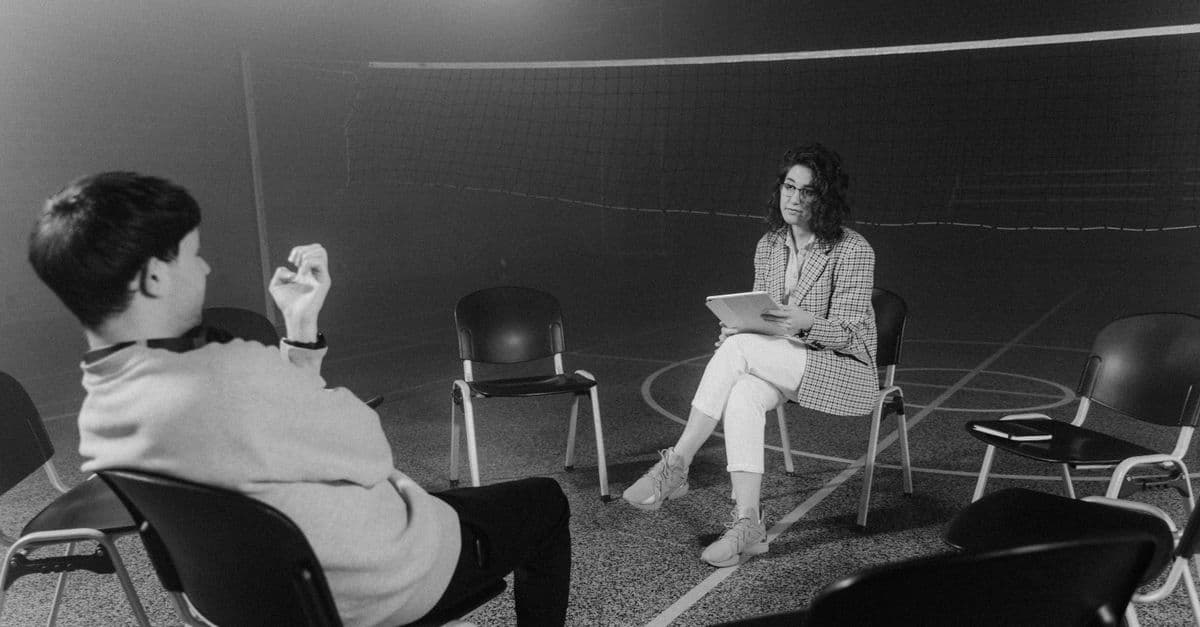
The 1964 murder of Kitty Genovese launched a landmark psychology experiment. Here's what Darley and Latané actually found — and why the original story was wrong.
Henry Cavendish measured Earth's density in 1798 using a torsion balance. Learn the apparatus, the G mystery, and why gravity's constant is still poorly known today.
On July 4, 2012, CERN announced the discovery of the Higgs boson at 125 GeV. Here is how the LHC, ATLAS, and CMS found the particle that gives other particles mass.
In 1932, James Chadwick proved the neutron exists in just 10 days of experiments using polonium, beryllium, and paraffin wax. Learn exactly how he did it.
In 1964, Penzias and Wilson found persistent noise in a Bell Labs antenna they could not explain. It turned out to be the afterglow of the Big Bang. Here is how they found it.