How Index Funds Track Markets
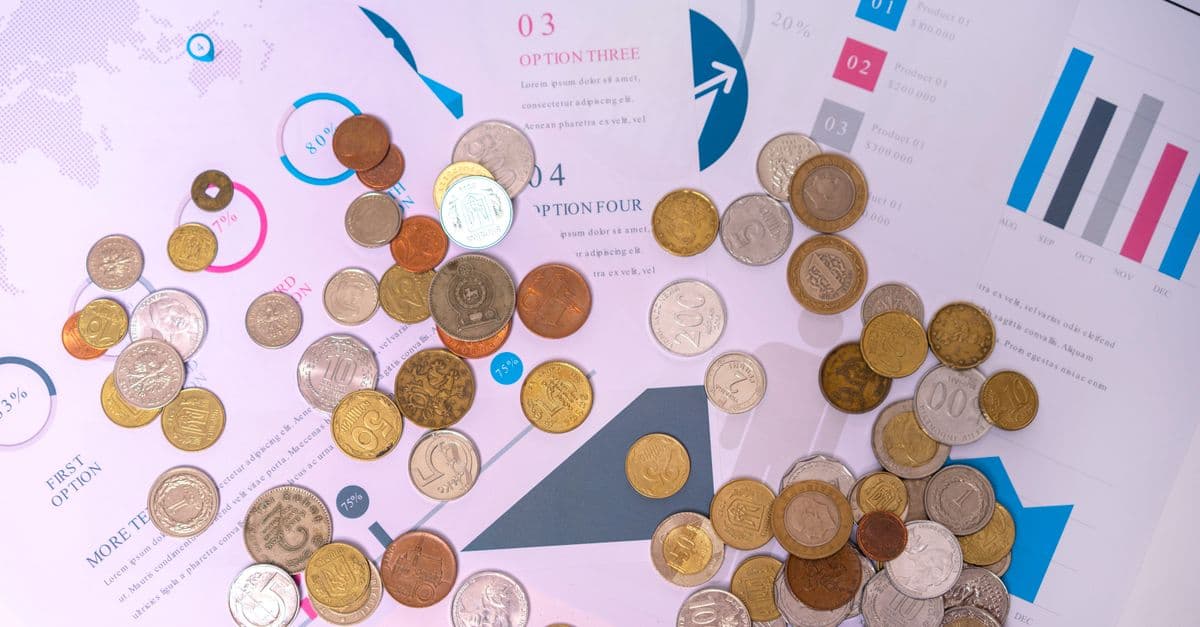
Photo: Atlantic Ambience / Pexels
An index fund does not try to guess which stocks will do well. It buys a market benchmark's constituent securities in roughly the same proportions the benchmark itself uses, then holds them with minimal trading, letting the market's overall return, not a manager's judgment, drive the result. This mechanical approach, called passive management, has quietly become the dominant way tens of millions of people invest. This article explains how it actually works. It is educational information, not investment advice, and past performance does not guarantee future results.
What an index fund is actually doing
Index fund — a pooled investment vehicle (either a mutual fund or an exchange-traded fund) designed to match the performance of a specific market benchmark, such as the S&P 500 or the Bloomberg U.S. Aggregate Bond Index, by holding the same or similar securities in the same or similar weights, rather than by having a manager select individual securities.
A stock market index itself is not a fund. It is a defined list of securities and a rulebook for how to weight them, maintained by an index provider such as S&P Dow Jones Indices, MSCI, FTSE Russell, or Nasdaq. The S&P 500, for instance, is a list of 500 large US companies selected by a committee according to published eligibility criteria (market capitalization, liquidity, US domicile, positive earnings history), weighted by how large each company is relative to the others. The index itself cannot be bought directly; it is simply a number that goes up or down as the value of the underlying stocks changes.
An index fund exists to close that gap between an abstract benchmark and something an investor can actually own. Its manager's job is not to beat the S&P 500 but to build a portfolio that behaves as close to identically to the S&P 500 as trading costs and practical constraints allow. That distinction, matching versus beating, is the single most important thing to understand about how these funds are built, priced, marketed, and regulated.
This differs meaningfully from how an actively managed fund is built, where a portfolio manager and research team select individual securities based on analysis, forecasting, or a specific strategy, aiming to outperform a benchmark rather than replicate it. The mechanics of that comparison, and how the two structures differ in cost, tax treatment, and trading, are covered in more depth in how ETFs differ from mutual funds, since many index funds today are structured as ETFs rather than traditional mutual funds.
The real 1976 launch that started this
Index funds existed in a limited institutional form before the mid-1970s, offered mainly to pension funds and large institutional investors by firms like Wells Fargo and American National Bank. What changed the trajectory of the whole idea was John C. "Jack" Bogle's decision to bring the strategy to individual retail investors.
Bogle, who had just founded The Vanguard Group in 1975, launched the First Index Investment Trust on August 31, 1976, a mutual fund designed to track the S&P 500 for ordinary investors buying through a brokerage account, not just institutions with dedicated portfolio staff. The fund later became the Vanguard 500 Index Fund, and its share class today also has an ETF version trading under the ticker VOO (Vanguard, "50 Years, 50 Facts: Indexing Since 1976").
The launch was not an immediate success. Bogle had targeted roughly $150 million in initial assets from the underwriting syndicate that sold the fund's shares; the fund actually raised about $11.3 million, far short of that goal, and the investment industry mocked the concept as "Bogle's Folly," on the theory that ordinary investors would never accept a fund that deliberately promised only to match the market rather than beat it (Vanguard, 2026). Bogle's underlying argument was straightforward: most professional stock pickers, collectively, cannot outperform the market they are trying to beat, because collectively they are the market, and any fund that avoids the cost of trying to beat the market keeps more of the market's return for its investors.
It is worth being precise about what Bogle did and did not invent. He did not invent the mathematical idea of a market-cap-weighted index; that groundwork traces back to earlier academic work on market efficiency and to the institutional index funds Wells Fargo and others had already built for pension clients in the early 1970s. What Bogle did was structure indexing as a low-cost, mutual, retail-accessible product and argue for it publicly and persistently over decades, a combination that is generally credited with turning indexing from a niche institutional tool into a mainstream retail strategy.
How replication actually happens: full replication versus sampling
Once a fund's managers decide to track a given index, they have to choose a method for building the actual portfolio, and the choice depends heavily on how many securities the index holds and how liquid those securities are.
Full replication is the most direct method: the fund buys every single security in the index, in exactly the weight the index specifies. For an index like the S&P 500, which holds a manageable number of large, highly liquid US stocks, full replication is straightforward and standard practice for most funds tracking it. The fund's holdings essentially mirror the index's published constituent list line for line.
Sampling (sometimes called optimized sampling or representative sampling) becomes necessary when full replication is impractical, most often for bond indexes or very broad, thinly traded equity indexes. A bond index like the Bloomberg U.S. Aggregate Bond Index can contain many thousands of individual bond issues, some of which trade infrequently or in small quantities that make buying the exact issue at the exact weight costly or simply impossible on a given day. Instead, the fund's managers use statistical modeling to select a smaller subset of securities whose combined characteristics (duration, credit quality, sector exposure, geographic exposure) closely approximate those of the full index, aiming to replicate the index's expected behavior without literally owning every underlying security.
Why doesn't sampling produce a worse result than full replication?
Sampling introduces additional tracking error risk compared with full replication, since the fund's holdings are not identical to the index's, but well-designed sampling models are built and continuously recalibrated specifically to minimize that gap. For broad bond indexes, sampling is often the only practically achievable method, so the comparison is less "sampling versus a better alternative" and more "sampling versus not being able to track the index at all."
A useful analogy: full replication is like photocopying a document page by page, exact and complete. Sampling is like a skilled artist recreating a detailed photograph with a smaller, carefully chosen set of brushstrokes, close enough in composition, color, and proportion that from normal viewing distance it reads as the same image, even though it is not a pixel-for-pixel copy.
Weighting methods: not every index measures "size" the same way
How an index decides how much weight to give each constituent has a large effect on what an index fund tracking it will actually behave like, even for funds nominally covering the same market. Three weighting methods account for the overwhelming majority of indexes in practical use.
| Weighting method | How weight is determined | Effect on largest constituents | Example index |
|---|---|---|---|
| Market-capitalization weighted | Weight is proportional to a company's total market value (share price × shares outstanding) | Largest companies dominate index performance | S&P 500, MSCI World |
| Equal weighted | Every constituent gets approximately the same weight regardless of size | No single company dominates; smaller constituents have outsized influence relative to a cap-weighted version | S&P 500 Equal Weight Index |
| Price weighted | Weight is proportional to a stock's per-share price, not its total market value | Highest-priced stocks dominate, regardless of company size | Dow Jones Industrial Average |
Three common index-weighting rules, and how each determines which constituents drive the benchmark's overall movement.
Market-capitalization weighting is by far the most common approach among widely tracked indexes, including the S&P 500, because it mirrors, in aggregate, the actual ownership structure of the market: an investor holding a market-cap-weighted index fund owns roughly the same proportional slice of "the market" that all investors collectively hold. One consequence worth understanding is that in a market-cap-weighted index, a small number of very large companies can represent a disproportionate share of the index's total value and, therefore, its performance, a concentration dynamic that has periodically drawn attention as the largest technology companies have grown to represent a substantial share of the S&P 500's total market value.
Equal weighting and price weighting are used far less often for index funds but illustrate why "the index" is not one single, objective measurement of "the market." The Dow Jones Industrial Average, one of the most widely cited market indicators, is price weighted, meaning a company with a very high per-share stock price can move the Dow more than a company with a far larger total market value but a lower per-share price, a quirk unrelated to either company's actual economic size.
Fees, and why a fraction of a percent compounds into real money
Passive index replication requires far less ongoing research, trading, and analyst staffing than active security selection, since the fund is not paying a team to forecast which stocks will outperform. That structurally lower cost base is the primary reason index funds and index ETFs tend to charge lower expense ratios than actively managed funds, sometimes below 0.05 percent annually for large, popular funds tracking major indexes, compared with expense ratios often in the 0.5 percent to 1.5 percent range, or higher, for many actively managed equity funds.
An expense ratio is deducted from a fund's assets regardless of whether the fund gained or lost value in a given year, which means the fee is not merely a cost paid once but a recurring drag applied to the investor's balance every single year the fund is held. Because investment returns compound (each year's gain or loss builds on the prior year's balance, not the original contribution), a fee difference that looks small in any single year, say 0.9 percentage points, compounds into a materially different total balance across a multi-decade holding period, entirely apart from any difference in the funds' gross investment performance.
It is worth being explicit about the limit of this argument: low fees do not guarantee good returns, and a fund can have both a low expense ratio and a disappointing result if the underlying index it tracks performs poorly. What a low expense ratio reliably does is ensure that a larger share of whatever the index does return actually reaches the investor, rather than being absorbed by the fund's operating costs.
Tracking error: why a fund rarely matches its benchmark exactly
Tracking error — the difference between an index fund's return and the return of the benchmark index it is designed to track, typically expressed as an annualized percentage.
Even a well-run index fund almost never returns exactly what its benchmark returns, for several structural reasons that have nothing to do with manager skill or stock selection. First, the fund's expense ratio is deducted from the fund's assets, but the benchmark index itself is a theoretical calculation with no costs deducted at all, so a fee-free comparison is never truly apples to apples. Second, funds typically hold a small cash buffer to meet investor redemptions without having to sell securities at an inconvenient moment, and cash sitting in a fund does not participate in the market's movement the way fully invested securities do. Third, when an index changes its constituent list, funds must buy and sell to match the new composition, and the timing of those trades relative to when the index itself officially reflects the change can create small, temporary mismatches.
For large, liquid, market-cap-weighted equity index funds tracking widely followed benchmarks like the S&P 500, tracking error is typically small, often within a fraction of a percentage point annually, though it is virtually never exactly zero. Tracking error tends to run larger for funds using sampling rather than full replication, and larger still for funds tracking less liquid or more complex markets, such as certain international, small-cap, or bond indexes, where buying and selling the exact underlying constituents is inherently harder and costlier.
How can an investor check a fund's tracking error before investing?
A fund's prospectus and annual report typically disclose its historical return alongside the benchmark's return for the same period, letting an investor calculate the gap directly. Some fund providers also publish tracking-error statistics directly on the fund's fact sheet, usually expressed as an annualized standard deviation of the return difference over a trailing period such as three or five years.
What happens when the index itself changes
Stock indexes are not static lists. Index providers periodically add and remove constituents, based on published, rules-based criteria rather than discretionary judgment, to keep the index representative of its intended market segment. The S&P 500 committee, for example, reviews the index regularly and replaces companies that no longer meet eligibility criteria, such as falling below a minimum market capitalization threshold, being acquired, or going private, with companies that do meet the criteria.
When a change is announced, index funds tracking that benchmark must trade to match it: selling the shares of the company being removed and buying shares of the company being added, in the weight the new index composition specifies. Because index providers typically announce these changes with several days of advance notice before they take effect, funds and market participants generally know a reconstitution is coming, which itself can create measurable, temporary price effects around the announcement and effective dates as index funds across the industry execute similar trades at similar times, a well-documented market phenomenon often referred to as the "index effect."
This process happens with minimal ongoing decision-making by the fund's own managers, since the index provider's published rules, not the fund manager's independent judgment, dictate exactly which securities to buy and sell and roughly when. That is a meaningful structural difference from an actively managed fund, where a portfolio manager exercises discretion over every buy and sell decision, for reasons that may not be disclosed publicly until well after the trade occurs.
What SPIVA data shows about active versus passive results
S&P Dow Jones Indices, the same firm that maintains the S&P 500 and many other widely used benchmarks, publishes a regular research series called SPIVA (S&P Indices Versus Active), comparing the performance of actively managed mutual funds against their relevant benchmark indexes, after fees, over various time horizons.
The most recent full-year SPIVA U.S. Scorecard found that 79 percent of actively managed large-cap US equity funds underperformed the S&P 500 in 2025, up from 65 percent in 2024, marking one of the weakest showings for large-cap active managers in the study's roughly 25-year history, driven in large part by a small number of very large technology companies accounting for an outsized share of the index's total return that year (S&P Dow Jones Indices, U.S. Persistence Scorecard, 2026). The same body of SPIVA research has repeatedly found that active manager underperformance against benchmarks tends to be even more pronounced over longer trailing periods, such as 10, 15, and 20 years, than over any single calendar year, a pattern SPIVA researchers attribute partly to the difficulty of identifying, in advance, which active managers will be among the minority that beat their benchmark in any given year, and partly to the compounding effect of the extra fees active management typically charges.
It is also worth noting a real limitation in this comparison: SPIVA's reports are not identical from year to year in which fund categories outperform. The same 2025 report found active small-cap managers had one of their best relative years on record, with only about 29.7 percent underperforming the S&P SmallCap 600, illustrating that active-versus-passive performance gaps vary meaningfully by market segment and by year, rather than being a fixed, universal rule (S&P Dow Jones Indices, 2026). No SPIVA report claims that active management can never outperform a benchmark, only that outperformance, after fees, has been the less common outcome across most large categories and most multi-year periods studied.
Common misconceptions about how index funds behave
A recurring misunderstanding is that an index fund is a low-risk or conservative investment simply because it is passively managed. An index fund tracking a stock market benchmark carries essentially the same market risk as the stocks in that benchmark, and a broad stock index fund can and does decline significantly in value during market downturns, just as the index itself does. "Passive" describes the management style, not the fund's exposure to market volatility.
Another common confusion is treating "index fund" and "S&P 500 fund" as interchangeable terms. The S&P 500 is one widely followed index among thousands, covering only large US companies, and index funds exist tracking narrower slices of the market (a single sector, a single country outside the US, small-capitalization companies, specific bond maturities) as well as broader ones (total international stock markets, global bond markets). Two funds can both accurately be called "index funds" while holding almost entirely different securities, because they track different underlying indexes.
A third misconception treats indexing as a strategy that guarantees diversification benefits by itself. A market-cap-weighted index fund concentrates more of its assets in whatever companies currently have the largest market value, which means an index fund's effective diversification can shift meaningfully over time as certain sectors or companies grow to represent a larger share of the underlying index, a dynamic sometimes described as concentration risk within an ostensibly broad, diversified fund.
Finally, some investors assume that because active managers have historically underperformed benchmarks in aggregate, any specific active fund is therefore a poor choice. SPIVA's own research documents genuine variation: some individual active funds and some fund categories have outperformed their benchmarks over specific periods, and past aggregate underperformance statistics describe historical patterns across large samples of funds, not a guarantee about how any single fund, active or passive, will perform going forward.
The takeaway
Index funds track markets by deliberately replacing stock selection with rules: buy what the benchmark holds, in the proportion the benchmark specifies, using full replication where practical and statistical sampling where it is not, then trade only when the index itself changes. That mechanical discipline is also what keeps costs low, since there is no forecasting team to pay for, and low costs compound into a meaningful advantage over long holding periods purely as a function of arithmetic, independent of whether markets go up or down in any given year. Jack Bogle's 1976 bet that ordinary investors would eventually value that combination of simplicity and low cost took years to catch on, but decades of SPIVA data comparing active and passive fund results have become some of the most frequently cited evidence behind the growth of the approach he pioneered. This article is educational and does not constitute investment advice; index fund returns are not guaranteed, index funds can and do lose value, and no specific fund is recommended here.
Read next:
- How ETFs Differ From Mutual Funds
- How Bond Prices Move With Interest Rates
- How Inflation Erodes Purchasing Power
FAQ
Q: How does an index fund actually track a market index?
It holds the same securities as its target index, in approximately the same proportions, using either full replication (buying every constituent) or statistical sampling (buying a representative subset), rather than having a manager select individual securities based on forecasts.
Q: Who created the first index fund for individual investors, and when?
John C. "Jack" Bogle launched the First Index Investment Trust through Vanguard on August 31, 1976, the first index mutual fund broadly available to individual, retail investors rather than only large institutions. It raised about $11.3 million against a $150 million target and was initially derided as "Bogle's Folly" (Vanguard, 2026).
Q: What is the difference between market-cap weighting and price weighting?
Market-cap weighting sets each company's index weight based on its total market value, so larger companies drive more of the index's performance; price weighting, used by the Dow Jones Industrial Average, sets weight based purely on a stock's per-share price, so a high-priced stock can move the index more than a much larger company with a lower share price.
Q: Why do index funds usually have lower fees than actively managed funds?
Passive replication requires far less ongoing research, forecasting, and trading than active stock selection, which lowers the fund's operating costs. Those lower costs are typically passed to investors as a lower expense ratio, an annual fee expressed as a percentage of assets under management.
Q: What is tracking error, and why does it never fully disappear?
Tracking error is the gap between an index fund's return and its benchmark's return, caused by fund expenses, cash held for redemptions, and the timing of trades made when the index itself changes composition. Even well-managed funds tracking liquid benchmarks like the S&P 500 typically keep this gap small but rarely eliminate it entirely.
Q: Do actively managed funds ever outperform index funds?
Yes. S&P Dow Jones Indices' SPIVA research has found individual active funds and specific fund categories, such as small-cap active managers in 2025, outperforming their benchmarks in particular years, even while a majority of active large-cap US equity funds have historically underperformed the S&P 500 over most multi-year periods studied (S&P Dow Jones Indices, 2026).
Q: Is an index fund a low-risk investment because it's passively managed?
No. An index fund tracking a stock benchmark carries essentially the same market risk as the underlying stocks in that index and can decline significantly in value during a broad market downturn. "Passive" describes how the fund is managed, not how much its value can fluctuate.
Follow new articles
Add SciHub101 to your feed reader to see new science and technology stories.
About the Author
SciHub101 is an independent science and technology publication founded and edited by Buğra Sözeri, a software engineer and app developer based in Türkiye. AI tools assist with drafting and research. Source documentation in the existing archive is uneven, and articles are being reviewed and corrected. The Editorial Team byline identifies editorial responsibility; it does not certify specialist or independent human review. Where we compare products, anything built by our own team is labelled as such — see the editorial guidelines and About page for how corrections and disclosures work.
Related Articles



What Is FIRE? Financial Independence Retire Early
What is the FIRE movement? Financial Independence Retire Early explained — 4% rule, savings rates, leanFIRE vs fatFIRE, math, and criticisms.
Index Funds vs Active Funds — Which Wins?
Index funds vs active funds: S&P SPIVA data on 20-year results, fee gaps, the Sharpe arithmetic, and where active management can still make sense.