Street Fighter: The Game That Defined Fighting Games

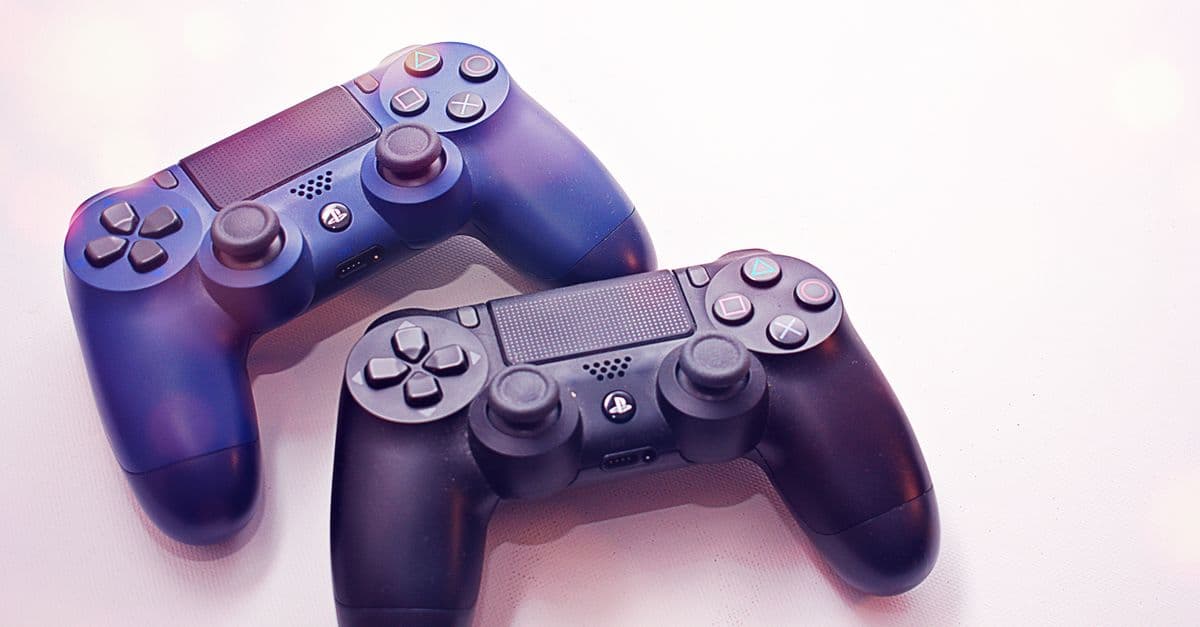
Photo: MART PRODUCTION / Pexels
Capcom released Street Fighter into Japanese arcades on August 30, 1987, a mechanically rough game built around pressure-sensitive punch and kick pads that most operators quietly swapped for standard buttons within months (Arcade History). The original barely registered outside Japan and the United Kingdom. But it planted an idea that would reshape arcade gaming for a decade: fighters with distinct movesets, command-based special attacks, and outcomes decided by player skill rather than button-mashing. Four years later, its sequel would gross billions and give competitive gaming its first real audience.
That gap between a niche 1987 curiosity and a genre-defining 1991 phenomenon is the story of how fighting games became a discipline. Understanding it means understanding frame data, matchup theory, and why a single 2004 parry sequence still gets cited as the most replayed clip in competitive gaming history.
Before Street Fighter, fighting games were shallow
Arcade combat existed before Capcom's game. Data East's Karate Champ (1984) is widely credited as the genre's true originator, and it sold well enough that Konami and others cloned it within a year. But these games shared a structural limit: every fighter used the same moves. Beating an opponent came down to reaction speed and pattern recognition, not character knowledge.
Capcom's designers, led by Takashi Nishiyama, wanted something with more strategic texture. The 1987 Street Fighter introduced six playable characters (though only two, Ryu and Ken, were selectable by a second human player without a special code) and gave the two leads different special attacks executed with joystick motions plus a punch or kick, rather than a dedicated button. That motion-based input system, however clunky in its first version, became the template every fighting game after it would refine.
How character diversity and frame data created a real skill ceiling
The mechanical leap that separated Street Fighter from its predecessors was character asymmetry paired with frame-based timing. Every fighting game runs on discrete animation frames, small slices of time (roughly 16.7 milliseconds each at 60 frames per second) during which a character's attack has a startup phase, an active hit phase, and a recovery phase. A fast jab might start on frame 4; a slow special move might take 20 frames to come out. That gap is where strategy lives.
Because Ryu, Chun-Li, Guile, and Blanka each had different startup speeds, hitbox shapes, and movement options, no single strategy worked against everyone. Learning a matchup meant memorizing which of your moves beat which of theirs, at what distance, and on what frame. This is the same underlying logic that governs why some game genres reward twitch reaction and others reward pattern study, a tension explored in more depth in how game difficulty works.
What is frame data in fighting games?
Frame data is the numerical breakdown of how many frames an attack takes to start, how long it stays active, and how long the character is vulnerable afterward. A move that is "+3 on block" leaves the attacker three frames ahead, meaning the defender cannot punish it before the attacker's next action lands first.
Why did Street Fighter II succeed where the original didn't?
Street Fighter II (1991) fixed the original's control problems, expanded the cast to eight selectable fighters with genuinely distinct playstyles, and arrived as arcades were hungry for a new hit. Capcom sold roughly 50,000 arcade units worldwide in its first year alone, including 17,000 in Japan, and kept manufacturing more due to sustained demand (VeVe Digital Collectibles retrospective).
The arcade boom: how one cabinet revived a dying industry
By the late 1980s, North American arcades were in decline, squeezed by home consoles that offered comparable graphics without a quarter-per-play cost. Street Fighter II reversed that trend almost single-handedly. By 1994, an estimated 25 million Americans had played the game, and more than 200,000 arcade cabinets had been sold globally (ComicBook.com 35th-anniversary feature).
The game's design encouraged something arcades desperately needed: repeat, competitive play between strangers. A player who lost a round often stayed to challenge the winner rather than walking away, and operators discovered that head-to-head cabinets generated more coin-drop per hour than any single-player game on the floor. That structural incentive, human versus human combat with a coin-op business model built around it, is the direct ancestor of every modern fighting-game tournament format.
| Milestone | Year | Detail |
|---|---|---|
| Street Fighter (original) | 1987 | 6-button pressure-sensitive pads; commercial success in Japan/UK only |
| Street Fighter II: The World Warrior | 1991 | 8 selectable characters; revives arcade industry |
| Super Street Fighter II Turbo | 1994 | Adds Akuma; becomes the definitive tournament build for years |
| Street Fighter III: 3rd Strike | 1999 | Introduces parry system; site of "Evo Moment #37" |
| Street Fighter IV | 2008 | Brings the series back to arcades and consoles after a franchise gap |
| Street Fighter V | 2016 | Launches with a thin roster and criticized netcode, later patched extensively |
| Street Fighter 6 | 2023 | Modern and Classic control schemes; rollback netcode; sold over 3.3 million units by May 2024 |
Table: Key Street Fighter releases and their competitive significance. Sales and dates sourced from Capcom investor relations and industry reporting cited throughout this article.
The moment that made fighting games a spectator sport
On August 1, 2004, at Evolution Championship Series 2004 in Pomona, California, Daigo Umehara faced Justin Wong in a Street Fighter III: 3rd Strike semifinal. With one pixel of health remaining, Umehara parried all fifteen hits of Wong's Chun-Li Super Art in real time, a defensive technique requiring a precisely timed forward input on each incoming hit, then punished with a full combo to win the round (Wikipedia, "Evo Moment 37"; Rolling Stone oral history).
The clip, uploaded under the arbitrary title "Evo Moment #37" by tournament organizer Ben Cureton, spread across early video-sharing platforms years before YouTube's mainstream era and is frequently cited as the moment competitive gaming proved it had spectator value comparable to traditional sports. It is worth being precise here: Umehara won that match but lost the tournament's grand final later the same event. The parry's fame rests entirely on the technical execution, not on a championship outcome.
What "footsies," hit confirms, and cancels actually mean
Advanced fighting-game vocabulary sounds opaque to newcomers, but each term describes a specific, learnable mechanic.
- Footsies: the mid-range spacing game where players poke with normal attacks (not specials) to control distance and bait a mistake, without committing to a risky combo.
- Hit confirm: visually or audibly recognizing that a normal attack connected, then continuing into a special move only if it landed, avoiding a wasted commitment if the opponent blocked.
- Cancel: interrupting a normal attack's recovery frames by inputting a special move, which is how many of the genre's flashiest combos link together.
- Frame trap: deliberately leaving a small gap between attacks that is too short for the opponent to counter-attack into, but long enough to bait a button press that gets punished.
- Meaty: timing an attack to hit an opponent on the exact frame they wake up from being knocked down, when their options are most limited.
None of this is exotic outside fighting games. It is the same layered decision-making that separates a game that rewards raw reflexes from one that rewards study, a distinction covered in general terms in the science of what makes pro gamers different.
Why does Street Fighter feel harder to learn than shooters or MOBAs?
Fighting games compress reaction, execution, and memorized matchup knowledge into a single continuous exchange with no team to fall back on. A first-person shooter lets a weak player hide by rotating positions or relying on teammates; a one-on-one fighting game exposes every mistake immediately, with no substitute and no map to disengage into.
Balance, tier lists, and why patches never stop
No fighting game roster launches perfectly balanced, and Street Fighter has never been an exception. Competitive results consistently reveal that some characters win more often than others at high-level play, which the community organizes into tier lists ranking characters from dominant to weak.
Modern Street Fighter titles patch character data on an ongoing basis, adjusting frame startup, damage values, and hitbox sizes based on tournament results and win-rate data the developer tracks internally. A single patch can invalidate months of practiced strategy, which is precisely why the top competitive scene treats "solved" characters skeptically. What wins in January can lose in March once developers respond to aggregated match data.
This is a deliberate design philosophy, not a flaw being tolerated. A perfectly static, permanently balanced roster would mean the metagame stops evolving, and competitive interest with it.
Street Fighter 6 and the accessibility-versus-depth debate
Street Fighter 6 launched in June 2023 with two parallel control schemes built into the same ranked matchmaking pool. "Classic" control preserves the traditional quarter-circle and charge-motion inputs veteran players know. "Modern" control lets new players execute special moves with a single button press plus a direction, trading some damage output and a portion of the move list for dramatically lower execution demands (Capcom press release, January 2024).
The game sold roughly 2 million copies within its first month, outpacing Street Fighter V's equivalent early sales window by a wide margin, and had surpassed 3.3 million units by May 2024 according to Capcom's own investor disclosures (EventHubs sales report; Capcom IR). By June 2025, Capcom reported the game had crossed 5 million units worldwide, a milestone reached faster than any prior mainline entry (Capcom IR, June 2025).
The design choice split the competitive community. Critics argued that letting new players hadouken with a single button press devalues years of execution practice by veterans. Capcom's counter-position, echoed by several top pros in post-launch interviews, is that raw input execution accounts for a minority of what separates skilled and unskilled play; spacing, matchup knowledge, and decision-making under pressure matter more, and Modern control does not make a novice competitive against a ranked veteran. It simply removes the specific frustration of losing to your own hands rather than to your opponent's read.
Rollback netcode: the infrastructure change that rebuilt online play
A less visible but arguably more consequential Street Fighter 6 feature is its rollback netcode, a networking method that predicts an opponent's next input locally, then silently corrects the game state if the actual input differs once it arrives over the connection. The alternative, delay-based netcode used in earlier Street Fighter titles, simply pauses the game briefly to wait for network data, which makes any connection above roughly 60 milliseconds of latency feel sluggish and unplayable at a competitive level.
Rollback made cross-region online competition genuinely viable for the first time in the franchise's console history. Where Street Fighter IV and V players largely accepted that ranked online play was a lesser substitute for local arcade or tournament competition, SF6's netcode let players in different countries compete with input responsiveness close to a local match. That technical shift, more than any single character or mechanic, is why the online competitive scene grew during and after the pandemic years when in-person events were restricted.
EVO and the economics of the fighting game community
Evolution Championship Series, universally shortened to EVO, has served as fighting games' de facto world championship since the late 1990s, and Street Fighter has anchored its marquee slot for most of that run. EVO 2024, held in Las Vegas, drew a record 10,240 unique competitors across all its game brackets, with 5,279 of them entering the Street Fighter 6 tournament alone, more than half of total attendance (Esports Charts, EVO 2024 viewership statistics). The SF6 bracket's official prize pool that year was 30,000 USD, and the event generated 3.66 million hours watched, 53 percent of EVO 2024's total viewership across every title on the schedule (Esports Charts).
Those numbers put Street Fighter's flagship tournament well below the prize pools of the largest team-based esports; League of Legends Worlds and Dota 2's The International have offered multi-million-dollar totals in past years, figures the fighting game community rarely approaches. What Street Fighter's competitive scene has instead is longevity and structural independence. EVO began as a fan-run tournament, not a publisher-organized league, and the fighting game community largely still self-organizes through independently run local and regional events feeding into the EVO calendar, a model closer to grassroots amateur athletics than to franchise esports leagues. For a broader view of how prize structures and career paths compare across esports titles, see esports in 2026.
How much do professional Street Fighter players actually earn?
Top-tier competitors earn income from a combination of tournament winnings, team salaries, sponsorship deals, and content creation rather than tournament prize money alone, since fighting-game prize pools remain modest compared to team-based titles. Capcom also runs the Capcom Pro Tour, a season-long qualifying circuit that funnels points toward an invitation to the Capcom Cup finals, which has offered a separate prize structure from EVO's standalone bracket.
What people get wrong about fighting game "cheapness"
A recurring argument inside the community concerns defensive playstyles, most famously the Ken-versus-Guile matchup in Street Fighter II, where Guile's charge-based sonic boom projectile and strong anti-air let a defensive ("turtling") player control space without taking risks. Newer players often label this "cheap," implying it violates some unwritten spirit of the game.
Competitively, this framing misunderstands what the genre rewards. Every fighting game move exists within a system of frame data, and if a defensive strategy is winning consistently, the correct response is adaptation, not an appeal to fairness. Professional players study the matchup, find the frame windows where the defensive character is vulnerable, and adjust their spacing accordingly. Complaints about turtling being "cheap" almost always come from players who haven't yet identified the counter-strategy, not from a genuine design flaw. When a strategy proves too dominant across the broader competitive population, that shows up in win-rate data and becomes a patch target, which is a very different process from a community simply deciding a tactic feels unfair.
A second common misconception is that fighting games are primarily about memorizing combos. Combo execution matters, but tournament footage consistently shows that matches are won and lost far more often in neutral, the pre-engagement phase where two players jockey for spacing and openings, than in any single flashy combo sequence. A player who lands one clean punish after reading an opponent's habit will usually beat a player who has memorized a longer combo but makes worse positional decisions.
The takeaway
Street Fighter didn't invent one-on-one combat games, but it built the specific vocabulary, frame-based mechanics, and coin-op business model that turned arcade fighting into a discipline with a real skill ceiling. Street Fighter II's 1991 arcade run proved that head-to-head, human-versus-human competition could revive a struggling industry, and the community structures it seeded, self-organized tournaments, patch-driven metagames, and matchup theory passed down through generations of players, still define how fighting games operate 35 years later. Street Fighter 6's Modern controls and rollback netcode are the latest iteration of the same underlying tension the original game introduced in 1987: how much of the challenge should live in your hands versus your head. The series has never fully resolved that question, which is precisely why it keeps generating new competitive strategy instead of settling into a solved game.
Frequently Asked Questions
Q: When was the first Street Fighter game released? A: Capcom released the original Street Fighter in Japanese arcades on August 30, 1987, with European and North American releases following later that year. It used unusual pressure-sensitive punch and kick pads that most arcade operators replaced with standard buttons.
Q: Why is Street Fighter II considered more important than the original Street Fighter? A: The original was a commercial success only in Japan and the UK and used unreliable hardware. Street Fighter II (1991) fixed the controls, expanded the roster to eight balanced, selectable characters, and arrived as arcades needed a hit, ultimately generating an estimated 10.61 billion USD in lifetime revenue across all versions.
Q: What is Evo Moment #37? A: It refers to a sequence at Evolution Championship Series 2004, where Daigo Umehara parried all fifteen hits of an opponent's Super Art attack while at one unit of health, then punished with a winning combo. It is widely cited as the moment competitive fighting games proved they had mainstream spectator appeal.
Q: What is the difference between Modern and Classic controls in Street Fighter 6? A: Classic controls use the series' traditional quarter-circle and charge-motion special move inputs. Modern controls let players execute special moves with a single button and a direction, at the cost of slightly reduced damage and a smaller available move list, and both control schemes compete in the same ranked matchmaking pool.
Q: How many copies has Street Fighter 6 sold? A: Street Fighter 6 sold roughly 2 million copies within its first month after its June 2023 launch, passed 3.3 million units by May 2024, and crossed 5 million units worldwide by June 2025, according to Capcom's own investor relations disclosures.
Q: Why do fighting games have such a high skill barrier compared to other genres? A: Fighting games combine three demands simultaneously: fast reaction to attacks that can arrive in well under 200 milliseconds, precise multi-input execution under time pressure, and memorized matchup knowledge across every character in the roster. Unlike team-based genres, there is no teammate to compensate for a weak individual performance.
Q: What is frame data and why does it matter in competitive play? A: Frame data describes how many frames (each roughly 16.7 milliseconds at 60 frames per second) an attack takes to start, how long it remains active, and how long the attacker is vulnerable afterward. Players use frame data to determine which attacks are safe to use, which can be punished on block, and how to time defensive options like frame traps.
Q: How large is the prize pool for Street Fighter's biggest tournament? A: EVO 2024's Street Fighter 6 bracket carried a prize pool of 30,000 USD and drew 5,279 competitors, the largest single-game entry at that year's event. This is modest compared to team-based esports like League of Legends or Dota 2, whose top international tournaments have offered multi-million-dollar prize pools in past years.
Q: Is Street Fighter still a major esport in 2026? A: Yes. Street Fighter 6 remained EVO's flagship title through its most recent installments, and Capcom's own World Championship tournament series has drawn record attendance figures in the years following the game's 2023 launch, according to Capcom press materials.
Read next
Follow new articles
Add SciHub101 to your feed reader to see new science and technology stories.
About the Author
SciHub101 is an independent science and technology publication founded and edited by Buğra Sözeri, a software engineer and app developer based in Türkiye. AI tools assist with drafting and research. Source documentation in the existing archive is uneven, and articles are being reviewed and corrected. The Editorial Team byline identifies editorial responsibility; it does not certify specialist or independent human review. Where we compare products, anything built by our own team is labelled as such — see the editorial guidelines and About page for how corrections and disclosures work.
Related Articles
Neural Networks and Physics Simulation: How AI Is Rewriting the Rules of Game Engines
Neural networks are replacing traditional physics equations in game engines, enabling more realistic simulation of fluids, cloth, destruction, and character motion at real-time speed.
Doom: The Game That Launched First-Person Shooters
Doom (1993) didn't invent FPS games but perfected them. Fast-paced gunplay, intense demons, and network multiplayer defined the genre.
Complete Gaming Guide 2026 — Technology, Design, Esports, and Psychology
The complete guide to gaming in 2026: how game engines work, gaming hardware, esports, game design psychology, industry trends, and what makes games engaging and addictive.