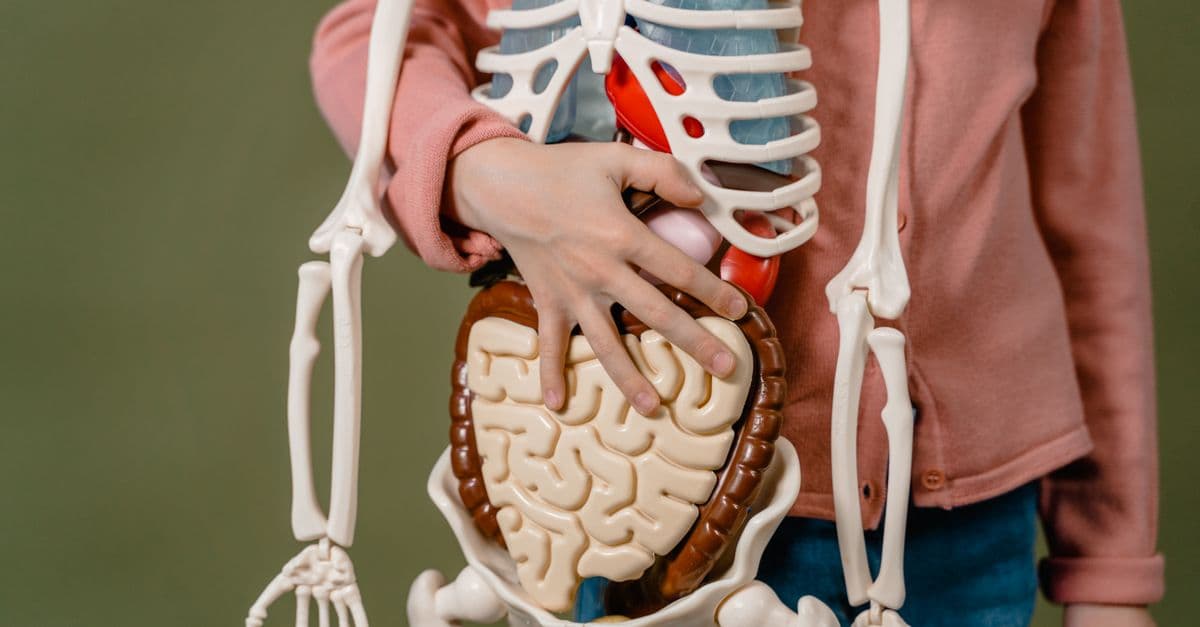
How The Liver Detoxifies Blood

Photo: Sebastian Callejas / Pexels
The liver receives roughly 1.5 liters (about 1.6 quarts) of blood every minute, nearly a third of the heart's total output, most of it arriving directly from the intestines carrying whatever was just absorbed during digestion: nutrients, medications, alcohol, and any toxins along with them. The liver does not strain this blood the way a coffee filter separates grounds from liquid. Its cells run a two-stage chemical transformation process, converting foreign substances into forms the kidneys and intestines can actually remove. That mechanism explains both how the liver protects the body and why marketed "detox" products misrepresent what detoxification actually is.
This article works through the real biochemistry, cytochrome P450 oxidation in Phase I, conjugation reactions in Phase II, using acetaminophen overdose and alcohol metabolism as concrete, well-documented examples of the system succeeding and failing. It also addresses, directly and skeptically, the commercial "detox" industry that has built a wellness market around a process the liver already performs continuously without help.
What "detoxification" actually means at the cellular level
Hepatocyte — the primary liver cell type, responsible for the majority of the organ's metabolic and detoxification functions. Hepatocytes make up roughly 70 to 80% of the liver's total cell mass and sit directly in the path of blood arriving from the portal vein, the vessel that channels blood from the intestines and spleen into the liver before it reaches general circulation. That anatomical position is not incidental. It means the liver is the first major organ to process anything absorbed from the gut, a design sometimes called first-pass metabolism in pharmacology, referring to the way orally taken drugs are partly broken down by the liver before they ever reach the bloodstream in their original form.
The core function performed inside hepatocytes is not filtration but biotransformation, the chemical conversion of a substance from one structure into another. Most drugs, environmental toxins, and metabolic byproducts (collectively called xenobiotics, meaning "foreign to the body") share a common property: they tend to be lipophilic, or fat-soluble. Fat-soluble molecules cross cell membranes easily, which is often exactly why they work as drugs in the first place, but that same property makes them difficult for the kidneys to excrete, since the kidneys filter blood into urine, a water-based fluid. A fat-soluble molecule filtered into urine would simply be reabsorbed back into the bloodstream across the tubule walls rather than eliminated.
This is the central problem the liver's detoxification system exists to solve: converting fat-soluble substances into water-soluble ones so the kidneys and intestines can permanently remove them. The two-stage process that does this, Phase I oxidation followed by Phase II conjugation, is one of the most extensively documented systems in biochemistry and pharmacology, studied for decades because so much of modern medicine depends on predicting how the liver will process a given drug.
Phase I: cytochrome P450 enzymes and oxidation
Cytochrome P450 (CYP450) — a large family of enzymes, roughly 57 functional genes in humans, that catalyze oxidation reactions on a wide range of foreign and endogenous compounds. The name comes from the enzyme's spectral absorption at 450 nanometers when bound to carbon monoxide, a quirk of its heme-iron structure discovered in the 1960s. Individual CYP450 enzymes are labeled by family, subfamily, and isoform, which is why clinical literature refers to CYP3A4, CYP2D6, CYP2C9, and similar names rather than a single generic term.
Phase I reactions primarily involve oxidation, though reduction and hydrolysis reactions also occur through related enzyme systems. Oxidation typically adds a reactive chemical group, often a hydroxyl group, to the substrate molecule. This does two things at once: it makes the molecule somewhat more water-soluble on its own, and, more importantly, it creates a chemical "handle" that Phase II enzymes can attach a much larger water-soluble group to in the next stage. In some cases, Phase I metabolism alone is enough to inactivate a drug or toxin. In other cases, Phase I oxidation actually creates a more reactive, and sometimes more toxic, intermediate than the original substance, which only becomes safe after Phase II conjugation. Acetaminophen, covered in detail below, is the textbook example of the second pattern.
CYP3A4 alone is estimated to metabolize somewhere between a third and half of all clinically prescribed drugs, which is why it sits at the center of so many documented drug-interaction warnings. Grapefruit juice is probably the most widely cited real-world example: furanocoumarin compounds in grapefruit irreversibly inhibit intestinal and hepatic CYP3A4, which can cause certain medications that rely on that enzyme for normal clearance to reach unexpectedly high blood concentrations, a well-documented interaction in clinical pharmacology reference literature.
How do liver enzymes decide which substances to process first?
They do not "decide" in any coordinated sense. Each CYP450 isoform has its own substrate specificity, meaning it recognizes and processes certain molecular shapes more efficiently than others. When two drugs that rely on the same enzyme are present simultaneously, they compete for that enzyme's limited processing capacity, which is the molecular basis of most drug-drug interactions involving liver metabolism.
Phase II: conjugation reactions that make excretion possible
Conjugation — the attachment of a small, water-soluble molecule onto a Phase I metabolite, producing a compound polar enough to be excreted in bile or urine. Phase II reactions are the step that actually completes detoxification in the literal sense of making a substance ready to leave the body. Without this step, many Phase I products would remain too fat-soluble to be efficiently excreted and could recirculate.
Several distinct conjugation pathways exist, each catalyzed by its own enzyme family, and different substances are routed to different pathways depending on their chemical structure. The table below summarizes how the two phases differ mechanically.
| Phase | Primary enzymes | Chemical action | Typical result |
|---|---|---|---|
| Phase I | Cytochrome P450 family (CYP3A4, CYP2D6, CYP2C9, and others) | Oxidation, reduction, or hydrolysis; adds or exposes a reactive chemical group | A modified metabolite, sometimes more water-soluble, sometimes more chemically reactive than the original substance |
| Phase II | UDP-glucuronosyltransferases, sulfotransferases, glutathione S-transferases, N-acetyltransferases | Conjugation; attaches glucuronic acid, sulfate, glutathione, or an acetyl group onto the Phase I product | A water-soluble compound excretable via bile (intestines) or urine (kidneys) |
Phase I typically activates or modifies a substance; Phase II is usually the step that makes it safely excretable.
Glucuronidation, catalyzed by UDP-glucuronosyltransferase (UGT) enzymes, is the most common Phase II pathway by volume and handles a large share of drugs, hormones, and bilirubin, the yellow-pigmented breakdown product of old red blood cells. Sulfation, carried out by sulfotransferase enzymes, tends to handle smaller molecules including some hormones and drugs. Glutathione conjugation, discussed in detail in the next section, is comparatively lower-capacity but disproportionately important because it neutralizes some of the most reactive and cell-damaging intermediates the liver produces.
Why does the liver route different substances through different Phase II pathways?
Each conjugation enzyme recognizes specific chemical features on the Phase I metabolite, so routing is determined by molecular structure rather than by substance category. This specialization is also why toxicity patterns differ: a substance that depletes glutathione reserves, for example, causes a very different failure mode than one that saturates glucuronidation capacity.
Glutathione and acetaminophen: a well-documented failure mode
Glutathione — a small peptide made of three amino acids (cysteine, glutamate, and glycine) that acts as one of the body's principal Phase II conjugation molecules and antioxidants. Its role in acetaminophen (paracetamol) metabolism is one of the most thoroughly studied and clinically important examples of how the liver's detoxification system can be overwhelmed.
At normal therapeutic doses, the large majority of acetaminophen is safely processed through glucuronidation and sulfation. A small fraction, however, is oxidized by CYP450 enzymes (primarily CYP2E1) into a reactive, toxic intermediate called NAPQI (N-acetyl-p-benzoquinone imine). Under normal conditions, glutathione binds and neutralizes NAPQI almost as fast as it forms, so no meaningful liver damage results.
At overdose levels, more acetaminophen is shunted through this CYP450 pathway than the glucuronidation and sulfation pathways can absorb, generating more NAPQI than the liver's glutathione reserves can neutralize. Once glutathione is depleted, unbound NAPQI accumulates and binds directly to liver cell proteins, causing cell death and, in severe cases, acute liver failure. This mechanism is well established in toxicology and emergency medicine literature and is the reason the standard antidote for acetaminophen overdose, N-acetylcysteine (NAC), works specifically by replenishing the body's glutathione supply, giving the Phase II pathway enough capacity to catch up before irreversible damage accumulates.
Alcohol metabolism as a real-time illustration of fixed enzymatic capacity
Alcohol (ethanol) is metabolized through a pathway related to, but functionally distinct from, the CYP450 system. The primary route runs through alcohol dehydrogenase, which converts ethanol into acetaldehyde, a highly reactive and toxic intermediate, followed by aldehyde dehydrogenase, which converts acetaldehyde into acetate, a relatively harmless compound the body can use for energy. A secondary pathway, CYP2E1 specifically, contributes more heavily at higher blood alcohol concentrations and with chronic heavy use.
The liver processes alcohol at a roughly fixed rate largely independent of how much alcohol is present in the blood, commonly cited around one standard drink per hour for an average adult, because enzyme activity, not blood alcohol concentration, sets the pace. This is comparable to a highway toll booth that can only process one car every few seconds regardless of how many cars are lined up behind it. More cars arriving faster does not make the booth process them faster. It just creates a backup. In the body, that "backup" is rising blood alcohol concentration and accumulating acetaldehyde, which is itself more toxic and reactive than ethanol.
This fixed-rate bottleneck is directly relevant to long-term liver health. Chronic heavy alcohol use continuously stresses this pathway and is well documented in hepatology literature as a driver of progressive liver disease: fatty liver (steatosis) develops first, potentially followed by alcoholic hepatitis and, over years, cirrhosis, the replacement of healthy liver tissue with scar tissue. None of this requires blood alcohol concentration to reach acutely dangerous levels; the damage accumulates from repeated exposure to the metabolic byproducts of a pathway running at or near its fixed capacity.
Why the liver's regenerative ability does not offset ongoing biochemical injury
The liver is well known for a genuinely remarkable property: its capacity to regenerate substantial functional tissue after significant loss, a characteristic documented extensively in liver transplant and surgical resection research, where living donors can give up a large portion of their liver and regrow functional mass over subsequent weeks. That regenerative capacity, however, addresses structural loss, not ongoing biochemical injury from a detoxification pathway running past its limits.
Repeated exposure to substances that generate toxic intermediates, NAPQI from acetaminophen, acetaldehyde from alcohol, or reactive oxygen species from various other xenobiotics, can outpace both the liver's enzymatic detoxification capacity and its regenerative repair mechanisms. Over time, this produces fibrosis, the deposition of scar tissue, rather than the clean regrowth of functional hepatocytes seen after a single surgical resection. This distinction, between the liver's capacity to regrow after a discrete injury and its vulnerability to cumulative biochemical damage, is well established in chronic liver disease research and explains why conditions like alcohol-related cirrhosis or non-alcoholic fatty liver disease progress gradually rather than resolving on their own the way post-surgical regeneration does.
Why is the liver particularly vulnerable to certain toxins despite its regenerative capacity?
Regeneration replaces lost tissue mass but does not undo ongoing biochemical stress from a saturated detoxification pathway. When toxic intermediates are generated faster than Phase I and Phase II enzymes and antioxidant reserves like glutathione can neutralize them, the resulting cell damage can outpace regeneration and gradually convert into scar tissue (fibrosis) instead of healthy new liver cells.
Why this system matters for drug safety and disease
Because CYP450 enzymes process the majority of pharmaceutical drugs, and because different drugs can either inhibit or induce (increase the activity of) specific CYP450 enzymes, combining certain medications can dangerously raise or lower blood levels of one or both drugs. This is a well-documented interaction mechanism that clinical pharmacists and physicians screen for routinely, and it is the reason electronic prescribing systems flag potential drug-drug interactions automatically.
Liver disease itself, whether from viral hepatitis, alcohol-related damage, or other causes, also changes how drugs should be dosed. Reduced hepatocyte function means reduced Phase I and Phase II processing capacity, so standard drug doses calculated for a healthy liver can accumulate to unexpectedly high, and potentially dangerous, levels in someone with significant liver impairment. This is why clinicians frequently adjust dosing, or avoid certain drugs entirely, in patients with documented liver disease, a standard practice reflected in prescribing guidelines and drug labeling.
Related detoxification and elimination work happens elsewhere in the body too. The kidneys balance salt and water through a completely different filtration-based mechanism that complements, rather than duplicates, the liver's chemical transformation role, and blood itself carries the transformed metabolites from the liver to the kidneys for final excretion, a process shaped by blood type compatibility considerations in transfusion medicine, though not by liver metabolism directly.
Why commercial "detox" products misrepresent liver biology
The word "detox" carries two very different meanings, and the gap between them is where most of the misinformation lives. In hepatology and toxicology, detoxification describes the specific, continuous, enzyme-driven Phase I and Phase II process described throughout this article. In wellness marketing, "detox" usually implies that toxins accumulate in the body over time and require a special product, juice cleanse, tea, or supplement, to be flushed out.
That marketing premise does not match how a functioning liver actually works. A healthy liver's CYP450 and conjugation enzyme systems operate continuously, processing xenobiotics as they arrive in the bloodstream rather than allowing them to accumulate and wait for periodic "flushing." There is no controlled clinical evidence supporting the claim that commercial detox products meaningfully enhance this existing enzymatic process in a healthy liver. Toxicologists and hepatologists who study liver metabolism have publicly and repeatedly noted that the term "detox," as used in the supplement and juice-cleanse industry, does not correspond to any specific, measurable physiological mechanism, in contrast to the well-characterized Phase I and Phase II pathways covered above.
This does not mean nothing a person consumes affects liver health. Chronic heavy alcohol use, certain medication combinations, obesity-related fatty liver disease, and viral hepatitis are all real, well-documented drivers of liver injury. But the mechanism by which they cause harm, saturating or damaging the CYP450 and conjugation systems described above, is entirely different from the mechanism commercial detox products claim to address. A cleanse product cannot "help" an enzyme system that is not deficient in a healthy person, and no cleanse product can reverse the specific molecular damage caused by chronic alcohol exposure or drug-induced liver injury once it has occurred. This article makes no claims about what any individual reader should do about their diet, supplement use, or medication regimen; those are decisions for a qualified clinician, not a general science explainer.
Common misconceptions about liver detoxification
A common assumption, reinforced heavily by "detox" product marketing, is that the liver needs external help to remove toxins effectively. In reality, a functioning liver's CYP450 and conjugation enzyme systems perform this role continuously, and there is no controlled clinical evidence that commercial cleanses meaningfully improve on that baseline process in someone without underlying liver disease.
A second misconception is that liver detoxification means physically removing substances from the body. It does not. The liver's actual role is chemical transformation: converting fat-soluble substances into water-soluble forms. The kidneys and intestines carry out the final excretion step. "Detoxification," in the biochemical sense, more accurately describes preparation for removal than removal itself.
A third error is assuming all substances are processed at the same rate through the same pathway. Different drugs and toxins rely on different specific CYP450 enzymes and different Phase II conjugation pathways, which is precisely why some drug combinations are dangerous: two substances competing for the same enzyme, such as CYP3A4, can each accumulate to unexpectedly high, unsafe blood concentrations rather than being cleared at their normal individual rates.
A fourth, related error is treating "detox" and "cleanse" as scientific terms describing a distinct physiological state the body can be pushed into or out of. Hepatology and toxicology do not use the term this way. The liver is either functioning normally, running its continuous Phase I and Phase II processes, or it is impaired by disease, injury, or overload, a binary that has nothing to do with whether someone has recently consumed a juice cleanse.
The takeaway
The liver detoxifies blood through a two-stage chemical transformation process: Phase I reactions, largely carried out by cytochrome P450 enzymes, modify foreign substances through oxidation, and Phase II conjugation reactions attach water-soluble molecules like glucuronic acid, sulfate, or glutathione, making those substances excretable through bile or urine. Liver enzyme capacity, not simple blood flow, sets the pace at which substances like alcohol and many medications are processed, which is why exceeding that fixed capacity, through overdose, chronic heavy alcohol use, or dangerous drug combinations, causes toxic intermediates to accumulate and damage liver tissue. None of this process depends on, or is meaningfully enhanced by, commercial detox products; a functioning liver already runs this system continuously, and the real risks to liver health come from conditions with well-documented biochemical mechanisms of their own.
Read next:
- How the body stores and releases glucose
- How painkillers reduce pain signals
- How kidneys balance salt and water
FAQ
Q: What are Phase I and Phase II reactions in liver detoxification?
Phase I reactions, mainly carried out by cytochrome P450 (CYP450) enzymes, chemically modify a foreign substance through oxidation, preparing it for further processing. Phase II reactions then attach a water-soluble molecule, such as glucuronic acid, sulfate, or glutathione, onto that modified substance through conjugation, making it excretable through bile or urine.
Q: Why is acetaminophen overdose dangerous to the liver?
A small fraction of acetaminophen is converted by CYP450 enzymes into a toxic byproduct called NAPQI, which is normally neutralized by glutathione. At overdose levels, glutathione becomes depleted faster than the liver can replenish it, allowing NAPQI to accumulate and damage liver cells directly, which is why the standard antidote, N-acetylcysteine, works by restoring glutathione levels.
Q: Why can the liver only process a limited amount of alcohol per hour?
Alcohol metabolism depends on a roughly fixed amount of enzyme activity, primarily alcohol dehydrogenase and aldehyde dehydrogenase, rather than on blood alcohol concentration itself. Drinking faster than this fixed processing rate, commonly cited around one standard drink per hour, causes alcohol and its toxic byproduct, acetaldehyde, to accumulate in the blood instead of being cleared.
Q: Do detox teas, juice cleanses, or supplements actually help the liver detoxify the body?
There is no controlled clinical evidence that commercial detox teas, juice cleanses, or supplements meaningfully enhance the liver's existing CYP450 and conjugation enzyme systems in a person without underlying liver disease. A functioning liver already performs Phase I and Phase II detoxification continuously; the marketing use of "detox" does not correspond to a specific physiological process these products measurably improve.
Q: Can the liver's regenerative ability undo damage from toxins or alcohol?
The liver can regrow substantial functional tissue after a discrete loss, such as surgical resection, but this is different from reversing ongoing biochemical injury. When toxic intermediates like NAPQI or acetaldehyde are generated faster than the liver's enzymes and antioxidant reserves can neutralize them, the resulting damage can outpace regeneration and gradually produce scar tissue (fibrosis) rather than healthy new liver cells.
Follow new articles
Add SciHub101 to your feed reader to see new science and technology stories.
About the Author
SciHub101 is an independent science and technology publication founded and edited by Buğra Sözeri, a software engineer and app developer based in Türkiye. AI tools assist with drafting and research. Source documentation in the existing archive is uneven, and articles are being reviewed and corrected. The Editorial Team byline identifies editorial responsibility; it does not certify specialist or independent human review. Where we compare products, anything built by our own team is labelled as such — see the editorial guidelines and About page for how corrections and disclosures work.
Related Articles


Best AI Workout Planners With Calendar Logging (2026)
Best AI workout planners with calendar logging (2026): MyWorkoutCalendar, Fitbod, Hevy, Strong, JEFIT, and Freeletics compared on free access and limits.