Why Goosebumps Happen
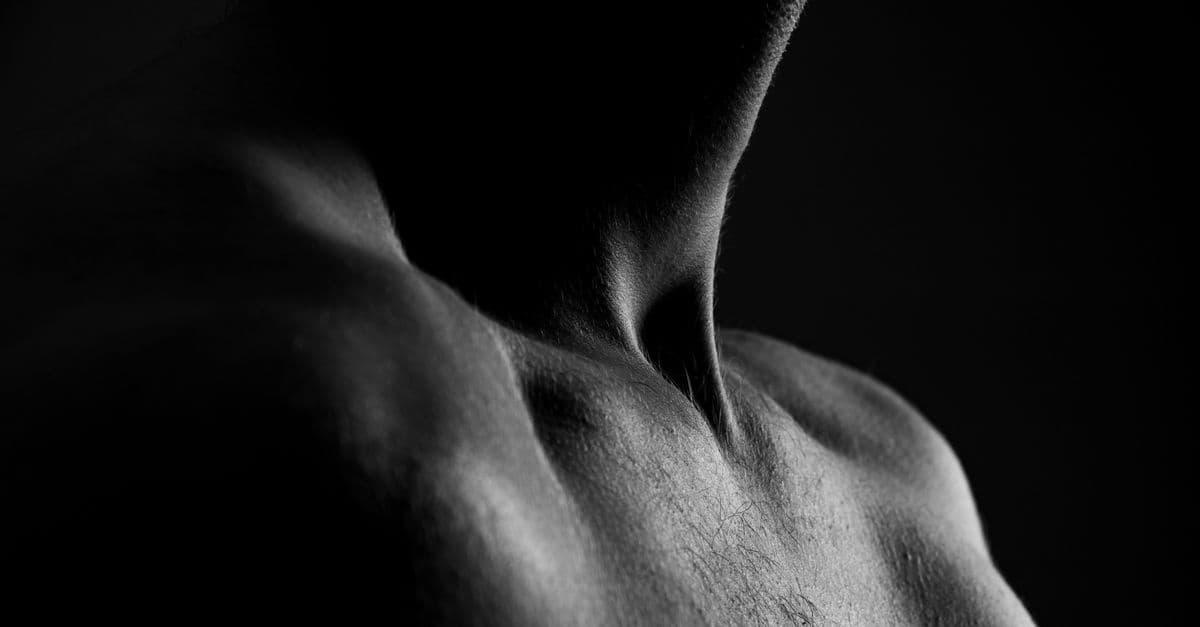
Photo: Patrick Gamelkoorn / Pexels
Goosebumps form when tiny muscles attached to hair follicles, called arrector pili muscles, contract and pull the follicle upright, puckering the skin around it. The reflex, formally called piloerection, is driven by the sympathetic nervous system, the same branch of the nervous system responsible for the broader fight-or-flight response, and it fires identically whether the trigger is cold air, fear, or a swelling piece of music. The reflex is widely considered evolutionarily vestigial in humans, but a 2020 Harvard study found the same muscle also does something modern biology didn't expect: it helps regulate the stem cells that grow new hair.
The mechanism: how a muscle you can't consciously control makes your skin bump up
Every hair follicle on the human body, apart from a few hairless regions like the palms and soles, is anchored to a small band of smooth muscle called the arrector pili muscle (Latin for "muscle that raises the hair"). Unlike the skeletal muscles you use to move your arms or legs, smooth muscle is involuntary. You cannot flex it on command, and you generally cannot feel it contracting on its own, only its visible effect on the skin's surface.
The arrector pili muscle is innervated by the sympathetic nervous system, the branch of the autonomic nervous system that governs rapid, involuntary responses to threat, exertion, and arousal, as opposed to the parasympathetic system that governs rest and digestion. When sympathetic nerve fibers release the neurotransmitter norepinephrine (also called noradrenaline) onto receptors on the arrector pili muscle, the muscle contracts, tilting the hair follicle from its resting angle to a more vertical one and bunching the surrounding skin into the small raised dome most people call a goosebump.
This is the same neurotransmitter system responsible for other classic fight-or-flight symptoms: an accelerated heart rate, dilated pupils, and a sudden surge of alertness. That overlap is why goosebumps so often show up alongside a racing pulse or a jolt of adrenaline rather than in isolation. Cold is the most familiar trigger. Thermoreceptors, temperature-sensing nerve endings in the skin, detect a drop in surface temperature and relay that signal up to the hypothalamus, the brain structure that regulates body temperature and a wide range of other autonomic functions. The hypothalamus, in turn, activates sympathetic output to the skin, and the arrector pili muscles contract in response.
The full circuit, in order, looks like this: a cold-sensing nerve ending in the skin fires, the signal travels to the hypothalamus, the hypothalamus routes an instruction through sympathetic nerve fibers, those fibers release norepinephrine at the base of the hair follicle, and the arrector pili muscle contracts. Each hair follicle has its own tiny muscle and its own local nerve supply, which is why goosebumps can appear in patches rather than uniformly across the whole body, particularly on the forearms and the back of the neck where the reflex tends to be most visible.
Why the "keeps ancestors warm and looks bigger" explanation is an evolutionary hypothesis, not a lab-tested one in humans
The most commonly cited explanation for why piloerection exists at all comes from comparative biology, not from direct experiments on the human reflex itself, and it is worth being precise about that distinction. In animals with a substantial fur or hair coat, raising the hair through arrector pili contraction has two well-documented, currently functional benefits.
First, an erect coat traps a thicker layer of still air close to the skin, and still air is a poor conductor of heat, so a thicker air layer improves insulation in cold conditions. This is directly observable and measurable in furred mammals: raised fur increases the coat's effective thickness, which increases its insulating value. Second, raised hair or fur makes an animal's body outline appear larger, a defensive display that can make a threatened or startled animal look more formidable to a predator or rival, most familiarly visible in a frightened cat's raised back fur or a startled porcupine's raised quills.
Humans retain the identical neuromuscular hardware, the same arrector pili muscles wired to the same sympathetic pathway, but human body hair is short, fine, and sparse compared to the coats of our evolutionary ancestors and compared to most other mammals alive today. Because the hair is too short and too sparse to trap a meaningfully thicker air layer, and because a "bigger-looking" human is not achieved by a few millimeters of raised arm hair, neither of the two documented benefits functions in modern humans, even though the identical muscle contraction still occurs.
This is why piloerection in humans is generally described as vestigial, a structure or reflex that persists from an earlier evolutionary state after its original function has become useless or nearly useless, the same category anatomists use for structures like the human tailbone or the plica semilunaris, a small fold in the inner corner of the eye that is a remnant of the nictitating membrane found in many other vertebrates. It is important to be precise here: the insulating and size-display functions have been directly documented in furred animals, but no controlled study has isolated a working thermal or defensive benefit of goosebumps in modern humans, which is exactly why researchers describe the human version as vestigial rather than as still functional in some minor way.
Why emotional goosebumps, or frisson, use the exact same muscle as cold-triggered ones
Goosebumps triggered by a swelling orchestral passage, a favorite song's chord change, an intensely emotional scene in a film, or even a vivid memory run through the identical final pathway as cold-triggered goosebumps. What differs is only the upstream source of the signal. Instead of a temperature-sensing nerve ending in the skin starting the chain, emotional processing centers in the brain generate the initial signal, which is then routed down through the same sympathetic nervous system to the same arrector pili muscles.
This phenomenon has a specific name in the research literature: frisson, a French word borrowed to describe the combination of skin tingling, goosebumps, and a felt "chill" that some people experience in response to strongly moving music or other emotionally powerful stimuli. Neuroimaging research on music-induced frisson has associated the experience with activity in brain regions involved in reward processing, a network that also activates in response to other pleasurable stimuli, suggesting that an intensely moving piece of music can, at a neural level, engage some of the same circuitry as other rewarding experiences, not merely resemble them metaphorically.
A useful way to picture this shared pathway is a building's fire alarm system. The same bell can be triggered either by an actual smoke detector sensing combustion particles or by a person pulling the manual alarm lever elsewhere in the building. Two completely different inputs, a chemical sensor and a human hand, both feed into one shared alarm circuit, and the bell has no way of "knowing" which one triggered it, it just rings. The arrector pili muscle works the same way: it does not distinguish a norepinephrine signal that originated from a cold-sensing thermoreceptor from one that originated in an emotional processing region of the brain. It receives the neurotransmitter and contracts, full stop, regardless of the upstream cause.
Why does a "chill down the spine" often arrive at the same moment as visible goosebumps?
Because both the subjective feeling of a chill and the visible skin bumps are two separate outputs of one shared sympathetic surge, not one causing the other. The nervous system fires a burst of sympathetic activity, and that single burst simultaneously produces the felt sensation researchers associate with autonomic arousal and the arrector pili contraction that raises the skin, so the two experiences feel linked because they are triggered in parallel, at essentially the same instant, by the same underlying signal.
Individual variation: why some people get chills far more often than others
Not everyone experiences frisson with the same frequency, and that variation has been studied as a legitimate question in personality and music psychology research rather than dismissed as random noise. Research into individual differences in music-induced chills has repeatedly found a correlation with the personality trait "openness to experience," one of the five broad personality dimensions measured on standard psychological inventories used in personality research. People who score higher on openness to experience, a trait associated with heightened engagement with art, imagination, and novel or emotionally rich experiences, tend to report frisson more frequently in response to music than people who score lower on that trait.
This correlation does not mean personality is the only factor. Familiarity with a piece of music, prior emotional associations tied to a song, the presence of specific musical features researchers have linked to chill responses, such as sudden dynamic shifts, unexpected harmonic changes, or a soaring vocal entrance following a quiet passage, and even the listening context itself, such as headphones in a quiet room versus background noise, all appear to influence how reliably frisson occurs. But the openness-to-experience finding is one of the more consistently replicated individual-difference results in this area of research, and it offers a partial explanation for why one person tears up and gets goosebumps at a concert while the person next to them, hearing the identical performance, feels comparatively little.
The wider comparative picture: piloerection across the animal kingdom
Goosebumps are not a uniquely human quirk, and understanding how widespread the underlying mechanism is helps clarify why scientists are confident in the evolutionary explanation described above. The arrector pili muscle and its sympathetic nervous system wiring are conserved, meaning structurally and functionally similar due to shared ancestry, across a very wide range of mammals, from rodents to primates to large carnivores.
| Trigger category | Upstream signal source | Underlying pathway | Functional in modern humans? |
|---|---|---|---|
| Cold exposure | Skin thermoreceptors → hypothalamus | Sympathetic norepinephrine release onto arrector pili muscle | No meaningful thermal benefit (hair too sparse) |
| Fear or a startle response | Threat-detection circuits (e.g., amygdala involvement) | Same sympathetic pathway, general fight-or-flight activation | No meaningful size-display benefit in humans |
| Music or emotional intensity (frisson) | Brain reward-processing regions | Same sympathetic pathway, emotional rather than thermal or threat trigger | No documented physical function; associated with reward-circuit activity |
| Furred mammal, cold weather | Skin thermoreceptors → hypothalamus | Identical sympathetic pathway | Yes; traps insulating air layer |
| Furred mammal, threat display | Threat-detection circuits | Identical sympathetic pathway | Yes; increases apparent body size to a predator or rival |
Across every trigger, the final step is the identical arrector pili contraction driven by sympathetic norepinephrine release. What changes is only which upstream brain circuit initiates the signal, and, in furred mammals, whether the resulting muscle contraction still produces a working physical benefit.
This is precisely why comparing a frightened human's goosebumps to a startled cat's raised back fur is not a loose or purely poetic analogy. It is a description of a shared, evolutionarily related neuromuscular mechanism, inherited from a common mammalian ancestor and still functional in one lineage while sitting largely dormant, in terms of its original purpose, in the other.
Why a dog's hackles rise in a strip instead of all over
Dog owners often describe "hackles" as if they were a separate structure from goosebumps, but a hackle is simply a localized, more visually dramatic version of the same arrector pili reflex covered above. The hair that rises is concentrated along the ridge running from the back of the neck, over the shoulders, and down the spine to the base of the tail, a region where dogs simply carry a denser concentration of longer guard hairs than on the rest of the body, so the same muscle contraction produces a far more visible ridge there than a scattering of raised hairs would elsewhere.
The trigger pathway is identical to the human one: a burst of sympathetic nervous system activity, the same fight-or-flight circuit, releases norepinephrine at the base of each hair follicle along that ridge, and the arrector pili muscles contract in unison. What differs from the human case is that dogs, like cats and many other mammals, still have a coat dense enough for the reflex to do its original evolutionary job, making the animal's outline look larger and more threatening to a rival or predator, exactly the kind of size-display function described earlier in this article as absent in modern humans.
A widely cited nuance from veterinary behavior writing is that raised hackles are not, by themselves, a reliable signal of aggression specifically. Because the reflex is driven by generalized sympathetic arousal rather than by any single emotion, a dog's hackles can rise from fear, excitement, frustration, or a genuine threat display, and telling those apart requires reading the rest of the animal's body language, not the hackles in isolation (Great Pet Care; Patricia McConnell). That is a useful parallel to human goosebumps, which likewise fire identically whether the upstream cause is a cold breeze or a swelling piece of music. In both species, the arrector pili muscle reports only that sympathetic arousal happened, not why.
Cats show a more full-body version of the same reflex, often combined with an arched spine, and the combined effect, an inflated-looking tail plus a raised ridge along the back, can make a startled cat appear noticeably larger within a fraction of a second, a defensive display that depends entirely on having enough coat density for the trick to work, the same requirement that keeps the human version from producing any visible size change at all.
Why a truly hairless mammal can't get goosebumps in any meaningful sense
The insulation and size-display logic above raises an obvious follow-up question: what happens to the arrector pili reflex in a mammal with essentially no fur at all, rather than the short, sparse hair humans have? Naked mole rats and hairless dog and cat breeds are useful edge cases here, because they still carry the arrector pili muscle and the sympathetic wiring that drives it, the muscle itself is not lost, but with no hair shaft of any real length attached to most follicles, the contraction has nothing substantial to lift, and the visible "bump" or coat effect is correspondingly minimal or absent. This helps make a broader point precise: piloerection is not one single adaptation that either works or doesn't, it is a muscle contraction whose usefulness depends entirely on the hair anchored to it, which is exactly why humans, with hair too short and sparse to trap air or change apparent size, sit in an intermediate zone, the muscle fires reliably, but the physical payoff that made the reflex worth having in a furrier ancestor has quietly dropped out.
Common misconceptions about goosebumps
A frequent misunderstanding is that goosebumps still provide meaningful warmth in modern humans, the way a jacket does. Because human body hair is far too short and sparse to trap a physiologically significant layer of insulating air, the thermal benefit that made this reflex genuinely useful in furrier ancestors is effectively absent today, even though the underlying reflex fires exactly as reliably as it always has.
A second misconception is that emotional goosebumps and cold-triggered goosebumps involve fundamentally different biology, as though frisson were somehow a separate phenomenon from the cold-induced version. Both are produced by the identical arrector pili muscle contraction, triggered by the identical sympathetic norepinephrine release; they differ only in which upstream brain region, a temperature-sensing pathway rooted in the hypothalamus or an emotion-processing pathway rooted in reward circuitry, initiates the signal that eventually reaches the skin.
A third error is treating goosebumps as evidence that a reflex either does something useful or does nothing at all, a false binary. The 2020 Harvard research on hair follicle stem cells is a useful corrective here: even a reflex that is functionally vestigial for its original evolutionary purpose, insulation and threat display, can turn out to participate in an entirely separate biological process, in this case anchoring nerve endings next to the stem cell niche that regenerates hair. That finding does not resurrect the "keeps you warm" explanation. It simply shows that the arrector pili muscle's job description, at a cellular level, turned out to be broader than researchers previously assumed.
A fourth misconception worth flagging is assuming the stem cell finding was demonstrated directly in humans. The 2020 study's central experiments were conducted in mouse skin tissue. It is a well-designed and widely cited piece of mammalian developmental biology, and mouse hair follicle biology shares substantial mechanistic overlap with human hair follicle biology, but readers should understand the distinction between "documented in a mouse model" and "directly demonstrated in living human skin."
What this means
Goosebumps happen because the sympathetic nervous system releases norepinephrine onto the arrector pili muscles anchored to hair follicles, causing them to contract and raise the skin into small bumps, a reflex that once helped furrier ancestors trap insulating warmth and appear larger to a threat, and that persists in modern humans as a mostly vestigial response with no remaining thermal or defensive function. The identical muscular reflex fires whether the upstream trigger is a cold-sensing nerve ending in the skin or an emotion-processing brain region responding to music, which is why a winter breeze and a favorite song's key change can produce the exact same visible skin response through two different starting points converging on one shared final muscle contraction. The 2020 discovery that this same muscle also anchors nerve endings next to hair follicle stem cells adds a genuinely new layer to that picture: a reflex long filed away as an evolutionary leftover turns out to still be doing real biological work, just not the work it originally evolved to do.
Read next:
- How your inner ear controls balance
- Why muscles shake during hard exercise
- Why your pupils change size
- Why fevers help fight infections
FAQ
Q: What causes goosebumps?
Contraction of the arrector pili muscles, tiny bands of smooth muscle attached to hair follicles, triggered by sympathetic nervous system release of norepinephrine in response to cold temperature, fear, or intense emotional stimuli like music.
Q: Why don't goosebumps keep humans warm anymore?
Human body hair is far too short and sparse to trap a physiologically meaningful layer of insulating air when raised, unlike the thicker fur coats of many other mammals, so the muscle contraction still occurs but no longer produces its original thermal benefit.
Q: What is frisson?
Frisson is the technical term for goosebumps and a felt chill triggered by emotionally powerful stimuli, particularly music, associated with activity in brain regions involved in reward processing rather than in temperature-sensing skin receptors.
Q: Do goosebumps serve any real function in modern humans?
Not the original insulation or threat-display function, which requires a thick fur coat to work. However, a 2020 Harvard study published in Cell found the arrector pili muscle helps anchor sympathetic nerve endings next to hair follicle stem cells in mice, suggesting the muscle plays a role in regulating hair growth beyond producing the visible goosebump reflex.
Q: Do all animals get goosebumps the same way humans do?
The underlying arrector pili muscle and sympathetic nervous system pathway is conserved across many mammals, and in animals with substantial fur it remains functional, providing both insulation and a size-enlarging defensive display that no longer works meaningfully in humans due to sparse body hair.
Q: Why do some people get chills from music more than others?
Research on individual differences in frisson has found a consistent correlation with the personality trait "openness to experience," suggesting people who score higher on that trait report music-induced goosebumps more frequently, alongside factors like familiarity with the music and specific musical features such as sudden dynamic or harmonic shifts.
Q: Why do a dog's hackles rise in a strip instead of over its whole body?
Dogs carry a denser concentration of longer guard hairs along a ridge running from the neck to the base of the tail than elsewhere on the body, so the same arrector pili contraction that produces scattered goosebumps in humans produces a far more visible raised ridge in that region, driven by the identical sympathetic nervous system pathway (Great Pet Care).
Q: Do raised hackles always mean a dog is being aggressive?
No. Because the reflex is triggered by generalized sympathetic arousal rather than by one specific emotion, a dog's hackles can rise from fear, excitement, or frustration as well as genuine aggression, so behaviorists caution against reading hackles alone and recommend evaluating the rest of the dog's body language before assuming a threat display (Patricia McConnell).
Follow new articles
Add SciHub101 to your feed reader to see new science and technology stories.
About the Author
SciHub101 is an independent science and technology publication founded and edited by Buğra Sözeri, a software engineer and app developer based in Türkiye. AI tools assist with drafting and research. Source documentation in the existing archive is uneven, and articles are being reviewed and corrected. The Editorial Team byline identifies editorial responsibility; it does not certify specialist or independent human review. Where we compare products, anything built by our own team is labelled as such — see the editorial guidelines and About page for how corrections and disclosures work.
Related Articles


Blushing Science: Why the Face Reveals Emotion
Blushing is a visible social signal produced by blood-vessel dilation in the face. It links embarrassment, attention, and social repair.
Finger Wrinkling in Water: The Science of Wet Grip
Wrinkled fingers are an active nervous-system response, not simple swelling. This guide explains grip, blood vessels, and evolution.
Goosebumps Science: Cold, Fear, and Music
Goosebumps come from a 300-million-year-old reflex: tiny muscles pull hair follicles upright when cold, fear, or music trigger the sympathetic nervous system.
Why Do We Get Goosebumps? The Science of Piloerection
Goosebumps are involuntary contractions of arrector pili muscles attached to hair follicles, triggered by cold, fear, or intense emotion. The response is mediated by the sympathetic nervous system and adrenaline, the same system that drives fight-or-flight reactions. In our evolutionary past, when humans were covered in body hair, piloerection served two critical functions: thermal regulation in cold environments and threat display to appear larger and more intimidating to predators. Today, as mostly hairless creatures, goosebumps persist as a vestigial reflex—a relic of our evolutionary history that no longer serves its original purpose but remains embedded in human physiology. Paradoxically, goosebumps can also be triggered by aesthetic and emotional experiences, including music, awe, and profound beauty.