Finger Wrinkling in Water: The Science of Wet Grip
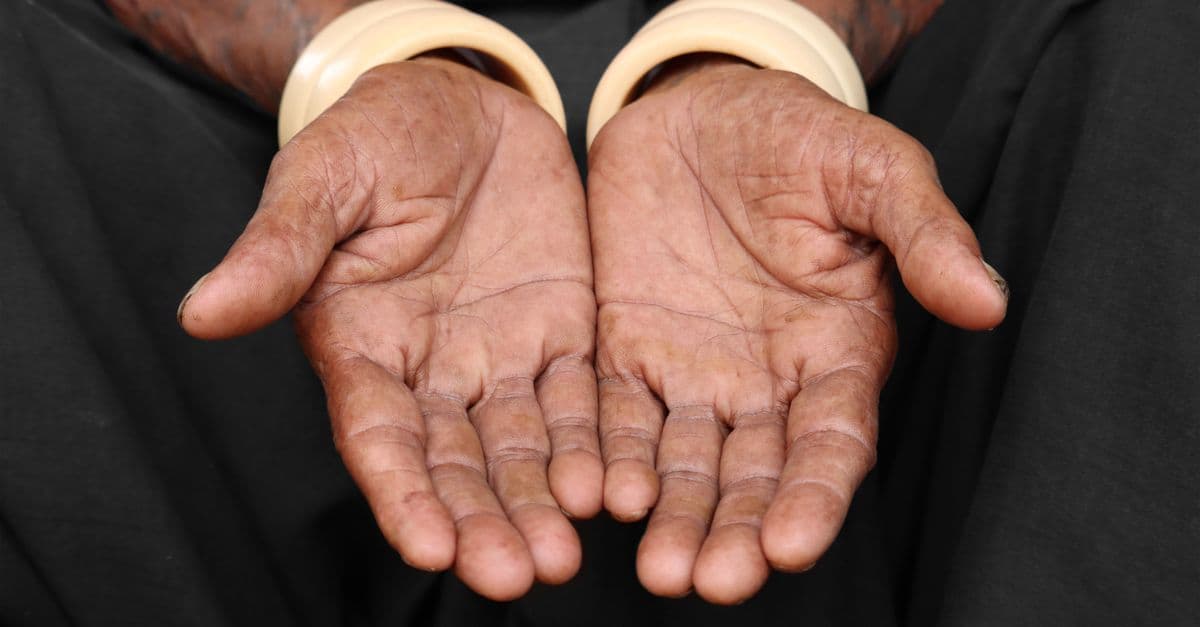
Photo: Pranavsinh suratia / Pexels
Soak your fingertips for five minutes and they wrinkle into a fixed, repeatable pattern of ridges that looks like tiny river deltas. For most of the twentieth century, doctors and biology textbooks treated this as simple osmosis: water soaking passively into thick, dead skin until it swells and buckles. That explanation is wrong. Finger wrinkling is an active nervous-system reflex, controlled by blood vessels constricting under the skin, and cutting the relevant nerve stops the wrinkling completely, even though the skin is still soaking in the same water. This guide walks through the mechanism, the clinical test built on it, the debate over whether wrinkles improve grip, and what happens when the reflex goes wrong.
Why "just swelling" cannot be the whole story
The osmosis explanation has an obvious appeal. Fingertip skin, technically called glabrous skin (the hairless, thick skin found on palms, fingers, and soles), is built from multiple layers of dead, keratin-packed cells that would be expected to absorb water like a sponge and expand unevenly, buckling into wrinkles. That is a plausible mechanical story, and for decades it was the accepted one.
The evidence against it comes from a strange source: nerve injury patients. Surgeons noticed decades ago that when the median nerve, one of the three major nerves supplying the hand, is severed, the fingers it serves stop wrinkling in water even though the skin itself is undamaged and still fully capable of absorbing moisture. If wrinkling were pure water absorption by dead skin, severing a nerve should not matter at all. It does, and it matters completely: no nerve signal, no wrinkles, regardless of soak time.
This single clinical observation flipped the standard model. Researcher Einar Wilder-Smith and colleagues confirmed in a 2003 study that water-immersion wrinkling depends on active vasoconstriction (blood vessels narrowing to reduce blood flow) driven by the sympathetic nervous system, the branch of the autonomic nervous system responsible for involuntary "automatic" responses like heart rate, sweating, and pupil size (Wilder-Smith, 2003). Wrinkling is not the skin reacting to water. It is the nervous system reacting to water and then reshaping the skin.
How the reflex actually works, step by step
Think of the fingertip's blood supply like a network of small hoses that keep tissue slightly plumped up, the way a garden hose stays round and firm when water is flowing through it, but goes slack and can fold when the water is shut off. When skin senses sustained wetness, it is not the water itself that triggers the reflex directly. It is a chain of signals that starts with sweat ducts and ends with blood vessels collapsing inward.
What actually starts the reflex at the skin surface
Researchers believe the trigger involves water moving into sweat ducts and altering the salt (electrolyte) balance inside them, which the surrounding nerve endings detect. That local change gets relayed to sympathetic nerve fibers, which respond by triggering vasoconstriction in the small blood vessels beneath the fingertip. As those vessels narrow and lose volume, the tissue above them loses its normal fullness and folds inward at fixed points, producing the wrinkle pattern.
Aquaporins, a family of membrane proteins that form fast-acting water channels in cells, appear to play a supporting role in this signaling chain. Aquaporin-5 (AQP5) is expressed in sweat gland cells and is involved in moving water and adjusting osmotic balance at the skin surface (JAAD, 2008). When AQP5 expression is abnormal, the wrinkling response misfires in ways described later in this article.
Why the pattern always looks like river deltas, not random blisters
Kareklas, Nettle, and Smulders, publishing in Biology Letters in 2013, showed that the wrinkle pattern is not random. It has the branching, converging geometry of a natural drainage network, the same statistical structure you would see in a river system carrying rainwater off a landscape (Kareklas et al., 2013, Biology Letters). That is a strong clue about function: a drainage-shaped pattern is exactly what you would design if the goal were channeling a thin film of water away from the point of contact between skin and an object, similar to how tire treads are engineered to funnel water out from under a tire on a wet road so rubber can keep touching pavement instead of hydroplaning.
Does wrinkled skin actually improve grip, or is that just a good story
This is the part of the story that gets repeated the most and is also the most contested part among researchers, so it deserves a careful, honest answer rather than a clean headline.
Q: Does finger wrinkling really improve grip on wet objects? A: The evidence is mixed. One controlled study found wrinkled fingers moved wet objects faster with fewer drops than smooth fingers, supporting a grip advantage. A separate study found no measurable improvement in dexterity or touch sensitivity from wrinkling. Both are peer-reviewed, and the disagreement remains unresolved.
The case for a grip advantage
Neurobiologist Mark Changizi first proposed in 2011 that finger wrinkles function like rain treads, channeling a thin surface film of water away from the fingertip so more of the finger's actual skin makes direct contact with a submerged object, the same principle that keeps a tire's rubber gripping wet asphalt instead of sliding on a film of water. Kareklas and colleagues tested this directly in 2013: participants moved wet marbles between containers, and those with water-wrinkled fingers completed the task measurably faster than participants with smooth, dry-equivalent fingers. Crucially, wrinkling made no difference at all when the same participants handled dry objects, which is exactly the pattern you would expect if the advantage is specific to wet-surface friction rather than a general dexterity boost (Kareklas et al., 2013).
A later 2020 study posted on bioRxiv extended this, reporting that water-immersion wrinkling improved grip efficiency specifically when handling wet objects, adding independent support to the original finding (bioRxiv, 2020). A 2015 study in Tribology Letters (tribology is the study of friction, lubrication, and wear between surfaces) measured how wrinkled skin changes friction against wet surfaces directly, adding a mechanical, not just behavioral, layer of evidence (Springer, 2015).
The case against a meaningful grip advantage
Not every study agrees. A 2013 study published in PLOS ONE tested touch sensitivity and object-handling dexterity in wrinkled versus smooth wet fingers and found no measurable difference in either measure, directly contradicting the idea that wrinkling meaningfully improves how people handle wet objects (Kreplak team, 2013, PLOS ONE).
The honest summary: multiple credible research groups have tested the same basic question with different methods and reached different conclusions. That is not a sign of bad science, it is a sign that the effect, if real, is probably small, task-dependent, and easy to wash out with different testing protocols. The safest claim a science writer can make is that wrinkling is a plausible grip adaptation with real, if inconsistent, experimental support, not a settled fact.
What determines how fast and how much you wrinkle
Wrinkling is not identical across people or conditions. Several factors change the speed and intensity of the response, and understanding them clarifies why the reflex sometimes seems unpredictable.
| Factor | Effect on wrinkling | Underlying reason |
|---|---|---|
| Water temperature | Warmer water speeds up wrinkling | Warmth increases local blood flow and sweat duct activity, accelerating the signal that triggers vasoconstriction |
| Water salinity | Fresh water triggers wrinkling; strong saltwater blunts it | Wrinkling depends on an osmotic (salt-concentration) gradient between sweat duct fluid and the surrounding water |
| Age | Sympathetic nerve responses, including wrinkling, generally weaken with age | Peripheral nerve conduction and vascular reactivity decline gradually over the lifespan |
| Nerve health | Damaged sympathetic nerves reduce or eliminate wrinkling | Vasoconstriction requires an intact sympathetic signal from nerve to blood vessel |
| Diabetes | Wrinkling is often reduced or delayed | Diabetic neuropathy (nerve damage from prolonged high blood sugar) frequently affects small sympathetic fibers first |
| Cystic fibrosis | Wrinkling appears unusually fast and exaggerated | Altered sweat gland chloride and sodium transport changes the local osmotic signal (detailed below) |
Table: Documented factors that change the speed or intensity of water-induced finger wrinkling, based on clinical and dermatological literature.
The clinical test built entirely on this reflex
Because the wrinkle reflex depends on an intact chain of nerve signaling, blood vessel response, and skin mechanics, doctors have turned the simple act of soaking a hand in water into a genuine diagnostic tool.
How the water-immersion wrinkling test works in practice
A patient's hand or fingers are immersed in water, sometimes warm water to speed the response, for a set period, commonly around 5 to 30 minutes. A clinician then scores how much wrinkling occurs. Reduced or absent wrinkling suggests impaired sympathetic nerve function, since the reflex physically cannot occur without a working nerve-to-blood-vessel signal reaching the fingertip.
Q: What does it mean if your fingers do not wrinkle in water? A: It can simply mean less time in water, cooler water, or normal individual variation. In a clinical setting, however, persistently absent or markedly reduced wrinkling after adequate soak time can indicate damage to the sympathetic nerve fibers serving that area, which is why doctors sometimes use it to screen for neuropathy or confirm nerve regrowth after surgery.
Why doctors use it for small fiber neuropathy
Small fiber neuropathy is damage specifically to the thin nerve fibers that carry pain, temperature, and autonomic signals, as opposed to the thicker fibers responsible for strength and vibration sense, and it is notoriously hard to diagnose with standard nerve conduction tests, which mainly measure large fiber function. Because wrinkling depends specifically on small sympathetic fibers, researchers have studied it as a low-cost bedside marker. A comparison study evaluated skin wrinkling against epidermal nerve density (a biopsy-based gold standard) and sympathetic skin response testing, finding the wrinkling test carries real diagnostic value as a simple, non-invasive complement to more invasive methods (ResearchGate summary of published neuropathy study). Diabetic neuropathy screening studies have used a related approach, applying EMLA cream (a topical anesthetic and vasoconstrictor) instead of water to trigger the same wrinkling pathway and measure whether it still functions normally (PubMed, EMLA-induced skin wrinkling study).
Q: Is the wrinkle test used instead of standard nerve tests, or alongside them? A: Alongside them. It is a simple screening or supporting tool, not a replacement for nerve conduction studies or skin biopsy. Its main value is being fast, painless, and equipment-light, useful for a quick bedside check rather than a definitive standalone diagnosis.
When wrinkling shows up too fast: cystic fibrosis and aquagenic wrinkling
There is a rare but clinically important flip side to the story: some people wrinkle far faster and more dramatically than normal, and that pattern is strongly linked to an underlying genetic condition.
Aquagenic wrinkling of the palms (AWP) is a condition where the palms develop pale, swollen, exaggerated wrinkling within just a few minutes of water exposure, compared with the roughly 11 minutes it typically takes for ordinary physiological wrinkling to become visible (DermNet). One clinical case series found that 84 percent of subjects with cystic fibrosis showed this exaggerated wrinkling response, compared with zero percent of healthy controls, an association strong enough that dermatologists now treat unexplained AWP as a red flag worth screening for CF or CF-carrier status (PubMed, high-prevalence AWP-CF study; Cureus, AWP as CF screening indicator).
Cystic fibrosis is caused by mutations in the CFTR gene, which normally regulates chloride and, indirectly, sodium transport across cell membranes, including in sweat glands. In people with CF, sweat glands retain abnormally high sodium, altering the osmotic gradient (the pressure difference across a membrane created by unequal salt concentrations) between the skin and surrounding water. That distorted gradient appears to over-trigger the same aquaporin-linked signaling pathway responsible for ordinary wrinkling, producing a faster, more exaggerated version of the normal reflex. Studies have specifically found aberrant AQP5 expression, extending into cell types where it is not normally present, in the sweat glands of patients with aquagenic wrinkling (JAAD, aberrant AQP5 study). One case report has even documented aquagenic wrinkling improving after patients started CFTR-modulating drug therapy, a class of medication that partially corrects the underlying chloride-transport defect, offering a striking real-world example of a visible skin sign tracking directly with a treatment targeting the root molecular cause (PMC, AWP response to CFTR modulator).
Q: Can wrinkling too easily in water be a sign of a health condition? A: Rapid, exaggerated wrinkling within a few minutes, especially with visible whitish swelling of the palms, is associated with cystic fibrosis and CF carrier status in the medical literature. It is uncommon, and most people who simply notice they wrinkle "fast" have no underlying condition, but persistent, pronounced aquagenic wrinkling with other symptoms is worth mentioning to a doctor.
How finger wrinkling compares to other water-related skin responses
It helps to place wrinkling next to two other water-and-skin phenomena people commonly confuse it with, because the mechanisms are genuinely different even though the surface-level cause, water contact, looks the same. Skin also changes in other ways, such as in why scars look different from normal skin.
- Wrinkling versus maceration. Maceration is the softening and breakdown of skin from prolonged, uninterrupted moisture exposure, common under bandages or wet socks left on too long. Unlike wrinkling, maceration is passive tissue damage from sustained wetness, not a nerve-controlled reflex, and it does not reverse the moment skin dries the way wrinkling does.
- Wrinkling versus goosebumps. Goosebumps (piloerection) are also controlled by the autonomic nervous system, but through a different branch, one that contracts tiny muscles at the base of hair follicles in response to cold or emotional arousal. Both are involuntary, fast, and reversible, which makes them a useful pair for illustrating how much of the skin's visible behavior is actually nervous-system output rather than passive material response.
- Wrinkling versus general skin aging. Age-related wrinkles form from a slow, permanent loss of collagen and elastin (structural proteins that give skin firmness and elasticity) over years. Water-immersion wrinkling is a temporary, fully reversible reshaping of already-present tissue that disappears within roughly an hour of drying off, with no lasting structural change.
What people get wrong about wrinkled fingers
The most common misconception is that fingers wrinkle because the outer skin layer is simply "waterlogged," swelling up like a sponge left in a sink. That description is intuitive and was even the standard textbook explanation for much of the twentieth century, but the nerve-injury evidence directly contradicts it: skin that cannot absorb any less water than normal will still refuse to wrinkle if its sympathetic nerve supply is cut. Passive absorption cannot explain a response that switches off completely when a single nerve is severed.
A second common assumption is that the grip benefit of wrinkling is settled science, often stated flatly in casual science writing as an established evolutionary adaptation. As the research above shows, it is a genuinely open question, supported by some well-designed studies and unsupported by others of comparable quality. Describing it as a "leading hypothesis with mixed experimental support" is accurate. Describing it as a "proven survival adaptation" overstates the current evidence.
A third misconception is that wrinkling speed is a meaningful, everyday health indicator on its own. In practice, water temperature and simple individual variation account for most differences in how quickly people wrinkle. It only becomes a clinically meaningful signal in specific, prolonged, or unusually exaggerated presentations, evaluated by a clinician alongside other findings, not from a five-minute bathtub observation.
The takeaway
Wrinkled fingers are proof that the nervous system is quietly running a maintenance reflex most people never think about: sensing sustained wetness through a sweat-duct signal, routing it through sympathetic nerve fibers, and reshaping blood flow at the fingertip into a fixed, drainage-like pattern. Whether that pattern meaningfully improves grip on wet objects remains a genuinely open scientific question, with real evidence pointing in both directions rather than a single settled answer. What is not in question is the reflex's diagnostic value: because it depends on an intact nerve pathway, its presence, absence, timing, and intensity have become a real, if narrow, window into sympathetic nerve health, from routine nerve-surgery follow-up to catching a rare genetic condition from something as simple as a few minutes in a sink of water.
Read next:
- /human-body/how-the-brain-works-explained
- /biology/dopamine-system-explained-reward-motivation
- /human-body/why-do-we-sleep-the-science
Frequently Asked Questions
Q: Why do fingers wrinkle in water? A: Sustained water contact alters the salt balance inside sweat ducts, a signal that sympathetic nerve fibers relay to blood vessels under the fingertip skin. Those vessels constrict, the tissue loses its normal fullness, and the skin folds inward into a fixed, drainage-like wrinkle pattern.
Q: Is finger wrinkling caused by water soaking into the skin? A: No. That was the historical explanation, but it is contradicted by nerve injury cases: fingers with a severed sympathetic nerve supply stop wrinkling in water entirely, even though the skin itself absorbs moisture normally. Wrinkling is an active nerve-driven reflex, not passive absorption.
Q: How long does it take for fingers to wrinkle in water? A: Physiological wrinkling typically becomes visible after roughly 5 to 30 minutes of immersion, commonly cited around 11 minutes for a clearly visible pattern, though warmer water and individual variation can shift that timing. Aquagenic wrinkling associated with cystic fibrosis can appear in as little as 3 minutes.
Q: Do wrinkled fingers actually grip wet objects better? A: The evidence is mixed. A 2013 Biology Letters study and a 2020 bioRxiv study both found wrinkled fingers handled wet objects faster and more efficiently. A separate 2013 PLOS ONE study found no measurable improvement in dexterity or touch sensitivity. The grip-advantage hypothesis remains plausible but unproven.
Q: What happens if fingers don't wrinkle in water? A: Reduced or absent wrinkling after adequate soak time can indicate damage to the sympathetic nerve fibers supplying that area. Clinicians have used the water-immersion wrinkling test for decades as a simple, non-invasive way to check nerve function, including confirming nerve regrowth after hand surgery.
Q: Does toe wrinkling work the same way as finger wrinkling? A: Yes. Toes and fingers are both covered in glabrous skin with the same sympathetic nerve supply and sweat gland structure, so soles wrinkle through the identical vasoconstriction mechanism and on a similar timescale.
Q: Can diabetes affect finger wrinkling? A: Yes. Diabetic neuropathy frequently damages small sympathetic nerve fibers before it affects larger ones, and reduced or delayed water-immersion wrinkling has been studied as a simple screening indicator for this type of early nerve damage.
Q: What is aquagenic wrinkling of the palms? A: It is a rare condition in which the palms develop fast, exaggerated, whitish, swollen wrinkling within a few minutes of water contact, well beyond ordinary wrinkling. It is strongly associated with cystic fibrosis and CF carrier status, likely driven by abnormal sodium handling in sweat glands.
Q: Does salty water cause the same wrinkling as fresh water? A: Wrinkling depends on an osmotic gradient between fluid inside sweat ducts and the surrounding water. Strongly salted water reduces or blunts that gradient, which is why wrinkling is typically slower or less pronounced in concentrated saltwater than in fresh water.
Q: Are finger wrinkles from water the same as age-related wrinkles? A: No. Water-immersion wrinkles are a temporary, fully reversible nerve-driven response that fades within about an hour of drying off. Age-related wrinkles come from a gradual, permanent loss of collagen and elastin in the skin and do not reverse.
Sources
- Wilder-Smith, E. P. (2003). Water-immersion wrinkling is due to vasoconstriction. Muscle & Nerve. onlinelibrary.wiley.com/doi/10.1002/mus.10323
- Kareklas, K., Nettle, D., & Smulders, T. V. (2013). Water-induced finger wrinkles improve handling of wet objects. Biology Letters, 9(2). royalsocietypublishing.org
- Changizi, M., Weber, R., Kotecha, R., & Palazzo, J. (2011). Are wet-induced wrinkled fingers primate rain treads? Brain, Behavior and Evolution.
- Kreplak, L. et al. (2013). Water-Induced Finger Wrinkles Do Not Affect Touch Acuity or Dexterity in Handling Wet Objects. PLOS ONE. pmc.ncbi.nlm.nih.gov/articles/PMC3885627
- Water-immersion finger-wrinkling improves grip efficiency in handling wet objects (2020). bioRxiv preprint. biorxiv.org
- Grip Performance Affected by Water-Induced Wrinkling of Fingers (2015). Tribology Letters. link.springer.com/article/10.1007/s11249-015-0515-4
- Skin wrinkling for diagnosing small fibre neuropathy: comparison with epidermal nerve density and sympathetic skin response. researchgate.net/publication/5582313
- EMLA-Induced Skin Wrinkling for the Detection of Diabetic Neuropathy. PubMed. pubmed.ncbi.nlm.nih.gov/24032026
- High prevalence of aquagenic wrinkling of the palms in patients with cystic fibrosis and association with measurable increases in transepidermal water loss. PubMed. pubmed.ncbi.nlm.nih.gov/22471628
- Aquagenic Wrinkling of the Palms as a Screening Indicator for Cystic Fibrosis Beyond Infancy. Cureus/PMC. pmc.ncbi.nlm.nih.gov/articles/PMC12949842
- Aquagenic Wrinkling of the Palm: A Rare Diagnostic Clue of Cystic Fibrosis and the Response to CFTR-Modulating Therapy. PMC. ncbi.nlm.nih.gov/pmc/articles/PMC8121091
- Aberrant aquaporin 5 expression in the sweat gland in aquagenic wrinkling of the palms. Journal of the American Academy of Dermatology. jaad.org/article/S0190-9622(08)00529-X
- Aquagenic Wrinkling Of The Palms. DermNet. dermnetnz.org/topics/aquagenic-wrinkling-of-the-palms
Follow new articles
Add SciHub101 to your feed reader to see new science and technology stories.
About the Author
SciHub101 is an independent science and technology publication founded and edited by Buğra Sözeri, a software engineer and app developer based in Türkiye. AI tools assist with drafting and research. Source documentation in the existing archive is uneven, and articles are being reviewed and corrected. The Editorial Team byline identifies editorial responsibility; it does not certify specialist or independent human review. Where we compare products, anything built by our own team is labelled as such — see the editorial guidelines and About page for how corrections and disclosures work.
Related Articles
Goosebumps Science: Cold, Fear, and Music
Goosebumps come from a 300-million-year-old reflex: tiny muscles pull hair follicles upright when cold, fear, or music trigger the sympathetic nervous system.

Dizziness Science: Inner Ear, Blood Pressure, and Balance
Dizziness can come from the inner ear, blood pressure, vision, anxiety, dehydration, or neurological signals. This guide explains the main mechanisms.

Why Do We Get Goosebumps? The Science of Piloerection
Goosebumps are involuntary contractions of arrector pili muscles attached to hair follicles, triggered by cold, fear, or intense emotion. The response is mediated by the sympathetic nervous system and adrenaline, the same system that drives fight-or-flight reactions. In our evolutionary past, when humans were covered in body hair, piloerection served two critical functions: thermal regulation in cold environments and threat display to appear larger and more intimidating to predators. Today, as mostly hairless creatures, goosebumps persist as a vestigial reflex—a relic of our evolutionary history that no longer serves its original purpose but remains embedded in human physiology. Paradoxically, goosebumps can also be triggered by aesthetic and emotional experiences, including music, awe, and profound beauty.

Why Do We Blush? The Science Behind Facial Flushing
Blushing is an involuntary reddening of the face triggered by emotional arousal — embarrassment, shame, attention, or self-awareness. Unlike sweating or trembling, blushing is mediated by the sympathetic nervous system and involves dilation of blood vessels in the face and neck. The capillaries in facial skin dilate dramatically, flooding the skin with blood and producing the characteristic red color. Paradoxically, humans appear to be the only species that blushes; other primates do not show this response. Blushing is believed to have evolved as an honest signal of social distress or vulnerability, one that cannot be easily faked, making it a critical element of human social communication.

Why Do Our Limbs Fall Asleep? The Science of Paresthesia
Sustained pressure squeezes a nerve and its blood supply, so the signals that carry sensation stop. When the pressure lifts, the recovering fibers fire on their own, and the brain reads that noise as pins and needles. The episode is common and usually harmless, but the same mechanisms underlie nerve compression syndromes, and the pattern of symptoms helps separate the two.

Blushing Science: Why the Face Reveals Emotion
Blushing is a visible social signal produced by blood-vessel dilation in the face. It links embarrassment, attention, and social repair.