Goosebumps Science: Cold, Fear, and Music
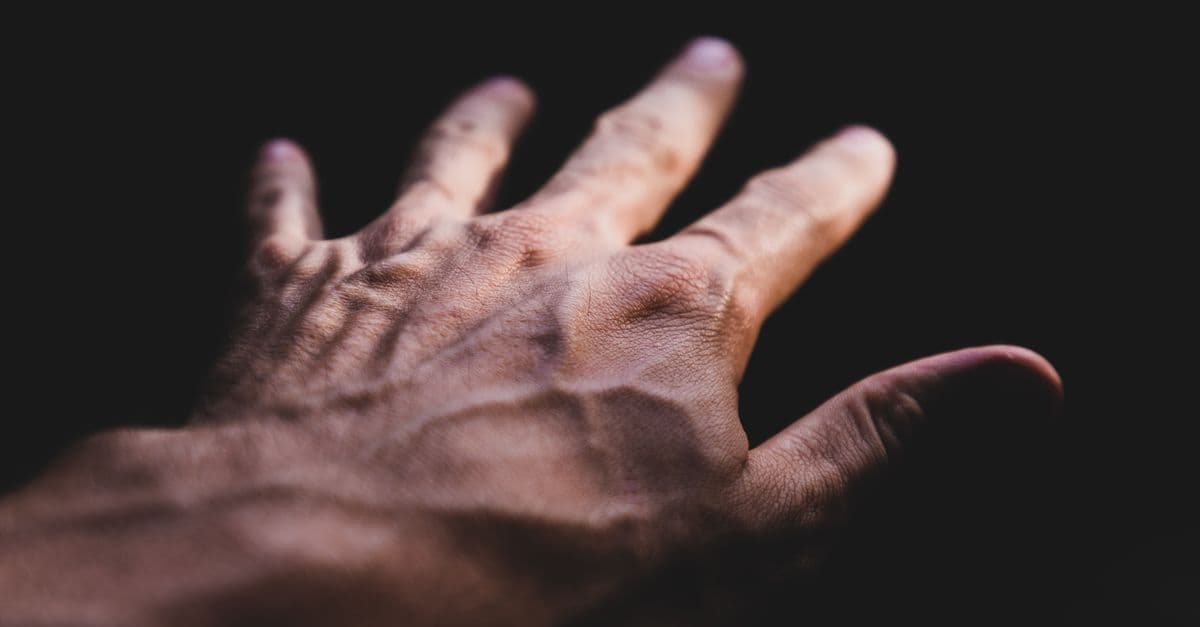
Photo: Sebastian Callejas / Pexels
Step outside on a cold morning, watch a horror movie jump scare, or listen to a favorite song hit its chorus, and the skin on your arms does the same small, strange thing: it puckers into tiny bumps and the hairs stand on end. This reflex is called piloerection, and it is powered by a bundle of smooth muscle no bigger than a grain of rice attached to every hair follicle on your body. The reflex is ancient, involuntary, and — according to a landmark 2020 Harvard study — doing more inside your skin than anyone suspected.
What is actually happening under the skin
Every hair on your body sits inside a follicle, and wrapped around the base of each follicle is a tiny bundle of smooth muscle called the arrector pili muscle (Latin for "muscle that raises the hair"). When that muscle contracts, it pulls the follicle from its usual slanted angle into a more vertical position. The skin around the follicle puckers upward with it, creating the small dome that gives goosebumps their bumpy texture and, in people with body hair, makes each strand stand up. Skin changes in other ways too, as explained in why scars look different from normal skin.
The arrector pili muscle is not under conscious control. It is wired to the sympathetic nervous system, the branch of the autonomic nervous system responsible for the "fight or flight" response. When the brain registers cold, fear, or a strong emotional jolt, sympathetic nerve fibers release a neurotransmitter called norepinephrine directly onto the muscle, which contracts within a fraction of a second. That is why goosebumps appear almost instantly and why you cannot will them away by relaxing; the muscle answers to the autonomic nervous system, not to intention.
The medical term for a goosebump reflex is cutis anserina, literally "goose skin," a name that has been used in anatomy texts for well over a century because the puckered, follicle-studded skin resembles a plucked bird. The scientific term for the underlying process — hair standing on end — is piloerection, and it shows up across nearly every mammal species, from a frightened cat arching its back with raised fur to a porcupine fanning its quills.
Why cold makes hair stand up (and why it barely helps humans anymore)
In furred mammals, piloerection is straightforward thermoregulation. When a dog, cat, or rabbit gets cold, contracting the arrector pili muscles fluffs up the fur coat, trapping a thicker layer of insulating air next to the skin. The same reflex that raises quills on a startled porcupine also raises fur on a shivering animal, and it can measurably slow heat loss by increasing the coat's effective thickness.
Humans still carry the exact same circuitry, but the payoff mostly disappeared somewhere along our evolutionary line. Roughly two million years ago, as early hominins lost most of their body hair (a change generally attributed to improved sweat-based cooling for endurance activity on the African savanna), the follicles and their arrector pili muscles stayed behind even after the thick coat did not. The result is what biologists call a vestigial reflex: the mechanism still fires exactly as it would in a furred ancestor, but with only a sparse coat of fine vellus hair to raise, it produces almost no meaningful insulation. You get the bumps and the faint prickling sensation, not the warmth.
This is a useful pattern to recognize in physiology generally: a reflex can be fully functional at the level of nerves and muscle while being functionally useless at the level of outcome. The wiring did not disappear when the fur did; it simply kept firing on schedule, the way a smoke detector that outlived a demolished kitchen still beeps at burnt toast next door. Another example of a skin response with its own logic is finger wrinkling in water.
Why do we get goosebumps when we're cold?
Cold skin is detected by thermoreceptors that send signals to the hypothalamus, the brain's temperature-control center. The hypothalamus routes a sympathetic nervous system response back to the skin, releasing norepinephrine onto arrector pili muscles, which contract and pull each hair follicle upright. In a furred ancestor this trapped insulating air; in modern humans it mostly produces bumps without meaningful warming.
Why fear and emotion trigger the same reflex
Cold is not the only trigger. The amygdala, the brain's threat-detection hub, can activate the same sympathetic pathway during fear, anger, or a sudden startle, independent of temperature. This is the same fight-or-flight cascade that dilates pupils, speeds the heart, and redirects blood toward large muscles. Piloerection was, in a furred ancestor, part of a package deal: standing hair makes an animal look physically larger and more threatening to a predator or rival, the same trick a frightened cat uses when its back arches and its coat puffs out.
Charles Darwin documented this cross-species pattern in his 1872 book The Expression of the Emotions in Man and Animals, describing how the erection of hair under strong emotion appears in humans as well as in many other mammals, and arguing it functioned as a size-exaggeration or intimidation display inherited from a common ancestor. Modern physiology has filled in the mechanism Darwin could only observe from the outside: the same sympathetic norepinephrine pathway that fires in the cold fires just as fast when the amygdala flags a threat.
That overlap explains a detail almost everyone has noticed: a chilling ghost story and a genuinely cold room can produce the identical sensation on your arms, because both routes converge on the exact same nerve-to-muscle circuit. The trigger differs; the hardware does not.
Why do horror movies and scary moments give you goosebumps?
A jump scare, a sudden loud noise, or a rush of fear activates the amygdala, which signals the sympathetic nervous system the same way cold does. Norepinephrine is released onto arrector pili muscles regardless of whether the trigger was temperature or emotion, which is why fear-induced goosebumps and cold-induced goosebumps feel physically identical.
The strangest trigger: music, chills, and frisson
Music is the trigger that puzzles researchers most, because it involves no temperature change and no physical threat, yet a swelling chorus, an unexpected key change, or a specific vocal moment can produce goosebumps as reliably as a cold wind. Researchers call this reaction frisson (French for "shiver") or aesthetic chills, and it has become one of the more closely studied intersections of music psychology and neuroscience.
A widely cited 2011 study led by Valorie Salimpoor at McGill University used a combination of PET and fMRI brain imaging to track what happens during musically induced chills. The team found that dopamine, the brain chemical tied to reward and anticipation, is released in two distinct phases and two distinct brain regions: the caudate nucleus lights up during the anticipation just before a chill-inducing musical moment, and the nucleus accumbens (a core reward center) releases dopamine at the peak of the chill itself (Salimpoor et al., 2011). In other words, the brain is not just reacting to the sound; it is predicting the emotional payoff and rewarding itself twice, once for guessing right and once for the arrival.
Not everyone gets chills from music, and the difference between people who do and people who do not turns out to be measurable. A 2011 study by Emily Nusbaum and Paul Silvia, published in Social Psychological and Personality Science under the title "Shivers and Timbres," found that the personality trait Openness to Experience — a general tendency toward imagination, aesthetic sensitivity, and emotional depth — was the single strongest predictor of how often someone reports musical chills (Nusbaum & Silvia, 2011). People high in Openness were more likely to say music regularly gives them goosebumps; people low in the trait reported the sensation rarely or never.
Why does music give some people goosebumps and not others?
Musical chills (frisson) correlate strongly with the personality trait Openness to Experience, according to Nusbaum and Silvia's 2011 research. People who score high on this trait — associated with imagination and aesthetic sensitivity — report chills more frequently. Twin studies have since suggested a heritable component as well, meaning the tendency is not purely a matter of taste or exposure.
The 2020 discovery that changed the picture
For over a century, textbooks treated the arrector pili muscle as a one-job structure: contract, raise hair, done. That changed in July 2020, when a research team led by Ya-Chieh Hsu at Harvard's Department of Stem Cell and Regenerative Biology, working with Sung-Jan Lin at National Taiwan University, published a study in the journal Cell showing the muscle does something far more interesting.
Using mice, the researchers found that arrector pili muscles physically connect to sympathetic nerve fibers and hair follicle stem cells, forming what the paper calls a niche — a specialized micro-environment that regulates stem cell behavior. The sympathetic nerve endings form synapse-like contacts directly onto the hair follicle stem cells and release norepinephrine onto them, and this signal keeps the stem cells primed and ready to activate. The arrector pili muscle's job in this system is to physically anchor and maintain that nerve connection in place (Cell, 2020; Harvard Stem Cell Institute summary).
The functional payoff showed up under sustained cold exposure. Mice kept in a cold environment for an extended period grew a noticeably thicker coat of new hair, driven by increased hair follicle stem cell activity. When the researchers surgically removed the sympathetic nerve supply to the skin, that cold-triggered hair regrowth was measurably delayed, even though the stem cells themselves were still present and capable of dividing. The National Institutes of Health's research summary of the study puts it plainly: goosebumps are "a visible sign of an otherwise hidden connection between the nervous system and hair follicle stem cells," and that connection appears to help the body grow a heavier coat during prolonged cold, not just fluff up the coat it already has.
This reframes piloerection from a single-purpose reflex into a dual-purpose system: a fast, seconds-long response (the visible bump and hair-raise) layered on top of a slow, weeks-long response (recruiting stem cells to actually thicken the coat over time). It is the same short-term/long-term split you see in other stress physiology — a burst of adrenaline for the immediate moment paired with a hormonal cascade that reshapes the body's baseline over days or weeks.
Goosebumps compared across triggers
The following table breaks down the three classic goosebump triggers side by side, since each one activates the identical muscle through a different upstream pathway.
Table 1. How the three main goosebump triggers compare
| Trigger | Brain region that initiates it | Signal reaching the skin | Evolutionary or functional origin | Typical duration |
|---|---|---|---|---|
| Cold | Hypothalamus (temperature regulation) | Norepinephrine via sympathetic nerves | Fur insulation in furred ancestors | Seconds to minutes, recurs while cold persists |
| Fear or startle | Amygdala (threat detection) | Norepinephrine via sympathetic nerves | Size-exaggeration display against predators or rivals | Seconds, tied to the stimulus |
| Music (frisson) | Auditory cortex, caudate nucleus, nucleus accumbens | Norepinephrine via sympathetic nerves, paired with dopamine reward signaling | Not evolutionarily explained; likely a byproduct of emotional/reward circuitry sharing the same output pathway | A few seconds per chill, can repeat through a song |
The mechanism at the skin level is identical in all three rows: sympathetic nerve, norepinephrine, arrector pili contraction. What differs is entirely upstream, in which brain structure decides to send the signal in the first place.
Why we still get goosebumps even though we lost the fur
This is the question that trips people up most, and the honest answer is that evolution rarely deletes a working circuit just because its original payoff shrank. Removing a reflex entirely usually requires a cost, some active disadvantage that natural selection can act against, and a slightly overactive arrector pili muscle costs almost nothing to carry around. It does not injure the body, does not waste meaningful energy, and does not reduce reproductive success in any measurable way. Absent a cost, traits tend to linger.
Think of it the way you might think of an appendix or the muscles that let some people wiggle their ears: not actively useful in modern humans, but not expensive enough to have been selected away either. The arrector pili muscle sits in that same category, except the 2020 Harvard findings suggest it may not be quite as useless as the appendix comparison implies, since it still plays an active role in maintaining the sympathetic nerve connection that helps regulate hair growth cycles, even if the growth itself is no longer producing a functional winter coat.
A second reason the reflex persists is that it is not an isolated trait sitting on its own; it is one small piece of a much larger, still very much load-bearing system: the sympathetic fight-or-flight response. You cannot selectively delete the goosebump piece of that cascade without touching the pupil dilation, heart rate acceleration, and blood redistribution that happen alongside it, and those other pieces remain critically useful for surviving genuine physical danger. The arrector pili muscle is essentially riding along on a nervous system pathway that is too valuable, as a whole, to lose.
Common misconceptions about goosebumps
Goosebumps are just a cold reaction, and anything else is unrelated. This gets the causal direction backward. Cold is one input into a shared sympathetic nervous system pathway; fear and strong emotion are separate inputs into that same pathway. The skin's response looks identical because the final steps of the circuit — norepinephrine onto the arrector pili muscle — are the same regardless of what triggered them upstream.
Goosebumps mean the body is doing something useful in humans, the same as in animals. In furred mammals, piloerection meaningfully traps insulating air and functionally increases apparent body size. In humans, with only sparse fine hair left on most of the body, neither effect does much of anything visible or physiologically significant. The reflex fires correctly; the payoff it evolved for mostly disappeared with the fur.
Only fear and cold cause goosebumps. Strong positive emotions do it too. Awe, being moved by a piece of art, pride, nostalgia, and the peak moment of a beloved song can all trigger frisson. The trigger is intensity and unexpectedness of emotion, not whether the emotion is pleasant or unpleasant.
Everyone experiences music-induced chills the same way. Research consistently shows large individual differences, and Openness to Experience is the strongest known predictor. Some people report frequent chills from music; a meaningful portion of the population reports rarely or never experiencing it, and that difference appears tied to a stable personality trait rather than simple unfamiliarity with the music.
Goosebumps are purely psychological with no physical substance. They are a real, physically observable, muscle-driven skin response with a clearly mapped neurological pathway; they show up on skin conductance and thermal imaging measurements used in psychophysiology labs. The trigger can be emotional, but the mechanism itself is entirely physiological.
When goosebumps are a medical sign, not a curiosity
Ordinary goosebumps triggered by cold, fear, or music are harmless and require no attention. There are, however, contexts where unusual or persistent piloerection is a clinical clue rather than a passing sensation. Sudden, unprovoked goosebumps combined with sweating, agitation, and a racing heart can appear during opioid or alcohol withdrawal, since the sympathetic nervous system rebounds into overdrive once the drug's suppressive effect on it lifts; clinicians sometimes note "gooseflesh" as part of a broader withdrawal symptom checklist. Certain autonomic nervous system disorders and some seizure types (particularly seizures originating in or near the temporal lobe) have also been associated with episodes of piloerection as part of a larger symptom cluster. None of this means every goosebump episode needs medical evaluation; it means that goosebumps occurring without an obvious cold, fear, or emotional trigger, especially alongside other symptoms, are worth mentioning to a clinician rather than dismissing.
What this means
Goosebumps are a small, visible readout of a nervous system decision that is otherwise invisible: the sympathetic branch of the autonomic nervous system firing norepinephrine at a muscle too small to see with the naked eye. That decision can be triggered by a thermostat check in the hypothalamus, a threat assessment in the amygdala, or a dopamine-driven emotional peak during a piece of music, and the skin cannot tell the difference between them because it does not need to; the final output pathway is shared. What has changed in the past few years is the assumption that this reflex is a pure evolutionary leftover with nothing left to do. The 2020 Harvard findings on the arrector pili muscle's role in hair follicle stem cell regulation suggest the circuit is still doing real physiological work, just work that is harder to see than a fluffed-up winter coat.
Frequently Asked Questions
Q: What causes goosebumps? A: Goosebumps happen when the sympathetic nervous system releases norepinephrine onto tiny muscles called arrector pili, which are attached to hair follicles. When these muscles contract, they pull the follicle upright and pucker the surrounding skin, producing the bumps and, in animals with thicker coats, raising the fur itself.
Q: Why do we get goosebumps from cold? A: Cold skin is detected by thermoreceptors that signal the hypothalamus, which triggers the sympathetic pathway to contract arrector pili muscles. In furred animals this traps insulating air near the skin; in humans, with mostly fine vellus hair remaining, the reflex still fires but produces little meaningful warmth.
Q: Why does fear give you goosebumps? A: Fear activates the amygdala, which can trigger the same sympathetic norepinephrine pathway that cold does. In furred ancestors, raised hair made an animal look larger and more threatening, a size-exaggeration display Darwin documented across mammal species in 1872.
Q: Why does music give some people chills but not others? A: A 2011 study by Nusbaum and Silvia found that the personality trait Openness to Experience is the strongest known predictor of musical chills (frisson). People high in this trait report the sensation more frequently, and later twin research has suggested a heritable component as well.
Q: What part of the brain is involved in music-induced goosebumps? A: A 2011 McGill University study led by Valorie Salimpoor used PET and fMRI imaging to show that dopamine is released from the caudate nucleus during anticipation of a musically peak moment, and from the nucleus accumbens at the peak of the chill itself.
Q: Do goosebumps serve any purpose in humans today? A: Mostly no, in terms of the original insulation or size-display function, since humans lost most body hair. A 2020 Harvard study found the arrector pili muscle still plays an active role in maintaining sympathetic nerve connections to hair follicle stem cells, which helps regulate hair regrowth during prolonged cold exposure.
Q: What is the medical term for goosebumps? A: The clinical term is cutis anserina ("goose skin"), describing the puckered appearance of the skin. The underlying muscle contraction and hair-raising process is called piloerection.
Q: Can goosebumps be a sign of a medical problem? A: Occasional goosebumps from cold, fear, or music are normal and harmless. Unprovoked or persistent piloerection paired with sweating, agitation, or a racing heart can appear during opioid or alcohol withdrawal, and some autonomic or temporal lobe seizure conditions have been associated with episodes of piloerection as part of a broader symptom pattern.
Q: Why did humans keep the goosebump reflex after losing body hair? A: Evolution generally only removes a trait if it carries a measurable cost. A slightly overactive arrector pili muscle costs almost nothing, and it rides along on the broader sympathetic fight-or-flight pathway, which remains essential for other functions like heart rate and pupil response, so there was little selective pressure to eliminate it.
Q: Is frisson the same thing as goosebumps? A: Frisson refers specifically to the pleasurable shivering or chill sensation triggered by music or aesthetic experience, and it is typically accompanied by visible goosebumps. The two terms describe the same physical event (piloerection) but frisson emphasizes the emotional, reward-linked trigger rather than cold or fear.
Related Reading
- How the Brain Works: Neurons, Regions, and the Mind
- The Dopamine System Explained: Reward and Motivation
- Why Do We Sleep: Stages, the Glymphatic System, and Memory
Sources
- Cell Types Promoting Goosebumps Form a Niche to Regulate Hair Follicle Stem Cells — Cell, 2020
- The real reason behind goosebumps — Harvard Stem Cell Institute
- What Goosebumps Are For — NIH Research Matters
- Musical chills: why they give us thrills — McGill University, on Salimpoor et al., 2011
- Shivers and Timbres: Musical Chills and Personality — Nusbaum & Silvia, Social Psychological and Personality Science, 2011
- Charles Darwin, The Expression of the Emotions in Man and Animals (1872)
Follow new articles
Add SciHub101 to your feed reader to see new science and technology stories.
About the Author
SciHub101 is an independent science and technology publication founded and edited by Buğra Sözeri, a software engineer and app developer based in Türkiye. AI tools assist with drafting and research. Source documentation in the existing archive is uneven, and articles are being reviewed and corrected. The Editorial Team byline identifies editorial responsibility; it does not certify specialist or independent human review. Where we compare products, anything built by our own team is labelled as such — see the editorial guidelines and About page for how corrections and disclosures work.
Related Articles
Hiccups Science: The Diaphragm Reflex Explained
Hiccups come from a three-part nerve reflex arc that fires the diaphragm early and snaps the vocal cords shut. Here is the mechanism, in detail.
Finger Wrinkling in Water: The Science of Wet Grip
Wrinkled fingers are an active nervous-system response, not simple swelling. This guide explains grip, blood vessels, and evolution.
Why Do We Get Goosebumps? The Science of Piloerection
Goosebumps are involuntary contractions of arrector pili muscles attached to hair follicles, triggered by cold, fear, or intense emotion. The response is mediated by the sympathetic nervous system and adrenaline, the same system that drives fight-or-flight reactions. In our evolutionary past, when humans were covered in body hair, piloerection served two critical functions: thermal regulation in cold environments and threat display to appear larger and more intimidating to predators. Today, as mostly hairless creatures, goosebumps persist as a vestigial reflex—a relic of our evolutionary history that no longer serves its original purpose but remains embedded in human physiology. Paradoxically, goosebumps can also be triggered by aesthetic and emotional experiences, including music, awe, and profound beauty.

Why Do We Blush? The Science Behind Facial Flushing
Blushing is an involuntary reddening of the face triggered by emotional arousal — embarrassment, shame, attention, or self-awareness. Unlike sweating or trembling, blushing is mediated by the sympathetic nervous system and involves dilation of blood vessels in the face and neck. The capillaries in facial skin dilate dramatically, flooding the skin with blood and producing the characteristic red color. Paradoxically, humans appear to be the only species that blushes; other primates do not show this response. Blushing is believed to have evolved as an honest signal of social distress or vulnerability, one that cannot be easily faked, making it a critical element of human social communication.
Why Do Our Limbs Fall Asleep? The Science of Paresthesia
Sustained pressure squeezes a nerve and its blood supply, so the signals that carry sensation stop. When the pressure lifts, the recovering fibers fire on their own, and the brain reads that noise as pins and needles. The episode is common and usually harmless, but the same mechanisms underlie nerve compression syndromes, and the pattern of symptoms helps separate the two.
Why Do We Have Fingerprints? The Science
Fingerprints exist primarily to improve grip and amplify fine touch. The ridged skin on your fingertips enhances friction against smooth surfaces and channels vibrations toward specialized nerve endings — but the exact patterns those ridges form are shaped by a reaction-diffusion process that plays out in the womb, governed by competing molecular signals that no two people, not even identical twins, experience in quite the same way.