Blushing Science: Why the Face Reveals Emotion

Photo: Antonius Ferret / Pexels
Charles Darwin called blushing "the most peculiar and most human of all expressions," and more than 150 years of research since has not found a good reason to disagree (Darwin, The Expression of the Emotions in Man and Animals). No other animal reliably reddens its face in response to a social evaluation. Understanding why the face, specifically, betrays embarrassment involves tracing a signal from the brain's threat-detection circuits through the sympathetic nervous system to a patch of skin engineered, almost accidentally, to broadcast it.
The short answer
Blushing happens when the sympathetic nervous system releases adrenaline that binds to beta-adrenergic receptors in the veins of the face, dilating them and pulling extra blood into the cheeks, ears, neck, and upper chest. This is functionally the opposite of most sympathetic "fight or flight" responses, which usually constrict blood vessels in the skin to redirect blood toward muscles. Facial blushing is a documented exception, and that exception is what makes the face specifically, rather than the arms or torso, the part of the body that visibly flushes during embarrassment.
The trigger is almost always social: being complimented, caught in a mistake, singled out for attention, or watched while performing a task. Physical exertion, heat, alcohol, and spicy food can produce a similar red face through a related mechanism, but that is technically flushing, not the emotionally-triggered blush that Darwin was describing.
Why the face specifically turns red
Facial skin has an unusual vascular structure that makes it uniquely suited to visible reddening. The cheeks contain a dense network of capillary loops close to the skin's surface, and beneath them sits the venous plexus, an extensive web of veins in the subcutaneous layer capable of holding a disproportionately large volume of blood relative to its size (British Psychological Society).
Crucially, research published in Psychophysiology found that facial veins carry an unusually high density of beta-adrenergic receptors, the molecular docking sites where adrenaline binds to trigger dilation rather than constriction (Drummond, "The effect of adrenergic blockade on blushing and facial flushing," Psychophysiology, 1997). A landmark 1982 study by Mellander demonstrated this beta-adrenergic dilation directly in human buccal (cheek) veins, a finding notable because adrenergic innervation of veins, as opposed to arteries, is uncommon throughout the rest of the body. That distribution is why a jolt of adrenaline widens the blood vessels in your face at the same moment it might be narrowing the blood vessels in your fingertips.
What causes blushing biologically, step by step?
A social trigger, such as being praised in front of a group or realizing you made an embarrassing mistake, activates the amygdala and related brain regions that process social threat. That activates the sympathetic nervous system, which releases adrenaline (epinephrine) into the bloodstream. The adrenaline binds to beta-adrenergic receptors concentrated in facial veins, causing them to dilate. Blood pools closer to the skin's surface in the cheeks, ears, and neck, producing visible redness within seconds.
Why can't people control blushing?
Blushing runs through the autonomic nervous system, the branch of the nervous system that governs involuntary functions like heart rate and digestion, rather than the somatic nervous system that controls voluntary muscle movement. Because the trigger and the response both occur below the level of conscious control, trying to consciously suppress a blush typically fails and can even intensify it, since the awareness of blushing becomes its own source of social self-consciousness.
Why blushing might be a social signal, not just a malfunction
For a long time, blushing looked like a design flaw: a reflex that broadcasts exactly the vulnerability a person is trying to hide. Research over the past two decades has built a stronger case that blushing functions as an appeasement signal, evolved specifically because it benefits the person who blushes.
A widely cited study by psychologist Corine Dijk and colleagues had participants play a trust-based economic game against a virtual partner who either blushed or did not blush after breaking an agreement. Participants trusted the blushing partner with significantly more money in follow-up rounds, rated them as more trustworthy, and expected a lower probability that they would break trust again (Dijk, de Jong, and Peters, "The Remedial Value of Blushing in the Context of Transgressions and Mishaps," Emotion). In other words, a visible blush after a mistake made observers more forgiving, not less, because it signaled that the person recognized the social norm they had violated and cared about the judgment of others.
That reframes blushing as costly, honest signaling in the same category as other involuntary emotional displays: it is hard to fake, which is exactly what makes it useful. A person who blushes after an awkward moment is communicating, without saying a word, "I know that was embarrassing, and I care what you think," a message that is more credible precisely because it cannot be consciously manufactured.
When blushing starts: what child development research shows
Blushing is not present at birth, and its emergence tracks a specific cognitive milestone rather than simple physical maturation. Self-conscious emotions, the category that includes embarrassment, shame, guilt, and pride, require a child to understand that they exist as a distinct self who can be observed and judged by others, an understanding that typically emerges around 18 months of age, roughly the same point at which children begin recognizing themselves in a mirror (Encyclopedia on Early Childhood Development, "The Self-Conscious Emotions").
Blushing itself lags slightly behind that early self-recognition milestone and becomes markedly more common by around age five, when researchers observing preschool-age children found that a majority displayed clear signs of embarrassment in socially evaluative situations, and blushing specifically was reported in slightly more than half of the children who showed embarrassment (Encyclopedia on Early Childhood Development). One controlled study had children of varying ages perform a singing task alone and then again in front of an audience; across age groups, participants reported more embarrassment and blushed more when performing in front of others, directly confirming that blushing is tied to audience presence rather than to the physical act itself.
A longitudinal study published in the Journal of Child Psychology and Psychiatry followed children over time and found that blushing frequency in early childhood made a unique, independent contribution to the later development of social anxiety disorder symptoms, distinct from general shyness or anxiety measures (Nikolić et al., "The unique contribution of blushing to the development of social anxiety disorder symptoms," Journal of Child Psychology and Psychiatry, 2020). That finding suggests blushing is not merely a symptom that rides along with anxiety, it may actively shape how a child's social-anxiety profile develops over time, likely because frequent, visible blushing episodes create their own feedback loop of self-consciousness.
The blushing paradox: how fear of blushing makes blushing worse
Research on adults with high social anxiety has identified what psychologists call the blushing paradox: the more a person fears blushing and worries about others noticing it, the more frequently and intensely they tend to actually blush, which then reinforces the fear that started the cycle. A study examining fear of blushing found that individuals with a strong fear of blushing explicitly and automatically associate blushing with social costs, meaning their brains have essentially learned to treat a blush as a kind of public failure before it even happens (PMC, "Individuals with Fear of Blushing Explicitly and Automatically Associate Blushing with Social Costs").
That anticipatory fear does real physiological work. Worrying about blushing activates the same sympathetic nervous system pathway that produces blushing in the first place, so the anxious anticipation of a blush can itself become the trigger, independent of any actual embarrassing event. Researchers studying this pattern found that frequent blushers report higher levels of shame specifically in the moments when they do blush, compared to moments when they do not, a pattern not observed among infrequent blushers, who tend to report the opposite, more pleasant affect when they blush rather than more shame. This split suggests blushing frequency itself changes how a person interprets their own reaction, not just how often the reaction occurs.
A separate study using naturalistic tracking of everyday social encounters, rather than lab-based tasks, found that facial blushing during real interactions correlated with specific internal states, including self-focused attention and concern about others' evaluations, providing evidence outside the artificial conditions of a laboratory that the same social-evaluative trigger identified in controlled studies operates in ordinary daily life (PLOS One, "Intrapersonal and Interpersonal Concomitants of Facial Blushing during Everyday Social Encounters"). This line of research is also why cognitive behavioral therapy protocols for social anxiety often specifically target the fear of blushing as a treatment focus distinct from general social anxiety symptoms, rather than treating blushing purely as a side effect to be tolerated.
Does worrying about blushing actually cause more blushing?
Yes, according to research on the "blushing paradox." Anticipatory anxiety about blushing activates the same sympathetic nervous system pathway responsible for the blush itself, so fear of blushing can become its own trigger, independent of any external embarrassing event, and this cycle is one of the mechanisms researchers link to the development and maintenance of social anxiety disorder.
When blushing becomes a medical concern
For most people, blushing is uncomfortable but harmless, a normal reflex tied to normal social situations. It becomes a clinical concern in two main scenarios. The first is erythrophobia, an intense, persistent fear of blushing in public that is often classified alongside social anxiety disorder; the fear of blushing itself can create a feedback loop where anxiety about reddening triggers more frequent and intense blushing episodes. Other everyday parts of the body have their own explanations too, including how teeth work and how hair grows.
The second is when facial redness appears without a clear emotional trigger, alongside other symptoms like persistent flushing, visible blood vessels, or skin sensitivity, which can indicate rosacea or another dermatological or vascular condition rather than emotional blushing. This article describes the normal emotional-blushing pathway; it is not a diagnostic tool, and persistent or severe facial flushing outside clear social triggers is worth evaluating with a physician or dermatologist rather than self-diagnosing.
Does skin tone change how blushing looks and is noticed?
The underlying mechanism, beta-adrenergic dilation of facial veins, is the same in every human being regardless of skin tone. What differs is how visible the result is to an outside observer, because melanin in the skin absorbs and scatters light and can mask the reddening that a paler complexion shows plainly.
A frequently cited study by psychologists Angela Simon and Stephanie Shields compared how White, Black, Hispanic, and Asian participants experienced and reported their own blushing. Between 50% and 77% of White, Asian, and Hispanic participants said they were aware of an actual color change in their skin when they blushed, but only 23% of Black participants reported noticing a visible color shift, even though 77% of the same Black participants said they still felt the characteristic facial warmth of a blush (Simon and Shields, "Does Complexion Color Affect the Experience of Blushing?", Morehead State University). In other words, the physiological event, the warmth of dilated facial veins, was reported at similar rates across groups, but the visible signal that other people can see was reported far less often among darker-skinned participants.
That gap matters because blushing's proposed social function, as an appeasement signal that makes an observer more forgiving after a mistake, depends on the blush actually being seen. A 2017 study using thermal infrared cameras found something related from a different angle: when researchers measured facial temperature directly, cheek and forehead temperature rose reliably after participants received compliments, but that thermal rise did not reliably line up with visible reddening captured on ordinary camera video (Ioannou et al., "Sympathetic Activity and Perceptual Sensitivity Changes During Anger Imagery," Frontiers in Human Neuroscience, 2017). The internal, thermal signature of blushing and its outward, visible signature can decouple, which helps explain why darker-skinned people can feel a blush warm their face while an observer sees little or nothing.
Because visible reddening is harder to detect on melanin-rich skin, researchers studying complexion and blushing have suggested that observers should also watch the ears, lips, and neck, areas where skin is thinner and less pigmented, and where a color shift is more likely to register even when the cheeks show little change.
Common misconceptions about blushing
The biggest misconception is that blushing is purely a symptom of shyness or low confidence. Research finds no consistent link between how often someone blushes and broader personality traits like introversion; blushing is triggered by specific situations of social exposure or evaluation, not by a stable personality deficit, and confident, socially skilled people blush just as readily under the right conditions.
A second misconception is that blushing and flushing are the same thing. Flushing from heat, exercise, alcohol, or spicy food involves a broader vasodilation response across the body and is driven by different physiological triggers, including histamine release and core-temperature regulation, rather than the beta-adrenergic, sympathetic-nervous-system pathway specific to social-emotional blushing. The end result looks similar, a red face, but the mechanism and the trigger are distinct.
A third misconception is that blushing can be reliably prevented through willpower or breathing techniques. Because the reflex runs through the involuntary autonomic nervous system, cognitive-behavioral approaches that reduce the underlying social anxiety tend to be more effective long-term than in-the-moment suppression attempts, which often paradoxically intensify the response.
The takeaway
Blushing is not a glitch in an otherwise well-designed nervous system. It is a specific evolutionary exception, veins in the face that dilate under sympathetic activation instead of constricting like veins almost everywhere else in the body, and that exception appears to exist because the resulting visible signal made early humans more trusted, not less, after a social mistake. The reflex you cannot control during an embarrassing moment is, according to the evidence, doing exactly what it evolved to do.
Quick Reference
| Question | Short answer |
|---|---|
| What causes blushing? | Adrenaline released by the sympathetic nervous system binds to beta-adrenergic receptors in facial veins, causing them to dilate rather than constrict. |
| Why does only the face blush? | Facial veins have an unusually high density of beta-adrenergic receptors and sit close to the skin's surface, unlike veins elsewhere in the body. |
| Is blushing controllable? | No. It runs through the autonomic (involuntary) nervous system, which is why trying to consciously suppress it often makes it worse. |
| Does blushing serve a purpose? | Research suggests it functions as an appeasement signal, people who blush after a mistake are rated as more trustworthy and forgiven more readily. |
Related Reading
- How the Brain Works: Neurons, Regions, and the Mind
- The Dopamine System Explained: Reward, Motivation, and Why It's Not What You Think
- Why Do We Sleep: Stages, the Glymphatic System, and Memory
Frequently Asked Questions
Q: What part of the brain triggers blushing? A: The amygdala and related brain regions that process social threat and self-consciousness activate the sympathetic nervous system, which then releases adrenaline. That adrenaline binds to beta-adrenergic receptors concentrated in facial veins, producing the visible reddening within seconds of the triggering social event.
Q: Why can't I stop myself from blushing? A: Blushing is controlled by the autonomic nervous system, the same system that governs heart rate and digestion, which operates outside conscious control. Because the reflex bypasses voluntary muscle control entirely, willpower has little effect, and trying to suppress it often increases self-consciousness and intensifies the response.
Q: Is blushing the same as flushing from heat or alcohol? A: No. Emotional blushing is driven specifically by beta-adrenergic receptor activation in facial veins triggered by social situations, while flushing from heat, exercise, or alcohol involves broader vasodilation driven by core-temperature regulation and, in alcohol's case, histamine release. Both produce facial redness but through different physiological pathways.
Q: Do animals blush? A: Not in the way humans do. Darwin himself noted that while some primates redden from arousal or passion, no other species has been documented to blush specifically in response to social embarrassment or self-conscious evaluation, making it, in his words, "the most peculiar and most human of all expressions."
Q: Can blushing be a sign of a medical problem? A: Occasional blushing tied to clear social triggers is normal and not a medical concern. Persistent facial redness without an emotional trigger, especially alongside visible blood vessels or skin sensitivity, can indicate rosacea or another vascular condition, and an intense fear of blushing itself (erythrophobia) is sometimes linked to social anxiety disorder; both are worth discussing with a physician rather than self-diagnosing.
Q: At what age do children start blushing? A: Blushing requires a level of self-awareness that emerges around 18 months, the same age children begin recognizing themselves in a mirror. It becomes markedly more common and consistent by around age five, when researchers find that a majority of children show observable embarrassment, and blushing specifically, in socially evaluative situations.
Q: Does fear of blushing make blushing worse? A: Yes. Research describes a "blushing paradox," in which anticipatory anxiety about blushing activates the same sympathetic nervous system pathway that produces the blush itself, so the fear becomes its own trigger. This cycle is one of the mechanisms researchers link to the development and maintenance of social anxiety disorder.
Q: Does blushing in childhood predict social anxiety later in life? A: A longitudinal study published in the Journal of Child Psychology and Psychiatry found that blushing frequency in early childhood made a unique, independent contribution to later social anxiety disorder symptoms, separate from general shyness or anxiety measures, suggesting blushing may actively shape social-anxiety development rather than just accompany it.
Sources
- British Psychological Society, "The puzzle of blushing"
- Drummond, "The effect of adrenergic blockade on blushing and facial flushing," Psychophysiology, 1997
- Dijk, de Jong, and Peters, "The Remedial Value of Blushing in the Context of Transgressions and Mishaps," PubMed
- Center for Academic Research and Training in Anthropogeny (CARTA), "Emotional Flushing (Blushing)"
- Encyclopedia on Early Childhood Development, "The Self-Conscious Emotions"
- Nikolić, M. et al., "The unique contribution of blushing to the development of social anxiety disorder symptoms: results from a longitudinal study," Journal of Child Psychology and Psychiatry, 2020
- PMC, "Individuals with Fear of Blushing Explicitly and Automatically Associate Blushing with Social Costs"
- PLOS One, "Intrapersonal and Interpersonal Concomitants of Facial Blushing during Everyday Social Encounters"
- Simon, A. and Shields, S., "Does Complexion Color Affect the Experience of Blushing?", Morehead State University
- Ioannou, S. et al., "Sympathetic Activity and Perceptual Sensitivity Changes During Anger Imagery," Frontiers in Human Neuroscience, 2017
Follow new articles
Add SciHub101 to your feed reader to see new science and technology stories.
About the Author
SciHub101 is an independent science and technology publication founded and edited by Buğra Sözeri, a software engineer and app developer based in Türkiye. AI tools assist with drafting and research. Source documentation in the existing archive is uneven, and articles are being reviewed and corrected. The Editorial Team byline identifies editorial responsibility; it does not certify specialist or independent human review. Where we compare products, anything built by our own team is labelled as such — see the editorial guidelines and About page for how corrections and disclosures work.
Related Articles
Brain Freeze Science: The Cold Headache Explained
Brain freeze is referred pain caused by rapid cooling in the mouth and throat, triggering blood-vessel and nerve responses.
Why Do We Shiver? The Science of Thermoregulation
Shivering is an involuntary muscle contraction that generates heat when your body temperature drops below its set point. Your hypothalamus acts as a thermostat, detecting temperature changes through cold receptors and triggering both shivering and non-shivering heat production. Brown fat provides extra warmth in infants, while shivering during fever occurs because your body's target temperature has been reset upward. Understanding this physiological response reveals how your nervous system maintains the narrow 37°C window needed for survival.
Finger Wrinkling in Water: The Science of Wet Grip
Wrinkled fingers are an active nervous-system response, not simple swelling. This guide explains grip, blood vessels, and evolution.

Why Do We Blush? The Science Behind Facial Flushing
Blushing is an involuntary reddening of the face triggered by emotional arousal — embarrassment, shame, attention, or self-awareness. Unlike sweating or trembling, blushing is mediated by the sympathetic nervous system and involves dilation of blood vessels in the face and neck. The capillaries in facial skin dilate dramatically, flooding the skin with blood and producing the characteristic red color. Paradoxically, humans appear to be the only species that blushes; other primates do not show this response. Blushing is believed to have evolved as an honest signal of social distress or vulnerability, one that cannot be easily faked, making it a critical element of human social communication.
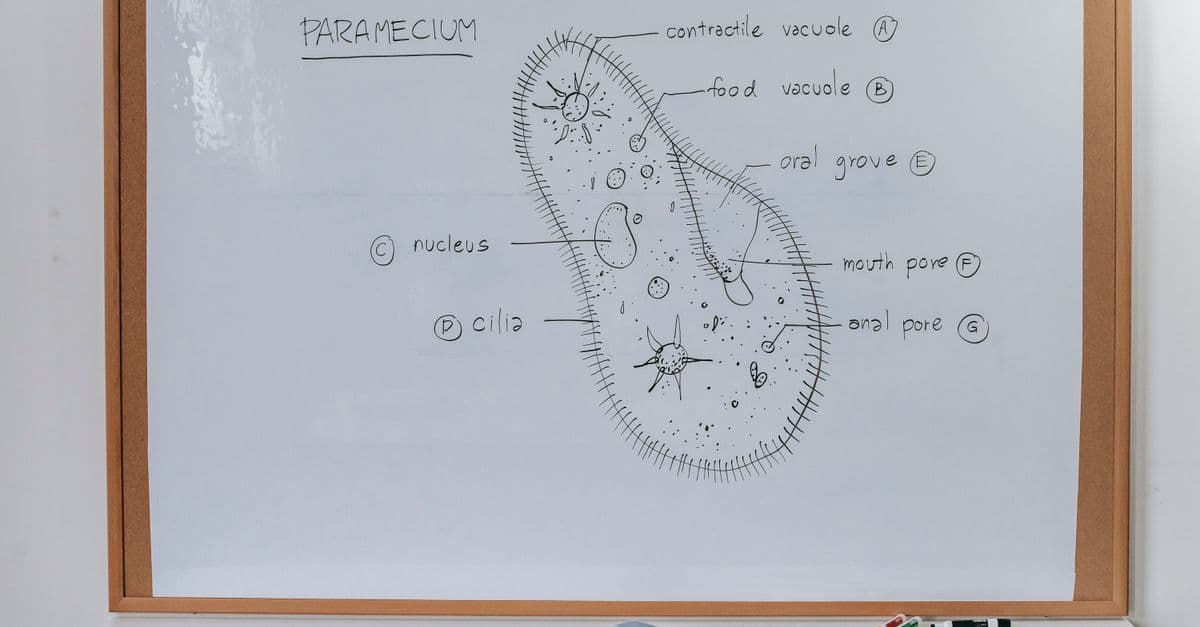
Why Do We Blush? The Biology of Embarrassment
Blushing is involuntary facial reddening from sympathetic vasodilation. Only humans blush in response to social embarrassment; it evolved as an honest apology signal.