Brain Freeze Science: The Cold Headache Explained
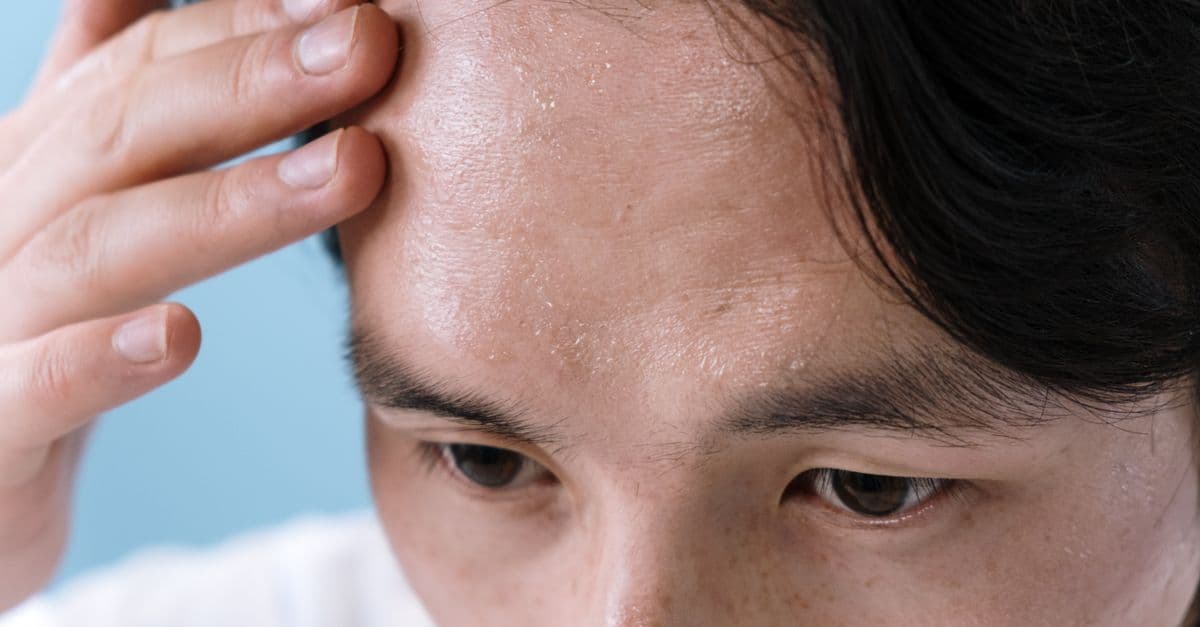
Photo: cottonbro studio / Pexels
The stabbing pain behind your forehead after a fast bite of ice cream has nothing to do with your brain actually getting cold. It is a blood-vessel reflex triggered in the roof of your mouth, and it produces pain your brain mistakenly locates somewhere else entirely. Researchers gave the sensation a formal name, sphenopalatine ganglioneuralgia, and a 2012 brain-imaging study finally pinned down the mechanism behind it: a sudden surge of blood flow through an artery deep in the skull.
What actually happens when you bite into something cold
Brain freeze, medically known as sphenopalatine ganglioneuralgia or "ice cream headache," happens when something cold touches the roof of the mouth, the palate, which sits directly beneath a dense network of blood vessels and nerve endings feeding into the trigeminal nerve, the same nerve responsible for most facial sensation and many types of headache pain. The rapid temperature drop triggers those blood vessels to react within seconds.
In a 2012 study presented at the Experimental Biology conference, researchers led by Jorge Serrador of Harvard Medical School had 13 healthy adults sip ice water through a straw pressed against the palate while monitoring blood flow in the brain's arteries using transcranial Doppler ultrasound, a technique that measures blood velocity through vessels using sound waves. The scans showed a sharp, sudden increase in blood flow through the anterior cerebral artery, one of the brain's major blood vessels, right as participants reported the onset of pain.
The mechanism: why a blood vessel reflex hurts
Blood vessels in the brain are unusually sensitive to sudden temperature and pressure changes because the skull is a fixed, rigid space. When cold hits the palate, nearby blood vessels in the mouth and throat rapidly constrict to conserve heat, a normal protective reflex. Researchers believe the body then rapidly widens the anterior cerebral artery immediately afterward, likely to rush warm blood toward the brain and protect delicate neural tissue from a temperature drop.
That rapid widening increases pressure inside a compartment that cannot expand, since the skull cannot flex the way skin or muscle can. The trigeminal nerve, which has sensory branches running through the palate, sinuses, and areas near this artery, picks up that pressure change and fires pain signals toward the brain. Because the trigeminal nerve is also the same nerve pathway involved in migraine pain, the brain often misreads the source of the signal.
Why does the pain feel like it's in your forehead, not your mouth?
This is a textbook example of referred pain, meaning pain that is felt in a location different from where the actual trigger occurred. The trigeminal nerve carries sensory signals from both the palate and the forehead through overlapping pathways, so when the palate's blood vessels trigger a pain signal, the brain often localizes it to the forehead instead, the same referred-pain mechanism responsible for some cases of sinus pain and migraine.
Why some people get brain freeze and others barely notice it
Not everyone experiences brain freeze with the same intensity, and there's a documented reason for that variation tied to how sensitive an individual's trigeminal nerve pathway and blood vessels are to rapid temperature change. People who are prone to migraines report brain-freeze episodes more frequently and more intensely than people who are not, which is part of why researchers found the phenomenon scientifically useful. Because brain freeze can be triggered on demand in a lab setting, unlike a migraine, it gives researchers a fast, reproducible, and low-risk model for studying headache mechanisms that share the same trigeminal-vascular pathway as migraines.
The speed of the cold exposure also matters more than the temperature itself. Sipping something cold slowly rarely triggers brain freeze because the palate's blood vessels have time to adjust gradually, while pressing very cold food or drink directly against the roof of the mouth, or swallowing it quickly, produces the rapid temperature shift that seems to be the actual trigger.
How doctors formally classify brain freeze
Brain freeze is not just a folk term, it has a formal diagnostic code. The International Classification of Headache Disorders, third edition (ICHD-3), the reference system neurologists use worldwide to categorize headache disorders, lists it under section 4.5.2, "Headache attributed to ingestion or inhalation of a cold stimulus." The official criteria describe short-lasting frontal or temporal pain, sometimes intense, brought on in susceptible people by cold material, solid, liquid, or gaseous, passing over the palate or the back wall of the throat, with the pain resolving within 10 minutes of the cold stimulus being removed (ICHD-3, section 4.5.2).
That formal classification sits inside a broader diagnostic category, ICHD-3 section 4.5, "Cold-stimulus headache," which actually splits into two distinct subtypes. The first is the ingestive form most people know as brain freeze, triggered by eating or drinking something cold. The second is an external form, triggered by cold air or cold water contacting the outside of the head, the kind open-water swimmers and winter hikers sometimes report when a cold gust or a plunge into icy water produces a sudden, sharp headache without any food or drink involved (Wikipedia, Cold-stimulus headache). Both subtypes are believed to involve the same trigeminal nerve pathway, but the external form is triggered through skin and scalp thermoreceptors rather than through the palate.
A 2020 cross-sectional study published in Cephalalgia, led by neurologist Torsten Kraya and colleagues, surveyed university students in Germany and found a lifetime prevalence of headache attributed to ingestion or inhalation of a cold stimulus of 40.6 percent, meaning roughly two out of every five people surveyed had experienced it at least once. The same study found the connection to migraine was not just theoretical: among students who also had migraine, 55.2 percent reported experiencing brain freeze, compared with 39.6 percent of students without migraine, a statistically meaningful gap that reinforces the idea that the two conditions share an underlying vascular and neural sensitivity (Kraya et al., "Prevalence and characteristics of headache attributed to ingestion or inhalation of a cold stimulus (HICS)," Cephalalgia, 2020).
Why researchers use brain freeze as a stand-in for migraine
Migraine is difficult to study in a lab because researchers cannot ethically or practically trigger a full migraine attack on demand, and individual attacks can take hours to build and days to resolve. Brain freeze solves that problem. It can be induced safely, briefly, and repeatedly in a healthy volunteer with nothing more exotic than ice water and a straw, and it resolves on its own within minutes even in a worst-case reaction. That combination, a real trigeminovascular event, meaning one that involves both blood vessels and the trigeminal nerve, that a researcher can start and stop at will, is rare in headache science, which is why brain freeze keeps showing up in migraine pathophysiology research rather than being treated as a curiosity.
External cold-stimulus headache: the version that has nothing to do with food
The external subtype of cold-stimulus headache explains a pattern many outdoor swimmers and winter runners have noticed without a formal name for it: a sudden, sharp headache brought on by cold wind or cold water against the scalp and face, with no ice cream or cold drink involved at all. Because the trigger reaches the trigeminal nerve through a different route, scalp and facial skin thermoreceptors rather than the palate's blood vessels, some researchers treat it as a related but mechanistically distinct phenomenon from the classic ice-cream headache, even though both fall under the same ICHD-3 category (Wikipedia, Cold-stimulus headache).
This distinction matters clinically because it broadens who should be counted when studying cold-triggered headache. A person who never eats ice cream quickly and reports no brain freeze from food can still experience the external form during open-water swims or cold-weather exposure, meaning the underlying trigeminal sensitivity being measured is broader than diet-related habits alone would suggest.
Common misconceptions about brain freeze
A common assumption is that the brain itself is briefly getting cold, but the brain is protected by the skull, cerebrospinal fluid, and a dense network of insulating tissue, and there is no evidence that brain tissue temperature drops meaningfully during a normal episode. What is actually changing is blood vessel diameter and pressure at a location several centimeters away from where the pain is felt.
Another misconception is that brain freeze is a purely trivial annoyance with no scientific value. In reality, researchers study it specifically because it shares a nerve pathway with migraines, and understanding what triggers and quickly resolves the vasodilation behind brain freeze could inform new approaches to migraine and other vascular headache treatments, according to the Harvard Medical School research team. This remains an active area of investigation rather than a settled clinical application.
When head pain is not just brain freeze
Ordinary brain freeze resolves within about 10 to 60 seconds once the cold trigger is removed and the artery constricts back to normal, and it does not require medical attention. Head pain that persists well beyond that window, that occurs without a clear cold trigger, that comes with vision changes, numbness, confusion, or fever, or that is unusually severe compared to past episodes falls outside the pattern of typical brain freeze and warrants evaluation by a medical professional. This article explains the general mechanism and is not a substitute for medical advice.
Brain freeze compared to other short, sharp headache types
Brain freeze belongs to a small family of primary headache disorders defined mainly by how briefly they last, a category that also includes primary stabbing headache (sometimes called "ice-pick headache") and exertional headache brought on by coughing or straining. What separates brain freeze from its relatives in this family is that its trigger is entirely external and identifiable: a specific cold stimulus at a specific moment. Primary stabbing headache, by contrast, strikes without any obvious external cause, arriving as sudden, brief jabs of pain, often around the eye or temple, that clinicians still cannot reliably tie to a single trigger the way brain freeze is tied to cold (Live Science, "What is a brain freeze?").
Migraine itself sits at the far end of that spectrum: instead of resolving in under a minute, a migraine attack typically lasts between 4 and 72 hours and involves a broader set of symptoms, including nausea, light sensitivity, and sometimes visual auras, symptoms brain freeze never produces. The shared thread connecting all of these conditions is the trigeminovascular system, the network linking blood vessels in and around the skull to the trigeminal nerve, which is why researchers studying any one of them tend to keep an eye on the others.
Is brain freeze a type of migraine?
No. Brain freeze and migraine are classified as separate primary headache disorders in the ICHD-3, and brain freeze does not meet migraine's diagnostic criteria for duration, associated symptoms, or recurrence pattern. What links them is a shared neural pathway, the trigeminovascular system, not a shared diagnosis. That shared pathway is precisely why people prone to migraine also tend to report brain freeze more often, as the Kraya et al. prevalence data shows.
What the cold pressor test reveals about pain sensitivity
Brain freeze research sits alongside a related, longer-standing tool in pain science called the cold pressor test, in which a participant submerges a hand in ice water while researchers measure how long they can tolerate it and how they rate the pain. The cold pressor test is not the same mechanism as brain freeze, since it measures general pain tolerance through skin and peripheral nerves rather than the trigeminovascular pathway specifically, but both tools share the same underlying appeal to researchers: cold is cheap, safe, fast-acting, and its intensity is easy to standardize across many participants, which makes it far more practical than trying to standardize a naturally occurring headache or injury for comparison across a study population.
That practicality is part of why brain freeze research has been able to move relatively quickly compared with most headache research. A single afternoon in a lab, with ice water, a straw, and a transcranial Doppler ultrasound machine, can generate usable data on trigeminovascular activation that would otherwise require waiting for volunteers to happen to develop a migraine while hooked up to monitoring equipment.
Quick reference: brain freeze mechanism at a glance
| Stage | What happens | Approximate timing |
|---|---|---|
| Trigger | Cold food or drink contacts the palate, especially with fast or direct contact | 0 seconds |
| Vessel response | Anterior cerebral artery rapidly dilates (widens), based on transcranial Doppler imaging | Within seconds |
| Pain signal | Trigeminal nerve detects pressure change and fires pain signals | Near-simultaneous with dilation |
| Referred pain | Brain localizes the pain to the forehead due to overlapping trigeminal pathways | Immediate |
| Resolution | Artery constricts back to baseline, pain resolves | Roughly 10–60 seconds |
Table: Sequence of events during a typical brain-freeze episode, based on 2012 transcranial Doppler imaging research from Harvard Medical School.
The takeaway
Brain freeze is not your brain reacting to cold, it is a fast, protective blood-vessel reflex in the roof of your mouth that your trigeminal nerve misreports as forehead pain. The 2012 Harvard imaging study turned an everyday nuisance into a reproducible headache model, which is exactly why researchers keep studying it: a phenomenon you can trigger on command with an ice pop is a rare and useful window into the same nerve pathway responsible for migraines. The next time it happens, the fastest fix, pressing your tongue against the roof of your mouth or drinking something warm, works by helping that dilated artery constrict back down sooner.
Read next:
- How the Brain Works: Neurons, Regions, and the Mind
- The Dopamine System Explained: Reward, Motivation, and Why It's Not What You Think
- Why Do We Sleep: Stages, the Glymphatic System, and Memory
Frequently Asked Questions
Q: What causes brain freeze? A: Brain freeze happens when something cold rapidly touches the roof of the mouth (the palate), triggering a sudden widening of the brain's anterior cerebral artery. That rapid change in blood flow and pressure activates the trigeminal nerve, which produces a pain signal the brain interprets as coming from the forehead.
Q: Is brain freeze actually your brain getting cold? A: No. There is no evidence that brain tissue temperature drops during a typical episode. The pain originates from a blood vessel and nerve response in the mouth and skull, not from the brain itself cooling down.
Q: Why does brain freeze pain feel like it's in my forehead? A: This is referred pain. The trigeminal nerve carries overlapping sensory signals from both the palate and the forehead, so the brain misattributes the source of the pain signal to the forehead even though the actual trigger is in the mouth.
Q: How long does brain freeze usually last? A: Most episodes resolve within roughly 10 to 60 seconds, once the anterior cerebral artery constricts back to its normal diameter and the pressure signal to the trigeminal nerve stops.
Q: Why do some people get brain freeze more easily than others? A: Individual sensitivity varies with how reactive a person's trigeminal nerve and blood vessels are to rapid temperature change. People prone to migraines tend to report more frequent and intense brain-freeze episodes, which is part of why researchers use it as a study model for migraine mechanisms.
Q: Can you prevent brain freeze? A: Eating or drinking cold items slowly, and avoiding direct, prolonged contact between very cold food and the roof of the mouth, reduces the rapid temperature shift that triggers the reflex. Pressing the tongue against the palate or drinking something warm can also help end an episode faster once it starts.
Q: How common is brain freeze? A: A 2020 study of university students published in Cephalalgia found a lifetime prevalence of 40.6 percent, meaning roughly two in five people surveyed had experienced it at least once. Among students who also had migraine, the rate rose to 55.2 percent, compared with 39.6 percent among students without migraine.
Q: Is there a version of brain freeze not caused by food or drink? A: Yes. The ICHD-3 classification includes an external subtype of cold-stimulus headache, triggered by cold air or cold water against the head and scalp rather than by anything eaten or swallowed. It is believed to activate the same trigeminal nerve pathway through skin thermoreceptors instead of the palate's blood vessels.
Q: Is brain freeze the same thing as a migraine? A: No. They are classified as separate primary headache disorders. Brain freeze resolves within about 10 minutes of removing the cold trigger and does not produce migraine's characteristic nausea, light sensitivity, or hours-long duration. The two conditions are linked only by a shared neural pathway, the trigeminovascular system, not a shared diagnosis.
Sources
- Serrador, J. et al., presented at Experimental Biology 2012, San Diego, reported via ScienceDaily: "Changes in brain's blood flow could cause 'brain freeze.'" sciencedaily.com
- News-Medical.net, "'Brain freeze' provides clue to migraine cause and therapy," coverage of Harvard Medical School research, 2012. news-medical.net
- Medical News Today, "Brain freeze: The science behind ice cream headache," clinical overview of sphenopalatine ganglioneuralgia and trigeminal nerve mechanism. medicalnewstoday.com
- International Classification of Headache Disorders 3rd edition, section 4.5.2, "Headache attributed to ingestion or inhalation of a cold stimulus." ichd-3.org
- Wikipedia, "Cold-stimulus headache," overview of ingestive and external subtypes. en.wikipedia.org
- Kraya, T., Schulz-Ehlbeck, M., Burow, P., Watzke, S., and Zierz, S., "Prevalence and characteristics of headache attributed to ingestion or inhalation of a cold stimulus (HICS): A cross-sectional study," Cephalalgia, 2020. journals.sagepub.com
- Live Science, "What is a brain freeze?" livescience.com
Follow new articles
Add SciHub101 to your feed reader to see new science and technology stories.
About the Author
SciHub101 is an independent science and technology publication founded and edited by Buğra Sözeri, a software engineer and app developer based in Türkiye. AI tools assist with drafting and research. Source documentation in the existing archive is uneven, and articles are being reviewed and corrected. The Editorial Team byline identifies editorial responsibility; it does not certify specialist or independent human review. Where we compare products, anything built by our own team is labelled as such — see the editorial guidelines and About page for how corrections and disclosures work.
Related Articles

Dizziness Science: Inner Ear, Blood Pressure, and Balance
Dizziness can come from the inner ear, blood pressure, vision, anxiety, dehydration, or neurological signals. This guide explains the main mechanisms.

Blushing Science: Why the Face Reveals Emotion
Blushing is a visible social signal produced by blood-vessel dilation in the face. It links embarrassment, attention, and social repair.


Sneezing Science: Reflexes, Allergies, and Irritants
Sneezing launches mucus at up to 35 meters per second through a trigeminal nerve reflex arc. Here is the real physiology, the genetics of sunlight sneezing, and the risks of holding one in.

How the Body Processes Alcohol: The Science of Metabolism and Intoxication
Alcohol is absorbed into the bloodstream within minutes of consumption, but the liver metabolizes it at a nearly constant rate of about one standard drink per hour, a rate that cannot be accelerated by food or hydration. The body treats ethanol as a toxin, converting it to acetaldehyde (more toxic than ethanol) and then to acetate through two enzyme-mediated reactions. Blood alcohol concentration (BAC) depends on body weight, sex, food intake, and genetics, making some individuals metabolically unable to process alcohol efficiently, as seen in alcohol flush syndrome. Once intoxicated, alcohol disrupts the balance of GABA and glutamate neurotransmitters in the brain, impairing judgment and coordination. Understanding alcohol metabolism reveals why hangovers occur, why some populations have lower tolerance, and why no trick can accelerate the clearance of alcohol from the body.
How Does the Sense of Touch Work? The Somatosensory System Explained
Touch is a unified sense that detects four distinct stimulus types — pressure, temperature, pain, and vibration — through specialized nerve endings called mechanoreceptors and nociceptors distributed across the skin and deeper tissues. Each receptor type targets a specific frequency band and depth: Meissner corpuscles detect gentle touch and texture at 10–40 Hz, Merkel cells sense sustained pressure and edges, Pacinian corpuscles detect vibration at 200–300 Hz, and Ruffini endings monitor skin stretch. Signals travel through the spinal cord to the thalamus and then to the somatosensory cortex, where a topographic body map called the sensory homunculus allocates disproportionate cortical real estate to sensitive regions like fingers and lips. Understanding touch explains why two-point discrimination (the ability to feel two separate contacts) is exquisite in fingertips but coarse on the back, how proprioception keeps us aware of limb position, and why the discovery of PIEZO channels in 2021 won a Nobel Prize.