Sneezing Science: Reflexes, Allergies, and Irritants
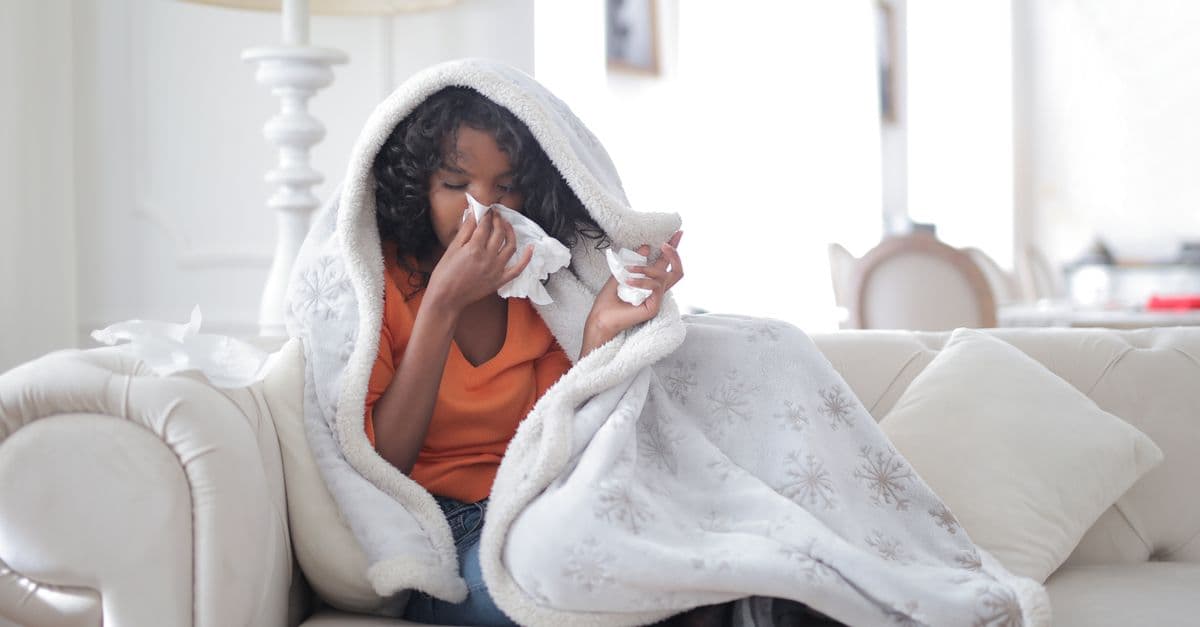
Photo: Andrea Piacquadio / Pexels
A sneeze is not a loose cough that happens to come out of your nose. It is a dedicated, hard-wired reflex with its own control center in the brainstem, its own nerve pathway, and its own explosive mechanics: mucus droplets can leave the nose at speeds up to 35 meters per second (about 80 mph), according to high-speed imaging research from MIT's Fluid Dynamics of Disease Transmission Laboratory (Bourouiba lab, MIT, 2016). This piece breaks down what triggers a sneeze, why some people sneeze at bright sunlight, why you cannot sneeze yourself unconscious, and why doctors specifically warn against holding one in.
What actually counts as a sneeze
A sneeze, formally called sternutation, is a stereotyped, involuntary reflex that clears the nasal passages by rapidly and forcefully expelling air, mucus, and whatever particle triggered it. The trigger can be mechanical (dust, pepper, a hair against the nasal lining), chemical (a strong odor), immunological (pollen or pet dander in someone with allergies), or, more strangely, a sudden change in light intensity. What separates a sneeze from a cough is where the irritation starts and how the body responds to it: a cough clears the throat and lower airway, while a sneeze clears the nasal mucosa specifically, and it recruits a much larger set of muscles to do it.
The reflex has been documented in the medical literature since at least the 19th century, but the specific brainstem circuitry behind it wasn't mapped in detail until relatively recently. A 2021 study in the journal Cell used mouse models to trace the sneeze reflex to a peptidergic (neuropeptide-driven) signaling pathway running from nasal sensory neurons to a defined cluster of neurons in the brainstem, confirming that sneezing is a distinct, genetically programmed circuit rather than an improvised muscle spasm (Li et al., Cell, 2021).
How the reflex arc actually works
The sneeze pathway runs through five stages, and understanding them explains why sneezing feels so involuntary and so total-body. Think of it the way you'd think of a fire alarm system in a building: a sensor detects smoke, a signal travels to a central control panel, and the control panel triggers sprinklers, alarms, and door locks all at once, in a fixed sequence, whether or not you wanted the disruption. For another take on the reflex, see why we sneeze; another nervous-system response is finger wrinkling in water.
Stage one: detection. Free nerve endings in the nasal mucosa, the moist tissue lining the inside of your nose, detect an irritant. These endings are branches of the trigeminal nerve (cranial nerve V), the same nerve that carries facial sensation and, notably, dental pain.
Stage two: transmission. The trigeminal nerve carries the signal to the trigeminal ganglion and then into the lateral medulla, a region of the brainstem. Research using cat and human brainstem mapping identified a specific "sneeze-evoking region" in the ventromedial spinal trigeminal nucleus, sometimes informally called the sneezing center (Songu & Cingi, "Sneeze reflex: facts and fiction," Therapeutic Advances in Respiratory Disease, 2009).
Stage three: the point of no return. Once the sneezing center receives enough signal, it commits to the reflex. This is why sneezes are so hard to stop once you feel the familiar tickling buildup, and also why some sneezes fizzle out before they fire: the center integrates signal strength over a fraction of a second and only commits past a threshold.
Stage four: coordinated motor output. Signals fan out simultaneously to the diaphragm, the intercostal (rib) muscles, the abdominal muscles, the muscles of the throat and soft palate, and the muscles that close the eyelids. The chest muscles compress sharply, the vocal cords briefly close to build pressure, the soft palate and tongue direct the blast mostly out the nose, and the eyes close as an involuntary side effect of the same brainstem discharge, not as a separate decision.
Stage five: expulsion. The pressure release forces air, mucus, and the offending particle out through the nasal passages, sometimes also through the mouth, at velocities that laboratory studies have measured at 14 meters per second (about 30 mph) for the air itself and up to 35 meters per second for mucus strands under ideal high-speed camera conditions (Bourouiba lab, MIT).
Why do your eyes always close when you sneeze?
The eyelid closure is generated by the same brainstem circuit that triggers the rest of the reflex, not by a separate protective reaction to pressure. It is possible to sneeze with your eyes open with conscious effort, and there is no physical mechanism by which sneezing pressure could dislodge an eyeball. Six extraocular muscles anchor each eye firmly in its socket, and no case of eye displacement from sneezing has been documented in the medical literature (HowStuffWorks / Vital Record, Texas A&M University).
Why does a sneeze feel unstoppable once it starts?
Because the brainstem's sneezing center works on an all-or-nothing threshold model. Sensory input from the nasal lining accumulates until it crosses a firing threshold, and once it does, the motor program runs to completion automatically, the same way a cough or a knee-jerk reflex cannot be halted midway once triggered.
The molecular players: histamine, allergens, and the immune trigger
Not every sneeze starts with dust or pepper. In allergic rhinitis (hay fever), the trigger is immunological. Allergens like pollen, dust mite droppings, or pet dander bind to IgE antibodies already stuck to mast cells in the nasal lining, and those mast cells release histamine and other inflammatory mediators. Histamine binds to H1 receptors on nearby sensory nerve endings and blood vessels, and this receptor binding is what directly produces the itching, nasal obstruction, runny nose, and sneezing that define an allergy attack (Journal of Allergy and Clinical Immunology, H1-receptors review). This is also the mechanistic reason antihistamine medications work: H1-receptor antagonists occupy the same receptor sites histamine would use, blocking the signal before it reaches the sensory nerve, which is why clinical trials found that H1 antagonists such as chlorpheniramine measurably suppress histamine-induced sneezing while H2-receptor blockers (the kind used for stomach acid) do nothing at all for nasal symptoms (Pubmed, Inhibition of histamine-induced nasal symptoms).
This is a useful distinction to hold onto: an irritant sneeze (pepper, dust, a sudden whiff of ammonia) fires the trigeminal nerve directly through mechanical or chemical stimulation, while an allergic sneeze fires the same nerve indirectly, through an immune cascade that takes histamine as its middleman. The end pathway through the brainstem is identical either way; only the upstream trigger differs.
| Trigger type | Example irritants | Upstream mechanism | Typical accompanying symptoms |
|---|---|---|---|
| Mechanical | Dust, pepper, hair, insect | Direct nerve ending stimulation | Isolated, single sneeze, no congestion |
| Chemical | Ammonia, strong perfume, smoke | Direct nerve ending stimulation | Watery eyes, throat irritation |
| Allergic | Pollen, dust mites, pet dander | IgE-triggered histamine release | Itchy eyes, nasal congestion, repeated sneezing bouts |
| Viral (cold/flu) | Rhinovirus, influenza | Inflammatory mediators from infected tissue | Sore throat, fever, fatigue, mucus discoloration over time |
| Photic (light) | Sudden bright sunlight | Cross-wired trigeminal/optic signaling (genetic) | Occurs in bright light exposure, often 1–3 sneezes, autosomal dominant inheritance |
Table: Common sneeze triggers grouped by upstream mechanism, based on clinical rhinology and genetics literature cited throughout this article.
Why some people sneeze at the sun
Roughly one in four people sneeze when they suddenly step from a dim room into bright sunlight or another intense light source. This is called the photic sneeze reflex, and it has an informal medical acronym: ACHOO syndrome, for "Autosomal dominant Compelling Helio-Ophthalmic Outburst." Prevalence estimates vary considerably by population and study method. An early clinical review reported the trait in as much as 23% of a white student sample and 2.3% of a Black student sample, while a separate study found rates of 38.2% and 8.2% respectively in similar groups, and a large genome-wide association study in a Chinese population of 3,417 individuals found a prevalence of 25.6% (genome-wide association study, Scientific Reports, 2019).
That same 2019 genetic study identified two specific gene loci associated with the trait, on chromosome 2 (near 2q22.3) and chromosome 3 (near 3p12.1), and confirmed that photic sneezing is polygenic, meaning multiple genes contribute rather than a single "sneeze gene." Because it is inherited in an autosomal dominant pattern, a child with one affected parent has roughly a 50% chance of inheriting the trait (ACHOO Syndrome, NCBI Medical Genetics Summaries).
Nobody has fully settled why light would trigger a reflex built for irritant clearance. The leading explanation involves the anatomical closeness of the optic nerve pathway and the trigeminal nerve pathway inside the brain: functional imaging in people with the trait has shown heightened excitability in the visual cortex and neighboring sensory regions when they're exposed to sudden light, suggesting a kind of neural cross-talk, or "wire crossing," between the light-detection circuit and the nasal-irritant circuit (The Scientist, "ACHOO Syndrome"). It is the sensory equivalent of two phone lines sharing a junction box: a strong enough signal on one line bleeds into the other.
Interestingly, this cross-wiring might carry real-world relevance beyond curiosity. A 2019 study in Neuropsychopharmacology Reports found a possible association between photic sneeze syndrome and both migraine history and heightened psychological distress, hinting that the same neural excitability that causes light-triggered sneezing might also play a role in other overactive sensory-processing conditions (Sasayama et al., 2019).
Is the photic sneeze reflex dangerous?
No. It is a benign genetic trait with no documented health consequences of its own. The only practical caution is situational: a sudden, uncontrollable sneeze triggered by a burst of sunlight while driving or operating machinery in bright conditions has been raised as a minor safety consideration in some clinical reviews, since the reflex briefly closes the eyes and diverts attention.
Why holding in a sneeze is genuinely risky
Pinching the nose and clamping the mouth shut to stifle a sneeze is common social etiquette, but it converts an open-pressure release into a closed-system pressure spike, and the medical literature has real case reports showing what that can do. The most widely reported case, published in BMJ Case Reports in 2018, describes an otherwise healthy 34-year-old man who felt a "popping" sensation in his neck after pinching his nose and closing his mouth mid-sneeze. Imaging confirmed he had torn his pharynx (the back of his throat) and driven air into the soft tissues of his neck and chest, a condition called pneumomediastinum. He required hospitalization, a feeding tube, and seven days of intravenous antibiotics before the swelling resolved (BMJ Case Reports, 2018, via CBC News). The report's authors wrote plainly that "halting sneezing via blocking nostrils and mouth is a dangerous manoeuvre and should be avoided."
That is not an isolated fluke. Separate case reports in the medical literature document intracranial hemorrhage and facial fractures following forceful nose-blowing and sneezing in patients with predisposing vascular fragility (PMC, "Intracranial Hemorrhage and Facial Fractures After Nose Blowing and Sternutation," 2023), and at least one documented case of spontaneous splenic rupture triggered by a violent sneeze in a patient with an already-enlarged spleen (PMC, "A Near Fatal Sneeze," 2018). These are rare and generally happen in people who already have a weakened blood vessel, an enlarged organ, or another underlying vulnerability, but they illustrate that a sneeze is not a trivial puff of air. Measured internal pressures during a suppressed sneeze can run many times higher than during a released one, because the compressed air and mucus have nowhere to go except into surrounding tissue.
The safer approach clinicians recommend is the one you were taught as a child for a different reason: sneeze into your elbow or a tissue, rather than holding it in or catching it bare-handed. That approach lets the pressure release the way the reflex evolved to release it, while still limiting how far the droplet cloud travels.
Why does sneezing spread illness so effectively
The same fluid mechanics that make a sneeze dramatic also make it an efficient disease-transmission event when the trigger is a respiratory virus like rhinovirus (the most common cause of the common cold) or influenza. High-speed imaging published by MIT researchers showed that a sneeze does not simply eject individual droplets. It first forms a ballooning sheet of mucus and saliva that stretches, thins, and fragments into long filaments, which then destabilize into a fine spray of droplets across a wide range of sizes (Scharfman et al., Experiments in Fluids, 2016). The smallest of these droplets can stay suspended in air currents and travel 7 to 8 meters (23 to 27 feet) from the source, far beyond the "6-foot rule" that became common shorthand during respiratory-illness precautions (Bourouiba, JAMA, 2020).
This is why a sneeze from someone with a viral infection is a meaningfully different event, epidemiologically, than a sneeze from someone reacting to pepper or pollen. The nasal mucosa of an infected person carries active viral particles, and the same mucus filaments and droplets that a healthy irritant-triggered sneeze would eject harmlessly instead become vehicles for pathogen spread. Rhinoviruses alone account for the largest single share of common colds among the roughly 200 virus types known to cause the condition (PMC, "Common cold," 2023).
Common misconceptions about sneezing
"Your heart stops when you sneeze." It doesn't stop. What actually happens is a brief change in intrathoracic pressure during the forceful chest compression of a sneeze, which can momentarily alter the rhythm of your heartbeat's electrical timing on an EKG trace. That transient change in rhythm is sometimes misread by laypeople as the heart "stopping," but there is no cardiac arrest involved, and normal rhythm resumes within a beat or two.
"You can't sneeze while asleep." This one holds up reasonably well as a rule of thumb, though it is not an absolute law of physiology. During sleep, especially REM sleep, the brainstem actively suppresses many reflex arcs, including the sneeze reflex pathway, as part of a broader shutdown of voluntary and semi-voluntary motor output. It is possible to be woken by a strong enough irritant and sneeze upon waking, but sneezing through sleep itself is unusual precisely because the same brainstem regions coordinating sleep states dampen the sneeze circuit.
"Bigger sneezes mean you're sicker." Sneeze force correlates with how strongly the trigeminal nerve is stimulated in that moment, not with overall illness severity. A single strong burst of pepper dust can produce a far more forceful sneeze than a mild cold, even though the cold is the more serious biological event over its course.
"Saying 'bless you' started as protection from the plague." This folk explanation is popular but not well supported historically. Multiple cultural traditions across centuries attributed spiritual or medical significance to sneezing well before any documented plague-era origin story, and the phrase's exact origin is genuinely uncertain rather than traceable to one clean historical event. The honest answer here is that the etymology is contested, not settled.
When a sneeze pattern needs medical attention
An occasional sneeze, or even a cluster of two or three, triggered by dust, cold air, sunlight, or a passing allergen is normal physiology and does not need evaluation. Clinicians generally suggest paying attention when sneezing becomes a chronic, near-daily pattern lasting more than a few weeks, especially alongside persistent nasal congestion, facial pain or pressure, reduced sense of smell, or symptoms that clearly track with a specific season or environment (a strong signal for allergic rhinitis rather than a passing irritant). Sudden violent sneezing accompanied by severe chest or abdominal pain, difficulty swallowing, or a popping or cracking sensation in the neck warrants urgent evaluation, given the documented case reports of pharyngeal tears and pneumomediastinum described above. This article explains mechanism, not diagnosis, and it is not a substitute for an in-person evaluation by a physician or allergist.
The takeaway
A sneeze is a genetically programmed reflex arc, not a loose bodily accident: a dedicated brainstem region receives trigeminal nerve signals, commits to an all-or-nothing motor program, and fires a coordinated blast that can send mucus flying at highway speeds. The trigger varies wildly, from a stray hair to a histamine cascade to a burst of sunlight hitting a genetically cross-wired nerve pathway, but the expulsion mechanism at the end is the same fixed circuit every time. The one piece of practical advice that survives contact with the actual medical literature is simple: let it out through a tissue or your elbow, because the case reports on stifled sneezes are a genuinely unpleasant read.
Read next:
- How the Brain Works: Neurons, Regions, and the Mind
- The Dopamine System Explained: Reward, Motivation, and Why It's Not What You Think
- Why Do We Sleep: Stages, the Glymphatic System, and Memory
Frequently Asked Questions
Q: What part of the brain controls sneezing? A: A region in the lateral medulla of the brainstem, sometimes called the sneezing center, receives signals from the trigeminal nerve and coordinates the motor response. Researchers identified this ventromedial spinal trigeminal nucleus region through brainstem mapping studies in both animal models and humans.
Q: How fast does a sneeze travel? A: Laboratory high-speed imaging from MIT's Bourouiba lab measured sneeze air velocity at roughly 14 meters per second (30 mph), with individual mucus filaments reaching up to 35 meters per second (80 mph), and the resulting droplet cloud capable of traveling 7 to 8 meters (23 to 27 feet).
Q: Why do some people sneeze when they look at the sun? A: This is the photic sneeze reflex, also called ACHOO syndrome, an autosomal dominant genetic trait affecting roughly a quarter of people. Genome-wide association studies have linked it to gene variants on chromosomes 2 and 3, and researchers believe it results from cross-talk between the optic and trigeminal nerve pathways in the brain.
Q: Can holding in a sneeze actually hurt you? A: Yes, in documented but rare cases. A 2018 BMJ Case Reports case described a man who tore his pharynx and developed pneumomediastinum after pinching his nose and mouth shut mid-sneeze, and other case reports describe intracranial hemorrhage, facial fractures, and even spontaneous splenic rupture linked to forceful or suppressed sneezes.
Q: Can your eyes pop out if you sneeze with them open? A: No. Six extraocular muscles anchor each eye firmly in its socket, and there is no physical pressure mechanism during a sneeze capable of dislodging an eyeball. It is also physically possible, though unusual, to sneeze with your eyes open through conscious effort.
Q: Does your heart stop when you sneeze? A: No. A sneeze causes a brief, measurable change in intrathoracic pressure that can alter the heart's electrical rhythm for a beat or two, which people sometimes describe as their heart "skipping," but this is not cardiac arrest and normal rhythm resumes immediately.
Q: What is the difference between an allergic sneeze and an irritant sneeze? A: An irritant sneeze fires the trigeminal nerve directly through mechanical or chemical stimulation, like dust or pepper. An allergic sneeze fires the same nerve indirectly: an allergen triggers mast cells to release histamine, which binds H1 receptors on nasal nerve endings and produces sneezing along with itching and congestion.
Q: Why do antihistamines stop allergic sneezing? A: Antihistamines block H1 receptors on nasal sensory nerve endings and blood vessels, preventing histamine released during an allergic reaction from binding and triggering the sneeze signal. Clinical studies found H1-receptor antagonists suppress histamine-induced sneezing, while H2-receptor blockers used for stomach acid have no effect on nasal symptoms.
Q: Is it true that you can't sneeze while you're asleep? A: It is largely true as a practical rule, though not an absolute law. The brainstem regions that manage sleep, particularly during REM sleep, actively dampen many reflex arcs including the sneeze pathway, which is why sneezing through sleep is unusual, though a strong enough irritant can still wake and trigger it.
Q: Why does a sneeze from a cold or flu spread illness more than a dust-triggered sneeze? A: Because the mucus and saliva ejected during a sneeze from someone with a respiratory infection like rhinovirus or influenza carries active viral particles, and high-speed imaging shows those droplets can travel far beyond arm's length, turning an ordinary reflex into an effective transmission event.
Sources
- Li et al., "Sneezing reflex is mediated by a peptidergic pathway from nose to brainstem," Cell, 2021
- Songu & Cingi, "Sneeze reflex: facts and fiction," Therapeutic Advances in Respiratory Disease, 2009
- MIT Bourouiba Fluid Dynamics of Disease Transmission Laboratory
- Bourouiba, "Turbulent Gas Clouds and Respiratory Pathogen Emissions," JAMA, 2020
- Scharfman et al., "Visualization of sneeze ejecta," Experiments in Fluids, 2016
- Genome-wide association study on photic sneeze reflex, Scientific Reports, 2019
- ACHOO Syndrome, NCBI Medical Genetics Summaries
- Sasayama et al., "Possible association between photic sneeze syndrome and migraine," Neuropsychopharmacology Reports, 2019
- BMJ Case Reports 2018 pharyngeal rupture case, via CBC News
- Intracranial Hemorrhage and Facial Fractures After Nose Blowing and Sternutation: A Case Report, PMC, 2023
- A Near Fatal Sneeze: Spontaneous Splenic Rupture, PMC, 2018
- Journal of Allergy and Clinical Immunology, H1-receptors review
- Inhibition of histamine-induced nasal symptoms by H1 antihistamine chlorpheniramine, PubMed
- Common cold, PMC, 2023
- Vital Record, Texas A&M University, "Can you sneeze with your eyes open?"
Follow new articles
Add SciHub101 to your feed reader to see new science and technology stories.
About the Author
SciHub101 is an independent science and technology publication founded and edited by Buğra Sözeri, a software engineer and app developer based in Türkiye. AI tools assist with drafting and research. Source documentation in the existing archive is uneven, and articles are being reviewed and corrected. The Editorial Team byline identifies editorial responsibility; it does not certify specialist or independent human review. Where we compare products, anything built by our own team is labelled as such — see the editorial guidelines and About page for how corrections and disclosures work.
Related Articles

Stomach Growling Science: Hunger and Gut Motility
Stomach growling comes from a gut-wide muscular sweep called the migrating motor complex, not just an empty stomach — here is the mechanism.

Muscle Cramp Science: Nerves, Fatigue, and Electrolytes
Muscle cramps involve nerves, fatigue, electrolytes, hydration, and local muscle control. Here is what actually causes sudden spasms.

How Do Wounds Heal? The Science of Tissue Repair
Wound healing is a four-stage biological process triggered immediately after injury and lasting weeks to years. Within seconds, platelets plug the wound; within hours, immune cells flood the area and initiate inflammation; over days to weeks, fibroblasts synthesize collagen and new blood vessels form; over months to years, tissue remodels and scars form. Despite apparent simplicity, the process involves coordinated signaling across dozens of cell types, growth factors, and immune mechanisms. Understanding wound healing is critical for treating chronic wounds (affecting 2 percent of the global population) and improving outcomes after surgery, trauma, and burn injuries.
Why Do We Get Fevers? The Science of the Fever Response
A fever is not an illness but a weapon—your immune system's coordinated response to infection that raises your body's set-point temperature. When pathogens invade, immune cells release signaling molecules called pyrogens that travel to the brain and reset the temperature thermostat from 37°C to 39°C or higher. This increase is controlled and purposeful: the higher temperature slows bacterial growth, accelerates immune cell activity, and enhances antiviral proteins. Understanding fever as an adaptive defense explains why suppressing it indiscriminately can sometimes hinder recovery, yet also reveals when dangerous fevers require immediate treatment.
How the Immune System Works: Innate, Adaptive, and Vaccines
The immune system is not a single organ or a single type of cell — it is a distributed surveillance network that distinguishes your own tissue from foreign invaders within minutes, then builds custom molecular weapons if the first response is not enough. Here is how.
Why Do We Sneeze? The Evolutionary Biology of Sneezing
Why do we sneeze? The evolutionary biology behind sternutation, from 600-million-year-old sponges to wild dogs voting by sneeze to salt-spitting iguanas.