Why Motion Sickness Happens
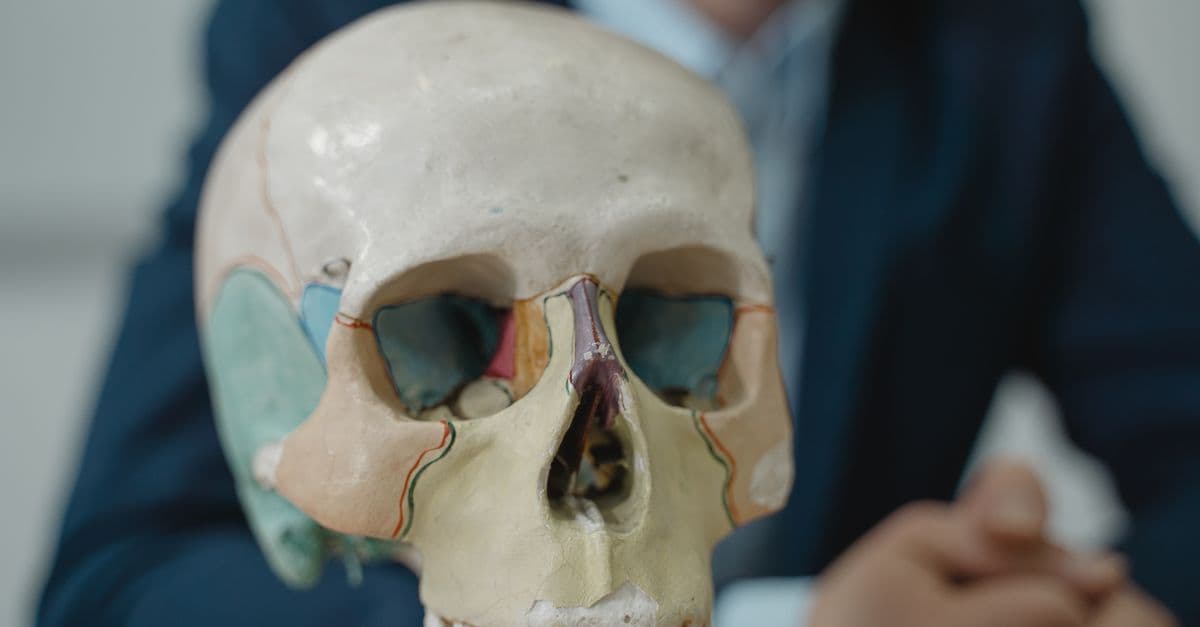
Photo: Tima Miroshnichenko / Pexels
Reading in the backseat of a moving car is one of the most reliable ways to trigger motion sickness, and it has nothing to do with the book. It comes down to a mismatch between what the inner ear reports and what the eyes report, a contradiction the brain has never evolved to resolve cleanly. The leading explanation, sensory conflict theory, treats that mismatch as the trigger, and a companion evolutionary idea, the poison hypothesis, explains why the response to it is nausea specifically.
The mechanism: three sensory systems that are supposed to agree
The brain determines the body's motion and orientation by combining information from three separate sensory systems that, under ordinary conditions, tell the same story. The first is the vestibular system, a set of fluid-filled structures in the inner ear that detects rotation and acceleration through the semicircular canals and the otolith organs. The second is vision, which reports motion relative to the surrounding environment. The third is proprioception, the sense of body position and movement generated by receptors in muscles, tendons, and joints. A companion explainer is why we get motion sickness.
Walking across a room, all three systems agree. The vestibular system detects the small accelerations of each step, the eyes see the room shift predictably as the head turns, and proprioceptors in the legs confirm the body is moving forward. The brain fuses these three streams into a single, stable sense of self-motion without any noticeable effort, a process vestibular researchers describe as sensory integration.
Reading in a moving vehicle breaks that agreement directly. The vestibular system accurately detects the car's acceleration, braking, and turning, because the fluid in the semicircular canals genuinely moves with the vehicle. The eyes, however, are fixed on a book held steady relative to the body, and report that the immediate visual surroundings are not moving at all. The brain receives a vestibular signal saying the body is accelerating and turning at the same moment it receives a visual signal saying nothing nearby is moving. Sensory conflict theory, developed by psychologist John Reason and physiologist J.T. Brand in their 1975 book Motion Sickness, identifies this contradiction between vestibular and visual input as the mechanism that triggers the nausea that follows (Reason & Brand, 1975).
The theory has been refined since, but it remains the field's dominant framework. A NASA Technical Reports Server analysis of sensory conflict as an "observer theory" model treats the brain as continuously comparing incoming sensory signals against an internal expectation of what those signals should be, generated from past experience, and interprets motion sickness as the response to a sustained, unresolved mismatch between the two (NASA Technical Reports Server, sensory conflict observer-theory analysis).
Why does looking at the horizon reduce motion sickness in a moving vehicle?
A distant, stable point like the horizon shifts gradually and consistently with the vehicle's actual motion, more closely matching what the vestibular system reports at the same moment. Fixing on a nearby, effectively stationary object, like a phone or book held steady relative to the body, keeps the visual signal locked at "no motion" while the vestibular signal keeps reporting motion, widening rather than narrowing the conflict.
Why the brain interprets sensory conflict as a poisoning signal
Sensory conflict theory explains what triggers motion sickness. It does not, on its own, explain why the specific response is nausea and vomiting rather than, say, a headache or dizziness alone. That second question is addressed by an evolutionary account often called the poison hypothesis (sometimes "toxin hypothesis"), which proposes that the pattern of conflicting sensory signals produced by unfamiliar motion resembles, from the brain's threat-detection standpoint, the neurological disruption caused by ingesting certain toxins.
A number of naturally occurring neurotoxins, including several found in spoiled food and some plant and animal poisons, are known to disrupt the vestibular system and produce exactly this kind of internal sensory contradiction as an early symptom of poisoning, well before more severe effects set in. Under the poison hypothesis, nausea and vomiting evolved as a protective mechanism to expel a potential toxin from the digestive system quickly, before it could be more fully absorbed. The brain's threat-detection system is not equipped to distinguish "a real neurotoxin is disrupting my vestibular signals" from "I am reading in the backseat of a moving car," so it triggers the same defensive nausea response to both circumstances.
This is comparable to a smoke detector that cannot distinguish an actual house fire from smoke drifting off burnt toast. Both trigger an identical alarm, because the detector is tuned to a narrow physical signature, airborne smoke particles, without the capacity to evaluate the broader context producing that signature. The brain's nausea response operates on a similarly narrow trigger: a specific pattern of mismatch between vestibular and visual signals, evaluated without reference to whether an actual toxin is present.
It is worth being precise about the evidentiary status of this idea. Sensory conflict theory is well supported and functions as the field's working model for what physically triggers the response. The poison hypothesis, by contrast, is best understood as a plausible evolutionary explanation for why that trigger produces nausea specifically, rather than a fully proven mechanism. Vestibular researchers generally treat it as the leading candidate explanation rather than settled fact, and it coexists with the observation that not every sensory-conflict situation produces identical symptom profiles across individuals.
Cybersickness: the same conflict, running in reverse
Sensory conflict does not require actual physical motion at all. Virtual reality headsets, driving or flight simulators, and even some first-person video content can produce a mirror image of the car-and-book scenario: strong visual cues of self-motion arrive while the vestibular system, because the body is physically stationary, reports no corresponding movement. Researchers refer to the resulting symptoms, which closely resemble classic motion sickness, as cybersickness or visually induced motion sickness.
Cybersickness has become an active area of applied research as head-mounted displays have moved from research labs into consumer gaming and training applications. A 2020 study published in Frontiers in Virtual Reality examined cybersickness in head-mounted displays and found that discrepancies between a user's virtual head pose and their actual physical head pose, essentially another form of sensory mismatch, are a significant contributor to symptom severity (Frontiers in Virtual Reality, 2020). Separate work applying sensory conflict theory specifically to motion-coupled VR systems has used the framework to explain why VR experiences that better align visual and physical motion tend to produce fewer symptoms than those that do not (ScienceDirect, cybersickness and sensory conflict in motion-coupled VR systems).
The practical implication engineers have drawn from this research is that reducing the gap between what a headset shows the eyes and what the vestibular system and body actually experience, whether through motion platforms, restricted field of view, or reduced visual acceleration cues, tends to reduce reported symptoms. This is the same underlying logic as looking at the horizon in a car: narrow the mismatch, and the conflict signal driving the nausea response weakens.
Is cybersickness the same thing as motion sickness?
Cybersickness and classic motion sickness share the same underlying trigger, a mismatch between vestibular and visual signals, and produce overlapping symptoms including nausea, disorientation, and eye strain. Researchers generally treat cybersickness as a subtype of visually induced motion sickness rather than a separate condition, distinguished mainly by which sensory channel, vision or the vestibular system, is providing the false or absent signal.
Motion sickness across different contexts: what conflicts and why
The specific sensory mismatch driving symptoms differs somewhat by setting, even though the underlying theory is the same across all of them. The table below compares the dominant conflict pattern across four common contexts.
| Context | Vestibular signal | Visual signal | Dominant conflict |
|---|---|---|---|
| Reading in a car | Reports genuine acceleration, braking, and turning | Reports a stationary book, no relative motion | Vestibular detects motion, vision does not |
| Boat in rough seas | Reports continuous, irregular rocking and swaying | Below deck: reports a fixed, seemingly stationary cabin interior | Vestibular detects motion, vision does not |
| VR headset / flight simulator | Reports the body is physically stationary | Reports strong simulated self-motion through a virtual environment | Vision detects motion, vestibular does not |
| Watching an IMAX or first-person action film | Reports the body is stationary in a theater seat | Reports large-scale simulated motion across the screen | Vision detects motion, vestibular does not |
Across contexts, the specific sensory channel providing the false signal flips, but the underlying trigger, an internal contradiction between what the vestibular system and the eyes independently report, stays the same.
Sailors below deck in rough water and passengers reading in cars share the identical conflict pattern, vestibular motion without matching visual motion, which is part of why the classic advice for both, going above deck or looking out the windshield toward the horizon, works through the same mechanism: giving the eyes a genuine visual reference for the motion the inner ear is already detecting.
Why some people are far more susceptible than others
Individual susceptibility to motion sickness varies substantially and depends on several documented factors. Age is one of the most consistent: susceptibility tends to be low in very young children, rises to a peak roughly between ages two and twelve, and generally declines through adolescence and adulthood, suggesting the sensory integration systems involved change measurably across development rather than staying constant.
Prior vestibular experience also matters. Research on adaptation has found that repeated exposure to a specific, consistent type of motion allows the brain to recalibrate its internal expectations for that particular conflict pattern, which is the mechanism behind sailors developing so-called "sea legs" after enough time at sea. The same adaptation process explains why experienced VR users often report less severe cybersickness over repeated sessions than first-time users encountering the same content.
Pregnancy and a personal or family history of migraine are both well-documented risk factors associated with heightened motion sickness susceptibility. The precise physiological mechanisms linking these conditions to increased vestibular sensitivity remain an active area of research rather than fully settled science, and researchers caution against assuming a single unified explanation covers both.
Habituation: how the brain learns to stop flagging the conflict
Susceptibility is not fixed. The same conflict pattern that produces severe symptoms on a first exposure often produces far milder symptoms, or none, after repeated exposure to the same specific type of motion. Vestibular researchers call this process habituation, and it is distinct from simply "getting used to" something in a casual sense; it reflects a measurable change in how the nervous system processes vestibular signals.
Habituation research on the vestibulo-ocular reflex, the reflex that keeps the eyes fixed on a target while the head moves, has found that repeated exposure to provocative motion shortens the vestibular system's response time constants, essentially recalibrating how long the brain weighs a given vestibular signal before treating it as reliable (research on vestibular time constants and optokinetic nystagmus habituation). That recalibration appears to happen without the exposure itself needing to induce motion sickness each time, which is part of why structured, incremental exposure works better as a training approach than repeated full-blown bouts of nausea.
A study of naval recruits tracked over roughly six months of sailing found that most sailors habituated to seasickness over that period, with the group splitting into distinct patterns: some stopped vomiting entirely while retaining mild queasiness, and others reached a point of essentially full adaptation to the specific rocking and pitching of shipboard motion (research on naval recruit habituation to seasickness). Separate research on sailors in the Southern Ocean, a notably rough sailing environment, found that greater intrinsic susceptibility, younger age, and a cabin located farther from the ship's center of gravity, where roll and pitch motion is more pronounced, all predicted worse and more persistent symptoms (Southern Ocean sailor motion sickness susceptibility research).
Pilot training programs have formalized this into a deliberate technique sometimes called incremental adaptation: trainees are exposed to gradually increasing amounts of provocative motion, calibrated to stay below the threshold that triggers full-blown sickness, so the vestibular system adapts with comparatively little discomfort along the way. The same underlying logic, in reverse, is a factor in space adaptation sickness, discussed above: astronauts habituate to microgravity's vestibular disruption after several days, and many experience a milder repeat version of the same disruption, sometimes called "return sickness," on readapting to Earth's gravity after a flight.
It is worth being specific about what habituation does and does not do. It appears to be motion-pattern specific rather than general. A sailor who has fully adapted to the particular rocking of their own ship is not automatically protected against the very different motion pattern of, say, a car's stop-and-go acceleration, or a VR headset's mismatched visual cues. This specificity is consistent with sensory conflict theory: if habituation works by updating the brain's internal expectation for a particular, repeated conflict pattern, there is no obvious reason that update should transfer cleanly to a structurally different conflict.
Does motion sickness habituation fade if exposure stops?
Yes, at least partially. Vestibular researchers generally describe habituation as reversible without continued exposure, which is consistent with sailors reporting a temporary return of symptoms after extended time ashore, and pilots requiring refresher exposure after breaks from flying. The underlying recalibration is a learned adjustment to a specific, repeated stimulus rather than a permanent structural change.
Autonomous vehicles: an old problem in a new setting
Self-driving and highly automated vehicles have turned motion sickness from a mostly incidental travel annoyance into an active engineering and human-factors research problem. The reason is specific to what automation changes about the passenger experience: a human driver is almost never motion sick while driving, because actively controlling the vehicle gives the brain continuous, accurate advance information about upcoming turns and braking, which keeps the vestibular and visual signals closely aligned. Remove the driving task, and that advance information disappears, even though the person is sitting in the exact same seat experiencing the exact same physical motion.
Research on automated-vehicle passengers has found that people who reported no history of car sickness while driving became measurably more susceptible once riding as passengers, particularly when they engaged in a non-driving task like reading, texting, or watching video content (research on motion sickness in automated vehicle occupants). One study estimated that a substantial share of passengers performing non-driving activities in automated vehicles report at least some motion sickness symptoms, with a meaningful subset reporting moderate to severe symptoms, a rate well above what the same population reports while actively driving (research on non-driving task engagement and automated vehicle occupant motion sickness). The mechanism proposed is a compounded version of the classic conflict: the vestibular system accurately tracks the vehicle's real acceleration and turning, the eyes are locked on a stationary screen or page, and, unlike an alert driver, the passenger has no predictive awareness of the next turn or stop to help the brain anticipate and partially discount the mismatch.
Findings from this research line are consistent with the classic pattern in other respects too. Rougher driving profiles with larger lateral accelerations produce worse symptoms than smooth driving, and longer exposure duration increases severity, both of which track directly onto sensory conflict theory's prediction that a larger or more sustained mismatch produces a stronger response. Engineering responses under active development include path-planning algorithms that factor predicted motion sickness into route and acceleration choices, ambient visual cues inside the cabin designed to give passengers an anticipatory sense of upcoming turns, and seating or display designs intended to narrow the same vestibular-visual gap that horizon-gazing narrows in a conventional car.
The automated-vehicle research does not identify any new underlying trigger; it is the same sensory conflict operating in a context, self-driving cars, that removes a factor, active driving control, that had previously been protecting most passengers from experiencing it as fully as they now do.
Common misconceptions
A common assumption is that motion sickness results from "too much" motion, similar to physical overexertion. In reality, the trigger is a specific mismatch between sensory signals, not the raw intensity of motion. This is why a person can feel completely fine during vigorous physical activity, where vestibular and visual signals agree closely, and yet feel severely nauseated during comparatively gentle car travel while reading, where the two signals directly conflict.
Another misconception is that motion sickness requires actual physical movement of the body. Cybersickness demonstrates that the same nausea response can occur while a person is entirely stationary, provided strong visual motion cues conflict with an accurate vestibular report of no physical movement.
A third error is treating children and adults as equally susceptible. Research indicates susceptibility follows a developmental arc, generally low in very young children, peaking through later childhood, and typically declining into adulthood, which suggests the underlying sensory integration process itself changes measurably across the lifespan.
A fourth misconception worth naming directly: sensory conflict theory explains the trigger, but it is sometimes presented as though it fully explains the resulting nausea as well. That second link, from sensory mismatch to the specific symptom of nausea, rests more heavily on the poison hypothesis, which remains the leading candidate explanation rather than a fully proven mechanism.
The takeaway
Motion sickness happens when the brain receives contradictory signals from the vestibular system, which accurately tracks physical motion, and the visual system, which reports a mismatched or absent version of that same motion. Sensory conflict theory, first formalized by Reason and Brand in 1975, identifies that contradiction as the trigger, while the poison hypothesis offers the leading evolutionary explanation for why the brain's response to it is specifically nausea: a defense mechanism tuned to expel a suspected toxin, misfiring in response to an unfamiliar but harmless sensory pattern. The same underlying conflict, running in either direction, explains why reading in a car, sailing below deck, and strapping on a VR headset can all produce the same feeling through opposite sensory routes.
Read next:
FAQ
Q: What is sensory conflict theory in motion sickness?
Sensory conflict theory is the leading scientific explanation for what triggers motion sickness. Formalized by John Reason and J.T. Brand in their 1975 book Motion Sickness, it proposes that symptoms arise when the vestibular system, which detects actual physical motion, and the visual system, which may report different or absent motion, send contradictory signals the brain has not evolved to reconcile smoothly.
Q: Why does reading in a car make motion sickness worse?
The vestibular system in the inner ear accurately detects the car's acceleration, braking, and turning, while the eyes, fixed on a stationary book, report that nothing nearby is moving. That direct contradiction between the two signals is the specific sensory mismatch sensory conflict theory identifies as the trigger for the resulting nausea.
Q: What is the poison hypothesis of motion sickness?
The poison hypothesis is an evolutionary explanation proposing that the sensory conflict pattern behind motion sickness resembles the vestibular disruption caused by certain neurotoxins, so the brain triggers a protective nausea and vomiting response to expel a suspected toxin, even when no toxin is actually present. It is the leading candidate explanation for why sensory conflict produces nausea specifically, though it is not considered fully proven.
Q: What causes cybersickness in VR headsets?
Cybersickness occurs when a VR headset delivers strong visual cues of self-motion while the vestibular system, because the body is physically stationary, reports no corresponding movement, the reverse of the mismatch that occurs when reading in a moving car. Research published in Frontiers in Virtual Reality in 2020 linked cybersickness severity to discrepancies between a user's virtual and actual head pose.
Q: Why does looking at the horizon help with motion sickness?
Looking at a distant, stable point like the horizon gives the eyes a visual motion signal that changes gradually in a way that more closely matches what the vestibular system is simultaneously reporting, narrowing the sensory conflict compared with focusing on a nearby object held still relative to the body.
Q: Does motion sickness susceptibility change with age?
Yes. Research indicates susceptibility is generally low in very young children, peaks during later childhood roughly between ages two and twelve, and tends to decline into adulthood, suggesting the underlying sensory integration process changes measurably across the lifespan rather than remaining constant.
Q: Can you train yourself to stop getting motion sick?
Research on habituation indicates that repeated, incremental exposure to a specific type of motion can measurably reduce symptoms over time, a documented effect in sailors, pilots, and astronauts. This adaptation tends to be specific to the pattern of motion practiced and can fade if exposure stops for an extended period, rather than functioning as a permanent, one-time fix.
Q: Why do some people get motion sick as passengers in self-driving cars but not as drivers?
Actively driving gives the brain continuous, accurate advance information about upcoming turns and braking, which keeps the vestibular and visual signals more closely aligned. Passengers in automated vehicles, especially while reading or looking at a screen, lose that predictive information, which research links to higher rates of motion sickness compared with the same people driving the same route themselves.
Follow new articles
Add SciHub101 to your feed reader to see new science and technology stories.
About the Author
SciHub101 is an independent science and technology publication founded and edited by Buğra Sözeri, a software engineer and app developer based in Türkiye. AI tools assist with drafting and research. Source documentation in the existing archive is uneven, and articles are being reviewed and corrected. The Editorial Team byline identifies editorial responsibility; it does not certify specialist or independent human review. Where we compare products, anything built by our own team is labelled as such — see the editorial guidelines and About page for how corrections and disclosures work.
Related Articles



Why Do We Get Motion Sickness? The Science of Sensory Conflict
Motion sickness strikes when your inner-ear vestibular system, eyes, and body position sensors send the brain conflicting motion signals. The leading explanation is the sensory-conflict theory, supported by the evolutionary toxin-detector hypothesis: your brain interprets the contradiction as a sign of poisoning and triggers nausea, sweating, and dizziness as a purge reflex. Reading in a moving car, standing below deck on a boat in rough seas, or piloting a flight simulator worsens the conflict. This response is ancient, rooted in survival.

How Does the Sense of Balance Work? The Vestibular System Explained
Balance is not a single sense but a symphony of three systems working in concert: the vestibular system (inner ear acceleration sensors), proprioception (body position awareness), and vision. The vestibular system contains the semicircular canals (which detect rotation) and the otolith organs (which detect linear acceleration and head tilt). Damage to any component creates the sensation of spinning, nausea, and falls. Understanding how the brain fuses these signals explains vertigo, motion sickness, and why astronauts become disoriented in microgravity where the vestibular system receives no gravitational input.

Dizziness Science: Inner Ear, Blood Pressure, and Balance
Dizziness can come from the inner ear, blood pressure, vision, anxiety, dehydration, or neurological signals. This guide explains the main mechanisms.