Why Muscles Shake During Hard Exercise

Photo: Jay Brand / Pexels
Hold a heavy weight at the top of a lift, or hold a plank past the point of comfort, and the muscle starts to visibly tremble. That shake isn't random weakness. It's the visible surface of a nervous system trying, and partially failing, to keep motor units, the basic building blocks of muscle control, firing in the smooth, coordinated pattern that normally produces steady force. Researchers have documented several contributing mechanisms, but they don't yet agree on exactly how much each one contributes.
What a motor unit actually is
A muscle isn't a single block of tissue that contracts all at once. It's divided into hundreds or thousands of motor units, each one a single motor neuron plus every muscle fiber that neuron's branching axon connects to. When a motor neuron fires an electrical impulse, every fiber in its unit contracts together, in an all-or-nothing pattern; there's no such thing as a partially firing motor unit.
The size of a motor unit varies enormously depending on the job the muscle does. Small, precise muscles, like the ones controlling eye movement, can have motor units with only a handful of fibers per neuron, which allows extremely fine-grained control over eye position. Large, powerful muscles like the quadriceps, in contrast, can have motor units where a single neuron drives hundreds of fibers at once, trading fine control for raw force output. This tradeoff is a well-established principle in motor physiology called the size principle, describing how motor units are recruited in order from smallest and weakest to largest and strongest as force demand increases.
Under normal, unfatigued conditions, the nervous system produces smooth, sustained force two ways at once: by recruiting additional motor units as more force is needed, and by adjusting how fast each already-active motor unit fires, a parameter called firing rate. Individual motor neurons don't fire continuously; they fire in discrete pulses. But because different motor units are recruited and modulated somewhat independently of each other, staggered rather than synchronized, the combined output across hundreds of units blends into what feels like continuous, smooth force at the whole-muscle level. It's a bit like a crowd clapping: no single person's hands are in contact with each other continuously, but if enough people clap slightly out of sync with each other, the aggregate sound smooths into a steady wall of noise rather than a series of distinct claps.
What actually depletes when a muscle fatigues
Sustained or near-maximal muscular effort draws down several biochemical resources simultaneously, and researchers studying exercise physiology have identified multiple, at least partially independent contributors to the resulting fatigue rather than one single cause.
The first and fastest-depleting resource is the immediate energy pool: stored adenosine triphosphate (ATP), the direct energy currency of muscle contraction, and phosphocreatine (PCr), a rapidly mobilized reserve that regenerates ATP within seconds. Research summarized by the Gatorade Sports Science Institute notes that muscle PCr levels can become almost completely depleted after maximal exercise, and that this depletion contributes directly to the rapid drop in power output seen during brief, intense efforts (Hargreaves, Gatorade Sports Science Institute).
The second resource is muscle glycogen, the stored form of glucose that fuels both glycolysis (the breakdown of sugar for quick energy) and oxidative phosphorylation (the slower, oxygen-dependent process that sustains longer efforts) inside muscle fibers. Because glycogen is the fundamental fuel for both pathways, its depletion during extended hard effort directly limits how fast the muscle can resynthesize ATP for continued high-power contraction (overview via ScienceDirect Topics). A more specific and less widely known mechanism connects glycogen depletion to fatigue at the level of individual muscle fibers: research has found that reduced glycogen in particular subcellular compartments of the muscle fiber, specifically the regions close to the sarcoplasmic reticulum, can directly impair the release of calcium ions needed for excitation-contraction coupling, the process that translates an electrical nerve signal into an actual mechanical contraction. That calcium-handling disruption offers one documented explanation for why performance drops sharply during repeated high-intensity efforts even when total glycogen stores aren't yet fully exhausted.
A third contributor is the accumulation of metabolic byproducts, particularly hydrogen ions (which lower the local pH, making the muscle environment more acidic) and inorganic phosphate, both of which build up faster than the muscle can clear them during sustained hard contraction. These byproducts interfere with the calcium-signaling machinery that couples nerve signal to muscle contraction, on top of whatever disruption glycogen depletion is separately causing.
Is this the same as "running out of oxygen"?
Not exactly. Oxygen availability matters for the oxidative energy pathway over longer efforts, but the fastest fatigue during near-maximal short efforts is driven more directly by phosphocreatine depletion, metabolic byproduct accumulation, and impaired calcium handling than by oxygen supply itself. Multiple mechanisms act together, and researchers still debate their relative weight under different exercise conditions.
Why fatigued motor units stop firing smoothly
This is the part of the mechanism most directly tied to visible shaking, and it's also the part where the science is least settled. As individual motor units fatigue, from any combination of the resource-depletion factors above, they lose the ability to sustain a high, steady firing rate. Some drop out of activity for brief stretches. Others keep firing but with less regular timing between pulses.
The nervous system tries to compensate for this loss of smooth output in real time, largely by recruiting additional motor units that hadn't been active yet and by pushing firing rates up in the units that are still capable of responding. That compensation is what keeps a fatiguing muscle producing roughly the same force output for a while even as individual units are failing. But the compensation is imperfect, and researchers studying electromyography, a technique that records the electrical activity of active muscle fibers through surface or intramuscular electrodes, have documented that this imperfection shows up as changes in how synchronized motor unit firing becomes as fatigue develops.
Here the honest, sourced answer gets more nuanced than a simple story of "firing becomes less synchronized." A study using a large-sample surface EMG decomposition method specifically measured motor unit synchronization during fatiguing contractions and found that motor unit synchronization actually tends to increase with fatigue, tracking alongside the emergence of visible tremor, rather than simply becoming disorganized in a chaotic sense (Holtermann et al., published via ScienceDirect; summary also available via PubMed). Separately, research into physiological tremor itself, the low-amplitude oscillation present in every muscle contraction, not just fatigued ones, has found that normal physiological tremor contains rhythmic contributions from motor unit synchronization occurring in specific frequency bands, and that this synchronization is a genuine source of some of the oscillation seen in tremor recordings, independent of the mechanical load being held (Christakos et al., PubMed).
Put together, the current research picture is this: exercise-induced tremor involves motor units becoming more synchronized with each other as fatigue develops, not simply degrading into disorganized noise, and this increased synchronization is one documented contributor to the tremor amplitude that becomes visible during hard effort. But the same body of research is explicit that the exact relationship between synchronization and visible tremor amplitude varies considerably between studies, likely because of differences in which muscle was tested, how activation was distributed across the muscle, and differences in measurement methodology between labs. This is a case where the general mechanism (fatigue changes motor unit coordination, and that change shows up as tremor) is well supported, but the precise quantitative relationship is still an open area of research rather than a settled number.
Is muscle shaking a sign that damage is happening?
Not typically, based on current research into the mechanism. The tremor mainly reflects motor unit firing and timing instability under metabolic strain and fatigue, not tissue damage occurring in real time. It can, however, signal that a muscle is approaching the point of failure for the current effort, since enough motor units have become fatigued that sustaining the same force output is becoming difficult.
What physiological tremor is, separate from fatigue
It's worth separating two related but distinct things: the everyday, low-amplitude physiological tremor present in every muscle contraction, even a perfectly relaxed one, and the visibly amplified tremor that shows up specifically during hard or sustained exercise.
Physiological tremor is a real, well-documented phenomenon present at all times in skeletal muscle, typically oscillating in an 8 to 12 hertz frequency range, and researchers describe it as arising from a combination of central and peripheral sources. The central component originates from oscillating activity within the nervous system itself and, notably, doesn't change frequency when extra weight is added to the limb being held, a signature researchers use to distinguish it from purely mechanical tremor sources. The peripheral component, by contrast, is described as a more passive response shaped by the mechanical properties, mass, and stiffness of the specific body part involved, along with contributions from subtetanic motor unit firing (firing fast enough to partially, but not fully, fuse into smooth tension) and even the mechanical impact of each heartbeat, a subtle effect called cardioballistics (overview via ScienceDirect; PubMed background on central mechanisms).
During hard exercise, this baseline physiological tremor becomes amplified and more visible, a state sometimes called enhanced physiological tremor, layered on top of the motor unit fatigue effects described above. Understanding that a small amount of tremor is present in every contraction, even a resting one under a microscope-level EMG recording, helps explain why the visible shake during exercise is a matter of degree and amplification rather than an entirely separate phenomenon suddenly switching on.
Why some efforts cause shaking faster than others
Isometric holds, where a muscle contracts without shortening or lengthening, like holding a plank or a weight steady overhead, tend to produce visible shaking faster than dynamic, repetitive movement using similar overall effort. Part of the reason is mechanical: a sustained isometric contraction compresses local blood vessels more than an intermittent, rhythmic contraction does, because the muscle never relaxes enough to let blood flow back in. That restricted blood flow both accelerates the buildup of fatigue-related metabolic byproducts and slows their clearance, since the fresh blood that would normally carry those byproducts away and deliver oxygen and glucose isn't reaching the tissue as effectively.
Dynamic movement, by contrast, involves the muscle rhythmically relaxing between contractions, which allows partial blood flow restoration during each brief relaxation phase, somewhat blunting the same fatigue processes, even at a comparable overall workload.
Cold temperatures introduce a related-looking but mechanistically distinct kind of visible shaking: shivering. Shivering is not a fatigue phenomenon at all. It's a deliberate, coordinated set of rhythmic muscle contractions triggered by the hypothalamus, the brain region that also governs the sweat response described in how sweat cools the body, specifically to generate metabolic heat when core body temperature drops. Exercise-induced tremor and cold-induced shivering can look superficially similar to an outside observer, but they arise from opposite starting conditions: one from a neuromuscular system running low on capacity and struggling to compensate, the other from a system deliberately activating additional capacity on purpose to produce heat.
Why do the last few repetitions of a hard set tend to shake the most?
Because the motor units recruited last, per the size principle, are the largest and most fatigue-prone, and by the final repetitions of a hard set, a growing share of active motor units have already been through extended high-rate firing. The compensatory recruitment of fresh units becomes harder to sustain as fewer unfatigued units remain available, which is when tremor tends to become most visible.
Why this remains an active area of research
It's tempting to reach for a single, tidy explanation for exercise tremor: "muscles shake because they run out of energy." That's not wrong, but it understates how many partially independent mechanisms researchers have documented contributing at once: rapid phosphocreatine depletion, glycogen depletion and its specific effect on calcium release near the sarcoplasmic reticulum, accumulation of hydrogen ions and inorganic phosphate interfering with calcium signaling, and firing-rate and synchronization changes across motor units, layered on top of the everyday physiological tremor present in every contraction.
What's genuinely well established is that fatigue changes how motor units coordinate their firing, and that this coordination change is connected to visible tremor. What's still actively researched is the precise, quantified contribution of each individual mechanism relative to the others, and how that balance shifts depending on which muscle is working, how the contraction is sustained (isometric versus dynamic), and how trained the person's motor units are. Studies using different EMG methodologies and different muscles have produced somewhat different quantitative pictures of the synchronization-tremor relationship specifically, which is exactly the kind of honest caveat that separates a well-sourced explanation from an overconfident one.
| Proposed contributor | Mechanism | Evidence status |
|---|---|---|
| Phosphocreatine depletion | Rapid loss of the fast-regenerating ATP reserve during near-maximal effort, cutting immediate power output | Well documented |
| Glycogen depletion (general) | Reduced fuel for glycolysis and oxidative phosphorylation limits ATP resynthesis rate | Well documented |
| Glycogen depletion (calcium-specific) | Localized glycogen loss near the sarcoplasmic reticulum impairs calcium release for excitation-contraction coupling | Documented, mechanism actively studied |
| Metabolic byproduct accumulation | Hydrogen ions and inorganic phosphate build up and interfere with calcium signaling during sustained contraction | Well documented |
| Motor unit firing-rate instability | Fatigued units drop out or fire irregularly; the nervous system compensates imperfectly | Well documented |
| Motor unit synchronization increase | Synchronization between motor units rises with fatigue and tracks with tremor amplitude | Documented, but magnitude varies substantially between studies |
| Baseline physiological tremor (8–12 Hz) | Central and peripheral oscillatory sources present in every contraction, amplified under fatigue | Well documented as a distinct, always-present phenomenon |
No single mechanism fully explains exercise tremor; researchers have documented several contributing factors, with the relative weight of each still an open, actively studied question.
What this means
Muscle shaking during hard exercise is not one clean, single-cause phenomenon; it's the visible outcome of several documented physiological processes converging at once. Fast-depleting phosphocreatine and glycogen reserves limit how much ATP the muscle can resynthesize during a maximal effort. Metabolic byproducts and glycogen depletion both interfere, through somewhat different pathways, with the calcium signaling that couples a nerve impulse to an actual contraction. And on top of all of that, fatigued motor units lose their ability to fire in the steady, staggered pattern that normally produces smooth force, triggering an imperfect compensatory response from the nervous system that shows up as visible tremor, layered over the small amount of physiological tremor present in every contraction, even at rest.
The takeaway
Muscle shaking during hard exercise reflects a genuine convergence of documented neuromuscular and metabolic processes rather than a single simple failure point: depleting energy reserves, glycogen's specific role in calcium handling, metabolic byproduct buildup, and motor unit firing instability all contribute, and researchers are still working out their precise relative weights. The shake itself, per current evidence, mainly signals a neuromuscular system running low on capacity and compensating imperfectly, not tissue damage in progress. That combination of real, sourced mechanism and honest scientific uncertainty about the exact math is a more accurate picture than any single-cause explanation offers.
Read next:
- How sweat cools the body
- Why your heart rate changes with breathing
- How your inner ear controls balance
- How mitochondria became cell powerhouses
FAQ
Q: What causes muscles to shake during intense exercise?
Fatigued motor units, the functional units of muscle control made up of a motor neuron and the muscle fibers it activates, lose the ability to fire in a smooth, staggered pattern as energy reserves like phosphocreatine and glycogen deplete and metabolic byproducts accumulate. The nervous system's imperfect compensation, recruiting fresh units and raising firing rates elsewhere, introduces visible tremor on top of a documented rise in motor unit synchronization.
Q: Does muscle shaking mean the muscle is being damaged?
Not typically, based on current research. Shaking mainly reflects motor unit firing and coordination instability under metabolic strain, not tissue damage occurring in real time. It often does signal that a muscle is approaching the point of failure for the current effort, since a growing share of active motor units have become fatigued.
Q: Is exercise tremor caused by muscles running out of oxygen?
Not primarily. During short, near-maximal efforts, phosphocreatine depletion, metabolic byproduct buildup, and impaired calcium release tied to glycogen depletion play a more direct documented role than oxygen supply alone. Oxygen availability matters more for fatigue during longer, lower-intensity efforts that rely on oxidative energy pathways.
Q: Why do isometric holds cause shaking faster than dynamic exercise?
Sustained isometric contraction restricts blood flow into the working muscle more than intermittent, dynamic contraction does, because the muscle never relaxes enough to let fresh blood return. This speeds up the buildup of fatigue-related metabolic byproducts and slows their clearance, accelerating the onset of motor unit firing instability.
Q: Does motor unit firing become more or less synchronized during fatigue?
Research using large-sample EMG decomposition has found that motor unit synchronization tends to increase with fatigue and tracks alongside the development of visible tremor, rather than simply becoming disorganized. However, the size of this relationship has varied considerably between studies, so the precise quantitative link is still actively researched.
Q: Is shivering from cold the same mechanism as muscle shaking from exercise?
No. Shivering is a deliberate, coordinated set of rhythmic muscle contractions triggered by the hypothalamus specifically to generate metabolic heat when core temperature drops. Exercise-induced tremor instead results from motor units struggling to fire smoothly under fatigue, an essentially opposite starting condition despite the superficial resemblance.
Q: What is physiological tremor, and is it present even when muscles aren't fatigued?
Yes. Physiological tremor is a low-amplitude oscillation, typically in the 8 to 12 hertz range, present in every muscle contraction, including relaxed, unfatigued ones, arising from a mix of central nervous system oscillation and peripheral mechanical factors like the mass and stiffness of the limb involved. Hard exercise amplifies this baseline tremor rather than creating an entirely new phenomenon from scratch.
Q: Can brief rest restore smooth muscle control during a hard set?
Yes, at least partially. Even a few seconds of rest allows some blood flow and metabolic byproduct clearance to occur, temporarily improving motor unit coordination, though full recovery from significant fatigue and glycogen depletion takes considerably longer than a brief pause provides.
Follow new articles
Add SciHub101 to your feed reader to see new science and technology stories.
About the Author
SciHub101 is an independent science and technology publication founded and edited by Buğra Sözeri, a software engineer and app developer based in Türkiye. AI tools assist with drafting and research. Source documentation in the existing archive is uneven, and articles are being reviewed and corrected. The Editorial Team byline identifies editorial responsibility; it does not certify specialist or independent human review. Where we compare products, anything built by our own team is labelled as such — see the editorial guidelines and About page for how corrections and disclosures work.
Related Articles

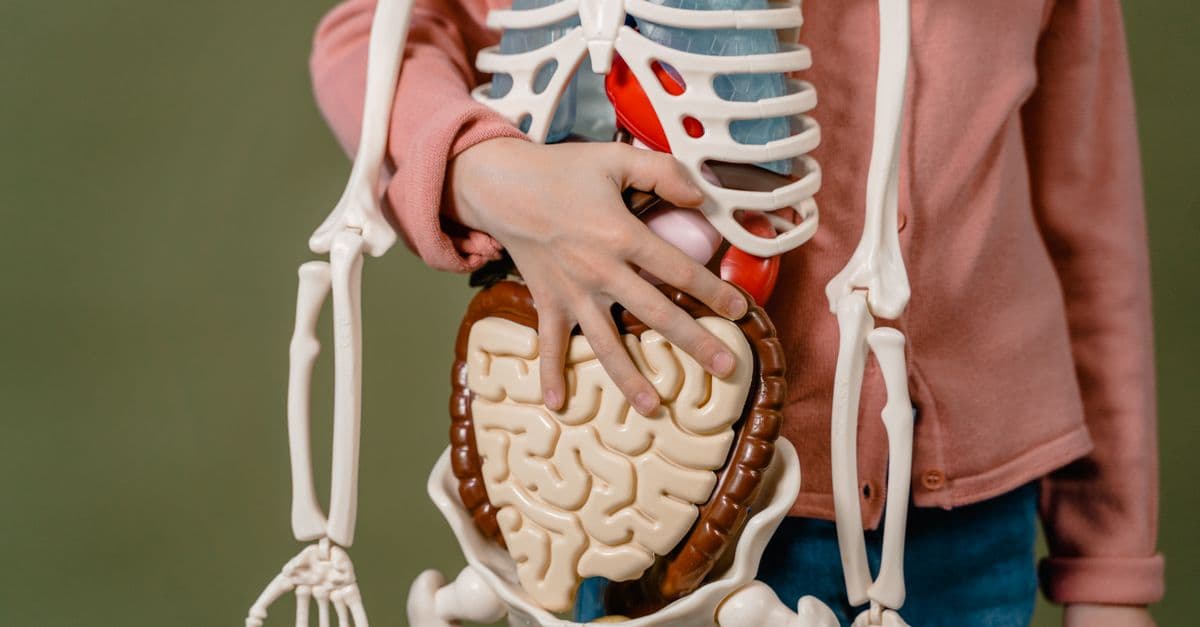


Muscle Cramp Science: Nerves, Fatigue, and Electrolytes
Muscle cramps involve nerves, fatigue, electrolytes, hydration, and local muscle control. Here is what actually causes sudden spasms.
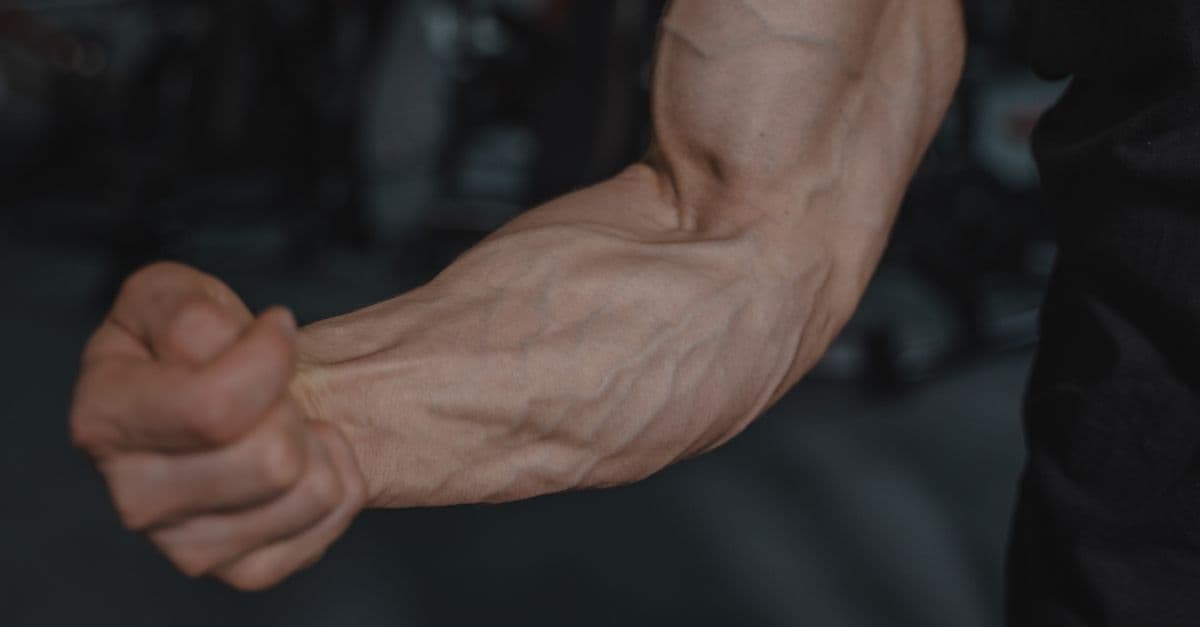
Why Muscle Cramps Happen — The Biology
Why do muscles cramp? The neural control theory, why dehydration may be a myth, and what actually treats cramps — by the evidence.
Best AI Workout Planners With Calendar Logging (2026)
Best AI workout planners with calendar logging (2026): MyWorkoutCalendar, Fitbod, Hevy, Strong, JEFIT, and Freeletics compared on free access and limits.