How Priming Changes What You Notice
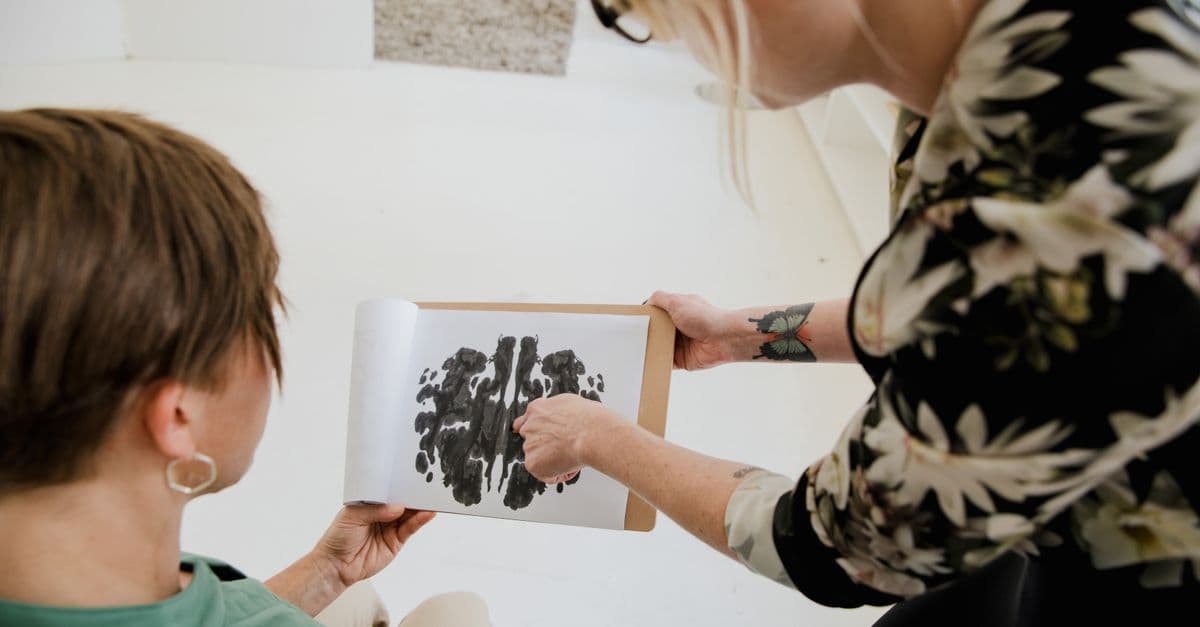
Photo: RDNE Stock project / Pexels
Show someone the word "doctor" and then flash the letter string "n-u-r-s-e" briefly on a screen, and they identify it as a real word faster than if you had shown them an unrelated word like "bread" first. David Meyer and Roger Schvaneveldt documented this pattern rigorously in a 1971 study, one of the first controlled demonstrations that recently activated concepts make related concepts easier to process. That finding, called semantic priming, remains one of the most reliably replicated results in cognitive psychology, and it explains a surprising amount of what determines which details you notice, remember, and act on in ordinary moments.
Priming is not one effect but a family of related effects, and the family has an uneven reputation. Some branches, especially the word-recognition and perceptual varieties, have survived decades of replication attempts across labs and languages. Other branches, especially the claim that abstract social concepts can shift complex behavior like walking speed, ran into serious trouble during the 2010s replication crisis in psychology. Understanding priming accurately means holding both facts at once: the phenomenon is real and well-documented, and popular claims about it have often outrun the evidence.
What priming actually is, and why the definition matters
Priming is a change in a person's response to a stimulus caused by prior exposure to a related stimulus, occurring without the person needing to consciously recall or intend to use that prior exposure. The word "prior" is doing real work in that definition: priming is fundamentally about sequence. Something happens first, quietly, and it changes how the mind processes something that comes second.
This distinguishes priming from ordinary memory retrieval in an important way. When you deliberately recall a fact, you are aware that you are searching memory. When you are primed, the influence operates beneath that threshold. You do not experience "activation" the way you experience remembering a phone number. You simply notice, recognize, or respond to the second stimulus a little faster, a little more easily, or with a slightly different interpretation than you would have otherwise, and you usually have no subjective sense that anything unusual happened.
Researchers distinguish priming from related concepts like habituation (a general decline in response to a repeated stimulus) and simple repetition (responding faster to the exact same stimulus seen before). Priming instead involves a relationship between two different stimuli, connected by meaning, form, or category membership, not identity. That relational quality is what makes the effect interesting: it reveals something about how concepts are organized and connected inside memory, not just how memory stores individual facts.
The practical upshot is that priming research functions as a kind of X-ray of memory's architecture. Because you cannot directly observe how concepts are wired together in someone's head, researchers infer the wiring by measuring how quickly one concept makes an adjacent concept easier to process. If "bread" reliably speeds up recognition of "butter" but never speeds up recognition of "airplane," that asymmetry tells you something concrete about how those concepts sit relative to each other in a shared associative network.
The lexical decision task that started it all
Meyer and Schvaneveldt's original experiment used what is called a lexical decision task: participants were shown pairs of letter strings and had to quickly decide whether each string was a real word or a nonsense string. When the first word in a pair was semantically related to the second, "bread" followed by "butter," participants responded significantly faster than when the pairing was unrelated, "nurse" followed by "butter," even though the actual word being judged was identical in both cases.
This response-time difference, now called semantic priming, revealed something important about how memory is organized. Related concepts appear to be stored in an interconnected network, and activating one concept, "bread," partially activates connected concepts, "butter," making them easier to recognize even without conscious awareness of the connection being triggered. The effect typically shows up as a difference of a few dozen to a few hundred milliseconds in reaction time, small on a human timescale but large and statistically robust when averaged across the hundreds of trials a typical experiment runs.
What makes this particular finding so durable in the scientific literature is its methodology. Lexical decision tasks produce a hard, objective, machine-timed measurement, a button press logged in milliseconds, rather than a subjective rating or a self-report. That kind of measurement is much harder to distort through experimenter expectation or participant guesswork than, say, a questionnaire about mood or motivation, which is part of why semantic priming has held up so consistently across replication attempts in the decades since 1971.
Later researchers extended the paradigm well beyond simple word pairs. Studies varied the delay between the first and second word, the type of relationship between them (categorical, like "robin" and "sparrow," versus associative, like "salt" and "pepper"), and the sensory format of presentation (visual versus spoken words). The core result held across most of these variations: prior exposure to a related concept speeds recognition of a subsequent one, and the effect scales with how strongly the two concepts are associated in everyday language use.
Spreading activation: the model that explains why this happens
Allan Collins and Elizabeth Loftus formalized a theoretical model in a 1975 Psychological Review paper called spreading activation theory, building on earlier work by Ross Quillian on semantic memory networks. The theory proposes that concepts in memory are organized as a network of interconnected nodes, and that activating any one node sends a wave of partial activation outward along its connections to related nodes, temporarily lowering the threshold needed to recognize or retrieve those related concepts.
Spreading activation — the process by which activating one concept in memory automatically and briefly increases the activation level of connected concepts, making them faster to access. Picture memory as a web of interconnected lights, where switching one light fully on causes nearby, connected lights to glow faintly too, not brightly enough to notice consciously, but bright enough that if you glance toward one of those dimmer lights next, you spot it slightly faster than you would spot a light with no connection to the one you just switched on. The strength of the glow depends on the strength of the wire between the two lights: a close, frequently used association like "salt" and "pepper" produces a brighter, faster spread than a distant, rarely used one like "salt" and "ocean."
Collins and Loftus used their model to explain a set of findings that had puzzled earlier researchers, including why people verify sentences like "a robin is a bird" faster than "a penguin is a bird," even though both statements are equally true. Their explanation was that "robin" sits closer to the central "bird" node in the associative network, built from more frequent, more typical exposure, so activation spreads there faster and more strongly. This idea, that some category members are more "central" or typical than others and are processed accordingly, became foundational to later work on categorization and concept structure.
The model also predicts something that later became important for interpreting priming research generally: the effect should decay as the associative distance between two concepts grows, and it should decay over time as attention shifts elsewhere. Both predictions have been tested repeatedly and both hold up reasonably well, which is part of why spreading activation, despite being nearly 50 years old, remains a standard textbook explanation for semantic priming rather than something superseded by more recent theories.
Why priming extends beyond word recognition
Priming effects extend well beyond simple word recognition tasks into perception, attention, and category use. Perceptual priming studies have shown that exposure to certain visual or conceptual cues can bias what ambiguous stimuli people report seeing afterward, sometimes called Gestalt-based response bias. Attentional priming research has demonstrated that recently processed categories of information become easier to detect in a visual search, a phenomenon relevant to real-world tasks like radiologists scanning medical images or airport security screeners examining luggage contents on an X-ray monitor.
A related and well-studied effect is called contextual cueing, where repeated exposure to the same visual layout of a scene speeds up how quickly people find a target embedded in it, even when they cannot consciously report having seen that exact layout before. Research on contextual cueing has found that this kind of implicit spatial learning can guide where attention goes next, functioning as a background process that shapes visual search independent of any deliberate strategy the searcher is using.
The distinctions between subtypes of priming matter because each type is measured differently, decays at a different rate, and has a different evidentiary track record. The table below breaks down the major categories researchers distinguish, along with how strong the underlying replication record is for each.
| Priming type | What gets activated | Typical measurement | Replication strength |
|---|---|---|---|
| Semantic priming | Related word meanings | Faster reaction time in lexical decision tasks | Strong, well-replicated |
| Perceptual priming | Recently seen visual or auditory forms | Faster identification of degraded or brief stimuli | Strong, well-replicated |
| Conceptual priming | Related categories or ideas | Increased likelihood of using primed category in a judgment task | Moderate, context-dependent |
| Behavioral / social priming | Abstract social or trait concepts | Changes in self-reported or observed behavior | Weak, largely contested |
Semantic and perceptual priming, both measured with objective, millisecond-scale reaction times, hold up far better under replication than conceptual and social priming, which typically rely on more subjective or indirect behavioral measures.
Why the "social priming" controversy matters for this topic
A separate and much more controversial body of research in the 2000s claimed that priming people with abstract social concepts could cause measurable behavioral changes. The best-known example is a study by John Bargh, Mark Chen, and Lara Burrows published in 1996, which reported that participants exposed to words associated with old age, such as "bingo," "Florida," and "wrinkle," subsequently walked more slowly down a hallway when leaving the experiment than participants exposed to neutral words. The finding became one of the most widely cited results in social psychology and was frequently invoked as evidence that subtle cues can meaningfully steer human behavior without conscious awareness.
The "elderly walking" effect ran into serious trouble in the 2010s. Stéphane Doyen and colleagues published a 2012 replication attempt that failed to reproduce the effect when the experimenters measuring walking speed were kept unaware of which condition each participant had been assigned to. In a second experiment, Doyen's team deliberately told half of the experimenters that participants would walk slower after the elderly-related priming and told the other half the opposite. The walking-speed effect only showed up when experimenters expected it to, which pointed toward experimenter expectancy, not the word prime itself, as a likely driver of the original result. That pattern, an effect that appears only when the person doing the measuring expects it, is one of the classic warning signs researchers now look for when evaluating whether a behavioral finding is genuine.
This episode became one of the touchstone cases of psychology's broader replication crisis, alongside similarly contested findings involving power posing and ego depletion. Several other specific social and behavioral priming studies from that era also failed to replicate in later, larger, and more tightly controlled experiments, and this has led researchers to treat social and behavioral priming claims with substantially more caution than the well-replicated semantic and perceptual priming effects described earlier in this article.
This distinction matters for understanding the topic honestly. Basic semantic priming, the "bread-butter" word recognition effect, remains one of the most robustly replicated findings in cognitive psychology, resting on decades of tightly controlled, objectively timed experiments. Claims that priming can broadly shift complex social behaviors like walking speed, voting intentions, or honesty are considerably weaker, more contested, and in several documented cases did not survive rigorous replication attempts using blinded measurement and larger samples.
Why did the two types of priming diverge so sharply in reliability?
Semantic priming measures a narrow, mechanical process, word recognition speed, with objective, machine-timed data collected over hundreds of trials per participant. Social priming studies typically measure complex behaviors using small samples, non-blinded observers, and outcome measures sensitive to experimenter expectation, all factors known to inflate false-positive rates in behavioral science.
Why priming effects are typically brief
Semantic priming effects in laboratory studies typically last only a few hundred milliseconds to a few seconds, since the spreading activation driving the effect decays quickly once attention moves elsewhere, unlike long-term memory associations that can persist for years. Researchers usually study this decay directly by varying what is called the stimulus onset asynchrony, the time gap between the prime and the target word, and measuring how the size of the priming effect shrinks as that gap widens.
This short duration is actually a defining feature of priming research rather than a limitation of it. Studies specifically measure how the effect fades over increasing delays between the prime and the target, mapping the natural decay curve of temporary activation. A prime shown 200 milliseconds before the target typically produces a larger effect than the same prime shown 2 seconds before it, and by roughly the 1 to 2 second mark in most word-recognition paradigms, measurable priming has usually faded to near zero.
That decay curve is one reason researchers are skeptical of claims involving priming effects that supposedly persist for minutes or influence behavior well after the prime has left conscious attention. The mechanistic model, spreading activation along a network of nodes, predicts fast decay because there is no proposed mechanism by which that activation would be sustained or reinforced once attention shifts to something unrelated. Extraordinary claims about long-lasting priming effects, in other words, run against the basic architecture the theory itself proposes, which is part of why researchers scrutinize such claims more closely.
Why advertisers and interface designers pay attention to priming research
Understanding that recently encountered concepts temporarily lower the threshold for noticing related concepts has practical applications in retail environments, where product placement adjacent to conceptually related items can influence what customers notice and consider next as they move through a store. Grocery stores placing chips near beer, or coffee filters near coffee, are leaning on the same associative-network logic that Collins and Loftus formalized in 1975, even if the store layout was designed through trial and error rather than cognitive theory.
In user interface design, menu ordering and recently viewed categories can shape which options users engage with next, since an item conceptually or visually related to something a user just clicked becomes marginally easier to notice and select. Search engines and recommendation systems exploit a related principle, though typically through explicit algorithmic association rather than the psychological priming mechanism itself, showing users items connected to what they just viewed.
These applications draw specifically on the well-established semantic and perceptual priming literature rather than the more contested social priming claims. It is worth being precise about this distinction: a retailer placing related products next to each other is exploiting a genuine, well-documented cognitive tendency to notice associated items more readily. That is a different and much better-supported claim than saying an abstract word or image can subconsciously reprogram a shopper's mood, personality, or decision-making in some broad, durable way, which is the kind of claim that ran into trouble during the replication crisis.
Common misconceptions
A common misunderstanding is that all priming research, including claims about subconsciously influencing complex behaviors like walking speed or voting decisions, rests on equally solid evidence. The well-replicated core of priming research involves semantic and perceptual effects measured in milliseconds using reaction-time tasks, while broader social and behavioral priming claims from the 1990s and 2000s have faced significant, well-documented replication failures, including the Doyen and colleagues 2012 failed replication of the original elderly-walking study.
Another misconception is that priming means people are being subliminally "controlled" without their knowledge in any meaningful sense. The actual effect, even in its strongest and best-replicated form, is narrower and more mundane: a temporary, small reduction in the threshold needed to recognize or notice a related concept, not a mechanism capable of overriding someone's decisions, preferences, or free will. Semantic priming shaves tens or hundreds of milliseconds off a reaction time in a laboratory task; it does not steer a person's choices the way popular coverage of "subliminal messaging" often implies.
A third common confusion treats priming and subliminal messaging as interchangeable, but they are not the same thing. Subliminal messaging refers specifically to stimuli presented below the threshold of conscious perception, so briefly or faintly that a person cannot report seeing them at all. Most priming research, including the classic semantic priming studies, uses stimuli that participants consciously perceive; the "hidden" part of the effect is not that the prime itself is invisible, but that its influence on subsequent processing operates without the participant's awareness or intention.
A fourth misconception worth flagging is the assumption that a failed replication means the original researchers acted dishonestly or fabricated results. The replication crisis in psychology is generally understood by researchers in the field as a systemic methodological problem, involving issues like small sample sizes, flexible analysis choices, and publication bias favoring novel positive findings, rather than evidence of individual misconduct in any specific case. Distinguishing a methodologically fragile finding from a fraudulent one matters for interpreting the field's history accurately.
How can you tell if a specific priming claim is well-supported or contested?
Well-supported priming claims tend to involve narrow, objectively measured outcomes, like reaction time in milliseconds, collected across many trials in controlled lab conditions. Contested claims tend to involve broad, subjectively measured, or observer-dependent outcomes, like walking speed or moral judgment, especially when the original study used a small sample and non-blinded observers.
The takeaway
Priming changes what you notice because memory appears to function as an interconnected network, where activating one concept sends a brief wave of partial activation to related concepts, temporarily making them easier and faster to recognize. The core semantic and perceptual priming effects documented by Meyer, Schvaneveldt, Collins, and Loftus remain robustly replicated across five decades of research, while broader claims about priming shifting complex human behavior deserve considerably more skepticism following the well-documented replication difficulties that emerged during the 2010s, including the failed replications of the original elderly-walking study. The lesson is less about doubting priming altogether and more about learning to ask, for any specific claim, what exactly was measured, how objectively, and how many independent labs have reproduced it.
Read next:
- How curiosity improves memory
- How working memory limits thinking
- Why confirmation bias is hard to notice
FAQ
Q: What is semantic priming?
Semantic priming is the well-replicated finding that exposure to one concept makes recognition of a related concept faster and easier, first rigorously demonstrated by David Meyer and Roger Schvaneveldt in a 1971 lexical decision task study.
Q: What is spreading activation theory?
Proposed by Allan Collins and Elizabeth Loftus in a 1975 paper, it describes memory as a network of interconnected concepts where activating one concept sends partial activation to related concepts, temporarily lowering the threshold needed to recognize them.
Q: Is all priming research considered reliable?
No. Semantic and perceptual priming, measured through reaction-time tasks in controlled lab settings, are robustly replicated. Broader social priming claims, such as abstract concepts influencing complex behaviors like walking speed, faced significant, well-documented replication failures during psychology's 2010s replication crisis, including a 2012 failed replication by Stéphane Doyen and colleagues.
Q: How long do priming effects typically last?
Semantic priming effects in laboratory studies typically last only a few hundred milliseconds to a few seconds, since the underlying spreading activation decays quickly once attention shifts elsewhere, unlike stable, long-term memory associations.
Q: Does priming mean people are being subconsciously controlled?
No. The well-established effect is a narrow, temporary reduction in the threshold needed to notice or recognize a related concept, not a mechanism that overrides a person's decisions, preferences, or awareness in any broad sense.
Q: Is priming the same thing as subliminal messaging?
No. Priming typically uses consciously perceived stimuli; what happens outside awareness is the influence on subsequent processing, not the visibility of the prime itself. Subliminal messaging specifically refers to stimuli presented below the threshold of conscious perception, a distinct and separate concept.
Follow new articles
Add SciHub101 to your feed reader to see new science and technology stories.
About the Author
SciHub101 is an independent science and technology publication founded and edited by Buğra Sözeri, a software engineer and app developer based in Türkiye. AI tools assist with drafting and research. Source documentation in the existing archive is uneven, and articles are being reviewed and corrected. The Editorial Team byline identifies editorial responsibility; it does not certify specialist or independent human review. Where we compare products, anything built by our own team is labelled as such — see the editorial guidelines and About page for how corrections and disclosures work.
Related Articles




The Psychology of Color: Science vs. Marketing Myths
The psychology of color explained: how color affects mood and behavior, the red performance effect, cultural differences in color meaning, and what the actual science says versus marketing myths.