Why Social Proof Changes Behavior

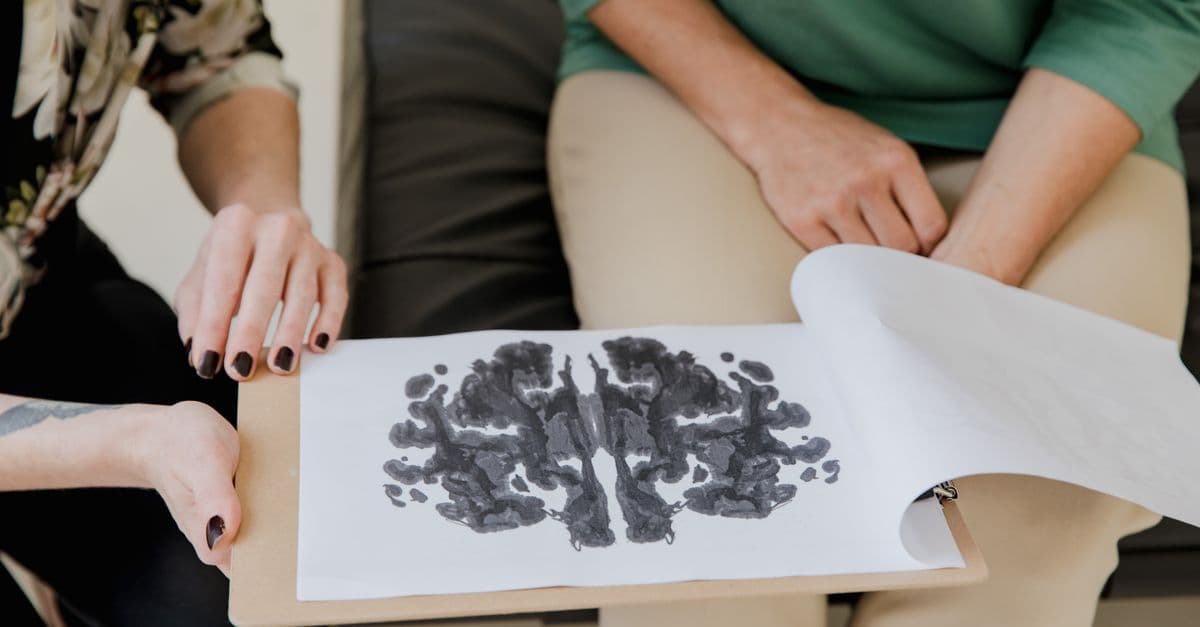
Photo: RDNE Stock project / Pexels
Social proof is the tendency to treat other people's behavior as evidence for what is correct, safe, or appropriate in a given situation. Solomon Asch demonstrated it in a stark form in 1951: he showed college students a line and asked them to match it to one of three obviously different comparison lines, then had actors in the room confidently give the wrong answer first. About 75% of real participants conformed to the incorrect group answer at least once across a series of trials, even though the right answer was staring them in the face (Asch, 1955). That single line-judgment study, later formalized into a broader theory of persuasion by psychologist Robert Cialdini, explains everything from why a restaurant with a line out the door feels trustworthy to why a hotel room card claiming "75% of guests reused their towels" changes what guests actually do with their towels.
This article works through four decades of documented research, Asch's original conformity data, Muzafer Sherif's earlier autokinetic-effect studies, Morton Deutsch and Harold Gerard's split between informational and normative influence, Cialdini's field experiments on hotel towel reuse, and the modern data on how star ratings and review counts move online purchasing. Along the way, it explains why social proof is not a single psychological trick but at least two distinct mechanisms, why it gets stronger or weaker depending on how uncertain a person is, and why marketers who use it sloppily leave persuasive power on the table.
What social proof actually is, and why it evolved
Social proof is a mental shortcut: instead of independently evaluating every decision from scratch, people use the observed behavior of others as a stand-in for information they don't have time or ability to gather themselves. It is a form of what psychologists call a heuristic, a rule-of-thumb that trades some accuracy for a lot of speed.
The logic behind why this shortcut exists is straightforward. For most of human history, a crowd running away from something was a far more reliable signal of danger than an individual's slow, deliberate risk assessment. A person who paused to personally verify every threat before reacting was less likely to survive than one who noticed everyone else running and ran too. Robert Cialdini frames this directly in Influence: The Psychology of Persuasion (1984, revised 2006), where he defines social proof as one of six core principles of persuasion: the tendency to view an action as more correct in a given situation to the degree that others are performing it.
Crucially, social proof is not the same thing as simple imitation. Imitation can happen without any belief that the imitated behavior is correct, a child mimicking a parent's gesture, for instance. Social proof specifically involves treating the group's behavior as evidence, whether that evidence is used to update a genuine belief or simply to avoid standing out. That distinction, evidence used for belief versus evidence used for social comfort, turns out to be the single most important fact about how social proof works, and it comes directly from the classic 1955 research covered in the next section.
Asch's conformity experiments: the foundational data
Solomon Asch's line-judgment studies, published as Effects of Group Pressure Upon the Modification and Distortion of Judgments (1955) after earlier trials run starting in 1951, placed one real participant in a room with seven to nine confederates, actors secretly working for the experimenter. The group was shown a reference line and asked, one at a time and out loud, to say which of three comparison lines matched it in length. On most trials the confederates answered correctly and honestly. On a set of critical trials, all of the confederates unanimously gave the same, obviously wrong answer, and the real participant, seated near the end of the group, had to answer after hearing the others.
The task itself was not hard. In a control condition where people judged the lines alone with no group pressure, errors occurred in under 1% of trials, confirming that the correct line was visually unambiguous. But when the unanimous group gave an incorrect answer, results changed sharply. Across the 12 critical trials, individual responses conformed to the wrong majority answer roughly 32% to 37% of the time on average, and about 75% of participants went along with the incorrect group at least once during the experiment. Roughly 5% of participants conformed on every single critical trial, while about 25% never conformed at all (Asch, 1955).
What makes this finding matter beyond a psychology-textbook footnote is what it ruled out. Participants were not confused about which line was longer. Follow-up interviews found that some genuinely started to doubt their own perception under the pressure of unanimous disagreement, a real, if temporary, shift in belief. Others reported that they knew the group answer was wrong the entire time but gave it anyway because they didn't want to be the lone dissenter, or because they assumed something must be wrong with their own perception that they couldn't identify. Both groups of participants produced the exact same visible behavior, conforming to the wrong answer, while running on completely different internal processes. That split is the seed of the next section.
Did Asch's effect hold up under replication?
Later replications and meta-analyses across different countries and decades have found the conformity effect is real but variable in size, generally somewhat smaller in more individualist cultures and larger in more collectivist ones, and it has weakened modestly since the original 1950s studies, a pattern researchers have partly attributed to shifting social norms around independence and dissent since Asch's era.
Two distinct reasons people follow the crowd
Morton Deutsch and Harold Gerard's classic paper, A Study of Normative and Informational Social Influences upon Individual Judgment (Journal of Abnormal and Social Psychology, 1955), formalized the split that Asch's interview data had already hinted at. Social proof, they argued, actually runs on two separate psychological mechanisms that get lumped together in casual conversation but behave very differently.
Informational influence happens when a person genuinely believes the group has better information than they do, especially under uncertainty. This is why a tourist choosing between two unfamiliar restaurants on an unfamiliar street will often pick the one with a line out the door: the queue is treated as a real signal about food quality that the tourist has no other way to evaluate. The person's underlying belief actually changes.
Normative influence happens when a person conforms not because they think the group is right, but because they want to avoid the social discomfort of standing out, being judged, or facing disapproval. In Asch's experiments, this is what drove some participants to give an answer they privately knew was wrong. Their belief about the line length never changed, only their willingness to state it out loud.
The practical difference between these two mechanisms matters enormously for anyone trying to understand persuasion, because they call for opposite fixes if you're the one being manipulated, and opposite strategies if you're the one designing a message. Informational influence is neutralized by giving someone independent, credible information they can verify themselves. Normative influence is neutralized by removing the social cost of disagreement, for instance by letting people respond privately instead of out loud in front of a group, a manipulation Asch himself tested: when participants could write their answer privately instead of speaking it aloud, conformity rates dropped sharply, evidence that a meaningful share of the original effect was normative rather than a genuine change in perception.
Cialdini's hotel towel experiments and the power of specificity
Robert Cialdini's contribution was less about discovering social proof, which social psychologists had studied since the 1930s, and more about showing exactly how to engineer it deliberately in real-world settings, and how much the wording of a social-proof message determines its power. The most cited demonstration of this is a pair of field experiments run with Noah Goldstein and Vladas Griskevicius, published as A Room with a Viewpoint: Using Social Norms to Motivate Environmental Conservation in Hotels in the Journal of Consumer Research (2008).
The researchers tested different versions of the small cards hotels leave in bathrooms asking guests to reuse towels instead of having them washed daily. A standard card appealed to environmental responsibility in the abstract, framing towel reuse as a way to help the planet. An alternative card instead stated a descriptive norm, a statement of what most people actually do, reporting that "75% of guests who were asked to participate in our new resource savings program did help by using their towels more than once." That descriptive-norm card outperformed the standard environmental-appeal card, producing measurably higher towel-reuse rates across the hotel (Goldstein, Cialdini & Griskevicius, 2008).
The researchers then pushed the manipulation one step further. A card citing a provincial norm, the reported reuse rate of guests who had stayed in that exact same room, outperformed the card citing the hotel-wide statistic. The closer and more relevant the reference group felt to the guest reading the card, the stronger the pull of the social-proof message. A follow-up replication published in PLOS ONE (2014) confirmed the core descriptive-norm effect while further probing which framing details mattered most, reinforcing that vague, general appeals to virtue consistently underperform specific, situationally relevant statistics about what people similar to you are actually doing.
Why uncertainty is the switch that turns social proof on
Social proof is strongest precisely when a person cannot easily verify the correct answer on their own. This was demonstrated even before Asch's line studies, in Muzafer Sherif's autokinetic-effect experiments from the 1930s. Sherif placed participants in a completely dark room with a single stationary point of light, which, due to a well-documented optical illusion (the autokinetic effect), appears to drift and move even though it never actually moves. Because there was no objectively correct answer for how far the light "moved," participants who estimated the distance in groups converged toward a shared group norm, and that converged estimate persisted even when the same participants were tested alone afterward, evidence that a genuinely uncertain situation lets group influence get absorbed into a person's own private judgment rather than remaining a surface-level performance.
Think of it like walking into a restaurant with no posted menu and no reviews to check. If every table is empty, a diner reasonably wonders what's wrong with the place. If every table is full, that fullness gets treated as real evidence of quality, even though the diner knows nothing else about the food. The emptier the informational field around a decision, the more weight a crowd's visible behavior carries, and the fuller that field is (menus, expert reviews, a trusted friend's recommendation), the less social proof has to work with.
| Study | Setting | Key documented finding |
|---|---|---|
| Sherif (1935) | Autokinetic light-movement estimate, no correct answer | Individual judgments converged toward group norm and persisted after the group was removed |
| Asch (1951–1955) | Line-length judgment, obviously correct answer | ~75% of participants conformed to a wrong unanimous group answer at least once; errors under 1% with no group present |
| Deutsch & Gerard (1955) | Conformity mechanism analysis | Separated informational influence (belief change) from normative influence (social pressure without belief change) |
| Goldstein, Cialdini & Griskevicius (2008) | Hotel towel-reuse signage | Descriptive-norm cards beat generic environmental appeals; room-specific ("provincial") norms beat hotel-wide norms |
| Spiegel Research Center, Northwestern University (2017) | E-commerce product pages | Displaying reviews on a high-priced item raised conversion by 370%; products with roughly five reviews saw purchase likelihood rise nearly fourfold versus zero reviews |
Five decades of independent research, spanning a psychology lab, a hotel bathroom, and an e-commerce storefront, converge on the same mechanism: ambiguity plus a visible crowd equals behavior change.
Why does social proof influence behavior even when people know better?
Social proof works through two separate channels: informational influence, where the crowd is treated as evidence about an uncertain reality, and normative influence, where people conform to avoid social friction even while privately disagreeing. Asch's experiments and follow-up interviews showed both channels operating at once, since some participants updated their actual belief about the lines while others knowingly gave the wrong answer just to fit in.
How social proof shapes buying decisions online
The modern, highest-stakes arena for social proof is not a hotel bathroom or a psychology lab, it is the product page. Research from the Spiegel Research Center at Northwestern University's Medill School, based on aggregated retail data, found that displaying customer reviews increased purchase conversion, with the effect growing sharply for higher-priced items: adding reviews to expensive products lifted conversion by roughly 370%, compared with about 190% for lower-priced items, evidence that social proof carries more weight exactly when the financial stakes of a wrong decision are higher and personal verification is harder.
The same research found that review quantity matters almost as much as review content. A product with around five reviews saw purchase likelihood rise nearly fourfold compared with a product carrying no reviews at all, and purchase likelihood increased further, by about 15%, when a review was explicitly marked as coming from a verified buyer rather than an anonymous source (Spiegel Research Center, 2017). That verified-buyer effect is a direct descendant of the provincial-norm finding from the hotel towel studies: a review from someone confirmed to be in a similar position as the shopper (an actual purchaser of this exact product) carries more persuasive weight than an equally positive but unverified opinion.
There is a documented ceiling to this effect, though, which is itself informative. The Spiegel Research Center also found that products sitting at a "good but not perfect" average rating, roughly in the 4.2 to 4.7 star range, were more likely to be purchased than products with a nearly flawless 4.7 to 5.0 rating. A plausible read of that pattern is that a suspiciously perfect score reads as less credible, less like an honest aggregate of real opinions and more like a manipulated or unrepresentative one, which suggests social proof only functions as intended when it's perceived as authentic rather than curated.
Where social proof fails, or backfires entirely
Social proof is not a universal lever that always pushes behavior in the intended direction. One of the more counterintuitive findings in this research area is that a poorly worded social-proof message can produce the opposite of its intended effect, a phenomenon documented in a separate strand of Cialdini's field research on descriptive norms.
The clearest documented example is a household energy-conservation field study by P. Wesley Schultz, Jessica Nolan, Robert Cialdini, Noah Goldstein, and Vladas Griskevicius, published in Psychological Science (2007). Homes that received a simple descriptive-norm report comparing their electricity use to the neighborhood average showed a split result: above-average users cut consumption, which was the intended effect, but below-average users, the households already conserving the most, increased their consumption afterward, apparently treating "you use less than your neighbors" as permission to relax. That reversal is known as the boomerang effect. When the researchers added a small injunctive cue, a hand-drawn smiley or frowning face signaling social approval or disapproval alongside the usage number, the boomerang effect disappeared entirely, and below-average users kept conserving (Schultz et al., 2007). The lesson is that a purely descriptive norm (what people actually do) needs to be paired with an injunctive norm (what is socially approved) or it risks normalizing the very behavior it was meant to reduce.
A second failure mode shows up in the online-review data covered above. Once a product's average rating climbs into a narrow, nearly flawless band, roughly 4.7 to 5.0 stars in the Spiegel Research Center's analysis, purchase likelihood can actually dip relative to a strong-but-imperfect 4.2 to 4.7 rating. Shoppers appear to read a suspiciously perfect score as evidence of manipulation, fake reviews, incentivized ratings, or a filtered display, rather than as an honest signal. That's a direct illustration of a broader principle: social proof only functions when the audience believes the crowd behavior being described is genuine and unmanipulated. The moment a signal starts to look engineered, it stops working as proof and starts working as a red flag.
A third limitation is that social proof weakens rapidly once a person has strong independent expertise or a clear personal preference. Asch's own data hints at this: participants with the most confidence in their own perception were the ones least likely to conform across all 12 trials, and roughly a quarter of participants never conformed at all despite facing unanimous, repeated group pressure. Social proof is a tool for filling in uncertainty, not for overriding settled conviction, which is why expert audiences tend to be measurably less swayed by "everyone is doing it" messaging than novice audiences evaluating an unfamiliar decision.
What people get wrong about social proof
A common mistake is assuming social proof only works on people who are unsure of themselves. Asch's participants weren't ambiguous cases: the line-length task had an objectively obvious answer, and conformity still occurred in roughly three-quarters of participants at least once, showing the effect operates even against clear physical evidence, not only against genuine uncertainty.
Another mistake is treating all crowd signals as equally persuasive, as if any mention of "other people" automatically triggers the effect. The 2008 hotel towel study found specificity mattered enormously: a vague appeal to "help the environment" moved fewer guests than a concrete statistic about actual past behavior, and referencing the exact same room outperformed referencing the whole hotel. The lesson generalizes well beyond hotels: a generic "customers love this" claim carries far less weight than a specific number tied to a specific, relatable reference group.
A third mistake, visible in the online-review data, is assuming more social proof is always better. Once a rating climbs into the "too perfect" range, it can actually undercut trust rather than build it, because it stops looking like an honest signal and starts looking like a curated one. Effective social proof depends on being perceived as an authentic reflection of real behavior, not as a persuasion tactic being deployed on the viewer.
The takeaway
Social proof is not simply "people copy other people." It runs on two distinct mechanisms, treating others' behavior as evidence when the truth is genuinely unclear, and conforming to avoid social friction even when a person privately disagrees, and Asch's line experiments proved both operate even under conditions where the correct answer is visually obvious. The effect scales with uncertainty (Sherif's autokinetic studies), with the specificity and relevance of the reference group (Cialdini's hotel towel work), and with how authentic the signal appears to the person receiving it (the modern online-review data). Understanding which mechanism is driving a given instance of conformity, belief or social pressure, is what separates a sharp read of persuasion from a vague one.
Read next:
- Why the Brain Prefers Stories Over Statistics
- Why Confirmation Bias Is Hard to Notice
- Why Choice Overload Makes Decisions Harder
FAQ
Q: What is social proof?
Social proof is the tendency to treat other people's behavior as evidence for the correct or appropriate action in a given situation. Robert Cialdini formalized it as one of six principles of persuasion in Influence: The Psychology of Persuasion (1984).
Q: What did Asch's conformity experiment show?
Solomon Asch's 1951–1955 line-judgment experiments found that individual responses conformed to an obviously incorrect unanimous group answer roughly 32% to 37% of the time on average, and about 75% of participants conformed at least once, even though the correct answer was visually unambiguous, demonstrating that social pressure can override direct sensory evidence.
Q: Is social proof always about believing the group is right?
No. Deutsch and Gerard's 1955 research distinguished informational influence, where people genuinely believe the group has better information, from normative influence, where people conform just to avoid social friction while privately disagreeing.
Q: Does social proof work better with specific numbers?
Yes. The 2008 hotel towel-reuse study by Goldstein, Cialdini, and Griskevicius found specific, room-relevant statistics ("75% of guests in this room reused their towels") outperformed both generic environmental appeals and hotel-wide statistics, a finding replicated in PLOS ONE (2014).
Q: When is social proof strongest?
Social proof has the most influence when a person faces genuine uncertainty and cannot easily verify the correct answer alone, a pattern shown as far back as Muzafer Sherif's 1935 autokinetic effect experiments and confirmed in modern e-commerce data where reviews matter more for expensive, harder-to-evaluate products.
Q: Do online reviews actually change purchasing behavior?
Yes. Research from the Spiegel Research Center at Northwestern University found displaying reviews raised conversion by roughly 370% for higher-priced items, and products with around five reviews saw purchase likelihood rise nearly fourfold compared with products carrying no reviews at all (Spiegel Research Center, 2017).
Follow new articles
Add SciHub101 to your feed reader to see new science and technology stories.
About the Author
SciHub101 is an independent science and technology publication founded and edited by Buğra Sözeri, a software engineer and app developer based in Türkiye. AI tools assist with drafting and research. Source documentation in the existing archive is uneven, and articles are being reviewed and corrected. The Editorial Team byline identifies editorial responsibility; it does not certify specialist or independent human review. Where we compare products, anything built by our own team is labelled as such — see the editorial guidelines and About page for how corrections and disclosures work.
Related Articles


Social Proof Psychology: Why Crowds Change Decisions
Social proof psychology explains why people copy crowds under uncertainty. Real experiments show how much, when, and why — plus how to resist it.
The Asch Conformity Experiment: Why People Deny What They Can See
The Asch conformity experiment showed 75% of people denied obvious visual evidence to fit a group. Learn the setup, the 37% figure, and what breaks conformity.

The Sherif Autokinetic Effect Experiment: How Groups Manufacture Reality
Muzafer Sherif's 1935 autokinetic effect experiment showed groups spontaneously form shared norms when judging an ambiguous stimulus — and those norms outlast the group itself.

Asch Conformity Experiment Explained
Solomon Asch's line-matching study showed 75% of people conform to wrong group answers. Here's why, when, and how to resist it.