Higgs Boson Discovery: CERN's Greatest Achievement

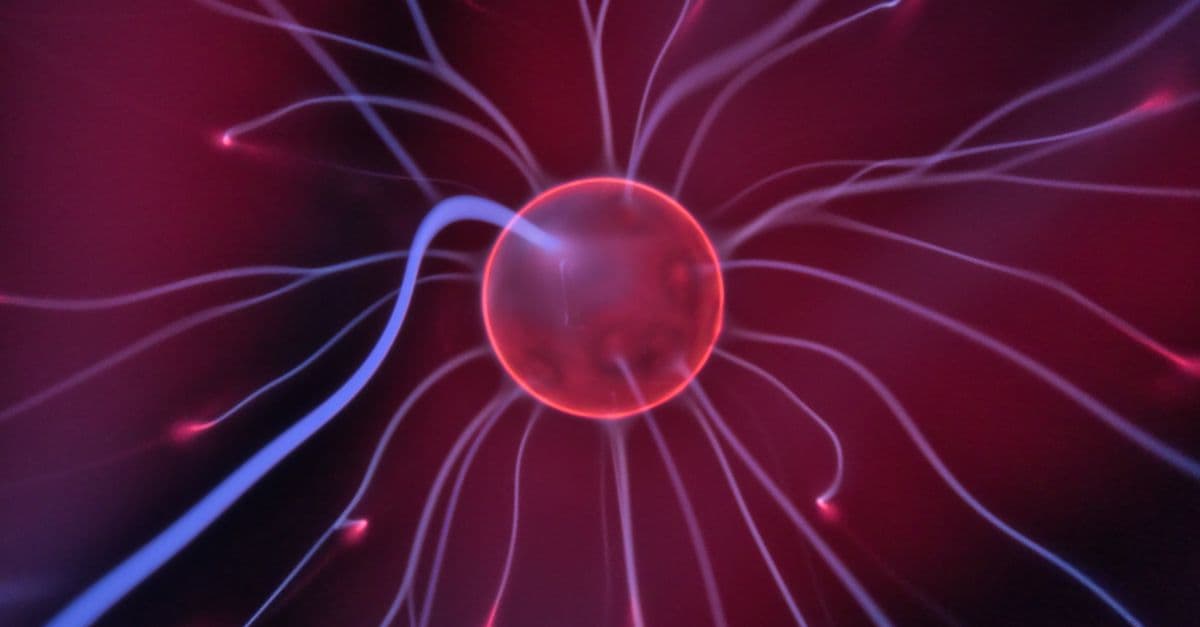
Photo: cottonbro studio / Pexels
On July 4, 2012, physicists at CERN, the European Organization for Nuclear Research, announced they had found a new particle weighing about 125 gigaelectronvolts (GeV), a unit particle physicists use instead of kilograms because the masses involved are so small. The particle matched a 48-year-old prediction: the Higgs boson, the piece of the Standard Model of particle physics that explains why anything has mass at all. Finding it took a 27-kilometer (17-mile) accelerator, thousands of scientists, and a data-analysis problem on a scale physics had never attempted. This is how they did it, and why it mattered.
Why physics needed a particle to explain mass
Mass sounds like a simple thing. Pick something up and you feel it. But the Standard Model, the equations that describe every known particle and three of the four fundamental forces, ran into a problem in the 1960s: the math only worked cleanly if every particle was massless. Electrons, quarks, the W and Z bosons that carry the weak nuclear force. All zero mass, moving at the speed of light, forever.
That is obviously wrong. Electrons have mass. Protons have mass. You have mass. The equations that correctly predicted nearly everything else about particle behavior flatly contradicted the most basic fact about matter: that it has weight.
This was not a minor technical wrinkle. It sat at the foundation of quantum field theory, the framework that treats particles as excitations, or ripples, in fields that fill all of space. An electromagnetic field fills space and its ripples are photons, the particles of light. If mass came from nowhere, then no field-based theory of particles could ever describe the universe as it actually is.
Three separate groups of physicists converged on a solution in 1964: Peter Higgs, working alone in Edinburgh; Robert Brout and François Englert in Brussels; and Gerald Guralnik, C.R. Hagen, and Tom Kibble in London, publishing independently within weeks of each other (Nobel Prize, 2013). Their proposal: a field, now called the Higgs field, fills the entire universe uniformly. Unlike the electromagnetic field, which is zero in empty space, the Higgs field has a nonzero value everywhere, even in a total vacuum. Particles that interact strongly with this field get dragged down, appearing heavy. Particles that barely interact with it, like photons, stay massless and fast.
Think of it like walking through a room full of people at a party versus an empty hallway. A celebrity trying to cross a crowded room gets stopped constantly, pulled aside, slowed to a crawl, even though nobody is physically restraining them, they are just interacting heavily with the crowd. A stranger nobody recognizes crosses the same room without friction. The "crowd" is the Higgs field. The friction it creates is what we measure as mass. It's an imperfect analogy, since real friction dissipates energy and the Higgs mechanism does not, but it captures the core idea: mass is not an intrinsic property of a particle sitting alone, it is a byproduct of that particle's relationship to a field that pervades everything.
The Higgs boson itself is a separate, testable prediction from all of this. If the Higgs field is real, then like every other quantum field it should have its own particle, a localized ripple you can knock loose with enough energy. Detecting that ripple, the Higgs boson, would be the smoking-gun evidence that the whole mechanism is correct rather than just a convenient piece of algebra.
How CERN actually built a machine to catch it
Proving the Higgs field existed meant producing its particle in a lab, and that required slamming protons together with more energy than any machine on Earth had ever managed. CERN's answer was the Large Hadron Collider (LHC), a 27-kilometer (17-mile) ring of superconducting magnets buried 100 meters (328 feet) beneath the Franco-Swiss border near Geneva (CERN, LHC facts). It is the largest and most powerful particle accelerator ever built.
The LHC accelerates two beams of protons in opposite directions around the ring, bending their paths with over 1,600 superconducting magnets cooled to 1.9 kelvin (-271.3°C, or -456.3°F), colder than the vacuum of deep space. At four points around the ring, the beams cross and protons collide head-on at close to the speed of light. During the run that found the Higgs, collisions happened at 7 to 8 teraelectronvolts (TeV) of combined energy, roughly the kinetic energy of a flying mosquito concentrated into a single pair of subatomic particles.
Two independent, room-sized detectors, ATLAS and CMS, sit at separate collision points and record what flies out of each crash. Independence mattered enormously here. If only one detector had reported a signal, skeptics could reasonably ask whether it was a quirk of that specific instrument's calibration. Having two teams, using different detector designs, different software, and largely different personnel, arrive at the same answer independently is what turned "interesting result" into "discovery."
Why is the Higgs boson so hard to detect directly?
The Higgs boson does not sit still long enough to be photographed. It decays in about 10⁻²² seconds, far too fast for any detector to see the particle itself. Physicists instead reconstruct its existence from the debris of its decay, tracing energy and momentum of the resulting particles back to a parent mass of 125 GeV, over and over across billions of collisions, until a statistical bump appears where only background noise should be.
What actually happens inside a proton-proton collision
A useful way to picture an LHC collision is less like two billiard balls hitting each other and more like two overstuffed bags of water balloons colliding at nearly light speed. Protons are not solid points, they are bundles of quarks and gluons in constant motion, and when two protons collide, it is really one quark or gluon from each proton smashing into its counterpart. Most of these collisions are boring, glancing scrapes that produce ordinary, well-understood particles.
Occasionally, though, a collision converts enough energy directly into a genuinely new particle, following Einstein's E=mc², the equation that lets energy and mass convert into each other. A Higgs boson, when one is produced, immediately decays into other particles because it is too massive and unstable to exist for more than a fraction of a fraction of a second. The particular way it decays, called a "decay channel," is what physicists actually search for.
Two decay channels proved decisive in 2012. In the first, the Higgs decays into two photons (written H→γγ), producing a clean, sharp energy spike that is relatively rare but easy to measure precisely. In the second, it decays into four leptons via a pair of Z bosons (H→ZZ→4ℓ), an even rarer event but one that leaves an extremely clean, low-background signature. Both channels, analyzed separately by ATLAS and CMS, showed a bump at the same mass: around 125 GeV (CERN press release, July 4, 2012).
Finding that bump required staggering amounts of data. The LHC produced roughly a petabyte, one thousand terabytes, of raw collision data per year during its early runs. The overwhelming majority of collisions are discarded within microseconds by automated trigger systems that decide, in real time, whether an event is interesting enough to keep. What survives still runs into petabytes annually, distributed across a global computing grid for physicists worldwide to analyze.
How do physicists know a bump in the data is a real particle and not random noise?
Particle physics uses a statistical threshold called "5-sigma," meaning the observed signal is five standard deviations away from what pure background noise would produce by chance, roughly a 1-in-3.5-million probability of being a fluke. Both ATLAS and CMS independently crossed 5-sigma significance around a 125-126 GeV mass in their July 2012 results.
The announcement and what came after
CERN's director general at the time, Rolf Heuer, opened the July 4, 2012 seminar by calling it "a milestone in our understanding of nature." ATLAS spokesperson Fabiola Gianotti and CMS spokesperson Joe Incandela each presented their team's independent results to a packed auditorium, with Peter Higgs himself in the audience, reportedly moved to tears (CERN, "Cern70: Announcing the Higgs boson discovery"). Both experiments reported a new particle at roughly 125-126 GeV with 5-sigma confidence, the gold standard for declaring a discovery in particle physics.
At the time, CERN was careful to describe the find as "a particle consistent with the long-sought Higgs boson," not yet the Higgs boson confirmed in full. That caution was appropriate and, in hindsight, correct. Over the following three years, ATLAS and CMS measured the particle's spin, parity, and decay patterns in far greater detail. Every property matched the Standard Model's prediction for the Higgs boson: spin-zero, positive parity, and couplings to other particles proportional to their mass, exactly as the 1964 theory required.
| Property | Predicted (Standard Model) | Measured (ATLAS + CMS) |
|---|---|---|
| Mass | Not predicted by theory, must be measured | 125.09 ± 0.24 GeV (ATLAS/CMS combined, 2015) |
| Spin | 0 (scalar particle) | Confirmed spin-0 |
| Parity | Positive (even) | Confirmed positive |
| Couplings to W/Z bosons | Proportional to particle mass | Consistent with Standard Model |
| Couplings to fermions (top quark, tau, bottom quark) | Proportional to particle mass | Consistent with Standard Model |
| Statistical significance (2012) | N/A | 5-sigma (both experiments, independently) |
Table: Predicted versus measured properties of the Higgs boson, based on CERN and ATLAS/CMS published results.
In March 2015, ATLAS and CMS jointly published a combined mass measurement of 125.09 GeV with a precision better than 0.2%, using the two-photon and four-lepton decay channels across their full 2011-2012 datasets (ATLAS-CMS combined mass paper, arXiv:1503.07589). That level of precision, achieved by combining two independently built detectors' results, is itself a demonstration of how rigorously the discovery was cross-checked before physicists were willing to call it settled.
On October 8, 2013, the Royal Swedish Academy of Sciences awarded the Nobel Prize in Physics jointly to François Englert and Peter Higgs "for the theoretical discovery of a mechanism that contributes to our understanding of the origin of mass of subatomic particles, and which recently was confirmed through the discovery of the predicted fundamental particle, by the ATLAS and CMS experiments at CERN's Large Hadron Collider" (Nobel Prize official citation, 2013). Robert Brout, who had co-developed the same mechanism with Englert, had died in 2011 and was ineligible under Nobel rules, which do not award prizes posthumously. Guralnik, Hagen, and Kibble, whose 1964 paper arrived independently within weeks of the others, were not included in the prize, a point of lingering debate in the physics community about how credit gets distributed among simultaneous discoverers.
Why finding the Higgs mattered beyond one particle
The Higgs discovery closed the last open gap in the Standard Model. Every other particle the theory predicted, quarks, leptons, the force-carrying bosons, had already been observed by the early 1980s. The Higgs boson was the final unconfirmed piece, and its discovery meant the entire mathematical structure describing three of the four fundamental forces (electromagnetism, the weak nuclear force, and the strong nuclear force) had now been experimentally validated down to its foundations.
It also confirmed something called electroweak symmetry breaking, the process by which the electromagnetic force and the weak nuclear force, which behave identically at extremely high energies, split apart into the two distinct forces we observe today at lower energies. The Higgs mechanism is what causes that split. Confirming the Higgs boson confirmed that this specific mechanism, rather than some alternative explanation, is what happened in the early universe fractions of a second after the Big Bang. For more on how the universe's early conditions are reconstructed from evidence like the cosmic microwave background, see our explainer on the Big Bang and the origin of the universe.
There is also a practical technology legacy that outlasts the physics result itself. Building the LHC required advancing superconducting magnet technology, cryogenics, and distributed grid computing well beyond what existed before the project began. The same detector and data-handling technologies developed for particle physics have since found uses in medical imaging and cancer therapy, an indirect but real return on a project that on paper existed purely to test an equation.
What people get wrong about the Higgs boson
The most common misconception is that the Higgs field, or the Higgs boson, is what gives all mass to the universe, full stop. That is not accurate. The Higgs mechanism accounts for the mass of fundamental particles, quarks, electrons, and the W and Z bosons. But roughly 99% of the mass of ordinary matter, protons and neutrons, and by extension almost everything you can touch, comes from the strong nuclear force binding quarks together inside those protons and neutrons, not from the Higgs field directly (CERN, "The Higgs boson"). The Higgs field explains why individual quarks and electrons have mass; it does not explain most of the mass you actually experience day to day.
Another common error is calling the Higgs boson "the God particle." That nickname originated from the title of physicist Leon Lederman's 1993 book, and Lederman himself later said his editor pushed the title because his original choice, "The Goddamn Particle," reflecting how frustratingly difficult the boson was to find, would not have passed muster with publishers. Most working physicists dislike the nickname because it overstates the particle's cosmic significance and understates how it fits into a much larger, unfinished picture of physics.
A third misunderstanding is that the 2012 discovery closed the book on particle physics. It didn't. The Standard Model, even with the Higgs confirmed, does not explain dark matter, does not explain dark energy, does not explain why neutrinos have mass, and does not unify gravity with the other three forces. If anything, nailing down the Higgs sharpened these open questions rather than resolving them, since physicists now have a precisely measured value to check other theories against. Readers curious about the largest of these remaining gaps, the identity of the invisible mass that dominates galaxies, may want to see our companion piece on quantum entanglement, which covers another area where the Standard Model's predictions run up against deep unresolved questions about the nature of reality.
The unsolved puzzle the Higgs discovery created
Confirming the Higgs boson's existence did not settle why it has the mass it does. In the Standard Model's equations, the Higgs mass is a free parameter, a number that has to be measured experimentally because the theory itself does not predict it. Physicists expected, on theoretical grounds involving quantum corrections from other particles, that the Higgs mass should naturally be enormous, potentially close to the Planck scale, the energy at which gravity becomes as strong as the other forces, roughly 10¹⁹ GeV. Instead it measures at 125 GeV, more than 17 orders of magnitude smaller than naive theoretical expectations.
This mismatch is known as the hierarchy problem, and it remains one of the most-discussed open questions in fundamental physics. Proposed solutions include supersymmetry, a theory predicting a heavier partner particle for every known particle, none of which the LHC has found despite extensive searches; extra spatial dimensions beyond the three we experience; and the idea that the Higgs mass is simply a low-probability outcome among many possible universes, an idea tied to the multiverse hypothesis and difficult to test experimentally. None of these has experimental support yet. The hierarchy problem is a genuine, unresolved crack in the theoretical foundation of physics, not a settled matter awaiting textbook confirmation.
What comes after the Higgs
The LHC did not stop running in 2012. It has since undergone two major upgrades, and its current run, called Run 3, collides protons at 13.6 TeV, the highest collision energy achieved by any accelerator to date (CERN, LHC Run 3). Physicists are using this higher-energy, higher-statistics data to measure Higgs boson couplings with greater precision, searching for any tiny deviation from Standard Model predictions that might hint at new physics beyond it.
One specific target is the search for pairs of Higgs bosons produced in a single collision, which would let physicists directly measure how the Higgs field interacts with itself, a property called the Higgs self-coupling. This measurement is central to understanding the exact shape of the Higgs field's potential energy, which in turn matters for cosmological questions like the long-term stability of the vacuum itself. As of the current LHC run, di-Higgs production has not yet been observed with enough statistical significance to draw firm conclusions, and it remains one of the harder measurements still ahead.
Looking further out, CERN has proposed the Future Circular Collider (FCC), a roughly 91-kilometer (57-mile) tunnel that would dwarf the LHC. The first stage, an electron-positron collider called FCC-ee, is designed explicitly as a "Higgs factory," producing Higgs bosons in much cleaner conditions than proton collisions allow, since electron-positron collisions do not carry the messy quark and gluon substructure that complicates every LHC measurement. A later, more distant stage, FCC-hh, would collide protons at up to 100 TeV, nearly seven times the LHC's current energy, in the same tunnel (CERN, Future Circular Collider). If approved and funded, the electron-positron stage could begin operating as soon as the 2040s, though the project's roughly $17 billion projected cost and multi-decade timeline mean its future depends on sustained international political and financial commitment, not physics alone.
FAQ
Q: What is the Higgs boson in simple terms? A: The Higgs boson is a subatomic particle that is the physical evidence of the Higgs field, an invisible field that fills all of space. Particles gain mass by interacting with this field, roughly the way an object moving through a thick medium experiences resistance. The Higgs boson itself is what you get when you excite that field with enough energy, similar to how a photon is an excitation of the electromagnetic field.
Q: When and where was the Higgs boson discovered? A: CERN announced the discovery on July 4, 2012, based on independent results from the ATLAS and CMS detectors at the Large Hadron Collider near Geneva, Switzerland. The particle was measured at approximately 125-126 GeV with 5-sigma statistical confidence in both experiments.
Q: Did the Higgs boson win a Nobel Prize? A: The particle itself cannot win a prize, but the theoretical prediction behind it did. François Englert and Peter Higgs received the 2013 Nobel Prize in Physics for the theoretical mechanism, which the 2012 CERN experiments confirmed. Robert Brout, who co-developed the mechanism with Englert, had died in 2011 and was ineligible since Nobel Prizes are not awarded posthumously.
Q: Does the Higgs boson explain all mass in the universe? A: No. It explains the mass of fundamental particles like quarks and electrons. Roughly 99% of the mass in ordinary matter, protons and neutrons, comes from the strong nuclear force binding quarks together, not from the Higgs mechanism directly.
Q: Why is it sometimes called the "God particle"? A: The nickname comes from physicist Leon Lederman's 1993 popular science book. Lederman later said the title was a publisher-friendly softening of his preferred title, referencing how difficult the particle was to find. Most physicists avoid the term because it overstates the boson's role and is not part of any formal physics terminology.
Q: How much did finding the Higgs boson cost? A: The Large Hadron Collider's construction cost roughly 4.3 billion Swiss francs charged to CERN's own budget, with total project costs, including detectors and international contributions, estimated at approximately $9 billion when the machine was built (Forbes, 2012). That cost was distributed across decades and dozens of member and partner countries rather than paid by any single nation.
Q: Could the Higgs boson have been discovered with an older, smaller accelerator? A: No. Producing a Higgs boson requires colliding particles with enough combined energy to create its 125 GeV mass, following Einstein's mass-energy equivalence. No accelerator built before the LHC reached the necessary collision energy, which is precisely why the LHC's construction was, in large part, motivated by the search for this particle.
Q: What questions does the Higgs discovery leave unanswered? A: The Standard Model, even with the Higgs confirmed, does not explain dark matter, dark energy, why neutrinos have mass, or why the Higgs boson's own mass is so much smaller than theoretical expectations suggest it should be, a puzzle known as the hierarchy problem. It also does not unify gravity with the other three fundamental forces.
Q: Is the Higgs boson stable, like a proton? A: No. The Higgs boson decays almost instantly, in about 10⁻²² seconds, into other particles. It cannot be isolated, stored, or observed directly, which is why physicists reconstruct its existence statistically from the particles it decays into across billions of collisions.
Q: What is the Large Hadron Collider doing now, after finding the Higgs? A: Since 2012, the LHC has undergone upgrades and now runs at 13.6 TeV collision energy in its current run, called Run 3. Physicists are using the higher energy and larger datasets to measure Higgs boson properties more precisely and to search for rarer processes, including pairs of Higgs bosons produced in a single collision.
The takeaway
The Higgs boson discovery closed a 48-year gap between a theoretical prediction and its experimental proof, and it did so at a level of statistical rigor, two independent detectors, 5-sigma confidence, years of follow-up measurement, that left little room for doubt once the dust settled. What makes the achievement significant is not just that physicists found a particle, but that everything about it, mass, spin, decay patterns, matched a 1964 equation almost exactly. That kind of agreement between decades-old theory and cutting-edge measurement is rare in any field. The Higgs field explains why the particles inside every atom in your body have mass instead of streaking away at light speed, but it also handed physicists a sharper, more precise version of the questions it didn't answer, and those questions, about dark matter, about why the Higgs mass is what it is, are what the next generation of colliders is now built to chase.
Read next:
Follow new articles
Add SciHub101 to your feed reader to see new science and technology stories.
About the Author
SciHub101 is an independent science and technology publication founded and edited by Buğra Sözeri, a software engineer and app developer based in Türkiye. AI tools assist with drafting and research. Source documentation in the existing archive is uneven, and articles are being reviewed and corrected. The Editorial Team byline identifies editorial responsibility; it does not certify specialist or independent human review. Where we compare products, anything built by our own team is labelled as such — see the editorial guidelines and About page for how corrections and disclosures work.
Related Articles

Immune System Changes in Space: ISS Immunology Research
ISS studies reveal how microgravity suppresses immune function, explaining increased infection risk in astronauts and informing immunology treatment strategies.

Haber-Bosch Process: Industrial Nitrogen Fixation
The synthesis process that enabled agriculture to feed billions
The CERN Higgs Boson Discovery: How Physicists Found the God Particle
On July 4, 2012, CERN announced the discovery of the Higgs boson at 125 GeV. Here is how the LHC, ATLAS, and CMS found the particle that gives other particles mass.

The Higgs Boson Explained — God Particle
The Higgs boson explained: how particles get mass, the 2012 CERN discovery, Standard Model, and why the 'God particle' nickname is misleading.
How the Large Hadron Collider Works — And What It's Searching For
The LHC is a 26,659-meter ring of superconducting magnets that smashes protons together to test the Standard Model. Here is how it works, what it found, and what it is still hunting.