What Is Consciousness? Science's Hardest Question
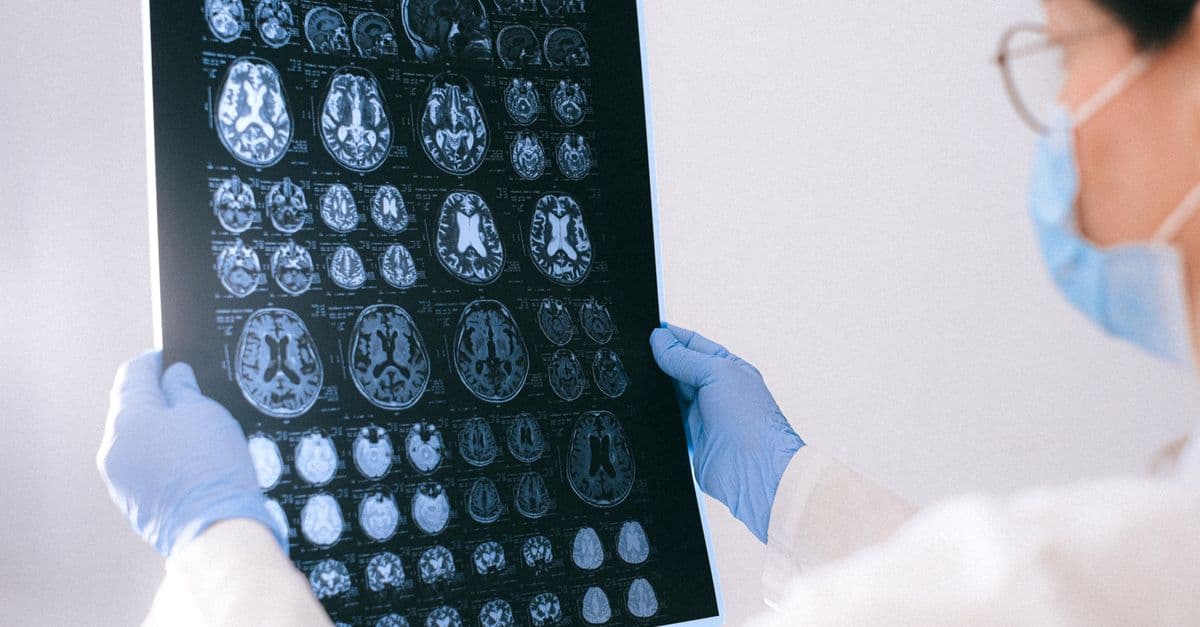
Photo: Anna Shvets / Pexels
Every morning you wake up and there is something it is like to be you. Colors look red, music sounds beautiful, coffee smells like coffee. This seemingly obvious fact — that you have a subjective, first-person experience of the world — is, according to many philosophers and neuroscientists, the single most puzzling thing in the universe.
We can explain how the brain processes visual information, how neurons encode memories, how anesthesia suppresses brain activity. But we have no accepted scientific explanation for why any of that physical activity produces subjective experience at all. Why isn't it all just information processing in the dark?
This is the consciousness problem — and despite decades of neuroscience, we remain genuinely, deeply uncertain about the answer.
The Easy Problems and the Hard Problem
In 1995, philosopher David Chalmers made a distinction that reorganized the entire field. He separated what he called the "easy problems" of consciousness from the "hard problem."
The easy problems include explaining:
- How the brain integrates information from different senses
- How we focus attention and ignore distractions
- How we report our mental states
- How we distinguish waking from sleep
- How we control behavior through deliberate thought
These are called "easy" not because they are simple — they are enormously complex research programs — but because they are, in principle, tractable through standard neuroscientific methods. We can imagine, even if we haven't yet achieved it, a complete mechanistic account of each.
The hard problem is different in kind. It asks: why does any of this processing feel like anything? When light hits your retina and triggers a cascade of neural signals that eventually produce the perception of redness — why is there a felt quality of redness at all? Why isn't it just computation? Why does physical processing give rise to subjective experience — what philosophers call qualia?
Chalmers' formulation was controversial precisely because it suggested the hard problem might not be solvable by standard neuroscience alone. Many scientists argue the hard problem will dissolve once we understand the brain well enough. Others maintain it reflects a genuine conceptual gap that no amount of neural mapping can bridge. This disagreement is still live and unresolved.
Neural Correlates of Consciousness
Even without solving the hard problem, neuroscience has made substantial progress on a more tractable question: what brain activity correlates with conscious experience?
Neural correlates of consciousness (NCCs) are the minimal neural mechanisms sufficient for a given conscious experience. Identifying NCCs doesn't explain why those mechanisms produce experience — it describes the physical correlate without explaining the experiential side. But it's a critical empirical starting point.
Classic NCC research uses paradigms where the physical stimulus is held constant but perception flips — for example, binocular rivalry, where the brain alternates between two different images presented to each eye. By measuring what changes in the brain when perception flips without any change in input, researchers can identify neural activity that tracks conscious content specifically.
Consistently, studies point to activity in higher cortical areas — particularly the prefrontal cortex and posterior cortical regions (parietal, temporal, and occipital association areas) — as most closely associated with conscious perception. Primary sensory cortices appear necessary but not sufficient. The precise NCC signature remains debated.
Major Scientific Theories of Consciousness
No single theory of consciousness currently commands consensus. Here are the most scientifically developed contenders:
Global Workspace Theory (GWT)
Developed by cognitive psychologist Bernard Baars and elaborated by neuroscientist Stanislas Dehaene, Global Workspace Theory proposes that consciousness arises when information is "broadcast" across a widespread neural network — the global workspace — making it available to many different cognitive processes simultaneously.
In this view, most brain processing is unconscious and modular. Consciousness is what happens when information "ignites" a network of frontoparietal neurons, broadcasting it widely and making it available for verbal report, working memory, voluntary action, and decision-making.
GWT makes testable predictions about neural signatures — specifically, that conscious perception should produce a late (~300ms) burst of activity across frontal and parietal regions, along with a characteristic "ignition" in which activity rapidly spreads rather than remaining local. These predictions have been confirmed in many experiments. GWT is currently the most experimentally supported theory, though critics argue it conflates access consciousness (information being accessible to reporting and control) with phenomenal consciousness (the felt quality of experience).
Integrated Information Theory (IIT)
Proposed by neuroscientist Giulio Tononi, Integrated Information Theory takes a radically different approach. Rather than asking "what brain processes produce consciousness?", it asks "what is consciousness, mathematically?"
IIT proposes that consciousness IS integrated information — specifically, a quantity called Phi (Φ), which measures how much more information a system generates as a whole compared to the sum of its parts. Any system with high Phi is conscious to some degree; any system with Phi = 0 is completely unconscious.
This has striking implications: a sufficiently complex grid of logic gates or a simple organism with integrated processing would be conscious in some minimal sense (panpsychism lite), while a feedforward network — even a complex one — with no recurrent integration would have no consciousness at all.
IIT has the virtue of being mathematically precise and making specific predictions. It also correctly predicts some puzzling findings — like why the cerebellum, despite having four times more neurons than the cerebral cortex, appears to contribute little to conscious experience (it's a largely feedforward structure with low integration). Critics argue Phi is computationally intractable to calculate for real brains, and some of IIT's implications (like the claim that certain simple systems are conscious while certain complex simulations are not) seem counterintuitive.
Higher-Order Theories
Higher-order theories propose that a mental state is conscious only if there exists a higher-order representation of it — a thought about the thought, or a perception of the perception. Consciousness, on this view, requires a kind of self-monitoring.
These theories align with data showing that prefrontal cortex damage can impair consciousness of perceptions even when the perceptions themselves appear largely intact. They also connect to metacognition research. However, higher-order theories are criticized for generating an infinite regress (what makes the higher-order state conscious?) and for seemingly predicting that animals and infants, with less developed prefrontal cortices, would have impoverished consciousness.
Predictive Processing
Karl Friston's predictive processing (or "active inference") framework proposes that the brain is fundamentally a prediction machine. Rather than passively processing incoming sensory data, the brain continuously generates predictions about the world and updates them based on prediction errors.
On this account, conscious experience is the brain's best current "controlled hallucination" — its generative model of the world, shaped by but not simply equivalent to sensory input. Perceptual consciousness is the content of these generative models; the hard problem may dissolve if we accept that what we call "experience" just IS the brain's internal model.
Predictive processing is influential and computationally sophisticated, but whether it truly solves the hard problem or merely redescribes it is actively debated.
Orchestrated Objective Reduction (Orch-OR)
The most controversial major theory is Orch-OR, proposed by physicist Roger Penrose and anesthesiologist Stuart Hameroff. They argue that consciousness arises from quantum computations in microtubules — protein structures inside neurons — and that this quantum processing is fundamental to producing subjective experience.
Penrose argues that human mathematical intuition involves non-algorithmic processes that classical computation cannot replicate, and that quantum gravity effects at the Planck scale produce a fundamental, non-computational element of consciousness.
Orch-OR is regarded skeptically by most neuroscientists because the brain is a warm, wet environment where quantum coherence is expected to decohere almost instantly. Proponents counter that biological systems may have evolved mechanisms to sustain quantum coherence. The theory remains fringe but cannot be dismissed without further empirical investigation.
Theories Compared
| Theory | Proposed by | Core claim | Key strength | Key criticism |
|---|---|---|---|---|
| Global Workspace Theory | Baars, Dehaene | Consciousness = information broadcast across widespread network | Most experimental support | May only explain access consciousness, not phenomenal experience |
| Integrated Information Theory | Tononi | Consciousness = integrated information (Phi) | Mathematically precise, explains cerebellum puzzle | Phi is intractable; implies controversial panpsychism |
| Higher-Order Theory | Rosenthal, Lycan | Consciousness requires a higher-order representation | Aligns with metacognition data | Infinite regress problem; prefrontal damage objections |
| Predictive Processing | Friston | Consciousness = brain's generative model of the world | Elegant unifying framework | May not genuinely address the hard problem |
| Orch-OR | Penrose, Hameroff | Consciousness arises from quantum processes in microtubules | Novel approach to hard problem | Quantum decoherence objections; little direct evidence |
The Binding Problem
A related puzzle is the binding problem: how does the brain unify the diverse, separately processed features of an experience — the color, shape, motion, and sound of a bird flying — into a single, integrated conscious moment?
Different features are processed in distinct brain regions (color in V4, motion in MT/V5, etc.), yet conscious experience presents them as unified. Various solutions have been proposed — synchronized neural oscillations (the 40 Hz "gamma" hypothesis of Crick and Koch), spatial convergence zones, or the global workspace. None is definitively established. The binding problem is often treated as a sub-problem of consciousness that any complete theory must address.
Which Animals Are Conscious?
The Cambridge Declaration on Consciousness, signed in 2012 by a prominent group of neuroscientists, made an explicit statement: "Non-human animals possess the neurological substrates that generate consciousness." This includes all mammals, birds, and many other creatures including the octopus.
But how far does consciousness extend? The question becomes harder as we move to simpler nervous systems:
Mammals and birds: Strong evidence for rich conscious experience. They have cortical or cortical-equivalent structures, show complex behaviors, respond to anesthesia predictably, and demonstrate metacognition in some species.
Fish: Evidence is accumulating that fish have more sophisticated pain processing than previously thought, though whether this involves subjective suffering remains debated. Recent research on trout pain responses has complicated the historical assumption that fish are "mere reflexes."
Octopuses: Remarkable case. Octopuses have a distributed nervous system (two-thirds of their neurons are in their arms, not their central brain), yet they show impressive problem-solving, play, and possible emotional states. Their convergent evolution of complex intelligence — entirely independent of vertebrate evolution — raises profound questions about what kind of neural architecture consciousness requires.
Insects: Most neuroscientists remain skeptical about rich insect consciousness, though insects show surprisingly complex behaviors. The debate about whether insects have a minimal form of experience — perhaps something like simple valenced states — is genuinely open.
Plants and single cells: No evidence for consciousness in any meaningful sense. Consciousness appears to require at minimum a nervous system capable of integrating information.
The neuroscience of consciousness connects directly to how we think about the brain more broadly — see How the Brain Works: Neuroscience Explained for background on neural architecture.
What Anesthesia Tells Us
Anesthesia is one of the most powerful probes of consciousness. General anesthetics — propofol, sevoflurane, ketamine — reliably eliminate conscious experience at sufficient doses, and they do so through distinct mechanisms that reveal different aspects of consciousness.
Propofol appears to work primarily by disrupting cortical-thalamic communication and disrupting the global broadcasting that GWT predicts is necessary for consciousness. Under propofol, local cortical processing continues, but information no longer propagates widely — the "ignition" fails.
Ketamine, a dissociative anesthetic, works differently — it blocks NMDA receptors and at sub-anesthetic doses produces altered states of consciousness rather than abolishing it entirely. Ketamine's effects highlight that consciousness is not simply on or off but exists on a spectrum of richness and integration.
Studying anesthetic mechanisms helps identify which neural processes are truly necessary for consciousness versus merely correlating with it.
The Split-Brain Experiments
Among the most startling evidence about consciousness comes from split-brain patients — individuals who, as treatment for severe epilepsy, had their corpus callosum (the main fiber bundle connecting the two hemispheres) surgically severed.
Pioneering research by Roger Sperry and Michael Gazzaniga in the 1960s and 70s revealed that after this surgery, patients appeared to have two separate streams of conscious experience — the left hemisphere and right hemisphere could hold different information, different intentions, and different answers to the same question, with each unaware of the other's activity.
When a picture of a snow scene was presented to the right hemisphere (which does not produce speech in most people) and a question about it was asked, the left hemisphere (which controls speech) would confabulate — generate a plausible but incorrect answer, then confidently believe its own confabulation. This revealed not only the division of consciousness but also the brain's extraordinary tendency to generate post-hoc narratives that feel like first-person experience.
More recent reanalysis of split-brain research has suggested the picture is more complex — some degree of coordination may persist after callosotomy through subcortical pathways. But the basic finding stands: the unity of conscious experience that we take for granted can be surgically disrupted.
The AI Consciousness Question
As artificial intelligence systems become increasingly sophisticated, the question of machine consciousness moves from philosophy lecture to urgent practical concern. Could a large language model, a neural network, or a future AI system be conscious?
Most consciousness researchers maintain that current AI systems — including large language models — are not conscious, for reasons that vary by theoretical framework:
- GWT perspective: Current systems lack the recurrent, global broadcasting architecture associated with conscious ignition
- IIT perspective: Feedforward-dominated neural networks have very low or zero Phi, regardless of their behavioral complexity
- Predictive processing: Current systems do not have generative models of the world in the relevant sense, nor do they have the active inference loop involved in biological consciousness
However, if consciousness is substrate-independent — if what matters is the pattern of information processing rather than biological neurons — then it is difficult to categorically rule out machine consciousness in principle. The debate is unresolved, and as AI systems grow more sophisticated, it will become increasingly important.
Acknowledging the Uncertainty
It is worth being direct about the state of the field: consciousness remains an open scientific problem. We do not know which theory is correct. We do not have a consensus account of neural correlates sufficient to explain phenomenal experience. The hard problem may or may not be solvable within a purely physical framework.
This uncertainty is not a failure of neuroscience — it reflects the genuine difficulty of the question. Consciousness research is young as a formal scientific discipline (it was largely taboo for behaviorist-dominated psychology for much of the 20th century) and has made remarkable progress. The coming decades, with better non-invasive neuroimaging, computational modeling, and perhaps quantum biology tools, may yield real breakthroughs.
For now, every time you have a moment of vivid experience — every sunset, every piece of music, every moment of clarity — you are participating in the universe's most mysterious phenomenon. And we still don't know why.
Understanding how the brain generates consciousness connects to questions about how it generates memory and how neuroplasticity allows the conscious mind to reshape itself over time.
Frequently Asked Questions
Q: Is the hard problem of consciousness actually a scientific problem or just a philosophical one? A: It's both — which is part of what makes it so difficult. Chalmers formulated it philosophically, but it has direct empirical implications: if you think the hard problem is a genuine explanatory gap, you'll look for mechanisms beyond information processing; if you think it dissolves with better science, you'll focus on neural correlates. Many scientists argue the hard problem is confused or will resolve naturally as we understand the brain better. Others, including some neuroscientists, take it seriously as a real gap. The debate is live.
Q: Could consciousness be an illusion? A: This is a serious philosophical position — the "illusionist" view, associated with philosophers like Daniel Dennett and Keith Frankish. They argue that what we call phenomenal consciousness, the felt quality of experience, is a kind of cognitive illusion — we are deceived about the nature of our own processing. Most people find this counterintuitive (an illusion is itself an experience — who's experiencing the illusion?), but illusionism has sophisticated defenders. It does not solve the hard problem so much as deny it.
Q: Are we conscious all the time, even in dreamless sleep? A: No — dreamless sleep appears to be a state of reduced or absent consciousness. EEG studies show that the brain's capacity for integrated, complex information processing drops during slow-wave (deep) sleep. Interestingly, dream sleep (REM) produces brain activity resembling waking consciousness, consistent with the vivid experiences of dreaming. This gradient — from waking consciousness to dreaming to dreamless sleep to anesthesia — suggests consciousness varies continuously rather than being simply on or off.
Q: Does IIT mean everything is conscious? A: IIT implies that any physical system with integrated information above zero has some minimal degree of consciousness — a very weak form of panpsychism. However, most inanimate systems (rocks, thermostats) would have essentially zero Phi because they don't integrate information in the relevant sense. The panpsychist implication mainly concerns simple but non-zero cases like bacteria or simple circuits. This implication is philosophically controversial but does not mean IIT says rocks have rich experiences.
Q: Can meditation change consciousness? A: Meditation practices alter brain states in measurable ways — increasing gamma oscillations, changing default mode network activity, and modifying cortical thickness in long-term practitioners. Experienced meditators report accessing unusual states of consciousness, including states described as "pure awareness" without object content. Whether these represent genuinely novel modes of consciousness or simply unusual patterns of normal brain activity is an open question that researchers like Richard Davidson and Judson Brewer are actively investigating.
Q: Will we ever solve the consciousness problem? A: Honest answer: we don't know. Some scientists believe the hard problem will dissolve once we have a complete mechanistic account of the brain — the mystery will evaporate as consciousness research did. Others believe we face a fundamental explanatory gap that requires either new physics, new philosophy, or both. A third possibility is that consciousness will remain permanently mysterious — not because of any failure of science, but because some aspects of first-person experience may be inaccessible to third-person scientific methods by their very nature. This is perhaps the most important open question in all of science.
Sources
- Chalmers, D. J. (1995). Facing up to the problem of consciousness. Journal of Consciousness Studies, 2(3), 200–219.
- Baars, B. J. (1988). A Cognitive Theory of Consciousness. Cambridge University Press.
- Dehaene, S., Changeux, J.-P., & Naccache, L. (2011). The global neuronal workspace model of conscious access: from neuronal architectures to clinical applications. Experimental Brain Research, 206, 235–250.
- Tononi, G. (2004). An information integration theory of consciousness. BMC Neuroscience, 5, 42.
- Penrose, R. (1994). Shadows of the Mind. Oxford University Press.
- Low, P., et al. (2012). The Cambridge Declaration on Consciousness. Publicly proclaimed at the Francis Crick Memorial Conference, Cambridge, UK.
- Sperry, R. W. (1968). Hemisphere disconnection and unity in conscious awareness. American Psychologist, 23(10), 723–733.
- Gazzaniga, M. S. (2005). Forty-five years of split-brain research and still going strong. Nature Reviews Neuroscience, 6, 653–659.
- Koch, C., Massimini, M., Boly, M., & Tononi, G. (2016). Neural correlates of consciousness: progress and problems. Nature Reviews Neuroscience, 17, 307–321.
- Friston, K. (2010). The free-energy principle: a unified brain theory? Nature Reviews Neuroscience, 11, 127–138.
Weekly digest
Stay ahead of the curve
Get the best science, AI, and tech stories delivered to your inbox every week. No spam — unsubscribe any time.
About the Author
SciHub101 is an independent science and technology publication founded and edited by Buğra Sözeri, a software engineer and app developer based in Türkiye. Articles are drafted against peer-reviewed literature and primary sources, fact-checked, and edited by a human before publication. Where we compare products, anything built by our own team is labelled as such — see the editorial guidelines and About page for how corrections and disclosures work.
Related Articles

CRISPR Gene Editing: How It Works in 2026
From bacterial immune system to approved therapies: how CRISPR-Cas9, base editing, and prime editing are rewriting the genetic code of medicine.
String Theory Explained — Beyond the Standard Model
What string theory really proposes, the extra dimensions, M-theory, the multiverse landscape, and why critics call it unfalsifiable in 2026.
What Is Consciousness Actually? The Hardest Question in Science
You're conscious right now. So am I (probably). But why? How does electrical activity in 1.5 kg of fatty tissue produce subjective experience? Nobody knows — and that might be the deepest unsolved problem in all of science.

The Libet Experiment: Did Your Brain Decide Before You Did?
In 1983, Benjamin Libet found brain activity began 350ms before conscious intention to move. The free will debate that followed has been partially rewritten by modern neuroscience.
The Default Mode Network — Brain at Rest
The Default Mode Network activates when you're not focused on the world. What it is, what it does, and why depression, Alzheimer's, and psychedelics all touch it.

How the Brain Works — Neuroscience Overview
Neurons, action potentials, brain regions, plasticity, and the science behind consciousness — a clear neuroscience primer.