Abstract Art Explained: What Is Modern Art Actually Doing?
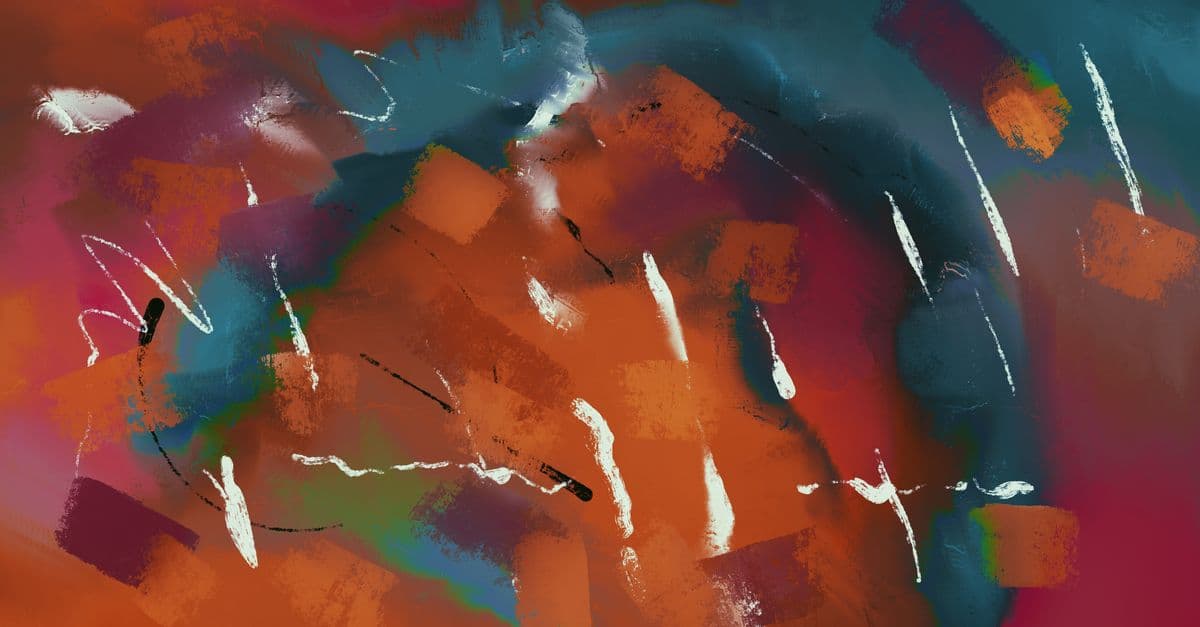
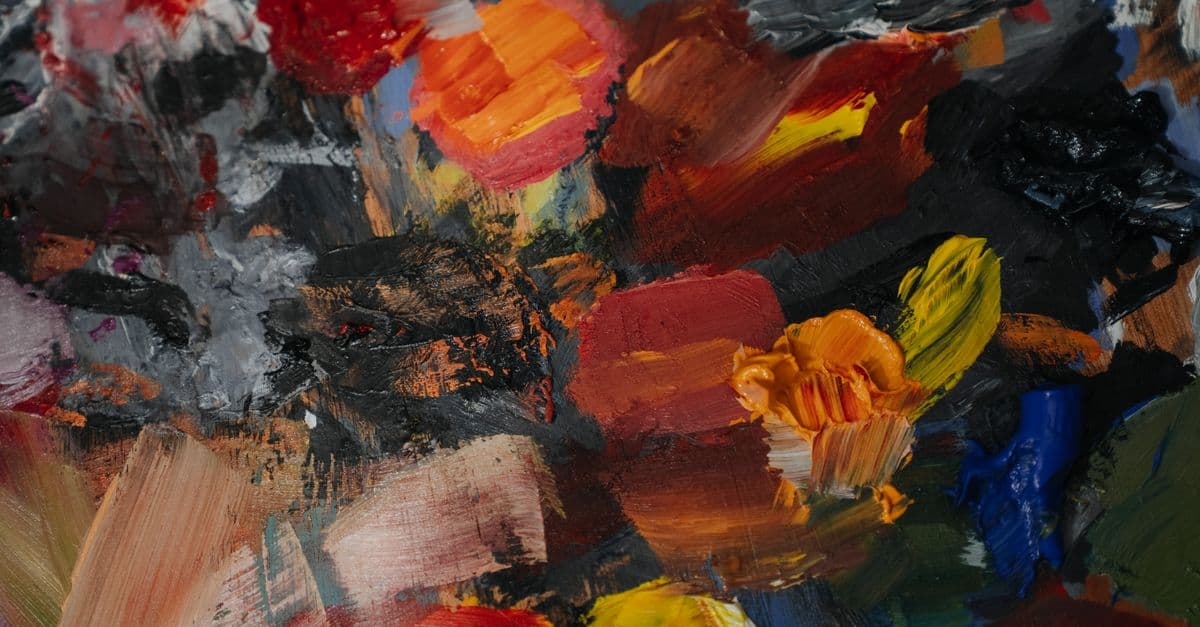
Photo: Steve A Johnson / Pexels
In April 1917, Marcel Duchamp, a board member of New York's Society of Independent Artists, entered a porcelain urinal signed "R. Mutt" in the group's first show. It was kept behind a partition, and the argument about whether it was art has never really stopped. Abstract art raises the same argument in paint. This article covers where abstract art came from, what its pioneers attempted, how the main movements differ, and what research says about viewers' responses.
Key takeaways
- Abstract art does not try to give an accurate picture of visible reality. It works through shape, color, line, and gesture, and it covers everything from simplified objects to pure geometry.
- Its pioneers, including Hilma af Klint, Wassily Kandinsky, Kazimir Malevich, and Piet Mondrian, had philosophical and spiritual motives as well as formal ones.
- Different movements used different strategies: fragmenting objects (Cubism), strict geometry (De Stijl, Suprematism), physical gesture (action painting), and large fields of color (Color Field).
- Small experimental studies suggest that viewers respond to implied movement in abstract works and tend to see an artist's intention in them, though the evidence is limited.
- The objection that "anyone could do this" is testable, and at least one study suggests that people can tell more than they expect.
What counts as abstract art?
The Tate defines abstract art as art that does not attempt to give an accurate depiction of visual reality. It uses shapes, colors, forms, and gestural marks to create its effect. The word itself comes from the idea of separating or withdrawing something from something else, so a painting can be abstract by simplifying a recognizable object or by dropping objects entirely.
That distinction matters, because "abstract" covers a wide range. A useful way to sort it is by how much of the visible world is left:
| Degree of abstraction | What remains | Example |
|---|---|---|
| Simplified or fragmented | A recognizable subject, broken into planes or viewpoints | Cubist portraits by Picasso and Braque |
| Geometric abstraction | No subject, only ordered shapes and colors | Mondrian's grids, Malevich's Black Square |
| Gestural abstraction | No subject, but the marks record the artist's movement | Pollock's drip paintings |
| Color-field abstraction | Large areas of flat or softly varied color | Rothko's rectangles of color |
Specialists also use the term "non-objective" for art that has no source object at all. The words are not perfectly fixed, so you will see them used differently across museums and books.
Why artists stopped painting the visible world
The turn away from representation did not happen on a single day, and historians do not agree on one cause. Several pressures converged in the late nineteenth and early twentieth centuries. The explanations below are the ones most often cited, and each is an interpretation, not a proven law.
Photography. The camera had been public since 1839, and over the following decades it took over much of painting's job of recording faces, streets, and events. A common account says this freed painters to ask what a painting could do that a photograph could not. Painters had leaned on optical aids long before that, a history covered in how the camera obscura shaped realistic art.
Cubism. Pablo Picasso and Georges Braque developed Cubism around 1907 to 1908, according to the Tate. They broke subjects into planes and showed several viewpoints at once. That flattened the canvas, replacing the illusion of depth built by linear perspective, and the Tate describes it as a starting point for later abstract movements such as Constructivism and Neo-plasticism. The critic Louis Vauxcelles coined the name in 1908 after seeing Braque's work and describing it as reducing everything to cubes. Picasso put the underlying attitude this way: "A head is a matter of eyes, nose, mouth, which can be distributed in any way you like." If a head can be rearranged, a painting no longer has to be a window.
A changing sense of reality. The same decades brought new physics and new psychology. Einstein's relativity papers of 1905 and 1915 made space and time look less fixed, and Freud's work around 1900 argued that much of mental life lies below awareness. Some artists and critics took these as reasons to doubt that a surface likeness captured what was real. Whether the artists were influenced directly by the science is debated, so it is safer to say that the cultural mood shifted in the same direction.
War and disillusion. World War I, which began in 1914, shattered confidence in an orderly, rational world for many Europeans. Movements such as Dada, which emerged during the war, set out to question the values that had led to it.
Notice what these explanations have in common. None of them says that artists lost the ability to paint realistically. Most of the early abstract painters had been trained in representational work. They left it on purpose.
The first abstractions: af Klint, Kandinsky, Malevich, Mondrian
Who painted the first abstract picture?
The usual answer used to be Wassily Kandinsky, who dated his first abstract watercolor to 1910. Scholars now treat that claim with caution. Dates for Kandinsky's earliest abstract works vary between sources, and the Tate lists his Cossacks of 1910 to 1911 as an example of early abstraction, a painting that still keeps traces of its subject.
The Swedish artist Hilma af Klint complicates the story. According to the biographical record, she painted her first abstract series in 1906, at age 44, as part of a larger project, The Paintings for the Temple, created between 1906 and 1915. Her work grew out of her involvement in spiritualism and Theosophy, and she directed that her paintings be kept private for at least 20 years after her death. They were not widely known to her contemporaries, so she did not influence the better-known pioneers directly, but the Guggenheim's 2018 to 2019 exhibition of her work drew more than 600,000 visitors, the most in the museum's history. The honest summary is that abstraction emerged in several places at once, and no single person invented it.
Kandinsky: painting as music
Kandinsky moved to Munich as a young man, became interested in Theosophy (he bought the book Thought-Forms in 1908 and joined the Theosophical Society in 1909), and came to believe that color and form could communicate directly with the soul. He compared painting to music: "Color is the keyboard, the eyes are the harmony, the soul is the piano with many strings." He linked yellow to the sound of a brass trumpet and held that combinations of colors work like chords. Modern research on color and feeling is more cautious than Kandinsky was, as the psychology of color explains, and the brain science of music is covered in why music affects emotions.
His book Concerning the Spiritual in Art, published in Munich around 1911 to 1912 (sources differ on the year), argued that the only valid reason to make art was what he called "inner necessity," the artist's compulsion to express an inner experience. The idea sounds mystical, and it was. It was also a real answer to the question of what painting is for, if not for depiction.
Malevich: the zero point
Kazimir Malevich began developing Suprematism in 1913, a style built on basic geometric forms and a limited palette. His Black Square (1915), a black square on a white ground, 79.5 by 79.5 centimeters, was shown in December 1915 at an exhibition in Petrograd (now St. Petersburg) and hung high in a corner, the traditional place for an icon in a Russian home. He called it the "zero point of painting" and described his aim as a struggle to free art from the weight of the objective world. In 2015, X-rays revealed that the painting hides two earlier works beneath the black surface: a colorful Cubo-Futurist composition and, on top of it, a proto-Suprematist one. The "zero" had a history.
Mondrian: the structure under things
Piet Mondrian, a Dutch painter, became interested in Theosophy in 1908 and joined the Dutch Theosophical Society in 1909. He believed abstraction could reveal a deeper reality than appearance. In 1914 he wrote, "Art is higher than reality and has no direct relation to reality." He called his approach Neo-plasticism and limited himself to primary colors, black, white, and gray, with only horizontal and vertical lines. His grid paintings reached their mature form around 1920 and 1921. When the Dutch magazine and movement De Stijl began in 1917, Mondrian was one of its two founders, along with Theo van Doesburg. The Tate describes the group's work as a style based on a strict geometry of horizontals and verticals. Mondrian left the group in 1923 when van Doesburg introduced diagonal lines.
His later Broadway Boogie Woogie (1942 to 1943), made after he moved to New York, uses bright squares of color to evoke the rhythm of the city and remains one of the most influential works of geometric abstraction.
A short timeline of abstraction
| Date | Development | Key figures |
|---|---|---|
| 1906 | First abstract series in The Paintings for the Temple | Hilma af Klint |
| 1907 to 1908 | Cubism emerges | Picasso, Braque |
| 1910 to 1911 | Early abstraction; Kandinsky later claims 1910 for his first abstract work | Kandinsky |
| 1913 | Suprematism begins; the Armory Show opens in New York | Malevich; many European and American artists |
| 1915 | Black Square shown | Malevich |
| 1917 | De Stijl founded; Fountain submitted | Mondrian, van Doesburg; Duchamp |
| c. 1920 to 1921 | Mondrian's mature grid paintings | Mondrian |
| 1940s to 1950s | Abstract Expressionism in New York | Pollock, de Kooning, Rothko |
| c. 1950 onward | The term Color Field first applied to a group of painters | Rothko, Newman, Still |
| 1964 | Post-Painterly Abstraction exhibition in Los Angeles | Clement Greenberg, 31 artists |
For where the story goes after the twentieth century, including street art and digital work, see most influential artists of the 21st century.
Why modern art still provokes anger
The reaction to abstraction and modern art has been loud from the start. The Armory Show, which ran from February 17 to March 15, 1913, in New York's 69th Regiment Armory, brought about 1,300 works by more than 300 European and American artists to an American audience. Duchamp's cubist-influenced Nude Descending a Staircase, No. 2 drew the most mockery: the critic Julian Street said it looked like "an explosion in a shingle factory," and former President Theodore Roosevelt said of the modern works, "That's not art!"
Duchamp's Fountain belongs to a related but different story. It is not an abstract painting. It is a "readymade," an ordinary object chosen by the artist and presented as art. According to the Dada journal The Blind Man, which published Alfred Stieglitz's photograph of it in 1917, "Whether Mr Mutt with his own hands made the fountain or not has no importance. He CHOSE it." The original has been lost, and Duchamp authorized replicas from 1950 onward. Yet in 2004, a poll of 500 British art professionals voted it the most influential artwork of the twentieth century.
Why connect it to abstraction? Because both raise the same question. If a painting no longer has to look like something, and an object can become art by being chosen, then what makes something art? Modern art did not answer that question. It made it unavoidable.
The American turn: Abstract Expressionism
In the 1940s and 1950s the center of gravity moved to New York. The Tate describes Abstract Expressionism as a movement developed by American painters such as Jackson Pollock, Mark Rothko, and Willem de Kooning, who drew on the Surrealist idea that art should come from the unconscious mind. It splits into two broad currents.
Action painting: the canvas as a record of movement
Pollock began his poured and dripped paintings in 1947, laying canvases on the floor and working around them. The Tate notes that he "famously placed his canvas on the ground and danced around it." In December 1952, the critic Harold Rosenberg coined the term "action painting" in an article in ARTnews, describing the canvas as an arena for action rather than a space in which to depict an object. The work, in that view, is an event rather than a picture.
Willem de Kooning, working with large brushes and sweeping marks, belonged to the same current.
Color Field: the canvas as a place to stand in front of
The second current is quieter. The term Color Field was first applied from about 1950 to Rothko, Barnett Newman, and Clyfford Still, who made simple compositions of large areas of color intended to evoke a contemplative response. What those colors are made of, from mineral pigments to synthetics, is the subject of how pigments create color in paintings. A younger generation, including Helen Frankenthaler, Morris Louis, Kenneth Noland, Alma Thomas, and Sam Gilliam, took this further from around 1960. According to the Tate, they dropped the emotional, mythic, and religious content of the earlier artists, along with their highly personal brushwork.
Rothko, who painted rectangular regions of color from 1949 until his death in 1970, was explicit about his aims. In a 1957 conversation published by Selden Rodman, he said he was interested only in expressing "basic human emotions: tragedy, ecstasy, doom, and so on," and that people who weep before his pictures are having the same religious experience he had when he painted them. He also objected to formalist readings: if you are moved only by the color relationships, he said, you miss the point. (Wording of these remarks varies slightly between sources.)
He recommended standing about 18 inches (roughly 46 centimeters) from a canvas, and he painted large so viewers would feel enveloped. In 1958, he was commissioned to paint murals for the Four Seasons restaurant in New York's Seagram Building. He produced 30 panels, then withdrew from the commission and returned his fee, reportedly because he decided a restaurant was the wrong place for them. He donated nine of the works to the Tate in 1969. Tate says it displays them according to the hanging height, lighting, and wall color the artist recommended, and that they are best seen in reduced light in a compact space.
Is there hidden order in a Pollock?
One popular claim is that Pollock's drip paintings contain fractals, patterns that repeat at different scales, as in coastlines and trees. A 1999 paper in Nature by Richard Taylor and colleagues reported that the fractal dimension of Pollock's paintings rose over his career, from close to 1 in 1943 to 1.72 in 1952, and suggested the approach could help identify authentic works.
The claim has been disputed. In 2006, Katherine Jones-Smith and Harsh Mathur argued in Nature that the paintings show fractal behavior over too narrow a range of scales to count as fractal, and that similar patterns can be produced by freehand drawing and by random motion. Taylor's group replied, and the exchange continued in follow-up comments. The sensible position is that fractal analysis is an interesting way to describe Pollock's textures, but it is contested as a proof of hidden order, and critics argue it provides no reliable test of authenticity.
What happens in the viewer
When people say they "don't get" abstract art, they often mean they cannot find a story to hold on to. Two lines of research suggest that viewers respond anyway, though both are small studies and should be read with care.
Do we feel the artist's gesture?
A 2012 study in Frontiers in Human Neuroscience by Maria Alessandra Umiltà and colleagues, including the art historian David Freedberg and the neuroscientist Vittorio Gallese, used EEG (electroencephalography, which records electrical activity at the scalp) to measure brain responses in 14 adults. The adults viewed black-and-white images of three abstract paintings by Lucio Fontana, whose canvases are slashed with cuts, and control images in which the cuts were replaced by lines of equal length and thickness.
Viewing the originals suppressed the mu rhythm, a brain signal linked to the motor system, more than viewing the controls. Familiarity with the artist did not change the result. The authors concluded that the cortical motor system is involved when people view static abstract works, and they proposed that the visible cuts imply a physical gesture that viewers partly simulate in their own motor representations. A separate EMG test in 12 adults found no change in hand and arm muscle activity.
That is a modest and specific finding: one artist, three paintings, 14 viewers. It does not show that every abstract work works this way, and it did not test Pollock or Rothko. It does suggest that "I feel nothing but a blank canvas" may not be the whole picture, even when a viewer is not aware of it.
Can people see the mind behind the art?
The most pointed test of "my child could have painted that" came from Angelina Hawley-Dolan and Ellen Winner in a 2011 paper in Psychological Science. They showed art students and non-art students pairs of images, one an abstract expressionist painting by a professional and one a similar-looking work by a child or an animal, first without labels and then with labels that were sometimes correct and sometimes swapped.
Participants in both groups preferred the professional paintings and rated them as better, even when the labels were reversed. Art students chose the professional works more often than non-art students did, but the two groups gave similar quality ratings. People in both groups more often explained their choices of professional works by pointing to the artist's intentions. The authors concluded that "the world of abstract art is more accessible than people realize," and described the result as seeing "the mind behind the art."
The result has limits. The preference was a tendency, not a certainty, and the study used abstract expressionist works specifically. It does not show that all abstract art is good, or that viewers always prefer it. It does show that "anyone could do this" is a claim you can test, and that when people were tested, they did better than the claim predicts.
How to look at an abstract painting
None of this is a rule, but these approaches follow from what the artists and researchers say.
- Start with what you see, not what it means. Ask what the painting is made of: lines, areas of color, texture, edges. Abstract art asks to be looked at before it is interpreted.
- Look for the hand. In gestural work such as Pollock's, trace the path of the paint. Fontana's cuts and Pollock's drips both record a movement, and the study above suggests that viewers may respond to it.
- Respect the scale and viewing distance. Rothko recommended standing about 18 inches away, and Tate hangs his Seagram paintings at the artist's preferred height, in reduced light. A reproduction on a phone removes most of that.
- Learn the context. Mondrian's grids make more sense once you know he saw them as a way to show structure beneath appearance. Malevich's Black Square makes more sense once you know it hung where a household icon would be.
- Notice your own reaction without forcing it. Rothko hoped for emotion, but he did not require tears. A calm or puzzled response is also a response.
What people get wrong about abstract art
"It is just random." Some of it uses chance on purpose, but most abstract painters worked with a plan. Mondrian limited himself to primary colors and straight lines, a strict set of rules, and Malevich's Black Square hides two earlier compositions, which tells you he painted over and rethought it.
"Abstract artists could not paint realistically." Most of the early pioneers trained in representational painting and chose to leave it.
"It means whatever you want." Not quite. Artists often had specific aims, such as Rothko's emotional intent and Mondrian's spiritual structure. Viewers respond in different ways, but knowing the artist's aims can enrich the experience.
"Kandinsky was first." He may have been first among the best-known European modernists to publish a theory of it, but Hilma af Klint's abstract series dates to 1906, and Kandinsky's own dating of his first abstract work is disputed.
"Abstract art has no rules." Each movement set its own: Neo-plasticism restricted line and color, Suprematism restricted form, and Color Field restricted gesture.
"Pollock's paintings prove a fractal secret." This is a contested claim, not an established fact.
FAQ
Q: What makes something abstract art? A: Abstract art does not try to depict visual reality accurately. It uses shapes, colors, forms, and gestural marks. It ranges from simplified or fragmented objects, as in Cubism, to non-representational work such as Malevich's Black Square. The Tate notes that the word "abstract" means to separate or withdraw something from something else.
Q: Who invented abstract art? A: No single person did. Hilma af Klint painted abstract series from 1906, Kandinsky later dated his first abstract watercolor to 1910, and Malevich and Mondrian developed their own abstract styles in the 1910s. Af Klint's work was kept private, so she did not influence the others directly. Dating each artist's first abstract work is disputed.
Q: Why does abstract art sell for millions if anyone can make it? A: Price reflects more than the difficulty of making a mark. Historical importance, influence, rarity, provenance, and demand all matter, as covered in why abstract art sells for millions. The study by Hawley-Dolan and Winner also suggests that the claim "anyone could do this" is weaker than it sounds.
Q: Does abstract art have a correct interpretation? A: Not a single one, but not unlimited ones either. Rothko said that viewers moved only by color relationships were missing the point, and Mondrian had explicit philosophical aims for his grids. Viewers' responses differ, and knowing an artist's aims and context can add to the experience.
Q: Why do some people cry in front of abstract paintings? A: No study has established a single cause. Rothko said that people who weep before his paintings are having the same religious experience he had when painting them. Experimental work suggests that viewers respond to implied gesture and to perceived intention. Scale, lighting, and the setting also matter, which is why Tate shows Rothko's murals in reduced light.
Q: Is Duchamp's urinal abstract art? A: No. Fountain is a readymade, an ordinary object presented as art, and it belongs to Dada and conceptual art. It is linked to abstraction by the question both raised: what makes something art when it no longer has to look like something?
Q: Did the Mark Rothko murals fade? A: Some did. According to the account of his career, a set of murals Rothko made for Harvard faded because of light exposure and the pigment lithol red. For how pigments change over time, see why colors fade.
The takeaway
Abstract art is best understood as a set of answers to one question: what is a painting for, once a camera can record the world? Af Klint, Kandinsky, Malevich, and Mondrian answered with spiritual ideas and strict geometry. Pollock answered with the record of a body moving. Rothko answered with a place to stand and feel. Whether any of it works for you is a personal matter, but the evidence suggests that the experience is less empty than the "anyone could do this" objection assumes. Viewers in the research responded to implied movement and to signs of intention, even without recognizable objects. The better question to bring to a gallery is not "what is this a picture of?" but "what was this made to do, and is it doing it to me?"
Sources
- Tate, Abstract art, Abstract Expressionism, Suprematism, De Stijl, Colour field painting, and Cubism.
- Umiltà, M. A., Berchio, C., Sestito, M., Freedberg, D., and Gallese, V. (2012). Abstract art and cortical motor activation: an EEG study. Frontiers in Human Neuroscience, 6, 311. Full text.
- Hawley-Dolan, A., and Winner, E. (2011). Seeing the mind behind the art: People can distinguish abstract expressionist paintings from highly similar works by children and animals. Psychological Science. Abstract.
- Wikipedia entries consulted for dates and quotations: Fountain (Duchamp), Armory Show, Black Square, Hilma af Klint, Piet Mondrian, Mark Rothko, and Concerning the Spiritual in Art.
- Taylor, R. P., Micolich, A. P., and Jonas, D. (1999). Fractal analysis of Pollock's drip paintings. Nature; and Jones-Smith, K., and Mathur, H. (2006). Fractal analysis: Revisiting Pollock's drip paintings. Nature, 444.
Read next:
Follow new articles
Add SciHub101 to your feed reader to see new science and technology stories.
About the Author
SciHub101 is an independent science and technology publication founded and edited by Buğra Sözeri, a software engineer and app developer based in Türkiye. AI tools assist with drafting and research. Source documentation in the existing archive is uneven, and articles are being reviewed and corrected. The Editorial Team byline identifies editorial responsibility; it does not certify specialist or independent human review. Where we compare products, anything built by our own team is labelled as such — see the editorial guidelines and About page for how corrections and disclosures work.
Related Articles

AI Art, Copyright, and Ethics: Who Owns What an Algorithm Creates?
When an AI generates art, who owns it? And is using millions of artists' work to train that AI fair? Courts in the US, UK, Germany, and China are giving different answers.
Music and Math: The Hidden Patterns That Make Music Work
From Pythagoras to Bach to electronic music, mathematics has always been running under music. Here's how ratios, waves, and arithmetic create harmony and rhythm.

Surrealism Explained: Dalí, Freud, and the Art of the Unconscious
Surrealism was an attempt to paint the unconscious mind. The movement that gave us melting watches borrowed its tools from Freud, and Freud was not impressed.
Street Art and Banksy: A History of Graffiti, Explained
From Pompeii's walls to New York's subway cars to Banksy's stencils, street art has always been the voice of people without a gallery. Here is what the history and the research actually show.
How Ancient Cave Paintings Were Made
Tens of thousands of years before canvas or brushes, humans were creating stunning art on stone walls deep inside caves. How they did it, and how researchers know, tells us something about being human.
How Impressionism Changed Art History
When Monet and a group of painters rejected the Salon's rules, they changed more than technique. They changed what a painting was supposed to record.